
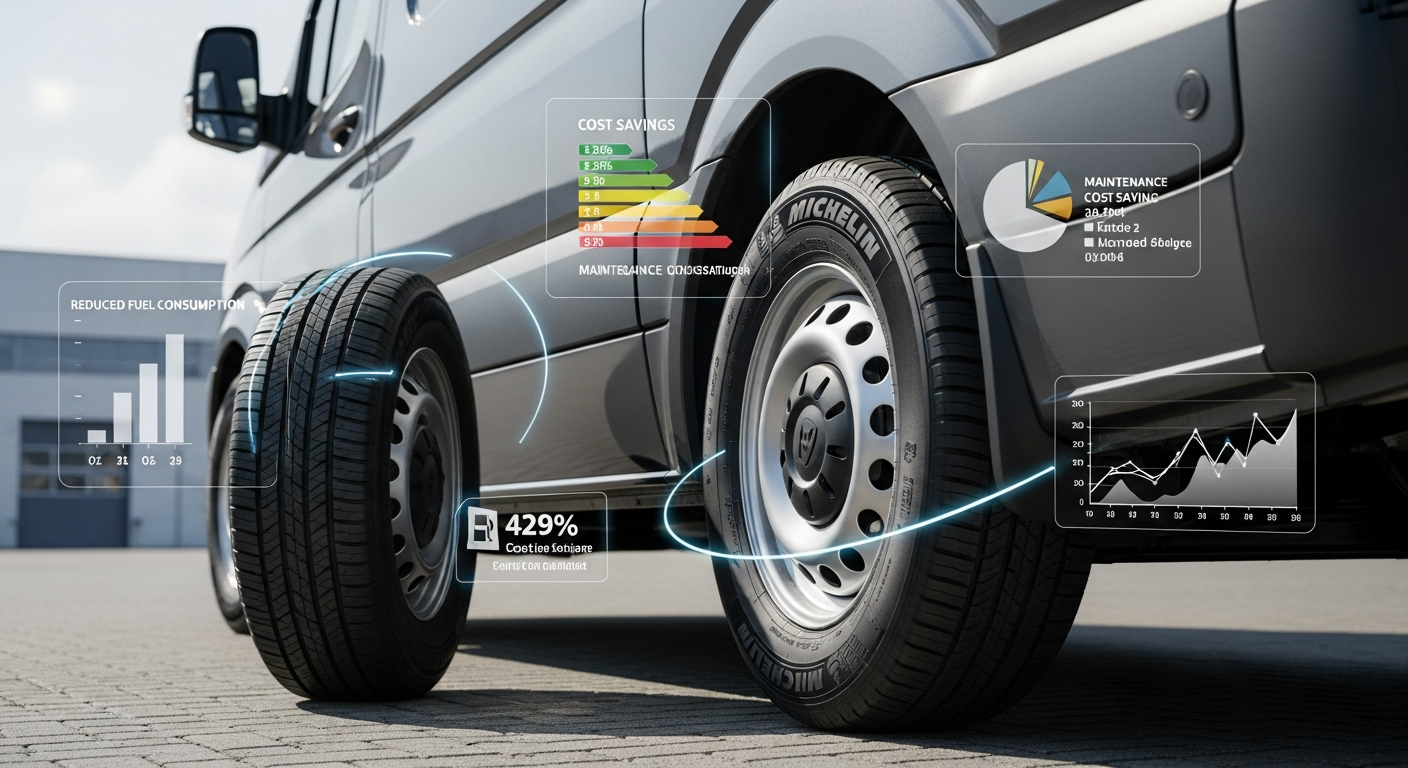
Discover why fleet managers trust the Michelin CrossClimate 2 all-season tire for cost savings and reliability. Learn how this premium tire reduces maintenance expenses while delivering year-round performance. Find the best value on ReifenDirekt today.
Fleet operators spend an average of 15-20% of their operational budget on tire management alone—and that's before accounting for seasonal changeovers, storage costs, and unexpected replacements. This reality shapes every decision made by logistics managers, fleet directors, and business owners trying to maintain profitability in competitive markets. The burden of managing tires has historically meant accepting higher costs as a fixed operating expense, with limited options for meaningful reduction.
The Michelin CrossClimate 2 has earned its reputation as a game-changer for commercial and fleet operations. Unlike traditional seasonal tires that force you into expensive changeover cycles twice yearly, this all-season powerhouse delivers consistent grip, durability, and reliability across diverse weather conditions. Commercial fleets from delivery services to transportation companies have increasingly turned to this solution to simplify their operations while maintaining safety standards.
Discover how the Michelin CrossClimate 2 can transform your fleet's tire economics at ReifenDirekt.
Fleet Economics: How the CrossClimate 2 Reduces Your Total Cost of Ownership
Elimination of seasonal tire swaps
Twice-yearly tire changeovers represent a significant operational cost that many fleet managers underestimate. Each changeover requires labor hours—whether performed in-house or outsourced to a service center—plus coordination across multiple vehicles. A fleet of twenty vehicles changing tires twice annually means forty separate service appointments. When you calculate labor costs at $50-100 per tire change across four tires per vehicle, the annual expense becomes substantial. Beyond labor, storage facilities for off-season tires consume valuable warehouse space that could be allocated elsewhere. Some operations rent dedicated climate-controlled storage, adding another layer of expense. The CrossClimate 2 eliminates this entire cost category by performing reliably year-round.
Extended tread life benefits
The CrossClimate 2's durability directly impacts your replacement frequency and associated downtime. Fleet vehicles experience continuous use, and tires that maintain consistent performance throughout their lifespan reduce unexpected failures and emergency replacements. When a tire fails during active operation, it often triggers roadside service calls that pull maintenance personnel away from scheduled work. The extended tread life of the CrossClimate 2 means vehicles stay on the road longer between replacements, improving fleet availability and reducing the disruption that comes with unplanned maintenance windows.
Inventory simplification
Managing separate summer and winter tire inventories creates logistical complexity that compounds across larger fleets. Each tire type requires separate procurement processes, different storage locations, unique tracking systems, and separate vendor relationships. A fleet carrying dual inventory must maintain adequate stock levels for both seasonal options simultaneously, locking up capital that could be deployed elsewhere. Standardizing on the CrossClimate 2 means one procurement process, one storage location, and one set of vendor relationships. This streamlined approach reduces administrative overhead and frees up warehouse space.
Maintenance schedule optimization
Consistent tire performance reduces unexpected roadside repairs and emergency replacements. When vehicles transition between summer and winter tires, the performance characteristics change, sometimes creating stress on suspension components and requiring drivers to adjust their operation. The CrossClimate 2's balanced performance characteristics mean suspension systems experience consistent loading and wear patterns. This predictability allows maintenance teams to plan repairs more effectively and reduces the emergency service calls that disrupt scheduling.
Fuel efficiency gains
Rolling resistance directly affects fuel consumption, and the CrossClimate 2 is engineered to optimize this factor. Better fuel economy becomes particularly valuable in fleet operations where vehicles accumulate significant annual mileage. A fleet of vehicles achieving 2-3% improvement in fuel efficiency across tens of thousands of annual miles translates to measurable savings. These gains compound across multiple vehicles and multiple years, creating a substantial financial benefit beyond the tire purchase itself.
Insurance and liability considerations
Premium all-season performance may positively impact fleet insurance rates and driver safety records. Insurers recognize that vehicles equipped with quality tires demonstrate better braking performance and reduced accident risk. Some insurance providers offer rate reductions for fleets maintaining higher-quality tire standards. Additionally, superior braking and grip characteristics reduce accident liability exposure, which carries both financial and reputational consequences for fleet operators.
Real-World Performance in Commercial Driving Conditions
Urban delivery routes
Urban environments present constant challenges for tires—frequent stops and starts, varied road surfaces, and exposure to road debris. The CrossClimate 2 excels in these conditions with responsive braking and grip that supports driver control during repeated acceleration and deceleration cycles. Delivery vehicles benefit from the tire's ability to handle both smooth asphalt and rougher street surfaces without compromising performance.
Highway and long-distance hauling
Extended highway driving demands tire stability and comfort that reduce driver fatigue. The CrossClimate 2 provides smooth, predictable handling characteristics over long distances. Its low road noise contributes to a quieter cabin environment, and consistent performance means drivers maintain confidence on extended journeys. For operations running long-haul routes, these characteristics translate to better driver retention and reduced fatigue-related safety incidents.
Seasonal weather transitions
Spring and autumn present unpredictable conditions where temperatures fluctuate and precipitation varies. The CrossClimate 2 handles these transitions without requiring seasonal changes. A vehicle encountering snow in March or November doesn't need different tires—the CrossClimate 2 maintains consistent grip across these weather variations. This performance flexibility proves particularly valuable for fleets operating in regions with variable seasonal patterns.
Light snow and winter capability
The CrossClimate 2 performs admirably in light to moderate snow conditions, providing reliable traction for commercial operations in most climates. However, fleet operators in regions experiencing severe winter conditions should recognize this tire's limitations compared to dedicated winter tires. For operations in areas with consistent heavy snow, ice, and extreme cold, a winter tire during harsh months may still provide superior safety margins. The decision depends on your specific geographic operating area and the severity of winter conditions you encounter.
Wet braking performance
Superior wet grip stands as one of the CrossClimate 2's defining characteristics. Reduced stopping distances in rainy conditions provide measurable safety benefits, particularly important for commercial vehicles operating in high-traffic areas. This performance advantage becomes critical during emergency braking situations where every additional foot of stopping distance increases collision risk.
Evaluate the CrossClimate 2's wet braking advantages and order your tires on ReifenDirekt today.
Noise and vibration reduction
Driver satisfaction directly impacts retention rates in commercial fleets. The CrossClimate 2's comfort characteristics—particularly reduced road noise and vibration—create a more pleasant driving environment during long shifts. Drivers appreciate quieter, smoother-riding vehicles, and this preference translates into measurable benefits for fleet operators managing driver recruitment and retention in competitive labor markets.
Comparing CrossClimate 2 to Seasonal Tire Strategies
Cost per mile analysis
Breaking down the true expense of seasonal tire strategies reveals surprising results. A fleet running summer and winter tire pairs must purchase double the quantity of tires. Seasonal changeover labor occurs twice yearly. Storage consumes resources. Comparing these costs against CrossClimate 2 expenses often shows the all-season solution delivering lower cost per mile driven, particularly when accounting for extended tread life.
Performance trade-offs
Seasonal tire strategies offer specialized performance advantages—winter tires provide superior ice traction, summer tires optimize warm-weather handling. The CrossClimate 2 represents a balanced approach that performs well across conditions rather than excelling in any single scenario. For fleet operations accepting this trade-off, the operational simplification and cost savings justify choosing good year-round performance over specialized seasonal excellence.
Operational complexity
Managing multiple tire inventories creates training requirements for maintenance staff, coordination challenges for procurement, and complexity in tracking which vehicles carry which tire types. The CrossClimate 2 eliminates these complications. One tire type means one training protocol, one procurement process, and simplified vehicle maintenance planning. Across a fleet of dozens of vehicles, this simplification saves significant administrative effort.
Downtime reduction
Seasonal changeover periods often require vehicles to be removed from service for extended periods, particularly when managing large fleets with limited service capacity. The CrossClimate 2 allows vehicles to transition between seasons without service interruptions. This continuous availability supports revenue generation and improves fleet utilization rates.
Vehicle wear patterns
Consistent tire performance characteristics reduce suspension stress and irregular wear patterns. Vehicles experiencing stable tire performance throughout the year show more predictable maintenance needs and longer component lifespans. Summer tires and winter tires impose different loading characteristics on suspension systems, potentially accelerating wear. The CrossClimate 2's consistent performance reduces this stress.
Fleet standardization benefits
Operating a single tire model across your entire fleet creates numerous advantages. Procurement becomes streamlined—you negotiate with one tire supplier for standardized volume rather than juggling multiple tire types and vendors. Maintenance protocols become uniform across all vehicles. Training requirements simplify. Driver transfers between vehicles don't require vehicle-specific knowledge about different tire characteristics. These standardization benefits multiply as fleet size increases.
Making the Fleet Economics Work: Your Path Forward
The Michelin CrossClimate 2 represents more than just a tire—it's a strategic business decision that addresses one of fleet management's most persistent cost drains. By eliminating seasonal changeovers, extending tire life, and simplifying inventory management, you're looking at tangible savings that flow directly to your bottom line. The performance advantages—superior grip, enhanced safety, and reduced maintenance—create a compelling case that goes beyond simple cost reduction.
One tire type means one procurement process, one maintenance protocol, one inventory headache eliminated. When you multiply that simplification across dozens of vehicles, the efficiency gains become genuinely significant. Your maintenance teams spend less time managing inventory logistics and more time addressing actual vehicle needs. Your procurement department negotiates a single contract rather than juggling multiple suppliers. Your drivers benefit from consistent, reliable performance that builds confidence and supports longer vehicle tenure.
The real question isn't whether the CrossClimate 2 can deliver value—the data and fleet case studies make that abundantly clear. The question becomes how quickly you can implement the transition and begin capturing those savings. Some operators transition their entire fleet gradually, replacing tires naturally as they reach end-of-life. Others perform wholesale conversions to accelerate the benefits. Either approach works; the key is recognizing that delay means continued spending on the seasonal systems you're already questioning.