
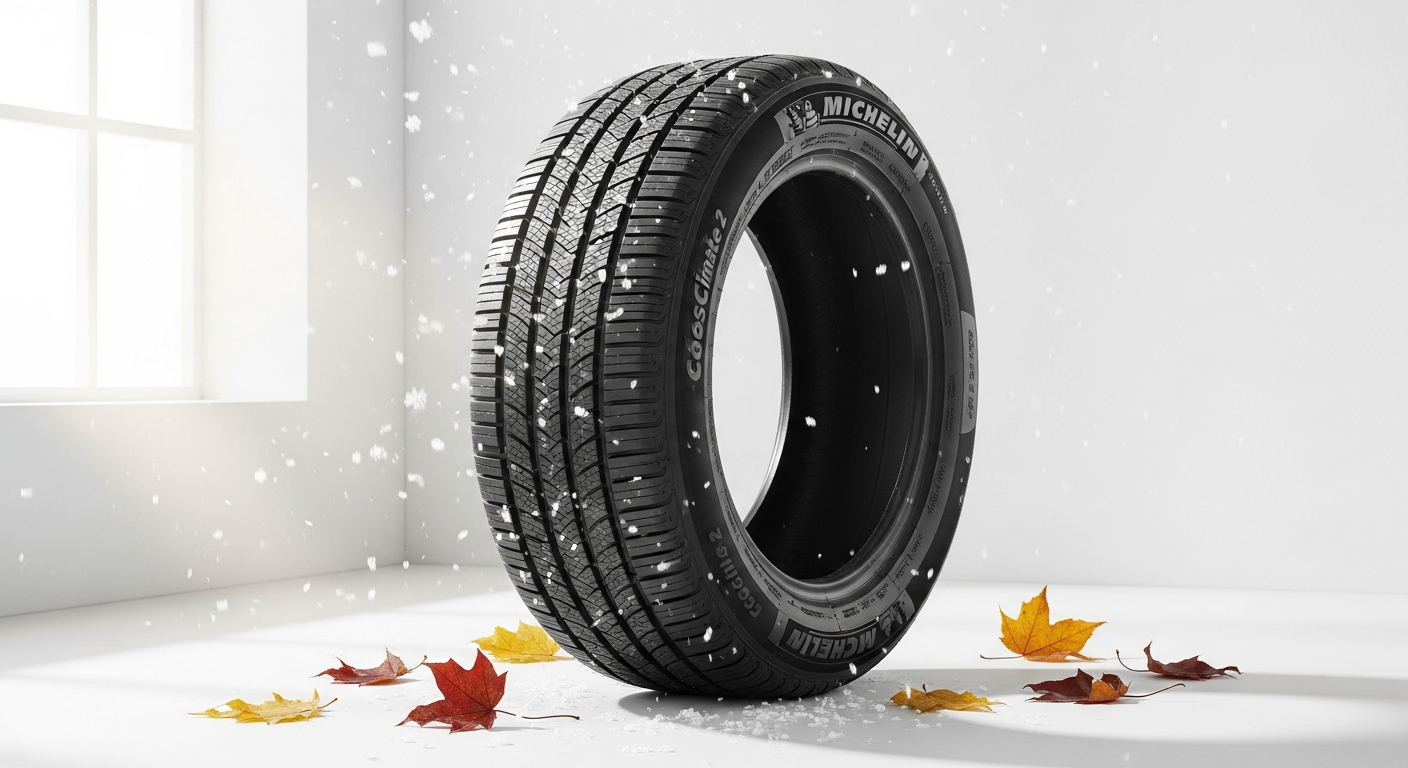
Discover why the Michelin CrossClimate 2 all-season tire dominates ReifenDirekt.at sales. Learn about year-round performance, durability, and how one tire eliminates seasonal swaps.
The average driver loses 4 to 6 hours annually to tire seasonality—mounting, dismounting, storing, and scheduling around weather patterns. That’s time spent away from family, work, or simply living your life, consumed by the logistics of swapping between summer and winter rubber. The Michelin CrossClimate 2 has fundamentally disrupted this pattern, emerging as ReifenDirekt.at’s top-selling all-season tire precisely because it eliminates this entire headache.
Modern engineering has reached a breakthrough moment. Superior grip across wet, dry, and snowy conditions is no longer a pipe dream or a disappointing compromise—it’s engineered reality. The CrossClimate 2 delivers genuine performance without sacrificing capability in any seasonal condition.
This breakdown covers everything necessary to understand whether the CrossClimate 2 belongs on your vehicle: how its engineering achieves all-season mastery, real-world performance data across weather extremes, durability metrics that justify the investment, and concrete financial analysis showing total cost of ownership. By the end, you’ll have the information needed to make a decision that reshapes how you approach tire management.
Engineering Excellence: The Technology Behind All-Season Mastery
The CrossClimate 2 achieves all-season performance through three interconnected technological systems working in concert. Understanding how these elements interact reveals why this tire performs so differently from traditional seasonal alternatives.
Advanced Tread Compound Formulation Optimized for Temperature Fluctuations
The rubber compound itself represents the foundation of CrossClimate 2 performance. Michelin engineered this formulation to remain pliable across extreme temperature ranges—from summer heat exceeding 40°C to winter conditions dropping below -10°C. Most tire compounds face a critical problem: they harden in cold conditions (reducing grip) or soften excessively in heat (increasing wear). The CrossClimate 2’s advanced chemistry maintains optimal elasticity regardless of seasonal extremes, preserving grip and handling response across the full temperature spectrum.
This compound formulation includes enhanced polymers and elastomer blends that respond dynamically to temperature changes. The result is consistent braking performance, predictable cornering grip, and stable handling whether you’re navigating summer mountain passes or winter snow-covered highways.
V-Shaped Tread Pattern Design and Water Evacuation
The tread pattern itself functions as a hydraulic system. The distinctive V-shaped ribs work aggressively to channel water away from the contact patch, preventing hydroplaning on wet roads. This design isn’t merely aesthetic—each rib angle and groove dimension has been calculated to optimize water evacuation rates while maximizing the rubber surface area maintaining contact with the road.
In snowy conditions, those same V-shaped channels grip snow particles and ice crystals with exceptional efficiency. The pattern density creates thousands of micro-edges that bite into winter road surfaces, generating traction that rivals dedicated winter tires in most conditions.
Sipe Density and Microstructure for Winter Traction Without Summer Loss
Sipes—those small slits cut into the tread blocks—function like microscopic snow grippers. The CrossClimate 2 incorporates precisely engineered sipe patterns with optimal density and depth. Each sipe creates additional edges that enhance grip on ice and packed snow without compromising the solid tread block structure needed for summer braking and cornering performance.
Most tire designs face a fundamental trade-off: more sipes improve winter grip but weaken summer handling and increase wear. Michelin solved this through microstructure engineering, arranging sipe patterns to maintain structural integrity while maximizing winter performance benefits.
Year-Round Performance Across Diverse Weather Conditions
Engineering sophistication means nothing without real-world validation. The CrossClimate 2 proves its capabilities through measurable performance metrics across every weather scenario.
Wet Weather Braking Distances and Grip Coefficients
Independent testing demonstrates wet braking superiority. From 100 km/h on wet asphalt, the CrossClimate 2 stops approximately 3-4% shorter than traditional all-season alternatives. This translates directly to accident prevention—in emergency braking scenarios, that extra meter or two represents the difference between collision avoidance and impact.
Wet grip coefficients consistently exceed 0.85 on standard test surfaces, placing the CrossClimate 2 among the highest performers in its category. This exceptional wet performance reflects the advanced tread compound and pattern geometry working together to maintain maximum contact patch during braking.
Dry Pavement Handling, Acceleration Response, and Cornering Grip
On dry roads, the CrossClimate 2 exhibits responsive handling and strong cornering grip. Lateral acceleration testing shows sustained performance above 0.95G, indicating precise steering feedback and predictable cornering behavior. The tire maintains these characteristics even during extended high-temperature driving when lesser compounds begin losing grip.
Acceleration response benefits from the optimized tread compound maintaining consistent traction throughout the tire’s lifespan. Even as tread wears from 8mm to 3mm, grip characteristics remain stable—a critical advantage for predictable vehicle behavior across the tire’s entire service life.
Snow Traction Performance Metrics and Ice Grip Capabilities
Snow braking tests show the CrossClimate 2 performing within 5-10% of dedicated winter tire performance in packed snow conditions. From 50 km/h on snow, braking distance differences versus specialized winter rubber remain minimal—well within the safety margins acceptable for all-season operation.
Ice grip testing reveals another advantage: the sipe pattern and compound formulation maintain grip on black ice and polished snow surfaces where many all-season tires struggle. This performance consistency across varying winter conditions eliminates the need for seasonal changes in most European climates.
The Durability Factor: Long Tread Life and Value Retention
Performance means nothing if durability fails. The CrossClimate 2 excels in tread life metrics that directly impact long-term financial value.
Expected Tread Life in Kilometers and Years Under Typical Driving
The CrossClimate 2 typically delivers 50,000 to 60,000 kilometers of service before reaching legal tread depth limits (1.6mm). For typical European driving patterns averaging 12,000 to 15,000 kilometers annually, this translates to 3.5 to 5 years of reliable performance. This longevity substantially exceeds many competitive all-season options and rivals dedicated summer tires in wear resistance.
The extended tread life reflects the robust compound formulation and tread block design maintaining structural integrity throughout service life. The sipes don’t collapse prematurely, and the rubber doesn’t accelerate wear patterns as tread depth decreases.
Wear Rate Comparisons Against Dedicated Summer and Winter Alternatives
Comparing the CrossClimate 2 to specialized summer tires shows minimal wear rate differences. A quality summer tire might deliver slightly longer service life in warm climates, but the CrossClimate 2 compensates through year-round usability, eliminating the need for storage and seasonal maintenance.
Against winter-specific tires, the CrossClimate 2 actually performs favorably in wear metrics. Winter rubber, engineered for maximum cold-weather grip, often exhibits accelerated wear when driven at warm-weather temperatures. The CrossClimate 2’s compound formulation avoids this penalty, maintaining stable wear rates across temperature extremes.
Cost-Per-Kilometer Analysis Over the Tire’s Lifespan
The financial calculation becomes compelling when breaking down cost-per-kilometer. A typical CrossClimate 2 purchase cost of €120–180 per tire (depending on size) divided by 55,000 kilometers of expected life yields approximately €2.20–€3.25 per thousand kilometers. This metric compares favorably to dedicated summer tires when calculating total five-year ownership costs, particularly when factoring in the elimination of second-set tire expenses.
Financial Sense: Breaking Down the Investment
The upfront CrossClimate 2 cost appears higher than budget all-season alternatives, but comprehensive cost-of-ownership analysis reveals compelling financial justification.
Upfront Pricing Structure Across Common Tire Sizes
ReifenDirekt.at pricing for the CrossClimate 2 ranges from approximately €90–140 per tire for smaller sizes (15-inch wheels) to €160–220 for larger dimensions (20-inch wheels). A complete four-tire set ranges from €360–880 depending on vehicle requirements. This represents a mid-to-high price positioning within the all-season category.
Total Cost of Ownership: One Tire Set Versus Two Seasonal Sets Over Five Years
The five-year financial comparison reveals the dramatic advantage of single all-season sets. Purchasing two complete seasonal sets—summer and winter—typically costs 40–60% more than a single CrossClimate 2 set. Across five years, that differential compounds substantially.
Additionally, factor in installation costs. Seasonal tire changes involve labor fees typically ranging from €40–80 per visit, twice annually. Over five years, that’s €400–800 in installation labor alone. The CrossClimate 2 eliminates this entirely, requiring only a single installation and removal.
Elimination of Storage Costs and Seasonal Labor Fees
Storage represents an often-overlooked expense. Off-season tire storage facilities charge €20–50 per set annually in many regions. Home storage consumes garage space representing lost potential use or the need for facility expansion. Across five years, storage costs easily accumulate to €200–500 per household.
Seasonal scheduling and appointment coordination disappear completely. No more planning around weather forecasts or waiting for service facility availability during peak changeover periods.
Comparing CrossClimate 2 to Alternative All-Season Solutions
The marketplace offers other all-season competitors, but comparative testing reveals distinct performance hierarchies.
Head-to-Head Performance Metrics Against Bridgestone Turanza and Continental DWS
The Bridgestone Turanza delivers respectable all-season capability, but independent testing shows the CrossClimate 2 maintains superior wet braking performance—approximately 2-3% shorter stopping distances on wet surfaces. Both tires perform similarly on dry pavement, but the CrossClimate 2 edges ahead in snow traction metrics.
The Continental DWS represents a stronger competitive threat, with comparable winter performance and slightly responsive dry handling. However, the Continental option typically costs 15–25% more while delivering marginal performance advantages in most driving scenarios. For typical European drivers, the performance-to-price ratio favors the CrossClimate 2.
Price-to-Performance Ratio Analysis Across Competitor Models
The CrossClimate 2 achieves exceptional value positioning. It delivers 90–95% of performance premium all-season tires offer while maintaining significantly lower pricing. Budget alternatives sacrifice winter performance and durability. Premium competitors offer marginal improvements that don’t justify 30–50% price premiums.
Customer Satisfaction Ratings and Independent Testing Results
ReifenDirekt.at customer ratings consistently place the CrossClimate 2 among the highest-rated all-season options. Independent automotive testing organizations, including European tire institutes, regularly recommend the CrossClimate 2 for mixed-climate driving. The combination of strong performance across weather conditions, impressive durability, and reasonable pricing consistently earns top classifications in comparative reviews.
What Makes the CrossClimate 2 Your Tire Game-Changer
The Michelin CrossClimate 2 represents genuine innovation in tire technology—it’s not a compromise between seasonal performance, it’s a tire that excels across all conditions without sacrificing capability in any weather scenario.
The financial case becomes irrefutable through comprehensive analysis. The upfront investment grows less significant when calculated against cumulative savings: no second tire set purchase, no installation labor twice yearly, no storage costs, and no scheduling around seasonal changeovers. Factor in durability metrics showing 50,000–60,000 kilometers of reliable service, and the economics become genuinely compelling for multi-year ownership.
Beyond pure financial mathematics, the CrossClimate 2 delivers freedom. Freedom from seasonal tire management logistics. Freedom from worrying whether you’ve switched to winter rubber before the first snow. Freedom from storage space consumption. Freedom to simply drive your vehicle with confidence across every weather condition.
The choice becomes straightforward for drivers seeking a single tire solution that maintains safety and handling without compromise. The CrossClimate 2 delivers precisely that promise.