
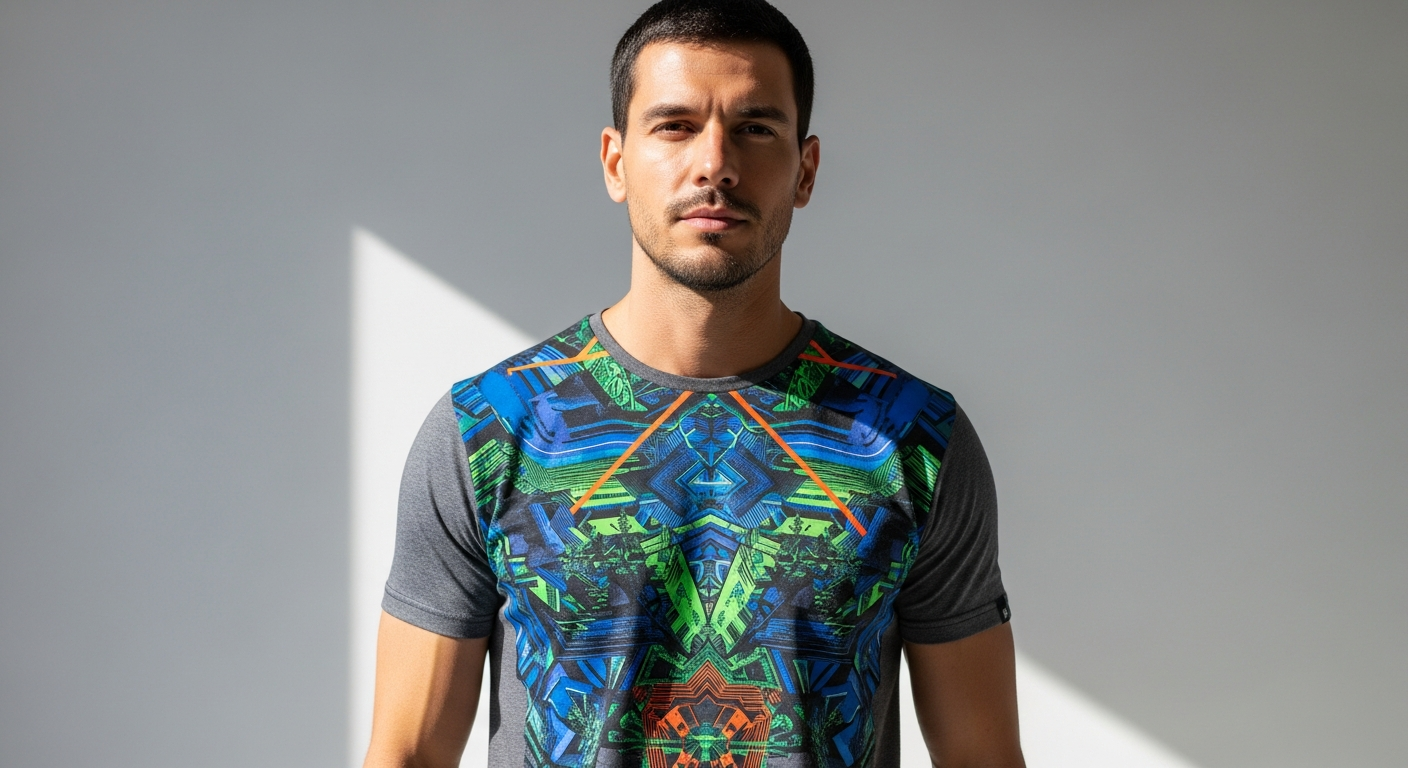
Discover how to select the best men’s casual graphic print t-shirt for your style and budget. Learn about fabric quality, sizing, design trends, and where to find authentic pieces that last. Your complete 2026 shopping guide.
Over 40% of budget-conscious fashion shoppers now purchase casual graphic tees online rather than in physical stores, signaling a fundamental shift in how men approach casual fashion. Men's casual graphic print t-shirts have evolved far beyond basic wardrobe fillers—they're now statement pieces that reflect individuality, pop culture interests, and artistic preferences. Whether you're drawn to anime aesthetics, vintage band designs, or minimalist abstract art, these tees offer accessible entry points into fashion experimentation without the hefty price tag.
This guide will help you navigate the complexities of purchasing graphic tees online. You'll learn to understand fabric quality, sidestep sizing inconsistencies, decode fabric specifications, and identify red flags before your money leaves your account. The goal is straightforward: build a collection of graphic tees that actually withstand regular wear and represent your style genuinely.
Explore quality men's casual graphic print t-shirts and start your collection today
Understanding Fabric Quality and Print Durability
Cotton versus cotton-polyester blends: breathability, comfort, and shrinkage rates
The fabric foundation determines whether your graphic tee feels premium or cheap after the first wash. Pure cotton offers exceptional breathability and comfort, especially during warm weather, but it shrinks more readily and requires careful laundering. Cotton-polyester blends typically contain 65-80% cotton mixed with 20-35% polyester, creating a more stable garment that resists shrinkage while maintaining breathability. The trade-off is slightly reduced breathability compared to 100% cotton, though the difference is minimal for most wearers.
When evaluating listings, check the fabric composition explicitly. Sellers often hide this information, but legitimate vendors clearly state the blend ratio. A 70/30 cotton-polyester blend represents a sweet spot for durability and comfort without sacrificing wearability.
Screen printing vs. digital printing: which techniques preserve color vibrancy longer
Screen printing remains the industry standard for graphic tees. This technique pushes ink through a mesh screen onto fabric, creating bold, durable prints that withstand numerous wash cycles. The print sits on top of the fabric with excellent color saturation and longevity. Digital printing, conversely, applies design directly onto fabric using specialized printers. While digital printing allows for more complex, photo-realistic designs, the ink penetrates differently and can fade faster with regular washing, particularly on lower-quality garments.
Budget-conscious buyers should note that screen-printed designs from reputable sellers typically outlast digital prints by a significant margin. However, digital printing excels for intricate, multi-color designs that screen printing cannot execute as effectively.
Weight and thickness indicators that signal quality construction
Fabric weight, measured in grams per square meter (gsm), directly correlates with durability and feel. Lightweight tees typically measure 150-180 gsm—they're thin, breathable, and prone to pilling. Mid-weight options fall between 180-220 gsm, offering a comfortable balance of durability and breathability. Heavyweight tees exceed 220 gsm, providing substantial fabric that resists wear but can feel stiff and warm.
For everyday casual wear, aim for mid-weight garments around 190-210 gsm. These provide adequate durability for frequent rotation without feeling bulky or uncomfortable.
How to spot cheap fabric that pills or fables after minimal washing
Pilling occurs when short fibers separate from the yarn structure, creating tiny balls on the fabric surface. Low-quality fabrics with poorly constructed yarns pill after just a few washes. When reviewing product photos, look for close-up images showing fabric texture. If the seller avoids detailed fabric shots or provides only full-body garment photos, this raises questions about transparency.
Customer reviews often mention pilling explicitly. Scan through reviews searching for phrases like "pilled after," "fabric quality," or "felt cheap." If multiple reviewers mention these issues, the product likely uses inferior materials.
Pre-wash considerations and care instructions that extend garment lifespan
Many graphic tees benefit from a pre-wash before wearing them. This initial wash at cold temperature removes excess dye and sizing agents applied during manufacturing. Pre-washing prevents unexpected color bleeding onto lighter garments and sets the print more permanently into the fabric.
Legitimate sellers provide detailed care instructions on their listings. Vague instructions like "machine wash" suggest the seller hasn't tested durability. Quality vendors specify temperature ranges, recommend inside-out washing, and suggest air drying for optimal longevity.
Browse our selection of durable graphic tees with detailed care guidance included
Navigating Sizing Challenges and Fit Variations
Decoding Asian sizing standards versus European and North American fits
Asian sizing runs smaller than Western standards, a critical fact that catches many first-time online shoppers. An Asian medium often fits like a Western small, and length measurements also tend shorter. This isn't poor manufacturing—it reflects different regional body proportions and style preferences. Understanding this distinction prevents purchasing a garment that arrives too snug or short.
Reputable sellers acknowledge these differences clearly in their listings, often providing both Asian sizing labels and Western equivalents. Some sellers even specify that their medium fits like a US small, demonstrating transparency about sizing realities.
Why the same size differs dramatically between sellers
Two different sellers' medium tees can fit completely differently due to variations in manufacturing facilities, pattern grading, and quality control standards. One seller's medium might measure 48 cm chest width while another's measures 52 cm. These differences seem minor numerically but create noticeably different fits when wearing.
This variation explains why reviewing seller-specific sizing information matters far more than assuming standardization. Never assume your usual size across multiple sellers.
Measuring yourself accurately before placing orders
Before ordering any graphic tee, measure yourself using a soft measuring tape. For chest width, measure across your chest horizontally while standing relaxed—don't pull the tape tight. For length, measure from the shoulder bone down to where you want the tee to end (typically hip level for most men). Compare your measurements directly against the seller's size chart, not against Western clothing size names.
This process takes three minutes but prevents expensive returns and disappointed arrivals. Write down your measurements and reference them for every new seller.
Reading seller-specific size charts and customer feedback for fit insights
Size charts should include multiple measurements: chest width, sleeve length, total length, and shoulder width. Charts that show only one or two measurements indicate sellers haven't invested in detailed sizing information. Additionally, scan customer photos and written reviews specifically mentioning fit. Phrases like "runs small" or "oversized fit" provide real-world context that charts cannot convey.
Pay special attention to reviews from customers indicating their usual size and how the tee actually fit. Someone noting "I usually wear M in Western brands and ordered M here, fit was tight" delivers more useful information than a generic positive review.
Oversized versus regular fit: style preferences and comfort trade-offs
Oversized graphic tees have dominated casual fashion since the early 2020s, offering comfortable, relaxed silhouettes. This fit works beautifully for layering and creating modern casual looks, but it requires intentional styling to avoid appearing shapeless. Regular fit tees follow your body contours more closely, suiting a more tailored aesthetic but demanding proper sizing to avoid looking too tight.
Your choice depends entirely on your style preferences and wardrobe goals. If you plan to layer under jackets or overshirts, oversized fit provides better proportions. For standalone casual outfits, regular fit often delivers more flattering silhouettes.
Evaluating Design Trends and Personal Style Expression
Current design categories dominating the market in 2026
The graphic tee market currently emphasizes vintage aesthetics, anime references, and minimalist abstract designs. Retro sports branding, band logos, and nostalgic 90s graphics remain perennially popular. Character-driven designs featuring anime, manga, and gaming characters have expanded significantly, appealing to niche communities while maintaining mainstream visibility. Minimalist designs featuring single-color prints or subtle geometric patterns attract those preferring understated style expression.
Understanding which categories align with your wardrobe prevents purchasing designs that sit unworn in your closet. Assess your existing casual clothing and identify which design families genuinely complement your rotation.
Anime and manga-inspired graphics: niche appeal and collectibility
Anime graphics occupy a unique market position—they appeal to dedicated enthusiasts while reaching broader audiences through mainstream popularity. These designs range from subtle character references to elaborate, detailed artwork. The collectibility factor means certain designs retain personal value and rarely feel dated, unlike trend-driven graphics that age quickly.
If anime aesthetics appeal to you, prioritize sellers specializing in this category and read reviews from similar fans. Quality matters more here than with generic designs, as intricate artwork demands excellent print reproduction to showcase details properly.
Vintage band tees and retro aesthetics: timeless versus trendy
Band logo tees and vintage band graphics represent the sweet spot between timelessness and trendiness. A classic rock band logo rarely goes out of style, whereas ironic or novelty band graphics tied to specific trends may feel dated within a year. When evaluating band tee options, consider whether the design conveys genuine interest in the band or relies on trendiness for appeal.
Vintage aesthetics including faded prints, distressed effects, and retro color palettes currently trend strongly but risk feeling dated as fashion cycles evolve. Balance trendy designs with timeless pieces to ensure long-term wearability.
Abstract art and minimalist designs for versatile styling
Abstract and minimalist designs excel at versatility, pairing easily with virtually any casual bottoms and layering pieces. These designs feature subtle visual interest without demanding attention, making them ideal for frequent rotation. Geometric patterns, abstract artwork, and single-color prints from trusted sellers typically withstand multiple wash cycles without visible deterioration.
Building a core collection around these versatile designs provides a foundation for experimenting with bolder graphics while maintaining outfit cohesion.
Price Points, Value, and Budget-Conscious Shopping Strategies
The $5-$15 USD range: what you get at different price levels
The $5-$8 range typically represents bottom-tier options where cost-cutting shows in fabric weight, print durability, and design complexity. These ultra-cheap tees work for occasional wear or as undershirts but rarely survive frequent washing with print integrity intact. The $8-$11 sweet spot offers dramatically improved quality—better fabric weight, more durable prints, and more sophisticated designs. At $11-$15, you're investing in premium selections featuring superior fabric, excellent print quality, and often exclusive or limited designs.
Most budget shoppers find maximum value in the $8-$11 range where quality improvements justify the modest price increase over rock-bottom options.
Identifying genuine sales versus inflated original prices
Dishonest sellers employ a common tactic: listing inflated original prices to create fake discount percentages. A tee with a "crossed-out" original price of $25 marked down to $9 creates perceived value when the product's actual worth is $8-$9. Legitimate sellers offer consistent, predictable pricing reflecting actual product value, with genuine sales reducing standard prices by 10-20%.
Check a seller's price history over weeks to identify pricing patterns. Products constantly advertised at "70% off" suggest dishonesty rather than legitimate sales.
Bulk purchasing advantages for refreshing your entire casual wardrobe
Bulk purchasing—ordering 5-10 tees simultaneously—offers several advantages beyond simple discounting. You're likely ordering from a single, vetted seller whose quality you've confirmed, reducing sizing inconsistency risk. Bulk orders often qualify for additional discounts or free shipping. Most importantly, buying multiple pieces from the same seller allows you to refresh your wardrobe cohesively while building purchasing history with a reliable vendor.
Strategy matters here: identify 2-3 trusted sellers, then gradually build your collection through multiple orders rather than random single-piece purchases.
Cost-per-wear calculations for evaluating true value
Calculating cost-per-wear clarifies actual value beyond sticker price. A $10 tee worn 50 times during its usable lifespan costs $0.20 per wear. A $7 tee worn only 20 times before pilling or fading costs $0.35 per wear. Quality fabric and print durability directly impact this calculation—cheaper options often deliver worse cost-per-wear despite lower purchase prices.
This perspective shifts decision-making from "what's cheapest" to "what delivers the best value." A slightly more expensive option that lasts longer and maintains its appearance frequently represents superior value.
Red Flags and Quality Indicators in Product Listings
Low review counts and suspiciously high ratings as warning signals
Products with 50+ five-star reviews and zero critical feedback raise suspicion. Real products naturally accumulate mixed reviews—some customers receive defective items, experience sizing issues, or simply dislike the design. Ratings in the 4.5-4.7 range with substantial review volume suggest authentic feedback. Conversely, new sellers with only 5-10 perfect reviews may be inflating their reputation or haven't received enough orders to show genuine patterns.
Avoid sellers with fewer than 50 reviews unless they explicitly specialize in specific designs you genuinely want. Established sellers with 500+ reviews and realistic rating distribution demonstrate consistent reliability.
What legitimate customer feedback reveals about print fading and fit accuracy
Read negative reviews first, not positive ones. Legitimate criticism mentioning specific issues—"print faded after 5 washes," "ordered XL but fits like L," "fabric pilled after second wear"—provides invaluable insight. Count how frequently these issues appear. One or two complaints about fit among hundreds of reviews suggests isolated incidents. Five or more mentioning the same problem indicates systemic issues.
Also notice whether the seller responds to negative reviews professionally. Sellers addressing concerns constructively demonstrate commitment to quality and customer satisfaction.
Photo quality and authenticity: professional shots versus blurry images
Professional product photography with clear, well-lit images, multiple angles, and close-up detail shots indicates seller investment in product quality and transparency. Blurry, poorly lit, or duplicate photos across multiple listings suggest low-effort sellers unconcerned with accuracy. Authentic product photos show real garments, occasionally with minor imperfections that prove legitimacy.
Overly polished or generic images—sometimes recycled from legitimate manufacturers—may indicate knockoffs or misrepresentation. Compare listing photos across multiple sellers; if identical photos appear on different accounts, exercise caution.
Return policies and seller responsiveness for problem resolution
Clear return policies and responsive seller communication prevent post-purchase headaches. Sellers should specify return windows (typically 15-30 days), return shipping responsibilities, and refund procedures explicitly. Sellers ignoring messages or delaying responses suggest they won't prioritize issues if problems arise.
Message potential sellers with questions before ordering. Their response speed and helpfulness indicate how they'll handle returns or quality issues.
Building a Versatile Graphic Tee Collection on a Budget
Creating a color palette foundation for maximum outfit combinations
Start by identifying 3-4 neutral base colors—black, white, navy, or gray—that form your collection foundation. These neutral-heavy tees pair effortlessly with virtually any bottoms and layering pieces. Gradually introduce accent colors complementing your existing wardrobe. If you favor earth tones, add olive, tan, and rust. If you prefer cool tones, incorporate charcoal, slate, and navy variations.
This intentional approach ensures every new tee works with existing pieces, maximizing outfit combinations from minimal pieces.
Mixing bold graphics with neutral bottoms for balanced casual looks
Bold or intricate graphic designs demand visual restraint elsewhere in your outfit. Pair statement graphic tees with neutral bottoms—black jeans, gray chinos, or navy shorts—allowing the tee to command attention without overwhelming the look. This styling strategy also protects bold graphics from competing with equally bold bottoms, which creates visual chaos.
Conversely, minimalist graphic tees pair beautifully with patterned or colored bottoms, creating balanced contrast.
Layering graphic tees with jackets and overshirts for season transitions
Graphic tees serve as excellent layering bases, extending their utility across seasons. A graphic tee under an open overshirt or lightweight jacket provides visual interest while maintaining appropriate coverage for varying temperatures. This layering strategy also protects prints from excessive wear and sun exposure, preserving durability.
Build your collection considering how each piece functions as both standalone and layered garment.
Rotating your collection to extend individual garment lifespan
Rotating between multiple tees instead of repeatedly wearing the same one extends longevity dramatically. Continuous wear accelerates fabric breakdown and print deterioration. Alternating between five tees allows each to rest between wears, reducing cumulative stress. This rotation principle applies especially to graphic prints, which suffer from friction and washing stress.
A rotating collection of eight to twelve versatile graphic tees provides excellent variety while maintaining reasonable garment longevity.
Care Instructions That Preserve Print Integrity and Fabric Quality
Cold water washing to prevent color bleeding and print deterioration
Warm and hot water accelerates color bleeding and print fading. Cold water washing—preferably between 60-70°F—preserves both garment color and graphic vibrancy across multiple wash cycles. Cold water also reduces fabric stress and shrinkage risk, particularly important for cotton-heavy blends.
Make cold water washing automatic for all graphic tees regardless of perceived dirt levels. The protective benefits outweigh perceived cleaning power from warmer temperatures.
Gentle cycle settings and avoiding harsh detergents
Machine gentle cycles reduce agitation that stresses fabric fibers and damages prints. Avoid heavy-duty cycles entirely for graphic tees. Additionally, skip harsh detergents containing bleach or strong optical brighteners. These chemicals accelerate color fading and can cause yellowing, particularly on lighter-colored tees. Use mild, color-safe detergents designed for delicate fabrics.
Pre-treating stains before washing prevents the need for aggressive scrubbing that damages prints and fabric.
Inside-out washing to minimize friction on printed surfaces
Washing graphic tees inside-out reduces direct friction between printed surfaces and washer drum or other garments. This simple practice significantly extends print durability, preventing premature cracking and fading. Inside-out washing takes one second more than regular washing but compounds benefits across the tee's lifespan.
Make inside-out washing standard practice for all graphic tees.
Air drying versus machine drying: impact on fabric longevity
Machine drying accelerates fabric deterioration through heat and tumbling action. Air drying preserves fabric integrity and print quality indefinitely compared to machine methods. When air drying, hang tees on a clothesline or drying rack away from direct sunlight, which can cause uneven fading. Direct sunlight fades prints faster than any other environmental factor.
If machine drying is necessary, use the lowest temperature setting available and avoid extended drying times.
The Smart Shopper's Takeaway: Making Graphic Tees Work for Your Wardrobe
Building a collection of men's casual graphic print t-shirts doesn't require compromising on quality—it requires strategic decision-making grounded in practical evaluation. The fundamental factors distinguishing worthwhile purchases from wasted money are fabric composition that actually breathes and lasts, sizing navigation preventing costly returns, design selection reflecting your genuine personality, and pricing strategies maximizing value. Your purchasing success hinges on reading between the lines of product listings, trusting customer feedback patterns rather than ratings alone, and understanding that the cheapest option rarely delivers the best cost-per-wear.
Start by identifying 2-3 trusted sellers with consistent quality and positive reviews, then gradually build your collection from those reliable sources. Begin by evaluating your current style preferences honestly and identifying which design categories genuinely excite you. Apply these evaluation criteria to your next purchase: assess fabric weight and composition, scrutinize size charts against your personal measurements, read substantial customer feedback mentioning fit and durability, and calculate whether the price represents genuine value.
You'll quickly develop an eye for quality indicators and recognize red flags instantly. This discernment takes time but compounds with each purchase, eventually enabling you to distinguish excellent values from overpriced mediocrity. Your collection will evolve into something genuinely valuable—graphic tees that actually earn their place in regular rotation through durability, comfort, and design integrity.
Start shopping for quality men's graphic tees with confidence today