
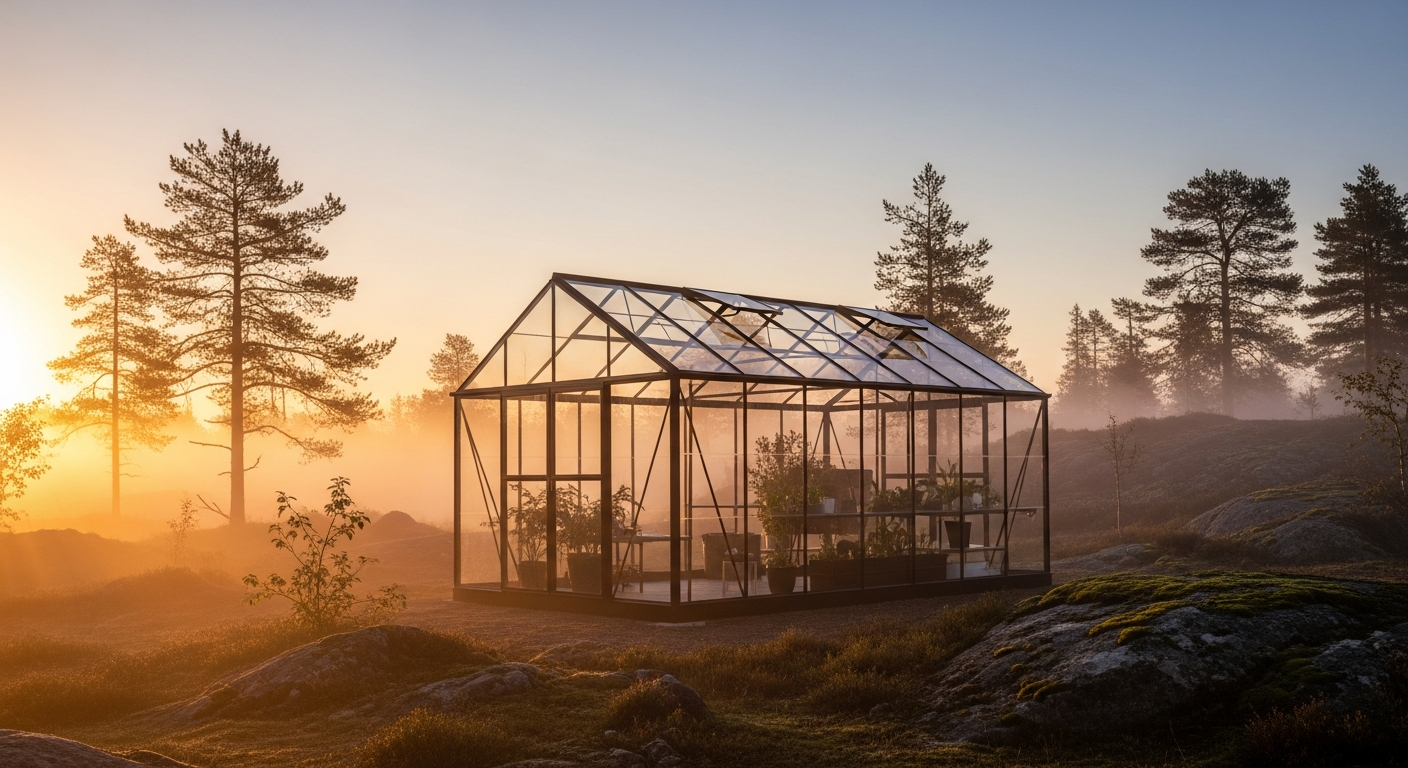
Discover how Luxvinduer’s aluminum greenhouses were engineered for Nordic climates with robust frames, safety glass, and customizable designs before their 2026 closure.
Nordic winters don't forgive weak construction. Snow loads exceeding 200 kilograms per square meter, wind gusts that shatter poorly-designed structures, and temperature swings that crack inferior glass are daily realities for greenhouse owners across Scandinavia. Luxvinduer ApS, the Danish greenhouse specialist that operated until June 2026, built its reputation on solving one specific problem: creating structures that wouldn't fail when Nordic weather turned vicious.
Rather than importing generic designs from warmer climates, the company engineered aluminum greenhouses from the ground up with Scandinavian conditions in mind. This represented a fundamentally different approach to greenhouse design—one rooted in regional engineering rather than universal templates. The structural principles, material selections, and customization strategies that defined Luxvinduer's work offer valuable insights for anyone serious about building a greenhouse that will last decades in demanding Nordic conditions.
Discover how Luxvinduer's aluminum greenhouse engineering addressed Nordic climate challenges.
Aluminum Frame Engineering for Extreme Nordic Weather
The foundation of any greenhouse's durability lies in its frame, and Luxvinduer understood this better than most manufacturers. Nordic winters impose demands that generic greenhouse frames simply cannot handle. The engineering principles that governed their aluminum structures addressed three interconnected challenges: massive snow accumulation, severe wind exposure, and extreme thermal cycling.
Structural Reinforcement for Heavy Snow Loads
Scandinavia receives snow loads that would collapse poorly-engineered structures. Many regions experience sustained loads exceeding 200 kilograms per square meter—roughly equivalent to a fully-loaded truck parked on a modest roof. Luxvinduer's frames incorporated reinforced aluminum profiles with calculated load paths that distributed weight efficiently across the entire structure. Rather than relying on thin aluminum tubes common in imported designs, their engineering emphasized thicker gauge materials and strategic bracing patterns that prevented buckling under extreme loads.
The company's approach recognized that snow load isn't just a static weight problem. As temperature fluctuations cause partial melting and refreezing, the loading pattern changes continuously. Their frames were engineered to handle not just peak loads, but the dynamic stresses created by these recurring cycles.
Wind Resistance Specifications for Coastal Exposure
Coastal Scandinavian locations experience wind conditions that few other regions face regularly. Gales exceeding 80 kilometers per hour occur with enough frequency that any greenhouse design must treat wind loads as a primary design criterion, not an afterthought. Luxvinduer specified aluminum alloys and frame configurations that resisted the lateral forces created by sustained wind pressure and the sudden gusts that characterize Nordic storm systems.
Their designs incorporated reinforced corners and diagonal bracing patterns that remained nearly invisible to the eye while providing structural rigidity. The aluminum frame geometry itself was engineered to minimize wind drag—a subtle distinction that separated their structures from competitors who focused solely on static load calculations.
Thermal Expansion and Temperature Cycling
The temperature range experienced in Nordic regions creates stresses that manufacturers in moderate climates rarely encounter. A greenhouse in central Scandinavia might experience a 40°C temperature swing between a winter night and a summer afternoon. This thermal cycling causes expansion and contraction that can crack inferior glass, loosen fasteners, and warp frames made from materials with poor thermal stability.
Luxvinduer's aluminum selections emphasized alloys with appropriate thermal expansion coefficients. More importantly, their frame design incorporated expansion gaps and flexible fastening systems that allowed materials to move without creating stress concentrations. The gaskets and sealants used throughout their structures were selected specifically for performance across these extreme temperature ranges.
Hardened Safety Glass and Climate-Specific Glazing Solutions
Glass failures represent one of the most dramatic—and costly—modes of greenhouse failure in Nordic climates. Thermal shock, hail impact, and structural stress convergence can all cause sudden glass failure. Luxvinduer addressed these challenges through careful glazing specifications that balanced strength, insulation value, and durability.
Tempered Glass and Thermal Shock Prevention
Standard glass develops internal stress when exposed to rapid temperature changes. A greenhouse glass surface heated by winter sun might reach 40°C while the night-side temperature plummets below freezing—a differential that creates enormous internal stresses. Tempered glass undergoes heat treatment that creates a state of mechanical prestress. If failure does occur, tempered glass fractures into small granules rather than large sharp shards, making it significantly safer.
Luxvinduer standardized on tempered glass for most of their greenhouse models. This choice reflected both safety considerations and practical durability—the prestressed glass actually becomes more resistant to thermal shock, not less. The company's glazing specifications called for specific tempering schedules that optimized performance in Nordic thermal cycling patterns.
Double-Glazing and Insulation Trade-offs
The choice between single-pane and double-glazed designs involved genuine engineering trade-offs that Luxvinduer navigated carefully. Double glazing provided superior insulation, reducing heating costs and maintaining more stable interior temperatures. However, it added weight, increased frame stress, and created additional complexity in ventilation management.
Rather than imposing a one-size-fits-all solution, their catalog included both options. Single-pane configurations used thicker tempered glass for structural strength while accepting higher heating demands. Double-glazed models incorporated lighter glass panes separated by insulating air gaps, providing year-round cultivation capabilities but requiring more robust frame engineering to support the additional weight.
UV Protection and Light Management
Nordic regions experience extreme seasonal light variation. Winter darkness persists for weeks at northern latitudes, while summer light extends for most of the 24-hour cycle. Standard glass provides minimal UV protection, which can degrade interior materials and affect plant growth cycles. Luxvinduer's premium glazing options incorporated UV-protective coatings that filtered harmful ultraviolet wavelengths while maintaining visible light transmission.
These coatings served a dual purpose: they protected the interior environment during intense summer sun (which, despite the northern latitude, can become extreme during long daylight hours), while supporting appropriate light filtering during the growing season.
Customization Options That Addressed Regional Growing Needs
One of Luxvinduer's distinguishing characteristics was their willingness to customize designs rather than force customers into standardized templates. This flexibility reflected their understanding that Nordic gardening involves highly specific regional requirements.
Size Configurations Across Growing Scales
Their catalog ranged from compact 6-square-meter units suitable for apartment buildings and small properties to expansive 50-square-meter structures that functioned as full-season growing spaces. Rather than offering only three or four fixed sizes, Luxvinduer allowed customers to specify dimensions within engineering parameters. This modularity acknowledged that Nordic properties vary dramatically in size and topology, and that growing ambitions span from supplemental vegetable cultivation to commercial operations.
Door and Window Placement for Ventilation Control
Natural ventilation in cool Nordic climates serves a different purpose than in warmer regions. Rather than simply exhausting excess heat, ventilation in Scandinavian greenhouses must balance competing needs: maintaining adequate air exchange to prevent fungal disease while preserving hard-earned warmth. Luxvinduer offered flexible configurations for door and window placement that let customers optimize airflow for their specific microclimate and intended use.
Some configurations featured vented roof panels for passive heat release during brief warm periods, while others emphasized side ventilation for controlled air movement. Foundation-level options in some designs created cross-ventilation patterns that worked with prevailing wind directions rather than against them.
Foundation Solutions for Frost-Prone Soils
Perhaps no regional consideration matters more than proper foundation design in areas where soil freezes deeply each winter. Frost heave—the expansion of soil as freezing groundwater expands—can lift and crack improperly founded structures. Luxvinduer offered multiple foundation approaches: some designs incorporated below-frost-line concrete piers, while others used specialized aluminum ground rails that allowed slight movement without structural compromise.
Their engineering recognized that foundation requirements varied by latitude and local soil conditions. A greenhouse in southern Denmark faced different frost-heave risks than one in northern Sweden. Rather than applying uniform foundation standards, they provided engineering guidance specific to regional soil mechanics and frost depth data.
Explore Luxvinduer's customization options for Nordic greenhouse design.
Low-Maintenance Design and Long-Term Durability Expectations
Choosing greenhouse materials involves accepting trade-offs between initial cost, maintenance demands, and lifespan. Luxvinduer's emphasis on aluminum reflected a specific calculation: that Nordic gardeners valued durability and low maintenance over the cheapest possible initial price.
Aluminum's Natural Corrosion Resistance
While steel rusts when exposed to moisture and salt, aluminum develops a thin oxide layer that actually protects the underlying metal. This passive protection becomes even more effective in coastal regions where salt spray would rapidly destroy steel structures. Luxvinduer's aluminum frames required no painting or rust-preventative treatments—a significant advantage in climates where maintenance windows are short and weather windows for outdoor work are narrow.
The company selected specific aluminum alloys chosen for their corrosion resistance in the Nordic environment. These weren't the cheapest aluminum grades; they were formulations that had proven themselves in decades of Scandinavian applications. The higher initial cost of premium alloys paid dividends through decades of maintenance-free service.
Minimal Maintenance Requirements
Wooden greenhouses, while attractive, require consistent painting and sealing to prevent rot. Traditional glass-to-wood seals deteriorate within years and demand replacement. Aluminum greenhouses eliminate these maintenance cycles. The combination of aluminum frames and modern gasket materials creates structures that function reliably for 15-20 years with minimal intervention beyond occasional cleaning.
Luxvinduer's design philosophy emphasized accessibility for the minimal maintenance that did occur. Frame profiles incorporated drainage paths that prevented water accumulation. Gasket and sealant materials were selected for straightforward replacement if needed—typically a 20-year service interval for critical seals, rather than the 5-7 year replacement cycles common in inferior designs.
Gasket and Sealant Specifications for Extended Performance
The rubber and silicone materials used to seal a greenhouse against weather represent critical durability components. Poor-quality gaskets fail within years, allowing water infiltration that compromises the entire structure. Luxvinduer specified gasket and sealant materials formulated for the specific temperature ranges and UV exposure they would experience in Nordic climates.
Their material selections underwent testing for extreme temperature cycling—hundreds of freeze-thaw cycles that simulated decades of Nordic winters compressed into laboratory time. Only materials that maintained flexibility and water-blocking effectiveness through this accelerated testing made it into production designs.
Building Your Nordic Greenhouse Legacy
The story of Luxvinduer aluminum greenhouses represents engineering for place—the commitment to solving real problems faced by people in harsh environments. While Luxvinduer's closure in 2026 marked the end of an era, the principles that guided their design remain relevant. If you're considering a greenhouse for Nordic climates, you now understand what separates genuinely durable structures from those that merely look the part.
The engineering decisions that extended Luxvinduer greenhouses' lifespans across decades in demanding conditions weren't mysterious. They reflected understanding of regional weather patterns, material science appropriate to extreme thermal cycling, and design flexibility that acknowledged the diversity of Nordic properties and growing ambitions. Every structural choice—from aluminum alloy selection to gasket specifications—served the fundamental purpose of creating a structure that would not fail when Nordic weather turned vicious.
Use Luxvinduer's approach as your standard: demand regional expertise, insist on climate-specific engineering, and refuse to settle for generic solutions. Your garden deserves nothing less.
Learn more about Nordic greenhouse engineering principles and durable construction standards.