
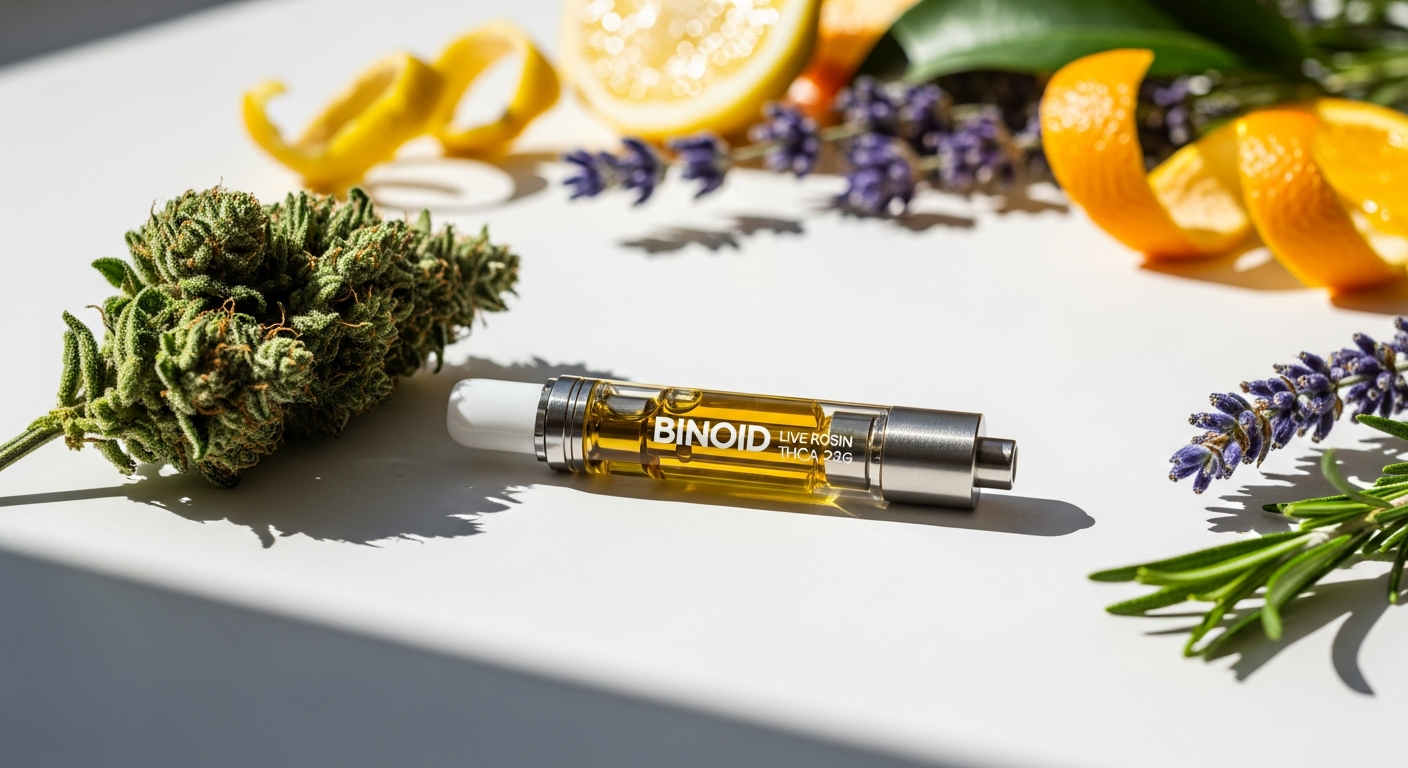
Compare live rosin vs standard THCa vapes. Explore Binoid Premium Live Rosin THCa Disposable Vape specs, strain profiles, potency, pricing, and real user feedback.
The vape market is flooded with THCa products, yet one extraction method keeps dominating consumer preferences: live rosin. If you've noticed the buzz around Binoid's Premium Live Rosin THCa Disposable Vape, you're witnessing a shift toward quality over convenience alone—though this product masterfully delivers both. What separates live rosin from traditional distillate extraction goes beyond marketing hype.
The difference lies in terpene preservation, flavor complexity, and the overall sensory experience that consumers increasingly demand. Extraction methodology directly impacts what you're inhaling, and the cannabis industry has finally begun treating this distinction as a premium feature rather than a technical footnote. Binoid recognized this demand early and positioned their disposable vape accordingly.
Live Rosin Extraction: Understanding the Superior Terpene Profile
What live rosin extraction actually is and how it differs from distillate and concentrate production
Live rosin represents a solventless extraction method that begins with fresh-frozen cannabis material rather than dried flower. The process involves applying heat and pressure to extract cannabinoids and terpenes without introducing chemical solvents like butane or propane. This fundamental difference separates live rosin from distillate production, which typically involves solvent extraction followed by aggressive purging and refinement steps that strip away volatile compounds.
Distillate prioritizes cannabinoid concentration and shelf stability. The extraction process isolates specific cannabinoids—in this case, THCa—and discards much of what makes cannabis smell and taste distinctive. Live rosin, conversely, preserves the full spectrum of plant compounds because the extraction method is gentler and designed specifically to retain volatile terpenes.
Terpene preservation during processing — why heat and solvent exposure matter for flavor
Terpenes are the aromatic compounds responsible for cannabis flavor and aroma. They're also the most fragile components in the plant material. Standard distillation involves heating cannabis material and exposing it to solvents, both of which damage terpene profiles. Temperatures exceeding 150°F can cause significant terpene loss, and solvent flushing removes lighter molecules that contribute to flavor complexity.
Live rosin production uses controlled heat and pressure applied for short durations. This preservation approach maintains terpene integrity because the extraction occurs quickly and without solvent exposure. The result is a product where you actually taste the strain's original genetic characteristics—citrus notes from limonene, earthy undertones from myrcene, or herbal sharpness from pinene.
Fresh-frozen cannabis material used in live rosin production versus cured flower in standard extraction
The starting material matters enormously. Live rosin begins with cannabis frozen within hours of harvest, locking in the plant's full biochemical profile. Curing—the standard preparation for most extractions—involves weeks of drying and moisture management, during which terpenes naturally evaporate and cannabinoid ratios shift through oxidation.
Fresh-frozen material preserves cannabinoids in their acidic form (THCa rather than THC) and maintains terpenes at higher concentrations. When you consume live rosin, you're experiencing cannabis closer to its original plant state, minus the chlorophyll and plant matter that would make smoking harsh.
Full-spectrum cannabinoid and terpene retention that creates the entourage effect
The entourage effect describes how cannabinoids and terpenes interact synergistically to produce effects beyond what isolated compounds could achieve independently. Live rosin's extraction methodology preserves this interaction. Your vape contains not just THCa but also minor cannabinoids like CBG, CBC, and CBD in the proportions they existed in the original plant. Terpenes like myrcene are believed to enhance relaxation, while limonene may support mood elevation.
Standard distillate isolates THCa and discards these supporting compounds. The entourage effect remains theoretical in some contexts, but consumers consistently report that live rosin experiences feel more nuanced and less one-dimensional than distillate-only products.
Breaking Down the 2g Disposable Specs: What You're Actually Vaping
2000mg THCa content with 99% distillate concentration and live rosin infusion blend
The Binoid Premium Live Rosin THCa Disposable contains 2000mg of active material. The product combines 99% THCa distillate with live rosin infusion, creating a hybrid approach that balances potency with flavor. The distillate component provides consistent, measureable cannabinoid concentration. The live rosin infusion adds terpene-rich material that enhances both flavor and the entourage effect without compromising shelf stability.
This formulation is deliberately engineered. Pure live rosin can be difficult to work with in disposable devices because of its density and moisture content. Blending live rosin with distillate allows Binoid to maintain structural integrity and consistent vapor production while preserving the terpene advantages that make live rosin sought after.
Hemp-derived versus cannabis-derived — legal status, sourcing, and supply chain transparency
The THCa in this disposable is hemp-derived, not cannabis-derived. This distinction carries legal significance. Hemp-derived THCa exists in a regulatory gray zone in the United States. The 2018 Farm Bill legalized hemp and hemp derivatives, which technically includes THCa since it converts to Delta 9 THC only when heated. Cannabis-derived THCa remains federally controlled and restricted to states with legal recreational or medical programs.
Binoid sources hemp material for extraction, allowing nationwide shipping and broader accessibility than cannabis-derived alternatives. The conversion from THCa to THC occurs through decarboxylation—the heating process your device performs—which explains why hemp-derived THCa products can deliver Delta 9 effects despite originating from legal hemp.
Pre-filled, pre-charged design eliminating setup friction for new and experienced users
Opening the Binoid disposable requires no preparation. The device arrives charged and ready to draw. No calibration, no filling, no troubleshooting. This eliminates the most common friction points that prevent casual users from trying new products. Experienced consumers also appreciate this simplicity for travel or situations where carrying traditional vaping equipment isn't practical.
The stick-style form factor maximizes portability. Rounded edges and a soft-touch finish create a grip that feels premium while remaining discreet enough for everyday use without drawing attention.
USB-C charging port specifications and battery life expectations
The built-in USB-C port enables fast charging and extended device longevity. USB-C has become the standard charging connector across consumer electronics, reducing the number of proprietary cables users need to carry. Charging from empty to full typically takes 30–45 minutes, though specific battery life depends on usage patterns and puff intensity.
A 2g disposable should deliver several hundred puffs before depletion, though this varies based on individual draw duration and frequency. USB-C charging allows users to extend the device's usability significantly compared to disposables with non-rechargeable batteries.
The Five Strain Profiles: Matching Effects to Your Lifestyle
Sativa-dominant strains for daytime use, focus, and creative energy
Sativa-dominant strains in the Binoid lineup typically feature terpene profiles heavy in limonene and pinene, compounds associated with alertness and mental clarity. These strains suit daytime use when you want cerebral effects without sedation. Users report enhanced focus, mood elevation, and creative thinking with sativa options.
The exact sativa strains in Binoid's rotation reflect current harvest availability and market preferences, but consistently feature the terpene ratios that produce energizing effects even in high-potency products.
Indica-dominant strains for evening relaxation, sleep support, and body-focused effects
Indica-dominant options emphasize myrcene and other terpenes associated with relaxation and physical comfort. These strains work better for evening use, winding down after work, or situations where you prioritize calm over stimulation. Indica effects tend to feel more full-body, which some users prefer to the primarily cerebral sensation of sativa-leaning products.
The potency of these strains means even light usage can produce noticeable effects, making them suitable for users seeking significant relaxation or sleep support.
Hybrid strain options providing balanced cannabinoid and terpene profiles
Hybrid strains split the difference, offering both cerebral and physical effects without extreme emphasis on either direction. For users uncertain about their preferences or seeking versatility, hybrids provide a middle ground. The cannabinoid profiles remain balanced, and terpene ratios mix compounds from both sativa and indica lineages.
Terpene-to-effect relationships — limonene for mood, myrcene for relaxation, pinene for clarity
Terpene science explains why strains feel different despite similar THC content. Limonene, prominent in citrus strains, is associated with mood elevation and energy. Myrcene, common in earthy-smelling strains, produces sedative effects and works synergistically with cannabinoids to enhance relaxation. Pinene, found in pine-scented strains, may support mental clarity and focus.
These relationships aren't absolute—individual neurochemistry varies, and placebo effects are powerful. However, terpene science provides a framework for understanding why a Sativa dominant strain produces different subjective experiences than an Indica option, even when both contain similar THCa amounts.
Potency and Effects: How THCa Converts to Delta 9 THC
THCa chemical structure and decarboxylation process during heating
THCa (tetrahydrocannabinolic acid) is the naturally occurring form of THC in raw cannabis. The "A" represents an extra carboxylic acid group attached to the THC molecule. This structural addition renders THCa non-intoxicating in its raw state. When you heat THCa—whether by smoking, vaping, or cooking—the carboxylic acid group breaks off through a process called decarboxylation, converting THCa into psychoactive Delta 9 THC.
Your Binoid disposable performs this conversion automatically. The vape's heating element reaches temperatures sufficient to decarboxylate THCa into Delta 9 THC during inhalation, producing the same effects you'd experience from traditional cannabis.
Conversion efficiency when vaping versus smoking or other consumption methods
Vaping generally produces more efficient THCa-to-THC conversion than smoking because the heating is controlled and sustained rather than intermittent combustion. Smoking involves temperatures exceeding 1000°F, which decarboxylates THCa thoroughly but also burns cannabinoids and terpenes, reducing bioavailability. Vape devices operate around 350–400°F, which efficiently converts THCa while preserving terpenes.
Edible consumption requires decarboxylation before ingestion, typically through oven heating at 240°F for 30 minutes. This method is less efficient than vaping because some cannabinoids degrade during the longer, hotter process.
Psychoactive intensity comparable to traditional Delta 9 THC products
Users report that the effects from hemp-derived THCa disposables are equivalent to traditional Delta 9 cannabis products of similar potency. A 2000mg disposable with 99% THCa converts to approximately 1980mg of Delta 9 THC upon heating—a substantial amount that produces significant psychoactive effects.
The live rosin infusion adds terpenes that modulate these effects, making the experience feel more nuanced than pure distillate products of equivalent potency.
Responsible dosing guidelines given the product's high potency
Given the potency, users new to THCa products should start with single short draws rather than aggressive puffing. The effects aren't always immediate; vape effects typically develop over 5–15 minutes as THC enters the bloodstream. Waiting at least 15 minutes before taking additional draws prevents accidental overconsumption.
Experienced cannabis users may find the potency comfortable, but individuals with low THC tolerance or those concerned about side effects should dose conservatively.
The Live Rosin Advantage: Flavor and Smoothness You'll Actually Notice
Terpene-forward flavor profiles that distinguish live rosin from distillate-only vapes
The most immediately noticeable difference between live rosin and distillate vapes is flavor intensity and complexity. Live rosin disposables taste like cannabis—actual cannabis with recognizable strain characteristics. Distillate vapes often taste chemically generic or artificial because the terpenes that create flavor have been stripped away during processing.
Binoid's live rosin infusion adds these compounds back to the blend, creating vapor with genuine aromatic character that reflects the original strain genetics.
Smooth hit quality attributed to full-spectrum cannabinoid and terpene presence
Users report that live rosin-infused disposables produce smoother vapor than pure distillate, even at equivalent potency levels. This smoothness likely results from the presence of cannabinoids and terpenes beyond just THCa. Full-spectrum products contain minor cannabinoids like CBD, which may reduce throat irritation, and terpenes that contribute to a gentler inhalation experience.
The smoothness makes extended sessions more comfortable and enjoyable, reducing coughing or throat irritation that can occur with aggressive distillate products.
Strain-specific flavor characteristics reflecting original cannabis genetics
Each Binoid strain option produces distinct flavor profiles reflecting its genetic heritage. A strain with prominent pinene tastes herbal and sharp. One heavy in limonene delivers citrus notes. Myrcene-forward strains taste earthy and spicy. These differences aren't subtle—they're substantial enough that users can identify strains by flavor alone, similar to how experienced wine drinkers recognize varietals by taste.
This sensory differentiation transforms vaping from a purely functional activity into an experience, which justifies the premium pricing for some consumers.
Vapor production and density compared to standard THCa disposables
Live rosin-infused products typically produce denser, more visible vapor than pure distillate disposables. The terpene content contributes to vapor density, and users often perceive this as a sign of quality or potency. While vapor production doesn't directly correlate with potency—both products deliver equivalent THCa—the visible cloud provides psychological satisfaction and confirms that the device is functioning properly.
Pricing Strategy: Is $26.99–$34.99 Worth the Investment?
Price comparison against competitor THCa disposables in the 2g range
The $26.99–$34.99 price point positions Binoid competitively within the THCa disposable market. Competitors offering 2g pure distillate disposables typically price between $19.99 and $29.99. Binoid's live rosin-infused options command a premium of roughly $5–$8 above base distillate pricing. For consumers prioritizing flavor and terpene preservation, this premium reflects a meaningful product differentiation. For budget-conscious shoppers, the price difference may outweigh the flavor benefits.
Value proposition of live rosin infusion versus standard distillate pricing
The live rosin infusion justifies the price premium through superior flavor, smoother vapor, and the entourage effect. You're not simply paying for 2000mg of THCa—you're paying for the preservation of terpenes and minor cannabinoids that enhance the overall experience. If flavor complexity and smoothness matter to you, the live rosin premium represents genuine value. If you prioritize potency alone and can tolerate harsh, generic-tasting vapor, standard distillate disposables deliver equivalent THCa at lower cost.
Cost-per-milligram analysis for budget-conscious consumers
A $30 Binoid disposable containing 2000mg active material costs $0.015 per milligram. This aligns with typical premium THCa pricing. Lower-cost disposables might achieve $0.01 per milligram, but this calculation overlooks the terpene content and extraction quality that justify premium pricing. Raw milligram count alone is a poor value metric when extraction method and terpene preservation differ significantly.
For consumers whose primary concern is cost efficiency, comparing milligram-to-dollar pricing is logical. For those who value experience, considering only milligrams misses the point of premium extraction.
Bulk purchase options or loyalty programs that improve value
Binoid's website periodically offers bundle discounts and loyalty programs that improve effective pricing. Purchasing multiple disposables simultaneously often triggers discounts that reduce the per-unit cost. Loyalty programs reward repeat purchases with account credits or exclusive access to limited strains. Monitoring sales periods and joining mailing lists can reduce the effective cost significantly below standard pricing.
The Bottom Line: Premium Extraction Justifies Premium Pricing
The Binoid Premium Live Rosin THCa Disposable Vape represents a meaningful evolution in hemp-derived vape technology. You're not simply paying for a pre-filled stick—you're investing in superior terpene preservation, lab-verified potency, and a flavor experience that separates live rosin from standard distillate products. The five strain options provide genuine customization, the USB-C charging adds practical longevity, and the discreet design handles daily use without drawing attention.
For 2026, live rosin extraction is moving from niche to mainstream. Binoid's early positioning and consistent quality mean you're backing a brand that shaped this category. Whether this specific disposable becomes your daily driver depends on your priorities: flavor complexity, potency intensity, and convenience versus budget constraints.
The product delivers exceptional performance in each category. Users notice the flavor difference immediately, the potency is undeniable, and the convenience removes friction from consumption. The $26.99–$34.99 price point sits at the premium end of the market, but quality extraction and lab testing justify the investment for discerning consumers.