
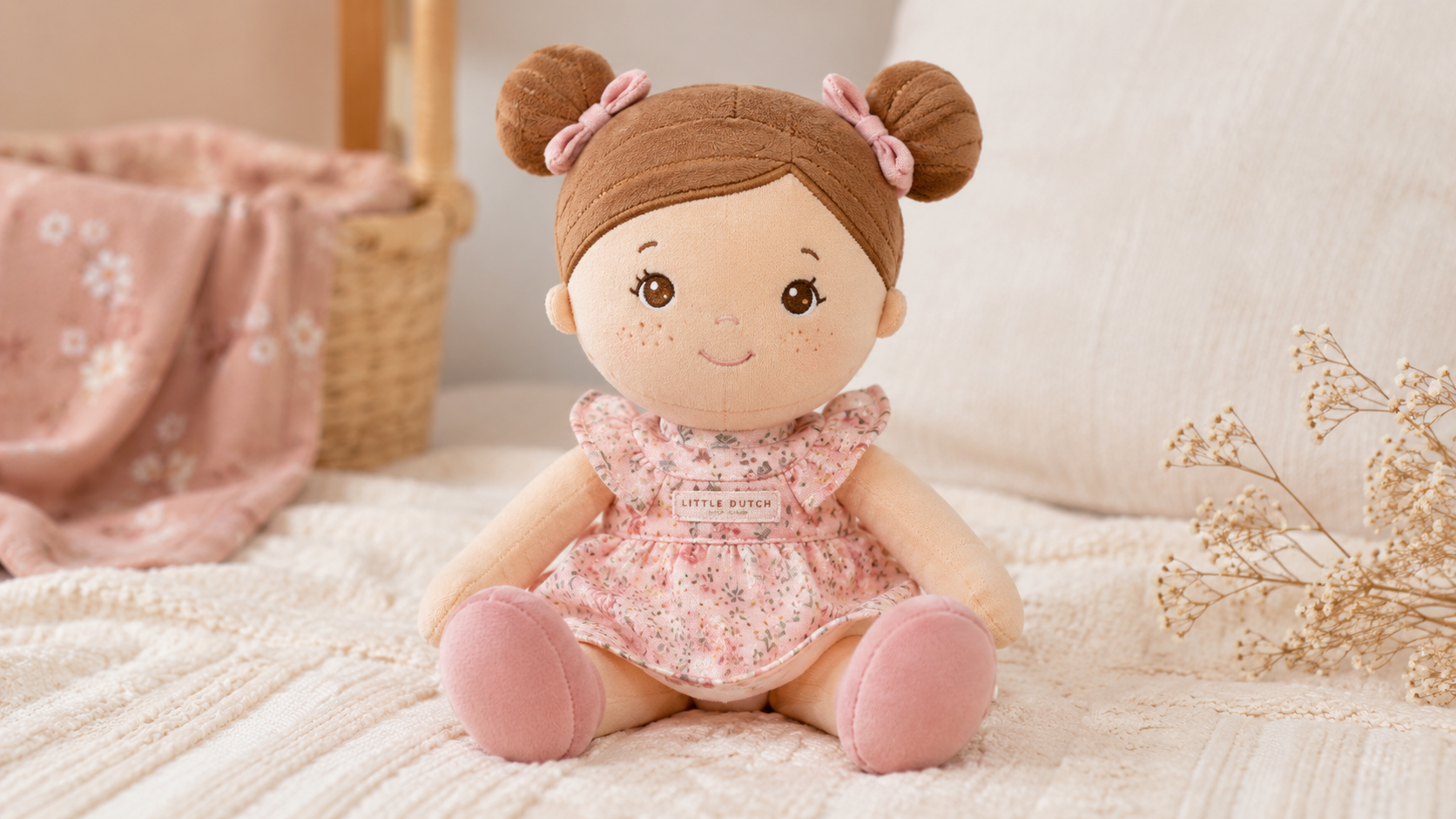
Discover how the Little Dutch Baby Doll Lily fosters emotional growth and empathy in toddlers. Learn why this soft, interactive doll is a top choice for child development. Read our parent’s guide.
Children who engage in nurturing role-play develop stronger emotional intelligence by age three. The way our toddlers interact with their toys shapes how they relate to the world around them. When a child rocks a doll to sleep or feeds her with a tiny bottle, something remarkable happens—they’re building the emotional foundations that will serve them throughout their lives.
The Little Dutch Baby Doll Lily has become a standout choice among parents and caregivers who understand the power of purposeful play. Little Dutch, known for their thoughtfully designed toys, created Lily with both comfort and developmental benefits in mind. This isn’t just another doll on the shelf; it’s a tool for fostering empathy, responsibility, and imaginative thinking during those crucial early years.
How Nurturing Play Shapes Your Toddler’s Emotional Growth
The Psychology Behind Caregiving Role-Play
Children naturally gravitate toward mimicking parental behaviors. When a toddler watches their parent comfort a younger sibling or care for a pet, they absorb those behaviors and recreate them during play. This isn’t random mimicry—it’s a fundamental way children learn to navigate relationships and understand emotions. A soft doll like Lily becomes the perfect vehicle for this exploration because she’s safe, non-judgmental, and always available when your child needs to practice these crucial skills.
Building Empathy Through Holding and Nurturing
Holding, feeding, and soothing a doll builds empathy and emotional awareness in toddlers aged 18 months and up. When your child gently places the pacifier in Lily’s mouth or wraps her in a blanket, they’re developing an awareness of another being’s needs. This awareness translates into real-world sensitivity. Your toddler begins to notice when a friend is upset, when a parent needs a hug, or when a sibling needs comfort. The physical act of caregiving—gentle touch, patience, repetition—creates neural pathways associated with compassion and attentiveness.
Pretend Caregiving and Social Development
The connection between pretend caregiving and developing social skills, patience, and responsibility runs deeper than surface play. When children engage in extended caregiving scenarios, they practice problem-solving (“Why is my baby crying?”), develop patience (rocking takes time), and internalize responsibility (the doll depends on them). These aren’t abstract concepts for toddlers—they’re lived experiences through play. A child learns that their actions have consequences and that caring for someone requires consistency and thoughtfulness.
Why Soft, Huggable Dolls Matter
Soft, huggable dolls create a safer emotional space for children to practice nurturing behaviors. Unlike hard plastic dolls that feel cold or stiff, Lily’s polyester body invites cuddling and provides genuine tactile comfort. This softness matters because it mirrors the physical sensation of holding a real baby or pet. When a toddler hugs Lily, they experience the feedback loop of comfort—the doll feels good in their arms, they feel good holding her, and that positive sensory experience reinforces the caregiving impulse.
From Dolls to Real Relationships
Real-world examples reveal how toddlers transfer caregiving skills learned with dolls to interactions with siblings and peers. A child who has spent months “feeding” and “soothing” Lily often becomes the one who notices when a baby cousin cries or when a friend drops their snack. Parents frequently report that their children become more attentive caregivers, more willing to help with younger siblings, and more naturally empathetic in their peer relationships. The doll serves as a rehearsal space for skills they’ll use throughout their lives.
The Physical Design That Makes Lily Stand Out
Soft Body Construction and Comfort
Soft polyester body construction versus traditional hard vinyl dolls represents a significant difference in how children experience play. Hard dolls, while durable, don’t provide the same tactile satisfaction. Lily’s soft polyester body encourages extended holding, hugging, and snuggling. This comfort factor matters tremendously for toddlers who use dolls as transitional objects during nap time or when they need emotional regulation. The softness also reduces the jarring sensation that can startle younger toddlers, making Lily approachable from the earliest months of the recommended age range.
The Perfect Size for Little Hands
The 35-36.5 cm height is precisely calibrated for toddler hands and lap play. This size is large enough for your child to see Lily’s features clearly and interact meaningfully with her, yet small enough that she fits comfortably in a toddler’s arms. There’s a sweet spot in doll sizing—too small and the fine motor requirements become frustrating; too large and the doll feels unwieldy. Lily hits that mark perfectly, allowing children to manage her independently while still feeling substantial enough to warrant genuine emotional investment.
Thoughtful Appearance and Aesthetic Design
Detailed appearance features—white skin, blue eyes, hairband, and Rosy Meadows design aesthetic—create a character that feels both familiar and special. The Rosy Meadows pattern on her long-sleeved top includes a gentle floral design that appeals to children’s visual preferences while maintaining the quality aesthetic Little Dutch is known for. The hairband adds a touch of personality without overwhelming the design. These thoughtful details transform Lily from a generic doll into a distinct character that children can easily form attachments to.
Removable Clothing and Motor Skill Development
The removable clothing system serves dual purposes: it extends play possibilities and teaches children about dressing, undressing, and fine motor skill development. Your toddler practices pulling clothes off and fastening them back on, developing hand strength and coordination. These aren’t incidental benefits—they’re core developmental milestones. The act of dressing and undressing Lily reinforces concepts like order and routine while building the small muscle control necessary for later skills like button handling and zipper use.
Durability Without Sacrificing Cuddliness
A durable vinyl head paired with a washable soft body balances longevity with cuddliness. The vinyl head ensures that Lily’s face remains detailed and resistant to wear, while the soft polyester body maintains that essential huggable quality. This hybrid construction means Lily can withstand years of play, multiple children, and countless washing cycles without losing her appeal. Parents who’ve passed their Little Dutch dolls between siblings consistently report that they look and feel nearly as good after years of use.
Interactive Accessories That Extend Play Possibilities
Pacifier and Milk Bottle: Essential Props
The included pacifier and milk bottle encourage realistic caregiving scenarios that feel authentic to children. These aren’t random toys—they’re symbolic objects that children recognize from their own experiences or observations. When your toddler feeds Lily with the bottle, they’re engaging in meaningful pretend play that mirrors the caregiving they’ve witnessed. The pacifier adds another layer of nurturing possibility, allowing children to comfort their “baby” when she’s fussy or overwhelmed.
Props and Extended Play Sessions
The role of props in extending imaginative play sessions and keeping toddlers engaged cannot be overstated. A doll alone is wonderful, but a doll with accessories becomes the center of elaborate scenarios. Your child transitions from simple rocking motions to complex narratives: “My baby is hungry, so I’ll feed her. Now she’s sleepy, so I’ll give her the pacifier.” These props naturally scaffold the play experience, helping children move from one scenario to the next and maintaining engagement over longer periods.
Building a Complete Play Experience
Building a complete play experience involves understanding what accessories come with Lily and which are optional purchases. Lily arrives with the essentials: pacifier and milk bottle. Optional purchases—such as doll clothing, furniture, and strollers—allow you to expand the play world gradually based on your child’s interests. This modular approach means you’re not forced to buy a complete set upfront, yet the foundation is solid enough that your child has meaningful play experiences immediately.
Language Development Through Role-Play
Interactive elements support language development through narration and role-play dialogue. When your child talks to Lily, feeding her, comforting her, and narrating her day, they’re practicing language in a low-pressure context. There’s no one listening to critique their grammar or vocabulary—just a doll who always appreciates the effort. This freedom encourages verbal experimentation, storytelling, and the development of a richer vocabulary centered around emotions, caregiving, and relationships.
Introducing Accessories Gradually
Tips for introducing accessories gradually prevent overwhelming younger toddlers. Start with just the doll herself, letting your child build a relationship and comfort level. After a few weeks of play, introduce the milk bottle during a natural moment—perhaps during snack time when feeding is on everyone’s mind. Later, add the pacifier. This gradual introduction ensures that each new element feels special rather than creating information overload. It also gives you time to observe which items capture your child’s imagination most strongly.
Safety, Quality, and Ethical Manufacturing Standards
Little Dutch’s Commitment to Ethics
Little Dutch’s commitment to ethical toy production and fair labor practices reflects values that extend beyond the toy itself. The company prioritizes responsible manufacturing, fair wages for workers, and sustainable production methods. When you purchase a Little Dutch product, you’re supporting a company that believes toys should be made ethically. This matters if you care about the impact your purchases have on workers and the environment—and it matters as a message to your children about what quality and responsibility look like.
Safety Certifications and Compliance
Material safety certifications and compliance with international toy safety standards ensure that Lily is genuinely safe for your toddler. Little Dutch dolls meet rigorous testing requirements for toy safety, including checks for small parts, chemical safety, and structural integrity. You can feel confident that every detail of Lily’s construction has been evaluated for safety. This compliance extends beyond minimum requirements—Little Dutch’s reputation depends on exceeding safety standards, not merely meeting them.
Cleaning and Maintenance
Surface cleaning instructions and maintenance tips keep Lily hygienic and long-lasting. The soft polyester body can be gently wiped with a damp cloth, and most stains respond well to spot cleaning. The removable clothing is typically machine washable at low temperatures. These simple maintenance steps mean that Lily can remain in pristine condition through multiple children or multiple years of play. Unlike toys that deteriorate quickly or become unsanitary, Lily actually improves with proper care—becoming softer and more beloved with time.
Quality Assurance and Durability
Quality assurance at Little Dutch means dolls hold up through multiple children and years of play. Parents who’ve invested in Little Dutch toys report passing them to younger siblings, cousins, or friends with confidence that the doll will perform beautifully. The stitching is secure, the materials resist wear, and the design doesn’t feel flimsy. This durability has financial implications—you’re not replacing Lily annually or even every few years. She becomes a keepsake toy that gains emotional value as she’s played with over time.
What High-Quality Design Means Practically
High-quality design means something concrete for parents investing in toys. It means fewer parts breaking, less stuffing leaking, more consistent colors and details, and a toy that feels intentional rather than mass-produced. When you hold Lily, you sense the difference. The stitching is straight, the seams are reinforced, the proportions are balanced. This quality translates into peace of mind—you’re not purchasing something that will frustrate your child through frequent breakage or disappointing you through poor construction.
Age Appropriateness and Developmental Milestones
The 18-Month Starting Point
The ideal age range of 18 months and older marks a developmental milestone when toddlers transition from exploring toys orally to engaging in more complex pretend play. By 18 months, most children have the fine motor skills to manipulate the doll’s clothing, the cognitive ability to understand simple role-play scenarios, and the emotional capacity to form attachments to objects. Starting earlier risks the doll becoming a teething toy; starting later means missing critical months of developmental benefit when pretend play begins naturally emerging.
Motor Skill Development
Gross and fine motor skills that toddlers develop through doll play with Lily span both categories. Gross motor skills develop as children carry Lily around, rock her, and position her in different ways. Fine motor skills emerge through dressing and undressing, holding the bottle, and manipulating small accessories. These aren’t incidental movements—they’re targeted practice that strengthens hand muscles, improves coordination, and develops the bilateral hand coordination necessary for future writing and self-care skills.
Language Development Opportunities
Language development opportunities abound through narration, singing, and talking to the doll. Your child might sing lullabies to Lily, describe what she’s doing, or have conversations with her. All of this verbal play strengthens language skills, builds confidence in speaking, and expands vocabulary related to emotions and caregiving. The beautiful part is that your child doesn’t feel judged or corrected—they’re simply exploring language in a meaningful context with a patient listener.
Cognitive Development and Problem-Solving
Cognitive development is supported significantly through pretend play with dolls. When your child decides that Lily is sick and needs comfort, or that she’s crying because she’s lonely, they’re engaging in hypothesis formation and problem-solving. Why is the baby fussy? What would help? These aren’t abstract questions—they’re concrete problems your child works through during play. The solutions they generate reflect their understanding of cause and effect, their emerging theory of mind, and their ability to think creatively about problems and solutions.
Recognizing Readiness for Independent Play
Signs your toddler is ready for independent doll play versus supervised interaction include sustained focus on the doll without adult prompting, the emergence of coherent narratives or scenarios, and genuine emotional attachment (wanting to bring Lily to bed, asking about her during the day). Some children show readiness as early as 20 months; others aren’t truly ready until closer to three years. There’s no rush—independent play emerges naturally as your child’s cognitive abilities expand. Supervised play in the meantime is beneficial, offering opportunities for you to model caregiving and narrate scenarios that expand your child’s imagination.
The Value Proposition: Is Lily Worth the Investment?
Price Point Analysis
At £23.95, the price point reflects the quality and ethical manufacturing standards Little Dutch maintains. Comparing this to similar soft-bodied dolls on the market reveals that Lily is reasonably priced, neither the cheapest option nor a luxury product. Budget alternatives exist, but many sacrifice either the softness, the quality construction, or the ethical manufacturing standards. Mid-range alternatives might be comparable in price but less durable. Premium dolls might offer more detailed features but at significantly higher cost. Lily occupies a sweet spot where quality, ethics, and affordability intersect.
Long-Term Value and Hand-Me-Down Potential
Long-term value becomes apparent when you consider that Lily might serve not just your child but also younger siblings, cousins, or friends. A doll that remains huggable and clean through multiple children effectively reduces the cost per child. Parents who’ve purchased Little Dutch dolls for their oldest children often buy additional ones for younger siblings simply because they’re impressed with how well the original has held up. This hand-me-down potential means Lily could provide developmental benefits and comfort to multiple children across years or even decades.
Optional Accessories and Total Investment
The cost of optional accessories versus the complete play experience investment requires some thought. Lily alone offers a complete play experience with the included accessories. Optional purchases—additional clothing, furniture, strollers—extend that experience but aren’t necessary for meaningful play. Budget-conscious parents can start with Lily and gradually add accessories as their child’s interests develop or as budget allows. This flexibility means you can invest as much or as little as you prefer.
Return on Investment from a Developmental Perspective
Return on investment from a developmental perspective extends far beyond entertainment value. You’re investing in emotional intelligence development, fine motor skill enhancement, language expansion, and the foundation for healthy social relationships. The developmental gains your child makes through play with Lily contribute to their overall success in social situations, school, and relationships throughout their life. Viewed through this lens, £23.95 represents an extraordinarily reasonable investment in your child’s psychological and developmental well-being.
Budget-Friendly Alternatives
Budget-friendly alternatives exist, and it’s worth acknowledging them honestly. Some discount retailers offer soft dolls at significantly lower prices. However, these alternatives often sacrifice durability, may use lower-quality materials, or might not meet the same rigorous safety standards. The question isn’t whether cheaper dolls exist—they do. The question is whether the cost savings justify the potential compromises in safety, durability, and quality. For many parents, Lily’s price point represents the optimal balance of affordability and quality.
Real Parent Experiences and Testimonials
Why Parents Choose Lily
Common reasons parents select Lily over other toddler dolls include her softness, her aesthetically pleasing design, and the reputation of the Little Dutch brand. Parents appreciate that Lily doesn’t feel cheap or flimsy. They value that she’s designed for genuinely young toddlers—many dolls target older children and feel inappropriately complex for 18-month-olds. The Little Dutch brand reputation for quality carries weight; parents know that choosing Little Dutch means investing in durability and ethical manufacturing.
Attachment and Comfort
How children form attachments to Lily and use her for comfort during transitions demonstrates the power of quality design. Children often become genuinely attached to Lily, requesting her at specific times of day, bringing her to new situations for confidence, and showing concern if she’s not easily accessible. This attachment isn’t frivolous—it’s a sign that the doll is serving her purpose as a transitional object. During challenging transitions like starting childcare or adjusting to a new sibling, Lily becomes a consistent, comforting presence.
Creative Play Scenarios
Stories of imaginative scenarios children create with the doll reveal the breadth of possibilities Lily opens. Children create elaborate narratives where Lily attends tea parties, goes to doctor’s appointments, travels on adventures, or has complicated feelings that need processing. One parent reported that their child used Lily to work through anxiety about a new baby sibling, playing out scenarios where the baby doll needed comfort and reassurance. Another described how their child created an elaborate pretend veterinary clinic where Lily was a patient being cared for. These stories highlight how Lily becomes a vehicle for processing emotions and exploring possibilities.
Parent Feedback on Durability and Maintenance
Parent feedback on durability, washability, and long-term wear is consistently positive. Parents report that Lily looks nearly as good after years of daily play as when first purchased. The soft body remains soft, the vinyl head shows minimal wear, and gentle washing keeps her clean and hygienic. Even parents who’ve used their Lily dolls intensively—carrying her everywhere, snuggling with her during naps, playing rough imaginative games—report that the dolls hold up remarkably well.
Honest Limitations and Adaptations
Honest limitations parents mention include that optional accessories like strollers and carriers require separate purchases, and some parents wish for a wider range of clothing options. However, most parents adapt by creating their own accessories or realizing that the limitations aren’t significant obstacles. A few parents note that their toddlers lost interest in the doll as they moved into preschool years, though most report sustained engagement. These honest observations help set realistic expectations—Lily is wonderful for the developmental stage she’s designed for, though engagement naturally evolves as children mature.
Building a Complete Little Dutch Play Collection
Lily Within the Broader Ecosystem
How Lily fits within the broader Little Dutch toy ecosystem reveals opportunities for cohesive play collections. Little Dutch produces complementary toys including dolls in different sizes, doll furniture, doll clothing, and other toys designed to work together. You might start with Lily and eventually add a larger sibling doll, a doll bed, or additional clothing. This ecosystem approach means your play collection can grow organically, with each addition building on what your child already loves.
Complementary Toys and Accessories
Complementary toys and accessories that enhance the Lily play experience range from practical (additional clothing, a doll stroller) to imaginative (toy food, a pretend kitchen where feeding happens). Little Dutch offers coordinating items in complementary colors and designs, creating visual harmony in a play space. You might also mix Lily with items from other brands—a toy stroller from a different manufacturer still works perfectly with Lily, and many parents enjoy combining items based on availability and budget.
Creating Themed Play Spaces
Creating themed play spaces that encourage extended imaginative scenarios requires thoughtful consideration of setup. A simple doll bed in a corner creates an intimate space for nighttime routines. A small table and chairs invite tea parties and meals. Storage baskets keep clothing and accessories accessible without creating visual chaos. These spaces don’t need to be elaborate—they simply need to be inviting and accessible so that your child can independently set up play scenarios that capture their imagination.
Mixing Brands and Flexibility
Mixing Lily with other doll accessories and furniture from different brands provides flexibility and prevents you from being locked into purchasing only Little Dutch products. A toy stroller from another brand works beautifully with Lily. Doll clothing from various sources creates a diverse wardrobe. This flexibility means you can be strategic about purchases, finding the best items regardless of brand, and creating a play collection that feels uniquely yours rather than completely coordinated.
Scaling Your Investment Gradually
Scaling your investment gradually means starting with Lily herself and expanding based on your child’s interests and play patterns. After a few months of observation, you’ll notice whether your child gravitates toward nurturing play, imaginative scenarios, or outdoor adventures with the doll. These observations guide your next purchases, ensuring that additions actually enhance play rather than sitting unused. Some families eventually build extensive collections; others remain content with Lily and her included accessories. Both approaches are valid and dependent on your child’s interests and your family’s budget.
Nurturing Tomorrow’s Empathetic Leaders Through Play Today
Your toddler’s relationship with the Little Dutch Baby Doll Lily is about far more than keeping her entertained during quiet time. Every time she feeds Lily, changes her clothes, or rocks her to sleep, she’s rehearsing the emotional skills that will define her relationships for years to come. The soft body, interactive accessories, and thoughtful design work together to create a play experience that feels natural and meaningful.
Parents who choose Lily often notice something special—their children become more attentive to others’ needs, more patient, and more creative in their storytelling. The doll becomes a bridge between your child’s inner world and the outer world of relationships and responsibility. At £23.95, she represents a genuine investment in your child’s emotional and developmental growth, not merely a toy purchase.
If you’re searching for a doll that combines comfort, quality, and developmental purpose, the Little Dutch Baby Doll Lily deserves serious consideration. Start with Lily herself, watch how your toddler bonds with her, and expand your collection based on your child’s interests and play patterns. Your future self—and your child’s future self—will thank you for choosing a toy that nurtures both imagination and emotional intelligence.
Get your Little Dutch Baby Doll Lily today and start nurturing empathy and emotional growth.