
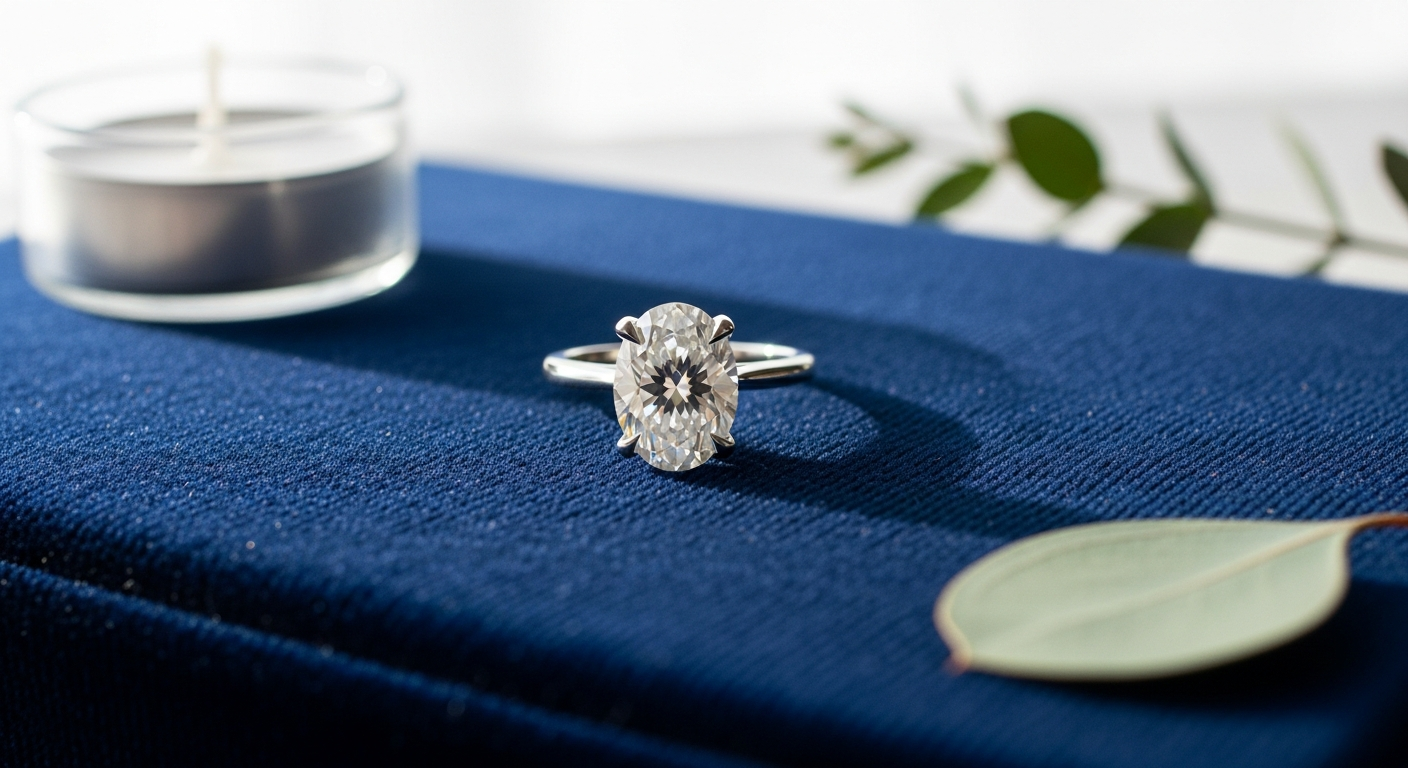
Discover why the Lane Woods Oval Moissanite Engagement Ring delivers brilliant sparkle and luxury aesthetics at $240–$660. Compare moissanite vs. diamonds and explore ethical, affordable engagement ring options.
Picture walking into a jewelry store and spotting a ring that sparkles more intensely than a diamond—yet costs a fraction of the price. Moissanite engagement rings have disrupted the luxury jewelry market, challenging the century-old notion that you need to spend $3,000+ for a stunning, forever-worthy piece. The Lane Woods Oval Moissanite Engagement Ring exemplifies this shift, combining lab-grown brilliance with ethical sourcing and accessibility.
Lane Woods has carved out a meaningful niche in the sustainable jewelry space by specializing in moissanite alternatives that don’t compromise on beauty or quality. With a higher refractive index than natural diamonds (2.65 vs. 2.41), moissanite produces that coveted fire and sparkle—sometimes even more visibly than its diamond counterpart. For couples prioritizing environmental responsibility, budget flexibility, and stunning aesthetics, this brand offers a compelling solution that traditional diamond retailers rarely acknowledge.
Explore the Lane Woods Oval Moissanite Engagement Ring collection today.
This guide breaks down everything you need to know about this bestselling ring: how moissanite compares to diamonds, what makes this specific design a standout, real-world performance considerations, and whether it’s the right choice for your engagement or everyday wear. You’ll walk away understanding not just the specs, but the real-world implications of choosing lab-grown moissanite over mined diamonds.
How Moissanite Outshines Diamonds: The Science Behind the Sparkle
Refractive Index Comparison: Moissanite (2.65) vs. Diamond (2.41)
The optical properties of moissanite create measurable differences in how light behaves when it enters the stone. Moissanite’s refractive index of 2.65 means light bends and travels through the stone differently than it does through a diamond at 2.41. This higher refractive index directly translates to more visible sparkle—that dazzling effect people notice when the ring catches the light at different angles. In practical terms, many observers find moissanite noticeably more brilliant in daylight and indoor settings compared to diamonds.
Fire and Dispersion: Why Moissanite Produces More Colorful Light Rays
Fire refers to the colored light rays that scatter from a gemstone’s surface. Moissanite’s dispersion rate (0.104) is significantly higher than diamond’s (0.044), meaning it breaks white light into more noticeable rainbow colors. Some wearers celebrate this as breathtaking sparkle; others notice the rainbow effect and find it too pronounced. The intensity of this fire varies depending on lighting conditions, viewing angle, and personal preference. Modern oval cuts tend to manage this effect more subtly than older cuts, creating a balanced visual experience.
Durability Metrics: Moissanite Hardness (9.25 on Mohs Scale) vs. Diamond (10)
Moissanite ranks 9.25 on the Mohs hardness scale, while diamonds rank 10. This one-point difference sounds minor but matters for scratch resistance over decades of wear. Moissanite resists scratching extremely well for everyday engagement rings, standing up admirably to daily friction, contact with other jewelry, and environmental exposure. Diamonds remain slightly harder, but the practical difference for most wearers is negligible. A moissanite ring worn daily for 20 years will show minimal surface damage under normal conditions.
Clarity Grades Explained: D-Color and VVS1 Clarity Standards
Lane Woods Oval Moissanite rings typically feature D-color grading, indicating a completely colorless stone with no visible tint. VVS1 clarity means very, very slightly included—essentially flawless to the naked eye. These grades ensure you’re receiving a visually perfect stone without paying premium prices. Under normal viewing conditions, inclusions at VVS1 clarity are invisible without magnification. The combination of D-color and VVS1 clarity guarantees a crystal-clear appearance that rivals high-end diamonds.
Lab-Grown vs. Mined: Environmental and Ethical Advantages
Lab-created moissanite requires significantly less water, generates lower carbon emissions, and eliminates the environmental devastation associated with diamond mining. Mining operations disrupt ecosystems, consume vast quantities of water, and sometimes fund conflict zones. Lab-grown moissanite sidesteps these concerns entirely. The creation process uses controlled laboratory conditions, producing stones with identical chemical and optical properties to naturally occurring moissanite (which is extraordinarily rare). This ethical positioning resonates with environmentally conscious couples who refuse to compromise on beauty.
Longevity and Resistance: Scratch Resistance, Heat Tolerance, and Long-Term Performance
Moissanite demonstrates exceptional heat resistance, tolerating temperatures that would damage other gemstones. The stone maintains its optical properties through decades of exposure to sunlight, heat, and environmental stressors. Scratch resistance is excellent for daily wear; the stone won’t cloud or dull from typical friction. Long-term wearers report minimal changes in appearance even after 10+ years of constant contact. The durability profile supports confident, worry-free everyday engagement ring wear.
The Rainbow Effect Debate: Addressing Visible Light Dispersion
Some consumers notice colored light flashing from moissanite more prominently than from diamonds. This “rainbow effect” or “disco ball effect” appears most noticeably in bright sunlight and less visibly in indoor lighting. Whether this matters depends entirely on personal preference. Many find the extra sparkle delightful and eye-catching. Others prefer the subtler light play of diamonds. Modern oval cuts and quality faceting minimize this effect compared to older stone cuts. Visiting a retailer to view moissanite in person before purchasing helps determine whether the dispersion aligns with your aesthetic preferences.
Lane Woods Oval Cut Design: What Sets This Ring Apart
Oval Cut Specifications: Maximizing Sparkle and Flattering Appearance
The oval cut maximizes light return through strategic faceting that bounces light efficiently throughout the stone’s interior. This shape creates a larger apparent size compared to round cuts of equivalent carat weight, stretching the stone horizontally in a way that elongates the finger visually. The oval silhouette suits various hand shapes and sizes, offering universally flattering proportions. The cut’s geometry, combined with moissanite’s high refractive index, produces exceptional sparkle that draws immediate attention.
Setting Materials: S925 Sterling Silver Base with Gold Plating Options
Lane Woods uses S925 sterling silver as the foundation, topped with white, yellow, or rose gold plating. Sterling silver offers affordability and workability, though it requires periodic maintenance to prevent tarnishing. The gold plating (typically 18K) provides the luxurious appearance of solid gold at a fraction of the cost. This construction keeps prices accessible while maintaining durability for regular wear. The plating will eventually wear in high-contact areas, requiring professional replating every 5-10 years depending on wear intensity. This trade-off delivers significant savings upfront.
Micro Pave Detailing: How Accent Stones Enhance Overall Design
Micro pave involves setting tiny moissanite or diamond accent stones into the band’s sides and under the center stone setting. This technique catches additional light, amplifying the ring’s overall sparkle and visual complexity. The delicate placement creates refined elegance without overwhelming the design. Micro pave detailing significantly increases the total sparkle count, making the ring appear more substantial and luxurious from every angle. The intricate work demonstrates quality craftsmanship.
Carat Weight Options: 1, 2, and 3-Carat Choices and Visual Impact
A 1-carat moissanite oval delivers substantial sparkle in a relatively modest size, suitable for elegant minimalist aesthetics. A 2-carat stone creates a more dramatic presence, catching light noticeably more intensely and appearing larger due to the oval’s elongated shape. A 3-carat option makes a bold statement, producing eye-catching sparkle that commands attention. Size preference depends on personal style, hand size, and lifestyle. Smaller stones suit understated elegance; larger stones suit bolder personalities.
Design Versatility: Classic, Contemporary, and Vintage-Inspired Styles
Lane Woods offers oval moissanite rings across multiple design categories. Classic solitaire settings emphasize the center stone’s brilliance without distraction. Contemporary designs incorporate geometric lines and modern metalwork. Vintage-inspired styles feature ornate detailing, filigree work, and three-stone or halo configurations. This range ensures customers find designs matching their personal aesthetic, whether they prefer timeless simplicity or elaborate ornamentation. The versatility makes Lane Woods suitable for diverse style preferences.
Comfort and Wearability: Band Width, Height, and Everyday Practicality
Ring comfort depends on band width, setting height, and weight distribution. Narrower bands (1.8-2mm) create delicate, understated profiles suitable for everyday wear without obstruction. Wider bands (3-4mm) provide substantial presence and additional durability. Setting height—how far the stone protrudes from the band—affects daily functionality. Lower-profile settings suit active lifestyles and hands-on work. The weight of moissanite is slightly less than diamond (approximately 10% lighter for equivalent size), making it comfortable for extended wear. Most customers report zero discomfort during normal daily activities.
Customization Possibilities: Whether Lane Woods Offers Modifications
Lane Woods provides standard options for metal color, carat weight, and design selection. Custom modifications—such as ring sizing before shipment, unique stone shapes, or bespoke band designs—should be confirmed directly with customer service before ordering. The brand excels at offering variety within established product lines rather than creating one-off custom pieces. This approach maintains quality control while keeping prices competitive.
The Price Reality: Luxury Without the Diamond Price Tag
Price Range Breakdown: $240–$660 for Lane Woods Oval Moissanite Rings
Lane Woods Oval Moissanite Engagement Rings span from $240 for entry-level 1-carat designs to $660 for premium 3-carat stones with extensive micro pave detailing. Mid-range options (2-carat) typically fall between $350-$500. The price variation reflects carat weight, design complexity, micro pave density, and metal plating quality. This range undercuts virtually all diamond engagement rings, which start at $1,500+ for comparable stone size and clarity grades.
Cost Comparison: Moissanite vs. Diamond Equivalents (Actual Price Differences)
A 2-carat D-color, VVS1 clarity diamond engagement ring typically costs $8,000-$15,000 depending on cut quality and setting materials. The Lane Woods equivalent moissanite ring delivers visually similar (many argue superior) brilliance at $400-$500. A 3-carat diamond ring ranges from $15,000-$35,000+. The moissanite alternative provides the same visual impact at $600-$660. These comparisons demonstrate the extraordinary value proposition moissanite offers without sacrificing visual appeal. The savings enable couples to invest in other meaningful experiences or financial goals.
Value Proposition: What You Get for Your Investment at Each Price Tier
At $240-$350 (1-carat, minimal detailing), you receive a stunning solitaire oval moissanite with D-color clarity and exceptional sparkle—perfect for minimalist tastes or budget-conscious shoppers. Mid-tier pricing ($400-$550, 2-carat with moderate micro pave) delivers a more dramatic presence with enhanced sparkle, suitable for traditional engagement rings. Premium pricing ($600-$660, 3-carat with extensive detailing) provides maximum visual impact and luxury appearance. Each tier represents genuine value, with quality and sparkle scaling appropriately with price.
Hidden Costs to Consider: Shipping, Sizing, and Potential Resizing Fees
Lane Woods provides free worldwide shipping, eliminating that typical expense. Ring sizing before shipment costs extra ($15-$40 depending on adjustment complexity); purchasing unsized and resizing locally after arrival may save money. Future resizing (necessary after significant weight loss or gain) costs $20-$60 at professional jewelers. These secondary costs remain minimal compared to diamond ring pricing. Customers should factor in potential resizing costs but not expect substantial additional expenses beyond the ring purchase.
Financing and Payment Options: Whether Lane Woods Offers Payment Plans
Payment plan availability should be confirmed directly with Lane Woods during checkout. Some retailers offer installment options through third-party financing companies; others require full payment upfront. Research available financing before committing, as spreading payments across months can ease the financial burden. Many customers find even the full purchase price accessible compared to diamond ring financing requirements.
Return on Investment: Resale Value Considerations and Market Perception
Moissanite rings won’t command the resale prices that diamonds attract, though secondary market demand exists. A moissanite ring purchased for $500 typically sells for $150-$250 used, depending on condition and design. The GRA certificates provided with Lane Woods stones carry minimal resale value compared to GIA diamond certifications. For customers viewing the ring as a keeper rather than an investment asset, resale value concerns become irrelevant. Those seeking maximum resale potential should prioritize diamonds despite the higher upfront cost.
Budget-Friendly Alternatives: How to Maximize Sparkle Within Specific Price Ranges
At $250-$350 budget: Select a 1-carat solitaire without micro pave; the single stone delivers maximum sparkle efficiency. At $400-$500: Choose a 2-carat with light micro pave detailing for balanced presence and sparkle. At $600+: Opt for 3-carat with comprehensive detailing for bold, unmistakable brilliance. Prioritize carat weight over design complexity if maximizing sparkle within budget constraints matters most.
Discover the perfect carat weight and design within your budget at Lane Woods.
Real Customer Experiences: The Honest Review
Positive Feedback: Sparkle Intensity, Design Quality, and Customer Satisfaction Ratings
Customers consistently praise the moissanite’s exceptional sparkle, using words like “breathtaking,” “dazzling,” and “more brilliant than I expected.” Design quality receives high marks for thoughtful detailing and luxurious appearance. Many note the ring looks significantly more expensive than its actual price tag suggests. Customer satisfaction ratings typically exceed 4.5/5 stars across review platforms, with the majority of purchasers reporting confidence in their choice and enthusiasm about their ring.
Quality Consistency: Addressing Hit or Miss Reports and What to Expect
Some customers report minor inconsistencies in plating finish or micro pave setting quality across different orders. Most stones arrive perfect and exceed expectations. The variation appears to stem from manufacturing scale and quality control processes rather than systematic defects. Purchasing through retailers offering 30-day returns mitigates this risk significantly. The majority of rings arrive flawless; occasional imperfections represent exceptions rather than the norm.
Delivery Timelines: Realistic Shipping Expectations and Potential Delays
Standard international shipping typically takes 2-4 weeks from order to delivery. Some customers experience delays extending into 6-8 weeks, particularly during peak seasons or supply chain disruptions. Lane Woods provides free worldwide shipping but doesn’t guarantee expedited timelines. Ordering well in advance of important dates (engagements, weddings) ensures sufficient time for delivery and any necessary adjustments. Real-time tracking information helps monitor package status once shipped.
Customer Service Interactions: Documented Experiences with Support and Issue Resolution
Customer service experiences vary significantly. Some customers report responsive, helpful support resolving issues quickly. Others document slow response times, difficulty with cancellations, and challenging communication. These inconsistencies appear most problematic early in the ordering process (pre-purchase questions) and during cancellation attempts. Post-purchase support for defective items generally receives better reviews. Reading recent customer feedback before purchasing helps set realistic expectations for support quality.
Return Policy in Action: 30-Day Return Process and Actual Customer Experiences
The 30-day return policy offers genuine protection, allowing customers to inspect the ring in person before committing long-term. Most customers report smooth return processes when initiating returns within the window. Documentation suggests a few customers encountered obstacles with return shipping costs or processing delays. The policy exists and appears functional in most cases, though procedural clarity and efficiency vary. Documenting purchase dates carefully and initiating returns promptly prevents complications.
Lifetime Warranty Coverage: What’s Included and How Claims Are Handled
The lifetime warranty covers manufacturing defects and structural failures but not damage from accidents, intentional misuse, or normal wear. Coverage includes stone replacement (moissanite only, not diamond upgrade) and band repair/replacement for eligible issues. Documentation suggests warranty claims process smoothly in most cases, though response times vary. Customers should retain proof of purchase and original certificates when claiming warranty benefits. The warranty provides meaningful protection for manufacturing defects.
Long-Term Durability: How These Rings Perform After Months and Years of Wear
Multi-year owners consistently report excellent durability. The oval moissanite maintains its sparkle without cloudiness or optical degradation. The sterling silver base shows expected tarnishing in some cases, requiring periodic cleaning or professional maintenance. Micro pave stones occasionally shift or loosen after 2-3 years of heavy daily wear; professional tightening resolves these issues affordably. Overall, the ring performs remarkably well for extended wear, with no reports of structural failure or stone cracking.
Moissanite vs. Diamond: Making the Right Choice for Your Engagement
Visual Comparison: Side-by-Side Appearance in Different Lighting Conditions
Under natural daylight, moissanite typically appears slightly more brilliant than diamonds, with noticeable rainbow flashes that some find delightful and others find excessive. Indoors under artificial lighting, the visual differences diminish significantly; both stones appear similarly sparkly to casual observers. Under candlelight or dimly lit venues, diamonds may appear subtly warmer while moissanite maintains bright sparkle. Viewing both stones in person under various lighting conditions helps determine personal preference. Some customers report initial surprise at moissanite’s intensity, followed by complete satisfaction and preference over diamonds.
Certification and Grading: GRA Certificates vs. GIA Diamond Certifications and Market Value
Moissanite typically comes with GRA (Gemological Research Associates) or similar certifications documenting stone specifications. These certificates carry minimal market recognition compared to GIA (Gemological Institute of America) diamond certifications. Jewelers and appraisers weigh moissanite certificates differently when assessing value or processing insurance claims. For personal wear and satisfaction, certification differences matter minimally. For resale purposes or insurance coverage, diamond GIA certification commands significantly more credibility and market acceptance.
Resale and Insurance: How Moissanite Rings Are Valued by Jewelers and Insurance Companies
Moissanite rings receive lower resale valuations compared to diamonds, typically around 30-50% of original purchase price for used stones in good condition. Insurance companies generally accept moissanite, though coverage amounts may be lower than diamond equivalents. Obtaining separate appraisals for moissanite before insuring ensures appropriate coverage limits. Many insurance companies require appraisals distinguishing moissanite from diamonds to process claims accurately. For customers prioritizing insurance protection and resale potential, diamonds remain the stronger financial choice.
Personal Preference Factors: Lifestyle, Budget, and Ethical Considerations
Budget-conscious couples or those prioritizing maximum sparkle often prefer moissanite. Environmentally conscious consumers choose moissanite specifically to avoid mining impacts. Couples comfortable with traditional expectations and seeking maximum resale value select diamonds. Active individuals and those who wear their ring constantly benefit from moissanite’s exceptional durability. Couples who value ethical sourcing align with moissanite’s sustainability story. Personal values, lifestyle demands, and financial priorities should drive this decision rather than external pressure.
Durability for Everyday Wear: Which Option Suits Active Lifestyles Better
Moissanite’s extreme hardness (9.25 on Mohs scale) and impact resistance suit active lifestyles extremely well. The stone won’t chip or crack from accidental bumps, drops, or contact sports. Diamonds rate slightly harder (10 on Mohs scale) but face similar real-world durability under normal wear conditions. For athletes, outdoor enthusiasts, or those working with hands, both stones perform excellently. Moissanite’s lighter weight (approximately 10% less than diamond) provides subtle comfort advantage for extended daily wear in high-activity lifestyles.
Maintenance and Cleaning: Care Requirements for Moissanite vs. Diamonds
Moissanite requires identical cleaning to diamonds: mild soap, warm water, and a soft brush work perfectly. Both stones attract oils and benefit from occasional cleaning. Professional ultrasonic and steam cleaning work for both. Moissanite doesn’t require special handling or unique maintenance beyond standard jewelry care. Sterling silver bases (common with moissanite rings) need periodic tarnish removal through cleaning or professional polishing. Overall maintenance demands remain minimal for both stone types, with no significant advantage for either option.
Emotional Significance: Addressing the Real Diamond Debate and Personal Values
The “diamonds are forever” marketing narrative carries emotional weight for many. Choosing moissanite sometimes triggers concerns about seeming inexpensive or inauthentic to others. However, an increasing number of couples reject outdated expectations and choose moissanite confidently. The emotional significance matters more than the material—a moissanite ring worn with pride and loved for its beauty carries identical meaning to a diamond ring. Couples secure in their choice and uninterested in external validation find moissanite deeply meaningful. The decision ultimately reflects personal values rather than material specifications.
Sustainability and Ethical Sourcing: The Conscious Choice
Lab-Grown Moissanite Production: Environmental Impact Compared to Diamond Mining
Lab-created moissanite production occurs in controlled facilities using electricity and silicon carbide in a high-temperature environment. The process requires significantly fewer natural resources compared to mining. Diamond mining involves strip-mining operations that remove vast quantities of earth, requiring extensive water usage and generating substantial waste. Mining operations often destroy ecosystems and disrupt local communities. Lab-grown moissanite eliminates these environmental and social harms entirely, making it the clear choice for environmentally conscious consumers.
Water Usage and Carbon Footprint: Quantifiable Sustainability Metrics
Diamond mining consumes approximately 226 million gallons of water per year globally. Lab-created moissanite uses a fraction of this amount in controlled laboratory settings. Carbon emissions from moissanite production typically measure 40-50% lower than diamond mining operations. These quantifiable differences demonstrate meaningful environmental advantages. Consumers prioritizing sustainability metrics find moissanite’s reduced environmental footprint compelling evidence supporting their choice.
Lane Woods’ Commitment: Brand Transparency Regarding Ethical Sourcing Practices
Lane Woods emphasizes lab-grown moissanite sourcing and sustainable practices as core brand values. The company markets ethical alternatives to diamond mining explicitly. Complete transparency regarding sourcing practices appears consistently across brand communications. Documentation of lab-grown sourcing and sustainability commitments helps environmentally conscious consumers feel confident in their purchasing decision.
Conflict-Free Assurance: How Moissanite Eliminates Concerns About Blood Diamonds
Lab-created moissanite cannot originate from conflict zones since it’s manufactured in facilities, not mined. This eliminates all concerns about conflict diamonds funding wars or human rights abuses. Even certified “conflict-free” diamonds face skepticism regarding supply chain verification. Moissanite offers complete assurance that no mining operation, regardless of location, produced the stone. This certainty appeals to consumers refusing to support potentially problematic supply chains.
Supporting Responsible Jewelry: What Conscious Consumers Should Know
Responsible jewelry choices involve considering full supply chains, labor practices, and environmental impact. Moissanite eliminates mining concerns but doesn’t automatically guarantee responsible manufacturing. Lane Woods’ commitment to ethical sourcing extends beyond stone selection to craftsmanship standards and labor practices. Consumers should verify manufacturers’ labor practices and facility conditions. Supporting responsible jewelry means choosing companies transparent about sourcing and committed to ethical practices throughout production.
Certification Standards: Understanding Lab-Grown Gemstone Verification
Lab-grown moissanite undergoes testing and certification confirming composition, hardness, and optical properties. GRA and similar certifications verify these specifications. Unlike diamond GIA certifications, moissanite certificates carry less market standardization. Consumers should understand that lab-grown doesn’t mean inferior—laboratory creation ensures controlled quality and eliminates mining uncertainty. Proper certification provides verification without requiring full GIA-style documentation.
The Bigger Picture: How Choosing Moissanite Aligns with Environmental Values
Selecting moissanite sends a message rejecting environmentally destructive mining practices. It demonstrates commitment to sustainability without compromising on beauty or brilliance. The choice aligns personal values with purchasing decisions in a meaningful, tangible way. Each moissanite ring purchased represents one fewer diamond mining operation supported. Environmentally conscious consumers find this alignment deeply satisfying and ethically justified.
Practical Considerations Before You Buy
Sterling Silver Base Concerns: Durability of Plated vs. Solid Gold Settings
Sterling silver bases cost significantly less than solid gold, explaining the low ring prices. S925 sterling silver is durable for daily wear but susceptible to tarnishing over time, particularly in humid environments. Gold plating (typically 18K) provides the appearance of solid gold and adequate durability for regular wear. The plating will eventually wear through in high-friction areas (inner band, underside of setting), requiring professional replating every 5-10 years. Maintenance costs ($50-$150 per replating) should be factored into long-term ownership expenses. Customers seeking zero-maintenance jewelry should consider solid gold options at higher price points.
Color Grading: D-Color Moissanite and Whether Color is Noticeable to the Naked Eye
D-color moissanite represents completely colorless stones with no visible tint under normal viewing conditions. The color grading system exists primarily for technical documentation rather than practical distinction. To the naked eye, D-color moissanite appears perfectly clear and colorless. Lower color grades (E, F) may show barely detectable hints of color under close inspection but appear identical in typical wear. Customers need not worry about color visibility with Lane Woods’ standard D-color offering.
Clarity Expectations: VVS1 Clarity and What Imperfections (If Any) Are Visible
VVS1 clarity indicates very, very slightly included stones—essentially visually flawless. Inclusions (if present) are invisible without magnification and have zero impact on appearance. Many customers worry about clarity grades unnecessarily; VVS1 stones appear perfect to the unaided eye. Choosing VVS1 ensures no compromises on visual perfection without paying premium prices for marginally better grades. Customers can expect a crystal-clear, perfect-appearing stone with no visible flaws.
Ring Sizing and Fit: Ensuring Proper Measurement Before Ordering
Accurate sizing prevents complications after purchase. Professional jewelers can measure ring size precisely and free-of-charge. DIY sizing using printable guides or string measurements introduces error risks. Ordering unsized and adjusting locally post-arrival offers flexibility but adds steps and costs. Lane Woods offers pre-shipment sizing for fees; verifying final fit before shipping prevents adjustment complications. Most customers find professional local sizing before purchase simplest and safest.
Shipping and Delivery: International Options and Tracking Reliability
Lane Woods provides free worldwide shipping, making international purchases accessible without additional costs. Shipping timelines vary from 2-8 weeks depending on location and processing speed. Real-time tracking information typically becomes available once packages ship. Insurance options may be available for high-value shipments; verifying these details before purchase prevents surprises. Most packages arrive safely; tracking reduces uncertainty during transit.
Warranty Terms: What’s Covered and What Requires Additional Insurance
The lifetime warranty covers manufacturing defects and structural failures but not accidental damage. Coverage includes stone replacement (moissanite only) and band repair for defects. Intentional misuse, accidents, and normal wear fall outside warranty scope. Additional insurance provides broader coverage for accidents and damage. Customers should understand warranty limitations and consider supplemental insurance for comprehensive protection, particularly for valuable pieces.
Return Process: Step-by-Step Guide to the 30-Day Return Policy
Customers initiate returns by contacting Lane Woods within 30 days of delivery. Documentation and proof of purchase are required. Return shipping procedures vary; customers should confirm whether they pay return shipping or if the company covers it. Upon receipt, Lane Woods inspects returned rings and processes refunds within specified timeframes. Detailed communication about return procedures prevents misunderstandings. Maintaining purchase documentation and initiating returns promptly ensures smooth processing.
Styling Your Lane Woods Oval Moissanite Ring
Wedding Band Pairings: Complementary Designs and Metal Matching
Oval solitaires pair beautifully with curved or fitted wedding bands that complement the center stone’s elongated shape. Matching metal colors (white with white, yellow with yellow, rose with rose) creates cohesive elegance. Bands with subtle detailing (small diamonds, pave moissanite) enhance the overall look without overshadowing the solitaire. Stack the wedding band immediately adjacent to the engagement ring for traditional appearance, or wear them separated for varied styling. Testing different band configurations before purchasing helps identify preferred aesthetics.
Metal Color Selection: White Gold, Yellow Gold, and Rose Gold Aesthetics
White gold plating creates cool, contemporary aesthetics that complements fair or cool-toned skin. Yellow gold evokes warmth and pairs beautifully with olive or deeper skin tones. Rose gold offers romantic, trendy appeal that suits virtually all skin tones. Personal coloring, lifestyle, and style preferences should guide selection. The good news: metal color doesn’t affect the moissanite’s brilliance, only the overall aesthetic impact. Trying on different colors in person before purchasing prevents regrets.
Stacking Options: How to Layer This Ring with Other Pieces
Oval solitaires work well with stacked arrangements, particularly when pairing with curved bands or thinner rings. Mixing metals intentionally (white gold with rose gold accents) creates modern, eclectic styling. Limiting the stack to 2-3 rings prevents overcrowding that diminishes individual piece visibility. Vary band widths and detailing levels across stacked rings for visual interest. Experiment with different combinations before committing to permanent arrangements.
Everyday vs. Formal Wear: Versatility Across Different Occasions
The oval moissanite ring transitions seamlessly from casual daily wear to formal occasions. The design’s classic elegance suits professional settings, weddings, and formal events equally. Daily wear doesn’t require removal or special handling—the durable stone and secure setting withstand constant contact. Customers appreciate this versatility, wearing a single ring confidently in all contexts rather than rotating multiple pieces.
Photography and Appearance: How Moissanite Photographs in Various Lighting
Moissanite sparkle photographs beautifully, sometimes appearing even more brilliant in photos than in person due to how camera sensors capture light. The rainbow dispersion may be more visible in close-up photography than in real-world viewing. Professional jewelry photography showcases the ring’s best qualities. Wedding and engagement photography typically captures moissanite’s brilliance flatteringly, with sparkle appearing vivid and dazzling.
Personal Style Integration: Matching the Ring to Your Overall Aesthetic
Customers with minimalist aesthetics prefer solitaire designs without extensive detailing. Those loving ornate details select rings with pave settings and intricate metalwork. Bohemian-style individuals might choose vintage-inspired designs with filigree. Modern lovers gravitate toward geometric lines and contemporary settings. Lane Woods’ design variety accommodates diverse personal styles effectively. Selecting designs aligning with existing jewelry and clothing preferences ensures the ring feels like an authentic personal statement.
Seasonal Trends: Timeless Designs vs. Contemporary Styles
Classic oval solitaires never fall out of fashion, providing timeless appeal across decades. Contemporary designs with geometric elements suit current trends but may feel dated in future years. Customers prioritizing longevity typically prefer classic designs with subtle updates rather than trend-heavy choices. Lane Woods offers sufficient variety to satisfy both preferences, allowing customers to choose based on personal longevity goals.
Make Your Move: Choosing Brilliance Over Tradition
The Lane Woods Oval Moissanite Engagement Ring represents a fundamental shift in how we think about engagement jewelry. You’re no longer choosing between beauty and budget—you’re getting both. With moissanite’s superior sparkle, ethical sourcing, and price points that won’t drain savings, this ring challenges the outdated narrative that diamonds are the only forever option.
Yes, trade-offs exist. The sterling silver base requires care, customer service experiences vary, and resale value won’t match diamonds. But for couples who prioritize environmental responsibility, visual brilliance, and financial flexibility, these considerations pale in comparison to the benefits. The 30-day return policy and lifetime warranty remove much of the purchase risk, allowing firsthand experience with the ring before committing long-term.
Whether you’re an environmentally conscious couple, a budget-savvy shopper, or someone who simply loves the unmatched sparkle of moissanite, the Lane Woods Oval Cut deserves serious consideration. The real question isn’t whether moissanite is good enough—it’s whether a diamond is worth the premium when you could have this stunning piece on your finger today.