
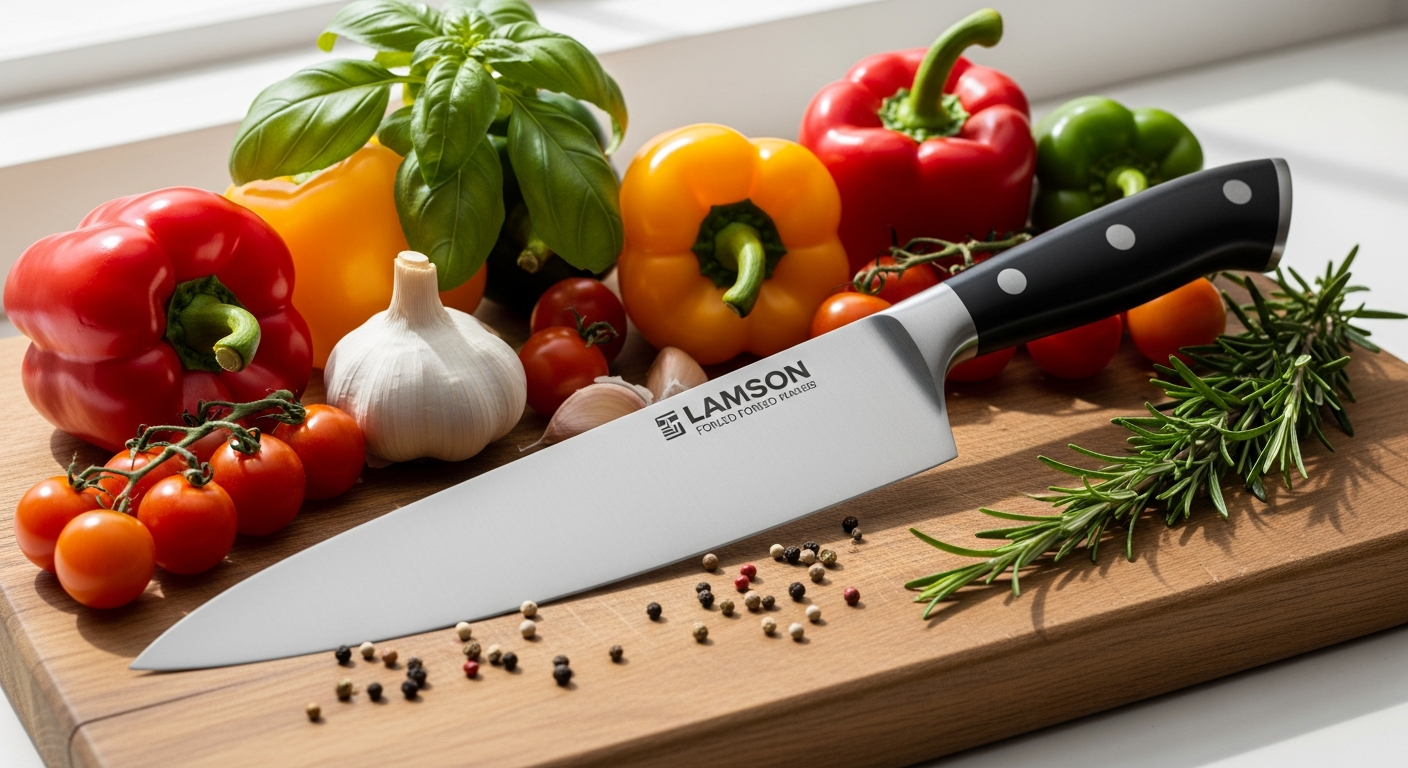
Discover why the Lamson 8-Inch Forged Chef’s Knife is the go-to choice for professional chefs and home cooks. Explore its German steel blade, lifetime warranty, and Sharp for Life™ program.
A quality chef’s knife can outlast an entire drawer full of budget alternatives—sometimes by decades. The difference between struggling through meal prep and executing it with precision often comes down to one tool, and that’s where the Lamson 8-Inch Forged Chef’s Knife enters the picture. Lamson has been crafting American-made kitchen tools for generations, and their 8-inch forged chef’s knife represents the pinnacle of that heritage.
This isn’t just another knife sitting in a crowded marketplace. It’s a best-seller that’s earned its reputation through consistent performance, durability, and genuine craftsmanship. The German steel blade, triple-riveted handles, and thoughtful engineering make this knife feel like an extension of your hand rather than a tool you’re wrestling with.
Discover why the Lamson 8-Inch Forged Chef’s Knife is the workhorse your kitchen deserves.
4116 / X50CrMoV15 Steel Composition and Why German Forged Steel Outperforms
The blade’s 4116 / X50CrMoV15 German steel composition sets this knife apart from countless competitors. This specific alloy was engineered to excel in demanding kitchen environments, delivering superior corrosion resistance and edge retention that keeps the blade performing through hundreds of meals. German forged steel brings a time-tested approach to blade metallurgy—one that prioritizes reliability and longevity over cutting-edge novelty.
58 HRC Rockwell Hardness Rating: The Sweet Spot
At 58 HRC on the Rockwell hardness scale, this knife strikes a deliberate balance. The blade is hard enough to maintain a sharp edge through extended use, yet soft enough to sharpen without requiring specialized equipment. This moderate hardness is the sweet spot for kitchen knives—it means you’re not battling frustration every time you need to touch up the blade, yet you’re not constantly re-sharpening after light use.
Full-Tang Construction and Its Impact on Balance
The full-tang construction—where the steel runs continuously from the tip of the blade through the entire handle—fundamentally changes how the knife feels in your hand. This creates a unified center of gravity that prevents the blade from tipping forward during use, a problem that plagues many budget knives. The weight distribution becomes intuitive, almost invisible, letting you focus on your cuts rather than fighting the tool itself.
Precision-Forged Blade Process
Lamson’s precision-forging process isn’t just marketing language—it’s the backbone of this knife’s durability. The forging process aligns the steel’s grain structure, creating a blade that resists chipping and maintains structural integrity across years of use. This craftsmanship creates superior corrosion resistance, meaning the blade won’t develop rust spots or pitting even in humid kitchen environments.
20-Degree Cutting Angle: Durability Versus Acute-Angle Nimbleness
The 20-degree cutting angle represents a deliberate choice. Japanese knives often feature 15-degree angles, which are sharper but more fragile. This 20-degree angle keeps the edge durable enough to handle the occasional awkward angle or harder ingredient without chipping, while still providing sufficient sharpness for precise work. It’s the angle of a knife meant to work hard without requiring babying.
Wide Blade Design and Practical Advantages
That generous blade width isn’t decorative. When you’re working through a stack of onions or herbs, the flat side becomes a scoop—you push the minced ingredients off the board with a single motion rather than wrangling pieces with the tip. This seemingly small detail saves minutes across a full prep session and makes the knife feel more versatile than its dimensions suggest.
Handle Options and Ergonomic Design: Finding Your Perfect Grip
Rosewood Handles: Classic Aesthetics and Warmth
Rosewood handles bring traditional appeal and warmth to your kitchen. The wood develops character over time, with slight variations in color that make each knife feel unique. For cooks who value aesthetics alongside function, rosewood communicates craftsmanship and care.
G10 Handles: Modern Durability and Low-Maintenance Care
G10 is a modern synthetic material that laughs in the face of humidity and temperature swings. If you’re looking for something virtually indestructible that requires zero special care, G10 handles deliver exactly that. The material is comfortable despite its technical name—textured for grip without being slippery.
Acrylic Handle Variants: Lightweight Options
Acrylic handles offer a lighter alternative, valuable if you’re working extended prep sessions and hand fatigue becomes a real consideration. The weight reduction is noticeable, though you still get the durability and ergonomic design that makes this knife special.
Triple-Riveted Construction
Three rivets securing the handle to the blade isn’t overkill—it’s insurance. This construction prevents handle flex and movement, maintaining the structural integrity that keeps your knife feeling solid after years of daily use. It’s the kind of detail that separates knives lasting 5 years from those lasting 20.
Balance and Weight Distribution
Pick up this knife and you immediately notice the balance. The weight sits perfectly distributed, creating what feels like an effortless pivot point when you’re rocking the blade. This balance reduces fatigue during long prep sessions and makes the knife respond intuitively to even subtle changes in cutting angle.
Grip Comfort for Different Hand Sizes
The handle is sized for real human hands, not idealized hand models. Whether you’re smaller or larger than average, the grip accommodates different hand sizes without forcing awkward angles. The ergonomic design means you’re not overcompensating for poor tool geometry.
Real-World Performance: From Dicing Onions to Breaking Down Poultry
Slicing Precision on Proteins, Vegetables, and Delicate Ingredients
Watch this knife glide through a salmon fillet or tomato. The blade geometry and edge sharpness combine to create clean slices rather than crushing—crucial for delicate proteins and produce that bruise easily. That precision translates to better presentation and flavor.
Dicing Consistency for Uniform Cuts
When you’re making a mirepoix or salsa, uniform dice matters. Smaller pieces cook evenly, larger pieces cook slower—inconsistency creates frustration. This knife’s weight and balance help you maintain consistent pressure and angle across every cut, producing remarkably uniform pieces without obsessive technique.
Chopping Efficiency for Herbs, Nuts, and Tougher Produce
Chopping involves repeated contact with the cutting board—this is where inferior knives fail. The durability of this blade means you can confidently attack a pile of fresh herbs or rough-chop a pile of root vegetables without worrying about the blade dulling or chipping.
Mincing Capability Without Crushing
Crushing garlic or ginger ruins their flavor. This knife’s sharp edge shears aromatics rather than crushing them, preserving their aromatic oils and preventing the bitterness that comes from damaged cells oxidizing.
Scooping Function Using the Wide Blade
After dicing a full onion, you simply press the flat of the blade against your knuckles and sweep everything toward you—the wide blade acts as a scoop. This small feature becomes essential once you experience it.
Performance Across 8+ Hours of Continuous Kitchen Work
Professional chefs don’t choose this knife because it’s pretty. They choose it because it survives the chaos of a busy kitchen. Eight hours of continuous cutting, from protein to vegetables to herbs, and the blade still cuts cleanly. The edge holds, the balance never wavers, and your hand doesn’t develop the cramping you’d expect from extended use.
The Lifetime Warranty and Sharp for Life™ Program: Long-Term Value
Lifetime Warranty Against Manufacturing Defects
Lamson’s lifetime warranty isn’t conditional theater—it’s genuine protection. Manufacturing defects are covered unconditionally. If the blade cracks, the handle delaminates, or the rivets fail due to defective construction, Lamson replaces it. This speaks to confidence in the manufacturing process.
Sharp for Life™ Complimentary Sharpening Service
This is where real value enters the equation. Throughout your knife’s lifetime, you can send it to Lamson for professional sharpening at no charge. Your only cost is shipping. Over a 15-year ownership period, this translates to hundreds of dollars in sharpening services you’d normally pay for.
Professional Sharpening Versus Home Maintenance
You should hone your knife regularly—using a honing steel realigns the edge between sharpenings. But professional sharpening is different. Lamson’s professionals use equipment and techniques that restore the blade to factory specifications. Sending it in every 1-2 years of heavy use ensures it never degrades despite daily work.
Cost Savings Over 10+ Years
Calculate the math: a $100 knife with a 15-year lifespan, receiving professional sharpening twice yearly (normally $15-20 per sharpening), comes out to approximately $110 in total cost across the knife’s life. Compare that to replacing budget knives every 2-3 years at $30 each—you’re spending $150+ on knives that never perform as well.
Warranty Protection for Different Handle Materials
Whether you choose rosewood, G10, or acrylic, the warranty covers manufacturing defects equally. Lamson understands that each handle material has different care requirements, and they’ve designed their warranty accordingly.
Registration Process and Warranty Activation
Activating your warranty is straightforward. Register your knife when you purchase it, and you’re protected. The process takes minutes and ensures Lamson’s records reflect your ownership.
Price Points and Value Comparison: Is It Worth the Investment?
Entry-Level Forged Rosewood Models Starting Around $80
Sales on the rosewood-handle versions bring the price point below $100, making this knife accessible without requiring a special occasion to justify. This is genuine value—a knife that normally costs more, available at a fair price.
Premium Collaborations Like the Great Jones Edition at $128
Special editions command premium pricing because they’re worth it. The Great Jones collaboration, for instance, reaches $128, delivering exclusive aesthetics alongside the proven performance of the Lamson blade.
Explore the different Lamson 8-Inch chef’s knife options and find your perfect match.
Price Variance by Handle Material
Handle material drives much of the price variance. Rosewood is often the entry point, G10 sits in the middle, and specialty materials command premium pricing. The blade remains identical across all versions—you’re primarily paying for handle aesthetics and durability.
Comparison to Japanese-Style Chef’s Knives at Similar Price Points
At $80-128, you’re in territory where Japanese knives offer serious competition. A Damascus or hand-forged Japanese blade might seem more exotic, and some cooks prefer the lighter weight and acute angle. But when performance and longevity are the criteria, the Lamson holds its own or wins outright.
Cost-Per-Use Analysis Over 15-20 Year Lifespan
If you cook five meals per week and use this knife for four of them, you’re using it roughly 260 times annually. Over 20 years, that’s over 5,000 uses. At $100 initial cost plus minimal maintenance, you’re looking at roughly two cents per use—extraordinary value for a tool that becomes essential to your cooking.
When to Buy: Seasonal Sales and Promotional Opportunities
Lamson runs sales periodically, particularly around the holidays and major shopping events. Signing up for notifications from the manufacturer or retailers like Williams Sonoma can alert you to opportunities to grab this knife at better pricing.
What You Need to Know Before Buying: Honest Considerations
Weight Comparison for Those Transitioning from Lighter Japanese Knives
If you’re coming from a 150-gram Japanese knife, the Lamson’s 200+ grams will feel substantial initially. Some cooks love this—the weight does the work for you. Others find it tiring during extended sessions. This is the primary adjustment required when switching brands.
Learning Curve If You’re Accustomed to Thinner, More Acute Cutting Angles
Japanese knives often feature 15-degree angles that feel nimble and responsive. The Lamson’s 20-degree angle is more durable but slightly less delicate. If you’re used to the precision of acute angles, you’ll notice a learning curve of perhaps a week or two.
Hand Fatigue Factors During Extended Prep Sessions
For some cooks—particularly those with smaller hands or arthritis concerns—the weight becomes fatiguing across extended sessions. Testing the knife before committing is wise if you’re concerned about this.
Not Dishwasher Safe: Why Hand-Washing Is Non-Negotiable
Running this knife through a dishwasher will dull it and potentially damage the handle. Hand-washing takes maybe 30 seconds per use—a trivial investment compared to ownership benefits. But if you’re someone who absolutely won’t hand-wash knives, this isn’t the tool for you.
Wooden Handle Care Requirements
Rosewood handles require occasional treatment with food-grade mineral oil to prevent drying and cracking. This is minimal maintenance—monthly application during heavy use seasons—but it’s non-negotiable if you want the handle lasting decades. Skip this and you’ll void your warranty while damaging the wood.
Storage Solutions to Protect the Blade
Without proper storage, even the best blade dull prematurely. A knife block, magnetic strip, or protective blade guard prevents damage and keeps the edge sharp longer. Some people store knives loosely in drawers—this knife deserves better.
Maintenance Essentials: Keeping Your Investment Sharp and Protected
Hand-Washing Best Practices
Hand-wash immediately after use with warm soapy water and a soft cloth. Avoid steel wool or abrasive scrubbers—they scratch the blade. This takes approximately 30 seconds per use and prevents the corrosion and dulling that dishwashers cause.
Drying Immediately to Prevent Water Spots and Corrosion
Water sitting on the blade creates spots and, eventually, corrosion. Dry the knife immediately after washing using a soft towel. This simple habit extends blade life significantly.
Honing Versus Sharpening: The Difference and How Often
Honing realigns the edge between sharpenings—think of it as maintenance. Use a honing steel every few weeks of regular use. Sharpening removes metal to create a new edge—do this every 1-2 years of heavy use via Lamson’s Sharp for Life™ program. Regular honing means sharpening happens less frequently.
Proper Storage Methods: Knife Blocks, Magnetic Strips, and Blade Guards
A wooden knife block is traditional and attractive. Magnetic strips mounted on the wall save space. Blade guards protect the edge if you’re traveling. Any of these beat loose storage in a drawer where the blade contacts other utensils.
Cutting Surface Recommendations
Plastic and wood cutting boards are forgiving. Glass and stone are enemies—they dull the blade rapidly. If you’re investing in this knife, invest in appropriate cutting surfaces too.
When to Send It to Lamson for Professional Sharp for Life™ Sharpening
After 1-2 years of heavy use (or longer if you cook casually), mail your knife to Lamson. They return it with the blade restored to factory specifications. No cost except shipping. This professional attention is what keeps the knife performing at peak levels throughout its lifetime.
Who Should Choose This Knife: Finding Your Perfect Match
Home Cooks Preparing 5+ Meals Per Week
If cooking is a regular part of your life, this knife pays for itself through improved efficiency and reliability. The countless small improvements—better slice, easier rocking motion, consistent performance—accumulate into meaningful time savings across hundreds of meals.
Small Restaurant Kitchens and Catering Operations
Professional chefs choose this knife because durability matters when you’re cutting constantly. The blade holds up to the abuse of commercial kitchen work while remaining affordable enough not to break the budget for multiple knives.
Culinary Students Learning Fundamental Knife Skills
Learning proper technique matters. Using a subpar knife teaches bad habits and frustration. This knife responds correctly to good technique and provides honest feedback when technique is off—ideal for developing skills.
Food Enthusiasts and Meal Preppers
If meal prepping is your Sunday ritual, you’ll appreciate how this knife makes the process faster and more enjoyable. The difference in cutting efficiency is transformative when you’re preparing food for multiple days.
Those Transitioning from Budget Knives Ready to Experience the Difference
The jump from a $20 knife to this $100+ investment feels dramatic—because it is. Many cooks delay this transition unnecessarily. If you’ve owned budget knives and thought “there has to be something better,” you’re ready.
Cooks Who Value American Craftsmanship
Lamson represents manufacturing heritage and quality control that feels rare in an import-dominated market. If supporting domestic production matters to you, this knife delivers both quality and principle.
The Lamson Difference: Why This Knife Stands Out in 2026
American Manufacturing Heritage
Lamson has been producing kitchen tools for generations, with manufacturing knowledge embedded in every step of production. This heritage isn’t nostalgia—it translates into consistent quality and attention to detail.
Consistency Reflected in Best-Seller Status
Best-sellers become best-sellers because they deliver reliably. Thousands of customers have chosen this knife, and the majority stay satisfied enough to recommend it. That consistency is worth something significant.
Customer Service Commitment Through Warranty and Professional Sharpening
Many companies see the sale as the end of the relationship. Lamson sees it as the beginning. The lifetime warranty and Sharp for Life™ program demonstrate genuine commitment to customer satisfaction across decades.
Blade Performance Stability Across Thousands of Daily Uses
Blade performance degradation is a sneaky problem—the knife gets slightly duller every day until one day you notice it’s struggling. This knife resists that degradation. Thousands of uses in, the blade still cuts with the confidence of a fresh knife.
Reputation Among Professional Chefs
Professional kitchens don’t compromise on tools. When chefs choose this knife for their own work, it’s because performance under pressure confirms quality.
Community of Loyal Users Who’ve Owned the Same Knife for 15+ Years
Scroll through knife forums or culinary communities and you’ll find cooks who’ve owned the same Lamson for a decade or more. That speaks louder than any marketing claim.
The Verdict: Your Kitchen’s New Essential Tool
The Lamson 8-Inch Forged Chef’s Knife represents something increasingly rare in modern kitchens: a tool that genuinely improves your cooking experience while lasting decades. The German steel engineering keeps the blade sharp, the ergonomic design prevents hand fatigue, and the exceptional value wrapped up in Lamson’s lifetime warranty and Sharp for Life™ program makes it a smart investment.
Yes, it’s heavier than some Japanese alternatives, and yes, you’ll need to hand-wash it. But these aren’t flaws—they’re trade-offs for a blade that forgives mistakes, holds an edge through hundreds of meals, and comes backed by a company that stands behind its products unconditionally. Whether you’re a home cook preparing dinner five nights a week or a culinary professional seeking a reliable workhorse, this knife delivers performance that justifies its investment.
The real question isn’t whether you can afford this knife—it’s whether you can afford to keep struggling without it.
Get your Lamson 8-Inch Forged Chef’s Knife today and transform your kitchen forever.