
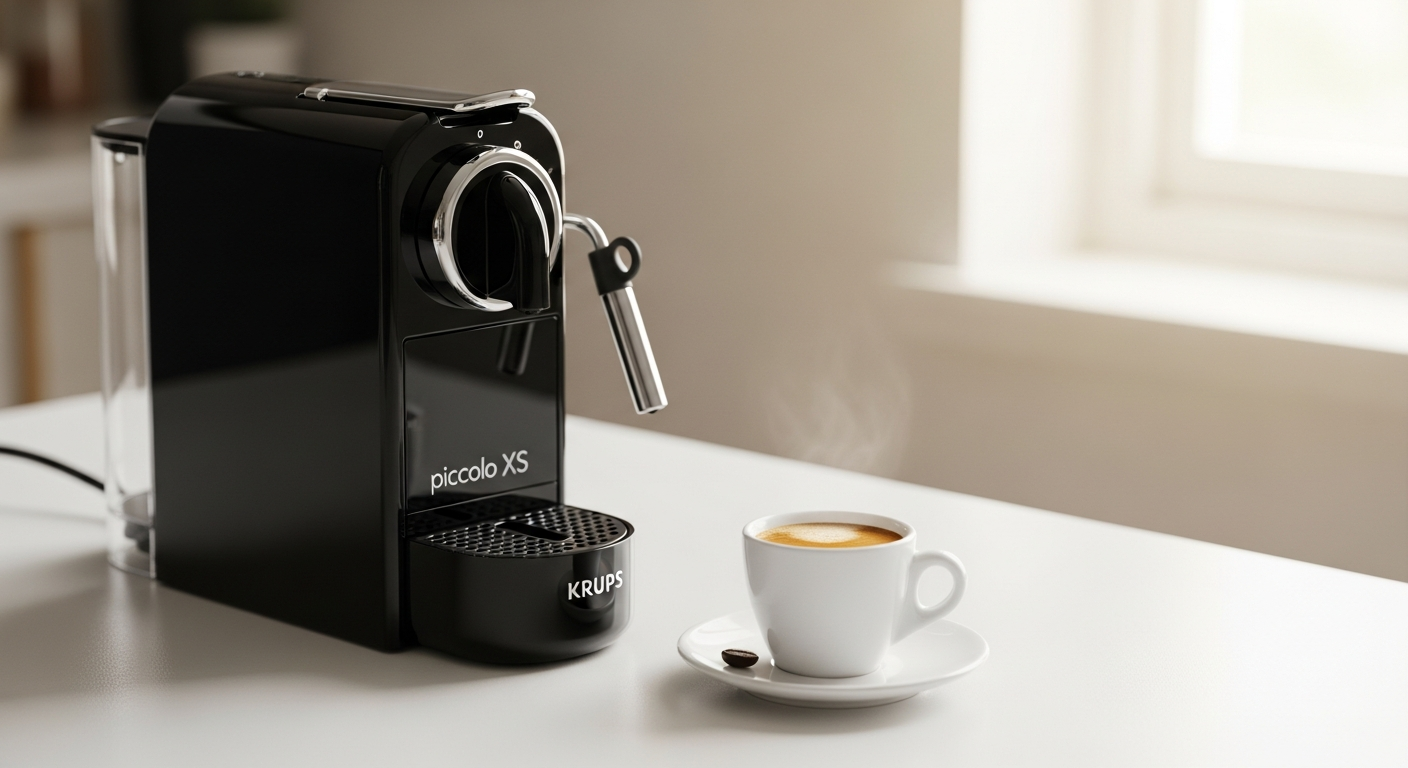
Discover why the Krups Piccolo XS Dolce Gusto is perfect for small kitchens. Learn about its compact design, 15-bar pressure system, and capsule versatility in our complete guide.
If you're among the 60% of urban apartment dwellers frustrated by cramped kitchen counters, you already know the painful compromise: either sacrifice quality coffee or sacrifice precious counter space. The Krups Piccolo XS Dolce Gusto Coffee Machine shatters this false choice entirely. This compact powerhouse delivers professional-grade espresso in a footprint smaller than a toaster, proving that spatial constraints no longer mean settling for mediocre beverages.
The KP1A35P16 model exemplifies a fundamental shift in home appliance design. Manufacturers increasingly recognize that performance and portability aren't mutually exclusive—they're complementary. This machine stands at the intersection of engineering innovation and real-world practicality, addressing what millions of renters, apartment dwellers, and anyone with limited kitchen real estate genuinely needs.
Throughout this guide, you'll understand how the Piccolo XS achieves authentic espresso quality through its pressure-based extraction system, examine the genuine trade-offs between convenience and environmental responsibility, and determine whether this machine fits your actual lifestyle. Explore the Krups Piccolo XS specifications and current availability on esseeffe.com
Engineered for Tiny Spaces: Design and Dimensions That Actually Work
The Piccolo XS exists because architects and designers finally listened to what real people actually need. Studio apartments, dorm rooms, and galley kitchens represent the living reality for millions, yet most coffee machines were designed as if everyone had sprawling kitchen islands.
This machine's compact footprint occupies roughly the same countertop real estate as a standard four-slice toaster. For anyone renting or moving frequently, that portability matters tremendously. You can transport it between apartments, offices, or vacation homes without requiring a moving company.
The red KP1A35P16 model transcends basic functionality through modern aesthetic design. Rather than appearing like a compromise squeezed into tight spaces, it complements contemporary kitchen décor. The sleek finish and thoughtful proportions make it an attractive addition rather than an appliance you'd prefer to hide.
Beyond pure dimensions, the removable components deserve recognition. The water tank detaches completely, simplifying both refilling and thorough cleaning. This modular approach means you can store individual pieces when space becomes absolutely critical—crucial for anyone juggling multiple roommates or transitioning between living situations.
The 15-Bar Pressure System: What Makes Espresso Actually Taste Like Espresso
Most pod-based coffee machines cut corners by operating at lower pressures, producing drinks that taste vaguely coffee-like rather than authentically espresso-forward. The Piccolo XS maintains 15-bar pressure throughout the extraction process, which separates genuine espresso from pretenders.
Pressure isn't just a technical specification—it's the mechanical foundation of espresso itself. When hot water passes through grounds under 15 bars of pressure (roughly 15 times atmospheric pressure), the extraction process fundamentally changes. The pressure forces water through the coffee grounds more efficiently, pulling deeper flavors and creating the characteristic crema layer atop authentic espresso shots.
This consistent pressure across different capsule varieties means you experience reliable quality whether brewing a simple espresso, a rich ristretto, or a longer lungo. The machine doesn't sacrifice extraction quality based on what capsule you insert. Temperature stability during brewing reinforces this consistency—the system maintains optimal heat throughout the extraction cycle, preventing the flavor degradation that occurs when water temperature fluctuates.
When comparing compact machines across the market, pressure ratings vary significantly. Lower-pressure competitors (operating at 9-12 bars) produce faster brewing cycles but sacrifice the flavor depth that pressure extraction provides. The Piccolo XS acknowledges this trade-off explicitly—it prioritizes authentic taste over pure speed.
Dolce Gusto Capsule Compatibility: Beverage Variety Beyond Basic Coffee
The capsule ecosystem represents both the Piccolo XS's greatest strength and its most significant constraint. Nescafé Dolce Gusto offers remarkably diverse options that extend far beyond basic black coffee.
The complete capsule range includes classic espresso, cappuccino, latte, and macchiato options at various intensity levels. But the selection expands substantially beyond these fundamentals. Specialty drinks include flavored cappuccinos, caramel macchiatos, and chai lattes. For anyone drinking coffee year-round, seasonal releases introduce limited-edition options that prevent monotony.
Cold beverage capabilities often surprise first-time users. Iced coffee capsules, chilled teas, and specialty cold drinks deliver refreshment beyond what traditional espresso machines typically offer. This versatility matters for households with mixed preferences—someone who wants hot espresso in winter can switch to cold beverages during summer without equipment changes.
Sourcing capsules presents minimal friction. Major retailers stock Dolce Gusto capsules, and online ordering ensures consistent supply. Typical pricing ranges from €0.40 to €0.70 per capsule, translating to €0.50 to €1.00 per serving depending on beverage type. Subscription services and bulk-purchase options reduce per-unit costs for regular users, rewarding commitment to the system.
Capsule storage deserves practical consideration in small kitchens. A compact drawer organizer or vertical rack stores significant quantities while consuming minimal counter or cabinet space. Many users maintain a rotating inventory of favorite varieties rather than single-variety bulk purchases, maintaining both freshness and beverage diversity.
Browse the complete Dolce Gusto capsule selection available through esseeffe.com retailers
Intuitive Controls and Manual Customization Features
The Piccolo XS embraces simplicity without sacrificing control. Single-touch operation means users who prioritize speed can brew their preferred beverage with one button press—no menu navigation, no temperature adjustments, no learning curve.
Simultaneously, the manual lever water volume control enables customization for those wanting greater precision. You physically control how much water passes through the capsule, adjusting drink strength and volume to personal preference. This hybrid approach—automated simplicity with optional manual refinement—accommodates both rushed mornings and leisurely coffee rituals.
First-time pod machine users typically master basic operation within their first brew. Visual indicators guide the process, displaying when the machine heats, when to insert capsules, and when brewing completes. The feedback system essentially eliminates confusion.
Accessibility features matter beyond casual convenience. Elderly users or individuals with limited dexterity appreciate controls that don't demand precise button combinations or smartphone app navigation. The straightforward lever mechanism requires minimal grip strength, and the large, clearly labeled buttons accommodate reduced finger mobility.
Common user errors trigger appropriate machine responses rather than cryptic error codes. If water isn't dispensing, the machine provides clear signals about refilling the tank. This user-centric design reduces frustration and encourages confident operation rather than hesitant button-pressing.
Water Tank Capacity and Energy Efficiency in Daily Use
The removable 0.8-liter water tank reflects practical engineering decisions. This capacity accommodates roughly 3-4 average beverages before requiring refill, balancing frequency against overall machine size.
For single-person households or occasional users, 0.8 liters provides more than sufficient capacity for daily routines. Small families or office break room scenarios might refill multiple times daily, but that frequency remains manageable compared to constantly refilling tiny reservoirs.
Automatic shut-off functionality activates after 30 minutes of inactivity, reducing electricity consumption during typical daily use. The machine doesn't maintain heating continuously—it powers down intelligently, then reheats when the next brew begins.
Heat-up time from complete cold start to first brew typically ranges from 60-90 seconds. For rushed mornings, this rapid responsiveness beats waiting 10+ minutes for traditional espresso machine warm-up cycles. Standby power consumption remains minimal, with annual electricity costs calculated around €15-25 for typical usage patterns.
Water quality considerations shouldn't be overlooked. Hard water minerals gradually accumulate inside the machine, reducing efficiency and affecting flavor. Regular descaling (typically monthly for hard water areas) maintains optimal performance and prevents mineral buildup that eventually damages internal components. The descaling solution cost factors into true operating expenses—budget approximately €5-10 monthly for descaling supplies depending on local water hardness.
Tank design minimizes spills during filling and removal, with ergonomic grip points and a secure locking mechanism. Integration with smart home energy monitoring systems remains limited on this model, but the energy-efficient design naturally aligns with conservation-minded households.
The True Cost of Capsule Convenience: Budget Breakdown and Value Proposition
The initial €90-110 investment appears attractive until you factor capsule expenses into the long-term financial picture. Understanding true operating costs determines whether this machine represents good value for your situation.
Per-serving capsule costs (€0.50-1.00) substantially exceed traditional ground coffee expenses (€0.15-0.40 per serving). Monthly projections reveal meaningful differences: someone brewing two cappuccinos daily through capsules spends approximately €30-60 monthly, whereas traditional brewing reduces that to €10-20 monthly.
Annual spending projections for different usage patterns clarify the financial commitment:
- Occasional use (2-3 drinks weekly): €20-40 annually
- Regular use (1 drink daily): €200-400 annually
- Heavy use (2+ drinks daily): €400-800 annually
Bulk-purchase discounts and loyalty programs genuinely reduce per-unit costs. Purchasing 100+ capsules at once occasionally yields €0.35-0.45 per capsule pricing versus standard retail rates. Many users stockpile during sales, timing purchases around promotional periods.
Hidden costs accumulate across time: descaling solutions (€60-100 yearly), optional water filters (€15-25 annually), and occasional replacement parts. A realistic annual total for regular users reaches €300-600 including all consumables and maintenance supplies.
Break-even analysis answers a practical question: when does home brewing save money versus café purchases? Someone spending €5 per café cappuccino breaks even after 18-22 home brews through capsule economics. For anyone currently frequenting coffee shops, the Piccolo XS pays for itself within weeks through home brewing savings alone.
Environmental Impact and Sustainability Concerns
Single-use pod waste represents the machine's most significant ethical concern. Each capsule becomes landfill waste, contributing to the global plastic crisis. This environmental reality shouldn't be minimized—it's a legitimate drawback worth serious consideration.
Nescafé and various retailers operate recycling programs that capture used capsules, preventing direct landfill disposal. These programs require active participation: you collect used capsules, mail them (often postage-paid), and they're recycled into new products. Participation rates remain modest because the process demands intentionality rather than automatic disposal.
Material composition matters significantly. Aluminum capsules decompose differently than plastic alternatives, with different environmental footprints across production, transport, and end-of-life stages. Aluminum recycles efficiently and repeatedly without degradation, whereas plastic capsule recycling produces lower-quality material unsuitable for new food-contact applications.
Emerging compostable capsule options address environmental concerns, though availability varies by region. These plant-based alternatives decompose in commercial composting facilities, eliminating persistent waste. However, compostable options often cost 30-50% more than traditional capsules, creating financial incentives against sustainable choice.
Carbon footprint comparisons acknowledge that capsule production, packaging, and transport generate emissions, but these must be weighed against café coffee shop carbon footprints (including customer transportation). Home brewing via capsules typically produces lower carbon output than frequent café visits, though traditional brewing methods produce the lowest environmental impact.
Water usage and wastewater considerations receive less attention than plastic waste but remain relevant. The brewing process uses roughly the same water volume as traditional espresso machines, but capsule production consumes significant water during manufacturing.
Honest acknowledgment: there's no way to enjoy the Piccolo XS's convenience without accepting environmental trade-offs. You're explicitly choosing convenience over sustainability, a valid personal decision provided you acknowledge the trade-off rather than rationalizing it away.
Real-World Performance: Speed, Reliability, and Consistency
Brew time from button press to finished beverage typically ranges from 90-120 seconds, including machine warm-up if cold-started. This speed advantage over traditional espresso machines ranks among users' most appreciated benefits.
Shot quality consistency across multiple brews throughout the day demonstrates genuine engineering. The pressure system maintains extraction standards regardless of whether you're brewing the first or tenth drink of the morning. This reliability prevents the afternoon quality degradation that plagues some competing machines.
Reliability metrics indicate solid long-term durability when properly maintained. Common failure points cluster around the water pump and heating element, components experiencing mechanical stress across thousands of brew cycles. Most users report trouble-free operation across 3-5+ years of regular use before experiencing significant issues.
Warranty coverage typically extends 2-3 years from purchase, with customer service responsiveness varying by retailer. Esseeffe.com and other authorized retailers generally provide responsive support for warranty claims and technical issues.
User reviews highlight consistent themes: customers praise reliability, speed, and convenience, while criticizing capsule costs and environmental concerns. Real-world scenarios where the machine excels include rushed weekday mornings, entertaining guests who prefer different beverages, and situations where space represents the primary constraint.
Durability expectations differ between daily versus occasional use. Someone brewing 2-3 drinks daily stresses the machine more intensively than someone brewing weekly, naturally affecting component lifespan. Maintenance requirements—regular descaling, occasional cleaning, capsule chamber inspection—sustain peak performance and extend operational lifespan significantly.
Who This Machine Is Perfect For (And Who Should Look Elsewhere)
Ideal user profiles include apartment dwellers with genuine space constraints, office workers seeking convenient personal coffee stations, and travel-focused individuals who appreciate portability. These categories consistently report maximum satisfaction.
Household size considerations matter substantially. Single-person households or couples experience ideal utility, whereas larger families might find the 0.8-liter tank and single-cup brewing limitations inconvenient. Someone brewing for four people daily may prefer larger capacity machines.
Lifestyle alignment determines satisfaction more than machine quality. If you prioritize convenience and consistency over cost-per-cup and environmental impact, you'll love this machine. Conversely, sustainability-conscious consumers or coffee enthusiasts prioritizing customization and freshness may experience ongoing frustration.
Budget flexibility for capsule purchases shouldn't be assumed. Someone viewing €30-60 monthly capsule spending as prohibitive should select traditional brewing methods. Those with modest discretionary income might experience buyer's remorse despite initial enthusiasm.
Technical comfort level and control preferences shape experiences. People preferring full automation appreciate the simplicity; those wanting manual grinding, tamping, and temperature control find pod systems frustratingly limiting.
Specific use cases reveal real strengths: rapid morning routines before work, entertaining guests with diverse beverage preferences, and remote work setups where café trips become impractical. These situations showcase what the Piccolo XS does exceptionally well.
Situations demanding different solutions include households with 4+ regular coffee drinkers, individuals prioritizing environmental responsibility over convenience, and coffee aficionados wanting complete customization over ingredient sourcing and brewing parameters. Traditional espresso machines or pour-over setups better serve these needs.
Practical Setup and Integration Into Your Kitchen Workflow
Unboxing reveals the machine, power cord, user manual, and typically a descaling solution sample. Initial setup requires simply filling the water tank and plugging in the power cable—no complex assembly or calibration steps.
Optimal counter placement balances accessibility with ventilation. Position the machine where steam easily disperses rather than accumulating against walls or cabinets. Ensure the tank side faces away from obstacles for easy refilling, and confirm you can comfortably insert and remove capsules without awkward reaching.
Integration with existing kitchen appliances and workflow patterns determines daily satisfaction. Position the machine near electrical outlets and water access points to minimize hassle. Many users establish a dedicated coffee station combining the machine, capsule storage, cup hooks, and small accessories within a compact footprint.
Storage solutions for capsule inventory deserve advance planning. Drawer organizers with compartments keep varieties separated and visible. Vertical wall-mounted racks save counter space while maintaining quick access. Some users rotate inventory between kitchen storage and pantry reserve supplies, maintaining freshness while avoiding desktop clutter.
Cleaning and maintenance routines fitting busy schedules involve wiping external surfaces weekly and running descaling solutions monthly. The drip tray empties simply, and most internal cleaning occurs automatically during the descaling cycle. Budget 15-20 minutes monthly for complete maintenance.
Descaling frequency depends on water hardness: hard water areas require monthly descaling, while soft water areas manage with quarterly treatments. The machine provides clear indicators when descaling becomes necessary, eliminating guesswork about timing.
Creating a dedicated coffee station in limited square footage involves vertical thinking and multi-functional design. Wall-mounted shelving above the machine stores capsules, and adhesive hooks organize small accessories. This concentrated arrangement keeps your coffee workflow efficient despite limited available space.
Making Your Final Decision: Is the Piccolo XS Your Perfect Match?
The Krups Piccolo XS Dolce Gusto Coffee Machine genuinely solves the primary problem it addresses: delivering authentic espresso quality within genuinely compact dimensions. The 15-bar pressure system produces real crema and flavor depth, the capsule system offers remarkable beverage variety, and the footprint actually works in real apartments rather than representing marketing fantasy.
However, honest assessment requires acknowledging legitimate trade-offs. Capsule costs accumulate quickly when calculated annually, environmental concerns around single-use pods reflect genuine ecological impact, and you're fundamentally exchanging customization and freshness for convenience. These aren't minor compromises—they represent real consequences worth serious consideration.
The central question isn't whether this machine performs well objectively. It clearly does. Rather, the question becomes whether your lifestyle, values, and budget genuinely align with what capsule-based brewing demands. If you're busy, space-constrained, willing to accept environmental trade-offs, and comfortable with ongoing capsule expenses, this machine could become your favorite kitchen appliance. If sustainability concerns dominate your choices or you derive genuine pleasure from manual brewing processes, other solutions serve you better.
Begin with ruthless honesty about your actual coffee habits rather than aspirational versions. Do you currently drink café coffee multiple times weekly? Then capsule expenses represent genuine savings. Are you environmentally conscious? Then pod waste will create ongoing cognitive dissonance. Do you have guests regularly wanting different beverages? Then capsule variety becomes a genuine advantage.
Start your evaluation with current pricing and detailed specifications on esseeffe.com