
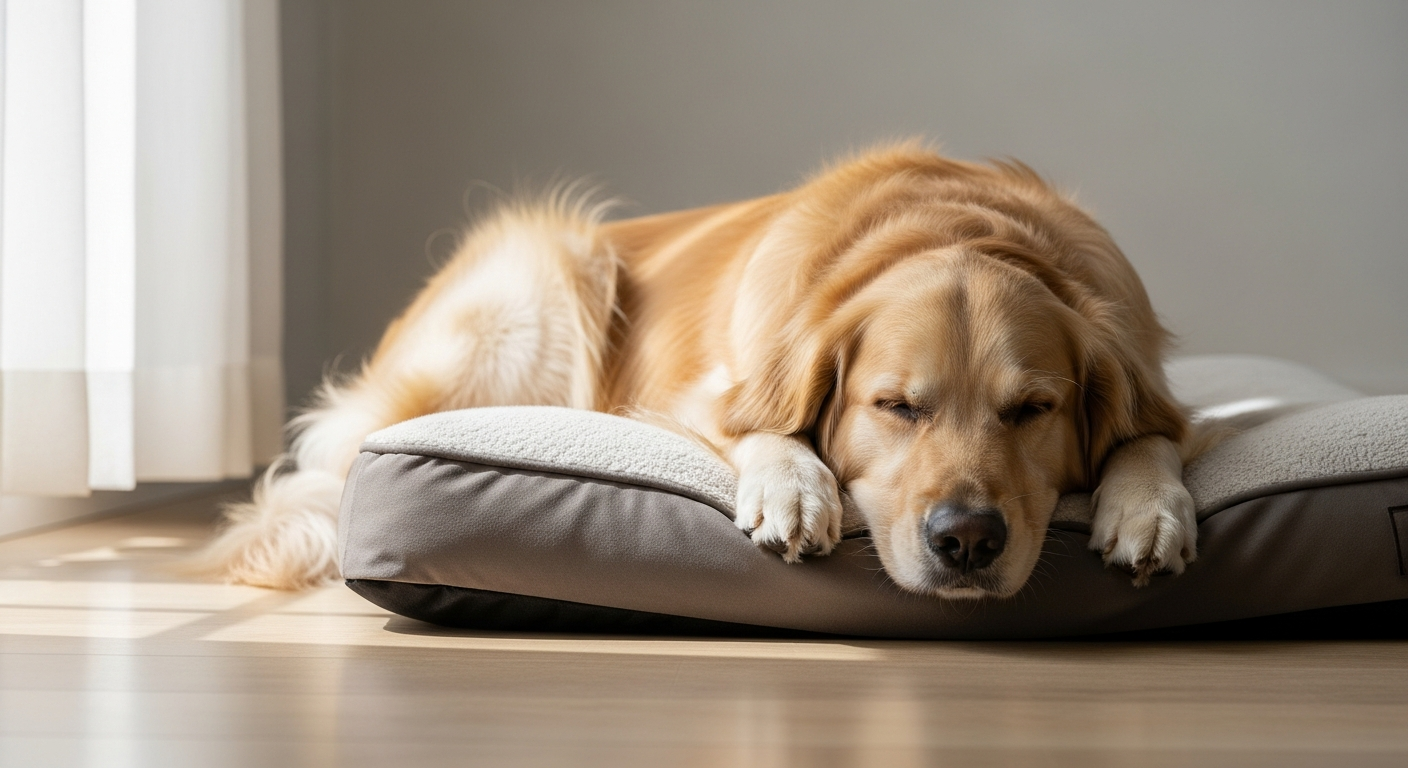
Discover how a Knuffelwuff orthopedic dog bed can transform your senior dog’s comfort and health. Learn about viscoelastic foam, washable covers, and sizing options to find the perfect bed for joint support and restful sleep.
As dogs age, their bodies undergo profound changes. Over 60% of dogs older than seven develop arthritis or joint-related discomfort, yet many owners overlook one of the most impactful interventions available: a proper sleeping surface. Dogs spend 12-14 hours daily sleeping, making their bed far more than just a place to rest—it’s a critical component of their health management.
Aging affects a dog’s joints, spine, and overall sleep quality in measurable ways. Cartilage deteriorates, inflammation increases, and the body’s ability to cushion impacts diminishes. Standard dog beds provide minimal support, creating pressure points that concentrate stress on the joints most affected by age-related degeneration. These pressure concentrations can actually accelerate joint deterioration and increase nighttime discomfort, creating a cycle where poor sleep exacerbates pain and stiffness.
The connection between sleeping surface quality and inflammation reduction is scientifically grounded. When a dog’s body receives proper support during sleep, pressure distributes evenly across joints and the spine. This even distribution reduces the inflammatory response that typically flares overnight, when a dog’s body has hours to process accumulated daily stress. A bed that fails to provide this support allows inflammation to compound night after night.
Orthopedic design prevents further joint deterioration by fundamentally changing how your dog’s body interacts with their sleeping surface. Rather than sinking unevenly into soft bedding, orthopedic construction cradles the body while maintaining spinal alignment. This support reduces compensatory movements—those awkward shifts dogs make to find comfortable positions—that place additional strain on weakening joints.
The foundation of Knuffelwuff orthopedic beds is viscoelastic foam, which adapts to each dog’s unique body shape. Unlike static foam that provides uniform firmness, viscoelastic material responds to body heat and weight distribution, creating a customized support structure that shifts as your dog moves throughout the night.
Explore Knuffelwuff’s orthopedic dog bed collection today.
Decoding Knuffelwuff’s Material Technology
Viscoelastic Memory Foam and Joint Care
Viscoelastic memory foam represents a significant advancement in pet bedding. This material was originally developed for aerospace applications, engineered to absorb impact while returning to its original shape. When applied to dog beds, viscoelastic foam provides two critical benefits: it reduces pressure on joints by distributing weight across a larger surface area, and it maintains spinal alignment by preventing the collapse that occurs with traditional foam.
The pressure-relieving properties of this foam are particularly beneficial for dogs with arthritis, hip dysplasia, or spinal issues. By minimizing pressure concentration, the material reduces nighttime pain that typically intensifies when a dog lies still for extended periods. Spine alignment advantages compound over time—proper support during sleep prevents the postural compensation patterns that develop when dogs constantly shift to escape pressure points.
Cover Material Options and Durability
Knuffelwuff offers multiple cover materials, each serving different lifestyle needs. Velours provides a plush, soft texture that many dogs find immediately comfortable, creating a cozy retreat feel. Cord material offers durability and texture variation, appealing to dogs that prefer less slippery surfaces. Artificial leather delivers maximum practicality for owners managing shedding or occasional accidents, offering waterproof protection and hair-resistant properties.
Machine-washable covers at 30°C specifications mean you can maintain hygiene without damage. Many Knuffelwuff models feature removable covers that separate from the foam core entirely, allowing for regular washing cycles that keep the bed fresh and allergen-free. Artificial leather models skip machine washing altogether—a simple wipe with a damp cloth restores the surface to like-new condition, making maintenance genuinely effortless.
Elevated Side Design and Support Structure
Elevated sides serve a functional purpose beyond aesthetics. These raised edges provide head and neck support, allowing dogs to rest their heads comfortably without straining their neck muscles. For senior dogs with limited mobility, lowered entry points reduce the physical effort required to climb onto the bed, making independent access possible even for dogs with significant mobility challenges.
Discover the complete range of orthopedic dog beds at Knuffelwuff.
Finding Your Dog’s Perfect Fit
Complete Size Range Breakdown
Knuffelwuff recognizes that dogs come in dramatically different sizes, offering options from S through XXXL and oversize categories. Small (S) beds suit toy breeds and smaller dogs under 5kg, while Medium (M) and Large (L) options accommodate the majority of household pets. Extra Large (XL) beds support dogs in the 30-50kg range, with XXL and XXXL options available for giant breeds and overweight dogs requiring additional support.
The extensive range means you’re not forcing your dog into an ill-fitting compromise. A bed that’s too large can defeat the purpose of orthopedic design by failing to create proper body contact, while a bed that’s too small forces uncomfortable curling positions that negate support benefits.
Matching Bed Size to Dog Weight and Breed
Weight provides the primary sizing reference, but breed characteristics matter too. A muscular 25kg German Shepherd has different support needs than a 25kg dog with short legs and a long spine. Longer-backed breeds benefit from additional length, while deeper-chested breeds need width that accommodates their body structure. Knuffelwuff’s size options accommodate these variations because they recognize that health support isn’t one-size-fits-all.
Measuring Your Dog Correctly
Accurate measurement prevents costly sizing mistakes. Measure your dog from the tip of their nose to the base of their tail while they lie in their natural sleeping position—typically a stretched-out posture rather than a curled ball position. This measurement should fit comfortably within the bed’s length with 10-15cm of additional space. For width, measure across your dog’s shoulders or the widest part of their body and add similar buffer space.
Place the measuring tape while your dog actually rests, not while standing, because the sleeping position determines the space your dog truly needs. A dog curled tightly at night might require less length than standing measurements suggest, while a dog that stretches out extensively needs the full measurement span.
Space Requirements and Furniture Compatibility
Before selecting your bed size, consider your physical space. An XXL orthopedic bed occupies significant floor area, and attempting to squeeze an oversized bed into cramped quarters defeats the purpose of providing a comfortable retreat. Measure your intended placement location and compare it against Knuffelwuff’s specifications to ensure the bed fits your home layout without creating an obstacle.
Color and Design Considerations
Available Color Palette and Home Coordination
Knuffelwuff offers colors ranging from practical neutrals—brown, black, grey, and beige—to vibrant options like red and blue. This palette acknowledges that your dog’s bed occupies visible space in your home, and you shouldn’t sacrifice aesthetics for functionality. Coordinating your bed color with existing furniture creates visual harmony rather than forcing an eyesore compromise.
Practical Color Considerations for Maintenance
Beyond aesthetics, color choice affects practical maintenance. Darker colors like black and dark grey hide shedding hair and minor stains between cleanings, extending the time between washes. Lighter neutrals like beige create a cleaner visual appearance but require more frequent cleaning to maintain that appearance. Dogs that shed heavily or spend time outdoors benefit from darker options, while indoor dogs with minimal shedding can embrace lighter shades.
Modern Aesthetic Without Compromising Function
Knuffelwuff’s design philosophy refuses the false choice between appearance and performance. The beds combine modern aesthetics with genuine orthopedic function—you’re not buying medical equipment that looks clinical or a decorative piece that fails to support your dog. This balance means your investment serves both your dog’s health and your home’s visual appeal.
Maintenance and Longevity
Machine-Washing Protocols and Care
Removable covers that machine-wash at 30°C offer genuine convenience. This temperature specification prevents foam shrinkage and fabric damage while removing dirt, allergens, and odors effectively. Most owners wash covers monthly or quarterly depending on their dog’s shedding and activity level, with occasional spot-cleaning between full washes.
Air drying after washing prevents heat damage to elastic edges and foam attachment points. Many owners hang covers to dry or lay them flat, allowing complete moisture evaporation before reattaching to the foam core. This approach extends cover lifespan significantly compared to machine-drying, which can degrade elastic and attachment points over time.
Spot-Cleaning Techniques for Artificial Leather
Artificial leather models eliminate washing concerns entirely. A damp cloth with mild soap removes surface dirt, stains, and shedding hair in minutes. For stubborn marks, a slightly dampened cloth with pet-safe enzymatic cleaner addresses odor-causing bacteria without damaging the waterproof surface. This simplicity appeals to owners managing multiple dogs or those with limited time for laundry-intensive maintenance.
Expected Lifespan and Long-Term Value
Standard dog beds typically last 1-2 years before developing permanent compression and loss of support. Knuffelwuff orthopedic beds consistently outlast this timeline, with many owners reporting 4-6 years of continued support and structural integrity. This extended lifespan transforms the value calculation—a bed costing €99.95 that lasts five years averages under €20 yearly, outperforming cheaper alternatives purchased multiple times.
Warranty Coverage and Manufacturer Support
Knuffelwuff’s reputation for quality includes manufacturer support and warranty coverage that stands behind their products. This commitment provides confidence that you’re purchasing from a company that will address defects and support your satisfaction over the bed’s lifespan.
Price Breakdown and Value
Entry-Level and Mid-Range Options
Knuffelwuff’s entry point begins around €34.95 for dog loungers—smaller platforms that provide basic orthopedic support for dogs with budget constraints or as secondary beds. Mid-range orthopedic beds typically range from €50-€80, offering full-size beds with quality foam and durable covers at accessible price points.
These entry and mid-range options provide genuine orthopedic benefits without premium pricing. They suit dogs experiencing beginning joint issues or owners seeking preventative support for healthy dogs before age-related problems develop. Feature-to-price ratios improve significantly in this range compared to low-quality alternatives that disintegrate after minimal use.
Premium Artificial Leather Models
Premium models beginning around €99.95 feature artificial leather covers with waterproof, hair-resistant properties. These beds justify higher pricing through enhanced durability, simplified maintenance, and extended lifespan. The artificial leather approach appeals to owners managing incontinence, severe shedding, or high-activity dogs that regularly bring outdoor dirt indoors.
Long-Term Value Calculation
Consider cost-per-year-of-use rather than initial purchase price. A €34.95 lounger lasting two years costs €17.48 yearly, while a €99.95 premium bed lasting five years costs €19.99 yearly—nearly identical annual costs despite vastly different support quality. The premium model delivers superior health benefits while costing virtually the same amount annually.
Real-World Benefits for Aging Dogs
Documented Improvements in Mobility
Owners consistently report noticeable improvements in their aging dogs’ movement ease within weeks of introducing an orthopedic bed. Dogs that previously struggled to rise from rest demonstrate increased willingness to move throughout the day. This increased mobility becomes self-reinforcing—less painful movement encourages more movement, which maintains muscle strength and joint flexibility.
Sleep Quality Enhancements and Behavioral Changes
Dogs settle into orthopedic beds differently than standard bedding. Many owners describe their dogs as appearing genuinely content, sighing with what seems like relief as they lower themselves into supportive material. Sleep deepens as dogs experience fewer pain-related position changes, leading to more restorative rest cycles. This improved sleep ripples into daytime behavior—dogs appear more alert, more playful, and more engaged with their environment.
Pain Reduction Signs and Quality-of-Life Improvements
Observable pain reduction manifests through behavioral shifts: dogs stop limping after sleeping, begin climbing stairs with confidence, and show increased enthusiasm for walks and play. These aren’t miraculous transformations but rather a return to comfortable movement patterns that aging and joint deterioration had compromised. The pain reduction compounds, as improved mobility prevents the muscle loss and weakness that typically accelerates aging.
Post-Recovery Acceleration and Rehabilitation Support
Dogs recovering from surgery or injury show accelerated healing when resting on orthopedic support. Reduced inflammation overnight, combined with proper spinal alignment during healing phases, contributes to faster return to normal function. Veterinarians increasingly recommend orthopedic beds as part of rehabilitation protocols, recognizing their measurable impact on recovery timelines.
Making the Right Choice
Assessing Your Dog’s Specific Health Needs
Begin by evaluating your dog’s current condition. Is your dog showing signs of aging—stiffness after rest, difficulty climbing stairs, or reluctance to play? Does your dog have a diagnosed condition like arthritis, hip dysplasia, or back problems? Is your dog recovering from surgery or injury? These health factors should drive your selection more strongly than budget or aesthetics.
Senior dogs and dogs with joint issues benefit most from premium orthopedic models with maximum foam thickness and support. Younger preventative buyers can opt for mid-range options that provide support without premium pricing. Post-recovery dogs might need temporary support solutions, influencing size and material decisions.
Evaluating Home Space and Décor Requirements
Consider where the bed will live permanently. A large bed in a cramped apartment creates an obstacle, while a small bed in a spacious living room fails to provide adequate personal space. Measure available floor space and cross-reference against Knuffelwuff’s specifications to ensure physical fit.
Décor coordination matters because your dog’s bed occupies visible space. Selecting colors and materials that harmonize with existing furniture creates a cohesive environment rather than an obvious pet accommodation that disrupts your home’s visual flow.
Budget Planning and Long-Term Investment Perspective
Establish a realistic budget while calculating long-term value. Premium beds cost more initially but provide superior support and durability that justifies the investment over multiple years. Entry-level options suit budget-conscious owners or those uncertain whether their dog will use a bed, allowing lower-risk initial purchases.
Consider future dog ownership timelines. Will you have multiple dogs needing beds? Will this dog’s bed eventually serve younger dogs? These questions inform whether investing in premium durability makes financial sense for your specific situation.
Size Selection Checklist
Before finalizing your choice, complete this verification process:
- Measure your dog in their natural sleeping position
- Add 10-15cm buffer space to the measurement
- Compare the result to Knuffelwuff’s size specifications
- Verify the bed fits your physical space without creating obstacles
- Confirm the size accommodates your dog’s breed characteristics and body structure
- Consider whether your dog typically stretches or curls during sleep
Invest in Your Dog’s Tomorrow—The Knuffelwuff Difference
Your dog’s comfort isn’t a luxury—it’s a health investment with real, measurable returns. Knuffelwuff orthopedic dog beds deliver genuine orthopedic support, durable construction that outlasts cheaper alternatives, and practical maintenance features that fit into real life. Whether you select an easy-clean artificial leather model for maximum practicality, plush velours covers for comfort appeal, or explore the extensive size range to find your dog’s perfect fit, you’re choosing a bed designed with your dog’s wellbeing at the center.
The real magic happens when you watch your dog settle into their new orthopedic bed with a contented sigh, their body finally properly supported after nights on inadequate bedding. That moment of visible relief reveals what your dog has needed all along—a sleeping surface that actually supports their body rather than merely cushioning it.
Measure your dog carefully, consider your lifestyle needs and home space requirements, and select the Knuffelwuff model that matches both your dog’s health requirements and your home environment. Your aging companion deserves a bed that supports their body as much as you support their spirit. This investment compounds over time, delivering both immediate comfort and long-term health benefits that extend your dog’s quality years.
Shop the complete Knuffelwuff orthopedic dog bed collection now.