
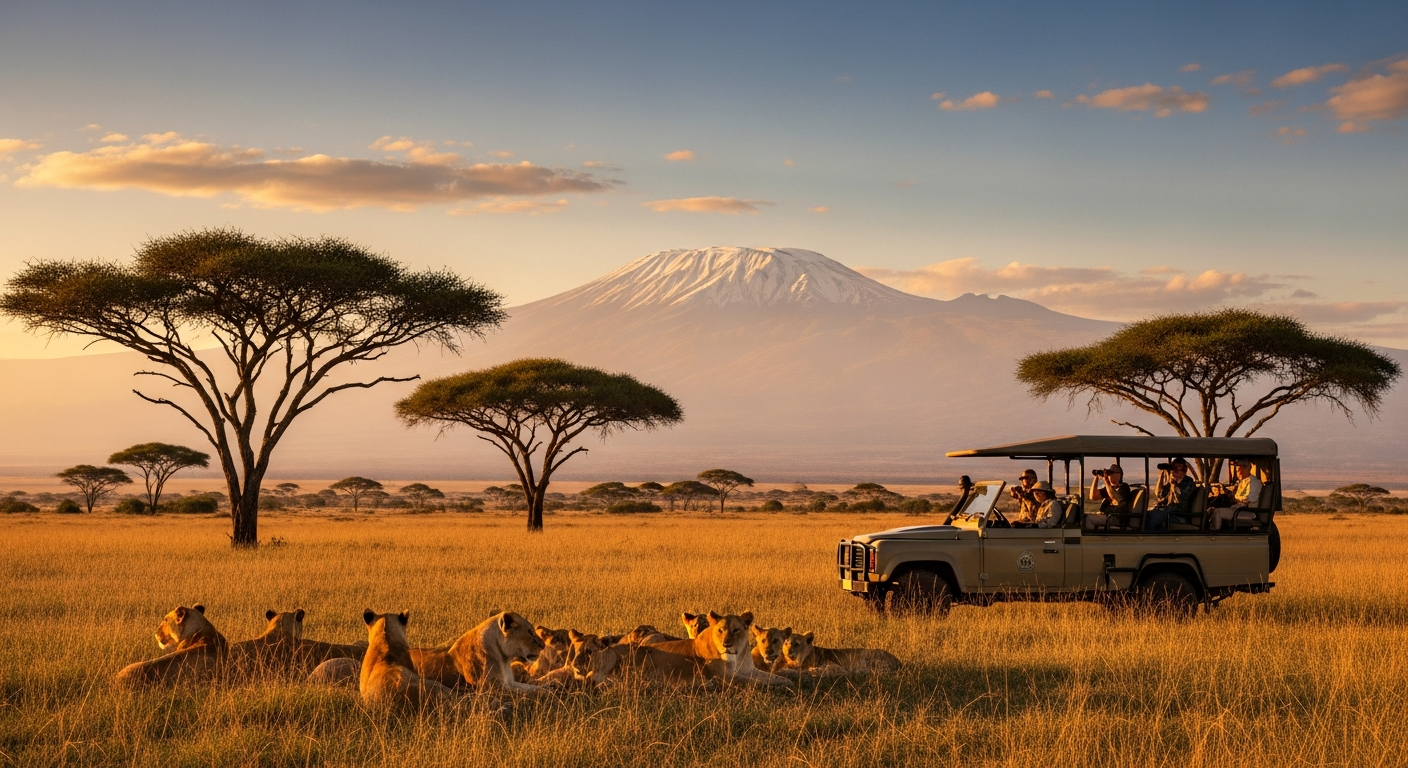
Experience Kenya’s most iconic wildlife and landscapes on this 10-day complete safari adventure. See the Big Five, Samburu Special Five, and pristine ecosystems with expert guides. Starting from €2,309.
Understanding Kenya's Most Sought-After Safari: A Complete Wildlife Journey
Over 93% of travelers rate their Kenya safari experiences as excellent—yet most visitors spend less than half the time needed to truly witness Africa's most spectacular wildlife moments. The difference between a rushed safari and a transformative one often comes down to having enough time in the right locations, with expert guidance at every turn. Safari En Afrique FR has crafted something special with their 10-day Kenya complete safari package.
This isn't just another tour; it's a meticulously designed journey that combines the legendary Big Five with the lesser-known Samburu Special Five, spanning eight distinct ecosystems across Kenya's most pristine reserves. The package has become their best-selling offering precisely because it strikes that rare balance between comprehensive wildlife encounters and authentic, personalized experiences.
Discover the complete Kenya safari experience with Safari En Afrique FR today.
Understanding What "Complete" Really Means: The Big Five and Samburu Special Five
The Big Five Explained
The Big Five—lion, leopard, elephant, rhino, and buffalo—define the classic safari experience. These five species represent the most formidable and iconic animals on the African continent. Their legendary status stems from both their majesty and the thrill of witnessing them in their natural habitat. A safari without encounters with these species feels incomplete to most travelers, which is precisely why seeing all five within a single journey has become the gold standard for safari success.
The Samburu Special Five Introduced
Northern Kenya holds wildlife secrets that few safari-goers ever encounter. The Samburu Special Five—Grevy's zebra, Somali ostrich, reticulated giraffe, gerenuk, and beisa oryx—represent a completely different layer of African biodiversity. These species have adapted to semi-arid environments and are found primarily in specific northern reserves. Their unique characteristics and specialized survival strategies make encountering them a genuinely distinctive experience that sets comprehensive safaris apart from standard itineraries.
Strategic Location Sequencing for Maximum Sightings
This 10-day itinerary maximizes sightings of all ten iconic species through carefully planned location sequencing. The journey begins in Nairobi, transitions through Samburu's unique terrain to capture the northern species, moves to the conservancy regions for rhino viewing, and culminates in the Masai Mara for the Big Five. This geographic flow isn't random; it's designed around wildlife distribution patterns, seasonal movements, and habitat types. Each location builds on the previous one, increasing your probability of complete sightings.
Wildlife Encounter Probability
The probability of encountering each species varies based on seasonal patterns and location-specific wildlife dynamics. Lions and elephants appear reliably across most reserves, while leopards require patience and expert guide knowledge. Rhinos concentrate in protected conservancies like Ol' Pejeta and Solio Ranch, where dedicated conservation efforts have rebuilt populations. The Samburu species thrive specifically in northern reserves where their adaptations to arid landscapes provide survival advantages. Safari En Afrique FR's guides understand these patterns intimately, positioning you for encounters that might otherwise depend on pure luck.
Creating a Complete Wildlife Narrative
Seeing both the Big Five and Samburu Special Five creates a genuinely complete wildlife narrative. You're not simply collecting sightings on a checklist; you're experiencing the full spectrum of Kenya's wildlife heritage. This completeness transforms how you understand African ecosystems—from the predator-prey dynamics of open savannahs to the specialized adaptations of semi-arid environments. You return home with a comprehensive understanding of African wildlife, not fragmented glimpses.
Ecological Significance and Ecosystem Health
These species serve as indicators of ecosystem health. The presence of thriving Big Five populations signals robust prey bases and functioning predator-prey relationships. The Samburu Special Five reveal the vitality of northern Kenya's semi-arid ecosystems. When expert guides explain the ecological roles these animals play, you begin understanding Africa not as a collection of beautiful creatures, but as an intricate, interconnected system where every species matters. This knowledge deepens your appreciation and creates lasting conservation awareness.
The Eight Ecosystems You'll Experience: From Savannah to Semi-Arid Landscapes
Nairobi's Urban Wildlife Context
Your journey begins in Kenya's capital, where civilization meets wildlife. Nairobi's urban landscape includes surprising wildlife opportunities—the Giraffe Center allows close encounters with endangered Rothschild giraffes, while the Elephant Orphanage provides context for conservation challenges. These activities serve dual purposes: they acclimate you to the journey ahead while providing cultural orientation. You'll begin understanding Kenya's conservation approach and the human-wildlife coexistence challenges that shape modern safari experiences.
Ol' Pejeta Conservancy: Rhino Sanctuary
Ol' Pejeta Conservancy represents private reserve success. This 90,000-acre protected area serves as a rhino sanctuary and boasts the largest black rhino population in East Africa. The conservancy model provides advantages that national parks cannot match—smaller visitor numbers, more flexible game drive routing, and closer access to wildlife. Walking through Ol' Pejeta's landscapes, you'll understand why dedicated conservation efforts have brought rhino populations back from the brink of extinction.
Samburu National Reserve: Semi-Arid Drama
Samburu transforms your safari experience entirely. This semi-arid reserve presents a completely different landscape from typical safari terrain—rugged, sparse, and dramatically beautiful. The harsh environment has shaped unique wildlife adaptations. Grevy's zebras possess narrower stripes than their cousins, reticulated giraffes display intricate geometric patterns, and gemsboks have developed water conservation strategies. Samburu reveals how African wildlife thrives across diverse environments, not just lush savannahs.
Solio Ranch: Exclusive Rhino Viewing
Solio Ranch functions as an exclusive rhino breeding and viewing facility. This private ranch has successfully reintroduced black and white rhinos into protected landscapes. The exclusivity means fewer visitors and exceptional rhino encounter opportunities. Solio represents conservation success—a tangible example of how dedicated private efforts can restore species populations. Walking these grounds, you witness firsthand the possibility of species recovery.
Lake Nakuru: Alkaline Dynamics and Birdlife
Lake Nakuru presents an entirely different ecosystem—an alkaline lake system that historically supported millions of flamingos. While flamingo populations have fluctuated with water levels, the lake remains a birdwatching paradise. The alkaline waters support unique algae blooms that attract diverse bird species. The lake's geological significance as part of the Rift Valley adds another dimension to your understanding of Kenya's natural systems.
Talek Mara: The Gateway Ecosystem
Talek Mara serves as the crucial gateway to the greater Masai Mara ecosystem. This transitional zone reveals wildlife corridor importance—how animals move between protected areas following seasonal patterns. Understanding wildlife corridors transforms how you see the landscape; you begin recognizing these areas not as arbitrary boundaries on maps, but as vital connections enabling animal migration and ecosystem health.
Masai Mara National Reserve: The Crown Jewel
The Masai Mara represents the pinnacle of African safari destinations. This vast reserve encompasses multiple distinct habitats and supports extraordinary wildlife concentrations. During certain seasons, the Great Migration brings millions of wildebeest and zebras in one of nature's most spectacular events. Even outside migration periods, the Mara delivers intense predator-prey dynamics. Multiple game drives across different Mara sectors expose you to varied wildlife interactions—lion hunts, elephant family groups, hyena hierarchy dynamics. The Mara's landscape ranges from open plains to riverine forests, each habitat supporting different species concentrations.
Lake Naivasha: Freshwater Contrast
Lake Naivasha provides freshwater contrast to the alkaline Lake Nakuru. This crater lake system supports hippo populations, fish eagles, and aquatic birds. The Rift Valley geological significance becomes tangible here—you're literally traversing one of Earth's most dramatic geological features. Naivasha's freshwater ecosystem and geological positioning complete your eight-ecosystem journey, providing a comprehensive understanding of Kenya's environmental diversity.
Your Daily Itinerary Breakdown: What Happens Each Day
Days 1-2: Nairobi Arrival and Cultural Orientation
Your journey begins with arrival in Nairobi, where Safari En Afrique FR's team greets you. Day 1 typically involves settling into accommodations, meeting your guide, and receiving orientation briefings about safari protocols, wildlife behavior, and daily schedules. Day 2 includes visits to the Giraffe Center and Elephant Orphanage, providing wildlife experiences while acclimating to Kenya's climate and pace. These days establish rapport with your guide and provide essential context for the intensive wildlife viewing ahead.
Days 3-4: Samburu National Reserve Immersion
Internal flights transport you to Samburu, where you'll conduct morning and afternoon game drives. These two days allow time for multiple wildlife encounters and ecosystem adaptation. Samburu's landscape and wildlife differ dramatically from what you've experienced, requiring patience and perspective shifts. Your guides will explain species behaviors and ecological relationships, transforming observations into understanding. Evening game drives in this region often reward you with nocturnal predator activity.
Days 5-6: Solio Ranch and Lake Nakuru Transitions
Days 5-6 involve transitions to central Kenya reserves. Solio Ranch provides dedicated rhino viewing opportunities during morning or afternoon game drives. Lake Nakuru offers birdwatching experiences and landscape diversity. These transition days provide recovery time from Samburu's intensity while maintaining consistent wildlife encounters. The pace allows photography opportunities without rushing between locations.
Days 7-9: Masai Mara Intensive Safari
Three full days in the Masai Mara constitute the safari's heart. Multiple game drives—often morning and afternoon sessions—position you for varied wildlife encounters. Day 7 introduces you to Mara geography and general wildlife patterns. Days 8-9 allow deeper exploration of specific areas based on guide knowledge and animal activity. You might concentrate on riverine zones for predator sightings, open plains for herbivore herds, or specific areas where guides anticipate particular species activity. Extended time in the Mara means you experience the reserve across different times of day and varying weather conditions.
Day 10: Lake Naivasha and Departure
Your final full day involves Lake Naivasha exploration before departure logistics. A morning game drive or boat excursion on the lake provides final wildlife encounters. Afternoon transfers return you to Nairobi for evening international flights. This gradual conclusion allows reflection and photography review rather than abrupt departure.
Game Drive Strategy: Timing Matters
Morning and afternoon game drives target different animal behaviors. Early morning drives—departing before dawn—position you for predator activity, cooling temperatures, and clear visibility. Afternoon drives capitalize on late-afternoon activity patterns and golden-hour photography lighting. Strategic timing combined with guide knowledge exponentially increases wildlife encounter quality and diversity.
Rest Periods and Sustainable Pacing
Each day includes rest periods at lodges, allowing energy recovery and meal experiences. Rather than continuous driving, the itinerary alternates intensive game drive days with more relaxed exploration. This pacing prevents safari fatigue while maintaining consistent wildlife access. Rest periods also allow time for reflection, photography review, and conversation with fellow travelers or guides about daily experiences.
Book your custom Kenya safari itinerary and experience all eight ecosystems firsthand.
The Accommodation and Transportation Experience
Private 4×4 Vehicle Advantages
Safari En Afrique FR conducts safaris in private 4×4 vehicles rather than shared group transportation. This approach offers flexibility, comfort, and personalized routing. Your guide can respond to wildlife sightings without coordination constraints, deviate to promising locations without group consensus, and adjust pace based on your interests. Private vehicles eliminate waiting for slower groups and optimize wildlife encounter opportunities. Climate-controlled cabins protect you from extreme temperatures while maintaining visibility through expansive windows.
Vehicle Specifications and Wildlife Experience
Vehicles feature roof hatches enabling unobstructed wildlife photography and observation. Seats position you at optimal angles for viewing and photography. Modern suspensions handle rough terrain smoothly, protecting both passengers and equipment. The vehicles carry field guides, binoculars, and communication equipment connecting guides to ranger networks reporting wildlife sightings. Every detail—from window placement to suspension design—prioritizes wildlife viewing quality.
Accommodation Quality Standards
The package includes 5-star rated lodges and conservancy camps throughout your journey. These accommodations balance luxury with location strategy—you'll stay in proximity to prime wildlife zones rather than distant resort areas. Nairobi's accommodation establishes service expectations; subsequent lodge selections maintain similar quality standards while emphasizing their specific locations. Conservancy camps offer more intimate experiences with fewer guests than larger lodges, deepening your sense of wilderness connection.
Customization Options for Accommodation
Safari En Afrique FR specializes in customization, allowing accommodation preference adjustments. Prefer luxury resort experiences? They'll arrange upgrades. Prefer more intimate camp settings? Alternative selections accommodate that preference. Budget considerations? Accommodation tier selections adjust pricing while maintaining quality standards. The company's tailor-made approach extends to every journey component, including lodging.
Transportation Between Locations
Internal flights connect distant reserves, minimizing road transfer time and reducing travel fatigue. Nairobi-to-Samburu flights, for example, save 12+ hours of driving. Road transfers between closer locations (such as Samburu to central reserves) occur via your private vehicle, offering scenic travel experiences and potential roadside wildlife sightings. Journey durations are planned to allow departure flexibility and arrival timing that optimizes wildlife viewing windows.
Vehicle Amenities and Field Resources
Beyond basic transportation, vehicles provide field guides covering Kenyan wildlife, climate control systems managing temperature extremes, binoculars for distance viewing, and communication equipment for guide networks. Some vehicles carry additional photography equipment or specialized viewing platforms. These amenities transform vehicles from mere transportation into functional wildlife viewing platforms.
Guide Expertise and French-Speaking Specialists
Safari En Afrique FR prioritizes French-speaking guides, serving their French-language clientele while ensuring clear communication. Guides receive extensive training in wildlife behavior, conservation practices, safety protocols, and customer service. Many guides possess 10+ years of safari experience and specialized knowledge about specific reserves. They function as wildlife interpreters, photographers' technical consultants, and conservation educators—roles that fundamentally elevate the safari experience beyond simple wildlife viewing.
Expert Guides: The Human Element That Transforms a Safari
Guide Selection and Training
Safari En Afrique FR implements rigorous guide selection criteria focusing on wildlife knowledge, communication skills, and customer service orientation. Selected guides undergo comprehensive training covering animal identification, behavioral interpretation, safety protocols, and cultural sensitivity. Ongoing training keeps guides updated on wildlife research discoveries and conservation developments. This commitment to guide quality distinguishes the company from budget operators utilizing minimally trained staff.
Experience Levels and Specialization
Guides typically possess 10-15+ years of safari experience, with many specializing in specific reserves or wildlife families. A guide specializing in predator behavior understands lion hierarchy dynamics, hunting strategies, and territorial patterns. Another might specialize in bird identification or botanical knowledge. Matching guides to traveler interests—whether wildlife photography, bird watching, or conservation learning—optimizes the experience. Your pre-trip communication allows Safari En Afrique FR to assign guides whose expertise aligns with your interests.
Language Capabilities
French-speaking guides enable natural communication without translation barriers. For non-French speakers, multilingual guides and translation services ensure complete participation. Clear communication removes obstacles to understanding wildlife behaviors, ecological relationships, and conservation context. When guides explain complex predator-prey dynamics in your native language, comprehension deepens significantly.
Guide Responsibilities Beyond Wildlife Spotting
Safari guides function as wildlife trackers, identifying species from distant silhouettes or sound signatures. They manage safety protocols, positioning vehicles appropriately relative to wildlife without harassment. They provide photography guidance—suggesting optimal positions, lighting angles, and timing for compelling wildlife photographs. They contextualize sightings within broader ecological narratives, transforming observations into understanding. Evening discussions cover daily experiences, wildlife behaviors observed, and conservation challenges facing specific species.
Wildlife Sighting Success Rates
Expert guides dramatically increase wildlife encounter success through several mechanisms. They understand seasonal movement patterns, positioning you in high-probability zones. They recognize subtle environmental cues—alarm calls, feeding patterns, water sources—indicating nearby wildlife. They communicate with ranger networks and other guides, receiving real-time sighting reports. They read weather patterns predicting animal behavior. These combined factors raise Big Five encounter probability from potentially uncertain outcomes to near-certain expectations.
Storytelling and Personal Anecdotes
Beyond biological facts, guides provide storytelling that humanizes wildlife encounters. A lion sighting transforms from "here's a big cat" to "this is the pride's alpha male, dominant three years, sired at least fifteen cubs, currently competing with challengers at the territorial boundary." A mother elephant becomes recognizable across encounters, her family behaviors revealing maternal bonds and grief responses. Personal anecdotes about specific animals or previous dramatic wildlife interactions create emotional resonance. This narrative layer separates genuine wildlife education from superficial animal-spotting.
Conservation Insights and Protection Efforts
Guides explain Kenya's wildlife management approaches, conservation successes and challenges, and community-based protection initiatives. You'll learn how park fees fund habitat protection, how anti-poaching efforts combat illegal hunting, and how tourism revenue incentivizes conservation. This education deepens your appreciation for the reserves you're visiting and contributes to global conservation awareness.
Customization and Flexibility: Tailoring the Experience to Your Needs
Base Itinerary Adaptation
Safari En Afrique FR presents the 10-day itinerary as a framework rather than an inflexible template. The company adapts itineraries based on traveler types, interests, and preferences. Photography enthusiasts receive modified schedules emphasizing lighting windows and photographic opportunities. Birdwatchers get customized routes through regions with specific avian concentrations. Families with young children receive pacing modifications and activity adjustments. Conservation-focused travelers get educational content emphasis and reserve management discussions.
Extended Stays in High-Activity Areas
If wildlife activity in a specific location exceeds expectations, guides can extend stays and compress visits to less active reserves. Discovering a lion pride's territorial boundary with active confrontations? Allocating extra days to track and document the dynamics becomes possible. Flamingos concentrating unexpectedly at Lake Nakuru? Extended lake time accommodates enhanced birdwatching. This flexibility transforms static itineraries into responsive experiences following actual wildlife patterns.
Photography-Focused Modifications
Serious wildlife photographers can request specialized modifications—early morning departures capturing pre-dawn wildlife activity and golden-hour lighting, extended stays at promising locations, positioning vehicles for optimal lighting angles, guide coordination with other photographers to avoid overlapping vehicles. Some travelers request dedicated photography guides with technical expertise in wildlife photography logistics.
Adventure Add-Ons
Beyond core game driving, numerous additions enhance experiences. Hot air balloon rides over the Masai Mara provide aerial perspectives and sunrise photography opportunities. Walking safaris with armed guides offering intimate ecosystem exploration. Cultural village visits introducing Maasai or Samburu communities. Night game drives targeting nocturnal species. Boat excursions on freshwater lakes. Specialized photography workshops. These additions transform safaris from observation-focused to experientially comprehensive.
Dietary Accommodations and Special Requirements
Safari En Afrique FR addresses dietary restrictions—vegetarian, vegan, kosher, halal, allergy-related—through advance communication with lodges. Physical limitations receive accommodation through vehicle positioning modifications, trail selection, or alternative activity offerings. Accessibility needs, health conditions, or special equipment requirements are planned collaboratively before departure.
Group Size Options
The package accommodates various group configurations. Solo travelers benefit from group tours providing social experiences and cost-sharing, or private tours offering solitude and customization. Couples receive romantic experience optimization. Families with children get age-appropriate activity adjustments. Corporate groups receive team-building components. Professional conferences can schedule multi-group safaris. Each configuration receives tailored treatment.
Seasonal Adjustments for Optimal Viewing
Kenya's wildlife viewing varies seasonally. The Great Migration (July-October) brings massive herbivore concentrations to the Masai Mara but increases crowds. Dry seasons (January-February, July-August) concentrate wildlife around remaining water sources, enhancing encounter probability. Green seasons (March-May, October-November) offer lush landscapes and reduced crowds despite lower wildlife concentration. Safari En Afrique FR guides you toward timing optimizing your specific interests and preferences.
Investment Breakdown: Understanding the €2,309+ Starting Price
What's Included in the Base Package
The €2,309+ starting price covers accommodations in quality lodges and conservancy camps, internal flights connecting distant reserves, private 4×4 vehicle transportation, experienced French-speaking guides, and all game drives throughout the 10-day period. Meals at lodges are included, though specific meal components vary by accommodation. Bottled water and basic refreshments during game drives are provided. Park entry fees for all reserves are covered. This comprehensive inclusion reduces unexpected expenses significantly.
What's Typically Not Included
International flights to/from Kenya remain separate, with costs depending on your departure location and travel dates. Travel insurance is not included but is strongly recommended. Kenya visa fees vary by nationality but typically run €50-100. Personal expenses—beverages beyond water, souvenirs, tips for guides and staff—are not included. Photography equipment, binoculars, or specialized gear must be sourced independently. Some optional activities like hot air balloon rides or cultural visits may carry additional costs.
Price Variation Factors
The €2,309 figure represents starting pricing for standard itineraries in typical seasons with shared lodging accommodations. Accommodation tier upgrades increase costs—5-star luxury lodges versus 4-star options create significant price variations. Group size affects per-person pricing—solo travelers or couples pay higher per-person costs than larger groups. Travel seasons influence availability and pricing; peak seasons command premium pricing while shoulder seasons offer discounts. Booking timing matters; early bookings secure lower rates while last-minute bookings face surcharges for availability.
Early Booking and Last-Minute Opportunities
Booking 3-6 months in advance often qualifies for early booking discounts of 10-20%. Last-minute availability sometimes appears 4-6 weeks before departure as other travelers cancel, occasionally offering significant discounts as Safari En Afrique FR prioritizes filling vehicles. These opportunities require flexibility on accommodation preferences and exact timing.
Value Assessment: Cost Per Day and Encounter
Breaking down costs reveals compelling value. At €2,309 for 10 days, daily costs approximate €230 per person (in double occupancy arrangements). This includes accommodations, transportation, guides, and activities—a comprehensive all-inclusive daily rate. Compared to U.S. safari operators charging $400-600 daily for equivalent services, French operators offer exceptional value. Cost-per-wildlife-encounter analysis similarly favors this investment; multiple Big Five sightings, Samburu Special Five encounters, and diverse ecosystem experiences create extraordinary value at this price point.
Payment Plans and Deposit Requirements
Safari En Afrique FR typically requires a deposit (often 30-50% of total cost) to reserve your safari, with final payment due 60-90 days before departure. Some bookings accommodate payment plan spreading across multiple months, accommodating budget planning. Flexible deposit policies may apply for early bookings or group arrangements.
Currency Considerations and Transparency
Euro pricing offers stability for European travelers. Non-European travelers should account for currency fluctuations when evaluating costs. Safari En Afrique FR provides transparent pricing documentation, breaking down accommodation costs, transportation fees, park fees, and guide services. This transparency eliminates surprise charges and enables accurate budget planning.
Real Traveler Experiences: The 93% Excellence Rating Explained
Review Aggregation Across Platforms
Safari En Afrique FR maintains 5-star ratings on TripAdvisor and Google, with 93% of clients rating experiences as excellent across multiple review platforms. This consistency across independent review sites—rather than just company websites—indicates genuine traveler satisfaction rather than marketing hyperbole. The rating encompasses hundreds of reviews from diverse travelers with varied expectations.
Frequently Praised Aspects
Consistent praise centers on guide expertise—travelers repeatedly highlight guides' wildlife knowledge, teaching ability, and personable engagement. Wildlife encounter success rates generate enthusiastic comments; travelers report seeing all or nearly all Big Five species and were frequently surprised by Samburu Special Five encounters they hadn't anticipated. Organizational efficiency—smooth logistics, reliable transportation, comfortable accommodations—appears repeatedly. The personal attention from Safari En Afrique FR staff before, during, and after safaris generates appreciation for the company's customer-centric approach.
Common Concerns and Realistic Expectations
Some reviews mention physical demands—early morning departures, extended vehicle time, rough terrain—noting the safari requires reasonable fitness levels. Pacing criticisms occasionally appear from travelers expecting more frequent accommodation changes; this feedback actually reflects the company's philosophy of extended stays enabling deeper ecosystem immersion rather than faster location rotation. Price concerns surface from budget-conscious travelers, though reviewers typically acknowledge the value delivered relative to costs. Setting realistic expectations through pre-trip communication prevents disappointment.
Transformation Narratives
Many reviews recount personal transformations. Travelers arrive anticipating pleasant vacation experiences but depart profoundly changed by wildlife encounters and African landscape immersion. Parents describe children's perspectives on nature shifting dramatically. Solo travelers mention emotional impacts of wildlife experiences and natural beauty. Corporate groups report renewed team cohesion and perspective-broadening. These transformation narratives distinguish this safari from standard tourism.
Photography Success Stories
Photography-focused reviews celebrate exceptional wildlife photography opportunities. Travelers highlight specific predator interactions, dramatic landscape moments, and migration scenes they captured. Guides' photography guidance receives praise for improving shot composition and technical execution. Even travelers without professional photography backgrounds report capturing compelling images exceeding their expectations.
Family Experiences and Age Suitability
Family reviews consistently report positive experiences across various age groups. Younger children (5-8 years) thrive with pacing modifications and guide enthusiasm for wildlife education. Teenagers engage through photography challenges or conservation education components. Parents appreciate guides' attentiveness toward family dynamics and activity pace adjustments. Multi-generational families report bonding through shared wildlife experiences.
Solo Traveler Perspectives
Solo travelers frequently comment on group dynamics and guide attention. Well-designed group tours eliminate travel isolation while maintaining independence. Guides often become informal tour leaders and educators for solo participants. The shared wildlife experience creates natural social bonding among travelers. Solo reviews consistently report the safari exceeded solitude concerns and delivered rich social experiences.
Practical Preparation: What You Need Before Departure
Visa Requirements and Processing
Most travelers require Kenya tourist visas, obtainable on arrival for many nationalities or through pre-departure processing. Processing times vary by nationality—European Union citizens typically receive visa-on-arrival access, while some nationalities benefit from pre-application through Kenyan embassies. Safari En Afrique FR provides detailed guidance on visa requirements specific to your nationality and timing recommendations. Allow 4-6 weeks if pre-application is necessary.
Vaccination Recommendations
Yellow fever vaccination is officially recommended for Kenya travel, though not mandatory for entry from most countries. Malaria prevention is essential—consult your physician about antimalarial medications appropriate for safari regions and your medical history. Typhoid, hepatitis A/B, and routine immunizations should be current. Vaccinations and medications require medical consultation 6-8 weeks before departure, allowing time for vaccination series completion and antimalarial adaptation periods.
Physical Fitness Expectations
The safari requires reasonable physical fitness rather than athletic conditioning. Early morning departures demand rising before dawn; extended vehicle time requires tolerance for sitting. Walking safaris involve moderate terrain navigation. Wildlife observation at certain reserves—like Samburu's terrain—includes rocky, uneven ground. Age isn't prohibitive; travelers in their 70s and 80s regularly complete safaris successfully. Flexibility and realistic expectations matter more than peak fitness. Pre-trip fitness activities—walking, light hiking—build endurance without requiring gym memberships or specialized training.
Packing Essentials and Clothing
Safari clothing emphasizes neutral earth tones—khakis, tans, greens, browns—that don't startle wildlife. Avoid bright colors, white clothing, and patterns that contrast sharply with natural landscapes. Layers accommodate temperature variations; mornings are cool, midday intense, evenings cool again. Comfortable walking shoes for lodge areas and sturdy hiking boots for terrain exploration are essential. Sun protection includes broad-spectrum sunscreen, a wide-brimmed hat, and sunglasses. Lightweight, long-sleeved shirts and pants protect from sun and insect exposure. A warm jacket or fleece for early morning game drives is vital. Modest clothing respects cultural norms in lodge areas and local communities.
Camera and Photography Equipment
Serious photographers benefit from bringing DSLR or mirrorless cameras with telephoto lenses (200mm minimum, 400mm+ preferred). Binoculars (8×42 or 10×42 magnification) enhance wildlife observation. Tripods stabilize long lenses for wildlife photography. Extra batteries and memory cards are essential—power availability varies, and memory card replacement is expensive in remote areas. Professional photographers should bring camera cleaning supplies for dust management in Samburu's arid environment.
Weather Patterns and Seasonal Considerations
Kenya's climate varies significantly across regions and seasons. Nairobi is relatively mild year-round. Samburu is intensely hot and dry. The Masai Mara experiences rainy periods with afternoon thunderstorms possible. Lake regions have distinct humidity patterns. Safari En Afrique FR provides detailed climate information specific to your travel dates, enabling appropriate clothing and equipment packing. Seasonal considerations significantly impact wildlife viewing—research optimal seasons for your preferred wildlife encounters.
Travel Insurance and Medical Coverage
Comprehensive travel insurance covering trip cancellation, medical evacuation, and lost luggage is essential. Safari En Afrique FR can recommend insurers familiar with Kenya travel. Medical facilities along the safari route include basic clinics and doctor availability through lodges, with serious medical emergencies evacuated by helicopter to Nairobi hospitals. Travel insurance should specifically cover safari activities and medical evacuation.
Pre-Trip Briefings and Orientation Materials
Safari En Afrique FR provides detailed pre-departure briefings covering safari protocols, daily schedules, packing recommendations, and wildlife safety guidelines. Orientation materials include reserve maps, wildlife identification guides, and communication information. Video introductions to guides familiarize you with your safari leaders. Equipment lists ensure you bring necessary items while avoiding oversized luggage. These materials transform departure preparation from stressful to organized.
Comparing This Package: How It Stacks Against Other Kenya Safaris
5-Day Safaris vs. 10-Day Comprehensive Options
Standard 5-day safaris concentrate on the Masai Mara, delivering iconic wildlife experiences but missing ecosystem diversity. Travelers see Big Five species reliably but may miss Samburu Special Five entirely. Limited time prevents deep reserve exploration or accommodation to wildlife behavioral observation. These shorter safaris suit travelers with limited vacation time but deliver less comprehensive experiences. The 10-day format enables ecosystem diversity, Samburu species encounters, and deeper wildlife knowledge.
Regional Alternatives
Tanzania's Serengeti offers spectacular migration events and predator concentrations but overlaps Mara wildlife in many respects. Amboseli's elephant herds are legendary, but the ecosystem is less diverse than Kenya's multi-reserve approach. Tsavo's vastness delivers wilderness experiences but lower wildlife concentrations than Mara. Each alternative excels in specific aspects but lacks the comprehensive ecosystem range Kenya's 10-day itinerary provides. Many experienced travelers combine Kenya and Tanzania experiences; Kenya's 10-day safari functions as an excellent standalone option or an exceptional foundation for expanded African exploration.
All-Inclusive vs. Customizable Packages
All-inclusive packages offer simplicity—fixed itineraries, predetermined accommodations, set pricing—appealing to travelers preferring straightforward bookings. Customizable packages require more planning but deliver personalization matching specific interests and budgets. Safari En Afrique FR's customizable approach empowers you to shape your experience while providing guidance and expertise. For travelers valuing flexibility and tailored experiences, customization delivers superior satisfaction despite requiring more collaboration.
Group Tours vs. Private Safari Experiences
Group tours offer cost-sharing benefits and social experiences, typically accommodating 6-12 travelers per vehicle or larger shared transportation. Private safaris provide exclusivity and maximum customization, typically accommodating 2-4 travelers per vehicle, commanding premium pricing. Group tours suit budget-conscious travelers and those seeking social interaction. Private safaris appeal to honeymooners, families prioritizing privacy, and photographers requiring customized logistics. Safari En Afrique FR accommodates both approaches; the 10-day itinerary works equally well as group or private experiences.
Budget Safaris vs. Luxury-Focused Alternatives
Budget safari operators minimize costs through basic accommodations, shared vehicles, and minimal guide training. Luxury operators emphasize 5-star lodges, Michelin-quality cuisine, and highly specialized guides. Safari En Afrique FR occupies the value-premium position—delivering 5-star accommodations and expert guides at costs significantly below luxury operators, while exceeding budget operators' quality standards. This positioning appeals to travelers seeking substantive quality without excessive luxury pricing.
Unique Advantages of Dual Wildlife Group Viewing
Few safari packages globally commit to both Big Five and Samburu Special Five viewing. This dual commitment distinguishes the 10-day itinerary—you're experiencing Kenya's wildlife comprehensively rather than narrowly. Experienced safari travelers recognize this completeness as exceptional; many have visited Kenya multiple times without encountering all ten species. The integrated approach creates narrative coherence missing from reserves focusing exclusively on Big Five or northern species.
Time Efficiency and Wildlife Encounter Probability
Ten days optimizes wildlife encounter probability better than shorter periods. Extended ecosystem exposure increases sighting likelihood. Multiple game drives per location provide varied encounter opportunities. Time allows response to unexpected wildlife activity—extended stays at locations experiencing dramatic predator interactions or migration events. Shorter timelines require luck; longer timelines generate reliability. Statistical analysis of sighting success rates clearly favors extended safaris.
Sustainability and Conservation: Your Role in Protecting Kenya's Wildlife
Safari En Afrique FR's Conservation Commitment
Safari En Afrique FR contributes to wildlife conservation through various mechanisms. Park fees paid for your safari directly fund habitat protection and anti-poaching initiatives. The company partners with conservation organizations implementing protection programs. Guide training emphasizes wildlife management and conservation education, creating informed travelers who return home as conservation advocates. Community partnerships ensure tourism revenue benefits local populations, creating economic incentives for wildlife protection rather than exploitation.
Park Fees and Habitat Protection Allocation
Park entry fees—typically €60-80 per person daily—fund reserve management, ranger patrols, infrastructure maintenance, and research initiatives. These fees are not arbitrary charges but essential conservation mechanisms. Without tourism revenue from fees, many reserves would lack funding for essential protection efforts. By paying park fees, you directly contribute to habitat preservation and anti-poaching operations protecting the wildlife you're visiting.
Responsible Safari Practices
Ethical wildlife viewing requires following established guidelines. Maintaining safe distances from animals prevents harassment and injury risk.