
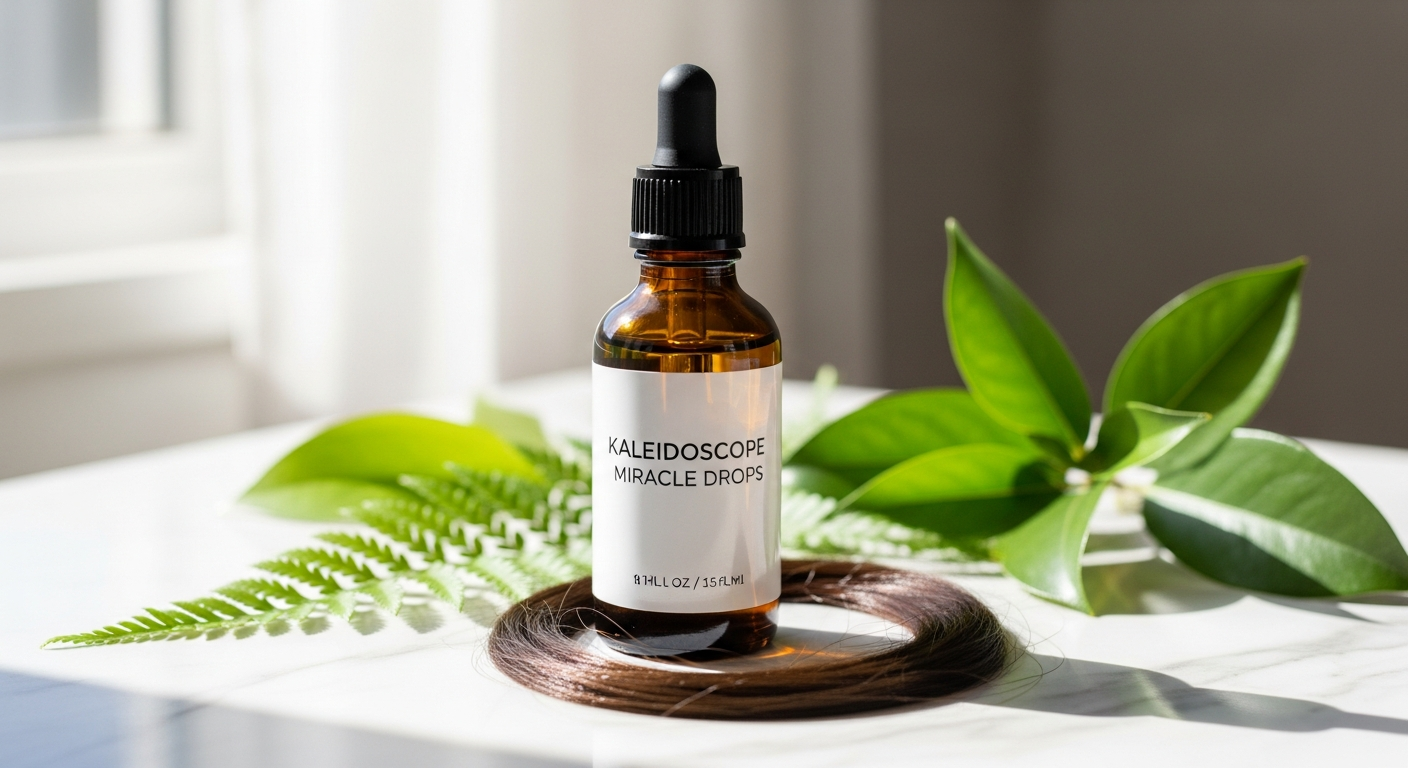
Learn how Kaleidoscope Miracle Drops are used, review key ingredients, scalp-care features, application tips, and factors to check before buying today.
If you are researching Kaleidoscope Miracle Drops, you may be looking for a targeted product that can fit into your scalp and hair-care routine without requiring a complicated application process.
The drops are marketed for dry scalp, thinning areas, breakage concerns, and added shine. The formula includes ingredients such as tea tree oil, peppermint oil, and aloe leaf extract.
What Are Kaleidoscope Miracle Drops?
Kaleidoscope Miracle Drops are a topical hair and scalp product applied with a dropper. Sally Beauty describes the formula as lightweight and quick absorbing, with the product intended for targeted application on areas experiencing thinning or scalp discomfort.
If you are comparing a hair growth oil with other scalp products, pay attention to what the formula can realistically contribute to your routine. Cosmetic oils can help condition the hair and scalp, yet individual hair-loss concerns can have many underlying causes.
The product comes in a 2-fluid-ounce bottle. Its targeted dropper application can be convenient if you prefer concentrating product around your hairline, part, or another specific area instead of coating your entire head.
What Ingredients Are Found in the Formula?
Current retailer listings identify tea tree leaf oil, peppermint oil, aloe leaf extract, and fragrance among the ingredients. Target’s current label information lists additional ingredients, including coconut oil, ylang-ylang flower oil, vitamin derivatives, and geranium oil. Ingredient lists can change, so checking the packaging you receive is sensible before your first application.
Tea Tree Oil
Tea tree oil is commonly included in scalp-care formulas. In this product, it contributes to the formula’s scalp-focused positioning. If you are searching for a scalp oil, this ingredient may be one reason the product catches your attention.
Peppermint Oil
Peppermint provides the cooling sensation associated with the drops. Anyone comparing a peppermint hair oil should keep personal scalp sensitivity in mind, since essential oils and fragrance may irritate some users.
Aloe Leaf Extract
Aloe is another conditioning ingredient included in the formula. It supports the product’s focus on hair and scalp conditioning without making the formula particularly complicated.
Can Miracle Drops Help With Thinning Edges?
Kaleidoscope markets the drops toward thinning areas, and retailers repeat claims related to supporting the scalp and reducing concerns associated with breakage. Those marketing claims should not be interpreted as proof that the product can treat every cause of hair loss.
If you are shopping for a thinning edges treatment, think about why your edges appear thinner. Tight hairstyles, repeated tension, heat, chemical processing, breakage, and medical factors can require different responses.
A topical cosmetic product may fit a routine focused on conditioning and minimizing breakage, while persistent or unexplained hair loss may warrant advice from a qualified healthcare professional.
How Do You Use Kaleidoscope Miracle Drops?
The application instructions are fairly straightforward. Sally Beauty directs users to dab the dropper onto the scalp or targeted areas and massage the product thoroughly using the fingertips. The retailer recommends applying it three to five times per week and states that results vary.
For practical use:
- Start with a small amount on the intended scalp area.
- Massage gently using your fingertips rather than your nails.
- Avoid saturating your hair with unnecessary product.
- Follow the frequency listed on your specific packaging.
- Watch for redness, itching, burning, or other signs of irritation.
Target’s label information recommends performing a patch test and discontinuing use if redness or irritation occurs. It also warns users to keep the product away from fire or flame during application and until the hair is dry because the contents are combustible.
Is It Suitable for a Dry Scalp?
People considering a dry scalp treatment may appreciate that the formula is applied directly where needed rather than distributed through every strand.
Still, dryness can have different causes. Flaking related to simple dryness may behave differently from dandruff, dermatitis, psoriasis, or another scalp condition. Persistent itching, inflammation, sores, or significant flaking deserves appropriate professional assessment rather than repeated cosmetic treatment.
What About Hair Breakage?
Breakage happens along the hair shaft rather than at the follicle. Styling habits, friction, chemical processing, dryness, and excessive heat can all contribute.
If you are researching a hair breakage treatment, look beyond a single topical product. Gentle detangling, lower-tension hairstyles, suitable conditioning, limited high-heat styling, and careful handling may matter alongside the product you apply.
What Should You Check Before Buying?
Price alone does not tell you if a scalp product suits your routine. Check several practical factors before purchasing:
- Ingredient tolerance: Essential oils and fragrance may not suit every scalp.
- Application preference: The dropper is designed for targeted use.
- Hair routine: Think about how another oil-based product will work alongside your shampoo, conditioner, and styling products.
- Scalp condition: Persistent irritation or unexplained hair loss may need professional assessment.
- Seller and packaging: Review the current package ingredient list because formulas and labeling can change.
- Expectations: Hair and scalp responses vary, so marketing timelines should not be treated as guaranteed outcomes.
Does the Formula Feel Heavy?
Sally Beauty describes Miracle Drops as lightweight and quick absorbing. However, how a product feels can depend on the amount applied, hair density, scalp oiliness, and the other products already in your routine.
Using a small targeted amount first can help you judge how the formula behaves without unnecessarily coating your scalp or hair.
Frequently Asked Questions
Can You Apply Kaleidoscope Miracle Drops to Wet or Dry Hair?
A Sally Beauty Q&A states that the product can be used on wet or dry hair. The primary directions focus on dabbing it directly onto the scalp and massaging it into the targeted area.
How Often Should You Apply the Drops?
Current retailer instructions recommend application three to five times per week. Follow the directions printed on the bottle you purchase in case the manufacturer updates its guidance.
Do Miracle Drops Guarantee Hair Growth?
No cosmetic hair product should be treated as a guaranteed solution for hair growth. Retailers present several growth-related claims for Miracle Drops, while also stating that individual results vary.
Should You Patch Test the Product?
Yes. Target’s current label information advises applying a drop to the wrist or behind the ear and discontinuing use if redness or irritation develops.
Are Kaleidoscope Miracle Drops Worth Researching?
Kaleidoscope Miracle Drops may suit shoppers seeking a targeted, lightweight product for scalp conditioning, shine, and areas affected by breakage.
The dropper format, relatively simple application process, and combination of tea tree, peppermint, and aloe are practical features to assess.
Your decision should depend on your scalp sensitivity, hair-care habits, ingredient preferences, and reason for using the product. For unexplained or ongoing hair loss, a cosmetic scalp product should not replace medical evaluation.