
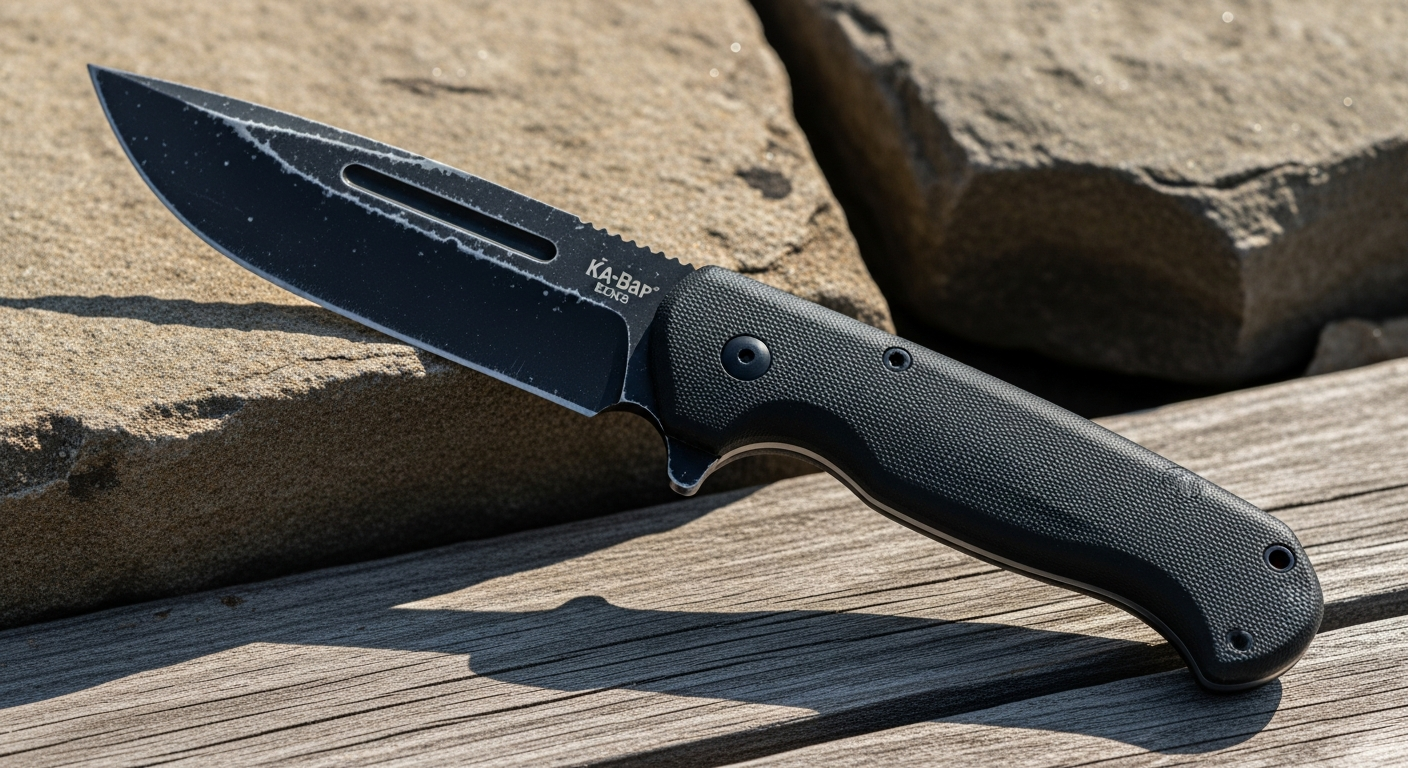
Discover why the KA-BAR Becker BK2 Companion knife dominates backcountry camps. Full-tang construction, drop-point blade, and MOLLE sheath make it the ultimate survival and bushcraft tool. Learn specs, performance, and real-world applications.
Full-Tang Strength Meets Field Practicality: The KA-BAR Becker BK2 Companion Knife
Ninety percent of backcountry enthusiasts will tell you that a single, dependable blade changes everything—yet most people still carry three knives when one would suffice. The KA-BAR Becker BK2 Companion knife emerged from Ethan Becker's philosophy that outdoor tools should be overbuilt rather than undersized. Since its introduction, this fixed-blade design has become the gold standard for bushcrafters, hunters, and survival specialists who demand performance without compromise.
Designed by Ethan Becker himself, an avid outdoorsman with deep roots in the knife community, the BK2 Companion represents more than just a cutting tool—it's a statement about what matters in backcountry work. KA-BAR's manufacturing expertise combined with Becker's innovative, practical approach has created something that resonates across the outdoor community. The knife has earned its reputation through countless hours in harsh conditions, proving itself against real-world demands rather than marketing claims.
I'll walk you through the anatomy of what makes the BK2 Companion exceptional—from its full-tang 1095 Cro-Van steel to its MOLLE-compatible sheath. You'll discover how it performs on real tasks, understand the trade-offs between weight and capability, and determine whether this investment aligns with your outdoor pursuits. Discover why the BK2 Companion has earned its place in the packs of serious outdoor professionals.
Full-Tang Construction and Material Breakdown
The BK2 Companion's full-tang design means the steel blade extends completely through the handle, with the handle material riveted or molded around it. This construction creates a single unified tool rather than a blade attached to a handle. The strength benefit is immediate and tangible—there's no weak point where the blade connects to the handle, no risk of separation under stress. When you're batoning wood, prying embedded rocks, or applying serious leverage, that full-tang design delivers the confidence that the knife won't betray you.
The blade itself typically features 1095 Cro-Van carbon steel, a material choice that reflects Becker's practical philosophy. This steel is tough and forgiving under stress, which matters when you're working hard in the field. Equally important is its field-sharpening capability—you can restore a sharp edge using basic whetstones or even natural stone without requiring specialized equipment or sending the knife back to a shop. The tradeoff is that carbon steel demands respect: it will rust if exposed to moisture without protection, requiring regular maintenance and proper storage protocols.
For those who prioritize corrosion resistance, KA-BAR offers the BK92 model, which uses MagnaCut steel. This modern steel alloy delivers superior edge retention, meaning fewer sharpening sessions during extended trips. It also resists rust far better than traditional carbon steel, particularly valuable in humid environments or maritime climates. The tradeoff involves slightly less extreme toughness and marginally more difficult field sharpening—but for many users, the reduced maintenance burden justifies the change.
The blade geometry measures approximately 5.25 inches with an overall knife length near 10.5 inches, striking a balance between reach and manageability. The drop-point design excels across multiple tasks: the gentle curve works beautifully for slicing and food prep, the sharp tip handles piercing through membrane and hide, and the spine offers leverage for prying and controlled strikes. This geometry isn't trendy—it's enduring, proven across generations of working knives.
Real-World Performance Across Backcountry Tasks
The BK2 Companion reveals its character when put to work. Batoning wood—the technique of using a knife as a wedge while striking the spine with a baton to split kindling—showcases the knife's primary strength. The full-tang construction handles repeated strikes without flex, and the blade geometry splits wood efficiently. Users consistently report that the BK2 processes firewood faster and more safely than smaller blades, which tend to bind or skip.
Chopping and camp chores represent another domain where this knife excels. Limbing branches, processing game, cutting through dried meat, and general camp construction all benefit from the blade's robust design and substantial length. The ergonomic handle, typically made from Ultramid or Zytel, provides secure grip even when hands are wet, cold, or covered in blood and tissue. The handle doesn't feel cramped or delicate—it communicates solidity.
Prying tasks present an interesting challenge. The BK2's full-tang construction makes it suitable for careful prying operations—loosening stuck stones, opening hardened shells, or separating bark—but the design philosophy emphasizes control and technique over brute-force abuse. Used intelligently, the spine and blade handle prying without damage; used recklessly, even a full-tang knife can fracture.
Fine detail work distinguishes the BK2 from simpler choppers. The drop-point blade excels at carving, whittling, and precision cuts around camp. Many users report that the BK2 handles these tasks as competently as dedicated carving knives, making the sacrifice of carrying a specialized tool unnecessary. This versatility reinforces the knife's appeal: it truly functions as a do-it-all tool rather than a specialist that requires companions.
The MOLLE-Compatible Sheath System
The included sheath transforms how you carry and access the knife. American-made from Celcon or similar durable plastic, the sheath provides serious retention—the knife seats firmly without rattling, yet draws cleanly with deliberate pressure. This balance matters during active movement, scrambling, or climbing where a loose knife becomes a hazard.
The MOLLE webbing integration opens tactical carrying options that extend far beyond traditional belt carry. You can attach the sheath vertically to pack shoulder straps for easy access, horizontally across your chest panel, or integrated into your main pack body. This flexibility means the knife adapts to your specific loadout rather than forcing you into a fixed carry position. Vertical chest carry provides immediate access during sudden needs, while pack-body integration keeps the knife secure during rough terrain.
Accessibility from various positions depends partly on carry choice and partly on draw technique. The sheath's design allows smooth, unimpeded draws from most positions, though vertical carry near the shoulder remains the fastest option for most users. During extended backcountry time, having the knife within arm's reach—not buried deep in a pack—changes how readily you use it for small camp tasks, which eventually compounds into significant time savings.
Steel Type Selection: 1095 Cro-Van vs. MagnaCut
The choice between steel types reflects your intended environment and maintenance philosophy. The 1095 Cro-Van steel delivers exceptional value and traditional carbon steel benefits. It sharpens quickly on basic equipment, holds a strong edge that's easy to touch up, and costs less than premium alternatives. However, carbon steel requires active rust prevention: oiling after use, proper storage away from humidity, and regular inspection. Neglect the maintenance, and you'll discover rust pitting the blade.
Users in dry climates, those who clean and oil their blades regularly, and people who appreciate traditional knife maintenance often prefer 1095 Cro-Van. There's something philosophically satisfying about understanding and actively caring for your tool. The blade develops patina over time, becoming darker and more refined, which many users find aesthetically appealing.
MagnaCut steel represents modern metallurgy, engineered specifically to improve on traditional compromises. Edge retention exceeds 1095 Cro-Van significantly—you'll sharpen less frequently during extended trips. Corrosion resistance improves dramatically; the blade resists rust even when neglected. The tradeoff involves slightly less extreme toughness under the most severe stresses and marginally more demanding field sharpening. For coastal environments, humid regions, or users who dislike routine maintenance, the BK92 with MagnaCut makes practical sense.
Edge retention differences translate to field practicality. A 1095 blade might require sharpening after a week of heavy camp use, while MagnaCut might go twice as long. This matters on extended expeditions where sharpening supplies are limited. The edge retention difference narrows considerably once you're performing fine detail work rather than sustained batoning; the practical distinction becomes most significant during heavy-duty camp chores.
Choose your steel type based on your climate and maintenance comfort level.
Weight, Balance, and Carry Comfort
The BK2 Companion weighs more than ultralight knife alternatives, which represents a genuine consideration for minimalist packers. Full-tang construction adds mass, as does the robust blade stock designed to absorb repeated impact. The total package sits comfortably in the 7-10 ounce range (depending on specific model), roughly equivalent to a large fixed-blade or small machete.
Balance point matters during extended carry and repetitive cutting. The BK2 balances near the blade's base, slightly forward of the handle, which most users find natural and comfortable. Forward balance helps during chopping motions, keeping the blade working without requiring excessive wrist effort. During slicing and detail work, the balance point doesn't create awkwardness.
Extended carry fatigue emerges as a consideration during all-day backcountry use. A knife in a hip sheath pulls downward with every step, and the BK2's weight becomes noticeable after eight hours of hiking. Strategic pack integration substantially mitigates this burden—carrying the knife vertically against a chest panel or integrated into your pack body distributes weight more effectively than relying solely on hip carry. Many users discover that repositioning the sheath during the day, shifting from hip to pack integration as conditions change, optimizes both accessibility and fatigue management.
Pack integration strategies deserve attention if you anticipate carrying the knife regularly. Chest carry positions it for rapid access while distributing weight across your entire pack frame. Pack-body integration keeps the knife secure during technical terrain and climbing. Experiment with positioning before committing to extended backcountry time; your ideal carry position depends on your specific pack design, physiology, and intended activities.
Price Point and Value Proposition
The BK2 Companion retails between $100 and $250, with variation based on steel type, included accessories, and retailer markup. Standard 1095 Cro-Van versions typically occupy the lower end of this range, while MagnaCut BK92 models and special editions command premium pricing. The Celcon sheath and MOLLE compatibility come standard across all versions, ensuring you're not paying extra for core functionality.
Factors affecting cost extend beyond steel type. Limited editions, special finishes, or bundled accessories push prices higher. Retailer markup varies significantly—online retailers often offer better pricing than brick-and-mortar shops, though you lose the opportunity to handle the knife before purchase. Patience and comparison shopping can yield meaningful savings without sacrificing anything substantive.
Long-term value justifies the investment when viewed across years of use. A knife that costs $150 and serves faithfully for two decades costs less than $10 yearly. The BK2's reputation for lasting decades under serious use makes this math work. Budget fixed-blade alternatives might cost $30-$50 but often require replacement within five years as they fail under heavy use. Premium competitors exceed $300 and deliver diminishing returns in practical capability for backcountry work.
Cost-per-use calculations that begin after your first multi-week expedition will convince you that the BK2 represents excellent value. Most users report that they stop wanting additional knives once they've learned to trust this one—the psychological factor of having a tool that simply works eliminates the acquisition impulse that plagues many gear-focused individuals.
Strengths That Set It Apart
The overbuilt design philosophy stands as the BK2's defining characteristic. Where lighter designs sacrifice durability for minimal weight, the BK2 sacrifices minimal weight for genuine durability. This isn't weakness masked by marketing—it's intentional engineering that prioritizes reliability during critical moments. You won't discover a hidden failure point under stress because the design eliminates them systematically.
Exceptional strength for heavy-duty abuse represents a practical advantage that separates the BK2 from competent but lesser knives. The spine can handle repeated batoning strikes without flexing. The blade absorbs the impact of prying without bending. The handle withstands the torque of difficult cuts and demanding work without cracking. This strength builds genuine confidence—you're not constantly worried about damaging your primary tool.
Ergonomic handle design deserves specific mention because many robust knives sacrifice comfort. The BK2's handle provides security and comfort simultaneously, which matters during extended use. The Ultramid or Zytel materials feel pleasant to touch, resist temperature extremes, and provide genuine grip security even in wet conditions. The handle design doesn't feel like an afterthought; it communicates that someone thoughtfully designed how your hand interacts with the tool.
The full-tang confidence factor blends psychology with practical reliability. When you understand that the steel extends completely through the handle, that there's no weak point where components attach, that you can apply full force without questioning whether the knife will survive, your decision-making in the field changes. You become more direct, more decisive, and less tentative—because you trust the tool completely.
Limitations and Honest Trade-Offs
The weight burden creates genuine friction for minimalist packers and ultralight enthusiasts. If you're optimizing for pure ounces, the BK2 represents unacceptable mass. Ultralight alternatives exist, though they typically sacrifice capability or durability. The question becomes whether shaving several ounces from your knife justifies potential failures at critical moments.
Carbon steel maintenance requirements demand discipline. The 1095 Cro-Van blade requires regular oiling, careful storage, and active rust prevention. Humid climates, maritime environments, or individuals who dislike routine maintenance will find carbon steel frustrating. The MagnaCut alternative addresses this limitation, though at increased cost.
Factory edge quality varies and occasionally requires additional sharpening out of the box. KA-BAR doesn't consistently deliver a factory-sharp edge across all examples. Some users receive knives ready for immediate use; others require several minutes with a whetstone to achieve acceptable sharpness. This inconsistency remains minor but worth acknowledging for those planning expeditions without backup sharpening supplies.
Size considerations affect specific user groups. Individuals with smaller hands might find the handle slightly large, and those preferring compact designs will find the 10.5-inch length excessive for detail work. These limitations remain minor—the BK2 accommodates most hand sizes adequately—but they represent genuine drawbacks for certain users rather than universal perfection.
Who Should Choose the BK2 Companion
Bushcrafters seeking a single, multi-purpose camp tool represent the primary user base. The BK2 eliminates the need for specialized knives when you're building shelters, processing wood, and managing camp infrastructure. Its versatility across diverse tasks makes it ideal for individuals who value carrying one excellent tool rather than multiple mediocre specialists.
Hunters requiring reliable performance during field dressing and game processing will find the BK2 exceptional. The blade geometry handles hide and membrane cleanly, the drop point reaches internal organs without excessive tissue damage, and the robust construction survives the demands of processing large animals. The ergonomic handle maintains security even when wet with blood.
Survival specialists building redundant, proven gear systems gravitate toward the BK2 because its reputation is built on genuine capability, not marketing narratives. Individuals planning for genuine survival scenarios select tools based on proven performance records, and the BK2's track record is extensive across multiple decades and diverse conditions.
Tactical professionals and military applications benefit from the knife's proven design and MOLLE-compatible sheath system. The overbuilt construction handles field expedient repairs, camp construction, and emergency situations without question. The consistent reputation across professional user communities reinforces its suitability for serious work.
Maintenance and Long-Term Care
Rust prevention strategies begin immediately with carbon steel ownership. After use, wipe the blade thoroughly to remove moisture and debris. Apply a light coating of oil—mineral oil, machine oil, or specialized knife oils all work—ensuring you protect the entire blade surface. Store in a dry location, ideally in a breathable sheath rather than sealed containers that trap moisture. Regular inspection reveals early rust formation before pitting becomes serious.
Sharpening techniques accommodate field conditions and access to equipment. Whetstones offer the most capable option for serious restoration, but field sharpening using ceramic rods or even natural stone works when circumstances demand it. The 1095 Cro-Van steel sharpens readily on basic equipment, which distinguishes it from premium stainless alternatives. Honing rods maintain edge sharpness between full sharpening sessions, extending intervals between serious maintenance.
Handle maintenance remains minimal. Ultramid and Zytel resist degradation, requiring only occasional cleaning and occasional inspection for cracks or damage. Avoid exposing the handle to extreme heat (stored directly in sunlight for extended periods) and harsh chemicals. The rivets holding the handle together might require occasional tightening if they work loose, though quality manufacturing generally prevents this.
Seasonal inspection and storage best practices involve examining the knife quarterly. Check for unexpected rust, loose handle components, and edge damage. Oil the blade, ensure the sheath retention remains appropriate, and verify that the MOLLE webbing attachments function properly. Store in a cool, dry location away from temperature extremes and humidity sources. Proper storage practices determine whether your BK2 serves you for decades or requires premature retirement.
Making the Investment: Is the BK2 Companion Your Backcountry Essential?
The KA-BAR Becker BK2 Companion knife stands as a testament to purposeful design—it refuses to compromise on strength, reliability, or capability. I've examined countless fixed-blade options, and this knife consistently delivers when it matters most. The full-tang construction, proven steel options, and MOLLE-compatible sheath create a system that genuinely works across diverse outdoor scenarios.
Your decision ultimately hinges on priorities. If you value overbuilt durability, don't mind the weight, and appreciate American manufacturing heritage, the BK2 Companion becomes a no-brainer investment. The $100–$250 price range positions it as accessible without cutting corners. The knife's reputation exists for a reason: it performs. Whether you're processing firewood in a remote camp, executing precision carving, or relying on it during a genuine survival situation, the BK2 Companion responds with the kind of reliability that builds confidence.
Start with the standard 1095 Cro-Van version, then explore the MagnaCut upgrade if corrosion resistance becomes a priority. Either way, you're acquiring a tool that will outlast trends and serve you faithfully for decades. Get your KA-BAR Becker BK2 Companion today and experience why serious outdoors enthusiasts trust this knife completely.