
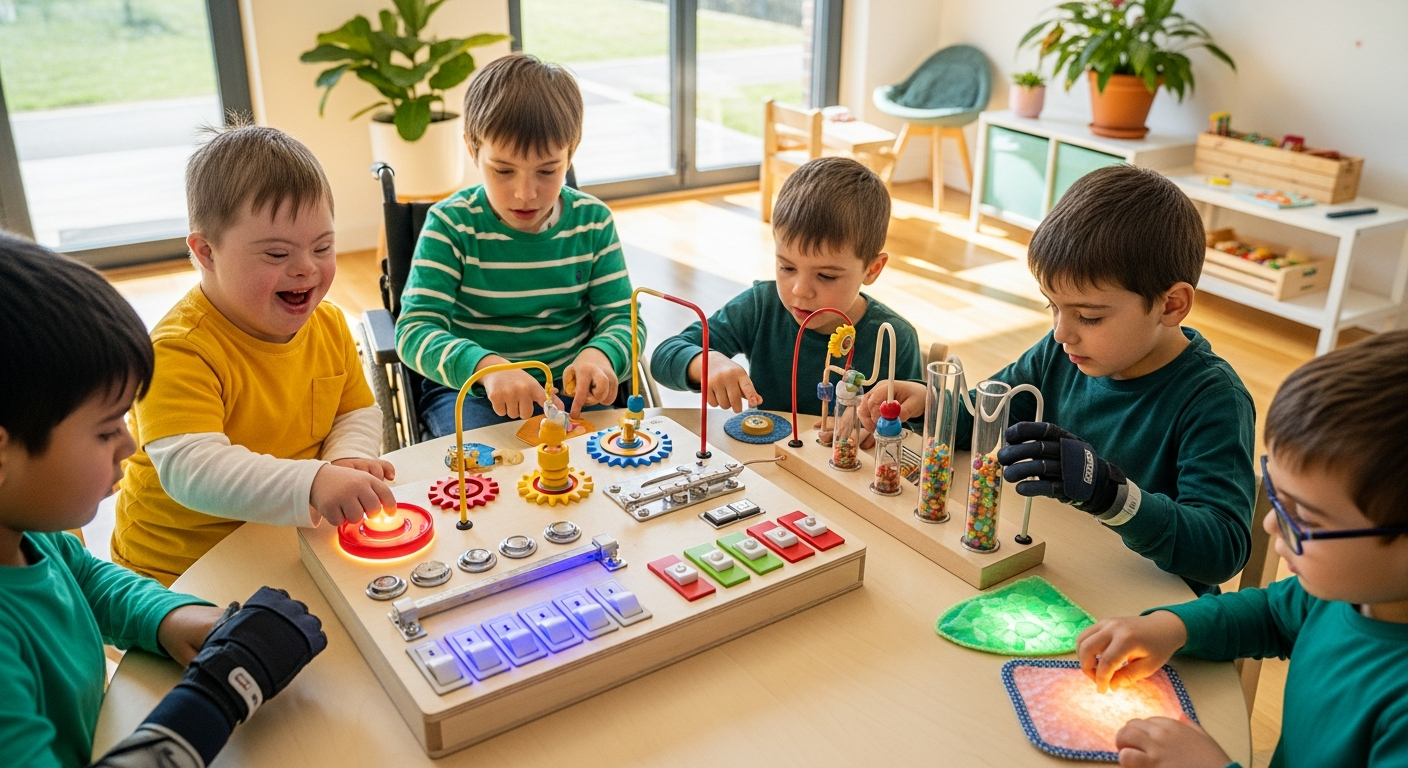
Discover how the Joyreal Montessori LED Light Busy Board promotes sensory regulation and fine motor skills in neurodivergent children. Explore calming textures, realistic switches, and screen-free learning benefits for kids with autism, ADHD, and sensory processing differences.
Roughly 1 in 4 children experience sensory processing differences, yet most busy boards on the market are designed for neurotypical learners alone. The gap between what's available and what actually works for neurodivergent kids is real and often frustrating for parents. The Joyreal Montessori LED Light Busy Board changes that equation entirely—it's built with these children in mind, acknowledging their unique sensory needs and learning styles from the ground up.
Montessori-inspired toys have gained serious traction among parents seeking screen-free alternatives that respect how children naturally learn and develop. Joyrealtoys has carved out a reputation for creating thoughtfully designed educational toys that work with a child's developmental stage, not against it. The LED Light Busy Board represents their commitment to inclusive play—combining realistic cause-and-effect learning with sensory-friendly features that appeal to kids with autism, ADHD, and sensory regulation challenges.
This guide unpacks the sensory elements that make it different, the developmental milestones it supports, and whether it's the right fit for your household. By the end, you'll have a clear picture of how this $49.99–$65.99 investment can transform quiet time into meaningful learning.
Beyond the Basics—Why Sensory-Friendly Design Matters for Neurodivergent Kids
Overstimulation is a real barrier to learning. Traditional busy boards loaded with excessive sounds and flashing lights often backfire, leaving sensitive children overwhelmed rather than engaged. What looks entertaining to neurotypical kids can trigger anxiety, shutdown, or complete avoidance in those with sensory processing differences.
The Joyreal board takes a different approach. Calming textures like soft felt and smooth wood provide regulatory input without triggering sensory overload. These materials give children something soothing to return to between more stimulating activities, creating natural pacing that respects their nervous systems.
Real switches and buttons create predictable, controllable interactions that build confidence in children with anxiety. When a child knows exactly what will happen when they flip a switch—no surprises, no overwhelming sounds—they're more likely to explore and take risks with learning. This predictability is foundational for anxious learners.
The absence of overwhelming auditory feedback supports sustained focus. Without constant beeping, music, or flashing light shows demanding attention, children can actually concentrate on the tactile and visual elements before them. This quieter approach aligns with how neurodivergent brains often process information most effectively.
Tactile variety throughout the board helps sensory-seeking children meet their regulation needs throughout the day. Some children crave input—they need to touch, manipulate, and engage with varied textures. A board with multiple tactile elements gives them legitimate, developmentally appropriate ways to satisfy that need.
Fine Motor Skills Development Through Accessible Manipulation
Lock mechanisms throughout the board challenge dexterity without frustrating young hands. The difficulty is calibrated so that children can succeed with effort, building both hand strength and problem-solving skills simultaneously.
Realistic switches teach hand-eye coordination and bilateral coordination—the ability to use both hands together toward a common goal. When a child must hold a board steady with one hand while manipulating a switch with the other, they're building neural pathways that support everyday tasks.
Progressive difficulty means children grow into the board as their motor skills advance. A toddler might spend weeks mastering a simple latch, while an older preschooler tackles more complex lock mechanisms. The same board serves different developmental stages without becoming boring or too easy.
Practical applications extend beyond the board itself. Skills learned transfer directly to everyday tasks—zipping jackets, buttoning shirts, turning doorknobs, and opening containers. Children see real-world relevance in what they're practicing, which strengthens motivation and retention.
Screen-Free Play That Actually Holds Attention
The neuroscience behind hands-on manipulation versus screen time is compelling. When children interact with physical objects, they activate multiple sensory systems simultaneously—touch, sight, proprioception, and often sound. This rich, multisensory engagement builds stronger neural connections than passive screen interaction ever could.
The Joyreal board keeps children engaged for extended periods without creating dopamine-driven dependency. There's no algorithm designed to trigger reward centers or keep kids scrolling. Instead, children become absorbed in the intrinsic satisfaction of figuring something out, watching cause-and-effect unfold, and mastering new challenges.
For parents managing sensory sensitivities in public spaces, this board solves a real problem. Restaurants, waiting rooms, and car rides become manageable when children have access to meaningful, engaging quiet play without digital distractions. A child absorbed in exploring switches and textures isn't melting down or demanding constant attention.
Patience and problem-solving develop naturally through trial-and-error exploration. When a lock doesn't open immediately, the child must adjust their approach, try different techniques, and persist. These aren't abstract lessons—they're lived experiences that build genuine confidence in their ability to solve problems.
Montessori Principles in Action—What Makes This Board Different
Self-directed learning sits at the heart of Montessori philosophy, and the Joyreal board embodies this completely. Children choose which activities to explore at their own pace, following their genuine interests rather than adult-directed play sequences. This autonomy matters enormously for neurodivergent children, who often benefit from control over their sensory and cognitive load.
The prepared environment concept means every element serves a developmental purpose. Nothing is decorative or random. Each activity targets specific skills—whether fine motor, sensory regulation, problem-solving, or spatial reasoning. This purposefulness makes the board both engaging and genuinely educational.
Isolation of concepts prevents overwhelm. Rather than a chaotic jumble of activities competing for attention, each feature stands somewhat distinct. A child can focus on mastering one lock without being distracted by ten other things demanding engagement simultaneously.
Child-led discovery invites exploration rather than demanding specific play patterns. The board doesn't come with instructions telling kids "play with this first, then that." Instead, it whispers possibilities—children discover what they enjoy and what challenges them in their own time.
Durability, Safety, and the Sustainable Birch Ply Construction
Sustainable materials matter, both ethically and practically. Birch ply sourcing reflects environmental responsibility, and the natural wood construction provides durability that plastic alternatives simply cannot match. A quality wooden board withstands years of manipulation, moisture, and wear without degrading.
Non-toxic finishes and safety certifications become especially important for children with sensory sensitivities. Some kids mouth objects or have skin reactions to certain chemicals. The Joyreal board's commitment to safe, non-toxic materials means parents can relax about what their children are touching and exploring.
Long-lasting investment describes this purchase accurately. Quality construction means this board survives multiple children, years of intensive use, or both. Families report passing boards between siblings or using them for years without significant wear, making the per-child cost quite reasonable.
Easy maintenance and cleaning matters for families managing hygiene concerns or sensory preferences around cleanliness. The smooth wood surfaces wipe clean quickly, and there are no crevices harboring germs or difficult to reach spaces requiring elaborate cleaning routines.
Practical Considerations Before You Buy
Battery requirements for LED lights deserve attention. The board uses standard batteries, and while LED lights are efficient, families should plan for occasional battery replacements. The cost is minimal, but it's worth factoring into the ongoing investment.
Size and portability balance practical concerns. The board is compact enough to travel—fitting into diaper bags or car seats—yet substantial enough for meaningful, extended play. It's not a tiny lap toy; it's genuinely engaging without consuming excessive space.
Age range suitability typically spans from around 18 months through age 5 or 6. Younger toddlers benefit from the sensory and fine motor elements, while older children engage with the problem-solving challenges. Some children remain interested longer, particularly those with developmental delays or ongoing sensory needs.
Pricing breakdown shows regular pricing around $65.99, with frequent sales bringing costs to approximately $49.99. At the lower price point, the value proposition becomes particularly strong—quality Montessori materials rarely cost less than $50. Even at regular price, the durability and developmental returns justify the investment.
Real Outcomes—What Parents and Educators Report
Parents consistently report improved focus and sustained attention during quiet time. Children who typically struggle with independent play find themselves absorbed in the board's activities, buying parents meaningful periods of peace and giving children genuine accomplishment.
Noticeable progress in fine motor skills and hand strength appears within weeks. Parents observe children zipping, buttoning, and turning knobs with greater confidence and capability. Teachers and occupational therapists note measurable improvements in hand strength and dexterity.
Reduced anxiety and sensory-seeking behaviors transform daily life for many families. Children with autism or ADHD develop healthier regulation strategies when given appropriate sensory tools. The board provides legitimate ways to meet sensory needs, reducing problematic behaviors driven by dysregulation.
Enhanced problem-solving confidence and willingness to tackle challenges ripple beyond the board itself. When children master complex locks or figure out how switches work, they internalize the belief that they can solve problems. This confidence transfers to academic work, social situations, and everyday challenges.
Positive feedback from occupational therapists and special education professionals validates what parents observe. Professionals recommend the board specifically for children with sensory processing differences, autism, and developmental coordination challenges, recognizing its alignment with evidence-based therapeutic principles.
Beyond Busy—Building Confident, Regulated Learners
The Joyreal Montessori LED Light Busy Board isn't just another toy gathering dust in the corner. It's a thoughtfully engineered tool that honors how neurodivergent children actually learn and regulate themselves. From the calming textures that soothe sensory systems to the real switches that teach cause-and-effect, every element serves a purpose. What strikes most about this board is its inclusivity—while many busy boards cater to neurotypical learners, this one explicitly addresses the needs of children with autism, ADHD, and sensory processing differences.
Whether you're a parent seeking screen-free alternatives, an educator building a calm-down corner, or someone raising a neurodivergent child, this board deserves serious consideration. At $49.99–$65.99, it's an investment in independence, fine motor development, and genuine engagement. Your child will spend hours discovering, problem-solving, and building confidence—all without a screen in sight.