
Discover how Intelligent Octopus Go EV tariff slashes charging costs with smart automation and off-peak rates as low as 5.49p/kWh. Learn setup requirements, real savings potential, and optimization strategies for UK EV owners.
Electric vehicle owners across the UK are currently spending an average of £400-600 annually on charging costs—but what if you could cut that figure in half? The gap between standard electricity rates and specialized EV tariffs has never been wider, and thousands of UK drivers are missing out on dramatic savings simply because they haven't switched to the right plan.
Octopus Energy's Intelligent Octopus Go has become the UK's dominant EV charging solution, powering the majority of smart time-of-use tariffs across the country. This isn't just another energy plan; it's a fundamentally different approach to how you pay for electricity. By combining a guaranteed six-hour overnight window with intelligent automation that learns your charging patterns, this tariff transforms EV ownership from an expensive necessity into a genuinely economical choice.
Start comparing Intelligent Octopus Go rates against your current plan today.
Understanding the Intelligent Octopus Go Rate Structure
The tariff's foundation rests on a simple but powerful principle: electricity costs far less when demand is lowest. Between 11:30 PM and 5:30 AM, you'll pay rates as low as 5.49p/kWh in some regions, with most areas averaging around 7p/kWh. This guaranteed six-hour window applies to both EV charging and general household consumption, creating genuine flexibility in how you manage your energy budget.
Outside this core period, daytime rates hover around 28p/kWh during business hours—significantly higher than the off-peak window. This creates a natural incentive structure: shift what you can to nighttime, and your bills shrink accordingly.
Beyond the fixed off-peak window, Intelligent Octopus Go's smart charging automation identifies the cheapest and greenest charging windows throughout the day. The system learns your patterns and can schedule charging outside the core 11:30 PM to 5:30 AM window when renewable energy availability spikes or grid demand drops. This automation removes the guesswork from energy management entirely.
Regional variations across UK distribution zones mean your exact rates depend on your postcode. Some areas see significantly lower off-peak rates than others, but the principle remains consistent: nighttime charging costs substantially less than daytime consumption. Fixed-rate predictability distinguishes this tariff from dynamic options that fluctuate daily—you know exactly what you'll pay, making budgeting straightforward.
Real savings potential is substantial. Customers comparing Intelligent Octopus Go against traditional Economy 7 or standard rates consistently report reductions of 60-70% on charging costs alone. For high-mileage drivers, this translates to £600-800 annual savings; for casual users, £300-400 remains achievable with minimal effort.
Essential Technical Requirements and Compatibility
A SMETS2 smart meter is non-negotiable for accessing the tariff's core features and automation capabilities. This isn't optional—it's the infrastructure that enables real-time monitoring and algorithmic optimization. If you don't currently have a SMETS2 meter, Octopus Energy arranges installation at no cost, though timelines typically span 2-4 weeks depending on regional availability and engineer scheduling.
Home chargers must support smart charging protocols to enable automated scheduling and optimization. If you're installing a new charger or upgrading an existing one, verify that your chosen model integrates with Octopus's platform before purchase. Many modern chargers support this functionality, but older units may require replacement or workarounds.
Vehicle compatibility varies across manufacturers. Tesla, BMW, and Nissan offer native Octopus integration, allowing seamless communication between your vehicle and the energy system. Owners of older vehicles without native integration can still benefit from the tariff through manual charging during guaranteed off-peak hours or by using compatible home chargers with scheduling capabilities.
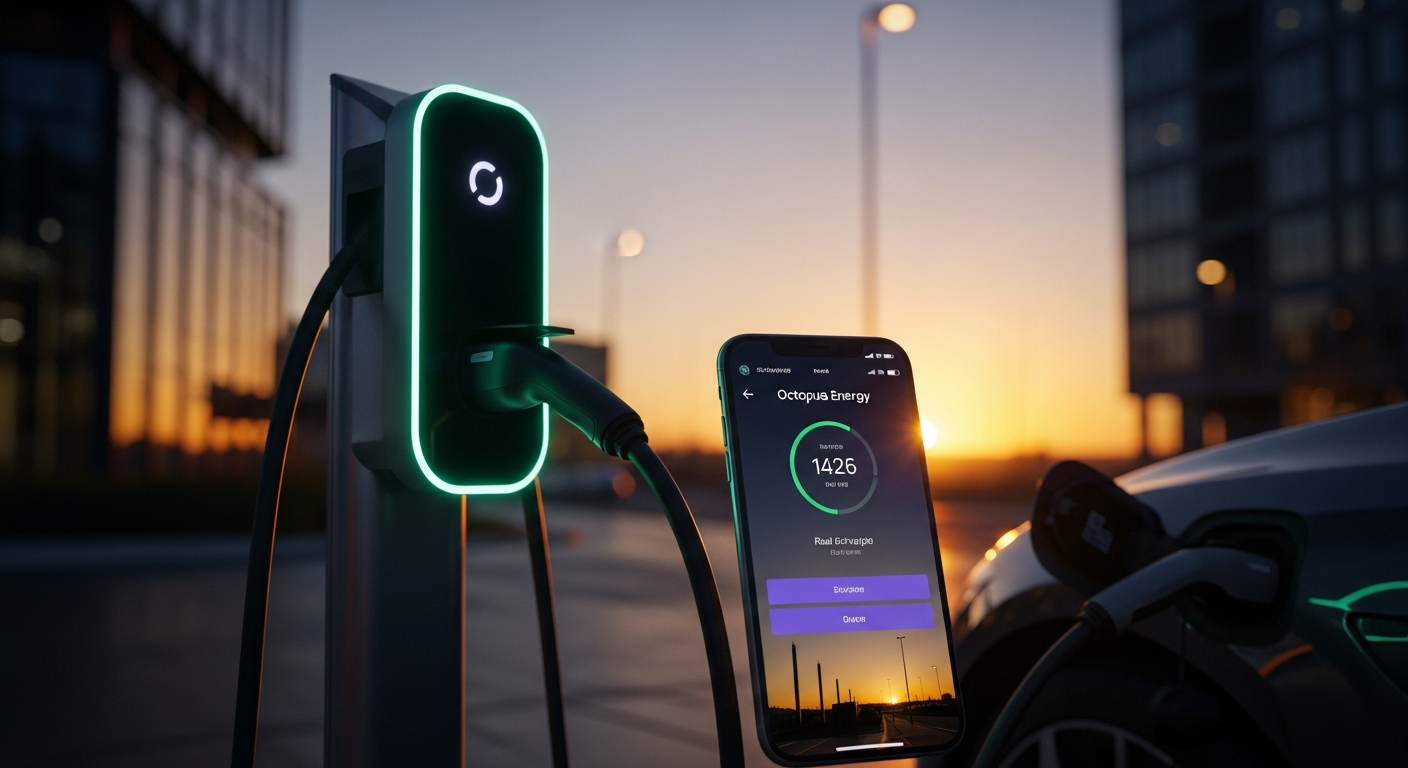
The Octopus Energy app provides real-time monitoring, charging schedule overrides, and comprehensive savings tracking. You'll see exactly how much you've saved in any given month, which charges occurred during peak versus off-peak periods, and recommendations for further optimization. This visibility transforms abstract savings into concrete numbers you can track.
Manual charging during the guaranteed off-peak window works effectively even without full smart integration capabilities. If your vehicle or charger doesn't support intelligent scheduling, you can still access the 5.49p-7p/kWh rates by plugging in between 11:30 PM and 5:30 AM. You'll sacrifice some optimization benefits, but substantial savings remain achievable.
A reliable broadband connection is required for automated charging to function properly. Without stable internet connectivity, the smart charging algorithm cannot access real-time grid data and renewable energy forecasts needed to identify optimal charging windows. If your broadband connection is unreliable, focus on the guaranteed off-peak window instead.
Check your home's smart meter status and charger compatibility with Octopus Energy now.
Real-World Savings Calculations for Different Households
Average annual savings of £300-500 compared to standard tariffs represents the norm for typical EV owners charging a single vehicle with moderate mileage. This assumes consistent use of off-peak charging during the 11:30 PM to 5:30 AM window and minimal peak-time charging.
High-mileage drivers charging 10,000+ miles annually can achieve savings of £600-800 through disciplined off-peak charging. A Tesla Model 3 requires roughly 15-18 kWh per 100 kilometers, meaning heavy users maximize their tariff benefits simply through volume. At 5.49p/kWh for off-peak charging versus 28p/kWh daytime rates, the financial advantage compounds rapidly.
Multi-vehicle households multiply additional savings dramatically. If you charge two EVs during the same off-peak window, you're effectively doubling your financial advantage. Families with multiple drivers or households combining an EV with a plug-in hybrid see particularly strong returns.
Shifting non-urgent household loads like laundry, dishwashing, and water heating to off-peak hours amplifies total savings significantly beyond EV charging alone. If you run your dishwasher at 11:30 PM instead of 7:30 PM, that consumption moves from 28p/kWh to 7p/kWh—roughly a 75% reduction on that individual load. Across a month, these shifts add up substantially.
Winter months often see higher savings due to increased charging frequency and lower renewable energy availability pushing grid operators to activate more efficient generation. Paradoxically, you save more in winter when renewable generation is lower because the tariff incentivizes you to charge during times the grid most needs demand shifting.
Smart meter installation costs typically recoup within 12-18 months through tariff savings alone. Since Octopus arranges installation at no cost, your only investment is the switching process itself—a timeframe measured in weeks, not months.
Real examples reveal substantial variation based on individual circumstances. A London commuter with a 30-mile daily round trip sees different absolute savings than a rural driver covering 100 miles daily, yet both benefit from the same rate structure and smart charging capabilities. Your specific savings depend on driving patterns, local electricity rates, and how effectively you optimize household loads.
Optimizing Your Charging Strategy Within the Tariff
Charging during the guaranteed 11:30 PM–5:30 AM window ensures absolute lowest rates without relying on automation or smart meter responsiveness. This represents your baseline savings—rates so low that even casual, unoptimized charging delivers substantial financial benefit.
Setting vehicle charging limits and preferred completion times allows Octopus's algorithm to find optimal windows automatically. Rather than charging to 100% immediately, specify that you need 80% charge by 7:00 AM. The system then identifies the cheapest 30-minute window between now and then, potentially finding rates cheaper than even the standard off-peak period if renewable energy availability peaks unexpectedly.
Moving high-consumption activities to off-peak hours like laundry, cooking, and heating maximizes tariff benefits across your entire household, not just vehicle charging. An electric oven, dishwasher, or washing machine running at 11:00 PM instead of 6:00 PM saves money on every kWh consumed. Over a month, these shifts represent meaningful financial leverage.
Understanding your EV's charging curve helps avoid expensive peak-time top-ups and unnecessary costs. Most vehicles charge fastest at lower battery states and slow considerably above 80% capacity. Recognizing this means you can plan full charging sessions during off-peak windows rather than accepting partial peak-time charges that waste expensive electricity on slower charging speeds.
Communicating your morning departure schedule to the Octopus system enables overnight completion and optimization. If you need to leave at 7:30 AM with a full battery, tell the system. It will ensure charging completes by 5:30 AM, capturing the lowest rates. Conversely, if you can leave with 70% capacity, you're done charging by 3:00 AM, potentially using an even cheaper window if renewable energy peaks then.
Weekly savings reviews and charging pattern analysis through the app reveal additional optimization opportunities. The platform identifies when you're consistently charging during expensive periods and suggests behavioral adjustments. Over time, these insights compound into noticeably lower bills.
Adapting strategy to daylight hours and weather patterns improves overall efficiency and cost savings. Sunny Sundays might see particularly cheap renewable electricity; rainy Tuesdays might see grid demand patterns that favor different charging windows. Flexible users who adjust their patterns seasonally extract maximum value.
Navigating Limitations and Potential Drawbacks
Customers without SMETS2 meters face installation delays before accessing the full tariff benefits. While installation is free, regional backlogs can extend timelines to 4-6 weeks. If you're eager to switch immediately, check your current meter status beforehand.
Peak-time electricity at 28p/kWh is significantly higher than some competitor offerings in the market. This rate applies to all daytime consumption, not just vehicle charging. Households with inflexible schedules or poor off-peak optimization potential may find better options elsewhere. Compare peak rates across providers before committing.
Older EV models or third-party chargers may not support full smart charging integration capabilities. If you drive a 2015 Nissan Leaf or use a basic charging unit, you're limited to manual charging during the off-peak window rather than benefiting from intelligent scheduling. Assess your equipment compatibility before assuming full automation benefits.
Occasional smart meter communication failures can disrupt automated charging schedules and optimization. These incidents are rare, but they occur. During outages, fall back to manual charging during guaranteed off-peak hours to protect your savings.
The tariff demands discipline as customers charging randomly during peak hours won't see substantial savings. Someone who tops up at 6:00 PM daily out of habit will pay 28p/kWh repeatedly, offsetting off-peak advantages. Success requires intentional behavior change, not passive adoption.
Some distribution areas offer less competitive off-peak rates than others, reducing overall savings potential significantly. Request a specific quote for your postcode to verify actual rates before switching. While 5.49p/kWh exists in some regions, others cap out around 7p/kWh, which still delivers savings but not the advertised maximum.
Standard 12-month contracts may limit flexibility if your circumstances or needs change during the period. If you sell your EV or relocate to an apartment without charging infrastructure, you're potentially locked into a contract. Verify exit terms before committing.
Making the Switch: Eligibility and Getting Started
UK residents with compatible smart meters and an EV or commitment to purchasing one are eligible for Intelligent Octopus Go. You don't need to already own an electric vehicle—being within 6-12 months of purchase qualifies you.
Moving from a current supplier typically takes 2-4 weeks while existing Octopus customers switch within days. The UK's Switching Service coordinates the process, managing meter readings and account transfers. Mark your calendar for when the switch completes and monitor your first bill carefully.
Meter readings, account details, and EV registration information streamline the switching process efficiently. Gather these before initiating a switch to avoid delays. Your current bill and EV registration documents contain everything Octopus needs.
Octopus arranges smart meter installation at no cost though timeline varies by region and availability. Their scheduling system shows available dates during your quote process. Confirm installation before your switch date to avoid gaps in service.
Octopus provides integration support for compatible home chargers and vehicles during setup. Their team can guide charger installation, verify smart connectivity, and configure settings within the app. This support extends through email, phone, and in-app chat.
Initial bills may seem high due to meter reading adjustments but savings accelerate from month two onward. Your first statement reflects usage patterns during the switching transition; subsequent months show clearer savings as you fall into optimized charging routines.
A dedicated EV tariff support team available via app, phone, and online chat provides customer assistance throughout your journey. Octopus's EV-specific expertise exceeds general customer service—they understand charging patterns and tariff optimization deeply.
Comparing Intelligent Octopus Go Against Alternative EV Tariffs
Octopus Go dominates with 60%+ market share among UK smart time-of-use EV tariffs. This dominance reflects both product quality and customer satisfaction rather than aggressive pricing or marketing. The network effect strengthens as more chargers integrate with Octopus's platform.
Off-peak rates of 5.49p–7p/kWh match or beat most competitors, with peak rates varying more widely across alternative providers. Some competitors offer cheaper daytime rates but higher off-peak rates—a trade-off that typically favors Octopus for EV owners.
The intelligent charging algorithm outperforms fixed-window competitors in identifying optimal charging times. While other providers offer static 11:00 PM to 6:00 AM windows, Octopus's automation adapts to real-time grid conditions, renewable energy forecasts, and demand patterns. This flexibility generates additional savings for connected users.
Octopus Energy's financial strength and renewable energy commitment provide long-term reliability and stability. Smaller suppliers occasionally exit the market; Octopus's scale ensures continuity and ongoing platform investment.
App integration, savings tracking, and customer support exceed many alternative providers in the market. The Octopus platform is simply more user-friendly, more transparent, and more responsive to customer needs.
The tariff works for general household electricity, not just vehicle charging, providing broader flexibility. You're not paying a premium for EV-specific features—the rates apply to all household consumption, making even non-vehicle loads cheaper during off-peak hours.
Consistently high customer satisfaction ratings for ease of use and actual savings delivery performance distinguish Octopus from competitors. Independent reviews and Trustpilot ratings show users genuinely receiving promised savings, not encountering billing surprises or hidden limitations.
Taking Action on Your EV Energy Savings
The Intelligent Octopus Go tariff represents a genuine opportunity to transform how you pay for electric vehicle charging. Off-peak rates as low as 5.49p/kWh combined with intelligent automation can slash your annual charging costs by £300-800, depending on your driving patterns and household energy consumption. Yes, you'll need a SMETS2 smart meter and compatible charging infrastructure, but these prerequisites unlock savings that compound month after month.
What separates successful users from disappointed ones isn't the tariff itself—it's intentional optimization. Those who embrace the off-peak window, shift household loads strategically, and monitor consumption through the Octopus app consistently report savings exceeding initial expectations. The peak-time rates do sting if you charge carelessly, but that's the tariff working as designed: encouraging smarter energy behavior across the entire grid.
Your next step is straightforward: check your current smart meter status and EV charger compatibility, then request a quote from Octopus Energy. The switching process takes weeks, not months, and your savings begin accumulating immediately. If you're serious about making EV ownership genuinely economical while supporting the UK's renewable energy transition, Intelligent Octopus Go is the logical choice for 2026 and beyond.
Get your Intelligent Octopus Go quote and begin saving on EV charging today.