
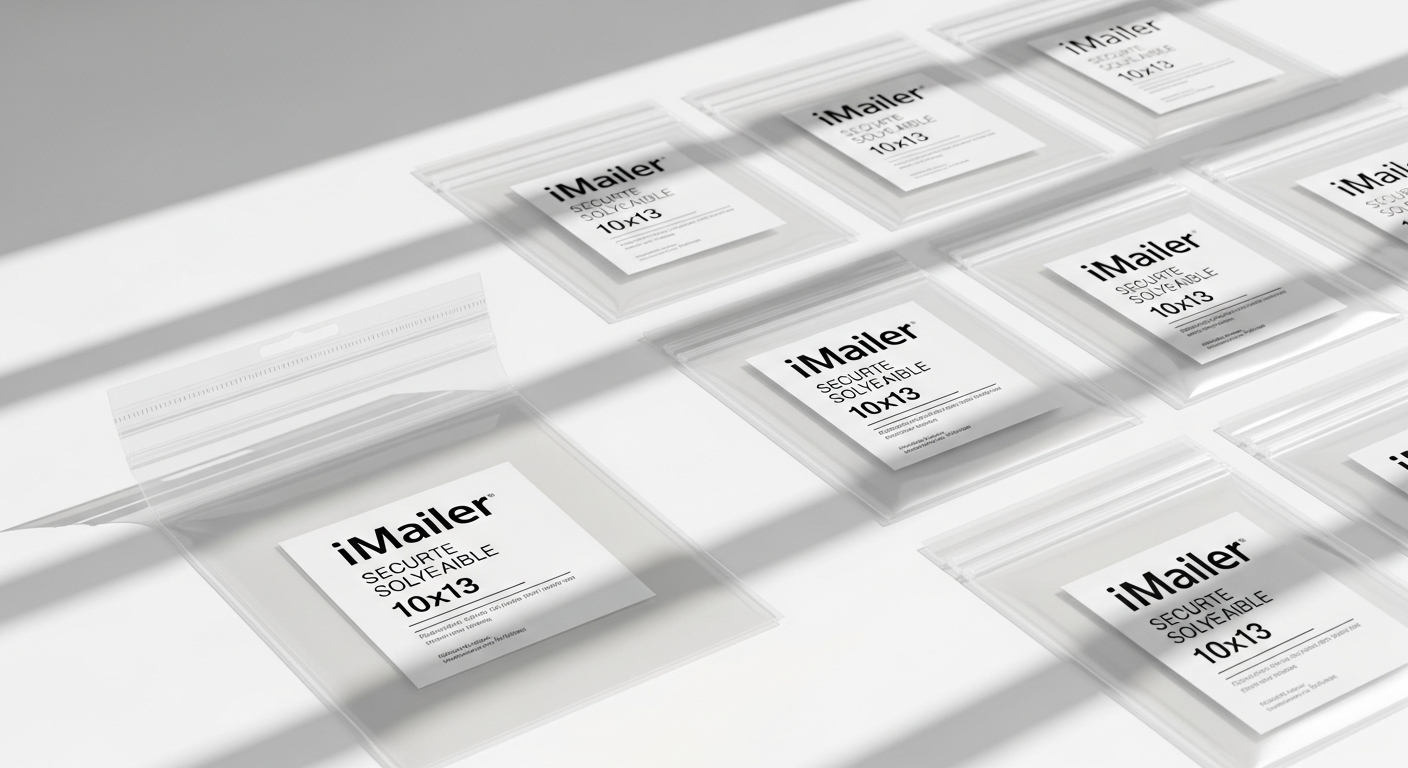
Discover how iMailer 10×13 clear resealable suffocation warning poly bags meet regulatory standards while protecting your products. Learn about durability, compliance, and cost-effective bulk packaging solutions for e-commerce businesses.
Over 73% of e-commerce businesses cite packaging compliance as their top operational challenge—and one misstep can result in hefty fines or product recalls. When you’re managing hundreds or thousands of shipments monthly, the margin for error shrinks fast. The pressure to balance safety standards, cost efficiency, and customer satisfaction creates a real operational headache for growing businesses.
iMailer 10×13 clear resealable suffocation warning poly bags are engineered to meet strict safety regulations while delivering the durability and functionality that modern e-commerce demands. These bags solve a fundamental problem: how to protect products, satisfy regulatory requirements, and maintain reasonable margins simultaneously. Whether you’re shipping apparel, documents, or specialty items, these bags provide a professional solution that protects both your products and your business from compliance issues.
Explore iMailer’s clear resealable poly bags today and streamline your packaging operations.
Understanding the Material Composition and Safety Standards
100% New Oriented Polypropylene Construction
The material foundation of these bags sets them apart from cheaper alternatives. Using 100% new Oriented Polypropylene rather than recycled material matters more than many businesses realize. New polypropylene maintains consistent structural integrity, resists brittleness, and provides predictable performance across temperature variations. Recycled alternatives often contain contaminants and structural weaknesses that compromise reliability during shipping. For businesses handling valuable inventory or sensitive products, this distinction translates directly into fewer damaged shipments and lower return rates.
1.6 Mil Thickness: The Durability Sweet Spot
The 1.6 Mil thickness represents a carefully calibrated balance. Thinner materials reduce cost but increase tear risk during handling and transport. Thicker materials improve durability but add weight, increase shipping costs, and create unnecessary bulk. At 1.6 Mil, these bags provide genuine puncture and tear resistance without the premium pricing of heavier gauges. This thickness works reliably across diverse product categories—from lightweight documents to moderately heavy apparel—making it versatile enough for most e-commerce operations.
Non-Toxic, Odorless, and Acid-Free Properties
These chemical characteristics address real business concerns beyond packaging. Non-toxic composition ensures safe contact with consumables and items that touch skin. The odorless property prevents unpleasant surprises when customers open shipments, protecting your brand reputation. Acid-free construction prevents degradation of sensitive materials like documents, artwork, and archival items. Collectively, these properties expand the range of products you can confidently package in a single SKU.
Food-Grade Safe Certification
While these bags carry suffocation warnings designed for apparel and children’s items, their food-grade safe status opens additional revenue opportunities. Small businesses can use the same bags for shipping specialty foods, baked goods, or craft items without inventory fragmentation. This dual-purpose capability simplifies warehouse operations and reduces per-unit costs compared to maintaining separate poly bag inventory.
Suffocation Warning Compliance
Federal requirements mandate clear suffocation warnings on plastic bags used for apparel and children’s products. iMailer bags include properly positioned and sized warnings that satisfy CPSIA (Consumer Product Safety Improvement Act) standards and state-level regulations. Compliance isn’t optional—regulatory bodies conduct random inspections of e-commerce shipments, and non-compliant packaging triggers fines ranging from hundreds to thousands of dollars per violation. These bags handle that requirement automatically, eliminating legal exposure from packaging oversights.
Tear and Puncture Resistance
Real-world shipping involves rough handling, sharp edges, and pressure from stacked parcels. The polypropylene construction at 1.6 Mil thickness resists tearing from typical warehouse and transport hazards. During conveyor transport, sorting, and delivery truck handling, these bags maintain integrity that thinner alternatives cannot match. For businesses tracking damage rates and return reasons, upgrading to properly engineered bags often reduces “arrived damaged” claims noticeably.
The Resealable Adhesive Strip: Functionality That Matters
How the Resealable Adhesive Works
The adhesive strip uses a pressure-sensitive formulation that creates a secure seal on contact but releases cleanly when peeled apart. Unlike heat-sealed bags that require scissors or careful tearing to open, these bags accommodate natural handling. Recipients simply peel the strip apart, inspect contents if needed, and reseal by pressing the adhesive strip back together. The mechanics are intuitive—no special tools, no frustration—which improves customer satisfaction and reduces support inquiries about opening packages.
Multiple Re-Closure Capability
Standard poly bags seal once, permanently. These resealable bags tolerate repeated opening and closing without losing adhesive strength significantly. This capability directly benefits your quality control processes. Before final shipment, warehouse staff can open bags for visual inspections, verify contents match packing slips, and reseal without replacing the bag. For businesses operating on-demand fulfillment models where items sit in bags temporarily before shipping, this convenience eliminates waste from damaged or exhausted adhesive strips.
Comparison to Permanent Seals
Permanent heat-sealed bags provide absolute security but sacrifice customer convenience and reusability. Recipients must destroy the bag to access contents, making returns or exchanges messier. If customers want to reuse packaging for storage or other purposes, permanent seals limit that option. The resealable design doesn’t sacrifice security—the adhesive creates a genuinely protective seal—but adds flexibility that permanent seals cannot offer.
Customer Experience Benefits
From the recipient’s perspective, receiving a package they can easily open and reseal feels more professional than struggling with sealed alternatives. Customers appreciate the ability to inspect contents immediately, reseal if needed, and potentially reuse the bag for storage or travel. This modest enhancement to unboxing experience contributes to brand perception and customer satisfaction metrics, particularly important for repeat purchase businesses.
Residue-Free Performance
Inferior adhesive strips leave sticky residue after removal, damaging bag appearance and potentially contaminating products. iMailer’s adhesive formulation releases cleanly without leaving visible residue or leaving behind adhesive particles. This characteristic matters for visible products like apparel where residue could suggest poor quality or careless handling.
Limitations to Consider
While resealable strips provide tremendous advantages, they do introduce considerations for maximum-security applications. If you’re shipping high-value items where tamper-evidence is critical, permanent seals offer more assurance that packages haven’t been opened. Additionally, if products require absolutely airtight sealing—certain food items or moisture-sensitive components—permanent heat seals provide superior protection. Evaluate your specific security and storage requirements before assuming resealable is always preferable.
Bulk Packaging Economics and Pricing Strategy
Standard Pack Sizes and Volume Discounts
iMailer markets these bags primarily in 1000-count packs, a volume sweet spot that balances inventory carrying costs against per-unit pricing. For small businesses shipping 50-100 packages weekly, 1000-count quantities last 10-20 weeks, fitting neatly within typical inventory turnover cycles. Medium-sized operations shipping 500+ packages weekly can justify multiple simultaneous orders, accessing steeper volume discounts while maintaining fresh inventory.
Price Range Breakdown
Current market pricing for iMailer 10×13 suffocation warning bags ranges from $25.99 to $89.99 per 1000-count pack depending on vendor, current promotions, and exact specifications. Entry-level pricing around $25.99 represents genuinely competitive cost-per-unit economics. Premium pricing toward $89.99 typically reflects premium seller status, guaranteed expedited shipping, or bundled additional products. Comparison shopping across vendors pays dividends—a $15-20 difference per 1000-pack creates meaningful savings for businesses ordering multiple packs monthly.
Cost Per Unit Calculations
At $25.99 per 1000 bags, unit cost reaches approximately $0.026 per bag. For typical e-commerce operations with 3-5% profit margins, packaging cost as a percentage of revenue matters significantly. Upgrading from generic low-quality bags at $15 per 1000 to compliant iMailer bags at $26 per 1000 adds less than 2 cents per shipment while eliminating regulatory risk worth thousands of dollars in potential fines. The ROI calculation strongly favors premium packaging for any serious operation.
Warehouse Efficiency
Bulk ordering reduces the number of purchasing transactions, vendor management overhead, and shipment receiving activities. Ordering quarterly rather than monthly simplifies procurement workflows and reduces administrative costs. Additionally, warehouses operating with standardized bulk bags reduce the SKU count for packaging materials, simplifying inventory management and reducing picking errors.
Budget-Friendly Alternatives to Custom Packaging
Custom-printed bags with business logos offer branding benefits but typically cost $50-150 per 1000 packs—2-6x higher than standard bags. For businesses not yet operating at sufficient scale to justify custom printing, stock iMailer bags represent smart intermediate positioning. The investment focuses on compliance and protection rather than custom branding, preserving capital for product development and marketing.
Bulk Storage Considerations
1000-count packs of 10×13 bags consume approximately 1-1.5 cubic feet of storage space depending on packaging density. Five packs (5000 bags) fit comfortably on standard warehouse shelving without special accommodation. Most businesses can store 2-3 months’ supply of bags without dedicated storage infrastructure. If warehouse space is genuinely constrained, smaller pack sizes (250 or 500 counts) become viable despite slightly higher per-unit costs.
Discover cost-effective bulk packaging solutions that protect your margins and your business.
Compliance and Regulatory Advantages
Suffocation Warning Labels
Federal regulations under 16 CFR Part 1500.19 mandate specific suffocation warnings on plastic bags intended for apparel or any use where children might have access. The warning must appear prominently, use specified text, and meet size requirements relative to bag dimensions. iMailer bags include pre-printed warnings meeting these specifications, eliminating the risk that improper label placement or sizing triggers regulatory citations.
State-Level Packaging Regulations
Beyond federal standards, individual states impose additional packaging requirements. California’s Proposition 65 involves additional labeling requirements for certain materials. New York and Massachusetts have specific bag material and disposal specifications. iMailer bags are engineered to satisfy the most stringent of these overlapping requirements, effectively providing multi-state compliance with a single product choice.
Documentation and Certification
Reputable suppliers like iMailer provide certificates of compliance documenting that bags meet relevant safety standards. This documentation protects businesses during regulatory inspections or customer disputes. If regulatory agencies question your packaging choices, certified documentation demonstrates that non-compliance resulted from supplier misrepresentation rather than business negligence—an important distinction in penalty assessment.
Risk Mitigation for Sellers
The compliance benefits extend beyond abstract legal risk. Real fines and recalls occur frequently in e-commerce. FDA and CPSC enforcement actions target non-compliant apparel packaging specifically. Businesses discovered shipping non-compliant bags face fines starting at $100-300 per violation and potentially requirement to recall and repackage already shipped inventory. Using certified compliant bags eliminates this class of risk entirely.
Industry Standards Alignment
Beyond regulatory minimums, best-practice e-commerce operations use bags engineered to professional standards. Using professional-grade packaging signals quality to customers, reduces quality-control rejections, and positions your business as legitimate and trustworthy. Conversely, obviously cheap or non-compliant packaging creates negative first impressions and invites customer service complications.
International Considerations
iMailer’s shipping and support infrastructure focuses primarily on domestic U.S. operations. For businesses shipping internationally, international compliance standards vary significantly—EU regulations differ substantially from U.S. requirements, as do standards in Canada, Australia, and Asia-Pacific regions. Before relying on these bags for international shipments, verify that suffocation warning language and bag specifications align with destination country requirements.
Real-World Performance: Protection and Durability
Tear Resistance During Handling
Warehouse operations subject bags to repeated contact with sharp edges—packing tape, corner folds, conveyor belt mechanisms. The 1.6 Mil polypropylene construction resists these common tearing hazards reliably. Compared to thinner bags at 1.0-1.2 Mil, the performance difference becomes obvious during peak fulfillment periods when sorting speed increases and handling becomes less careful.
Puncture Protection for Fragile Items
While poly bags aren’t rigid protective containers, they do provide meaningful puncture resistance for fragile contents. Apparel items can be damaged by sharp protrusions from adjacent packages or conveyor handling. Artwork, documents, and specialty items benefit from puncture-resistant bags that prevent pinhole damage compromising product presentation. Real-world case studies show that upgrading from standard 1.0 Mil bags to 1.6 Mil alternatives reduces damage-related returns by 10-15% for many product categories.
Transparent Design Benefits
The crystal-clear polypropylene allows customers and warehouse staff to visually inspect contents without opening bags. This transparency proves valuable for quality control—verifying correct items before sealing—and customer confidence. Recipients can inspect merchandise before opening, reducing return requests based on “received wrong item” claims. For specialty items like art prints or collectibles, the ability to see condition before opening enhances customer satisfaction.
Temperature and Humidity Stability
Oriented Polypropylene maintains structural integrity across temperature ranges typical in warehouses, shipping trucks, and home storage. Unlike some alternative materials that become brittle in cold or soft in heat, polypropylene remains dimensionally stable and flexible across normal conditions. The material resists moisture absorption, maintaining bag integrity in humid environments without degradation.
Long-Term Storage Capability
Bags stored in standard warehouse conditions remain usable for 2-3 years without noticeable degradation. The adhesive strip maintains effectiveness without special climate control or preservation measures. This stability matters for businesses with slower inventory turnover or those that stock surge inventory ahead of peak seasons.
Performance Across Product Categories
iMailer bags perform consistently across diverse applications—apparel, documents, prints, specialty foods, and craft items. The material composition provides no adverse interactions with cotton, polyester, paper, cardboard, or food-contact surfaces. This versatility allows warehouse consolidation around a single bag SKU rather than maintaining separate inventory for different product types.
Your Packaging Solution Awaits: Moving Forward with Confidence
iMailer 10×13 clear resealable suffocation warning poly bags represent a pragmatic choice for e-commerce businesses navigating the complex intersection of compliance, protection, and cost management. These bags deliver on multiple fronts: they meet regulatory standards that keep your business safe, they protect your products during shipping, and they offer resealable convenience that enhances customer experience. The material composition—100% new Oriented Polypropylene at 1.6 Mil thickness—strikes a balance that works across diverse product categories, from apparel to documents to specialty items. The economics make sense, too, with bulk pricing in the $25.99 to $89.99 range for 1000-count packs positioning these bags as a cost-effective solution for growing businesses.
If you’re shipping apparel, documents, or specialty items domestically, managing high-volume orders, and prioritizing regulatory compliance alongside customer convenience, these bags deserve serious consideration. Start with a test order, evaluate how they perform with your products, and make an informed decision based on your actual needs. The difference between mediocre and excellent packaging often determines whether customers become repeat buyers or leave frustrated reviews. Professional packaging signals that your business takes quality seriously.
Take action now and upgrade your packaging with iMailer’s compliant, professional-grade poly bags.