
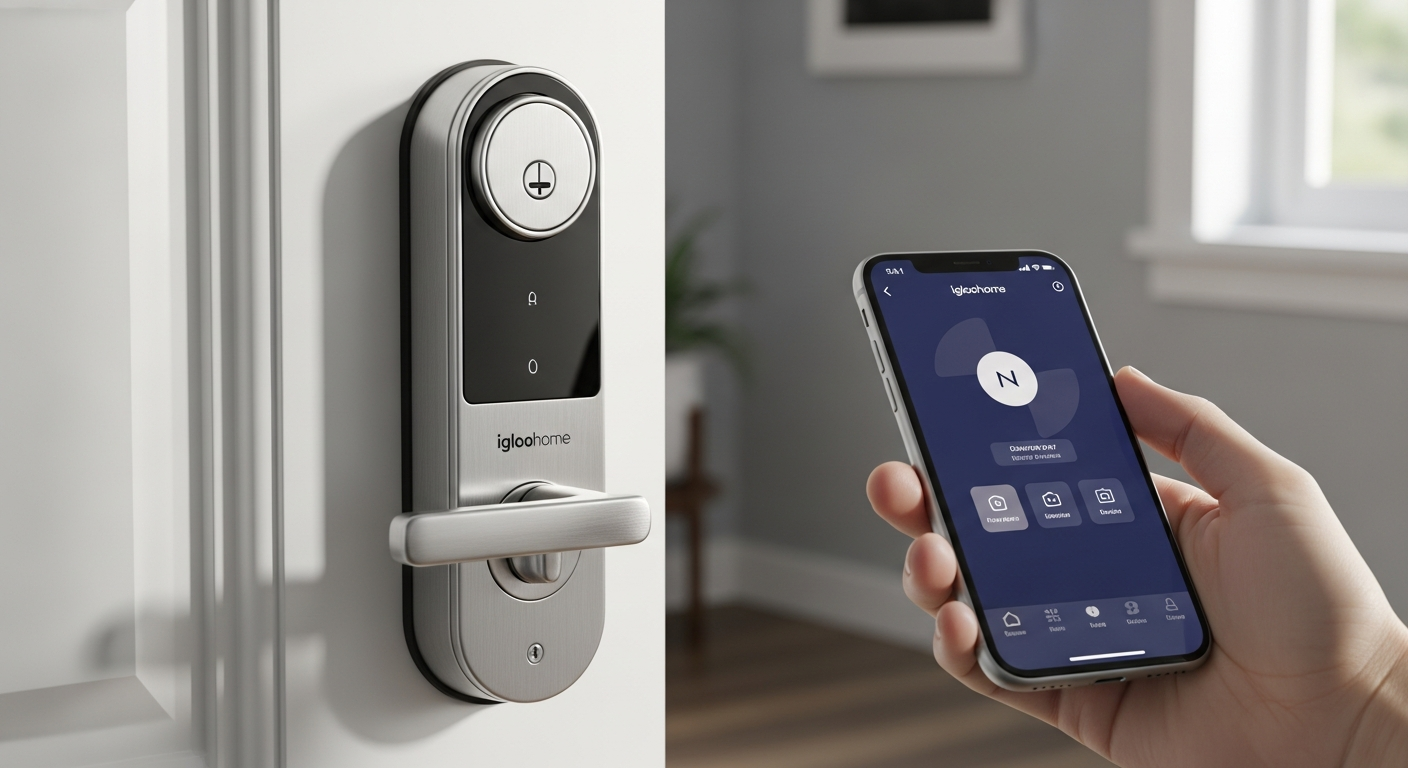
Discover how the Igloohome Smart Deadbolt 2S keyless lock revolutionizes remote access with AlgoPIN™ technology, offline PIN generation, and seamless guest management. Compare features, specs, and real-world performance in this comprehensive guide.
Nearly 65% of property managers and short-term rental hosts struggle with secure, friction-free guest check-ins—and traditional smart locks that depend entirely on Wi-Fi connectivity only make the problem worse. The Igloohome Smart Deadbolt 2S emerged as a market leader because it solved a critical pain point: how do you manage access remotely without sacrificing security or reliability?
This keyless lock introduced AlgoPIN™ technology, a breakthrough that lets you generate time-sensitive PIN codes without needing the lock itself to connect to the internet. Rather than relying on cloud servers for every access decision, the Igloohome Smart Deadbolt 2S operates independently, making it remarkably resilient to network outages and internet vulnerabilities.
Discover the Igloohome Smart Deadbolt 2S and experience offline-first access control.
How the Igloohome Smart Deadbolt 2S Operates Without Internet Dependency
Explanation of AlgoPIN™ Technology and How It Generates Secure PIN Codes Remotely
AlgoPIN™ technology represents a fundamental shift in how smart locks handle access management. Rather than transmitting PIN codes through the internet to a cloud database, AlgoPIN™ uses a sophisticated algorithm-based approach. The lock generates codes locally based on mathematical calculations that don't require constant internet connectivity. Users can create, modify, and revoke PIN codes through the Igloohome app, and these changes sync to the lock whenever it connects—whether that's moments later or hours later.
How Offline Operation Reduces Reliance on Wi-Fi for Basic Access Management
Traditional smart locks become essentially useless during internet outages. The Igloohome Smart Deadbolt 2S, by contrast, remains fully functional. Guests with PIN codes can enter without any internet connection. Property managers can generate new codes through the app and distribute them knowing the lock will accept them once it receives the update—no need for both the lock and user to be online simultaneously.
The Security Advantage of Not Requiring Constant Internet Connectivity
Internet-dependent locks create a wider attack surface. Every connection represents a potential vulnerability. Hackers can target cloud databases, intercept wireless signals, or exploit server weaknesses. The Igloohome Smart Deadbolt 2S minimizes these risks by handling authentication locally. The lock doesn't broadcast sensitive information continuously. It doesn't require cloud servers to validate access attempts.
Comparison of Offline vs. Cloud-Dependent Smart Lock Architectures
Cloud-dependent locks offer certain conveniences—you might control them from anywhere globally, and analytics integrate with broader smart home systems. However, they introduce dependencies: service outages affect your access, data breaches expose your patterns, and subscription fees sometimes become mandatory. Offline-first architectures like the Igloohome Smart Deadbolt 2S sacrifice some bells and whistles for fundamental reliability and security. The trade-off heavily favors offline capability for critical access points.
Real-World Scenarios Where Offline Capability Prevents Lockouts or Access Failures
Picture a property manager with ten rental properties. A storm knocks out internet across the area. Cloud-dependent locks leave guests stranded outside. The Igloohome Smart Deadbolt 2S? It continues operating normally. Guests enter with their PIN codes. Maintenance staff access properties without delay. Similarly, a homeowner experiencing router failure still unlocks the door with a PIN code or physical key—no panic, no costly locksmith calls.
How the System Maintains Security Protocols Without Cloud Servers
Security doesn't require constant cloud surveillance. The Igloohome Smart Deadbolt 2S uses robust local encryption and sophisticated access protocols. The lock stores encrypted codes in its internal memory. When a user enters a PIN, the lock validates it against these encrypted records using the same algorithm that generated the code. This happens entirely on the device, with military-grade security protocols protecting the process.
Multiple Access Methods: Flexibility Meets Security
PIN Code Entry Through the Physical Keypad
The most straightforward access method involves entering a PIN directly into the lock's keypad. Users punch their code, the lock validates it, and the door opens. This doesn't require smartphones, batteries running low, or Bluetooth connectivity. For guests unfamiliar with technology or properties where device usage isn't practical, PIN entry provides dependable access.
Bluetooth Key Access via the Igloohome Mobile App
Smartphone users enjoy seamless access through the Igloohome app. The lock communicates via Bluetooth, creating a secure connection between the phone and the device. This method feels modern and convenient—opening the door becomes as simple as launching the app and tapping a button.
Traditional Physical Key Backup for Emergency Situations
Even with advanced technology, the Igloohome Smart Deadbolt 2S includes a traditional physical key slot. If the lock fails, batteries die unexpectedly, or smartphone access becomes impossible, users can resort to the physical key. This redundancy eliminates the "locked out because of technology" scenario that plagues purely digital smart locks.
How Users Can Manage Multiple Access Methods Simultaneously
Property managers often enable all three methods for different users. A long-term tenant might receive a physical key and a permanent PIN code. A delivery service gets a time-sensitive PIN. A guest uses the Bluetooth unlock through the app. The lock handles all simultaneously without conflicts or security compromises.
Setting Time-Sensitive PIN Codes for Temporary Guests or Service Providers
AlgoPIN™ truly shines here. Managers create codes that work only during specific dates and times. A housekeeping service might receive a code valid for three hours on a Thursday. A guest checking in Friday gets a code active only for their three-night stay. Once the window closes, the code stops working automatically—no manual revocation needed, no lingering access rights.
Permanent PIN Codes for Household Members and Frequent Users
Family members, property managers, and maintenance staff who need ongoing access receive permanent PIN codes. These codes continue working indefinitely until explicitly changed or revoked. Unlike time-sensitive codes, they provide the reliability permanent inhabitants require.
Switching Between Access Methods Based on User Needs
Different situations call for different approaches. A homeowner might use Bluetooth most days but resort to the physical key when running to the car with no phone. Guests unfamiliar with apps simply use their PIN. The lock adapts to user preferences rather than forcing a single method.
AlgoPIN™ Technology: The Security Innovation Behind the Lock
What AlgoPIN™ Is and How It Differs From Traditional PIN Generation
AlgoPIN™ uses mathematical algorithms to generate codes that validate themselves against the lock's internal clock and security parameters. Traditional PIN systems rely on matching entered codes against a stored database—vulnerable to brute-force attacks if someone obtains the database. AlgoPIN™ generates codes that are mathematically verified by the lock itself, eliminating the need for centralized code storage or cloud validation.
How Time-Sensitive Codes Enhance Security for Short-Term Rentals
Short-term rental hosts historically faced a dilemma: share one code with guests and change it between stays (cumbersome), or use outdated key systems. AlgoPIN™ enables elegant solutions. Managers generate unique codes for each guest, active only during their stay. Multiple guests never see each other's codes. Turnover simply requires generating new codes for incoming guests—no physical re-keying, no manual tracking, no security compromises.
The Ability to Create and Revoke Codes Without Physical Access to the Lock
This capability fundamentally changes property management workflows. Sitting at a desk across the country, a manager can generate a code for an arriving guest, send it through the app or SMS, and the guest enters using that code when they arrive. Similarly, if plans change and a guest cancels, the manager revokes the code without any physical action at the property. The lock simply won't accept the revoked code on the next sync.
Protection Against Brute-Force Attacks and Unauthorized Code Sharing
AlgoPIN™ codes aren't simple sequential numbers that attackers could systematically try. They're mathematically complex and time-bound, making brute-force attacks computationally impractical. Additionally, time-sensitive codes prevent the scenario where a shared code continues working indefinitely after guests leave. Each code's validity window closes automatically.
How Property Managers Use AlgoPIN™ for Seamless Guest Handovers
Traditional access management for rental properties involved meeting guests, exchanging keys, then collecting them again—logistically complex and time-consuming. With AlgoPIN™, managers text codes to arriving guests who let themselves in. The code works at their appointed arrival time. Checkout involves no key collection because access was digital. For properties with multiple units, managers juggle dozens of codes across time windows—all manageable through one app.
The Role of AlgoPIN™ in Reducing Security Risks for Airbnb and VRBO Hosts
Shared physical keys accumulate security risks. Lost keys, duplicate copies in guests' possession, and lack of audit trails plague traditional systems. AlgoPIN™ codes are digital, time-limited, and automatically logged. Hosts gain complete visibility into access patterns. If suspicious activity occurs, they review detailed logs showing exactly when each code was used. Guest codes disappear automatically after checkout, eliminating lingering access.
Design and Durability: Aesthetics Meets Functionality
Slim 17mm Front Panel Design That Fits Modern Door Aesthetics
The Igloohome Smart Deadbolt 2S breaks the unfortunate tradition of smart locks bulging from doors like external hardware. Its front panel measures just 17mm—thinner than many deadbolts themselves. This slim profile means the lock integrates seamlessly rather than protruding obtrusively. Modern homes with minimalist aesthetics, contemporary doors, and design-conscious owners appreciate this refinement.
Material Composition: Aluminum, Zinc Alloy, and ABS Construction
Durability starts with material selection. Aluminum provides lightweight strength without corrosion vulnerability. Zinc alloy components resist oxidation, essential for locks exposed to weather or humidity. ABS plastic in non-structural areas balances weight and cost without sacrificing integrity. This combination creates a lock that withstands daily use, environmental stress, and temperature fluctuations across diverse climates.
How the Sleek Design Integrates Seamlessly With Various Interior Styles
Whether installed on a Victorian farmhouse door, a contemporary apartment entrance, or a minimalist Scandinavian-inspired space, the Igloohome Smart Deadbolt 2S adapts visually. The slim profile, refined finish, and understated design language complement rather than clash with existing aesthetics. Users often comment that they forget the lock looks high-tech because it simply looks right.
Compatibility With Wooden Swing Doors (35mm to 60mm Thickness)
Most residential doors fall within this thickness range, making the Igloohome Smart Deadbolt 2S broadly compatible. The lock installs on standard door frames without requiring custom modifications or frame reconstruction. This matters for renters or property managers who need flexibility—the lock removes cleanly without permanent damage.
IP65 Weather Resistance Rating for Sheltered Outdoor Installation
IP65 rating means the lock resists water jets and dust exposure. While not fully submersible, it tolerates rain, sprinklers, and humidity in sheltered outdoor locations. A covered porch, recessed entryway, or protected exterior door can safely host the Igloohome Smart Deadbolt 2S without weather-related failures.
Durability Testing and Long-Term Performance Reliability
The Igloohome Smart Deadbolt 2S gained its market position partly through demonstrated reliability. Thousands of installations across property management portfolios and short-term rental networks provided real-world durability testing. User reviews consistently report multi-year performance without mechanical failures. The lock operates smoothly after years of daily use by multiple users with varied PIN codes.
Aesthetic Appeal Compared to Bulky Traditional Deadbolts
Traditional deadbolts protrude several centimeters from the door, visible and intrusive. The Igloohome Smart Deadbolt 2S's slim profile creates a distinctly more refined appearance while delivering superior functionality. This represents genuine industrial design—aesthetic improvement coupled with practical advancement.
Power Management and Battery Performance
Four AA Battery System and Typical Battery Lifespan of Up to One Year
The Igloohome Smart Deadbolt 2S operates on four standard AA batteries. This design choice matters: AA batteries are universally available, inexpensive, and easily replaceable. Users aren't locked into proprietary batteries or expensive specialized components. Under typical usage, these four batteries power the lock for approximately one year—a substantial lifespan for a frequently-used electronic lock.
Factors Affecting Battery Drain and Longevity
Several variables influence how long batteries last. Frequent unlocking, especially through Bluetooth (which requires more power than PIN entry), accelerates drain. Cold temperatures reduce battery efficiency. Older batteries start degraded. Properties with high traffic naturally drain batteries faster than low-traffic properties. Understanding these factors helps users plan maintenance.
Low Battery Indicators and Alerts Through the Igloohome App
Users don't face surprise dead batteries. The lock monitors power levels and sends app notifications when voltage drops below operational thresholds. Property managers receive alerts days or weeks before batteries completely deplete, providing ample time to arrange replacement.
Emergency Backup Power Options for Extended Outages
Should batteries become completely discharged, users can provide temporary power through external emergency power connectors. This prevents lockouts due to battery failure and provides a safety valve for properties where replacement might be delayed.
Cost-Effectiveness of AA Battery Replacement vs. Proprietary Batteries
Standard AA batteries cost pennies compared to proprietary smart lock batteries that sometimes exceed twenty dollars. Replacing the Igloohome Smart Deadbolt 2S's batteries costs minimal dollars—a genuine advantage over competitors employing proprietary solutions.
Maintenance Requirements for Optimal Battery Performance
The Igloohome Smart Deadbolt 2S demands minimal maintenance. Check battery status monthly, replace when notified, and that's essentially it. No firmware updates, no sensor cleaning, no specialized care. This simplicity appeals to users who want security technology that works without constant attention.
Comparison of Battery Life to Other Premium Smart Locks
The one-year battery lifespan matches or exceeds competitors in its category. Some locks require battery changes more frequently; others employ larger, heavier battery systems. The Igloohome Smart Deadbolt 2S balances longevity with practical component sizing.
The Igloohome App: Control and Monitoring at Your Fingertips
User-Friendly Interface for Lock Management and Setup
The Igloohome app prioritizes clarity over feature bloat. Setup guides walk users through installation step-by-step. The dashboard displays lock status at a glance. Navigation intuitively leads to relevant functions. Users unfamiliar with smart devices report successfully configuring the lock without extensive documentation review.
Remote PIN Code Generation and Management Features
From anywhere with an internet connection, users generate new PIN codes, modify existing ones, and revoke codes through the app. Changes queue for the lock and sync at the next opportunity. Property managers can manage dozens of codes across multiple properties without visiting each location.
Real-Time Lock Status Monitoring and Control
Users see whether the lock is currently locked or unlocked. They can remotely lock or unlock from the app (useful for guests still approaching, or for securing the property if occupants forget). This real-time visibility provides peace of mind.
Access History Review and Filtering Options
The app maintains detailed logs of every access event. Users see timestamps, which PIN code or access method was used, and whether entry succeeded or failed. Filtering options let property managers isolate specific timeframes, specific users, or specific properties if managing multiple units. This audit trail proves invaluable for security concerns or accountability requirements.
Guest Invitation and Temporary Code Creation Workflows
Rather than manually generating codes and sending them through separate channels, the app streamlines the process. Managers select "invite guest," specify dates and times, and the app generates a code automatically, optionally sending it directly to the guest via SMS or email. This integrated workflow reduces errors and confusion.
Notification Settings and Customization Options
Users customize what events trigger notifications: someone using their PIN, the door being unlocked, battery low warnings, unusual access patterns. Property managers managing multiple properties can filter notifications by location, preventing notification fatigue while maintaining relevant alerts.
Troubleshooting Tools and Support Resources Within the App
Should issues arise, the app includes diagnostic tools. Users can check connectivity status, verify battery levels, see recent activity, and access support documentation without leaving the interface. This self-service approach resolves most common issues immediately.
Explore how the intuitive Igloohome app simplifies access management today.
Real-World Applications: From Homeowners to Hospitality Professionals
Residential Use Cases for Homeowners Prioritizing Security and Convenience
Homeowners appreciate the Igloohome Smart Deadbolt 2S for eliminating key management headaches. No more spare keys hidden under rocks or mattresses. No more fumbling for keys when carrying groceries. Family members receive PIN codes. Guests get temporary codes for specific dates. Service providers receive brief-access codes. Security-conscious owners appreciate knowing exactly who accessed their home and when.
Renter-Friendly Installation That Doesn't Damage Permanent Door Structures
For renters, traditional deadbolt installation means drilling into door frames—a lease violation. The Igloohome Smart Deadbolt 2S installs without permanent modifications. Upon moving, renters remove the lock and reinstall the original deadbolt. Landlords appreciate tenants maintaining property integrity while gaining smart lock benefits.
Airbnb and Short-Term Rental Host Advantages for Guest Management
This is where the Igloohome Smart Deadbolt 2S excels. Hosts generate unique codes for each guest, active only during their stay. No meeting guests, no key exchanges, no security concerns about previous guests retaining access. Cleaning services receive codes valid only during turnover windows. Maintenance contractors access the property at scheduled times. The lock handles entire guest lifecycles digitally.
Property Manager Workflows for Multi-Unit Portfolio Management
Professional property managers handling dozens or hundreds of units benefit profoundly. Centralized app management means one person controls access across all properties. Guest check-in becomes instantaneous—email or SMS a code, guests let themselves in. Maintenance staff access scheduled properties without requiring manager presence. This scalability made the Igloohome Smart Deadbolt 2S popular in institutional property management.
Use Cases for Co-Living Spaces and Shared Housing Arrangements
Co-living properties with shared common areas and private units benefit from granular access control. Each resident receives a code for their unit. Common areas have different codes for residents, staff, and occasional guests. Temporary residents receive temporary codes. The system accommodates complex occupancy scenarios that defeat traditional key-based systems.
Emergency Responder Access Scenarios and Integration Possibilities
In some jurisdictions, property managers can provide emergency responders with master codes that activate during specific scenarios. The audit trail documents responder access for verification. This balance between security and emergency access reflects modern institutional requirements.
Commercial Applications for Small Offices and Boutique Businesses
Small office spaces benefit from the Igloohome Smart Deadbolt 2S's access control capabilities. Employees receive permanent codes, contractors get temporary ones, clients in shared office spaces can be granted specific-time access. The lock transitions from consumer product to practical business tool.
Advantages That Made the Igloohome Smart Deadbolt 2S a Best-Seller
Offline PIN Generation Eliminating Hacking Risks From Internet Vulnerabilities
Cloud-based smart locks generate codes through internet servers—introducing vulnerability. The Igloohome Smart Deadbolt 2S generates codes locally through mathematical algorithms, eliminating the attack surface that plagues internet-dependent competitors. This single advantage resonates throughout the product's value proposition.
Multiple Access Methods Providing Flexibility for Different User Types
Different people prefer different approaches. The Igloohome Smart Deadbolt 2S accommodates all preferences: PIN entry for traditionalists, app-based access for smartphone users, physical key backup for emergencies. This flexibility expanded the potential customer base beyond early adopters to mainstream users.
Stylish, Slim Design That Doesn't Compromise Door Aesthetics
Many smart locks sacrifice aesthetics for functionality. The Igloohome Smart Deadbolt 2S does neither. Users praise how it looks on their doors—a rarity in smart lock reviews. This design excellence contributed to strong word-of-mouth and residential adoption.
Exceptional Battery Life Reducing Maintenance Frequency
One-year battery life between replacements represents genuine value. Users aren't constantly replacing batteries or worrying about power failures. This practical reliability matters more than specifications suggest.
Comprehensive Event Logging for Accountability and Security Audits
Property managers required audit trails for liability and management purposes. The Igloohome Smart Deadbolt 2S provided detailed, searchable logs of every access event. This transparency distinguished it from consumer-focused competitors lacking audit capabilities.
User-Friendly App Reducing Setup Complexity and Learning Curve
Complex technology adoption fails. The Igloohome Smart Deadbolt 2S's straightforward app and clear setup process meant first-time smart lock users could configure and operate it without extensive learning. This approachability proved critical to mainstream adoption.
Reliability and Consistent Performance Across Diverse Installations
The Igloohome Smart Deadbolt 2S maintained solid performance across residential homes, apartment buildings, shared spaces, and commercial properties. This consistency, supported by thousands of successful installations, established trust and reputation.
Limitations and Considerations Before Purchasing
Doorframe Sensor Placement Challenges on Certain Door Configurations
Some door designs present challenges for the frame-mounted sensor. Non-standard frames, complex architraves, or specific door construction might require creative placement. While not deal-breaking, it adds installation complexity in some scenarios.
Limited Third-Party Smart Home Integrations and Ecosystem Compatibility
Unlike some competitors, the Igloohome Smart Deadbolt 2S doesn't deeply integrate with broader smart home ecosystems. It operates somewhat independently—excellent for security-first installations but less attractive for users building comprehensive connected homes.
Premium Pricing May Exceed Budgets for Cost-Conscious Buyers
At the $189-$200 retail price point, the Igloohome Smart Deadbolt 2S occupies the premium segment. Budget-conscious buyers seeking cheaper alternatives will find options, though possibly with compromised features.
Bluetooth Range Limitations in Large Properties or Multi-Building Setups
Bluetooth operates within roughly 30-50 meters in typical conditions. In sprawling estates or multi-building properties, smartphone users might be outside Bluetooth range, requiring PIN entry instead. This limitation primarily affects Bluetooth unlocking convenience.
Lack of Voice Assistant Integration (Alexa, Google Home) Compared to Competitors
Some smart lock competitors enable voice commands through Alexa or Google Home. The Igloohome Smart Deadbolt 2S doesn't offer this integration. For users building voice-controlled smart homes, this represents a notable limitation.
Sensor Calibration Requirements for Optimal Performance
The doorframe sensor requires proper calibration for reliable operation. Improper calibration can cause functionality issues. While not complicated, it represents an additional setup step that some users might find frustrating.
Regional Availability and Warranty Support Variations
Availability and support quality vary by region. Some areas have robust Igloohome support networks while others lack local service options. Warranty terms also differ by region, affecting long-term value calculations.
The Bottom Line: Why Offline-First Smart Access Matters
The Igloohome Smart Deadbolt 2S proves that security and convenience don't require constant internet connectivity—they require smart engineering. AlgoPIN™ technology flips the script on traditional smart lock vulnerabilities, and the offline-first approach matters more than ever in an increasingly connected world. This lock delivers tangible value across residential, rental, and commercial applications.
Whether you're a security-conscious homeowner tired of key management headaches, a property manager juggling multiple guest check-ins, or an Airbnb host seeking seamless access control, this lock addresses real pain points with elegant, reliable solutions. The premium price point reflects genuine innovation and build quality—not marketing hype. Offline capability, sleek design, and long battery life represent thoughtful engineering choices rather than premium feature padding.
The decision ultimately depends on your priorities. If access reliability during internet outages matters, if you value detailed audit trails, if aesthetic refinement appeals to you, or if you manage properties and need scalable access solutions, the Igloohome Smart Deadbolt 2S stands as a worthy investment in modern access control. If you require voice assistant integration or deep smart home ecosystem compatibility, you might explore alternatives. For most users seeking an intelligent, attractive, and genuinely reliable smart lock, the Igloohome Smart Deadbolt 2S remains a market-leading choice.
Choose the Igloohome Smart Deadbolt 2S for dependable offline-first access control.