
Learn how to choose running shoes based on your foot type. Discover gait analysis tips and find the perfect shoes for your running style.
Running injuries often stem from a single culprit: the wrong shoes on your feet. Blisters, shin splints, knee pain, and plantar fasciitis plague runners who haven't matched their footwear to their biomechanics. The solution isn't mysterious—it requires understanding how your body moves and what your feet truly need.
Every runner's body works differently. Your arch height, pronation pattern, and gait mechanics create a unique blueprint that demands specific shoe characteristics. Ignoring these factors means compromising comfort, increasing injury risk, and potentially cutting your running career short. The good news is that selecting the right shoes becomes straightforward once you know what to look for.
This guide reveals how to identify your foot type, analyze your running gait, and match yourself with shoes engineered for your biomechanics. You'll learn the assessment methods used by professional coaches and specialty running stores, then discover which shoe categories address your specific needs.
Explore specialized running shoes designed for your foot type at Bikila ES
Understanding Your Foot Type
Your foot's arch structure determines how you distribute impact forces when running. Three primary foot types require distinct shoe designs to function optimally.
Neutral pronation shoes for balanced stride
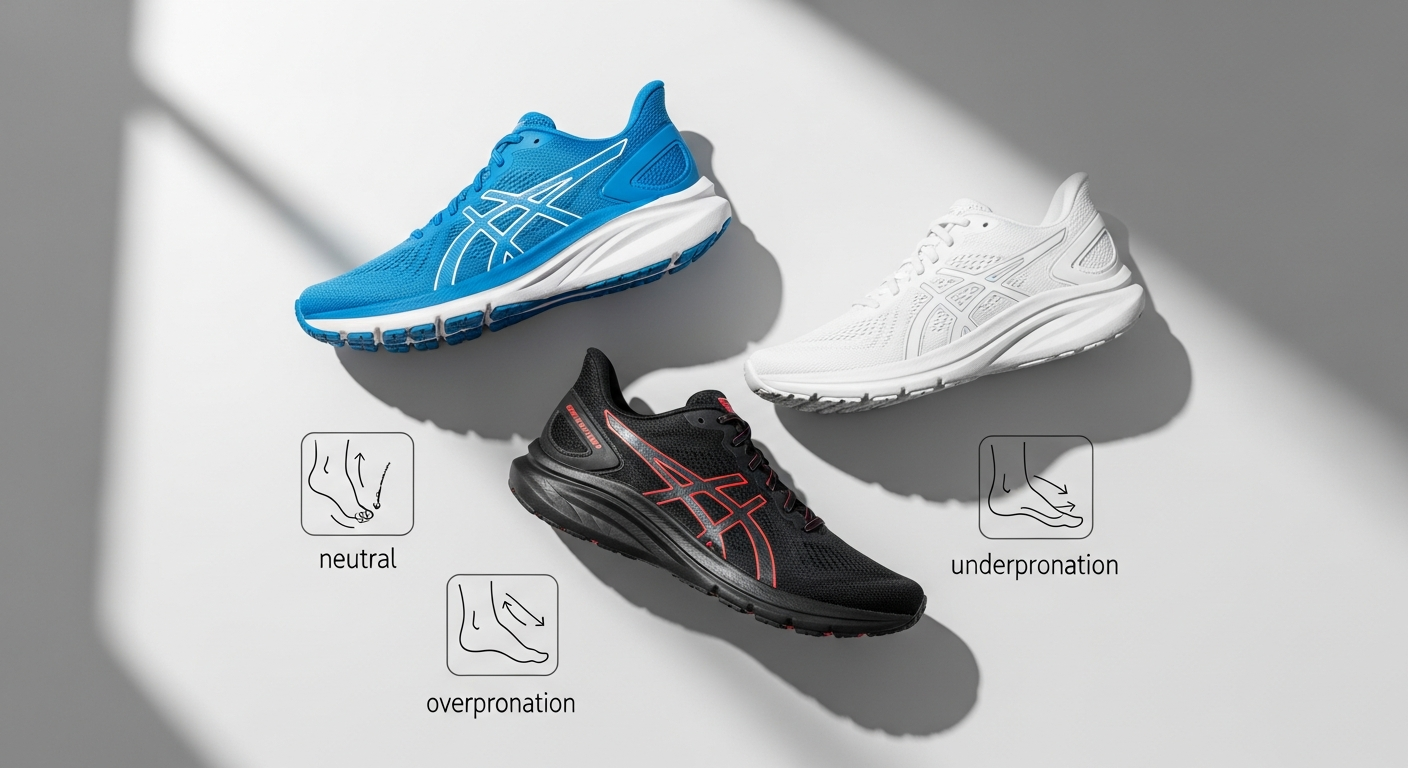
Neutral pronation means your foot rolls inward slightly—about 15 percent—as it lands. This natural movement efficiently absorbs shock and propels you forward. Runners with neutral pronation have the widest selection of shoes available. These shoes feature standard cushioning and moderate support, allowing your foot's natural mechanics to work without interference. You can choose from road shoes, trail shoes, and racing flats knowing they'll perform well with your gait pattern.
Overpronation support for inward rolling feet
Overpronation occurs when your foot rolls inward excessively—more than 15 percent—during the landing phase. This excessive inward motion places stress on your knees, ankles, and hips. Your arch collapses too much, and your body compensates by altering knee and hip alignment. Overpronators require stability shoes featuring medial posts or guide rails on the inner side of the midsole. These reinforced areas control the inward roll and maintain proper alignment throughout your stride.
Underpronation shoes for outward rolling feet
Underpronation, also called supination, happens when your foot doesn't roll inward enough—less than 15 percent. Your weight concentrates on the outer edge of your foot, leaving the inner arch unsupported. Underpronators need cushioned shoes with extra support on the lateral (outer) side. These shoes encourage proper pronation while protecting the outside of your foot from excessive impact forces.
Identifying Your Gait Pattern
Determining your foot type requires assessment methods ranging from simple at-home tests to professional analysis. Each approach provides valuable insight into your running mechanics.
Wet foot test reveals your arch type
The wet foot test is the simplest self-assessment method. Wet the bottom of your foot and step onto a paper bag or paper towel. The wet imprint shows your arch structure. A complete footprint with a thick band connecting your heel and toe indicates overpronation. A curved footprint with a thin connection reveals underpronation. A moderately curved impression suggests neutral pronation. This quick test gives you a starting point for understanding your foot type.
Professional gait analysis at specialty stores
Running specialty stores offer professional gait analysis, the gold standard for accurate assessment. Staff members observe your running form from multiple angles, often using pressure plates or motion sensors. These tools measure exactly how your foot contacts the ground, how your arch responds to impact, and whether your knees track properly over your feet. This data-driven approach identifies subtle biomechanical issues that a simple wet test might miss.
Video analysis of your running form
You can also film yourself running at a steady pace, then review the footage in slow motion. Focus on how your foot lands—heel first, midfoot, or forefoot. Watch whether your knees angle inward (a sign of overpronation). Notice if your body leans forward excessively or if your stride feels natural. Record multiple angles, including front, side, and rear views, to capture the complete picture of your running mechanics.
Cushioning and Support Options
Cushioning preferences vary widely among runners. Your choice depends on your injury history, running distance, and personal comfort preferences.
Maximalist shoes for impact protection
Maximalist shoes feature thick, soft midsoles that absorb significant impact. Runners recovering from injuries, those training for marathons, or heavier athletes often prefer maximalist cushioning. These shoes reduce stress on joints and muscles, making them ideal for high-mileage training. The trade-off is that they weigh more and feel less responsive, potentially slowing your pace slightly. However, injury prevention often justifies this compromise.
Minimalist shoes for natural ground feel
Minimalist shoes offer thin midsoles and minimal cushioning, allowing direct ground contact. Runners seeking a natural feel and enhanced proprioception—your body's awareness of foot position—choose minimalists. These shoes encourage proper running form and strengthen foot muscles. They work best for runners already accustomed to lighter cushioning and those running shorter distances. Transitioning to minimalist shoes requires gradual adaptation to avoid injury.
Moderate cushioning for balanced comfort
Most runners find their ideal shoe in the moderate cushioning category. These shoes provide enough shock absorption to prevent injuries while maintaining ground feel and responsiveness. Moderate cushioning works across various terrains and distances. Whether you're training for a 5K or logging easy recovery miles, moderately cushioned shoes deliver balanced performance without extreme trade-offs.
Terrain-Specific Shoe Selection
Your running environment dictates specific shoe requirements. Different surfaces demand different designs.
Road running shoes for pavement surfaces
Road shoes are engineered for smooth asphalt and concrete. They feature responsive cushioning that returns energy with each stride, helping you maintain speed. The outsole rubber is optimized for paved surfaces and lacks aggressive tread. Road shoes prioritize weight efficiency and forward propulsion. These shoes work for daily training runs, tempo efforts, and road races.
Trail running shoes for off-road terrain
Trail shoes handle rocky, rooted, and uneven ground. They feature aggressive tread patterns for traction, stiffer midsoles for stability on uneven surfaces, and protective toe caps shielding your feet from obstacles. The cushioning is slightly reduced compared to road shoes, allowing better ground feedback for navigating technical terrain. Trail shoes excel on mountain paths, forest trails, and rocky descents.
Track shoes for competitive racing
Track shoes are minimal, lightweight platforms designed for speed on the oval. They feature minimal cushioning, stiff midsoles, and aggressive traction spikes or nubs. These shoes are built for performance, not comfort or durability for daily training. Competitive runners use track shoes primarily for racing events, not regular workouts.
Finding Your Perfect Fit
Even the perfect shoe for your foot type won't perform well if the fit is wrong. Proper fitting technique prevents blisters, hot spots, and other foot discomfort.
Measure feet in afternoon when swollen
Your feet swell throughout the day, especially after running or standing for extended periods. Measure your feet in the afternoon or evening when they're at their largest. This timing ensures your shoes won't feel tight during actual runs. Bring the socks you typically wear when running—their thickness affects proper shoe fit. Use the same measurement tools specialty stores use: a Brannock device that measures length and width accurately.
Allow thumb width space at toe box
Your toes need room to move without hitting the shoe's front. Stand while wearing the shoe, then slide your thumb into the space between your longest toe and the shoe's end. You should fit your thumb comfortably with slight pressure. This spacing—roughly half an inch—provides room for your foot to swell during runs without your toes jamming forward. Shoes that feel snug in the store will feel cramped after several miles.
Test shoes with your running socks
Never evaluate shoe fit wearing thin dress socks or going barefoot. Running socks are thicker than everyday socks and affect how shoes fit. Wear your actual running socks during the fitting process. Walk around the store, jog in place, and simulate the movements you'll make while running. A good fit feels secure around your heel and midfoot while allowing your forefoot to move freely.
Find Your Perfect Running Shoes Today
Your running future depends on the shoes protecting your feet right now. Selecting shoes matched to your foot type prevents injuries and enhances performance. The process starts with understanding whether you pronate neutrally, overpronate, or underpronate. Next, assess your gait using the wet test, professional analysis, or video review. Consider your preferred cushioning level and the terrain where you'll run most frequently. Finally, ensure proper fit by measuring in the afternoon, allowing adequate toe space, and testing with your actual running socks.
Running with shoes engineered for your biomechanics transforms your experience. Comfort improves, confidence grows, and injuries become less frequent. You'll run farther, faster, and happier when your feet get the support they deserve.
Find your ideal running shoes matched to your foot type at Bikila ES today