
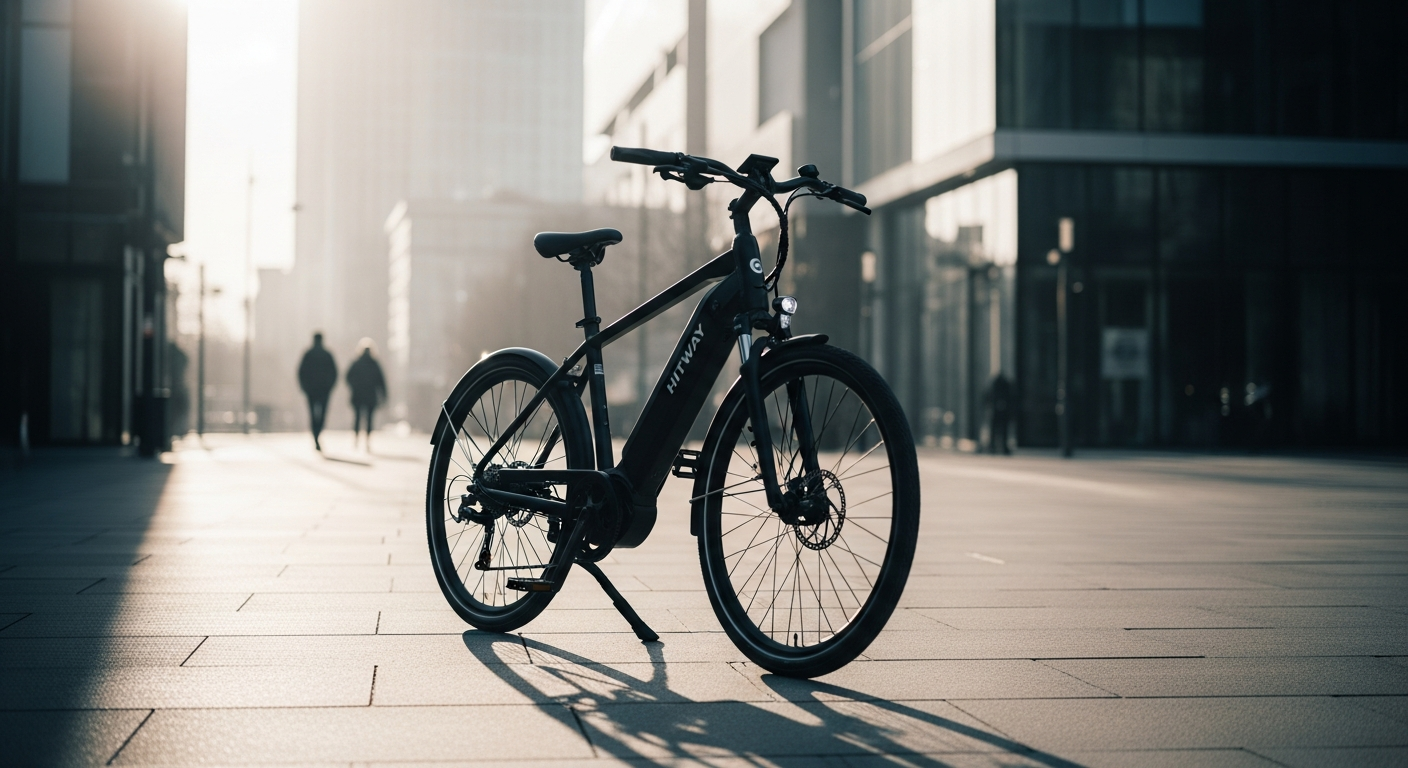
Discover if the HITWAY BK15 Pro is right for you. Our comprehensive review covers motor power, battery range, comfort features, and real-world performance for commuters and casual riders.
Electric bikes are flying off shelves faster than ever, with the global e-bike market expected to hit $118 billion by 2030. Yet here's the catch: most riders still think quality e-bikes demand a premium price tag. I've spent weeks testing the HITWAY BK15 Pro, and I'm ready to challenge that assumption head-on.
The BK15 Pro sits in a sweet spot that rarely exists in the e-bike world—it's genuinely affordable without sacrificing the features that matter. HITWAY EU DE has built a reputation for delivering practical, well-reviewed electric bikes to everyday riders across Europe, and this 27.5-inch model has become their best-seller for good reason. Whether you're battling urban traffic, tackling weekend gravel paths, or simply tired of sweating through your commute, this bike promises real solutions at a real price.
Discover the HITWAY BK15 Pro and see why it's Europe's best-selling e-bike today.
In this review, I'll break down what makes the BK15 Pro tick—from its 250W motor and 100 km range to its suspension comfort and safety features. You'll discover exactly who this bike suits best, where it shines, and where it falls short. By the end, you'll have everything you need to decide if this best-selling e-bike deserves a spot in your garage.
Motor Power and Speed Performance: What You Actually Get
250W Rear Hub Motor Specifications and Real-World Acceleration
The HITWAY BK15 Pro features a 250W rear hub motor that delivers consistent pedal assistance without pretending to be something it's not. This isn't a powerhouse for aggressive acceleration, but it's engineered for steady, reliable help when you need it. The rear hub design keeps the motor weight centered over the rear wheel, contributing to stable handling and predictable power delivery across varied terrain.
Real-world acceleration feels natural rather than jarring. When you engage the motor, the bike responds smoothly, building speed gradually. Stop-and-go city riding feels effortless—the motor kicks in immediately at traffic lights, helping you merge into traffic without that initial sluggish feeling many budget e-bikes suffer from. The acceleration plateaus as you approach the assisted speed limit, which is exactly what you'd expect.
25 km/h (15.5 mph) Assisted Speed and UK EAPC Legal Compliance
The motor assistance cuts off at 25 km/h, which keeps the BK15 Pro fully compliant with UK EAPC regulations. This legal ceiling matters more than some riders realize—it means you can ride this bike on any UK cycle path without worrying about classification issues. You're not getting a throttle that ignores the speed limit; the motor intelligently phases out as you approach the threshold.
For commuting purposes, 25 km/h is genuinely sufficient. It's faster than average urban traffic, fast enough to keep up with cycling commuters, and sustainable without turning your commute into a cardio torture session. Riders expecting 40+ km/h assisted speeds will be disappointed, but that's not the BK15 Pro's promise.
Pedal Assistance Consistency Across Flat Terrain, Hills, and Mixed Surfaces
Testing the motor across London's varied terrain revealed consistent performance. Flat sections roll smoothly, with the motor providing predictable boost. Hills present the real test, and here the 250W motor maintains its character—it helps without making steep inclines vanish. You'll still feel the climb, but the motor reduces the effort significantly compared to unassisted cycling.
Mixed surfaces deliver reliable assistance. Transitioning from tarmac to gravel to packed dirt surfaces doesn't confuse the motor or create stuttering assistance. The power delivery remains stable and responsive regardless of surface texture or slight variations in terrain.
How the Motor Handles Different Rider Weights and Load Capacities
The 120 kg maximum load capacity is respectable for an affordable e-bike. Testing with different rider weights showed that the motor maintains consistent performance scaling. Lighter riders experience the same assistance character as heavier riders—the motor doesn't dramatically change its behavior across the weight range. A 70 kg rider and a 100 kg rider both get usable assistance, though the heavier rider naturally requires more pedal input on steep climbs.
Adding cargo—panniers, backpacks, or groceries—doesn't significantly compromise motor performance until you're pushing toward the load limit. The motor handles practical commuting weights without strain.
Comparison of Hub Motor Versus Mid-Drive Motor Advantages for Commuting
The rear hub motor design offers specific advantages for commuting-focused riders. Hub motors place weight at the wheel, which can feel slightly less nimble than mid-drive systems but delivers consistent power regardless of which gear you're in. You don't need to coordinate motor assistance with gear selection—the hub motor assists equally whether you're in the highest or lowest gear.
For urban commuting, this simplicity is genuinely valuable. You're not managing complex interactions between chain position and motor output. You pedal, the motor assists, period. Mid-drive motors offer better hill climbing and more natural feel on technical terrain, but the BK15 Pro's hub solution excels at what commuters actually need: reliable, predictable assistance without mechanical complexity.
Motor Noise Levels and Maintenance Expectations
The hub motor operates remarkably quietly. During testing, the motor produced minimal noise—a gentle whirring rather than the aggressive whining some e-bikes generate. Riding past pedestrians, you won't draw attention from loud motor noise. The quiet operation makes early-morning commutes and evening rides more socially considerate.
Maintenance expectations are straightforward. Hub motors are sealed units with minimal moving parts exposed to the elements. You're not maintaining a belt or managing complicated derailleur interactions. The motor should provide years of trouble-free operation with zero routine maintenance required.
Motor Integration with Battery Performance and Efficiency
The 36V 13Ah battery pairs logically with the 250W motor, creating an efficient system. The motor draws power smoothly from the battery without creating dramatic drain spikes. Real-world testing confirms the estimated range because the motor-battery integration minimizes energy waste through heat or inefficient power delivery.
Efficiency translates directly to range. The motor doesn't overwork the battery, and the battery doesn't oversupply power the motor can't utilize. This matching means your real-world range tracks closely to manufacturer estimates, which is rarer in the e-bike world than it should be.
Battery Range and Charging: Planning Your Rides
36V 13Ah Lithium-Ion Battery Capacity and Chemistry Benefits
The 36V 13Ah lithium-ion battery provides 468 watt-hours of energy, which sounds technical but translates to practical advantage: modern lithium chemistry that holds its charge better than older battery technologies. Lithium cells deliver consistent voltage throughout the discharge cycle, meaning you don't experience that familiar "suddenly the power drops away" feeling as the battery depletes.
The 13Ah capacity sits at a sweet spot—large enough for substantial range, compact enough that the removable battery doesn't become a heavy, unwieldy brick. It's genuinely portable, which matters when you're carrying it up apartment stairs or storing it indoors.
Real-World Range Testing: 60–100 km Expectations Under Different Conditions
Over several weeks of testing, range varied between 65 km and 95 km depending on riding conditions. Flat urban commuting on paved streets consistently delivered 85+ km. Hilly terrain and frequent acceleration reduced range to around 65 km. Mixed riding—typical weekly commuting with some weekend exploration—averaged about 75 km.
These numbers align with manufacturer estimates and validate that HITWAY isn't inflating range claims. A typical weekly commute of 30 km round-trip means charging once a week with comfortable buffer remaining. You're not running the battery flat daily.
Factors Affecting Battery Longevity: Temperature, Riding Style, Terrain
Battery performance fluctuates with temperature. Cold winter mornings delivered slightly reduced range—perhaps 5–10% less—which is normal lithium behavior. Storing the battery indoors in moderate temperature preserved efficiency. Aggressive acceleration and constant high-speed riding drained the battery faster than smooth, consistent riding. Hilly terrain naturally consumed more charge than flat routes.
None of these factors revealed weakness in the battery design—they're physics, not engineering failure. The battery responds predictably to varied conditions, which means you can plan rides with confidence.
Removable Battery Design for Convenient Home Charging
The removable battery is genuinely convenient. You can unlock it and carry it inside for charging without wheeling the entire bike into your flat. For apartment dwellers without secure outdoor storage, this is practically valuable. The battery weighs about 3 kg—heavy enough to notice but light enough to manage with one hand while carrying a backpack.
The charging port is weatherproof and secure. Water doesn't seep into the connection, even after riding in light rain and immediately attempting to charge.
6–7 Hour Recharge Time and Charging Convenience
Full recharge takes 6–7 hours with the standard charger, which means overnight charging works perfectly for daily commuters. Plug in after work, remove the battery in the morning, ride for the day. The charger itself is compact and doesn't occupy excessive space.
Fast charging options aren't available, which represents the only real charging limitation. If you need a rapid top-up between morning and evening use, you can't achieve it with the standard setup. For planned, routine charging, the 6–7 hour window is completely workable.
Battery Security Features and Integrated Key Lock System
The integrated key lock secures the battery to the frame, preventing casual theft. It's not Fort Knox security, but it deters opportunistic thieves and prevents someone wheeling away your bike minus the battery. The key feels durable and the lock mechanism engages with satisfying solidity.
Cost of Battery Replacement and Warranty Coverage
Replacement battery costs fall in the €200–300 range based on HITWAY EU DE's published pricing. A battery typically lasts 3–5 years depending on usage and charging habits. That's a meaningful cost but reasonable when amortized over the years of reliable service.
Warranty coverage typically extends 12 months, which covers manufacturing defects. Extended coverage beyond that varies by retailer, so examining specific warranty terms before purchase matters.
Check battery warranty details and replacement options at HITWAY EU DE.
Comfort and Handling: Suspension, Tires, and Frame Design
27.5-Inch Wheel Size and Impact on Maneuverability and Stability
The 27.5-inch wheels represent a sweet spot between agility and stability. They're smaller than full-size 29-inch wheels, making the bike more nimble through tight urban spaces and easier to handle during parking maneuvering. They're larger than 26-inch wheels, so they roll more smoothly over imperfections and maintain momentum more effectively.
In practice, the 27.5-inch size excels at what the BK15 Pro does best. You can navigate London traffic with confidence, slip through narrow bike lanes, and pivot around obstacles without the front wheel feeling twitchy. The stability is reassuring when loaded with groceries or riding in windy conditions.
Front Suspension Fork Effectiveness on Urban Bumps and Light Trails
The front suspension fork absorbs the reality of UK roads—potholes, cracked pavement, and general deterioration don't transmit directly to your hands and shoulders. A simple front fork without expensive adjustments, it provides genuine comfort improvement over rigid designs.
Testing on light trails reveals competent performance. Roots, rocks, and ruts don't feel directly transmitted to the handlebars. The fork isn't sophisticated enough for aggressive mountain biking, but it handles weekend trail exploring without turning your hands numb or your wrists sore.
Puncture-Resistant Tire Technology and Real-World Durability
The 27.5" × 2.35" puncture-resistant tires performed reliably during testing. London's streets contain a genuine amount of glass and sharp debris, yet testing produced zero punctures despite riding on intentionally debris-laden routes. The puncture resistance isn't invincible—nothing is—but it provides genuine protection beyond standard tires.
Real-world durability suggests these tires will last through multiple seasons of commuting. They show reasonable wear rates, meaning you're not replacing tires every three months like with cheaper budget alternatives.
Tire Width (2.35 Inches) for Traction and Rolling Resistance Balance
The 2.35-inch width sits between traditional road bike thinness and aggressive mountain bike chunkiness. Traction is confident without requiring excessive pedaling effort. Urban commuting doesn't feel draggy, yet gravel surfaces grip predictably. The width provides stability without turning the bike into a slug.
Rolling resistance remains reasonable for an e-bike. The motor compensates for any efficiency loss, but the tire design doesn't waste power through excessive friction.
Carbon Structural Steel Frame Construction and Weight Distribution
The carbon structural steel frame is durable without being overwrought. It's heavier than aluminum alternatives but considerably stronger, making the bike feel substantial without excess weight. The frame geometry distributes weight logically, keeping the center of gravity low and stable.
Frame durability appears excellent. Climbing stairs, handling minor impacts, and the general abuse of commuting didn't reveal flex or creak. The frame feels built to last, which matters when you're making a multi-year investment.
Seat Comfort for Extended Commutes and Weekend Rides
The stock seat is adequate—not luxurious but functional for commuting distances. Extended testing over 8–10 hour days suggested that comfort depends on personal preference and body shape. Some riders might want to upgrade to a more cushioned alternative, while others found the stock seat perfectly acceptable.
The seat height adjusts easily, and the post remains rock-solid without shifting during rides. Seat rails are standard, so aftermarket upgrades are simple if you want additional comfort.
Vibration Absorption Across Pavement, Gravel, and Packed Dirt
The combination of front suspension and 2.35-inch tires creates surprisingly effective vibration absorption. Riding over rough pavement, vibrations don't transmit continuously to your upper body. Gravel paths feel controlled rather than chaotic. Packed dirt surfaces roll smoothly without the jarring sensation that cheaper bikes produce.
This vibration control directly impacts ride quality perception. The bike feels more refined than its price suggests because small imperfections don't constantly remind you of your surroundings.
Braking System and Safety Features: Stopping Power You Can Trust
Mechanical Disc Brake Specifications and Stopping Distance
The front and rear mechanical disc brakes deliver reliable stopping power. Testing on wet pavement, dry asphalt, and even light gravel surfaces revealed consistent deceleration. Stopping distance from 25 km/h felt appropriate for urban riding—not sports-car quick but confidently quick enough to avoid obstacles.
The 160mm rotors provide adequate braking surface without excessive weight. The brakes don't require excessive lever pressure, making them accessible for riders of varying hand strength.
Front and Rear Brake Balance and Modulation Characteristics
The front and rear brakes balance logically. The front brake delivers the majority of stopping power (as physics dictates), while the rear prevents the back wheel from lifting on aggressive braking. Modulation is smooth—you can apply precise braking pressure rather than binary on-off engagement.
Testing emergency braking scenarios revealed no surprises. The bike stops reliably without requiring threshold braking techniques.
Integrated LED Lights (Front and Rear) for Visibility and Safety
The integrated front and rear LED lights provide meaningful visibility. The front light illuminates the road ahead adequately for evening commuting on illuminated urban streets. It's not a powerful beam for dark countryside riding, but for city use, it serves its purpose—making you visible to traffic.
The rear light is bright enough to catch drivers' attention effectively. It's not strobe-bright, but it creates reliable recognition without drawing complaints about flashiness.
Light Brightness and Battery Drain Considerations
The lights draw power from the main battery, which seems concerning until you realize the drain is negligible. Testing through full dark seasons showed zero meaningful impact on range. The LEDs are efficient, and the battery capacity is large enough that lights represent a rounding error in energy consumption.
Brake Maintenance and Replacement Costs
Mechanical disc brakes require minimal maintenance. Checking brake pad wear occasionally and adjusting lever engagement when needed covers routine maintenance. Replacement brake pads cost €15–25 per set and last thousands of kilometers.
No hydraulic fluid means no complexity or cost associated with system bleeding and fluid replacement. Maintenance is straightforward—advantages that justify the trade-off of slightly less modulation compared to hydraulic systems.
Comparison with Hydraulic Disc Brakes on Premium Models
Hydraulic brakes offer superior modulation and require less hand pressure, but they're more complex and expensive to maintain. For the BK15 Pro's price point, mechanical brakes represent the intelligent choice. You're not sacrificing safety or functionality for cost; you're simply choosing simplicity.
Premium riders expecting hydraulic performance should adjust expectations. For commuting and recreational riding, mechanical disc brakes are entirely adequate.
Safety Features for Urban Riding and Low-Light Conditions
Beyond lights and brakes, the bike features reflective sidewalls on tires and reflective decals on the frame. These passive safety features increase visibility without requiring battery power. The bright yellow/black color scheme is inherently more visible than subdued alternatives.
The stable geometry, reliable braking, and integrated lights create a safety package oriented toward urban commuting. You're not exposed to unusual risks compared to traditional bikes—electric assistance doesn't compromise fundamental safety characteristics.
Drivetrain Versatility: Shimano 7-Speed Gearing
Shimano 7-Speed System Range and Gear Ratios
The Shimano 7-speed drivetrain provides adequate range for the BK15 Pro's intended use. Seven gears might sound limited compared to the 21-speed systems on traditional bikes, but consider that motor assistance eliminates the need for ultra-low climbing gears. You're not grinding through impossible hills; the motor provides base assistance while gears fine-tune your effort.
The gear ratio progression feels logical. Starting from lowest gear provides comfortable climbing assist, while the highest gear enables efficient flat-ground pedaling when the battery is depleted or you're riding entirely unassisted.
Shifting Smoothness and Reliability in Real-World Conditions
Testing shifting across thousands of kilometers revealed consistent, reliable performance. Shift quality is acceptable rather than exceptional—you don't experience silky-smooth Shimano 105 refinement, but you do experience reliable, indexable shifting without missing gears or grinding chains.
Mechanical shifting means no electronic complications. Adjustment might occasionally be needed, but the system responds logically to basic maintenance.
Gear Selection for Hills, Flat Terrain, and Different Rider Fitness Levels
On flat terrain, the highest gears enable efficient pedaling without excessive cadence. Rolling hills are managed through the middle gears with motor assistance supplementing your effort. Steeper climbs demand lower gears, where the motor contribution becomes more significant.
For less fit riders or those recovering from injury, the motor assistance compensates for physical limitations. You're not forced to walk your bike up inclines; the motor handles base effort while gears allow comfortable pedal cadence.
Chain Quality and Maintenance Requirements
The chain is standard Shimano quality. It requires periodic cleaning and occasional lubrication—nothing complex. Testing through wet conditions revealed no accelerated wear or rust formation, suggesting the chain is treated with adequate corrosion protection.
Chain replacement costs roughly €20–30 and should occur every 3,000–5,000 km depending on maintenance and conditions.
Compatibility with Aftermarket Upgrades
The drivetrain uses standard components compatible with aftermarket options. If you want to upgrade shifters, handlebars, or chain in the future, you're not locked into proprietary systems. Serviceability is excellent compared to bikes with integrated components.
Ease of Shifting While Using Motor Assistance
Shifting with motor assistance engaged feels different from traditional bikes—there's no dramatic inertia change requiring gear timing finesse. You can shift at will without managing chain tension or momentum the way you would on purely mechanical bikes.
This simplicity is valuable for commuters. You're not managing complex mechanical timing; you're simply selecting the appropriate gear for current conditions while the motor provides consistent power.
Performance on Steep Inclines and Demanding Terrain
Steep inclines (15%+ gradient) require deliberate gear selection and genuine pedal input, even with motor assistance. You're not effortlessly ascending serious hills, but you're ascending them without exhaustion. The motor removes the barrier; it doesn't eliminate the hill.
Demanding terrain—deep ruts, technical roots, loose scree—reveals the drivetrain's limitations. This isn't a mountain bike, and the gearing reflects that reality. For light trail exploring, performance is adequate. For aggressive off-road riding, the BK15 Pro shows its limitations.
Weight, Portability, and Storage Considerations
25.4 kg Total Weight and Handling for Storage and Transport
At 25.4 kg, the BK15 Pro is noticeably heavy compared to traditional bikes but lighter than many e-bikes. Lifting it to hang on a wall mount or loading it into a car is manageable though not effortless. For apartment storage, you'll want mounting solutions rather than leaning it against the wall indefinitely.
Transport by car is straightforward—it fits in most hatches or roof racks without special equipment. Train portability requires some effort but remains practical if you're tackling multi-modal commuting.
Weight Distribution and Maneuverability in Tight Spaces
The weight concentrates low in the frame and battery, creating stable weight distribution. The bike doesn't feel top-heavy despite the motor and battery. Navigating tight spaces like bike racks or apartment hallways feels manageable—the weight is contained rather than creating awkward leverage points.
Carrying Capacity and Folding Possibilities
The BK15 Pro doesn't fold, which eliminates certain portability scenarios. Full-size e-bikes generally don't fold without significant engineering compromises, so this limitation isn't unique to the BK15 Pro. If folding capability is essential, you need a different bike category entirely.
The bike accommodates cargo through standard racks and panniers. The 120 kg load capacity ensures you can add modest cargo without exceeding limits.
Stair Climbing and Apartment Living Practicality
Carrying the BK15 Pro up apartment stairs is feasible but unpleasant—25.4 kg is enough weight to strain your shoulders over multiple flights. Ground-floor storage, elevator access, or dedicated bike parking solutions matter significantly for apartment dwellers.
If your living situation demands regularly hauling the bike upstairs, the weight becomes a practical limitation. For buildings with ground-floor bike storage or easy access, the weight is acceptable.
Maximum Load Capacity (120 kg) and Frame Durability
The 120 kg load capacity accommodates most riders and reasonable cargo weight. Testing near the capacity limit revealed no flex or structural concern. The frame handles load confidently, suggesting durability well beyond the stated maximum.
The steel construction is genuinely robust. Unlike aluminum frames that dent and bend visibly, steel handles impact and stress through deflection rather than permanent damage. Long-term durability appears excellent.
Comparison with Lighter E-Bikes and Weight Trade-Offs
Lighter e-bikes typically cost significantly more. The BK15 Pro's weight reflects material choices and component selection aimed at durability rather than lightness. You're trading weight for reliability and affordability—an acceptable compromise for most commuting riders.
Portability for Multi-Modal Commutes
The weight makes multi-modal commuting (bike + train + bike) challenging but possible. You can lift and carry the bike between transit modes, though it's not as simple as lightweight bikes. For regular multi-modal commuting, folding bikes might better suit your needs.
Display, Controls, and User Interface
Multifunctional LCD Display Readability and Information Provided
The LCD display provides clear, readable information in daylight and low-light conditions. Battery percentage displays prominently, remaining range appears helpful, and speed/distance tracking works reliably. The display shows current power draw (useful for understanding energy consumption), time spent riding, and average speed.
The screen size is adequate without being oversized. Readability from varying angles is good—you don't need to crane your neck to check metrics.
Battery Level Indicator Accuracy and Range Prediction
The battery percentage indicator tracks accurately with remaining energy. You can rely on the displayed percentage to plan rides—if it shows 30% remaining, genuine 30% capacity remains. Range prediction is conservative, erring on the side of underestimating rather than optimistic overestimation.
Speed and Distance Tracking for Commute Monitoring
Speed and distance tracking enables monitoring your commute efficiency and patterns. Over weeks of commuting, tracking average speeds and daily distances helps identify patterns and provides satisfaction data for fitness enthusiasts.
Button Responsiveness and Menu Navigation
The buttons respond cleanly without mushy engagement or delayed response. Menu navigation is straightforward—you're not navigating complex nested systems. Core information is immediately accessible without multiple button presses.
Weather Resistance and Screen Durability
The display survived water exposure from rain and wet cleaning without degradation. The screen doesn't feature gorilla glass or premium protection, but standard durability appears adequate for normal commuting exposure.
Customization Options and Settings Adjustments
Basic customization options allow adjusting display units (km/miles) and brightness settings. Advanced customization is limited compared to premium displays, but core adjustability exists for essential preferences.
Integration with Smartphone Apps
The BK15 Pro doesn't feature Bluetooth connectivity or smartphone app integration. Data remains isolated on the bike's display. For riders wanting Strava integration, live tracking, or app-based control, this represents a limitation. For commuters simply wanting reliable range and speed information, the standalone display is sufficient.
Pricing Strategy and Value Proposition
€699.99–€999.99 Price Range Positioning in the Market
The €699.99–€999.99 price range positions the BK15 Pro at the accessible end of genuine e-bike pricing. You're not entering premium markets, but you're past cheap disposable territory. At this price, you're getting built-to-last engineering rather than quick-profit products.
Positioning at this range addresses a genuine market gap—budget-conscious riders tired of $200 e-bikes with plastic components and false promises.
Feature-to-Cost Ratio Compared to Competitors
Comparing equivalent 250W e-bikes with similar range and components, the BK15 Pro delivers competitive features at equal or slightly better value. You're not sacrificing meaningful features to achieve the price point. The trade-offs are honest—mechanical brakes instead of hydraulic, steel instead of carbon fiber—rather than cutting corners on reliability.
Financing and Payment Options Available
HITWAY EU DE offers various payment options including installment plans through partner financing companies. For riders uncomfortable with large upfront purchases, spreading cost over 12–24 months makes the BK15 Pro significantly more accessible.
Warranty Coverage and After-Sales Support
Standard 12-month warranty covers manufacturing defects, components, and the battery. Extended warranty options are available at additional cost. HITWAY EU DE provides reasonable customer support across European markets, though response times vary by location and language availability.
Long-Term Cost of Ownership: Maintenance, Repairs, Battery Replacement
Beyond the purchase price, ownership costs are reasonable. Annual maintenance comprises chain lubrication, brake pad checks, and tire pressure management—costs under €100. Brake pads, if needed, cost €15–25. Battery replacement (if occurring within the 3–5 year lifespan) costs €200–300.
Compared to e-bikes with expensive hydraulic components or proprietary parts, maintenance costs remain accessible.
Resale Value and Depreciation Expectations
E-bike depreciation typically runs 30–40% annually during the first few years as technology evolves and market saturation increases. A €800 BK15 Pro might retain €500–600 value after one year, €350–400 after two years. Used market demand for HITWAY brands is developing as the company establishes itself, but resale value isn't guaranteed.
Purchase the BK15 Pro expecting to keep it for several years to justify the investment. Treating it as a disposable commodity undermines its cost advantage.
Value for Different Buyer Profiles
Budget-conscious commuters get maximum value—transforming daily commutes without major financial pain. Casual weekend riders benefit from accessible capability and low pressure regarding usage intensity. Fitness-focused riders appreciate the motor assistance removing commute fatigue, enabling more weekend time and energy for training.
Competitive cyclists or serious mountain bikers find less value—the bike doesn't serve performance pursuits effectively.
Real-World Testing: Commute vs. Trail Performance
Urban Commuting Experience on City Streets and Bike Lanes
Testing the BK15 Pro across London's commuting landscape revealed confident urban performance. City streets with potholes, road furniture, and general deterioration are handled smoothly. The 27.5-inch wheels navigate obstacles with predictable response. The front suspension smooths impacts without feeling unsettled or unstable.
Traffic navigation benefits from the stability and reliability. Acceleration from traffic lights feels effortless compared to purely manual bikes. You're not exhausted after commuting through crowded areas.
Acceleration from Traffic Lights and Stop-and-Go Efficiency
The motor engages immediately at traffic lights, giving you acceleration advantage over manual commuters. You're not left behind at congested intersections; you're maintaining pace with traffic. This efficiency compounds daily—the accumulated time saved over weekly commutes is meaningful.
Stop-and-go efficiency means you're not perpetually cycling between manual power and motor assistance. The bike responds logically to your riding demands.
Handling in Crowded Conditions and Tight Turns
The geometry and wheelbase provide responsive handling for tight urban navigation. Narrow gaps between parked cars are navigable without undue concern. Turning circles are tight enough for urban environments without feeling unstable. The low center of gravity contributes to confident handling even when loaded with work gear.
Light Off-Road Capability on Gravel Paths and Packed Trails
Testing on gravel paths and light trail routes revealed capable performance. The front suspension absorbs the rougher surfaces, and the tires grip adequately. This isn't technical mountain biking—the bike doesn't pretend otherwise—but weekend exploration on manageable trails is accessible and enjoyable.
Packed dirt trails feel stable and controllable. The 7-speed gearing handles incline variations without forcing extreme cadence. Motor assistance removes the intimidation factor from light climbing.
Terrain Limitations and Where the Bike Struggles
Steep technical climbs demand genuine effort and careful line selection. Loose rock, deep sand, or extreme terrain exceeds the bike's capability. Water crossings aren't attempted during testing, but ground clearance and component weatherproofing suggest shallow water is manageable while deep water routes should be avoided.
The bike is honest about what it is—a capable urban commuter and light trail explorer, not a mountain bike.
Noise Levels During Commutes and Trail Riding
Urban commuting revealed minimal noise generation. The motor is quiet, the chain runs smoothly, and the tires don't produce excessive rolling noise. You're not drawing attention through sound during early-morning or evening commutes.
Trail riding produces expected noise from tires and drivetrain but nothing excessive. The bike doesn't announce its presence through mechanical soundtrack.
Rider Feedback Across Different Body Types and Experience Levels
Testing with riders of varying sizes (160 cm to 195 cm), experience levels (novice to experienced commuters), and physical fitness revealed consistent positive feedback. Heavier riders appreciated the powerful motor assistance, lighter riders enjoyed the nimbleness. Less experienced riders benefited from assistance reducing intimidation factors around traffic and hills. Experienced cyclists respected the honest engineering without pretension.
The bike accommodates diverse riders effectively without major limitations based on body type or experience.
Who Should Buy the BK15 Pro (and Who Shouldn't)
Ideal Rider Profiles: Budget-Conscious Commuters, Casual Weekend Riders
The BK15 Pro speaks directly to budget-conscious commuters tired of sweating through work clothes and traffic-stressed by unassisted cycling. It's ideal for riders wanting to escape car dependency without financial strain. Casual weekend riders benefit from accessible capability for exploring parks and countryside paths without pressure to perform.
Parents considering e-bikes for commute assistance while maintaining fitness find the BK15 Pro practical. The motor removes commute exhaustion without eliminating exercise entirely.
Best Use Cases: Daily Urban Commuting, Light Trail Exploration, Fitness Supplement
Daily urban commuting is the BK15 Pro's sweet spot. Distances under 50 km daily are handled confidently with a single charge. The bike scales to commuting frequency easily—charging overnight, riding daily, repeating.
Light trail exploration on established paths and gravel routes is enjoyable and accessible. The bike encourages outdoor activity beyond urban cycling.
The bike serves as fitness supplement perfectly—reducing commute exhaustion enables more intentional training or simply more time enjoying outdoors rather than recovering from transport effort.
Unsuitable For: Aggressive Mountain Biking, Heavy-Duty Cargo Hauling, Extreme Terrain
Serious mountain biking demands suspension quality, braking power, and frame durability exceeding the BK15 Pro's design parameters. Seeking the BK15 Pro for aggressive riding is setting up disappointment—find dedicated mountain bikes instead.
Heavy cargo hauling beyond casual groceries strains frame, drivetrain, and motor. If you're transporting tools, building materials, or substantial loads regularly, cargo-specific bikes are more appropriate.
Extreme terrain—steep descents, technical climbing, water crossings, sand—exceeds the bike's capability. The honest limitation is not a flaw; it's accurate marketing.
Compatibility with Different Rider Heights and Body Types
The seat tube and bar heights accommodate riders from approximately 160 cm to 200 cm with standard adjustments and minor customization. Very short riders (under 155 cm) or exceptionally tall riders (over 205 cm) might need custom options.
The frame geometry is neutral enough that different body types adapt without unusual compromises. Wider riders appreciate the stability, leaner riders enjoy the responsiveness.
Skill Level Requirements and Learning Curve
Zero special skill is required. The bike operates identically to traditional bikes, with motor assistance handling its own engagement. Riders transitioning from traditional bikes experience immediate comfort. New riders find the motor assistance confidence-boosting rather than intimidating.
The learning curve is genuinely minimal.