
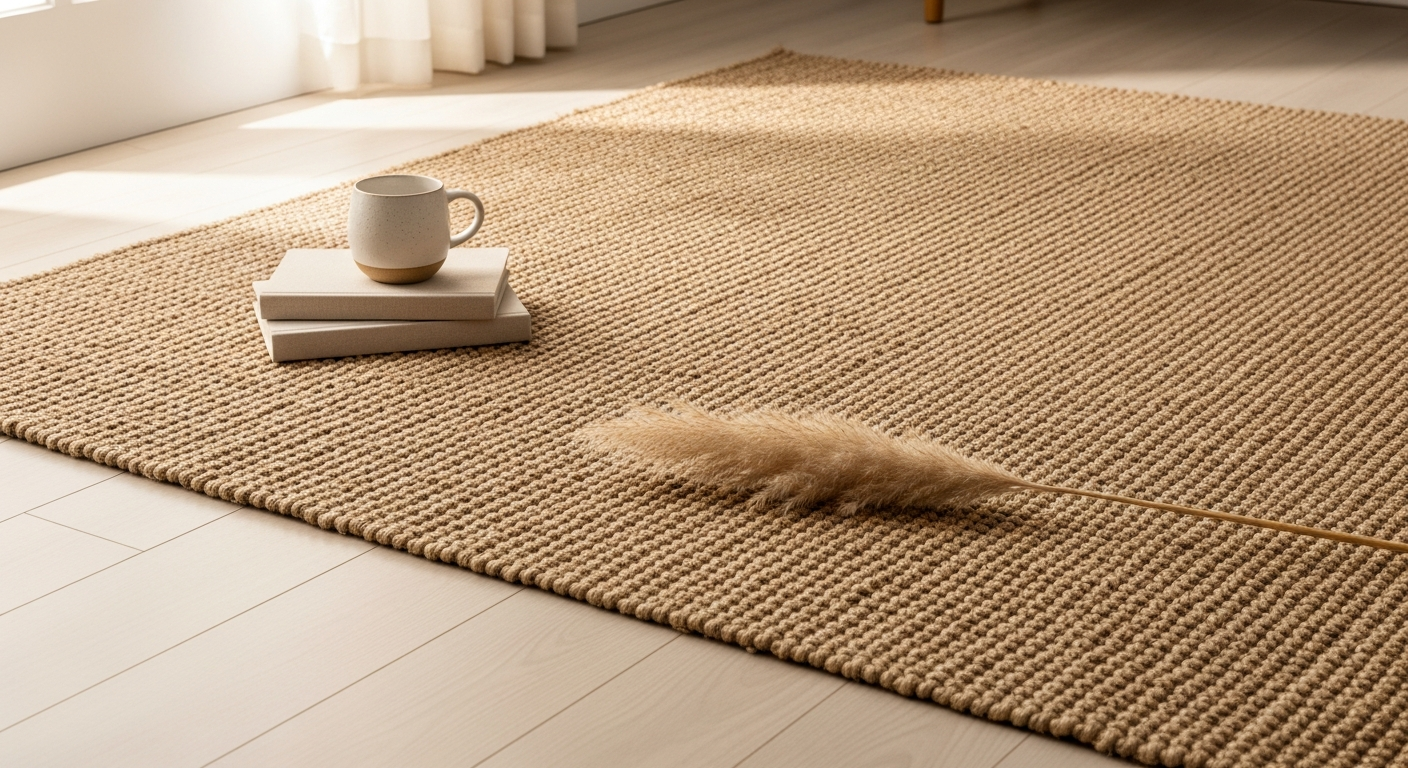
Discover why handwoven jute-blend natural area rugs balance affordability with quality. Learn about durability, eco-friendly materials, style versatility, and how to choose the perfect size.
Over 60% of homeowners struggle to find an area rug that genuinely balances affordability with quality. The market floods us with cheap synthetic options that pill within months or premium wool rugs that drain the wallet. You're left feeling like you have to choose between compromise and overspending—but that choice is a false one.
The handwoven jute-blend natural area rug has quietly become a game-changer in the flooring world. Handcrafted in India using traditional weaving techniques, these rugs combine 60% jute with 40% cotton to create something that feels surprisingly soft while maintaining the durability and organic appeal of natural fibers. The result is a rug that works harder than you'd expect, delivering warmth, character, and practical performance all at once.
Discover how the perfect handwoven jute-blend natural area rug can transform your space.
Why Jute-Cotton Blends Outshine Pure Natural Fiber Rugs
The softness factor: How 40% cotton transforms the traditional rough jute feel
Pure jute rugs have a reputation for roughness underfoot—they're scratchy and stiff, especially when new. The 40% cotton component changes this equation entirely. Cotton fibers are naturally softer and more pliable than jute alone, creating a blend that feels gentler against bare feet while retaining the structural integrity that jute brings to the table. This isn't about sacrificing authenticity for comfort; it's about enhancing the natural fiber experience.
Durability comparison: Jute-blend vs. 100% jute vs. wool alternatives
When it comes to standing up to daily life, jute-blend rugs prove themselves time and again. Pure jute can be brittle and prone to fraying in extremely high-traffic areas, while wool rugs cost significantly more upfront and require specialized cleaning. The blend offers a sweet spot: it maintains the resilience of jute while gaining flexibility from cotton. Wool absorbs moisture slowly and dries gradually, which can lead to mildew in humid environments. Jute-cotton blends dry faster and resist moisture better, making them more practical for real homes.
Comfort underfoot: Thickness specifications (0.35-0.45 inches) and what that means for your feet
At 0.35 to 0.45 inches thick, these rugs provide a subtle cushioning effect without feeling spongy or unstable underfoot. The thickness is intentional—thin enough to sit flush under furniture and in doorways, yet substantial enough to provide comfort. You won't feel the hard floor beneath when you walk across, but you also won't experience the wobbling sensation that comes with overly plush rugs.
Breathability and moisture management in natural fiber construction
Natural fibers are inherently breathable. They allow air to circulate beneath the rug, which prevents moisture from accumulating and creating odor or mold problems. Cotton's hygroscopic properties work alongside jute's structure to manage humidity effectively. This breathability also means the rug won't trap heat, making it comfortable even during warmer months.
Why handwoven flatweave construction matters for longevity
Handwoven flatweave construction, produced using traditional methods, creates a tight, consistent weave that resists unraveling and pilling. Unlike machine-made rugs where a single thread break can cascade into damage, handwoven construction allows the artisan to work intentionally, ensuring each thread is properly locked. Flatweave, in particular, means there's no pile to crush or mat down, so the rug maintains its appearance through years of foot traffic.
The role of dual-toned yarn in creating visual depth and hiding imperfections
The subtle flecks visible in warm tan, beige, and light-brown tones aren't random—they're the result of dual-toned yarns that blend different shades together. This technique accomplishes two critical things: it creates visual interest and texture without requiring bold patterns, and it makes dirt, dust, and minor stains virtually invisible. A speck of dust or a small smudge disappears into the natural variation, making these rugs exceptionally practical for homes where life happens.
Cost-per-quality ratio: Why blended rugs offer superior value
When you calculate the cost per square foot and factor in longevity, natural fiber blends consistently outperform both budget synthetics and premium alternatives. A 9×12 foot hand-braided jute rug might cost $329 (originally priced at $849), translating to roughly $3 per square foot. Compare that to a wool rug at $15+ per square foot or a polyester rug that will need replacement in five years, and the math becomes clear: blended rugs deliver premium quality at practical prices.
Eco-Friendly Flooring Without the Guilt or Compromise
Sustainable sourcing: Understanding jute and cotton as renewable materials
Both jute and cotton are renewable plant-based fibers that regenerate annually. Jute grows rapidly in tropical climates and requires minimal pesticides compared to conventional cotton farming. Even the cotton component in these blends can be sourced responsibly through suppliers committed to sustainable practices. You're not choosing between style and environmental responsibility—you're getting both.
Carbon footprint comparison with synthetic alternatives
Synthetic rugs rely on petroleum-based materials and energy-intensive manufacturing processes. Natural fiber rugs, by contrast, require significantly less processing and transportation energy. Jute production in India, where these rugs are handwoven, has far lower carbon emissions than shipping finished synthetics from overseas factories.
Biodegradability and end-of-life environmental impact
When a jute-cotton rug finally reaches the end of its life, it biodegrades naturally without releasing microplastics or synthetic chemicals into landfills. Synthetic rugs persist for decades, slowly fragmenting into harmful particles. Choosing natural fibers means you're making a responsible choice even regarding disposal.
Artisanal production methods supporting fair trade practices in India
The handwoven nature of these rugs supports artisans in India who maintain traditional weaving techniques. These are real people earning sustainable livelihoods through their craft, not machines running in automated factories. Purchasing these rugs directly supports communities and preserves cultural heritage.
Chemical-free manufacturing processes in handwoven construction
Handwoven production doesn't require the harsh dyes, chemical treatments, and synthetic finishes that industrial manufacturing demands. The natural colors come from the fibers themselves, not from chemical applications that can off-gas into your home or wash into waterways.
How natural fiber rugs improve indoor air quality
Unlike synthetic rugs that can off-gas volatile organic compounds (VOCs), natural fiber rugs don't emit harmful chemicals. They're also less likely to harbor dust mites in deep pile, making them a healthier choice for people with allergies or respiratory sensitivity.
Certifications and standards to look for when shopping responsibly
When purchasing, look for rugs from suppliers who disclose their sourcing practices. Some manufacturers obtain Fair Trade certifications or partner with organizations that verify ethical production. Reading product descriptions carefully and reaching out to retailers about their supply chain helps you make informed decisions aligned with your values.
Find your sustainable jute-blend natural area rug and make an eco-conscious choice today.
Room-by-Room Guide: Where These Rugs Truly Shine
Bedrooms: Creating cozy retreats with neutral, grounding tones
A bedroom needs to feel like a sanctuary, and the warm tan and beige tones of jute-blend rugs create instant coziness. The neutral palette doesn't compete with your bedding or wall colors—it enhances them. Place the rug at the foot of the bed or anchor it under the bed frame with nightstands positioned on top. The soft texture feels welcoming against bare feet when you step out of bed in the morning.
Living rooms: Anchoring furniture arrangements with large area rug placement
In living rooms, larger rugs (8×10 or 9×12 feet) define seating areas and tie furniture groupings together visually. Position your sofa so its front legs sit on the rug, with accent chairs and side tables following suit. This anchoring effect makes the room feel intentional and cohesive, preventing the scattered appearance that comes when furniture floats on a bare floor.
Kids' play areas: Durability and stain-hiding benefits for high-traffic zones
Kids' spaces demand durability and forgiveness. The jute-cotton blend handles the wear of active play, and the neutral coloring conceals the inevitable dirt, crumbs, and minor spills. Unlike light-colored wool rugs that show every stain, these rugs maintain their appearance through the chaos of childhood. The flatweave construction also means no pile to trap small objects or create tripping hazards.
Entryways: Why thin profile rugs work perfectly for transitions
The 0.35 to 0.45 inch thickness makes these rugs ideal for entryways where tripping hazards are a concern. The rug sits flush with flooring transitions, allowing doors to swing freely and creating a smooth path from outside to inside. The neutral tone hides the dirt tracked in from outside, making entryway rugs nearly maintenance-free compared to lighter alternatives.
Dining rooms: Practical considerations for spill-prone environments
Dining rooms present challenges—spills happen at the table, chairs slide back and forth, and food debris accumulates. The dual-toned neutral coloring of jute-blend rugs makes minor stains virtually invisible, while the tight weave provides some protection against liquid absorption if spills are addressed quickly. Consider sizing so the front legs of dining chairs sit on the rug while back legs rest on bare floor, defining the eating space without creating a stain magnet directly under the table.
Home offices: Aesthetic appeal that doesn't distract from productivity
A home office needs to support focus, not compete for attention. The subtle texture and neutral tones of these rugs create a grounding effect without visual distraction. The rug defines the office zone within a larger room while maintaining calm, professional aesthetics. The natural fiber quality adds character that makes the space feel intentional rather than utilitarian.
Kitchens and mudrooms: Placement strategies to minimize moisture exposure
Kitchens and mudrooms present moisture challenges, making jute-cotton blends less ideal directly in front of sinks or outside doors. However, strategically placed runner rugs in hallways adjacent to kitchens or mudrooms work beautifully, adding warmth without constant exposure to water. If placing a rug near a kitchen, ensure good air circulation beneath and address spills immediately.
The Neutral Palette Advantage: Why Warm Tones Work Everywhere
Warm tan, beige, and light-brown color psychology in interior design
Warm neutral tones trigger feelings of safety, comfort, and groundedness. They're inherently calming without being boring. Tan and beige reflect rather than absorb light, making spaces feel brighter and more open. Light-brown tones add depth and richness that pure whites or grays lack, creating visual interest through subtlety rather than boldness.
Blending seamlessly with bohemian, farmhouse, modern, and Scandinavian styles
The jute-blend rug works across design aesthetics because natural fibers are foundational to multiple styles. Bohemian design celebrates organic textures; farmhouse embraces natural materials; modern minimalism values clean lines and natural elements; Scandinavian design prioritizes functionality and natural materials. A single rug fits all these visions without contradiction.
Subtle flecks and texture: Creating visual interest without bold patterns
The flecked appearance—achieved through dual-toned yarns—adds visual complexity without requiring patterns. This matters because patterns can feel trendy or restrictive, while texture feels timeless and sophisticated. You get visual depth that engages the eye without demanding attention or limiting your ability to change other elements in the room.
Complementing existing furniture and decor without clashing
Neutral rugs don't compete with your furniture or artwork. If you have colorful sofas, bright throw pillows, or bold wall art, the rug supports these elements rather than fighting them. If you prefer a monochromatic approach, the rug provides textural interest while maintaining the color story.
Timeless appeal: Why neutral rugs resist trendy design cycles
Trends come and go, but neutral rugs remain relevant across decades. You won't wake up in five years feeling like your rug is dated. This longevity matters both aesthetically and financially—you're making an investment that stays current regardless of whether shag or flatweave, maximalist or minimalist design takes the spotlight.
Versatility across different lighting conditions and times of day
The warm tones of jute-blend rugs respond beautifully to both natural and artificial light. Morning sunlight highlights the subtle flecks, creating texture and dimension. Evening artificial light warms the space without creating harsh shadows. The rug maintains its appeal regardless of when you view it or how light angles through your windows.
Pairing strategies with accent pillows, throws, and wall colors
Build your design around the rug by selecting accent pillows in deeper earth tones, jewel tones, or soft neutrals. A cozy throw in cream, rust, or sage green layers beautifully with these rugs. Wall colors ranging from soft whites and creams to deeper charcoals all complement the jute-blend base.
Size, Shape, and Customization: Finding Your Perfect Fit
Small accent rugs (2×3 feet): Ideal uses and placement ideas
Small rugs starting around $40 work perfectly as accents in bedrooms, home offices, or beside armchairs. They define small seating areas without overwhelming the space. Layering a small patterned rug on top of a larger jute-blend base creates visual interest while keeping the neutral foundation visible around the edges.
Medium rugs (5×8 feet): The sweet spot for most living spaces
A 5×8 foot rug is the workhorse size that fits most living rooms and dining rooms. It's large enough to anchor furniture without consuming the entire room, and the pricing sits at a reasonable mid-range investment point. This size works particularly well in apartments and smaller homes where larger rugs would overwhelm the space.
Large area rugs (8×10, 9×12 feet): Creating defined zones in open floor plans
Large rugs define distinct zones in open floor plans. A 9×12 foot rug costs around $329 (originally $849) and creates a distinct living area within a larger space. The size accommodates most sofa configurations with all front legs on the rug, creating intentional groupings that prevent the scattered appearance of open layouts.
Custom sizing options: When standard dimensions don't work
Unusual room shapes or specific furniture configurations sometimes require custom sizes. Many suppliers offer made-to-order options that allow you to specify exact dimensions. The pricing scales logically—you're paying for material and labor based on the size you need rather than forcing your space into a standard option that doesn't fit perfectly.
Shape variations: Round, square, oval, and runner rugs for different applications
Beyond rectangular rugs, round rugs anchor circular seating areas or dining tables, while runners extend narrow hallways or frame entryways. Square rugs work for smaller spaces or accent areas. Oval rugs bridge rectangular and round, offering versatility in oddly shaped rooms. Shape selection should reflect your space's natural flow and furniture arrangement.
Measuring your space correctly to avoid costly mistakes
Measure wall-to-wall length and width, then consider furniture placement. For living rooms, aim for a rug large enough that at least the front legs of sofas sit on it. In dining rooms, the rug should extend under the front legs of chairs when they're pulled out from the table. Sketching your layout with measurements before purchasing prevents expensive mistakes.
How rug size affects visual proportions and room flow
A rug that's too small makes a room feel disconnected and choppy. A rug that's too large overwhelms the space and makes it feel smaller. The ideal size feels proportional—it covers enough floor to define the space without consuming it entirely. Most design guidelines suggest the rug should be about three-quarters the size of your main furniture grouping.
Real Talk: Maintenance, Shedding, and Longevity Expectations
Initial shedding: What's normal and when to be concerned
New handwoven rugs shed for the first few weeks as loose fibers settle and the weave tightens. This is completely normal and not a sign of poor quality. Vacuum daily for the first week or two, and shedding diminishes rapidly. After a month, shedding should be minimal. If shedding persists heavily after two months, something may be amiss with the rug's construction.
Natural scent upon arrival: Why it happens and how long it lasts
Handwoven rugs produced in tropical climates can carry an earthy, slightly musty scent. This occurs naturally from the environment and materials, not from chemicals or poor manufacturing. Unroll the rug in a well-ventilated area for a few days, and the scent typically dissipates completely. Opening windows and allowing air circulation speeds the process.
Vacuuming frequency and technique for natural fiber rugs
Vacuum at least weekly to remove surface dust and prevent dirt from settling into the weave. Use a standard upright or handheld vacuum—these rugs aren't delicate like antique orientals. Avoid beater bar vacuum settings on high, as this can stress the fibers unnecessarily. A gentle pass removes dirt without causing damage.
Spot-cleaning protocols for spills and stains
Address spills immediately by blotting with a clean, dry cloth. For liquid spills, work from the outside of the spot inward to prevent spreading. For dried stains, mix a solution of mild dish soap and cool water, apply it to the stain, blot gently, and rinse with a clean damp cloth. Avoid rubbing, which can push the stain deeper into the fibers.
When to call professional cleaners vs. DIY solutions
Most maintenance and minor stains respond to DIY spot-cleaning. For set-in stains, deep cleaning, or spills involving dark liquids like wine or coffee, professional cleaning by someone experienced with natural fibers is worth the investment. Professional cleaning removes embedded dirt that vacuuming can't reach and extends the rug's lifespan.
Moisture management: Why jute absorbs liquids faster than wool
Jute absorbs moisture more quickly than wool but dries faster. This creates a double-edged situation: spills need attention immediately, but humidity doesn't linger. Never leave standing water on a jute rug, as prolonged moisture can cause mildew or weaken the fibers. Keep the area beneath the rug dry and ensure good air circulation.
Longevity in high-traffic areas: Realistic expectations and placement strategies
In moderate to heavy traffic areas, expect 7-10 years of good appearance from a well-maintained jute-blend rug. Extremely high-traffic zones—like hallways in busy households or commercial spaces—may show wear sooner. Rotating the rug periodically distributes wear and extends longevity. Placing protective pads under furniture legs prevents crushing and extends the rug's visible lifespan.
Warranty coverage and manufacturer guarantees
Most reputable retailers offer satisfaction guarantees of 30-90 days, allowing returns if the rug doesn't meet expectations. Some manufacturers provide limited warranties covering defects in materials or workmanship. Review warranty terms before purchasing to understand what protection comes with your investment.
Price Breakdown: Getting Premium Quality Without Premium Pricing
Entry-level pricing: Small rugs starting around $40
The most accessible entry point is small accent rugs at $40-80. These 2×3 or 3×5 foot options allow you to experience the quality and feel of jute-blend rugs without significant financial commitment. Many people start here before investing in larger sizes.
Mid-range investment: 5×8 and 8×10 options
Five-by-eight foot rugs typically range from $100-250, while 8×10 rugs fall in the $250-400 range depending on construction quality and retailer. These are the sizes that work for most living rooms and dining rooms, offering excellent value for the coverage and durability you receive.
Large area rug costs: 9×12 feet and bigger dimensions
A 9×12 foot hand-braided jute rug originally priced at $849 frequently goes on sale for $329—a remarkable 61% discount. Even at full price, the $849 cost for 108 square feet translates to under $8 per square foot, which is competitive with mid-quality wool. Rugs larger than 9×12 can range up to $700-1200, though discounts often apply.
Discount strategies: Finding 9×12 hand-braided rugs for $329 (originally $849)
Retailers frequently discount natural fiber rugs, particularly at seasonal transitions. End-of-season sales in late summer and January offer significant savings. Signing up for email lists from major rug retailers alerts you to flash sales and promotional periods. Shopping in off-peak seasons yields better prices than rush furniture-shopping times.
Seasonal sales and timing your purchase
Spring and fall sales typically offer the steepest discounts as retailers shift inventory. Black Friday and Cyber Monday deliver significant savings. Shopping in July and August, when demand is lower, often yields better pricing than holiday seasons when everyone's furnishing or redecorating.
Bulk buying and multi-rug discounts
If furnishing multiple rooms or looking to layer rugs throughout your home, many retailers offer discounts for multiple purchases. Buying three or four rugs at once might qualify you for 10-15% off total purchase price. This strategy also ensures consistent quality and style across your home.
Value calculation: Cost per square foot and long-term durability ROI
Calculate value by dividing total cost by square footage. A $329 rug at 108 square feet costs $3 per square foot. Factor in 7-10 years of use, and your annual cost is $33-47 per year. Compare that to synthetic rugs requiring replacement every 3-4 years or wool rugs costing $12+ per square foot, and the value proposition becomes clear.
Financing options and payment plans for larger purchases
Many retailers offer financing through third-party companies like Affirm or Klarna, allowing you to spread payment across months without interest if paid within promotional periods. For large rugs costing $500+, these options make the purchase more manageable financially while you enjoy the rug immediately.
Styling Tips: Making Your Jute-Blend Rug the Room's Anchor
Layering rugs: Combining jute-blend bases with patterned accent rugs
The neutral jute-blend rug serves as a perfect foundation for layering. Place a smaller patterned rug—perhaps with geometric designs, tribal patterns, or botanical prints—on top. The jute foundation prevents color clashing while the accent rug adds personality and visual interest. This technique works particularly well in living rooms and bedrooms.
Furniture placement: Centering sofas and defining seating areas
Position your largest piece of furniture (usually a sofa) so its front legs rest on the rug. This centers the seating area visually and creates intentional zones. Accent chairs and side tables should follow the same placement principle, with at least some portion on the rug rather than floating on bare floor.
Color coordination: Working with neutral tones as your foundation
Build your palette around the warm tan and beige base. Sofas in cream, gray, or deeper neutrals complement these rugs. Add depth with throw pillows in terracotta, rust, navy, or forest green. Accent pieces in gold or wood tones warm the palette and create richness without overwhelming the neutral foundation.
Texture mixing: Pairing natural fibers with soft furnishings
The texture of jute and cotton naturally pairs with other natural materials. Linen curtains, wool throws, wooden furniture, and woven baskets all complement the rug's organic quality. Leather accents add sophistication, while soft cotton or wool pillows provide tactile contrast to the rug's slightly more textured surface.
Lighting effects: How warm tones interact with natural and artificial light
Warm-toned rugs reflect light beautifully, making spaces feel brighter. Natural sunlight highlights the subtle flecks in the weave, creating dimension. In the evening, warm artificial lighting enhances the cozy feeling without creating harsh shadows. The rug acts as a stage for how light moves through your space throughout the day.
Rug pads and underlay: Preventing slipping and protecting floors
Quality rug pads serve two purposes: they prevent the rug from slipping on hard floors, creating a tripping hazard, and they protect your flooring from moisture and pressure marks beneath the rug. Non-slip rug pads work with any floor type and are inexpensive insurance against damage.
Seasonal styling: Refreshing your space without replacing the rug
The neutral rug remains constant while you refresh the room seasonally. Swap heavier wool throws for lightweight linens in summer. Rotate accent pillow colors from warm autumnal tones to cooler winter shades. Change wall art, curtain panels, or decorative accessories while the rug quietly anchors everything, creating stability and continuity.
Addressing Common Concerns: Separating Fact from Fiction
Durability myths: Why these rugs hold up better than expected
A persistent myth suggests natural fiber rugs are fragile—this simply isn't true. The flatweave construction creates durability comparable to low-pile synthetic rugs. The handwoven process, while time-intensive, produces consistent quality. These rugs handle foot traffic, furniture weight, and daily living with resilience that surprises people accustomed to delicate natural rugs.
Stain susceptibility: Truth about jute's liquid absorption and prevention
Jute does absorb liquids faster than wool, but this isn't a death sentence if you act quickly. The dual-toned coloring hides many stains completely. The real issue emerges only with persistent neglect—if spills sit for days, absorption becomes problematic. Immediate attention to spills makes these rugs far more practical than their reputation suggests.
Odor issues: Distinguishing between normal scent and actual problems
The earthy scent from handwoven rugs in tropical climates dissipates within days of unrolling in your home. This is normal and not concerning. Actual problems smell different—musty, strongly chemical, or unpleasant in ways that don't fade. If odor persists beyond a week or smells genuinely wrong, contact the retailer about replacement.
Shedding reality: How much is normal and when it stops
Some shedding is absolutely normal for any natural fiber rug, especially initially. You might vacuum up a small pile of fibers for the first two weeks. This isn't the rug falling apart—it's loose fibers from production settling. When shedding continues heavily after a month, or when you're losing visible amounts of material, something may be genuinely wrong with the rug's construction.
Longevity in extremely high-traffic areas: Honest assessments and solutions
In moderate traffic areas, expect 7-10 years. In very high-traffic commercial or restaurant settings, expect 3-5 years before noticeable wear appears. For extremely high-traffic residential areas like busy hallways, using runner rugs instead of large area rugs extends visible lifespan. Strategic placement and rotation mitigate wear in heavily trafficked zones.
Pet-friendly considerations: Suitability for homes with dogs and cats
Jute-blend rugs work fine with pets. The flatweave resists snagging from claws, and the neutral coloring hides shedding fur. Pet accidents should be addressed immediately to prevent staining and odor absorption. The tight weave doesn't trap hair the way plush rugs do, making cleaning easier. These rugs are actually more pet-friendly than pile rugs in many ways.
Allergies and sensitivities: Natural fiber safety profiles
Natural fibers like jute and cotton are less likely to trigger allergies than synthetic materials. They don't off-gas VOCs or harbor dust mites as readily as pile rugs. People with sensitivities to chemicals often find natural fiber rugs more comfortable. If you have severe jute allergies (rare), blends with higher cotton percentages or 100% cotton options exist.
Making Your Selection: A Practical Buying Checklist
Assessing your room's traffic patterns and usage intensity
Walk through your home and honestly evaluate where people spend time. Bedrooms experience light traffic, living rooms moderate to heavy traffic, and entryways peak traffic. Kitchens and mudrooms present moisture challenges. This assessment guides both size and placement decisions—a large rug in a living room might show wear differently than the same rug in a bedroom.
Determining the right size for your space and furniture layout
Measure your room and furniture dimensions. Sketch your layout with the rug included. A rug should complement your furniture proportions, not overwhelm the space. In general, aim for 75% of your main furniture grouping's size. Leave at least 18 inches of bare floor visible around the rug's edges, which prevents the cramped feeling of wall-to-wall coverage.
Choosing between color options and subtle variations
While warm tan, beige, and light-brown dominate the market, some suppliers offer slightly different undertones—some more golden, others more gray. Look at photos in multiple lighting conditions or request samples if possible. The subtle differences matter when you're looking at thousands of square inches of color.
Evaluating blend ratios (60/40 vs. 100% jute alternatives)
The standard 60% jute and 40% cotton blend balances softness and durability beautifully. Some suppliers offer 50/50 blends for extra softness, while others emphasize 100% jute for purists. For most home applications, the 60/40 blend is ideal. If you want even more softness, a 50/50 blend is worth considering. Pure jute works if durability and natural authenticity trump comfort.
Checking return policies and satisfaction guarantees
Reputable retailers offer 30-90 day return windows. This matters because you need to see the rug in your specific lighting, with your furniture, and experience it before committing. A rug that looks perfect in a photo might not feel right in person, and a good return policy protects your investment.
Reading customer reviews strategically: What to trust and what to ignore
Focus on reviews mentioning specific details: softness, color accuracy, durability timelines, and shipping condition. Ignore reviews from people with unusual expectations—someone complaining about shedding in week one clearly didn't understand natural fibers. Positive reviews mentioning long-term satisfaction (2+ years) carry more weight than immediate reactions.
Comparing retailers and shipping options
Different retailers offer different pricing, sales schedules, and return policies. RugsUSA, Wayfair, The Citizenry, and specialist natural fiber retailers all carry quality jute-blend options. Some offer free shipping on large orders, others charge. Factor shipping costs and return shipping policies into your total investment before purchasing.
The Right Rug Changes Everything
Handwoven jute-blend natural area rugs aren't a compromise between quality and budget—they're actually a smarter choice than either extreme. You get the warmth and character of natural fibers without the rough texture, the durability that handles real-life living, and the eco-friendly peace of mind that comes with sustainable materials. The neutral palette works harder than you'd expect, anchoring rooms across every design style imaginable while hiding the inevitable dirt and wear that comes with daily life.
Whether you're furnishing a bedroom retreat, grounding a living room, or creating a play space for kids, these rugs deliver practical elegance at prices that don't require a second mortgage. The investment pays dividends through years of use, environmental consciousness, and the intangible comfort of a room that finally feels complete.
Start by measuring your room, identifying your style preference, and browsing current sales. Your perfect space is waiting—the one where furniture arrangement feels intentional, colors coordinate effortlessly, and you can actually relax without worrying about every mark and scuff.
Browse handwoven jute-blend natural area rugs and find your perfect fit today.