
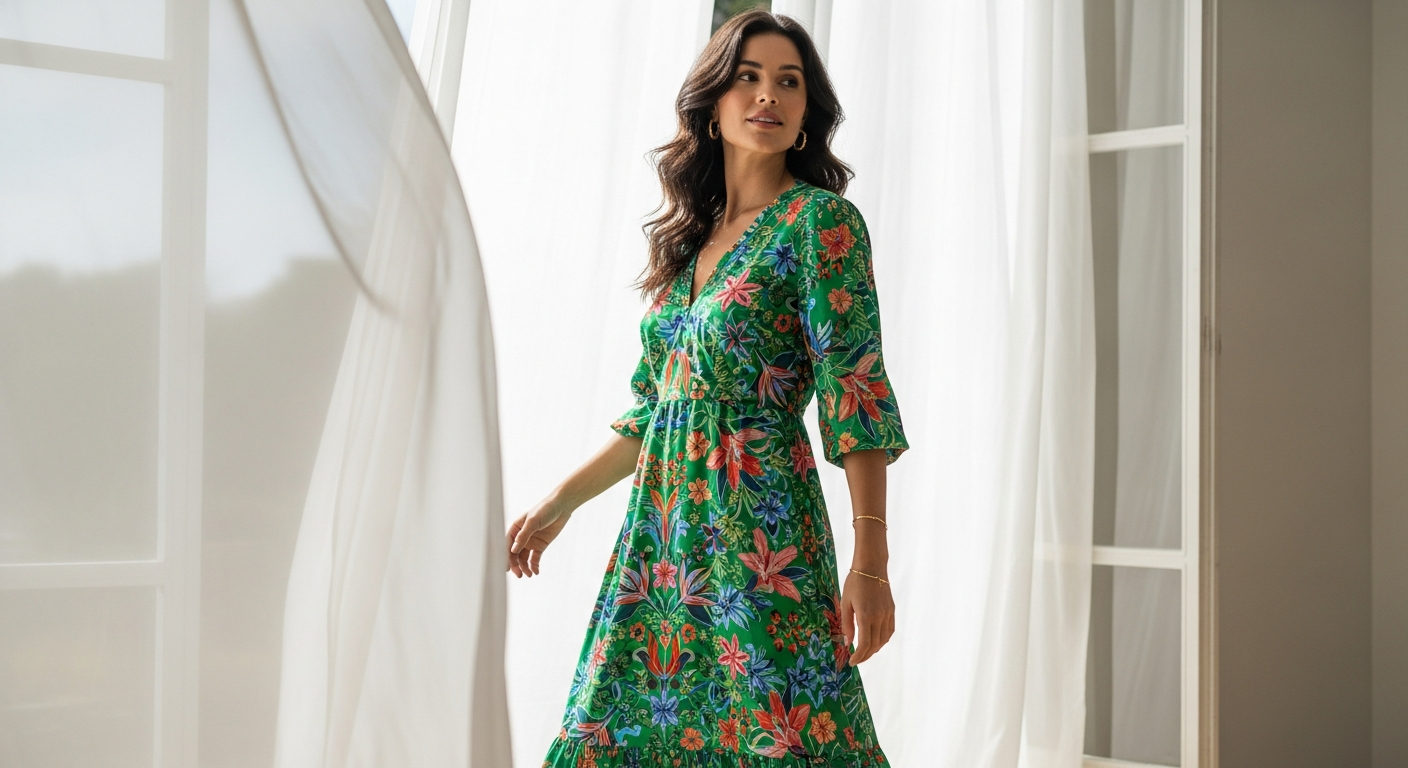
Learn how to properly care for your Farm Rio Green Floral Vibing Maxi Dress with our expert maintenance guide. Discover washing techniques, storage solutions, and fabric care tips to keep your dress vibrant and beautiful for years.
A stunning maxi dress can transform your entire wardrobe—but only if you know how to keep it looking pristine. The Green Floral Vibing Maxi Dress, with its intricate placed floral print and delicate viscose fabric, demands a bit more attention than your everyday basics. Farm Rio's signature pieces are celebrated for their bold, cheerful aesthetic and tropical-inspired designs that instantly elevate any occasion.
This particular dress is crafted from 100% viscose, a natural fiber that offers lightweight comfort but requires thoughtful maintenance to preserve its beauty. The one-shoulder neckline, flowing shift silhouette, and tiered skirt create an elegant silhouette that deserves proper care. The vibrant pink florals against the lush green backdrop are what make this dress truly special, yet these colors can fade or shift if washing isn't handled correctly.
Understanding Your Viscose Fabric: Why Care Matters for This Maxi Dress
What 100% Viscose Means for Garment Durability and Longevity
Viscose is a semi-synthetic fiber made from cellulose, offering a silky-smooth texture and natural breathability that makes it ideal for warm-weather garments. Unlike synthetic materials, viscose absorbs moisture beautifully and drapes with an elegant fluidity that synthetic blends simply can't replicate. The 100% viscose composition of your Green Floral Vibing Maxi Dress means you're investing in a piece that prioritizes comfort and aesthetic appeal over durability in the traditional sense.
The longevity of your dress depends heavily on how you treat it. Viscose fibers weaken when wet, making them more susceptible to stretching and tearing during aggressive washing. With proper care, however, your dress can maintain its luxurious feel and vibrant appearance for years. The key is understanding that viscose rewards gentle handling with extended wearability.
How Viscose Differs from Synthetic Blends in Terms of Care Requirements
Synthetic blends like polyester or nylon can withstand harsher washing conditions because their petroleum-based fibers are inherently more resistant to water damage and abrasion. Viscose, being cellulose-based, operates differently. It's naturally breathable and temperature-responsive, which means it cares deeply about the conditions it's exposed to during cleaning and drying.
Where synthetic blends might shrug off hot water and vigorous spinning, viscose needs cool temperatures and gentle agitation. Synthetic blends also tend to resist color bleeding more effectively, while viscose—particularly with bold, placed prints like your dress features—requires cold water to prevent dye migration. The difference isn't about one being superior; it's about honoring the unique characteristics of your fabric.
Why the Green Floral Vibing Maxi Dress Needs Gentle Handling Compared to Cotton or Polyester Alternatives
Cotton is sturdy and forgiving, often improving with age and washing. Polyester is practically indestructible. Viscose, by contrast, occupies a middle ground—it's luxurious and comfortable but demands respect. The placed floral print on your dress is particularly vulnerable during washing because the dyes used in vibrant prints can shift or bleed if exposed to temperatures that are too warm or agitation that's too aggressive.
The tiered skirt and flowing silhouette that make this dress so visually stunning also require careful handling. Cotton or polyester garments with similar construction might handle machine washing without issue, but viscose's weaker fiber structure when wet means aggressive spinning or rough movements can compromise the fabric's integrity and appearance. Treating your viscose dress gently isn't optional—it's essential.
Washing Your Green Floral Vibing Maxi Dress: The Right Method Every Time
Machine Washing on Gentle Cycle: Temperature Recommendations and Cycle Settings
Always select the gentle or delicate cycle on your washing machine. This cycle uses slower spin speeds and less agitation, protecting the viscose fibers from unnecessary stress. Set your water temperature to cold—never warm or hot. Cold water is non-negotiable for preserving the vibrant pink and green colors of your floral print.
Most modern washing machines have a delicate or hand-wash setting that reduces water agitation significantly. Choose a cycle duration of 30 minutes or less. Longer wash times don't clean better; they simply expose your fabric to extended water contact, increasing the risk of dye bleeding and fiber weakening. Your dress isn't heavily soiled, so a shorter, gentler cycle is perfectly adequate.
Why Cold Water Is Essential for Preserving the Vibrant Pink and Green Floral Print
Heat opens the pores of fabric fibers, allowing dyes to escape and colors to shift. The placed floral print on your dress uses concentrated dyes to create those stunning pink motifs, and warm water essentially invites those dyes to migrate beyond their intended boundaries. Cold water keeps fiber pores closed, trapping dyes exactly where they belong.
Additionally, cold water reduces the risk of color bleeding onto the green background of the dress. Farm Rio dresses have garnered occasional feedback about color bleeding in certain pieces, particularly with white-patterned items. Using cold water consistently is your first line of defense against this issue. The small sacrifice in perceived cleaning power is absolutely worth the visual preservation you gain.
Pre-Washing Preparation: Turning the Dress Inside Out and Checking for Loose Threads
Before placing your dress in the washing machine, turn it completely inside out. This simple step protects the placed floral print on the exterior from direct friction with the machine's drum and with other garments. The interior viscose is less delicate than the printed surface, making this reversal highly effective protection.
Inspect the entire dress for loose threads, particularly around seams and the ruffled hem. Farm Rio pieces, while beloved, have occasionally received feedback about minor sewing imperfections. If you notice any loose threads, secure them with a small knot or carefully trim them—don't ignore them, as loose threads can unravel during washing. Finally, consider placing your dress in a mesh laundry bag for additional protection. This barrier prevents the dress from snagging on the machine's agitator or becoming tangled with other garments.
Drying Techniques That Preserve Shape and Color
Tumble Drying on Low Heat: Optimal Settings and Duration
If you choose to machine dry your dress, select the lowest heat setting available—often labeled "delicate" or "low." Set a timer for 20-30 minutes maximum. Viscose responds poorly to prolonged heat exposure, which can cause permanent creasing and shrinkage. Check the dress periodically during the drying cycle; removing it slightly damp allows you to complete air-drying without exposing the fabric to excessive heat.
The goal with tumble drying is to remove moisture without applying damaging heat. Higher temperatures might dry your dress faster, but they compromise the fabric's integrity and can set wrinkles permanently. Low heat is slower but infinitely safer for your investment.
Air-Drying Benefits for Maintaining the Tiered Skirt's Graceful Movement
Air-drying is genuinely the superior option for your Green Floral Vibing Maxi Dress. The natural drying process, without any heat, is what viscose genuinely prefers. When your dress air-dries, the fabric relaxes into its natural shape without the stress of tumbling or heat-induced tension.
The tiered skirt particularly benefits from air-drying. As gravity pulls gently on each tier while the dress hangs, the fabric settles into its intended silhouette. You'll notice the skirt has more graceful movement and better drape after air-drying compared to machine drying. Additionally, colors remain more vibrant when heat isn't involved in the drying process.
Proper Hanging Methods That Prevent Stretching and Maintain the One-Shoulder Neckline Integrity
Use a padded or cloth hanger to support the dress during air-drying—never wire hangers, which can create permanent indentations and stress points. If the dress came with a sample hanger, that's your ideal choice. Hang the dress by the shoulder tie or by the seams at both shoulders if possible. Hanging from a single point creates uneven weight distribution and can stretch the neckline area over time.
Ensure the dress hangs freely without touching walls or other garments. Air circulation around the entire dress accelerates drying evenly and prevents moisture pockets that could develop mildew or odors. In humid climates, positioning your dress near an open window or fan helps air circulation. Avoid direct sunlight while drying, as extended UV exposure can fade even the most vibrant colors.
Storage Solutions for Long-Term Preservation
Choosing the Right Hangers to Maintain the Dress's Silhouette and Shoulder Tie
For long-term storage between wears, continue using padded or wooden hangers. These distribute weight evenly and prevent the deep creases that come from thin wire hangers. The one-shoulder neckline and delicate shoulder tie deserve support that prevents stress and stretching at this crucial seam.
If you're storing the dress for an extended period, consider a hanger with a clip system that secures the dress at the waistline rather than solely at the shoulders. This distributes the dress's weight more evenly and prevents gravity from creating permanent stretches in the shoulder area. Whatever hanger you choose, ensure it's designed to hold the weight of a full-length dress without slipping or shifting.
Folding Techniques for Seasonal Storage Without Permanent Creasing
Some people prefer folding their dresses for storage rather than hanging them. If you choose this route, use acid-free tissue paper to create a buffer between fold points and the dress itself. Fold the dress along its seams rather than creating arbitrary creases. Start by folding it lengthwise along the side seams, then fold gently at the waist if necessary.
Store the folded dress in an acid-free box or drawer, never in plastic bags or containers that prevent air circulation. Rotate where you fold the dress every few months if storing long-term; this prevents permanent creases from setting. The goal is making your storage method as gentle as the washing and drying methods you've already perfected.
Climate-Controlled Storage: Temperature and Humidity Considerations
Viscose is sensitive to humidity fluctuations. Store your dress in a cool, dry location where temperatures remain relatively stable. Excessive humidity can encourage mildew growth and weaken viscose fibers, while dry conditions can make fabric brittle. Ideally, maintain humidity levels between 45-55%.
Avoid storing your dress in attics, basements, or other spaces prone to temperature swings or moisture. A bedroom closet or interior wardrobe in a climate-controlled room is ideal. Keep the storage area away from direct sunlight, which fades colors over time. If you live in a particularly humid climate, consider adding a small desiccant packet to your storage container, replacing it monthly. These precautions seem detailed, but they're what separates a dress that looks beautiful after five years from one that shows visible wear and fading.
Keeping Your Tropical Statement Piece Vibrant Season After Season
Your Green Floral Vibing Maxi Dress is more than just a garment—it's a bold expression of joy and Brazilian-inspired style. With the right care routine, you can absolutely preserve its vibrant pink florals, flowing silhouette, and that coveted lightweight feel for years to come. The key is treating your viscose investment with the respect it deserves through gentle washing, strategic storage, and thoughtful maintenance.
The placed floral print that makes this dress so eye-catching will remain vivid when you commit to cold-water washing and proper drying techniques. The tiered skirt will continue to move with graceful elegance when you support it properly during storage and drying. The one-shoulder neckline and delicate shoulder tie will maintain their integrity when handled with care rather than convenience.
Start implementing these expert tips today, and you'll find yourself reaching for this stunning piece again and again, whether you're planning a tropical getaway or elevating your everyday elegance. Your wardrobe will thank you for the investment in proper care.