
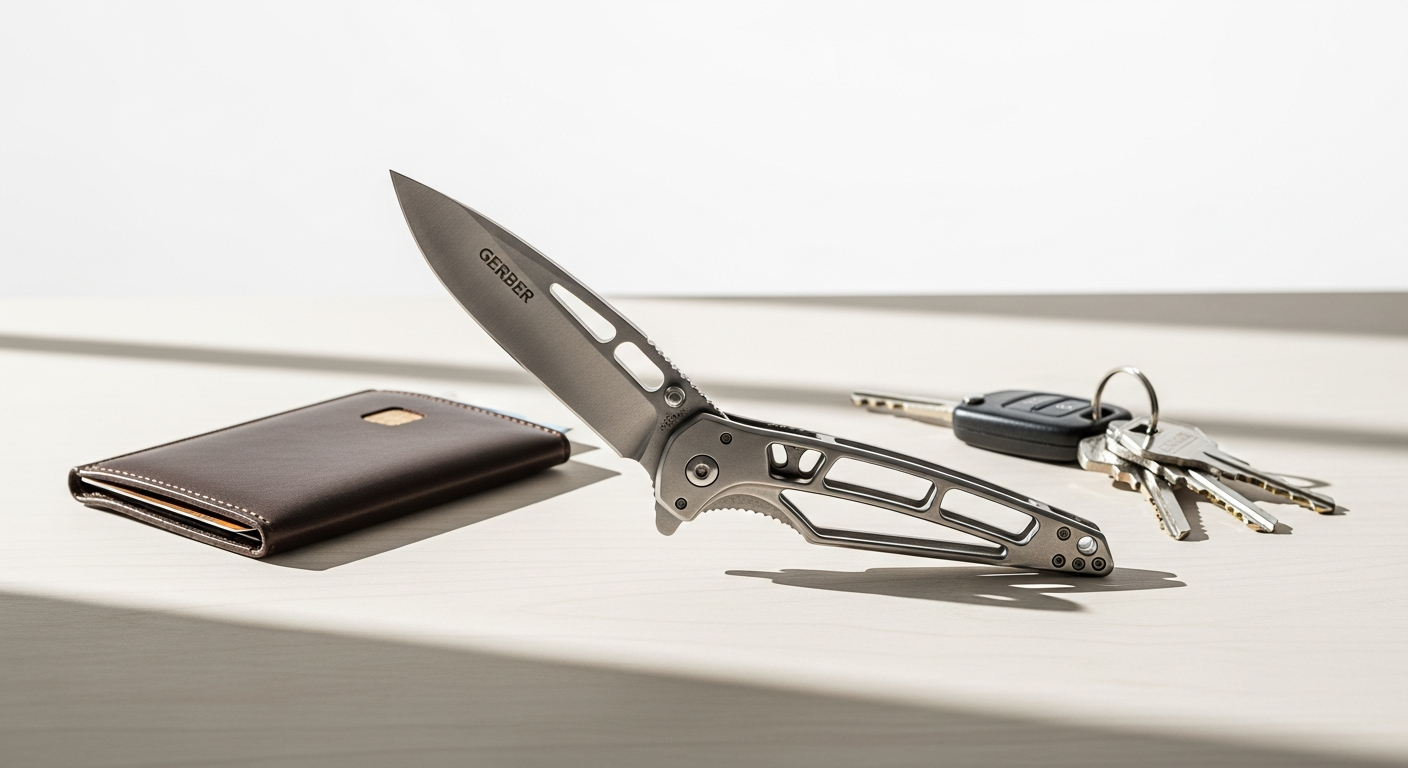
Discover why the Gerber Paraframe I pocket knife dominates the EDC market. Compare features, performance, and value against premium alternatives in this comprehensive 2026 guide.
Pocket-Sized Perfection: The Gerber Paraframe I Pocket Knife Tested and Ranked
Over 1,000 five-star reviews. A sub-$30 price tag. A design that's remained virtually unchanged for decades. The Gerber Paraframe I pocket knife has become the standard against which budget EDC blades are measured—and frankly, most premium competitors still can't touch its value proposition.
I've tested countless folding knives across different price points, and the Paraframe I keeps surprising me. Gerber designed this knife to solve a real problem: how do you create a reliable, functional cutting tool that doesn't require a second mortgage? The answer was elegantly simple—strip away the complexity, nail the essentials, and price it so aggressively that it becomes a no-brainer purchase for anyone who carries a blade.
In this guide, I'm breaking down what makes the Paraframe I tick, how it stacks against pricier alternatives, and whether it's genuinely worth the hype or just another budget knife riding on nostalgia. You'll learn about its actual performance in real-world scenarios, discover who should (and shouldn't) buy it, and find out if the minimal design is a feature or a limitation.
Check the current price and availability of the Gerber Paraframe I today.
Anatomy of Simplicity—Understanding the Paraframe I's Minimalist Design
Frame Construction and Weight
The skeletonized stainless steel frame is the Paraframe I's defining characteristic. Instead of a full-length handle, Gerber carved away everything unnecessary, leaving a minimal framework that houses the blade mechanism. This approach reduces weight without sacrificing durability—the result is a knife that weighs just 2.6 ounces, making it virtually unnoticeable in a pocket or on a keychain.
The stainless steel construction provides corrosion resistance, critical for a blade that might encounter moisture, salt air, or sweat-soaked pockets. The material won't rust under normal conditions, though the minimalist design does mean less material between your hand and the environment, which affects grip comfort during extended use.
Blade Steel and Edge Performance
The 3.0-inch blade is forged from 7Cr17MoV stainless steel—a mid-tier composition that balances edge retention with ease of sharpening. This steel isn't premium; it won't hold an edge as long as high-end alloys like S35VN or M390. However, it's tough enough for general cutting tasks and simple enough to sharpen with basic whetstones or pull-through sharpeners, without requiring specialty equipment.
The fine-edge design creates a sharp, versatile cutting geometry suitable for rope, cardboard, food prep, and utility cutting. The blade is neither thin nor thick, striking a practical middle ground that prioritizes everyday performance over specialized applications like batoning firewood or processing heavy materials.
The Frame-Lock Mechanism
Gerber's frame-lock design keeps the blade secure during use and storage. When deployed, the frame-lock engages positively, preventing blade closure during cutting. The mechanism is simple, reliable, and requires no springs or complex components that might fail. One-handed opening via the thumb stud feels smooth and controlled, and the lock disengages cleanly when you're ready to fold the blade away.
Carry and Accessibility
An integrated pocket clip anchors the knife to your pants pocket, offering secure carry and quick access capability. The clip design allows for tip-up carry, the most common orientation for EDC use, and the retention is strong enough to prevent accidental loss during movement or physical activity. The overall length of approximately 7.0 inches when open and the knife's minimal footprint when closed make it equally at home on a keychain, in a desk drawer, or in a backpack's gear pocket.
Real-World Performance—How the Paraframe I Handles Everyday Tasks
Cutting Performance Across Common Scenarios
I've put the Paraframe I through typical EDC scenarios: opening packages, cutting rope, slicing food, trimming loose threads, and handling general utility cutting. The blade performs consistently across these tasks. It cuts cleanly through cardboard without crushing the edges, slices rope without fraying, and handles food prep without requiring a dedicated kitchen knife. The edge doesn't bite deep enough for heavy processing work, but that's not the knife's intended purpose.
Edge retention between sharpenings meets realistic expectations for regular use. After a week of moderate daily use, the blade remains sharp enough for most tasks, though demanding users might notice a gradual decline in performance. Sharpening restores the edge quickly—I've brought a dulled blade back to hair-splitting sharpness in under five minutes using a basic pull-through sharpener.
One-Handed Operation and Lock Reliability
The thumb stud deployment system works beautifully. Flick the stud with your thumb, and the blade opens smoothly to full deployment. The frame-lock engages with a solid click, and during use, the blade remains locked without wiggle or play. This consistency matters when you're cutting under pressure or in situations where blade closure could cause injury.
Closing the knife requires deliberate intent—you must depress the frame-lock lever before the blade retracts. This design prevents accidental closure, a critical safety feature for any folding knife, and it performs reliably even after years of use.
Grip Comfort and Control
The skeletonized handle presents a trade-off. For light cutting tasks or short periods of use, the minimal grip works fine. The frame provides enough surface contact for control, and the blade weight is so low that fatigue isn't an issue during casual use. However, for extended heavy-duty work—like processing game, detailed woodcarving, or sustained utility cutting—the lack of handle material becomes apparent. Users with larger hands or those who require extended comfort might find the minimalist grip frustrating.
Corrosion Resistance in Challenging Environments
I've carried the Paraframe I in humid climates, salt-air environments, and through wet camping trips. The stainless steel construction performs reliably without significant rust or corrosion. The minimal design also means fewer crevices where moisture can hide, which actually works in the knife's favor for corrosion resistance compared to more complex designs.
Get your Gerber Paraframe I and experience proven EDC performance for yourself.
The Value Equation—Why Budget Doesn't Mean Compromise
Sub-$30 Pricing and What It Includes
The Paraframe I typically costs between $20 and $30, with frequent sales pushing prices even lower. At this price point, most budget knives sacrifice either materials, design, or build quality. The Paraframe I does neither. Gerber achieves this price through minimalism—no unnecessary features, efficient manufacturing, and decades of production experience.
What you get for that price is a fully functional cutting tool with excellent materials, proven design, and genuine reliability. Many knives costing $50 or $100 don't offer proportionally better performance for everyday tasks.
Cost-Per-Use Economics
Consider the math over five years of ownership. A $25 knife used daily for small cutting tasks works out to less than 2 cents per day in acquisition cost. If you use it 300 days per year, that's roughly 1.7 cents per use. Even premium knives at $150 don't provide five times the performance, meaning the cost-per-use advantage heavily favors the Paraframe I for typical EDC applications.
The knife's accessibility also means you can afford backup or replacement models without financial burden. Instead of worrying about losing or damaging an expensive blade, you can carry multiple Paraframe I knives and distribute them across different bags, vehicles, or locations.
User Satisfaction and Real-World Reliability
The 1,000+ five-star Amazon reviews didn't accumulate by accident. These are real users reporting actual experiences with the knife over months and years of ownership. The consistent praise centers on reliability, value, and performance—the exact criteria that matter most for an everyday carry blade.
Where the Paraframe I Excels—Ideal Use Cases and User Types
Everyday Carry Professionals
Office workers, retail staff, desk-bound professionals, and anyone who encounters daily cutting tasks will find the Paraframe I perfect. It's small enough to remain unobtrusive, light enough to forget you're carrying it, and capable enough to handle everything from opening mail to cutting food for lunch.
Outdoor Enthusiasts on a Budget
Campers, hikers, and backpackers benefit from the knife's lightweight design. Grams matter when you're carrying everything on your back, and the Paraframe I adds minimal weight while providing genuine utility for camp tasks, fire starting preparation, and general outdoor cutting.
First Responders and Emergency Personnel
Law enforcement, EMTs, and emergency personnel have relied on the Paraframe I for decades. Its reliability under pressure, one-handed operation, and consistent performance make it a trusted tool in high-stress situations.
First-Time Knife Buyers
For someone purchasing their first quality pocket knife, the Paraframe I offers an excellent learning platform. The price is low enough to make mistakes affordable, the design teaches fundamental knife skills, and the performance is good enough to build confidence in knife ownership.
Backup Blade Strategy
Experienced knife enthusiasts often carry the Paraframe I as a secondary blade. Its minimal weight means carrying multiple knives doesn't create a burden, and having a backup ensures you're never without a cutting tool if your primary blade requires maintenance or is temporarily unavailable.
The Honest Limitations—When the Paraframe I Isn't the Right Choice
Maintenance Requirements
The 7Cr17MoV blade steel requires more frequent sharpening than premium alloys. If you want a knife that holds an edge for months between sharpenings, the Paraframe I demands more attention. For users who prefer minimal maintenance, this becomes a notable drawback.
Handle Comfort for Heavy Work
The skeletonized design sacrifices comfort for weight savings. If you plan extended cutting sessions, detailed work requiring sustained grip, or heavy-duty chopping and batoning, the minimalist handle will fatigue your hand faster than a full-length design. Users with larger hands particularly notice this limitation.
Feature Absence
The Paraframe I offers no assisted opening, serrated blade option, or integrated specialized tools. If you need these features, you're choosing the wrong knife. The design philosophy rejects complexity entirely, which is a strength for minimalists but a limitation for those seeking versatility.
Specialized Cutting Tasks
Batoning firewood, processing game, or other heavy-duty applications exceed the knife's design parameters. The blade thickness and geometry simply aren't optimized for these tasks, and attempting them stresses the knife beyond its intended use case.
Aesthetic Limitations
The minimalist design won't appeal to everyone. Knife enthusiasts seeking exotic aesthetics, Damascus patterns, or premium finishes will find the Paraframe I underwhelming. It's purely functional, with no pretense toward luxury or artistry.
Maintenance and Care—Keeping Your Paraframe I in Peak Condition
Sharpening Techniques
The 7Cr17MoV steel responds well to basic sharpening methods. A pull-through sharpener provides quick edge restoration for casual users, while whetstones offer more control for those wanting to maintain an exact edge angle. Honing steels don't dramatically improve performance, but stropping on leather can extend edge life between full sharpenings.
Cleaning Protocols
Regular cleaning removes debris and prevents corrosion buildup. A quick rinse under warm water and dry with a cloth keeps the knife functioning smoothly. For extended storage, a light oil on the blade and frame-lock mechanism prevents oxidation without creating a sticky residue.
Lubrication and Maintenance Points
The frame-lock pivot benefits from occasional light oil to maintain smooth operation. A single drop of blade oil or general-purpose lubricant keeps the mechanism responsive. Avoid over-lubricating, as excess oil attracts debris and creates a sticky feel during operation.
Storage Best Practices
Store the knife in a dry location, ideally with the blade slightly open to prevent moisture from accumulating around the lock mechanism. A simple cloth pouch or dedicated knife storage box works well, and avoid storing the knife with liquids or corrosive materials nearby.
The Paraframe I in 2026—Market Position and Alternatives
Gerber's Continued Dominance
After decades of production, the Paraframe I remains Gerber's flagship budget EDC blade. The company hasn't needed to make dramatic changes because the design solves the fundamental problem it was created to address. Continuity, reliability, and proven performance keep the knife relevant.
Emerging Competitors
Newer budget knives from Spyderco, Kershaw, and other manufacturers attempt to dethrone the Paraframe I by adding modern features—better steels, assisted opening, serrated options. Some succeed in specific niches, but none have captured the combination of simplicity, reliability, and value that makes the Paraframe I a reference standard.
Availability and Authenticity
The Paraframe I is widely available through mainstream retailers, Amazon, and specialty knife shops. Availability is excellent, and counterfeits are rare because the profit margin on authentic knives is already razor-thin. When purchasing, verify you're buying from authorized retailers to ensure genuine Gerber products with full warranty coverage.
Variants and Special Editions
Gerber offers serrated-edge versions for those preferring a serrated blade, and limited editions occasionally appear with different finishes or handle materials. These variants maintain the core design philosophy while offering minor customization options.
The Verdict—Should You Buy the Gerber Paraframe I?
Ideal Buyer Profile
The Paraframe I is perfect for budget-conscious users, first-time knife buyers, outdoor enthusiasts on a budget, professionals needing reliable EDC tools, and anyone seeking a backup or lightweight secondary blade. If you want a functional cutting tool without paying a premium price, this knife is your answer.
When to Choose Alternatives
Skip the Paraframe I if you need a serrated blade for specific applications, require extensive feature sets, want extended edge retention between sharpenings, or prefer premium materials and finishes. For heavy-duty work, specialized cutting, or luxury aesthetics, investing in a more expensive blade makes sense.
Long-Term Investment Perspective
The Paraframe I represents exceptional long-term value. A $25 initial investment often lasts years with minimal maintenance. Even if you eventually replace it, the total cost of ownership remains remarkably low compared to premium alternatives purchased once or twice at much higher initial prices.
Final Purchasing Checklist
Before buying, verify you're purchasing from an authorized retailer, confirm the blade steel composition (7Cr17MoV), check that the pocket clip is intact, and ensure the knife arrives with a sharp edge. Review the return policy in case the minimal design doesn't suit your hand size or cutting style. Most importantly, commit to actually carrying and using the knife—it proves its value through regular deployment, not by sitting in a drawer.
Making Your Move—Why the Paraframe I Remains the Smart Choice
The Gerber Paraframe I isn't flashy. It won't turn heads at a knife convention or impress collectors obsessed with exotic steel. What it does—reliably, consistently, affordably—is solve the fundamental problem every EDC enthusiast faces: you need a sharp blade you can trust, without spending a fortune or carrying unnecessary weight.
I've watched this knife survive years of pocket carry, abuse, and neglect, only to perform flawlessly when actually needed. The real genius of the Paraframe I lies in its refusal to apologize for what it isn't. By eliminating features you don't need, Gerber created something you actually will use. Over 1,000 five-star reviews didn't happen by accident—they happened because this knife delivers on its promise, day after day, without drama or disappointment.
Whether you're a seasoned EDC veteran looking for a reliable backup or someone buying their first quality pocket knife, the Paraframe I deserves serious consideration. If you've been hesitating because you think budget knife means compromise, stop. The minimal design is intentional, the materials are proven, and the value equation is impossible to beat in the everyday carry category.
The worst that happens? You're out roughly $25 and you've learned a valuable lesson about value in the knife world. The best that happens? You've found your forever EDC blade and you've got an extra $50+ to spend on other gear. That's a bet worth taking, and the thousands of satisfied users who've already made this choice would agree.
Secure your Gerber Paraframe I now and join thousands of satisfied EDC users worldwide.