
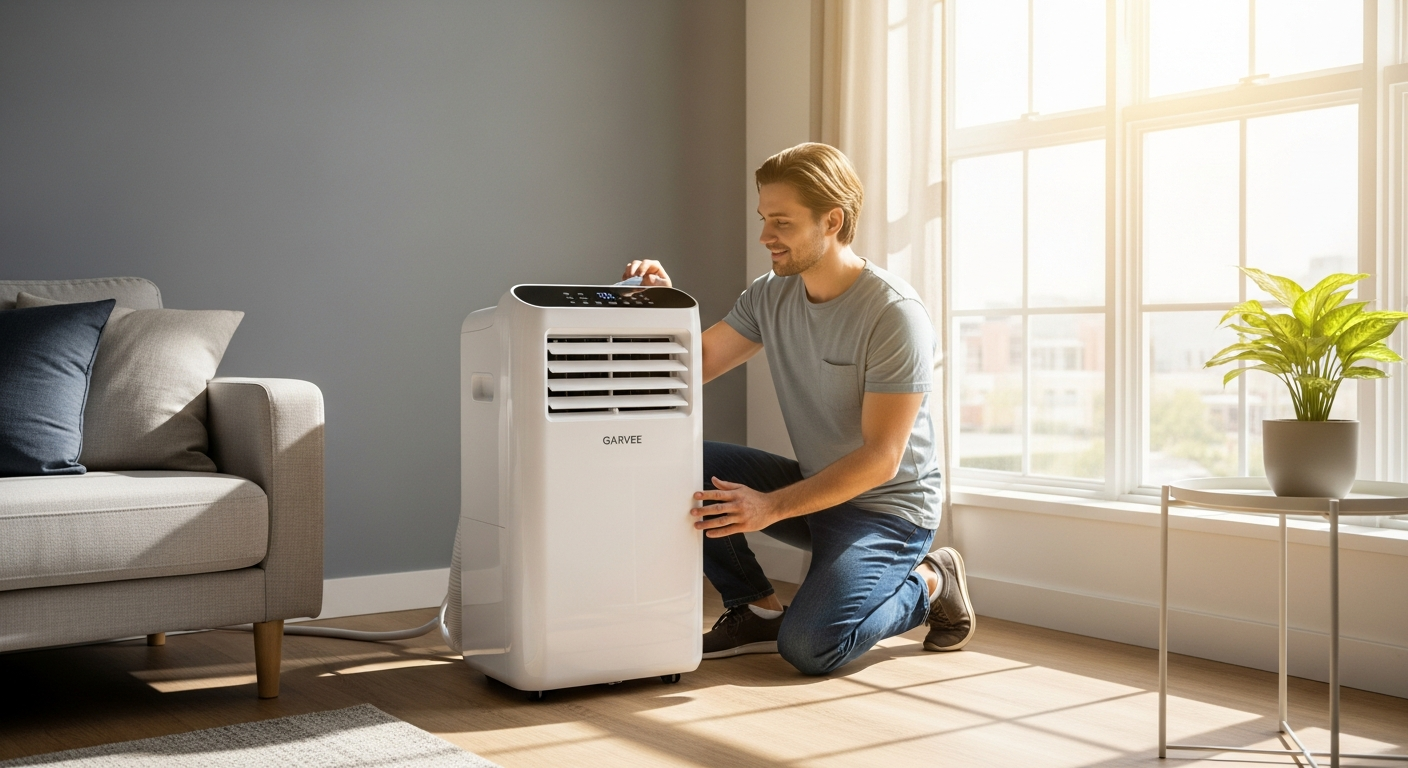
Discover why renters love the Garvee 14,000 BTU Portable Air Conditioner. Learn about its 3-in-1 cooling, dehumidifying, and fan functions—plus real pros, cons, and setup tips for apartment living.
Portable Air Conditioning for Renters: The Garvee 14,000 BTU Honest Review
Renting an apartment or living in a space where you can't install a traditional air conditioning system? You're not alone—millions of renters struggle through hot summers without permanent cooling solutions. The Garvee 14,000 BTU Portable Air Conditioner has become a go-to choice for tenants seeking powerful, hassle-free cooling that requires zero landlord approval.
This 3-in-1 cooling system combines air conditioning, dehumidification, and fan functions into one compact unit that moves from room to room on caster wheels. Unlike window units that require permanent installation or split systems that demand professional setup, the Garvee arrives ready to deploy. With its included window venting kit and flexible exhaust hose, you can have cold air flowing within minutes—and remove it just as quickly when your lease ends.
Check current pricing and availability on the Garvee website
Why Renters Choose Portable Air Conditioning Over Fixed Systems
The flexibility of a portable air conditioner addresses a fundamental frustration for renters. You can move between rooms and take the unit with you when your lease ends, avoiding the permanent installation hassles that plague traditional systems. Window units require landlord approval and can damage window frames, while split systems demand professional installation and permanent modifications to walls.
Portable AC units eliminate these complications entirely. No drilling, wall damage, or modifications are necessary for installation. You maintain complete control over whether cooling is available in your space, and you don't have to negotiate with landlords or worry about deposit deductions for installation marks.
The ability to cool specific rooms without cooling your entire apartment translates to significant energy savings. Running a portable unit in your bedroom during the day and your living room at night costs far less than maintaining a centralized system. Additionally, portable units remain your property—they're not part of the rental agreement, so you're free to take them with you.
The 3-in-1 Functionality Breakdown: Cooling, Dehumidifying, and Fan Modes
Air Conditioning Mode
The Garvee's 14,000 BTU ASHRAE capacity cools spaces up to 750 square feet effectively. This rating positions it in the mid-to-large range for portable units, suitable for master bedrooms, living rooms, or studio apartments. The standard SACC (Seasonally Adjusted Cooling Capacity) rating of 9,300 BTU provides a more realistic expectation of performance under typical conditions.
Dehumidifier Function
Removing up to 90 pints of moisture daily, the dehumidification feature becomes critical for humid climates and basement apartments. High humidity not only creates discomfort but also promotes mold growth and structural damage—particularly concerning in rental spaces where you want to preserve your security deposit.
Fan Mode
Circulating air without cooling proves useful during mild weather or as a standalone option when outdoor temperatures don't justify running the compressor. This mode consumes minimal electricity and provides air movement without the cooling cycle.
Seasonal Flexibility
Each mode operates independently, allowing you to adjust usage based on weather patterns. The temperature control range spans from 64 to 90 degrees Fahrenheit, accommodating various comfort preferences. A programmable 24-hour timer allows you to schedule cooling around your routine, so the unit runs only when needed.
Setup and Installation: The Renter-Friendly Reality
Quick Deployment
The included window venting kit and flexible exhaust hose streamline setup considerably. Typical installation takes 15-30 minutes without special tools or expertise. The unit arrives with everything necessary for basic operation, making it genuinely accessible for renters without technical skills.
Window Kit Considerations
Positioning the unit near windows or doors optimizes exhaust hose placement and minimizes the duct's length. Securing the window kit to prevent drafts and maintain seal integrity matters more than many renters realize—air leaks directly undermine cooling efficiency. Different window types (sliding, casement, double-hung) require slightly different approaches, but the flexible kit accommodates most standard configurations.
Removal and Restoration
When moving out, removing the unit and restoring the space takes less than fifteen minutes. No patches, repairs, or touch-ups are required. Store the exhaust hose and window kit in a cool, dry location between seasons to prevent mold growth and material degradation.
Cooling Performance: What Users Actually Experience
Advertised Capacity Versus Reality
A significant gap exists between the advertised 14,000 BTU capacity and the real-world SACC rating of 9,300 BTU. Understanding this distinction matters: ASHRAE numbers represent peak capacity under ideal laboratory conditions, while SACC provides a more realistic estimate under standard operating conditions. Expect the higher number in marketing materials and the lower number in your apartment.
Coverage Area Expectations
Realistic performance in 700-750 square foot spaces works well when room insulation is adequate and the unit sits relatively close to the space being cooled. Room size limitations become apparent in spaces above this range, particularly if windows face direct sunlight or if insulation is poor.
Real-World Performance Inconsistencies
User reviews reveal troubling inconsistencies in cooling performance. Some renters report excellent results, while others describe units that blow air barely cooler than room temperature. Factors affecting cooling output include room insulation quality, window placement and sun exposure, and outdoor ambient temperature. A north-facing bedroom in a well-insulated apartment performs dramatically differently from a south-facing living room with aging windows.
Performance Optimization
Maximizing cooling efficiency requires closing doors to isolate the cooled space, using thermal curtains to block sunlight, and ensuring the exhaust hose vents directly outside rather than into a garage or unconditioned space. Users report better results when they adjust expectations based on their specific environment rather than assuming manufacturer claims will translate directly.
Noise Levels: Separating Marketing Claims from Bedroom Reality
Sleep Mode Claims
The marketing claims of 42dB sleep mode operation—technically quiet compared to normal conversation—don't account for the specific disturbance that comes from a compressor cycling in a silent bedroom. Decibels measure volume but don't capture the nature of the sound itself.
Operation Noise Variations
Standard operation produces noticeably higher noise levels than sleep mode. Users report louder-than-expected operation contradicting quiet claims, particularly when the compressor engages. Compressor noise differs from fan noise, and the combination creates an ambience some renters find problematic for light sleep.
Impact on Sleep Quality
The unit's impact on sleep depends heavily on individual noise sensitivity and apartment wall construction. Thin walls mean neighbors hear it too. Testing the unit during mild weather—before relying on it for essential cooling—allows you to assess whether noise will genuinely disrupt your sleep.
Minimizing Disruption
Placing the unit in a corner, away from the bedroom directly, and running it before bedtime rather than during sleep reduces perceived noise impact. Many renters find that using sleep mode exclusively during nighttime hours provides adequate cooling for sleeping while maintaining reasonable quiet levels.
Dehumidification Capabilities for Damp Rental Spaces
Moisture Removal Capacity
The 90 pints per day moisture removal capacity translates to practical applications in basement apartments and humid climates where mold and mildew thrive. Running the dehumidifier function alongside cooling addresses both temperature and moisture simultaneously, improving indoor air quality noticeably.
Water Management
Water collection options include manual bucket emptying (requiring daily attention in very humid conditions) or continuous drain setup (if a nearby floor drain or window exists). Planning your drainage approach before purchasing prevents water accumulation issues that can damage rental property.
Seasonal Operation
Operating the dehumidifier-only function during cooler months extracts moisture without cooling, providing year-round humidity control. This capability proves particularly valuable in transition seasons when temperatures don't warrant cooling but humidity remains high.
Mold Prevention
Preventing mold and mildew in rental spaces with high humidity directly protects your security deposit and your respiratory health. Regular dehumidifier operation reduces moisture levels that enable mold growth, particularly in closets, bathroom areas, and basements prone to dampness.
Find the Garvee 14,000 BTU unit with full dehumidification features here
Portability Features: Wheels, Handles, and Room-to-Room Movement
Physical Design for Movement
Integrated side handles and caster wheels enable easy repositioning without professional help. The unit's footprint of approximately 14" D x 16.5" W x 27.6" H fits through most doorways and slides along apartment floors with minimal effort.
Weight and Maneuverability
Weight considerations matter for renters living in upper floors without elevators. The unit isn't lightweight, but the wheels and handles make movement manageable for most adults without requiring assistance. Testing your ability to move it during delivery day prevents regrets later.
Floor Protection
Protecting floors from wheel marks and damage becomes relevant during extended use. Placing the unit on a mat or using protective wheel covers prevents indentation marks on carpet and scuffs on hardwood—important for deposit preservation.
Operational Stability
Ensuring stability and safety during operation prevents tipping when the exhaust hose experiences back-pressure or vibration. Positioning the unit against a wall and away from high-traffic areas minimizes movement during operation.
Remote Control and Smart Features That Simplify Daily Use
Convenient Operation
The LED display and remote control eliminate the need to physically adjust the unit repeatedly. Changing temperature, switching modes, or enabling sleep mode happens from across the room—meaningful convenience in rental spaces where you want minimal disruption.
Programmable Timer
Setting a 24-hour programmable timer means the unit activates before you arrive home and shuts down automatically at designated times. This automation reduces energy waste and ensures comfortable temperatures without manual oversight.
Sleep Mode Activation
Sleep mode functions independently from cooling mode, activating whisper-quiet operation while maintaining your target temperature. This separation allows effective cooling without the noise that disrupts light sleepers.
Air Distribution Features
Auto-swing louvers direct cool air throughout the room rather than concentrating it in a single jet stream. Select models include a "follow me" function for targeted cooling, directing airflow toward your location through remote adjustment.
Practical Considerations
Battery-operated remotes require periodic replacement, and reliability varies across user experiences. Keeping spare batteries on hand prevents the frustration of a non-responsive unit when you need adjustments.
Durability Concerns: What Long-Term Users Report
Material Quality Issues
Exhaust blower fan housing durability raises questions, with users describing the components as "cheap molded plastic" prone to cracking. Plastic component longevity in the unit's construction becomes particularly relevant if you plan to keep the unit for multiple years across different rental situations.
Common Failure Points
Water leakage problems reported by some users damage floors and carpets, creating expensive problems beyond the unit's cost. Rust formation in drain water collection areas indicates corrosion issues with internal components, suggesting potential long-term reliability problems.
Warranty Protection
Warranty coverage varies, and understanding what the manufacturer includes protects your investment. Some aspects of the warranty may not apply to renters or secondary users, making careful review essential before purchase.
Expected Lifespan
User feedback suggests typical lifespans of 3-5 years for units used seasonally, with some lasting longer and others failing within two years. Maintenance practices that extend unit durability—regular filter cleaning, proper drainage, and appropriate storage—directly impact longevity.
Energy Consumption and Impact on Rental Utility Bills
Estimated Operating Costs
The 14,000 BTU capacity consumes significant electricity during operation, typically drawing 1,200-1,500 watts continuously. At average U.S. electricity rates of $0.13 per kilowatt-hour, running the unit eight hours daily costs approximately $12-15 monthly, with variations based on your local rates and usage patterns.
Mode-Based Efficiency
Cooling mode consumes the most electricity, while dehumidifier-only and fan modes draw substantially less power. Switching to appropriate modes based on conditions—using fan mode on mild days and dehumidifier-only mode when cooling isn't necessary—reduces overall consumption.
User-Reported Bill Increases
Some renters report unexpected increases in electric bills, suggesting either extended running times than anticipated or less-efficient operation than expected. Monitoring your first billing cycle with the unit running helps establish baseline costs before committing to year-round use.
Seasonal Usage Patterns
Peak usage typically spans June through August in most climates, with shoulder seasons (spring and fall) requiring intermittent operation. Winter storage eliminates operational costs entirely, making seasonal calculation more accurate than annualizing summer consumption.
Price Comparison: Finding the Best Deal on the Garvee Unit
Current Pricing Range
The Garvee 14,000 BTU Portable Air Conditioner ranges from $180 to $550 depending on retailer and seasonal sales. Walmart pricing occasionally reaches lows near $180 during competitive sales periods, while Garvee's official website typically lists units between $369.99 and $499.99.
Retail Variations
Comparing prices across multiple retailers reveals significant savings opportunities during seasonal transitions and promotional events. Waiting for off-season sales (September through April) typically yields better prices than purchasing during peak cooling demand.
Price-to-Performance Analysis
For budget-conscious renters, the lower price points ($180-250) offer attractive entry points despite potential performance trade-offs. Mid-range pricing ($300-400) balances features and cost, while premium pricing ($450-550) may include extended warranties or improved components.
Long-Term Value Calculation
Estimating total cost-of-ownership requires factoring in the purchase price, estimated energy costs for your climate, and potential maintenance expenses. A unit purchased at $200 with five years of seasonal use and moderate energy consumption represents significantly better value than a $500 unit used for only two years before failure.
Alternative Purchase Options
Financing options and payment plans from retailers with credit lines reduce upfront cost barriers. Some credit cards offer promotional financing on appliance purchases, further improving affordability.
Real User Reviews: Honest Feedback from Renters Like You
Positive Experiences
Users highlighting powerful cooling and ease of setup tend to occupy spaces suited to the unit's specifications—rooms under 750 square feet with adequate insulation and favorable window placement. These positive experiences provide realistic models for similar rental situations.
Common Complaints
Inconsistent performance and cooling effectiveness dominate complaint categories, with significant portions of negative reviews citing units that fail to cool effectively. Water leakage and maintenance issues appear with concerning frequency, particularly after extended use.
Noise Level Discrepancies
Numerous users report louder-than-expected operation contradicting quiet claims, suggesting marketing materials may overstate sleep mode capabilities. Light sleepers consistently express disappointment with noise levels preventing comfortable sleep.
Return Patterns
Common reasons for returns include inadequate cooling performance, unexpected water leakage during operation, and noise disturbance. Satisfaction rates appear significantly lower among renters in small spaces or those expecting substantial cooling in poorly-insulated apartments.
Review Interpretation
Identifying potential red flags requires reading recent reviews from renters in climates similar to yours. Reviews from humid regions are more relevant for humidity concerns, while reviews from hot, dry climates provide insight into cooling performance under different conditions. Reviewing one-star and five-star reviews while skipping middle ratings reveals extremes worth understanding.
Maintenance and Care Tips for Portable AC Units in Rentals
Filter Maintenance
Regular filter cleaning schedules (typically monthly during peak usage) maintain optimal performance and prevent dust accumulation that reduces cooling efficiency. Washable filters should be rinsed gently under running water and completely dried before reinsertion.
Drain Pan Management
Drain pan maintenance and water removal procedures vary based on your drainage setup. Manual bucket collection requires daily emptying in humid conditions to prevent overflow, while continuous drain setups need regular inspection to ensure unobstructed water flow.
Mold Prevention
Preventing mold growth in the unit's internal components protects both the unit and your indoor air quality. Occasional dehumidifier-only operation without cooling helps dry internal components, and leaving the unit unplugged with windows open between seasons allows thorough drying.
Seasonal Preparation
Before storing the unit during off-season months, clean filters, empty water collection areas, and allow the unit to air dry completely. Storing in a cool, dry location prevents mold growth and protects components from temperature extremes.
Basic Troubleshooting
Addressing common issues before calling customer service saves time and frustration. Low cooling output often results from poor window kit sealing, clogged filters, or undersized capacity for the space. Water leakage frequently stems from blocked drain tubes rather than unit failure.
Documentation Practices
Documenting maintenance activities and keeping receipts for any service protects warranty claims. Manufacturers may deny claims if maintenance records show neglect, so establishing consistent care patterns matters practically and legally.
Alternatives to Consider: Other Portable AC Options for Renters
Window-Mounted Portable Units
Window-mounted portable AC units operate more efficiently than free-standing models by locating the condenser directly outside. However, they require window modifications and landlord approval, partially defeating the renter-friendly purpose.
Evaporative Coolers
Evaporative coolers (swamp coolers) work effectively in dry climates but become nearly useless in humid environments where the evaporative cooling principle loses effectiveness. Installation requirements and limited seasonal applicability make them unsuitable for most renters.
Hybrid Portable Units
Some portable units include heating capabilities for winter operation, extending their seasonal utility. These hybrid options cost more but consolidate cooling and heating into a single unit, valuable for renters in temperate climates with seasonal temperature extremes.
Competitive BTU Ratings
Comparing portable air conditioners across brands reveals competing options at various price points. 12,000 BTU units cost less than the Garvee's 14,000 BTU version but cover smaller spaces, while 18,000 BTU competitors offer greater capacity at premium pricing.
Brand Comparison Factors
Noise levels, efficiency ratings, warranty terms, and customer support quality vary across manufacturers. Premium brands typically offer quieter operation and better build quality, while budget options prioritize lower initial cost over long-term durability.
Rental Versus Purchase
Some renters find success renting portable AC units seasonally rather than purchasing, avoiding long-term storage challenges and the risk of unit failure. Monthly rental costs typically range from $50-100, making this approach viable for renters uncertain about long-term needs.
Making the Decision: Is the Garvee 14,000 BTU Right for Your Rental?
Space Assessment
Assessing your rental space size and cooling needs honestly prevents purchasing an undersized or oversized unit. Measure square footage, evaluate window placement and direct sunlight exposure, and consider insulation quality. A 600-square-foot room with south-facing windows requires more cooling capacity than a 700-square-foot north-facing space.
Humidity Evaluation
Evaluating humidity levels determines whether the dehumidification function becomes essential or remains supplementary. Basements, ground-floor apartments, and humid climates justify prioritizing dehumidification capacity, while dry climates place less importance on this feature.
Noise Tolerance
Noise tolerance assessment prevents post-purchase regret. If you're a light sleeper or work night shifts requiring daytime sleep, prioritize units with documented quiet operation and test them before committing. Hearing reviews from other renters about actual noise levels provides more reliable guidance than manufacturer specifications.
Budget Reality
Budget constraints extend beyond the purchase price to include estimated energy costs and potential maintenance expenses. Calculating total cost-of-ownership over your anticipated usage period—typically 3-5 years for renters—provides realistic financial perspective.
Lease Review
Landlord approval and lease agreement review sometimes reveal restrictions on portable AC units, particularly regarding window kit installation or electrical outlet usage. Reviewing your lease before purchasing prevents discovering incompatibility after purchase.
Trial Periods
Trial periods and return policies from retailers provide risk-free testing opportunities. Requesting a 30-day return window allows assessment of cooling performance, noise levels, and reliability before finalizing the investment.
Backup Planning
Backup cooling options if the unit underperforms prevent situations where your primary cooling solution fails during critical weather. Identifying secondary options—borrowing a unit from friends, renting temporarily, or using fans—provides contingency plans.
Your Rental Cooling Solution Awaits: Making an Informed Choice
The Garvee 14,000 BTU Portable Air Conditioner delivers on its promise of renter-friendly cooling without the permanent installation headaches. Its 3-in-1 functionality, quick setup, and portability make it genuinely attractive for apartment dwellers and temporary housing situations. The ability to move between rooms, remove it when you relocate, and avoid landlord negotiations gives it real advantages over traditional AC systems.
However—and this matters—user experiences reveal a gap between marketing claims and real-world performance. Some renters report cooling that barely outperforms a fan, water leakage issues that damage floors and carpets, and noise levels that contradict sleep mode promises. The plastic components raise durability questions, especially if you plan to keep the unit for multiple years.
Before you purchase, honestly assess your space's cooling needs, humidity levels, and noise tolerance. Check your lease for any portable AC restrictions. Read recent user reviews from renters in climates similar to yours—their experiences will be more relevant than general feedback. Consider the price range ($180 to $550) and factor in potential energy costs.
If you decide to move forward, start with the unit during a mild weather period so you can test it without relying on it for survival-level cooling. The Garvee can be an excellent rental cooling solution—just go in with realistic expectations and a clear understanding of both its strengths and documented weaknesses.