
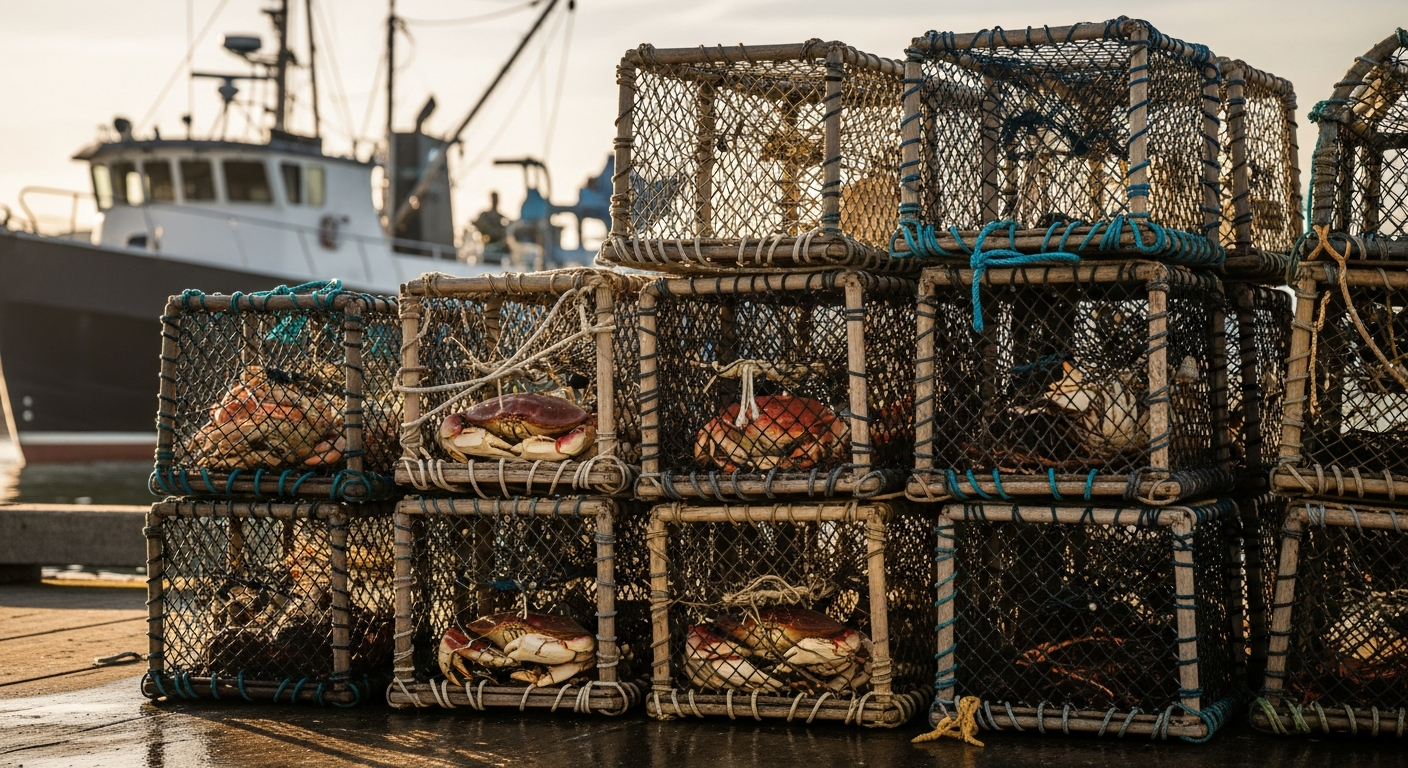
Discover why professional fishermen trust Gael Force commercial crab and lobster creels for superior durability and catch rates. Learn about innovative soft eye design and Scottish engineering excellence.
Commercial lobster and crab fishermen face a brutal economic reality—equipment failure during peak season can cost thousands of pounds in lost catches and operational downtime. A single creel malfunction might mean the difference between a profitable haul and a disappointing return to port, which is why experienced operators refuse to compromise on equipment quality. Gael Force Marine has spent decades perfecting creel manufacturing, drawing on generations of Scottish shell fishing expertise to create equipment engineered for real-world performance in the harshest Atlantic conditions.
The commercial fishing industry demands more than basic functionality. Your creels must withstand repeated deployments, deliver consistent catches across varying conditions, and remain reliable even when left uncollected for extended periods. Gael Force’s commercial-grade crab and lobster creels have earned industry-standard status, accounting for 70% of their total production because they’re built to survive brutal conditions while consistently outperforming competitors in head-to-head comparisons.
Understanding what separates professional-grade equipment from standard alternatives reveals why serious commercial operators invest in Gael Force. Explore Gael Force commercial creels and discover the engineering innovations that prevent escape and maximize your catch potential.
Scottish Engineering Meets Modern Manufacturing: The Foundation of Creel Excellence
Heritage Craftsmanship Blended with Contemporary Design
Gael Force’s approach to creel manufacturing represents a deliberate fusion of traditional Scottish shell fishing knowledge with modern engineering precision. The company didn’t invent the creel—generations of shell fishermen refined the design through countless seasons and countless deployments. This accumulated expertise forms the intellectual foundation of every Gael Force product.
Hand-finished construction by traditionally trained Scottish craftsmen ensures that each creel reflects the standards established over decades. These aren’t mass-produced items stamped out by indifferent machinery. Every unit receives individual attention from specialists who understand the nuances of what makes a creel perform when conditions deteriorate.
Quality Control That Sets Professional Standards
Individual quality inspection protocols verify consistency across every creel before it leaves the workshop. This commitment to verification isn’t optional—it’s built into production methodology. When your operation depends on equipment reliability, you can’t afford creels that pass inspection by accident or luck.
The frame design itself demonstrates engineering intelligence. Welded joints represent potential failure points under stress, particularly on creels that endure repeated cycles of deployment, pressure changes, and retrieval. Gael Force minimizes welded joints at critical stress points instead, leveraging the inherent strength of the steel itself. This design philosophy turns the material’s natural properties into the primary structural advantage rather than relying on the integrity of joints.
The Soft Nylon Eye Innovation: Why Escape Rates Plummet
A Self-Closing Mechanism That Works Without Complexity
The soft nylon eye represents the kind of innovation that makes experienced operators smile—it solves a fundamental problem through elegant simplicity rather than mechanical complexity. Traditional hard-eye designs require precise alignment and can damage the catch through aggressive entry points. The soft nylon eye takes the opposite approach.
Nylon’s natural sinking properties create a passive closing mechanism. When a lobster or crab enters the creel, the nylon eye facilitates effortless passage even for the largest specimens. Once inside, the nylon sinks closed behind the catch, physically preventing escape without any moving parts or mechanical failure points. The catch can’t push back through a nylon eye the way it might force past a traditional design.
Performance That Extends Across Fishing Seasons
This design innovation proves particularly valuable when creels remain uncollected for extended periods. Some commercial operators work on schedules where creels might sit on the seabed for several weeks before retrieval. Traditional designs begin to show performance degradation under these conditions. Gael Force creels maintain their catching efficiency because the soft nylon eye mechanism doesn’t degrade—it’s passive, it’s simple, and it works as reliably on week four as it did on day one.
The compatibility across multiple creel sizes (24″, 26″, and custom specifications) means you’re not switching between different catch-management systems throughout your fleet. Crew familiarity matters when conditions get rough and you’re working quickly.
Advanced Bait Bag Technology: Extending Catch Windows and Reducing Waste
Bait Preservation That Directly Impacts Earnings
The specially designed bait bag preserves bait freshness significantly longer than standard alternatives. This isn’t a minor convenience—it directly correlates with catch volumes. Fresh bait attracts more lobsters and crabs. Deteriorated bait loses effectiveness rapidly. Every day your bait maintains optimal condition translates to improved catch potential.
The bait bag also functions as a natural predator deterrent. Seals and other marine mammals present a persistent problem for commercial operators, particularly in certain fishing grounds. This design reduces seal and marine mammal interference, protecting your investment in bait while simultaneously improving the creel’s primary function.
Operational Cost Reduction Through Extended Bait Cycles
The flexibility to accommodate multiple bait types without compromising effectiveness expands your operational options. You’re not locked into expensive specialty baits. Standard options work reliably within this system. Strategic placement of the bait bag within the creel architecture ensures optimal scent dispersal—the bait’s attraction reaches lobsters and crabs across a wider area of the seabed.
Steel Specifications and Weight Distribution: Building Creels That Land Right
Choosing the Right Steel for Your Conditions
Two steel construction options exist: 8mm for standard commercial use and 10mm for heavy-duty applications. The 10mm specification is recommended for extreme conditions and maximum professional performance, particularly when working deep-water grounds or deploying in rough Atlantic waters where creels experience significant pressure and physical stress.
The distinction between 8mm and 10mm isn’t theoretical. The difference in weight and structural capacity becomes apparent when you’re retrieving creels after extended periods at depth or when rough conditions create additional physical demands.
Stability That Prevents Repeated Damage
Engineered weight distribution on the frame base ensures creels always land upright. This seemingly simple feature prevents the rolling or tipping that causes damage from repeated deployments and retrieval operations. When a creel lands consistently in the correct orientation, the catch position is predictable and the structural stress is distributed evenly. Inconsistent landing creates point loads and accelerates wear.
This stability guarantee has genuine economic implications. Creels that land reliably sustain less damage per deployment. Less damage means longer useful life and lower replacement costs.
Complete Preparation: Full Rope and Rubber Configuration
Creels arrive fully roped and ready for immediate deployment. You’re not unpacking equipment and immediately facing assembly work. The integrated rubber components protect against corrosion and abrasion—two inevitable consequences of maritime work. Weather-resistant material selection extends longevity through seasonal cycles.
Reduced maintenance requirements and downtime between fishing seasons means your fleet stays productive. Professional presentation that reflects quality standards matters more than some operators realize. When crew handle equipment that’s clearly built to professional standards, that quality perception influences work habits and operational discipline.
Real-World Performance Metrics: What Commercial Operators Actually Report
Commercial fishermen operating identical gear types and fishing the same grounds provide the most reliable performance data available. Gael Force creels consistently deliver improved catches compared to competitor alternatives under these controlled conditions. Reliability records spanning multiple seasons demonstrate that performance doesn’t degrade significantly—these creels maintain catching efficiency across years of continuous use.
Positive feedback from commercial fisheries across Scottish and Atlantic waters confirms that this reputation extends across diverse fishing grounds and seasonal variations. The reputation wasn’t built through marketing claims—it emerged from decades of proven results that commercial operators experienced firsthand.
Investment Justification: Understanding Professional-Grade Creel Pricing
The Premium Reflects Specialized Engineering
Commercial-grade creels represent a premium investment compared to leisure alternatives. EasyCatch leisure models priced around £79 serve recreational users with different requirements. Value prawn creels starting from £52.24 target entry-level commercial applications. Professional crab and lobster creels occupy a different category entirely—they’re specialized equipment for serious operators who measure ROI through catch rates and equipment reliability rather than initial purchase cost.
Cost-per-catch analysis demonstrates that superior catch rates quickly recover the premium investment. If a professional creel increases your annual catch by even 15-20% compared to standard equipment, the additional revenue covers the higher initial cost and generates profit.
Choosing the Right Specifications for Your Commercial Operation
Size options (24″, 26″, and custom dimensions) should match your vessel capacity and target species. Steel gauge selection depends on your fishing ground conditions and seasonal demands. Load capacity considerations vary significantly between deep-water and shallow-water deployments.
Fleet standardization provides practical benefits beyond initial cost considerations. Maintenance procedures remain consistent across your equipment, crew familiarity develops faster, and spare parts inventory becomes more efficient. If you operate multiple vessels, Gael Force specialists can consult on custom requirements and help you develop a standardized configuration that serves your entire operation.
Why Commercial Fishermen Return to Gael Force Year After Year
Gael Force commercial crab and lobster creels represent far more than equipment—they’re a strategic investment in your operation’s profitability and reliability. The combination of Scottish heritage craftsmanship, innovative soft nylon eye technology, and advanced bait preservation systems creates a product that simply outperforms alternatives when conditions deteriorate. The engineering excellence isn’t accidental. Decades of refinement, rigorous quality inspection, and feedback from thousands of professional fishermen have shaped every aspect of these creels.
When you factor in extended service life, reduced maintenance requirements, and proven catch improvements, the premium investment becomes economically sensible rather than extravagant. Your choice in creel equipment directly impacts your bottom line—it influences catch volumes, maintenance costs, replacement frequency, and operational downtime. The commercial fishermen who consistently return to Gael Force year after year have done the calculation. They understand that spending more on equipment that reliably outperforms standard alternatives generates better financial outcomes than purchasing cheaper alternatives that underperform.