
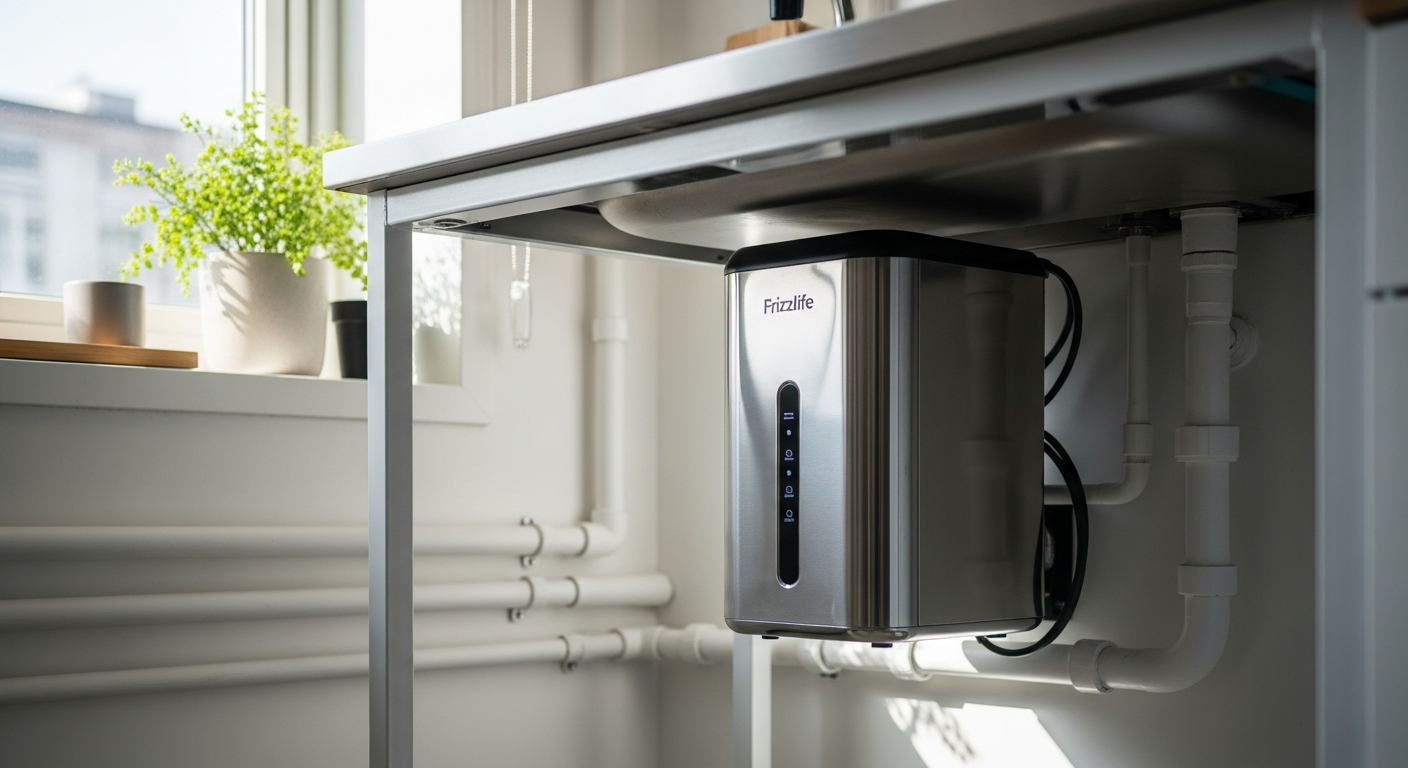
Explore the Frizzlife PD600-TAM3 Tankless RO System, including its compact under-sink design, multi-stage filtration, remineralization, water flow, monitoring features, and maintenance needs.
Under-sink water filtration can become challenging when cabinet space is limited. Traditional reverse osmosis systems often include a separate storage tank, adding another component beneath the sink.
The Frizzlife PD600-TAM3 Tankless Reverse Osmosis System takes a different approach. Its tankless configuration combines filtration, remineralization, and monitoring features in a relatively compact system designed to provide filtered water on demand.
Save Space With a Tankless Design
One of the main attractions of the PD600-TAM3 is the absence of a separate water-storage tank.
Instead of storing filtered water until you need it, the system filters water as it is dispensed. Eliminating the tank can leave more usable cabinet space for cleaning supplies, bins, and other kitchen essentials.
This design may appeal to apartment residents and homeowners with smaller kitchens, although you’ll still need adequate under-sink space for the main filtration unit and its connections.
Understand the Filtration Process
The PD600-TAM3 uses multiple filtration stages designed to address different components in the incoming water.
Its system incorporates reverse osmosis along with pre- and post-filtration. The RO membrane is responsible for reducing a range of dissolved substances.
Actual reduction performance can differ by contaminant and operating conditions. If you’re concerned about a particular substance in your water, check the manufacturer’s current performance documentation rather than assuming every contaminant is removed at the same rate.
Consider the Remineralization Stage
Reverse osmosis removes dissolved substances from water, including minerals.
The PD600-TAM3 incorporates an alkaline remineralization stage intended to add certain minerals back after RO filtration. This can affect the characteristics and taste of the finished water.
Avoid treating alkaline or remineralized water as a guaranteed source of specific health benefits. If your primary goal is filtration, focus on documented contaminant-reduction performance and your household’s actual water conditions.
Look at Water Production Capacity
The model is rated at 600 gallons per day (GPD) under specified operating conditions.
A higher production rating can be useful when you’re filling drinking glasses, cooking pots, kettles, or reusable bottles throughout the day.
However, real-world output can depend on several factors, including:
- Incoming water pressure
- Water temperature
- Filter condition
- Feed-water quality
- System installation
Consider the GPD figure a system specification rather than a guarantee of identical performance in every home.
Use the Monitoring Features
The system includes monitoring features designed to make everyday operation and maintenance easier.
The display can provide information related to water quality and filter condition. Filter-life indicators are particularly useful because filtration components need periodic replacement.
Monitoring can help you determine when attention is needed instead of relying entirely on memory.
Follow the current manufacturer instructions for interpreting indicators and replacing individual filters.
Plan the Installation Carefully
Although compact, the PD600-TAM3 remains an under-sink plumbing system.
Before ordering, measure your available cabinet space and review the installation requirements. Check your plumbing configuration, electrical requirements if applicable, faucet setup, and available connections.
Renters should be especially cautious. Don’t assume that an under-sink system is automatically permitted simply because it can potentially be removed later.
Review your lease and obtain landlord or property-manager approval when required before modifying plumbing or installing a dedicated faucet.
Consider Water Efficiency
Reverse osmosis systems produce wastewater as part of the filtration process.
The source materials highlight the PD600-TAM3’s wastewater efficiency compared with some traditional RO configurations. However, actual efficiency can depend on operating conditions.
When comparing systems, review the manufacturer’s current pure-water-to-drain-water specifications and consider how much filtered water your household typically uses.
Prepare for Filter Replacement
A reverse osmosis system isn’t maintenance-free.
Filters and other replaceable components eventually need attention. Replacement frequency can depend on household consumption, incoming water quality, and manufacturer recommendations.
Before purchasing, check:
- Current replacement-filter prices
- Recommended replacement intervals
- Filter availability
- Warranty conditions
- Maintenance instructions
These ongoing expenses are part of the true cost of owning the system.
Decide Whether Tankless RO Fits Your Kitchen
The Frizzlife PD600-TAM3 Tankless RO System may be worth considering if you want reverse osmosis filtration without dedicating cabinet space to a conventional storage tank.
Its combination of a tankless configuration, 600 GPD rating, remineralization stage, and monitoring features creates a system geared toward convenient under-sink filtration.
Before buying, measure your space, check installation requirements, review current performance certifications and contaminant-reduction documentation, and calculate replacement-filter costs. If you’re renting, confirm that your lease allows the required installation before making any plumbing changes.