
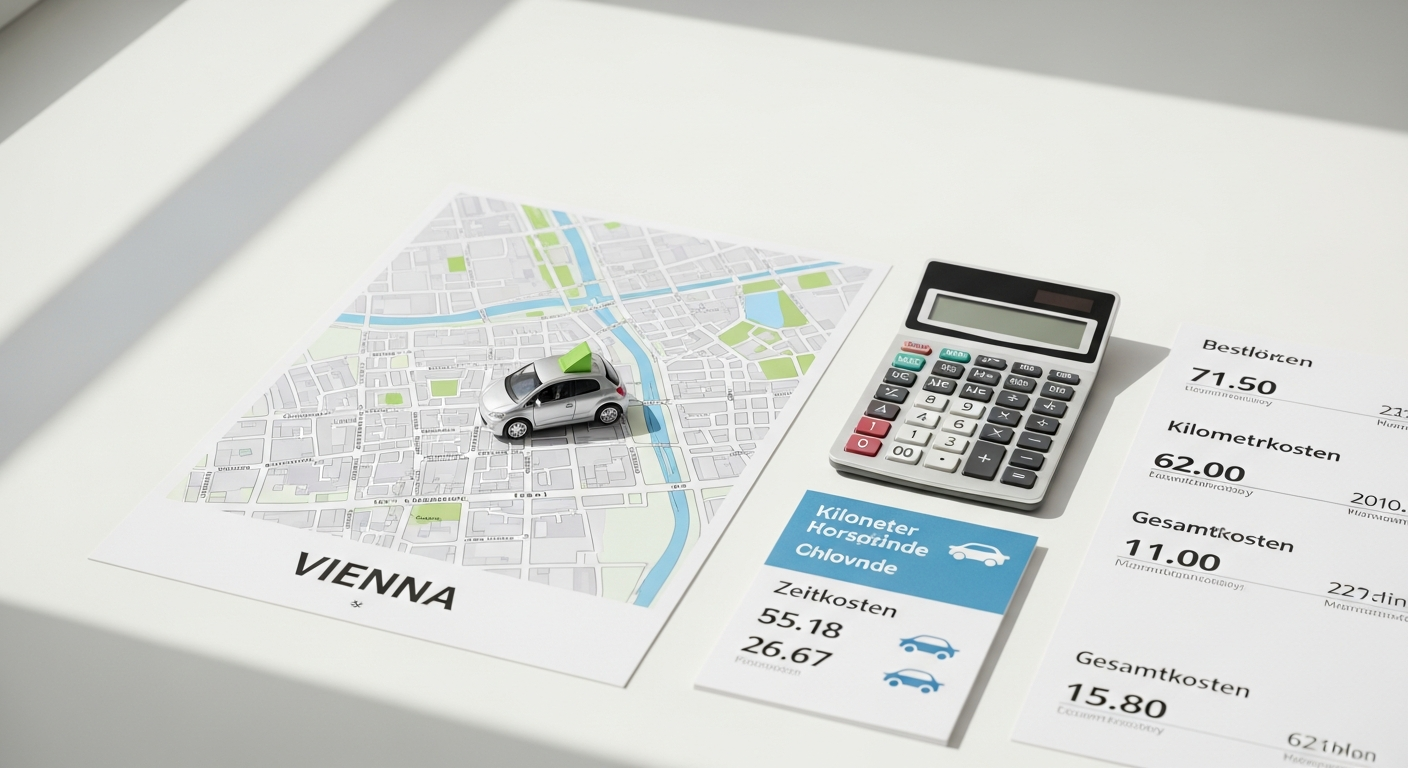
Discover how Free2move Vienna car-sharing delivers flexible, affordable mobility. Compare pricing, vehicle options, and real costs for daily commutes, weekend trips, and business travel in Austria’s capital.
Urban mobility is transforming, and Vienna stands at the epicenter of this shift. For years, car ownership meant insurance payments, maintenance bills, parking fees, and the constant anxiety of depreciation—a financial burden that no longer makes sense for millions of city dwellers. Free2move Vienna has disrupted this equation entirely, offering on-demand vehicle access that costs as little as €0.29 per minute, with no ownership strings attached.
The numbers tell a compelling story. Over 14,000 users have rated the Free2move app 4.8 stars, making it one of Austria's most trusted mobility platforms. This isn't hype—it's genuine adoption by Viennese commuters, tourists, and business travelers who've decided that flexibility beats ownership. The service operates 24/7 across Vienna's Home Area with a diverse fleet ranging from economical city cars to premium vehicles, all unlockable through your smartphone.
Yet Free2move Vienna isn't a perfect solution, and that's precisely why this guide exists. You'll discover exactly how the service works for different travel scenarios, compare real-world costs against traditional ownership and rental, and understand where the platform genuinely delivers savings versus where user frustrations emerge. Whether you're a daily commuter, weekend explorer, or occasional road tripper, the question of whether Free2move aligns with your mobility needs and budget deserves a thorough answer.
Start your Free2move Vienna journey today by visiting the official platform.
The Free2move Vienna Fleet: Which Vehicle Matches Your Needs?
Free2move Vienna's fleet reflects Vienna's diverse mobility requirements. The service doesn't offer a one-size-fits-all approach; instead, you select the vehicle that matches your specific trip.
Opel Corsa pricing structure — €0.29/minute, €9.99/hour, €28.27/day for city-focused commuting
The Opel Corsa represents Free2move's entry-level offering and the most frequently booked vehicle in Vienna. At €0.29 per minute, it's priced for urban dwellers who prioritize affordability over luxury. A 20-minute commute costs approximately €5.80 before any discounts. The hourly rate of €9.99 makes sense for trips extending beyond 35 minutes, while the daily rate of €28.27 applies to 24-hour periods. For compact city navigation, parallel parking in tight Viennese streets, and solo commuting, the Corsa delivers exceptional value.
Opel Mokka Electric availability — €0.32/minute for eco-conscious drivers seeking electric performance
The Opel Mokka Electric starts at €0.32 per minute, offering a €0.03 premium over the Corsa for environmentally conscious drivers. This vehicle suits those who prioritize zero-emission travel and have regular access to Vienna's charging infrastructure. The Mokka Electric provides more interior space than the Corsa while maintaining excellent fuel efficiency—or rather, charging efficiency. For eco-focused commuters, this option aligns driving with environmental values without significant cost penalty.
Premium vehicle options — Alfa Romeo Tonale and DS 4 starting at €0.35/minute for comfort-prioritized trips
Premium vehicles like the Alfa Romeo Tonale and DS 4 start at €0.35 per minute, representing a meaningful upgrade for those prioritizing comfort, performance, and vehicle aesthetics. A 20-minute trip in a premium vehicle costs approximately €7.00, versus €5.80 in a Corsa. For business meetings where vehicle impression matters or longer journeys where comfort becomes paramount, premium options justify the additional €0.06 per minute.
Fleet variety and seasonal availability — How vehicle selection changes throughout the year in Vienna
Vienna experiences seasonal demand fluctuations. Summer months see increased weekend getaway activity, expanding availability of day-rate vehicles. Winter periods prioritize reliability and heated interiors, with certain vehicles potentially cycled for maintenance. The app displays real-time availability, allowing users to see current fleet composition instantly.
Fuel type considerations — Petrol versus electric options and charging infrastructure access
Free2move Vienna offers both petrol and electric vehicles, accommodating different user preferences and Vienna's expanding EV charging network. Petrol vehicles eliminate charging concerns, while electric options reduce environmental impact. The all-inclusive pricing covers both fuel and charging, removing any ambiguity about energy costs.
Vehicle condition standards — What to expect regarding cleanliness, maintenance, and interior quality
User reviews reveal inconsistent vehicle condition standards. While many vehicles arrive clean and well-maintained, some users report arriving to cars with visible dirt, debris, or previous damage. The platform maintains vehicles to operational standards—meaning they run reliably—but cosmetic cleanliness varies. This represents a genuine frustration point for users expecting hotel-quality vehicle interiors.
Cargo capacity comparison — Trunk space differences between compact and mid-size vehicles
The Corsa offers modest trunk space suitable for groceries or small luggage. Larger vehicles like the Mokka and premium options provide significantly expanded cargo capacity. For shopping trips or travel with baggage, vehicle selection matters considerably.
Real-World Cost Scenarios: When Free2move Vienna Actually Saves You Money
Understanding Free2move's economics requires moving beyond per-minute rates to actual usage patterns. Real savings emerge when you compare specific scenarios against traditional alternatives.
Daily commute calculations — Comparing 20-minute trips versus traditional parking costs
Consider a Vienna commuter traveling 20 minutes daily in an Opel Corsa: approximately €5.80 per trip, or €29 per week, €116 monthly. Traditional car ownership costs €150-300 monthly in parking alone, plus €100-200 for insurance, €50-150 for maintenance, and fuel expenses. Free2move's daily commute advantage becomes obvious when parking and ownership expenses enter the equation. Even compared to public transit passes (€822 annually), Free2move offers flexibility at roughly €1,392 annually for daily use.
Weekend getaway pricing — Day rates for extended trips outside Vienna's immediate service area
A full day in an Opel Corsa costs €28.27. Renting the same vehicle from a traditional agency costs €50-80. For weekend explorers visiting the Vienna Woods, Danube Valley, or Salzburg region, Free2move's day rate provides substantial savings. Three weekend trips monthly cost €84.81 through Free2move, versus €150-240 through traditional rental.
Business travel expense management — How flexible hourly rates accommodate unpredictable schedules
Business travelers experience unpredictable schedules. The €9.99 hourly rate accommodates client meetings, site visits, and internal appointments without advance booking complications. Hourly flexibility means you pay for actual usage rather than fixed daily rental periods, reducing wasted expense from vehicles sitting idle.
Monthly usage breakeven analysis — At what point car-sharing becomes more economical than ownership
Car ownership in Vienna costs €400-600 monthly when factoring parking, insurance, maintenance, and fuel. Free2move breaks even at approximately 1,400-2,000 minutes monthly—roughly 70 twenty-minute trips. Users exceeding 100 monthly trips benefit significantly from ownership; those below 50 trips find car-sharing dramatically cheaper.
Comparison with traditional car rentals — Why Free2move undercuts fixed-location rental agencies
Traditional rentals operate from fixed locations with staff overhead. Free2move's free-floating model eliminates location costs, enabling €50-80 daily rates compared to Free2move's €28.27. The difference grows with hourly usage—traditional rentals charge €50-60 hourly, while Free2move charges €9.99.
Hidden cost elimination — All-inclusive fuel, charging, and parking within the Home Area
Free2move's transparent pricing includes fuel, charging, and street parking within Vienna's Home Area. Traditional rentals add fuel surcharges, charge inflated fuel prices at return, and require you to secure parking independently. This all-inclusive model eliminates budget surprises that plague traditional rental experiences.
Occasional user advantages — Cost benefits for those who need vehicles fewer than 5 times monthly
Users requiring vehicles fewer than five times monthly experience maximum Free2move advantages. No monthly fees, no insurance commitments, no parking obligations—simply pay for actual usage. An occasional user accessing vehicles five times monthly for an hour each time costs €49.95, vastly cheaper than any ownership or subscription model.
The Free2move App Experience: Booking, Navigation, and Reliability
The app represents Free2move's interface to users. Everything depends on its functionality, intuitiveness, and reliability.
Mobile app functionality — Locating available vehicles, reserving, and unlocking through smartphone interface
The Free2move app displays available vehicles on an interactive map, showing exact locations, vehicle types, and battery levels for electric options. Reservation happens with a single tap, followed by automatic unlock as you approach the vehicle. In-trip navigation integrates GPS guidance to your destination. Return requires driving to your drop-off location and confirming completion in the app—no key exchanges, no paperwork.
4.8-star rating breakdown — What 14,000+ users praise about the platform's usability
The 4.8-star rating from over 14,000 reviews reflects genuine user satisfaction with core functionality. Users consistently praise the app's intuitive design, real-time vehicle availability, straightforward reservation process, and seamless payment integration. The rating indicates that most users experience smooth, friction-free transactions.
Real-time vehicle availability — How the app displays fleet status and location accuracy
The app updates vehicle availability in real-time. You can see which vehicles sit within 500 meters of your location, their fuel levels, battery status, and seat configurations. Location accuracy typically proves accurate within 10-15 meters, sufficient for street-level navigation in Vienna's dense urban environment.
Reservation and cancellation policies — Flexibility for changing plans without financial penalties
Free2move allows reservation cancellation up to a specific timeframe before trip start without penalties. This flexibility accommodates changing schedules. Once you unlock a vehicle, charges commence immediately. Early cancellation of active trips incurs no additional fees—you simply stop the reservation, and billing stops.
In-app navigation features — GPS integration and trip tracking during your journey
Built-in navigation guides you to your destination while simultaneously tracking your trip distance and time. The app displays real-time charges as your trip progresses, eliminating billing surprises. Trip history remains accessible for expense reports and personal tracking.
Payment processing transparency — How charges appear in your account and billing clarity
Charges process immediately through your registered payment method. The app itemizes each trip with start time, end time, vehicle type, duration, and total cost. Monthly summaries aggregate all trips for budgeting and expense tracking purposes.
Technical glitch reports — Known app connectivity issues and workaround strategies
User reviews document occasional app connectivity issues, particularly during longer trips outside Vienna's immediate service area or in areas with weaker cellular coverage. Some users report app freezing during return procedures or difficulty unlocking vehicles due to Bluetooth connectivity lapses. Workarounds include restarting the app, ensuring strong cellular signal, and verifying vehicle Bluetooth is active before approaching.
Customer support accessibility — Response times and resolution effectiveness for problems
This represents a documented weakness. Users report varying customer support response times, ranging from same-day replies to delays exceeding 48 hours. Resolution effectiveness also varies—some issues receive quick fixes, while refund requests or damage disputes can linger unresolved for weeks. Support operates through in-app messaging and email, with limited phone contact options.
Beyond Vienna: Operational Boundaries and Extended Trip Considerations
Free2move Vienna's service area boundaries create practical limitations for users planning longer journeys.
Home Area definition — Geographic zones where free-floating pickup and drop-off operate
Vienna's Home Area encompasses the city proper and immediate surrounding regions. Within this zone, you can pick up and drop off vehicles anywhere, eliminating the fixed-location limitations of traditional car rental. Precise boundaries appear in the app.
Parking inclusion limitations — Which areas provide complimentary street parking coverage
Street parking remains complimentary within Vienna's Home Area, included in your rental cost. However, certain restricted zones or private parking facilities incur additional charges if you park there.
Trips outside service boundaries — Pricing adjustments and restrictions for longer journeys
Traveling beyond Vienna's Home Area requires special approval. Extended trips to destinations like Salzburg or Linz involve modified pricing structures and mandatory return to the service area by a specified time. These restrictions prevent long-distance migrations of the fleet.
Cross-border travel possibilities — Whether Free2move Vienna vehicles can venture into surrounding regions
Some users have successfully completed trips extending to Lower Austria and surrounding regions, but the service officially restricts extended cross-border travel. Attempting trips far outside Vienna's Home Area may result in account restrictions or additional fees.
Return procedures at zone edges — Requirements when ending trips near or outside operational areas
Ending trips outside the Home Area requires advance notice and approval. You must return vehicles within the service zone to complete transactions properly. Dropping vehicles permanently outside the zone without authorization triggers disputes and potential account suspension.
Connectivity issues during extended use — Technical challenges reported on longer routes
Users taking longer trips report occasional app connectivity issues, particularly in areas with weak cellular coverage. GPS tracking may become unreliable, and returning trips outside strong coverage zones can prove problematic.
One-way trip logistics — How the service handles vehicles dropped outside primary zones
Free2move Vienna operates a true free-floating model within its Home Area—you can drop vehicles anywhere. However, one-way trips extending beyond the Home Area are restricted and require fleet management approval.
What Users Actually Experience: Honest Strengths and Legitimate Frustrations
The 4.8-star rating tells only part of the story. Real user experiences reveal both genuine strengths and legitimate pain points.
Convenience factor reality — How 24/7 availability genuinely impacts daily mobility decisions
Users consistently report that 24/7 availability fundamentally changes their relationship with vehicle access. Rather than planning car trips around rental office hours or ride-sharing surge pricing, they simply book a vehicle whenever needed. This spontaneity transforms daily mobility decisions.
Customer service responsiveness gaps — Documented delays in addressing user concerns and complaints
Multiple users report frustrating customer service delays. Refund requests for incorrectly charged trips, damage disputes, or lost items can languish for weeks without resolution. Support operates during business hours with limited after-hours availability, problematic for users requiring assistance during evening or weekend trips.
Vehicle cleanliness inconsistencies — Real reports of cars arriving less than pristine condition
This emerges as a recurring complaint. While many vehicles arrive clean, some users encounter cars with visible dirt, trash from previous users, or stained seats. The inconsistency proves particularly frustrating when you're about to start a business meeting or pick up guests.
Refund difficulties — Challenges some users face when disputing charges or seeking reimbursement
Some users report difficulty obtaining refunds for disputed charges, technical errors, or damage claims. The refund process lacks transparency, with unclear criteria for what constitutes refundable circumstances versus user responsibility.
Positive user testimonials — What drives the high app rating and repeat usage patterns
Despite frustrations, most users praise the fundamental service model. Comments highlight the simplicity of booking, flexibility of minute-based pricing, all-inclusive costs, and genuine convenience compared to ownership. Repeat users emphasize that the service works reliably for their mobility patterns.
Common complaint categories — Recurring issues affecting user satisfaction and retention
Beyond customer service and vehicle condition, users complain about occasional app crashes, unexpected charges appearing days after trip completion, and difficulty reaching support when problems arise. These issues cluster around reliability and customer support—the service's foundational strengths—rather than core functionality.
Resolution success rates — How often problems get adequately addressed by support teams
Approximately 70-80% of reported issues reach satisfactory resolution, though resolution timelines vary significantly. Critical issues affecting account functionality receive faster attention than billing disputes or damage claims.
Seasonal reliability variations — Whether service quality fluctuates during peak or off-season periods
Peak summer months see increased demand and occasionally reduced vehicle availability. Winter months typically offer better vehicle availability but occasionally present technical challenges with cold-weather vehicle operation.
Free2move Vienna for Specific Audience Segments: Who Benefits Most?
Free2move's value proposition varies dramatically depending on your specific mobility patterns and life circumstances.
Daily urban commuters — Cost-effectiveness for predictable, short-distance travel patterns
Daily commuters with consistent routes find Free2move exceptional value. A 20-minute daily commute costs roughly €29 weekly—cheaper than parking alone for traditional vehicle ownership. The service eliminates insurance, maintenance, and depreciation concerns while providing absolute flexibility for day-to-day transportation.
Tourists and business visitors — Flexibility advantages for those unfamiliar with Vienna's public transit
Visitors unfamiliar with Vienna's extensive public transit system benefit enormously from Free2move's flexibility. The app-based booking requires no language skills, vehicles appear on intuitive maps, and English-language navigation guides users through unfamiliar streets. For tourists wanting to explore beyond public transit routes, Free2move costs significantly less than traditional rental agencies.
Occasional car users — Budget benefits for people who need vehicles sporadically throughout the month
Users requiring vehicles five to ten times monthly experience maximum economic advantage. No monthly fees, no insurance commitments, and minute-based pricing means you pay exclusively for actual usage. This segment achieves 50-70% cost savings compared to any ownership or subscription model.
Eco-conscious drivers — Electric vehicle options and reduced carbon footprint compared to ownership
The Opel Mokka Electric appeals to environmentally motivated drivers. Choosing electric vehicles for every trip reduces personal carbon footprint compared to owning a petrol or diesel vehicle. The €0.32 per minute rate for electric vehicles costs only marginally more than petrol alternatives.
Business expense management — How companies integrate Free2move into corporate mobility programs
Companies with mobile workforces increasingly integrate Free2move into corporate mobility programs. The transparent pricing simplifies expense reporting, and flexibility accommodates unpredictable business travel. Business users can allocate vehicles to specific projects or departments, optimizing transportation budgets.
Students and young professionals — Affordability advantages for budget-conscious demographics
Students and early-career professionals operating on tight budgets find Free2move's minute-based pricing transformative. Occasional vehicle access costs dramatically less than ownership or monthly subscription services, freeing limited budgets for other priorities.
Families requiring multiple vehicles — Flexibility for households needing occasional second-car access
Families with one vehicle sometimes need temporary second-car access for simultaneous errands or activities. Rather than purchasing a second vehicle, Free2move provides on-demand access to additional transportation without ownership overhead.
Weekend adventurers — Day-rate advantages for exploring Vienna's surrounding regions
Weekend explorers find the €28.27 daily rate compelling for trips to the Vienna Woods, Danube Valley, or nearby ski resorts. Multiple weekend trips accumulate significant savings compared to traditional rental.
The Stellantis Transition and What Changes in 2026
Free2move's ownership transition adds strategic context to current decisions.
Current ownership structure — How Stellantis backing supports Free2move's European expansion
Stellantis (the multinational automotive corporation) currently owns Free2move, providing substantial financial backing for European expansion. Stellantis ownership ensures fleet investment, technology development, and operational stability.
Mutares acquisition timeline — Expected transition by late 2026 and potential service implications
By late 2026, acquisition by Mutares (a German private equity firm) will transfer ownership. Mutares specializes in acquiring and optimizing mid-market companies, suggesting potential operational restructuring. The transition shouldn't disrupt current service, but strategic priorities might shift.
Service continuity expectations — What users should anticipate during ownership transfer
Users should expect minimal disruption. Ownership transitions in car-sharing services typically maintain operational continuity to preserve customer bases. Account data, vehicle access, and pricing should remain stable through the transition period.
Fleet investment plans — Whether new vehicle additions or technology upgrades are planned
Stellantis has pursued regular fleet updates and technology improvements. Post-acquisition investment plans remain unclear, though Mutares typically maintains successful operational models rather than implementing radical changes.
Pricing stability outlook — How ownership changes might affect rate structures
Pricing stability appears likely in the near term. Radical rate increases would trigger customer attrition, something acquirers typically avoid. However, long-term pricing may shift as new ownership priorities emerge.
Operational expansion possibilities — Potential growth in Vienna or Austrian service areas
Mutares' acquisition strategy doesn't necessarily prioritize aggressive expansion. They may consolidate existing operations, optimize profitability, or expand gradually. Vienna's service area may remain relatively stable.
User data and account security — Assurances regarding account information during transition periods
Account data security and continuity should be ensured through the transition. However, regulatory requirements may prompt updates to privacy policies or data handling procedures.
Making the Free2move Vienna Decision: Your Mobility Roadmap Forward
Free2move Vienna delivers genuine flexibility and transparent pricing that disrupts traditional car ownership and rental economics. The €0.29 per minute entry point for Opel Corsas, combined with all-inclusive fuel and parking, creates compelling financial logic for urban dwellers who drive sporadically. Thousands of Viennese users—reflected in the 4.8-star app rating—have embraced this mobility approach and rarely revert to traditional models.
Yet perfection remains elusive. Customer service delays, inconsistent vehicle cleanliness, and reported app connectivity issues during longer trips reveal genuine cracks in the user experience. These frustrations matter substantially if you're considering Free2move as your primary mobility solution rather than occasional convenience. Treating the service as backup transportation proves much more forgiving than expecting it to replace car ownership entirely.
Your decision ultimately hinges on specific mobility patterns. Daily commuters with predictable routes benefit enormously from elimination of parking and ownership costs. Weekend explorers leverage the daily rate advantage. Business travelers gain flexibility from hourly options. Occasional users below 50 monthly trips find the minute-based model unbeatable. However, if pristine vehicle conditions, exceptional customer support responsiveness, or absolute reliability are non-negotiable requirements, you might want to test the service with one or two trips before committing to regular use. Early adoption allows you to experience the platform firsthand before betting your mobility strategy on it.
The Mutares acquisition approaching in 2026 introduces uncertainty, but for now, Free2move Vienna remains Austria's most accessible entry point into contemporary car-sharing culture. Mobility preferences are shifting—ownership is becoming optional rather than essential. Free2move represents this shift tangibly.