
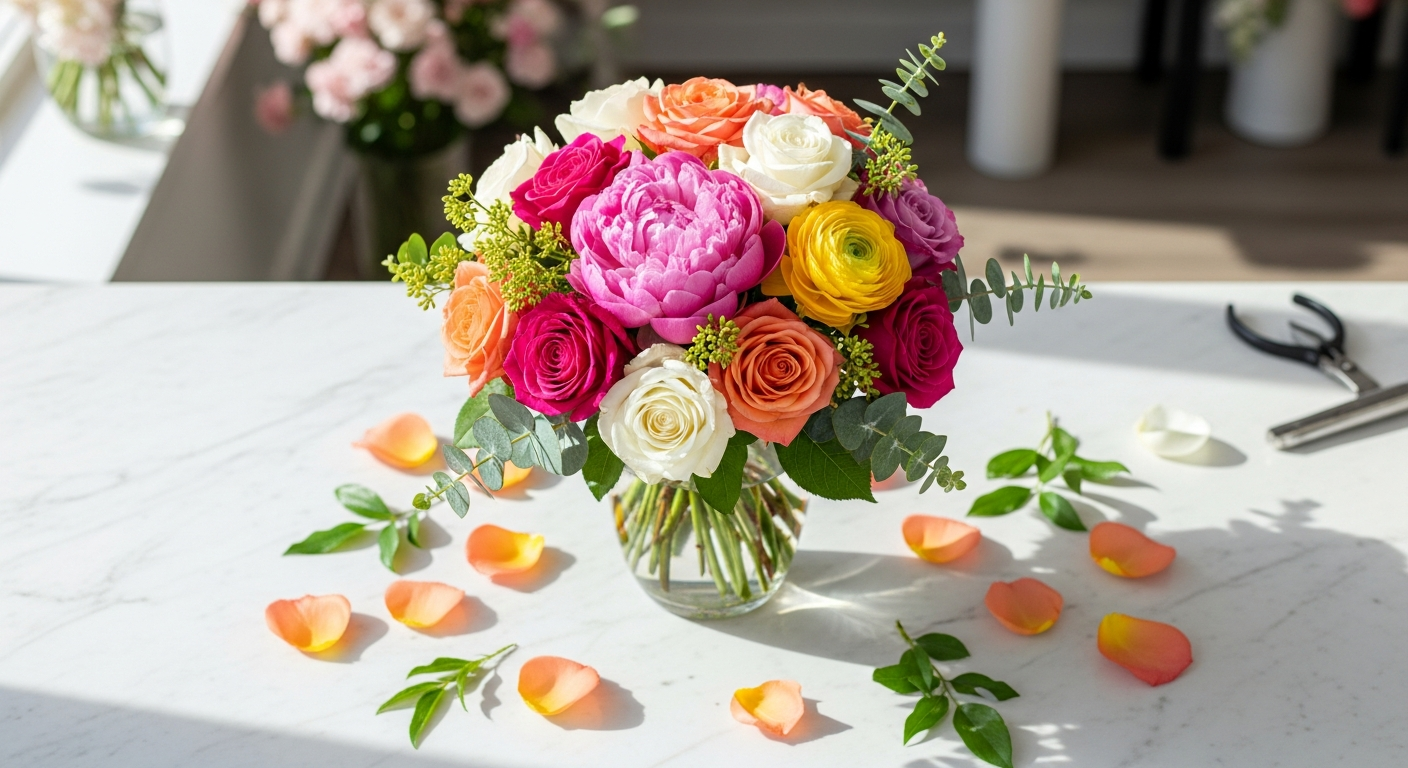
Learn how to create stunning floral arrangements with Freddie’s Flowers Showstopper Subscription Box. Discover arranging tips, flower varieties, and why this premium UK delivery service empowers home florists.
From Bud to Bloom—Understanding the Showstopper's Unique Delivery Model
When your Showstopper box arrives at your door, you might initially wonder why the flowers aren't already in full bloom. This is actually one of the subscription's greatest strengths. Freddie's Flowers deliberately delivers stems in bud form because flowers in this stage have significantly longer to flourish—typically 10-14 days or more in your vase, compared to the mere days you'd get from supermarket bouquets that have already begun their decline before reaching your home.
The reason is rooted in supply chain efficiency. Traditional florists source through multiple intermediaries, and each hand-off introduces delays and stress to the blooms. Freddie's cuts out this entire process by sourcing directly from growers. Your flowers travel the shortest possible distance, arriving fresher and with their full lifespan ahead of them. This direct relationship between grower and home arranger is the foundation of the Showstopper's premium quality.
Why Flowers Arrive in Bud Form and How This Extends Vase Life Beyond Typical Supermarket Bouquets
A flower in bud is a flower with potential still locked inside. During the 3-5 day opening timeline, you'll witness the gradual unfurling of petals—a process that's actually magical to observe. This progression means your arrangement transforms daily, giving you multiple visual experiences from a single delivery. More importantly, because the bloom hasn't yet matured, the flower hasn't begun its senescence cycle. The stamens are fresh, the petals haven't dried at their edges, and the overall structure remains turgid and vital.
Supermarket flowers, by contrast, have often been cut days earlier, stored in less-than-ideal conditions, and exposed to temperature fluctuations during transport. They arrive already several days into their lifespan. When you arrange them, you're working with flowers that are already beginning their decline. The Showstopper model inverts this entirely—you're working with flowers that are just beginning their journey.
The 3-5 Day Opening Timeline and How to Manage Expectations During the Bloom Progression
Understanding that your arrangement will evolve is crucial for managing expectations and actually enhancing your enjoyment. On day one or two, your stems may look sparse or understated. This is perfectly normal. The towering varieties like gladioli and large hydrangeas included in your box are chosen specifically for their dramatic opening sequences. By day three or four, you'll see a noticeable difference. By day five, your arrangement reaches its full visual impact.
This timeline isn't a shortcoming—it's an asset. You'll notice the arrangement reveals itself gradually, creating a sense of anticipation and discovery. Some arrangers deliberately stagger their viewing of different stems, creating micro-moments of beauty throughout the week rather than one explosive moment that then declines.
Direct-from-Grower Sourcing and Its Impact on Freshness and Longevity Compared to Traditional Florists
The freshness advantage of direct-from-grower sourcing cannot be overstated. When Freddie's sources directly, there's no middleman warehouse storage, no time languishing in cold storage facilities, and no unnecessary handling. Your flowers are harvested, packaged, and dispatched to you within days. This proximity to the source means you're receiving stems at their peak vitality.
Traditional florists, even excellent ones, cannot compete with this model because they're operating within a conventional supply chain that inherently introduces delays. The flowers they receive have already traveled through distribution networks. Freddie's philosophy acknowledges that the moment a flower is cut, its clock starts ticking—so the goal is to minimize the time between cutting and arranging.
How the Bud Stage Actually Empowers Arrangers to Control the Visual Journey of Their Display
Here's where the bud stage becomes genuinely empowering: you're not locked into a single aesthetic. Because your flowers are opening over several days, you control the pacing of your arrangement's evolution. If you have an event on day five, you know your flowers will be at their most spectacular. If you prefer a looser, more naturalistic look, you can enjoy it on day three when some blooms are open and others are still opening.
This control is something professional florists don't have. They create a finished arrangement and hand it over, hoping it lasts. You become an active participant in the arrangement's journey, adjusting water, removing spent stems, and watching the composition transform into something even more beautiful than when you first arranged it.
Discover the Freddie's Flowers Showstopper Subscription and start your floral journey today.
Building Your Arranging Confidence—Tools, Techniques, and the Included Guide
Breaking Down the Beautifully Illustrated Arranging Guide and How to Interpret Design Principles
The arranging guide included in every Showstopper box is a masterclass in making floral design accessible. Rather than overwhelming you with jargon, it uses visual demonstrations to show you how to achieve height, depth, and balance. The illustrations walk you through foundational principles: understanding your focal flowers (the largest, most eye-catching blooms), selecting secondary flowers to support and enhance, and using greenery and filler elements to create structure and flow.
What makes this guide particularly effective is that it translates abstract design concepts into practical actions. Instead of being told "create visual balance," you're shown exactly how to position stems at different angles and heights to achieve it. This visual-first approach removes the intimidation factor that often prevents people from trying flower arranging.
Essential Tools You May Already Have at Home Versus Optional Purchases for Advanced Arrangements
You likely already own the most essential tools. A sharp knife or flower shears is the primary tool you'll need—something you probably have in your kitchen. A clean vase is your next requirement, and we'll address vessel selection in detail shortly. Scissors work in a pinch, though sharp pruning shears or florist scissors are gentler on stems and give cleaner cuts.
Beyond these basics, optional purchases include floral foam (which helps position stems in exact locations), flower frogs (weighted devices that hold stems in place), and various cutting tools. However, these aren't necessary for creating stunning arrangements, especially as a beginner. The Showstopper guides are designed with the assumption that you're working with everyday household items. As your confidence grows, you can invest in specialized tools if you wish, but they're genuinely optional.
The Role of Flower Food in Nourishment and How to Apply It Correctly for Optimal Longevity
Every Showstopper box includes flower food—a specialized nutrient formula that serves multiple purposes. It provides sugars that nourish the blooms (flowers are living organisms that require energy to stay vibrant), it lowers the pH of water to help stems absorb water more efficiently, and it contains biocides that prevent bacterial growth in the vase water.
Application is straightforward: dissolve the packet in the water according to the included instructions, typically mixing it thoroughly before arranging your flowers. The flower food isn't a magic potion, but it's a measurable advantage. Water alone will sustain your flowers, but water with flower food will extend their lifespan noticeably. This is one of the reasons Showstopper blooms consistently outlast supermarket alternatives—the combination of fresh stems and proper nutrition creates compounding benefits.
Step-by-Step Techniques for Creating Height, Depth, and Visual Balance with Large Seasonal Stems
Large seasonal stems like gladioli require a different approach than a conventional mixed bouquet. These tall varieties are your anchors. Start by placing your tallest stem slightly off-center in your vase—dead center looks rigid and formal, whereas off-center placement creates a more dynamic composition. Your secondary stems should be progressively shorter as you move outward, creating a triangular or pyramidal silhouette.
Depth is created by varying the angle of your stems. Some should point straight up, some should angle forward toward the viewer, and some should angle backward, creating a three-dimensional space rather than a flat, one-dimensional arrangement. Your greenery and secondary flowers fill the gaps, creating visual density without obscuring the overall structure.
Balance doesn't mean symmetry. You're aiming for visual weight distribution—if one side feels heavier (due to larger or darker flowers), counterbalance it with height or a focal element on the opposite side. The included guide shows these principles visually, making them much easier to internalize than reading descriptions alone.
Choosing the Perfect Vessel—Container Selection for Maximum Impact
Why Vessel Choice Matters More Than Most Arrangers Realize When Working with Towering Varieties
Your vessel isn't just a holder—it's a design element that dramatically affects your arrangement's visual impact and stability. With towering varieties, vessel choice becomes even more critical because you're working with height and weight that require proper support. A too-narrow vase will struggle to anchor tall stems. A vase that's too short will look awkward and unstable. The right vessel enhances your flowers; the wrong one fights against them.
Additionally, your vase color, material, and texture communicate aesthetic messages that either harmonize with or compete with your flowers. A clear glass vase recedes visually, letting the flowers dominate. A patterned or colored vase becomes a statement piece that collaborates with your arrangement. Understanding this relationship elevates your results significantly.
Sizing Guidelines for Matching Container Height and Width to Stem Count and Flower Types
A general rule exists among arrangers: your vase height should be approximately one and a half times the height of your tallest stem. This proportion creates visual harmony and prevents your arrangement from appearing top-heavy. However, the Showstopper's included guide provides more specific guidance based on your particular stems and arrangement style.
Vessel width matters equally. You need enough diameter at the opening to accommodate your stem count without crowding them. Crowded stems don't receive adequate water uptake and are prone to leaning or toppling. A good rule of thumb is that you should be able to see individual stems clearly without them pressing against one another. If you're using 15-20 stems (typical for a Showstopper delivery), you want a vase with at least a 3-4 inch opening diameter.
Material Considerations (Glass, Ceramic, Metal) and How They Affect Both Aesthetics and Stability
Clear glass is the most versatile option because it's visually neutral and lets the flowers and water be seen—which is often attractive with colorful stems and greenery. Glass is also stable and comes in countless shapes and sizes. The downside is that algae can develop in the water with prolonged exposure to light, though this is purely aesthetic and easily managed.
Ceramic and stoneware vessels offer more design personality and can create stunning color coordination with your blooms. They're stable, heavier (which helps with tall arrangements), and hide the water—some prefer this for a cleaner look. Opaque vessels work beautifully when you want your arrangement to be the focus without visual distraction.
Metal vases, particularly brass or copper, can create dramatic modern arrangements but are less common for fresh flowers. They can accelerate bacterial growth and may not accommodate standard floral preservatives effectively, so glass or ceramic are generally better choices.
Budget-Friendly Container Alternatives That Don't Compromise on Visual Impact
You don't need to purchase expensive vessels. Examine your kitchen cabinets. Mason jars, glass pitchers, ceramic bowls, and even repurposed bottles create stunning arrangements. The advantage of these everyday containers is authenticity—they feel personal and lived-in rather than self-consciously decorative.
A tall mason jar paired with towering gladioli creates a farmhouse aesthetic. A ceramic kitchen pitcher arranged with hydrangeas brings cottage charm. The key is ensuring your chosen vessel is clean, waterproof (obviously), and large enough to properly support your stems. These alternatives are often more interesting visually than conventional vases because they bring personality and context to your space.
Extending Vase Life—Pro Tips for 10-14 Days of Beauty
Daily Water Changes and Stem Re-Cutting Techniques That Maximize Longevity
The single most impactful action you can take is changing the water every two to three days. This removes accumulated bacteria and provides fresh water for your stems to absorb. When you change the water, also re-cut the bottom inch of each stem at a 45-degree angle using sharp shears. This fresh cut opens new vascular tissue, increasing water uptake dramatically. The angle prevents the stem from sitting flat against the vase bottom, which would block water absorption.
This routine seems simple, but it's the difference between 10 days of beauty and 14 days or more. Each water change and stem re-cut signals to your flowers that they're still connected to a water source, encouraging them to stay hydrated and vibrant.
Temperature Control and Avoiding Direct Sunlight, Heating Vents, and Ripening Fruit
Flowers prefer cool environments. Keep your arrangement away from direct sunlight, which accelerates petal opening and senescence (aging). This might seem counterintuitive—flowers need light to thrive—but the light should be ambient and indirect. A room with bright indirect light is ideal.
Avoid placing your arrangement near heating vents, radiators, or appliances that generate heat. Heat accelerates the aging process and causes water to evaporate faster from both vase and stems. Similarly, keep fruit away from your flowers. Ripening fruit releases ethylene gas, which triggers flower senescence—a natural aging mechanism. You'd be inadvertently accelerating the end of your arrangement's life.
Temperature stability matters more than the absolute temperature. A cool room at consistent 65-70°F is better than a room that fluctuates between 50°F and 75°F throughout the day.
Removing Lower Foliage to Prevent Bacterial Growth and Stem Rot
Before arranging, strip all leaves from the portion of each stem that will be submerged in water. Submerged foliage decays, introducing bacteria into the vase water and accelerating stem rot. This single action—removing lower leaves—is one of the most effective preventative measures you can take.
Ensure your vase water never becomes cloudy or foul-smelling. If it does, it's a sign that bacterial growth has accelerated. Change the water immediately, re-cut all stems, and refresh your arrangement. Most issues with vase life are related to bacterial accumulation, and preventative practices around water quality and stem cleanliness directly combat this.
Identifying Which Stems Are Fading First and Strategic Removal for Continued Visual Interest
As your arrangement progresses through its 10-14 day lifespan, individual stems and blooms will fade at different rates. Rather than watching your entire arrangement decline simultaneously, you can manage this process. When a stem begins showing obvious signs of fading—wilting petals, browning edges, or drooping—remove it. This accomplishes two things: it keeps your arrangement looking fresh longer by removing the focal point of decline, and it redirects the plant's remaining energy to the still-vibrant stems.
This practice extends perceived vase life significantly. A bouquet with a few faded stems removed at day 10 can look fresher than one left entirely intact. You're essentially curating your arrangement's decline, maintaining visual impact throughout its lifespan.
Your Journey to Floral Mastery Starts Here
The Freddie's Flowers Showstopper Subscription Box represents far more than a convenient flower delivery service. It's a creative partnership between you and growers who understand that fresh, premium blooms deserve to be arranged by passionate hands—yours included. By removing the intimidation factor through beautifully designed guides, providing exceptional quality that rewards your effort, and committing to sustainable practices that align with conscious living, Freddie's empowers everyday people to become confident arrangers.
The £45 per delivery represents a premium investment compared to supermarket options, certainly. But when you factor in the extended vase life, the educational experience, the environmental responsibility, and the genuine pride that comes from creating something stunning with your own hands, the value becomes undeniable. You're not simply purchasing flowers—you're investing in a skill, a creative practice, and a weekly moment of intention in your home.
Your space transforms when you place a showstopping arrangement you've created yourself in it. The flowers bloom, the arrangement evolves, and your confidence grows with each delivery. The techniques you've learned here—understanding the bud-to-bloom timeline, choosing vessels that work with your stems, maintaining water quality, and strategically managing decline—become second nature remarkably quickly.
Start your subscription today and bring showstopping arrangements into your home.