
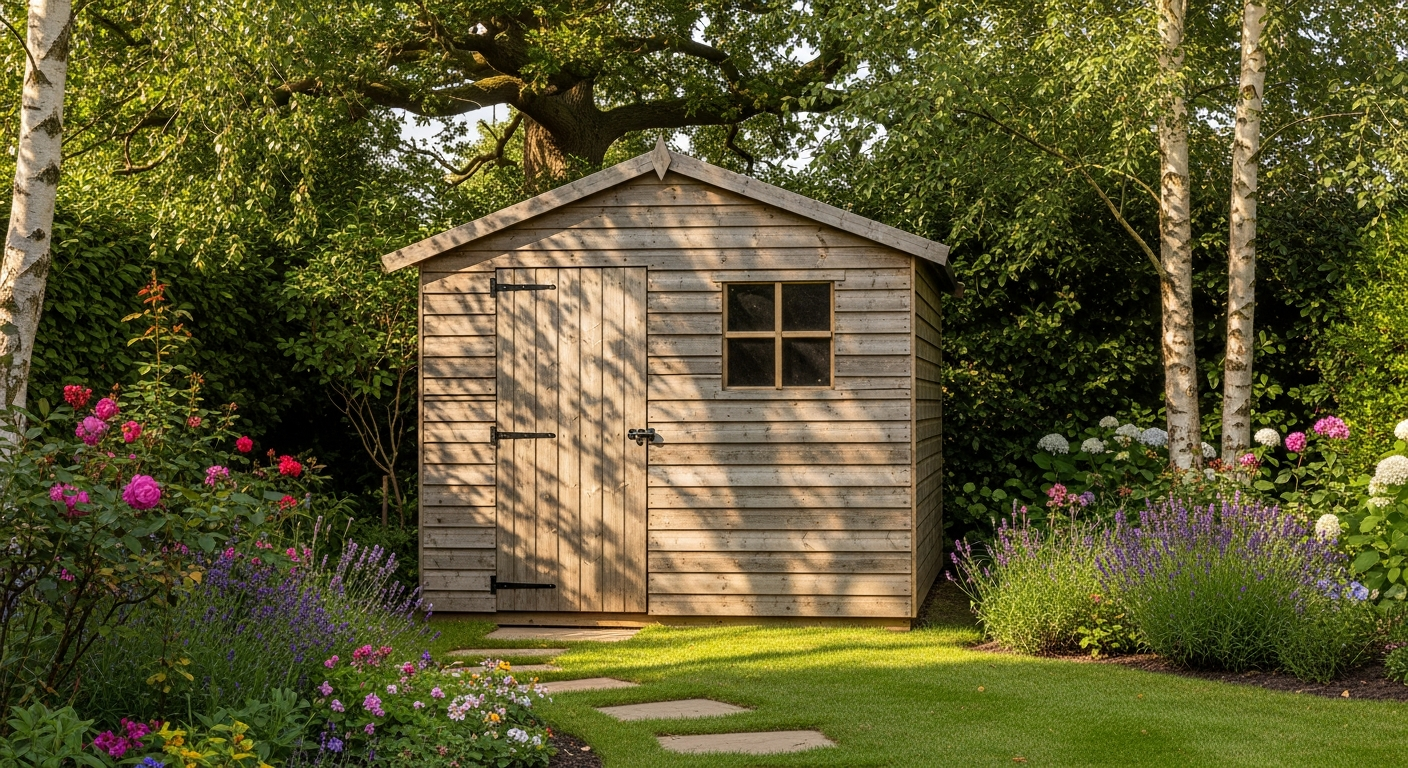
Discover why the Forest 4Life 6×4 Apex Wooden Shed with Windows is the go-to choice for serious gardeners. Learn about its 25-year guarantee, robust build, and long-term value.
Most wooden sheds deteriorate within 10-15 years, forcing homeowners to spend hundreds on repairs, replacements, or constant maintenance treatments. Yet there’s a breed of garden storage solutions built to outlast trends, mortgages, and even your patience with DIY projects. The Forest 4Life 6×4 Apex Wooden Shed with Windows represents a different philosophy—one where you buy once and genuinely forget about it.
This British-made shed comes with a market-leading 25-year anti-rot guarantee, which isn’t just marketing speak—it’s a commitment that eliminates the annual timber treatment cycle that plagues most garden structures. The combination of FSC-certified timber, pressure-treatment technology, and engineering that’s 30% thicker than standard alternatives creates something genuinely different in the crowded shed market.
Explore the Forest 4Life 6×4 Apex Wooden Shed with Windows at Buy Sheds Direct today.
Explanation of Pressure-Treatment Technology and How It Differs from Standard Timber Treatment
Pressure-treated timber undergoes a fundamentally different process than surface treatments applied after construction. The timber is placed in a vacuum chamber where preservatives are forced deep into the wood fibers under high pressure. This penetration reaches areas that brush-on or spray treatments simply cannot access—the heartwood where rot and decay begin their destructive work.
Standard timber treatment relies on surface coatings that degrade over time, requiring reapplication every 1-3 years. Pressure treatment, by contrast, integrates the preservative into the wood’s cellular structure itself. This means the protection doesn’t wash away with rain or fade with UV exposure; it remains embedded throughout the timber’s lifespan.
The Science Behind the 25-Year Anti-Rot Guarantee and What It Actually Protects Against
The 25-year anti-rot guarantee provided with this shed reflects rigorous testing protocols and proven performance data. The pressure-treated timber resists the specific fungi and bacteria responsible for wood decay. Rather than preventing all damage universally, this guarantee specifically protects against rot—the most common cause of structural failure in garden sheds.
Rot develops when moisture and oxygen combine with fungal spores already present in untreated wood. The preservatives in pressure-treated timber create an inhospitable environment for these fungi, effectively stopping the decay process before it compromises structural integrity. This targeted protection means the guarantee covers what actually causes sheds to fail, not theoretical scenarios.
How FSC-Certified Timber Sourcing Impacts Durability and Environmental Responsibility
FSC (Forest Stewardship Council) certification guarantees that timber comes from responsibly managed forests where new trees replace harvested ones. This sourcing approach ensures consistent timber quality because certified forests maintain strict standards for tree selection, growth patterns, and harvesting practices.
The durability benefit extends beyond marketing credentials. FSC-certified timber typically comes from well-maintained forests where trees grow in optimal conditions, developing denser wood grain structures that naturally resist decay better than timber from over-harvested or poorly managed sources. The environmental responsibility aspect means you’re not contributing to deforestation while securing a shed that will last decades.
Comparison of Maintenance-Free Timber Versus Traditional Timber Requiring Annual Re-Treatment
A standard wooden shed demands annual attention. Homeowners must schedule treatment cycles, purchase preservatives or hire professionals, and monitor for early signs of deterioration. Over 25 years, this translates to approximately 25 treatment applications, each costing between £50-150 depending on whether you do the work yourself or hire professionals.
The maintenance-free timber approach eliminates this cycle entirely. After installation, the shed requires no timber-specific treatments. You clean it occasionally, ensure proper drainage around the foundation, and that’s genuinely it. The preserved timber maintains its integrity without intervention, freeing your time and budget for other garden investments.
Cost Savings Over 25 Years When Factoring in Eliminated Treatment Cycles
The financial math becomes compelling when you calculate the true cost of ownership. A typical wooden shed costing £250-300 might seem cheaper initially than a pressure-treated alternative at £344.99. However, factor in 25 years of treatment costs.
At £75 per annual treatment, you’re looking at approximately £1,875 in treatment expenses alone over 25 years. Add replacement costs—most standard sheds require rebuilding after 12-15 years at a cost of £400-600—and the economics shift dramatically. The pressure-treated shed, requiring no treatments and lasting the full 25-year guarantee period, delivers substantially lower total cost of ownership.
Engineering for Longevity: What Makes This Shed Structurally Superior
The Significance of 30% Thicker Framing Compared to Industry-Standard Sheds
The frame is the skeleton of any shed. Most manufacturers use standard framing dimensions to reduce costs, accepting trade-offs in structural longevity. The Forest 4Life shed uses framing that’s 30% thicker than industry norms. This substantial difference means greater load-bearing capacity, improved wind resistance, and a structure that doesn’t flex or shift as seasonal changes occur.
Thicker framing also accommodates better connection points for walls and roof, reducing stress concentrations that would otherwise develop weak spots over time. The shed essentially has more structural reserve, handling years of seasonal wood movement, weather exposure, and stored equipment weight without degrading.
How 7mm Overlap Cladding Accommodates Seasonal Timber Movement Without Compromising Weatherproofing
Wood naturally expands and contracts with seasonal temperature and humidity changes. Poor shed designs ignore this reality, leading to gaps, warping, and eventual water ingress. The 7mm overlap cladding allows each plank to move independently while maintaining a weatherproof seal.
The overlap design means each plank sits slightly on top of the one below it, creating channels that direct rainwater downward and outward rather than allowing it to pool or penetrate gaps. As wood expands in summer humidity, the overlap accommodates the movement. As it contracts in winter dryness, the overlap design maintains its protective function without creating vulnerability.
Solid Wooden Floor Options (12mm vs. 14mm) and Why They Outperform OSB Alternatives
Most affordable sheds use OSB (oriented strand board) flooring—essentially compressed wood fibers that swell and deteriorate rapidly when exposed to moisture. A solid wooden floor represents a fundamentally different approach. The 12mm or 14mm solid wooden floor options provide actual timber rather than composite materials.
The thickness choice matters for load capacity. A 12mm floor handles typical garden tools and seasonal storage adequately. The 14mm option suits properties where heavier equipment—ride-on mowers, power tools, bulk materials—will be stored. Both solid wooden options resist water absorption far better than OSB and actually improve with age rather than degrading, making them investment-grade flooring choices.
Weight-Bearing Capacity and Suitability for Storing Heavy Garden Equipment
The engineering combination of 30% thicker framing and solid wooden flooring creates genuine weight-bearing capacity. This shed can safely store ride-on mowers, stacks of pavers, log stores, and other substantial items that would compromise lesser structures. The floor won’t sag or bow under these loads, and the framing won’t develop structural stress that compounds over years.
This capacity makes the shed suitable for serious gardeners and contractors, not just casual storage. Properties with expensive equipment gain protection and organization, while homeowners with modest tool collections enjoy a structure built to handle life’s demands without restriction.
Discover the robust engineering and superior specifications of this shed at Buy Sheds Direct.
Security Features That Go Beyond Basic Storage
Ledged and Braced Security Door Construction with Double-Z Frame Technology
The security door isn’t a basic plywood panel hinged to the frame. This design uses ledged and braced construction with a double-Z frame, meaning the door has internal cross-bracing that prevents racking (twisting under force) and makes forced entry significantly more difficult. The double-Z pattern distributes stress across multiple points rather than concentrating force at the hinges.
This construction creates a door that’s genuinely robust rather than superficially sturdy. Someone attempting to kick or pry the door faces a structure designed specifically to resist that exact threat pattern, not just incidentally tougher because of thicker materials.
Hidden Hinges: Why They Matter for Preventing Forced Entry
Traditional exposed hinges present an obvious attack point—you remove the hinge pins and the door opens regardless of locks. Hidden hinges eliminate this vulnerability entirely. The hinge mechanism is concealed within the door frame, making it impossible to disable the door by removing hardware.
This seemingly small detail represents genuine security thinking. Combined with the ledged and braced construction, hidden hinges mean the door can only be opened through the proper locking mechanism, not by circumventing hardware.
Shatterproof PET Glazed Windows Versus Traditional Glass: Security and Longevity Advantages
The four windows use shatterproof PET (polyethylene terephthalate) glazing rather than traditional glass. This material is dramatically more difficult to break—it requires substantial force to shatter, eliminating the convenient access point that glass windows create for thieves. The transparency remains identical to glass; you gain security without sacrificing visibility or aesthetics.
Beyond security, PET glazing resists yellowing and brittleness that affects glass over time. The windows maintain their clarity through decades of weather exposure, UV radiation, and temperature cycling. This means the shed’s appearance improves with age rather than gradually becoming opaque or damaged-looking.
Padlock-Ready Hasp and Staple Latch System for Enhanced Protection
The door includes a hasp and staple latch mechanism specifically designed to accommodate a padlock (padlock sold separately). This provides a physical security layer you control—you choose the padlock quality and can change it as needed. The system uses robust construction designed to resist prying attempts.
The hasp mounts securely to the door with the staple attached to the frame, creating a connection point strong enough to resist force. You’re not relying on a flimsy mechanism; this is engineered security hardware suitable for protecting valuable equipment.
Four Windows: Balancing Natural Light Access with Security Concerns
The four windows provide natural light and visibility into the shed’s interior without creating excessive security vulnerabilities. The shatterproof glazing means that having multiple windows doesn’t significantly compromise security—they can’t easily be broken to access interior contents or doors.
The window placement allows you to monitor contents from outside while providing adequate ventilation and light for comfortable work inside. This balance between utility and security defines the design philosophy—you don’t sacrifice practical features in pursuit of maximum security.
Real-World Use Cases: Who Benefits Most from This Investment
Serious Gardeners Requiring Secure, Durable Storage for Expensive Tools and Equipment
For gardeners with significant tool investments—professional-grade hedge trimmers, chainsaws, soil amendments, specialist equipment—this shed provides appropriate storage infrastructure. The security features protect expensive tools, while the durable construction handles years of equipment storage without deterioration.
The solid flooring supports tool chests, work benches, and heavy equipment without concern about structural failure. Gardeners investing thousands in tools benefit from matching that investment with equally serious storage infrastructure.
Homeowners with Limited Garden Space Seeking Maximum Functionality
The modular design and fully configurable features make this shed adaptable to various properties and needs. Homeowners with limited garden space can position it optimally, customize door and window placement for their specific layout, and use the storage capacity efficiently. The 1.88m x 1.34m footprint is genuinely useful without consuming excessive space.
Properties where garden room is at a premium benefit from a shed that maximizes functionality within a compact footprint, providing storage that would otherwise require larger, less practical solutions.
Properties with Heavy Rainfall or Challenging Weather Conditions
The 7mm overlap cladding, 8mm OSB roof covered with green sand-felt, and pressure-treated timber specifically address challenging weather. Properties experiencing heavy rainfall, coastal salt spray, or extreme temperature cycling benefit from engineering designed to withstand these conditions.
The weatherproofing performance compounds over decades—this shed maintains its integrity in harsh conditions where lesser sheds would develop leaks and deterioration within years. For properties where weather is genuinely demanding, the engineering difference becomes essential rather than optional.
Families Storing Seasonal Items, Outdoor Furniture, and Recreational Equipment
Households managing bicycles, recreational equipment, seasonal decorations, and outdoor furniture need flexible storage that accommodates variable contents. This shed’s capacity, security, and durability make it suitable for families where storage needs change seasonally.
The protection keeps equipment safe from weather, theft, and deterioration. Recreational items last longer when stored properly, meaning the shed investment extends the lifespan of the items within it—bicycles, camping gear, sporting equipment all benefit from secure, weatherproof storage.
Value Analysis: Breaking Down the True Cost of Ownership
Initial Purchase Price Versus Original RRP and Long-Term Savings
The current listing of £344.99 represents a reduction from the original RRP of £429.99. This pricing positions the shed competitively against standard alternatives, while the quality justifies the premium over the cheapest options. However, understanding value requires looking beyond the initial purchase.
The upfront cost includes engineering, FSC-certified timber, pressure treatment, security features, and robust construction. You’re paying more initially than you would for a basic shed, but you’re purchasing years of genuine durability rather than short-term functionality.
Comparison of Total Cost of Ownership Over 10, 15, and 25 Years
Over 10 years: The pressure-treated shed at £344.99 costs £34.50 annually. A standard shed at £250, requiring replacement after 12 years and 10 annual treatments at £75, costs approximately £60 annually (including treatment and replacement allocation). The pressure-treated option saves roughly £250 over this period.
Over 15 years: The standard shed requires replacement midway through the period, plus 15 treatment cycles. Total cost approaches £900. The pressure-treated shed remains at £344.99 plus minor maintenance. Savings exceed £500.
Over 25 years: The standard shed undergoes at least two complete replacements (at years 12-14 and 24-26), plus 25 treatment cycles. Total cost reaches approximately £1,800. The pressure-treated shed, lasting the full 25-year guarantee, costs £344.99 with minimal maintenance. The savings approach £1,500—more than four times the original purchase price.
Elimination of Annual Timber Treatment Expenses and Financial Impact
Annual treatment of a typical shed costs £75-150 depending on whether you perform the work or hire professionals. Over 25 years, this represents £1,875-3,750 in treatment expenses alone. The pressure-treated shed eliminates this entirely, freeing that budget for other garden improvements or investments.
Beyond the direct cost, you gain time freedom—no scheduling treatment cycles, no organizing professional services, no applying harsh chemicals annually. The maintenance-free approach means genuinely less work over decades of ownership.
Replacement Frequency Comparison: This Shed Versus Typical Alternatives
Standard wooden sheds typically require replacement after 12-15 years of use. The pressure-treated shed’s 25-year anti-rot guarantee suggests at least one full generation longer before replacement becomes necessary. For a family planning to stay in a property 20+ years, this difference means one fewer major expense and disruption.
The replacement calculation shows that buying this shed once at £344.99 costs less than purchasing two standard sheds over 25 years, before factoring in treatment cycles or installation labor.
ROI Perspective for Homeowners Viewing Garden Storage as a Long-Term Investment
From an investment standpoint, this shed delivers returns through cost avoidance and durability. Rather than generating cash returns, it prevents costs—treatment cycles, replacements, repair expenses—that would otherwise accumulate. Over 25 years, these prevented costs substantially exceed the purchase price.
For homeowners staying put long-term, the ROI becomes increasingly compelling as time passes. Year 1 might seem expensive compared to cheaper alternatives, but year 15 shows genuine financial advantage, and year 25 demonstrates the wisdom of quality investment.
Honest Considerations Before You Buy
Delivery Logistics for Large Garden Structures and Assembly Support Options
A 1.88m x 1.34m shed arrives as a substantial delivery that requires planning. Ensuring clear access routes to your garden—driveway width, gate dimensions, garden layout—matters before ordering. Buy Sheds Direct provides delivery services that coordinate this logistics, but your responsibility includes confirming access and preparing a suitable location.
Assembly is manageable but requires time and typically two people for efficiency. The modular design simplifies assembly compared to traditional builds, but anticipate several hours of work. Some customers have occasionally reported needing minor timber adjustments during assembly—nothing structural, but fitting elements together sometimes requires slight sanding or adjustment to achieve perfect alignment.
Minor Timber Adjustments Sometimes Required During Assembly
Natural timber varies slightly. Occasionally, components require minor adjustments during assembly—sanding a door edge for perfect fit, adjusting frame alignment, or similar straightforward work. This reflects timber’s nature, not manufacturing defect, and is easily resolved with basic tools and minimal effort.
Approaching assembly with realistic expectations prevents frustration. Allow extra time, have sandpaper and basic tools available, and understand that minor adjustments represent normal timber work rather than problems.
Space Planning: Ensuring Proper Foundation and Access Routes
The shed requires a level foundation—concrete, compacted gravel, or similar surface that prevents settling. Uneven ground leads to door misalignment and potential structural stress. Preparing the site properly before delivery prevents ongoing issues.
Plan access routes considering both initial delivery and ongoing use. The door needs clear space for opening and closing, and you’ll want adequate workspace around the shed for maintenance and accessing stored items. Tight spacing might save garden room but creates frustration during use.
Ventilation Considerations for Stored Items and Moisture Management
Even a weather-tight shed requires ventilation to manage moisture from stored items and environmental conditions. The four windows provide some air circulation, but additional ventilation might benefit items sensitive to humidity. Consider whether stored contents need moisture management or if air circulation will naturally maintain suitable conditions.
For items requiring dry storage—seasonal decorations, tools, materials sensitive to dampness—positioning the shed for natural air flow and considering supplementary ventilation options pays dividends in protecting your stored investments.
Positioning for Optimal Weather Exposure and Longevity
While the shed’s construction handles challenging weather, positioning matters for longevity. Placing it where drainage flows away from the structure, where wind exposure remains reasonable, and where roof runoff doesn’t concentrate against one side contributes to optimal performance.
Consider morning or afternoon sun exposure based on your climate and stored items’ needs. Southern exposure in temperate climates provides light and natural drying; excessive heat exposure in hotter regions might affect painted surfaces or stored items. Thoughtful positioning leverages the shed’s engineering rather than working against it.
Making the Investment That Keeps Giving Back
The Forest 4Life 6×4 Apex Wooden Shed with Windows represents something increasingly rare in garden storage: a product that genuinely rewards patience and investment. The 25-year anti-rot guarantee isn’t theatrical marketing—it’s a reflection of engineering choices that prioritize durability at every level, from the pressure-treated timber to the 30% thicker framing to the solid wooden flooring that actually supports heavy equipment.
What stands out most is how this shed flips the typical cost equation. Rather than calculating the price against cheaper alternatives, you’re comparing it against years of treatment cycles, repair bills, and eventual replacement expenses. For homeowners who plan to stay put, who value peace of mind, and who understand that quality compounds over time, this investment transforms from an expense into genuine value creation.
The combination of British engineering, FSC-certified timber, security features, and robust construction means you’re not just buying a shed—you’re purchasing decades of reliable storage infrastructure that improves financially with every passing year. The maintenance-free timber approach frees time and budget for other priorities while the durable construction confidently protects expensive equipment and seasonal items.
If you’re ready to stop treating garden storage as a temporary solution and start viewing it as a long-term asset, this particular model deserves serious consideration.