
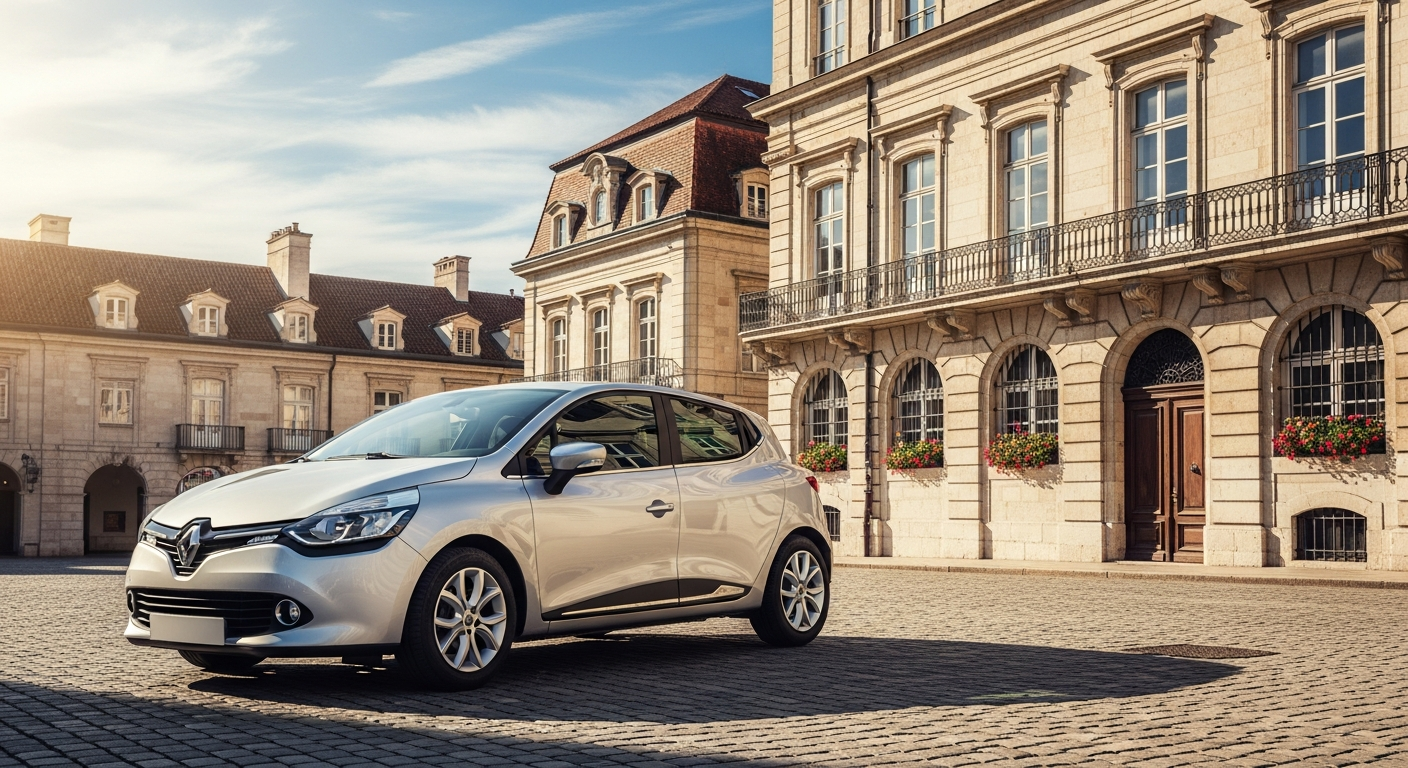
Discover why Europcar’s Economy Car Rental service is perfect for city travelers. Compare costs, fuel efficiency, and vehicle options starting at $25/day. Find your ideal compact car today.
When you're planning a city getaway, every dollar counts—and nearly 60% of urban travelers prioritize fuel efficiency and parking convenience over spacious interiors. The reality of modern city exploration is that you don't need a sprawling sedan or SUV; you need something nimble, affordable, and genuinely practical. Europcar's Economy Car Rental service dominates this segment precisely because it understands what urban explorers actually want.
Europcar's Economy category represents their most accessible entry point into vehicle rental, featuring nimble models like the Fiat 500, Peugeot 208, and Volkswagen Polo. These aren't stripped-down budget cars—they're thoughtfully designed vehicles engineered for European cities where narrow streets and tight parking spaces are the norm. Throughout this guide, I'll break down everything you need to know about maximizing an Economy rental: from real pricing structures and fuel-saving advantages to transmission options and storage realities.
Discover how Europcar Economy rentals can transform your city travel experience.
The Real Cost of Economy Rentals: Breaking Down Europcar's Pricing Structure
Europcar's Economy fleet starts at an appealingly low $25–$45 per day, though actual costs depend heavily on your location, season, and how far in advance you book. Barcelona in July carries a different price tag than the same city in November, and booking three months ahead typically unlocks better rates than securing a vehicle last-minute.
Advance bookings consistently deliver the deepest discounts. Off-season travel—think October through March in most European destinations—offers naturally lower daily rates. Regional pricing variations are substantial; renting in Eastern European cities costs considerably less than major Western European hubs. A Fiat 500 in Prague might run $28 per day, while the same vehicle in Geneva could approach $50.
When comparing across Europcar's categories, the gap becomes clear. An Economy rental costs roughly 30% less than a Mid-Size sedan and 50% less than a Premium SUV. Those savings accumulate rapidly over a week-long trip.
Hidden fees warrant careful attention. Airport pickups typically add 15–25% to your base daily rate. Insurance options range from basic coverage (often included with credit cards) to comprehensive policies. Fuel policies matter significantly—prepaying for a full tank sometimes saves money, though pay-as-you-go works better if you're uncertain about mileage.
Long-term rentals unlock weekly rate discounts, often reducing per-day costs by 10–15%. Loyalty program members access additional reductions. Currency considerations affect international renters; booking in your home currency sometimes locks in better rates than paying in local currency upon arrival.
Perfect Vehicle Matches: Understanding Europcar's Economy Fleet
The specific models available depend on your rental location. Across Europe, you'll encounter the Fiat 500 (iconic and compact), Peugeot 208 (slightly roomier), Volkswagen Polo (known for reliability), and regional equivalents like the Citroën C1 or Opel Corsa.
These vehicles share optimized compact dimensions—typically around 3.9 meters long and 1.7 meters wide—engineered specifically for tight European parking spaces. You can parallel park into gaps that would seem impossible in larger vehicles. Seating capacity reaches four or five passengers, though rear passengers on longer drives start feeling the space constraints. Luggage space realistically accommodates two carry-on bags plus a backpack; weekend trips work perfectly, but extended journeys require strategic packing.
Automatic transmission availability at approximately 60% of Europcar's Economy fleet matters significantly for international drivers. Manual transmission options remain available and sometimes cost slightly less per day, though the savings rarely exceed $3–5. Manual transmissions often deliver marginally better fuel economy, while automatics provide undeniable convenience in unfamiliar cities with heavy traffic.
Engine specifications in Economy vehicles typically feature 1.0–1.2 liter engines producing 60–110 horsepower—adequate for city driving and highway cruising, though acceleration feels leisurely when passing on open roads. Interior comfort includes air conditioning (essential in summer), radio with smartphone integration, and basic climate controls. Modern safety technology increasingly appears even in Economy models, with many vehicles offering automatic emergency braking and lane departure warnings.
Fuel Efficiency as Your Hidden Savings Account
Economy vehicles average 45–55 miles per gallon in real-world driving, substantially outpacing Mid-Size sedans at 35–42 MPG and SUVs at 25–30 MPG. Over a two-week rental, this fuel efficiency difference can mean $50–100 in savings.
Highway driving slightly reduces fuel economy, while city driving in stop-and-go traffic increases consumption. Eco-driving techniques specific to compact vehicles—maintaining steady speeds, avoiding rapid acceleration, and minimizing air conditioning use—can push consumption toward 55–60 MPG. Fuel tank capacity typically sits around 40–45 liters, offering realistic range of 450–550 kilometers between fill-ups.
Europcar's fuel policy options deserve careful evaluation. Prepaying for a full tank locks in fuel prices at the rental rate (typically higher than gas station prices), yet eliminates the scramble to refuel before returning the vehicle. Pay-as-you-go works best if you're comfortable tracking consumption and finding gas stations near your return location.
Over a week-long trip covering 1,200 kilometers, an Economy car consuming 50 MPG costs roughly €80–90 in fuel. The equivalent Mid-Size sedan costs €120–140. That €40–50 difference compounds significantly on extended journeys.
Start maximizing your travel budget with Europcar Economy rentals today.
Urban Navigation: Why Compact Cars Excel in City Environments
Compact cars navigate European city streets with genuine advantage. Barcelona's Gothic Quarter, Rome's historic center, and Amsterdam's canal-side lanes feature passages where larger vehicles struggle. The superior maneuverability of a 3.9-meter vehicle versus a 4.7-meter sedan translates into genuine stress reduction when threading through medieval street layouts.
Parking advantages are equally compelling. A Fiat 500 fits into spaces where a larger sedan simply won't fit—period. Crowded city centers where street parking dominates benefit enormously from compact dimensions. You'll find spots that remain empty for larger vehicles.
Visibility and handling characteristics favor city driving. Smaller vehicles offer better sightlines around corners, reduced blind spots, and tighter turning radius. Complex urban intersections with multiple traffic streams feel less intimidating in a nimble compact compared to a larger sedan.
Stress-free driving in congested traffic conditions becomes possible when your vehicle responds immediately to steering inputs and stops quickly. Pedestrian-friendly dimensions reduce accident severity; the physics simply work differently in lighter, smaller vehicles.
Barcelona, Rome, Paris, and Amsterdam represent ideal destinations for Economy rentals. These cities charge congestion fees for larger vehicles, limit driving in historic centers based on vehicle size, and feature parking spaces designed for European compacts. Garage and street parking success rates with compact models approach 95% in major European cities; larger vehicles sometimes face genuine availability challenges.
Transmission Choices: Manual vs. Automatic in Europcar's Economy Fleet
Approximately 60% of Europcar's available Economy vehicles feature automatic transmission, a substantial shift from previous decades. For drivers unfamiliar with manual shifting or navigating new locations, automatics eliminate a genuine stressor.
Manual transmission makes financial sense only if you genuinely prefer it or seek the marginal fuel efficiency gain (typically 2–3%). Driver comfort considerations for unfamiliar locations generally favor automatics; wrestling with clutch control in Rome's chaotic traffic isn't how you want to spend your vacation.
Fuel efficiency differences between transmission types have largely vanished in modern vehicles; modern automatics match or exceed manual efficiency. Booking strategies to guarantee your preferred transmission involve explicitly selecting transmission type during the reservation process and confirming your choice via email to the rental location.
Regional preferences show interesting patterns. Germany and Eastern Europe see higher manual transmission utilization, while Scandinavian countries heavily favor automatics. Learning curve and safety considerations matter most if driving in an unfamiliar country; unfamiliar manual transmissions have caused rental accidents. The additional cognitive load of managing a clutch while navigating unfamiliar roads simply isn't worth it.
Who Should Book an Economy Rental (and Who Shouldn't)
Economy rentals excel for solo travelers tackling city exploration on limited budgets. Couples traveling together find Economy vehicles perfectly adequate for typical city breaks and short road trips. Small families with one or two children work well, assuming luggage expectations remain realistic.
Budget-conscious explorers prioritizing cost savings over luxury find Economy rentals deliver exceptional value. Urban navigation requiring frequent parking plays directly to compact vehicle strengths. Short-distance journeys and day trips represent ideal Economy use cases.
Economy rentals aren't ideal for large families requiring spacious interiors—five adults plus luggage creates genuine discomfort. Road trips demanding significant cargo capacity exceed Economy limitations. Travelers seeking luxury features and premium comfort will feel disappointed by basic amenities. Extended journeys with multiple passengers and luggage strain both vehicle capacity and passenger patience.
Practical Limitations: What Economy Renters Should Expect
Limited luggage space requires strategic packing. Two medium suitcases or equivalent fill the trunk; adding a roof rack expands capacity but increases wind noise and fuel consumption.
Reduced passenger comfort on longer drives becomes apparent after 5–6 hours; rear passengers especially notice space constraints. Lower power output compared to larger vehicle categories means acceleration feels leisurely; highway passing requires planning ahead.
Minimal luxury amenities mean no premium sound systems, panoramic sunroofs, or heated seats. Potential noise levels at highway speeds can feel higher than larger vehicles, though modern Economy cars have improved soundproofing substantially. Air conditioning effectiveness varies; extremely hot climates sometimes challenge single-zone climate control in compact vehicles.
Ground clearance limitations create issues on unpaved roads; mountain village access via gravel tracks sometimes exceeds what compact vehicles handle gracefully. Towing capacity—if relevant—sits at zero for most Economy models.
Booking Strategies That Maximize Your Economy Rental Value
Timing your reservation around shoulder seasons delivers optimal rates. September and April typically offer lower prices than peak summer or winter holidays. Flexible dates and their impact on daily pricing can mean 20–30% savings for off-peak travel.
Location selection matters substantially; city center pickups cost less than airport locations. Membership programs including loyalty discounts, corporate accounts, or aggregator memberships (Autoslash, Kayak) unlock additional savings. Insurance options require careful evaluation—your personal auto insurance or credit card coverage might already protect rental vehicles, eliminating duplicate expense.
Fuel prepayment versus pay-as-you-go decision-making hinges on your driving behavior. Prepayment works if you'll consume most of the tank; pay-as-you-go suits lighter usage. Upgrade opportunities sometimes warrant consideration—if a Mid-Size sedan costs only $5 more per day and you're feeling space constraints, upgrade appeal becomes real.
Real Traveler Experiences: Economy Rental Success Stories
A Barcelona weekend explorer booked a Fiat 500 and discovered parallel parking in Gothic Quarter alleyways suddenly became achievable. The compact dimensions transformed what could have been a parking nightmare into a genuine advantage.
Frequent budget renters consistently report that Economy vehicles deliver 80–90% of the comfort of larger categories at 40–50% of the cost. Unexpected advantages emerge constantly—easier visibility around corners, reduced anxiety in heavy traffic, friendly parking attendants who favor compact vehicles.
Challenges do occur. One renter underestimated luggage space for a two-week trip, learning painfully that four weeks' worth of clothing doesn't fit. The solution: shipping items ahead or accepting that laundry happens during travel.
Fuel efficiency wins accumulate. A traveler covering 2,000 kilometers reported total fuel costs of €130 versus an estimated €200+ for an equivalent larger vehicle. Parking victories in notoriously difficult centers like Rome and Paris regularly reward Economy renters with available spots when larger vehicles circle endlessly.
Family trips work brilliantly with compact vehicles when expectations align with actual capacity. One family with two children under eight completed a three-week European journey in a Peugeot 208, proving that space constraints matter less than realistic planning.
Comparing Europcar Economy to Competitor Offerings
Europcar's Economy pricing stacks competitively against Hertz and Avis, often matching or undercutting competitor rates for identical vehicle classes. Fleet quality shows Europcar maintaining vehicle condition standards matching larger competitors; all three companies rotate newer vehicles into Economy fleets regularly.
Transmission options across rental companies show similar patterns—approximately 60% automatic availability industry-wide. Customer service and support differences matter; Europcar's mobile app and customer service responsiveness rank well against major competitors. Fuel efficiency standards in the Economy category remain consistent across companies; all offer 45–55 MPG vehicles.
Availability and location network advantages favor Europcar in European markets, with particularly strong presence in major cities and secondary locations. Insurance and protection plan variations exist; Europcar's options compare favorably without standout differentiation. Overall value proposition positions Europcar Economy rentals as competitive choices for budget-conscious renters prioritizing straightforward, reliable service.
Your Smart Choice for Savvy City Travel
Europcar's Economy Car Rental service delivers exactly what budget-conscious travelers need: affordable daily rates starting at just $25–$45, fuel-efficient vehicles that stretch your rental budget further, and compact dimensions that make urban exploration genuinely enjoyable. The Economy category shines brightest for solo travelers, couples, and small families tackling city breaks where parking space is premium and fuel costs matter.
While luggage space remains limited and luxury features take a backseat, these trade-offs deliver substantial savings that most renters happily accept. The approximately 60% automatic transmission availability removes friction for international drivers, and the widespread fleet availability across Europcar's global network means you'll find your ideal compact car almost anywhere.
Ready to book your next adventure without breaking the bank? Start by checking availability for your destination, comparing daily rates across different seasons, and securing an Economy rental that matches your travel style.
Book your Europcar Economy rental now and start exploring Europe affordably.