
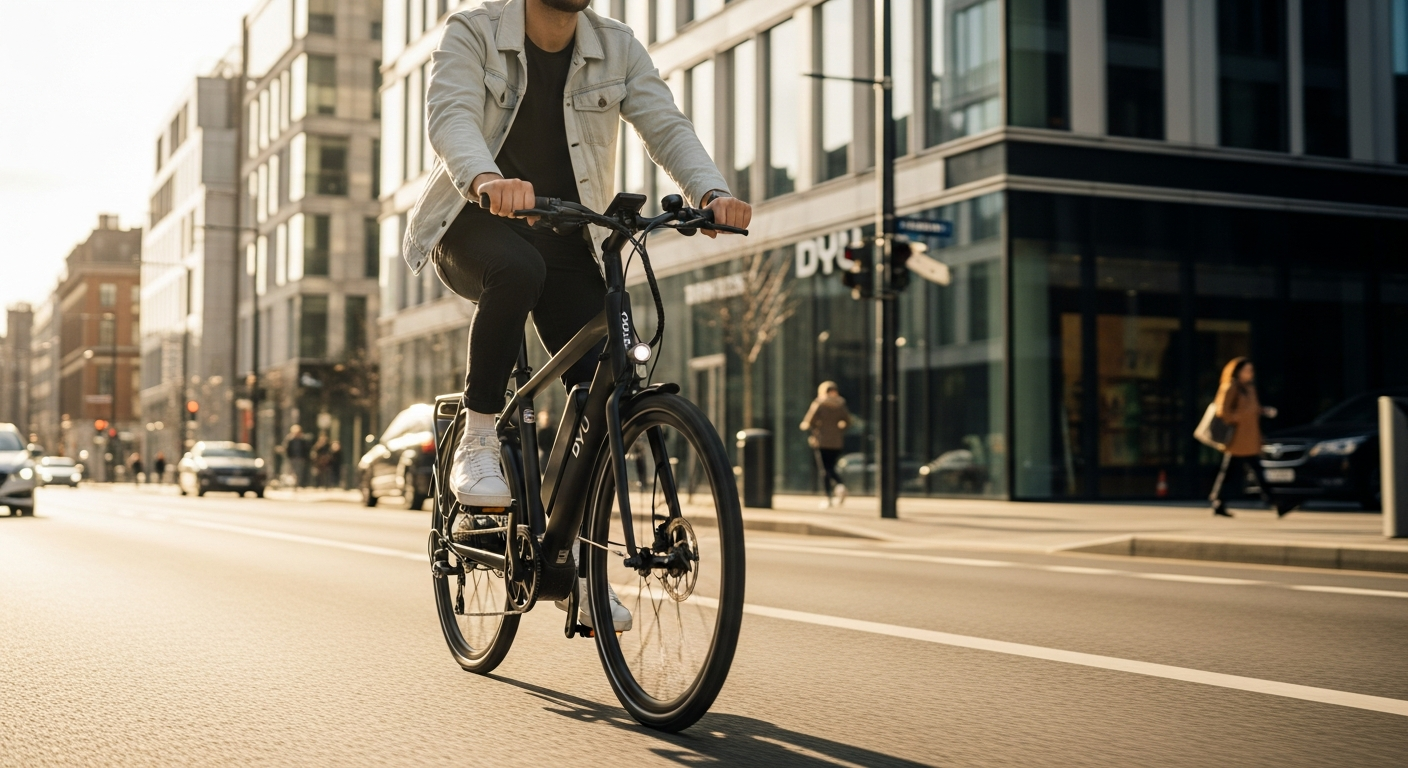
Discover who benefits most from the DYU D3F Mini Folding Electric Bike. Explore ideal use cases, rider profiles, and lifestyle applications for this affordable, portable e-bike in 2026.
Nearly 40% of urban commuters report spending over $200 monthly on transportation costs—yet most haven't considered a mini folding e-bike as a serious alternative. The assumption persists that electric bikes are either expensive luxury items or novelty toys, when in reality, a growing segment of riders have discovered practical, affordable solutions that genuinely reshape their daily mobility.
This isn't your typical e-bike review focused on specs and numbers alone. Instead, we're examining the real people behind the DYU D3F purchase: apartment dwellers reclaiming closet space, multi-modal commuters seeking flexibility, budget-conscious newcomers testing the waters, and weekend adventurers hungry for accessible fun. Understanding who benefits most from this bike reveals why it's become one of DYU's best-selling products.
Discover if the DYU D3F Mini Folding Electric Bike matches your lifestyle and transportation needs.
Throughout this guide, you'll discover the specific lifestyle profiles that align perfectly with the D3F's strengths, examine use cases ranging from apartment living to recreational riding, and identify whether it fits your personal transportation puzzle.
The Urban Apartment Dweller's Commute Solution
City living demands creative solutions to space constraints. The DYU D3F addresses one of urban renters' most persistent frustrations: where to store a bike when square footage is precious and closet space is already maxed out.
How the 18 kg lightweight frame and folding design solve the apartment storage problem
The D3F weighs around 18 kg (38 lbs), making it genuinely portable rather than just theoretically foldable. Compare this to traditional e-bikes at 25–30 kg, and apartment dwellers immediately recognize the difference when moving it up three flights of stairs or maneuvering it through hallways. The folding mechanism collapses the frame into a compact footprint, transforming it from a bike into something closer to a large suitcase.
Storage versatility: fitting the D3F in closets, under beds, and car trunks without sacrificing living space
Apartment living means making ruthless space decisions. The D3F fits vertically in a standard closet corner, slides under most bed frames without modifications, and nestles neatly in compact car trunks alongside groceries. Renters frequently mention that unlike traditional bikes—which demand dedicated wall mounts, hooks, or an entire corner of the living room—the D3F genuinely disappears from sight.
Last-mile connectivity for those using public transit and bike combination commuting
Many urban commuters use buses or trains for primary transportation, then need something compact for the final mile. The D3F's portability transforms this scenario. Fold it, carry it aboard transit without resistance (many systems allow folded bikes), then unfold and ride the remaining distance to your actual destination. This hybrid approach eliminates the frustration of public transit schedules while preserving the flexibility of personal transportation.
The Multi-Modal Commuter's Secondary Transportation
The D3F excels when transportation isn't one-dimensional. These riders aren't choosing between driving or biking—they're combining multiple modes throughout their week, and the D3F adapts to each scenario.
Why the D3F excels as a secondary bike for mixed-mode commutes and flexible travel
Multi-modal commuters value flexibility over specialization. Mondays might involve driving to a train station, taking the train downtown, and biking the final 3 km. Wednesdays might be direct car drives. Fridays could mean taking the bus to a park and cycling local neighborhood errands. The D3F doesn't demand full commitment as a primary bike—it excels as the adaptable option that fits various weekly scenarios without dominating your storage space or financial investment.
Car trunk compatibility for spontaneous cycling opportunities throughout your week
A bike permanently stored in a car trunk creates spontaneous possibilities. Arrive early for a meeting? Take a 20-minute D3F ride around the neighborhood. Client cancellation freed up your afternoon? The bike's already with you. Unlike larger e-bikes that demand planning and logistics, the D3F invites casual, unscheduled riding simply because it's conveniently present. This spontaneity—the ability to cycle without advance preparation—appeals strongly to commuters who value flexibility.
Train plus bike commuting workflows and the D3F's portability advantage over traditional bikes
Train stations and bike compatibility have always created logistical friction. Traditional bikes require racks, cable locks, and worry about theft at busy terminals. The D3F changes this calculation. You carry it aboard (most transit systems permit folded bikes), keep it with you, and eliminate the vulnerability of leaving a bike unattended during your commute. This security benefit, combined with portability, makes the D3F unusually practical for train commuters.
The Budget-Conscious Entry-Level Rider Profile
E-biking carries an intimidating price tag for newcomers. The DYU D3F removes this barrier, offering access at price points ($167–$581) that feel approachable rather than financially daunting.
Price accessibility at $167–$581 range removing financial barriers to e-biking
Traditional e-bikes routinely exceed $1,500, pricing out curious riders who want to test the experience without major financial commitment. The D3F's broad discount range—from discounted pricing in the low hundreds to standard retail around $479–$756—creates an entirely different calculus. First-time e-bike buyers can explore the category affordably, discovering whether electric biking genuinely improves their lives or remains an unfulfilled fantasy.
Building confidence before investing in premium e-bike models and expensive equipment
Skeptical potential riders benefit tremendously from low-stakes introduction. Spending $200–300 on a D3F to test whether you'll actually use an e-bike is fundamentally different from investing $2,000 in a premium model. This entry-level positioning allows newcomers to build skills, understand their actual commuting preferences, and make informed decisions about upgrading before committing substantial money.
Testing whether electric biking fits your lifestyle without major financial commitment required
Some people discover they love e-biking and immediately upgrade. Others realize they prefer traditional cycling or cars. Still others find the D3F perfectly adequate and never feel the need to spend more. The affordability allows all three outcomes without regret or financial strain. You're testing a hypothesis about your transportation preferences, not mortgaging your bike investment.
Explore the DYU D3F as your affordable entry into electric biking today.
The Recreational Weekend Cyclist
Beyond commuting, the D3F attracts riders seeking fun rather than utility. These cyclists value the experience itself—the enjoyment of riding—over optimizing transportation efficiency.
Designing short recreational trips within parks and neighborhoods using the 50 km range
The D3F's 50 km range proves more than adequate for recreational cycling. Weekend loops around your neighborhood, park explorations, café rides to nearby destinations—all fit comfortably within this capability. You're not pushing the bike to its limits; you're using a fraction of available range for casual, unstructured riding where discovery matters more than speed.
The fun factor riders consistently praise in D3F reviews and community feedback
DYU D3F owners frequently mention "fun" in reviews and community discussions. This word choice reveals something important: the bike delivers enjoyment beyond functional utility. The compact size, responsive handling, and accessible speed create an engaging riding experience. Riders describe it as genuinely fun rather than as serious transportation—permission to enjoy the ride itself rather than optimize for arrival time.
Comfortable riding posture for leisurely pace cycling and casual exploration adventures
The D3F's ergonomic design with an adjustable saddle and hydraulic shock absorption supports relaxed, upright riding posture. This matters enormously for recreational cycling where you're not hunched forward in performance mode but sitting comfortably, experiencing the surroundings, and enjoying the slow-speed exploration. Casual riders appreciate that they can pedal for an hour without fatigue or discomfort.
The Space-Constrained Household Scenario
Family homes and shared housing often struggle with bike storage. Multiple household members cycling creates logistical nightmares when space is limited. The D3F solves this differently.
Managing multiple bikes in homes with minimal storage capacity and limited garage space
Households with two or three cyclists quickly face a storage crisis. Each traditional bike demands floor space, wall mounts, or garage real estate. The D3F's compact folded dimensions allow stacking multiple bikes efficiently. Three D3F units, folded and stored in a closet corner, occupy less space than one traditional bike with handlebars extended. This efficiency transforms the storage equation entirely for space-conscious families.
The D3F as a practical alternative to traditional bikes for shared households and families
Shared housing—roommates, extended family, co-living arrangements—benefits from the D3F's minimal footprint. Individual cyclists maintain their own transportation without creating household friction over storage or space allocation. Each person can own their own D3F without collective space strain.
Portability benefits for families with children and younger riders within 120 kg weight capacity
The D3F accommodates riders up to 120 kg (265 lbs), creating accessibility across different family members. Younger or lighter-weight riders find the geometry comfortable, while the 240W motor provides adequate power across this weight range. The lightweight frame means even younger riders can handle the bike independently when folded, increasing household accessibility.
The Eco-Conscious Consumer's Sustainability Journey
Environmental motivation increasingly drives transportation choices. The D3F offers a tangible way to reduce carbon impact without requiring major lifestyle restructuring.
Reducing carbon footprint through electric bike adoption and sustainable commuting choices
Each car trip generates measurable carbon emissions. The D3F eliminates dozens of short trips annually—apartment to office, home to market, neighborhood explorations previously made by car. Across a year, this compounds into meaningful carbon reduction. For environmentally conscious consumers, the D3F represents concrete action rather than abstract commitment.
Offsetting short car trips without full vehicle ownership commitment or environmental guilt
Not everyone can eliminate car ownership entirely, nor should they feel compelled to. The D3F addresses a specific opportunity: short trips within a few kilometers where cars are least efficient. By replacing these segments with electric biking, you're focusing on the highest-impact opportunities for personal carbon reduction. This pragmatism appeals to realistic environmentalists who prioritize effectiveness over purity.
Supporting sustainable transportation infrastructure in your community and local environment
D3F adoption represents market demand for electric mobility, influencing local infrastructure investment and community transportation priorities. When enough residents choose e-bikes, cities notice and allocate resources accordingly—bike lanes, charging stations, protected infrastructure. Your individual D3F purchase participates in this broader shift toward sustainable transportation systems.
Performance Expectations Across Different Rider Types
Understanding how the D3F actually performs across various conditions prevents disappointment and clarifies realistic expectations.
How the 240W motor performs for different weight categories and various terrain types
The 240W motor provides modest but capable power. Lighter riders (under 70 kg) experience responsive acceleration and manageable hill climbing. Riders at the upper end of the 120 kg capacity encounter more sluggish performance, particularly on inclines. Terrain matters significantly—flat urban streets feel peppy and engaging, while sustained hills demand patient effort. The motor isn't designed for high-performance climbing or rapid acceleration; it's calibrated for comfortable, accessible urban riding.
Battery longevity and charging patterns for various daily usage scenarios and commute distances
The 36V 10Ah (360Wh) battery delivers approximately 50 km on a single charge under ideal conditions. Real-world range varies with rider weight, terrain, weather, and riding style. A 10 km commute consumes roughly one-fifth of battery capacity, allowing five commutes per charge. Daily 15 km commutes mean charging every three days. Extended recreational rides approaching 40–50 km benefit from full charges. Most owners report charging 2–4 times weekly during active riding seasons, requiring minimal disruption to daily routines.
Dual disc brake reliability across different riding styles, conditions, and weather situations
Dual disc brakes provide reliable, responsive stopping power across various conditions. Mechanical disc brakes (common on D3F models) offer satisfactory performance for urban speeds and casual riding. They require periodic maintenance in wet climates but deliver consistent stopping ability. Riders generally report confidence in the braking system for city commuting and recreational use, though performance technicians note that mechanical systems demand more frequent adjustment than hydraulic alternatives.
Where the D3F Doesn't Fit: Honest Limitations
The D3F excels for specific use cases but genuinely underperforms in others. Recognizing these boundaries prevents frustration and supports better purchasing decisions.
Long-distance commuting beyond 40 km daily and range anxiety concerns for extended trips
If your daily commute exceeds 30–40 km, the D3F's 50 km range creates anxiety. You're consuming most or all battery capacity on a single commute with minimal buffer. Long-distance commuters need bikes designed for extended range, not compact portability. The D3F's strength—lightweight compactness—directly conflicts with the heavier batteries required for 60+ km daily ranges.
Heavy cargo transport and load-carrying limitations for serious delivery or hauling needs
The 120 kg weight capacity includes rider weight, leaving minimal cargo capacity. Serious delivery riders, those hauling significant packages, or cyclists carrying professional equipment find the D3F inadequate. Its frame lacks cargo-focused geometry and structural reinforcement. This isn't a limitation but rather a design choice prioritizing personal transportation over utility hauling.
Off-road or technical trail riding beyond the bike's design scope and capability limits
The D3F's 14-inch wheels and city-focused geometry don't suit mountain biking or technical trails. The motor and brakes lack the power and precision required for serious off-road riding. Rough terrain, jumps, and technical descents demand different bikes entirely. This is straightforward: the D3F is an urban bike, not an adventure bike.
Real-World Scenarios: When D3F Owners Actually Ride
Abstract specifications matter less than actual usage. Here's how real owners integrate the D3F into daily life.
Morning apartment-to-office commutes within the 5–15 km typical range
An apartment dweller lives 8 km from their office. Previously, they drove (parking $150/month) or took public transit (30-minute commute). The D3F transforms this to a 20-minute ride, eliminating parking stress, checking exercise into their day, and saving time overall. The bike lives folded in their apartment closet—invisible until departure. They ride 4–5 days weekly, charging twice per week, spending negligible electricity costs.
Weekend farmer's market trips, local errands, and spontaneous neighborhood exploration
A suburban household uses their D3F for Saturday farmer's market runs (4 km away), hardware store visits, and casual neighborhood exploration. The lightness means even the non-cyclist household member can handle it. The folding design lets them explore neighborhoods by car on weekend drives, unfolding the bike for 15-minute local explorations. They ride 2–3 times weekly seasonally, discovering neighborhood routes and parks they wouldn't have explored by car.
Park-and-ride scenarios combining car travel with bike segments for flexible commuting
A commuter drives to a train station 2 km from their office, then rides the train downtown and needs to reach their final destination 1.5 km from the station. They keep the D3F folded in their car, unfold it at the destination station, and complete the final segment by bike. This hybrid approach combines the train's efficiency for long distances with the D3F's flexibility for first-mile and last-mile connectivity. They ride 3–5 times weekly as part of their commute pattern.
Making the Purchase Decision: Is the D3F Right for You?
Clarity requires honest self-assessment. These questions separate ideal candidates from those better served by different bikes.
Self-assessment questions to determine lifestyle alignment and actual riding needs
Do you live in an apartment or space-constrained home where storage matters? Do you commute 30 km or less daily, or primarily ride recreationally? Would you use a bike 3+ times weekly, or mostly seasonally? Do you value portability and fun over maximum power and range? Are you budget-conscious or genuinely cost-sensitive? Do you enjoy exploration and casual riding more than goal-oriented commuting?
If you answered yes to most of these, the D3F aligns with your lifestyle. If you answered no to several—particularly regarding distance, storage, and riding frequency—different bikes likely serve you better.
Comparing your actual commute distance against the 50 km range capability
Calculate your realistic daily distance. A 10 km commute uses one-fifth of battery capacity, leaving substantial buffer. A 25 km commute consumes half the range, requiring careful charging between rides. A 40 km commute approaches the limit, demanding full charges between trips. Be honest about actual distance, not theoretical optimistic scenarios. Include your longest anticipated rides, not just typical commutes.
Storage space audit before committing to purchase and delivery arrangements
Measure your closet width and depth, available space under your bed, car trunk dimensions. Verify that your actual storage space accommodates a 30-inch (approximately) folded bike. Visit a local DYU dealer if possible and physically interact with the folded unit to confirm it fits your space. This tangible assessment beats imagining it'll work somehow.
Your Lifestyle, Your Bike: The D3F Equation
The DYU D3F Mini Folding Electric Bike isn't universally perfect—and that's precisely what makes it so effective for specific people. Apartment dwellers reclaiming closet space, multi-modal commuters seeking flexibility, budget-conscious newcomers testing the e-bike waters, and weekend adventurers craving accessible fun all thrive with this model. The bike's 240W motor, 50 km range, and featherweight 18 kg frame create a compelling package for short-distance urban mobility and recreational riding.
What matters most is honest self-assessment. If your daily commute exceeds 40 kilometers, you need serious cargo capacity, or you're planning technical off-road adventures, the D3F signals you toward different options. But if you're juggling apartment living, exploring multi-modal commuting, or seeking an affordable entry point into electric biking, this compact e-bike delivers remarkable value.
Your next step is evaluating where you actually ride, how far you typically travel, and whether portability matters more than raw power. Start by identifying which lifestyle profile resonates most with your situation—that clarity will guide your decision with confidence.