
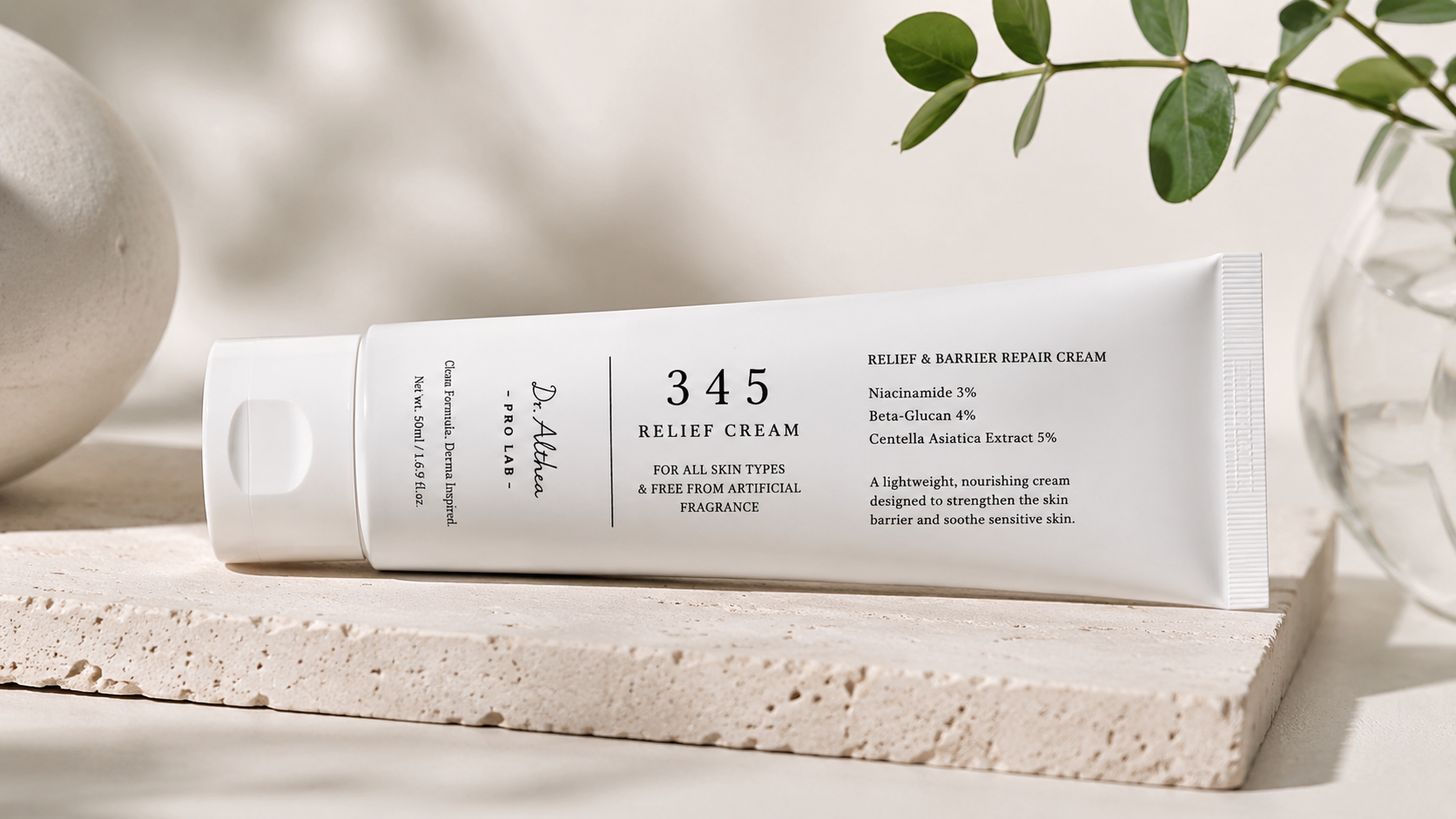
Discover how Dr. Althea 345 Relief Soothing Cream soothes irritated skin, repairs barrier damage, and restores clarity after acne. Lightweight, vegan, and clinically effective—read our complete breakdown.
Over 70% of people who struggle with acne face an even tougher challenge afterward: managing the lingering redness, texture, and sensitivity that post-acne skin demands. The frustration doesn't end when breakouts clear—it transforms into a new battle against inflammation, compromised barriers, and stubborn marks that refuse to fade. I've watched countless skincare enthusiasts search for that one product capable of handling the aftermath of acne without triggering new problems.
The Dr. Althea 345 Relief Soothing Cream emerged as a game-changer precisely because it addresses this specific phase of skin recovery. Rather than treating active breakouts, this lightweight cream specializes in what comes next: calming irritation, restoring barrier function, and gradually improving the appearance of post-acne marks. Its popularity on Farma2go reflects a genuine need among people recovering from acne—a need that standard moisturizers simply don't meet.
Discover how Dr. Althea 345 Relief can transform your post-acne recovery journey.
Throughout this guide, I'll walk you through how this Korean skincare staple tackles the unique challenges of post-acne skin, break down its powerhouse ingredient list, and reveal whether it's worth the investment for your recovery journey. You'll also discover how to layer it effectively for maximum results and understand which skin types benefit most from its restorative formula.
Why Post-Acne Skin Requires Specialized Care
Understanding the damage acne inflicts on your skin barrier and why standard moisturizers fall short
Acne doesn't just leave behind marks—it fundamentally compromises your skin barrier. Active breakouts create inflammation, bacterial colonization, and sebum oxidation that damage the lipid layer protecting your skin. By the time acne clears, your barrier often resembles a fortress with crumbling walls: weakened, depleted, and unable to retain moisture effectively. Standard moisturizers formulated for healthy skin simply don't address this specific trauma.
The difference between treating active acne and repairing post-acne skin concerns
Active acne treatment focuses on bacterial control, sebum regulation, and exfoliation—often through ingredients like salicylic acid, benzoyl peroxide, or retinoids. These are necessary but harsh. Post-acne recovery demands an entirely different approach: barrier restoration, inflammation reduction, and moisture repletion without any irritation. The shift from treatment to recovery requires products designed with gentleness and regeneration as primary objectives.
Common frustrations people face when their skin remains irritated long after breakouts fade
The confusion sets in when acne clears but redness persists. Users report continued sensitivity weeks or months after their last breakout, confusion about whether their skin is still "broken," and frustration when heavy creams trigger new sensitivity. The barrier remains compromised, moisture evaporates rapidly, and any misstep—a new active treatment, overexfoliation, even regular moisturizer—causes setbacks.
How targeted soothing ingredients accelerate the healing process
Ingredients like Centella Asiatica, green tea, and tea tree leaf water aren't just pleasant additions—they're evidence-backed botanical compounds with anti-inflammatory and antimicrobial properties. They signal your skin to reduce inflammation, calm immune responses, and shift from damage-control to healing mode. This targeted approach accelerates recovery far more effectively than generic soothing claims.
The role of barrier repair in preventing future sensitivity and breakouts
A compromised barrier isn't just uncomfortable—it's a gateway to recurring problems. When the barrier weakens, bacteria penetrate more easily, irritants cause disproportionate reactions, and moisture loss triggers compensatory sebum production. Barrier repair with ceramides and humectants isn't a luxury; it's foundational prevention.
Why lightweight formulations matter for recovering skin that's easily overwhelmed
Post-acne skin is hypersensitive and reactive. A rich, heavy cream, even a beneficial one, can trigger irritation simply through texture overload. Lightweight ointment-gel hybrids penetrate easily, deliver active ingredients without suffocation, and feel comfortable on already-stressed skin. The formulation itself communicates: your skin is safe here.
The Science Behind Dr. Althea 345 Relief's Soothing Power
Ceramide NP and Beta-Glucan: how these work together to rebuild a compromised barrier
Ceramides form the structural backbone of your skin barrier—imagine them as mortar between brick cells. Ceramide NP specifically is abundant in healthy human skin and becomes depleted during acne and inflammation. Beta-Glucan, derived from yeast cell walls, reinforces this barrier function while providing additional anti-inflammatory benefits. Together, they don't just moisturize; they reconstruct.
Hydrolyzed Hyaluronic Acid's multi-depth hydration approach for dehydrated post-acne skin
Hyaluronic acid exists in multiple molecular weights. The hydrolyzed form penetrates multiple skin layers simultaneously, delivering moisture to the epidermis while supporting deeper dermal hydration. For post-acne skin losing moisture constantly through its compromised barrier, this multi-layer approach prevents the surface-level hydration that feels temporary and unsatisfying.
Green Tea and Tea Tree Leaf Water: proven anti-inflammatory botanicals that reduce redness
Green tea contains EGCG, a catechin with demonstrable anti-inflammatory and antioxidant properties backed by numerous dermatological studies. Tea tree leaf water provides antimicrobial benefits without the irritation of pure tea tree oil. These aren't trendy ingredients—they're botanical compounds with clinical evidence supporting their use on inflamed, sensitive skin.
Centella Asiatica and Madecassoside: the healing herbs dermatologists recommend for sensitive skin
Centella Asiatica, also called Gotu Kola, has been used in traditional medicine for centuries and is now validated by modern dermatology for wound healing and inflammation reduction. Madecassoside is its active compound, particularly effective at strengthening barrier function and reducing redness. Many dermatologists specifically recommend it for post-inflammatory hyperpigmentation and sensitized skin.
Niacinamide's dual action on blemish marks and pore refinement
Niacinamide (Vitamin B3) doesn't just moisturize—it regulates sebum production, strengthens barrier function, and reduces inflammatory responses. For post-acne marks, it helps regulate melanin production (addressing marks that appear darker than surrounding skin) while simultaneously refining the appearance of enlarged pores that acne often leaves behind.
Resveratrol and Tannic Acid: antioxidant support for brightening and evening skin tone
Resveratrol, found in red grapes, provides antioxidant protection against environmental stressors that can worsen post-acne hyperpigmentation. Tannic acid adds astringent and antioxidant properties, helping to even skin tone and reduce the appearance of marks. These ingredients support the skin's own healing mechanisms rather than forcing results.
Botanical oils (jojoba and sunflower seed) that nourish without clogging pores
Post-acne skin is often dehydrated, but heavy oils trigger panic and new breakouts. Jojoba and sunflower seed oils have molecular structures that don't clog pores while delivering essential fatty acids and vitamin E. They prevent the "tight, uncomfortable skin" feeling that can occur with purely water-based hydration alone.
Texture, Absorption, and Sensory Experience
The ointment-gel hybrid consistency and what it means for application
The ointment-gel hybrid sits between traditional cream and gel—thicker than a serum, lighter than a rich cream. This consistency matters because it prevents the suffocating feeling of heavy products while delivering occlusive benefits of ointments. Application feels luxurious without the greasiness users on acne-prone skin fear.
Why fast-absorbing formulas matter when skin is already irritated
Irritated skin can't handle waiting. Products that sit on the surface feel uncomfortable, trap heat, and trigger reactive inflammation. Dr. Althea 345 Relief absorbs within minutes, allowing skin to breathe while still locking in hydration. This speed prevents the "product sitting on my skin" discomfort that can frustrate people with compromised barriers.
The silky finish that leaves skin balanced without greasy residue
The sensory experience of skincare matters—a lot. Users report that the silky finish feels comforting rather than clinical, leaves skin feeling balanced rather than either tight or slick, and creates an ideal base for makeup or additional products without the heavy feeling that can trigger sensitivity.
How the lightweight texture prevents the heavy cream feeling that can trigger sensitivity
Heavy, occlusive creams can paradoxically trigger irritation in post-acne skin by trapping bacteria, heat, and inflammation. The lightweight formulation prevents this by allowing skin to breathe while still providing barrier support. For people with acne-prone skin conditioned to fear thickness, this lighter approach feels psychologically safer while remaining effective.
Comparing the sensory experience to other post-acne recovery creams
Many post-acne creams prioritize richness, assuming barrier repair requires maximum occlusion. Dr. Althea 345 Relief differentiates by balancing occlusion with breathability—more effective for sensitive, combination, and acne-prone skin types than heavier alternatives that feel uncomfortable and trigger defensive sebum production.
Real user feedback on how the cream feels during and after application
Users consistently report satisfaction with the texture itself. Comments highlight "doesn't feel heavy," "absorbs quickly," "leaves skin smooth," and "comfortable under makeup." The sensory experience creates positive reinforcement for consistent use—a critical factor in skincare routines where people abandon products that feel uncomfortable even if they're beneficial.
Ideal Candidates: Which Skin Types Benefit Most
Sensitive and acne-prone skin: the primary audience for this cream
This cream is engineered specifically for the person whose skin reacts to everything. Fragrance-free, vegan, and non-comedogenic formulation means you're not introducing new irritants while your barrier recovers. The gentle soothing botanicals calm reactive skin without the aggression of treatment-focused products.
Combination skin with dehydrated zones and post-acne marks
Combination skin presents a unique challenge: oily zones and dehydrated zones often coexist, particularly during recovery. The lightweight, non-comedogenic formula hydrates dehydrated areas without triggering congestion in oilier zones. Post-acne marks across the face benefit from the brightening and soothing ingredients without overwhelming any particular area.
Individuals recovering from severe breakouts or hormonal acne cycles
People cycling through hormonal breakouts need a product that supports their skin during flare cycles without waiting for a "perfect" skin state. Dr. Althea 345 Relief works as a constant, gentle support throughout the hormonal calendar, reducing overall inflammation and barrier stress even during active breakout phases.
Those with compromised barriers seeking barrier-repair focused products
If your skin burns with standard products, feels tight and uncomfortable despite moisturizing, or reacts dramatically to mild irritants, your barrier is compromised. This cream's ceramide and beta-glucan focus makes it ideal for barrier-specific repair rather than general-purpose moisturizing.
Skin types that react negatively to heavy creams or fragrance-laden formulas
For people with compromised skin, heavy creams feel suffocating and fragrances trigger irritation. The fragrance-free, lightweight formula removes two major irritation sources while maintaining efficacy. This audience has often abandoned traditional moisturizers due to negative reactions.
Why vegan and fragrance-free formulations matter for recovering skin
Vegan formulations exclude animal-derived ingredients that can carry higher contamination risks and trigger sensitivity. Fragrance-free formulations eliminate one of the most common irritants. These aren't marketing choices—they're practical decisions that reduce irritation risk for vulnerable skin.
When this cream works best as part of a layered routine versus standalone use
For mild post-acne concerns with robust barrier function, Dr. Althea 345 Relief often works standalone. For severe barrier compromise or extensive post-acne marks, it works best as a core layer in a strategic routine combining hydrating toners, targeted serums, and appropriate sunscreen. The assessment depends on your specific damage level and recovery phase.
Layering Strategies for Maximum Effectiveness
Using Dr. Althea 345 Relief as a base layer in your post-acne recovery routine
Apply Dr. Althea 345 Relief after your hydrating toner or essence but before targeted serums. Its ceramide-rich base creates an ideal foundation for other actives, allowing them to penetrate while the cream buffers irritation. This positioning optimizes barrier support while delivering additional treatments.
Pairing with lightweight hydrating toners for enhanced moisture penetration
Apply a hydrating toner first—something with hyaluronic acid or glycerin—then layer Dr. Althea 345 Relief while skin is still slightly damp. This traps moisture at the skin surface, enhancing hydration effectiveness. The cream's ceramides then seal this moisture in, creating multi-layer protection.
Combining with targeted serums addressing specific post-acne concerns (redness, texture, marks)
Niacinamide serums amplify pore-refinement benefits. Vitamin C serums enhance the brightening action. Azelaic acid serums address post-inflammatory hyperpigmentation. Apply serums before the cream, allowing them to penetrate, then seal with Dr. Althea 345 Relief to prevent irritation and maximize absorption.
The best time to apply: morning versus evening routines
Morning application works well when you layer with sunscreen—the cream provides barrier protection during the day, and SPF protects healing skin from UV damage that worsens post-acne marks. Evening application allows slightly richer layering and longer absorption time without concern for makeup compatibility. Many users apply both morning and evening for accelerated recovery.
How much product you actually need to avoid the shiny appearance some users report
A pea-sized amount for the entire face usually suffices. Users reporting shine typically over-applied. Start conservatively, increase gradually, and remember that the lightweight formula doesn't require generous amounts. Proper amount feels nourishing without feeling heavy or slick.
Layering with sunscreen during the day without compromising the soothing benefits
Allow Dr. Althea 345 Relief to fully absorb (3-5 minutes), then apply sunscreen. Most lightweight sunscreens layer well over this cream without causing pilling or discomfort. Some users prefer mixing a small amount of sunscreen into the final layer for seamless integration. Never skip sun protection during post-acne recovery—UV exposure darkens marks significantly.
When to add a richer occlusive layer for very dry or severely compromised skin
If your skin remains tight despite Dr. Althea 345 Relief, or if you're dealing with extremely severe barrier compromise, add a richer occlusive like a facial oil or heavier cream on top. This layering approach—lightweight soothing base plus richer occlusion—often works better than a single heavy product for very dry skin types.
Real Results: What Users Actually Experience
Timeline expectations: when you'll notice reduced redness and irritation
Most users report noticeable reduction in redness and irritation within 7-10 days of consistent use. The anti-inflammatory botanicals work relatively quickly, and reduced irritation is usually the first visible benefit. This early success builds momentum for consistent use during the longer barrier-repair timeline.
Barrier repair improvements and how they manifest in daily comfort
Barrier repair is progressive. The first sign is reduced reactivity—your skin stops burning with products that previously irritated it. Next comes the disappearance of tightness and discomfort, even before visible improvements. Around 2-3 weeks, users report that their skin feels "normal" again rather than constantly stressed. This comfort is perhaps the most meaningful improvement.
Post-acne mark fading: realistic expectations versus marketing claims
Be honest: a moisturizer can't eliminate deep pitted scars or severe post-inflammatory hyperpigmentation. What it can do is reduce the appearance of mild to moderate marks through improved skin texture, even tone, and reduced inflammation. Combined with targeted treatments and time, the supportive benefits become visible. Expect gradual subtle improvements over 4-8 weeks rather than dramatic transformations.
Feedback from sensitive skin users on tolerance and non-irritation
The consistent feedback from sensitive skin users is straightforward: this doesn't irritate. People with reactive skin often report using it without the defensive reactions they experience with other products. The fragrance-free, gentle formula proves genuinely suitable for compromised skin, not just marketing-friendly.
Reviews from combination and oily skin types regarding weight and shine
Combination and oily skin users report success when applying appropriate amounts. The lightweight formula doesn't trigger the compensatory sebum production that heavy creams activate. Some users note that proper hydration actually reduces oiliness in the long term because their skin isn't dehydrated and overcompensating.
Honest accounts from very dry skin users about layering needs
Very dry skin users are direct: this works well as a base layer but often needs additional occlusion. Rather than this being a product failure, it reflects realistic assessment that very dry skin requires layering strategies, not single-product solutions. Users appreciate the foundation it provides when combined with richer products.
Before-and-after observations from consistent users over 4-8 weeks
The most compelling feedback comes from users documenting 4-8 week timelines. Redness reduction is visible and consistent. Skin texture improves as barrier function returns. Post-acne marks appear less noticeable as overall skin quality improves. These aren't dramatic transformations but meaningful, measurable improvements reflecting genuine barrier repair and soothing benefits.
Pricing, Value, and Where to Buy
Current price range (€15-€25 on Farma2go) and regional variations
The 50ml size typically costs €15-€25 on Farma2go, positioning it as affordable skincare rather than luxury product. Regional variations exist, with some retailers listing it around $27.00 USD or ₹2,374 in other markets. Price varies by retailer, retailer location, and current promotions.
How to spot discounted rates and seasonal promotions
Farma2go regularly offers promotional pricing, particularly during seasonal sales or bulk purchases. Subscribe to retailer newsletters for promotional notifications. Bundle purchases often provide better per-item pricing than single products. First-time customer discounts may apply at some retailers.
Comparing cost-per-use when incorporated into a complete routine
A pea-sized amount lasts approximately one week when used daily. The 50ml size provides roughly 8-10 weeks of use, equating to €1.50-€3.00 per week. Compared to professional treatments or luxury skincare, the cost-per-use is genuinely economical, especially considering its role in preventing more expensive dermatological interventions.
Availability across different retailers and international shipping options
Dr. Althea 345 Relief is widely available on Farma2go, which ships internationally. Regional availability varies—it's more readily available in Europe and Asia than North America. Check international shipping costs before purchasing, as these can affect overall value. Some retailers offer free shipping thresholds that make bundled purchases more economical.
Whether the 50ml size justifies the investment for daily use
For daily use, the 50ml size represents reasonable value—8-10 weeks of use for €15-€25. If you intend to use it occasionally or as part of a massive skincare collection, the longevity justifies the smaller bottle size. For committed daily use during post-acne recovery phases, it's appropriately sized.
Return policies and guarantees from trusted retailers
Farma2go typically offers return policies within 14-30 days for unopened products. Open products may have restrictions depending on the retailer's policy. Reputable retailers stand behind their products, so purchase from established vendors rather than unofficial channels to ensure return access if needed.
Subscription or bundle options that increase value
Some retailers offer subscription services for routine replenishment at slight discounts. Bundling Dr. Althea 345 Relief with complementary products (toners, serums, sunscreen) often reduces per-item cost. Investigating these options at purchase can increase overall value significantly.
Potential Limitations and Who Should Reconsider
Why very dry skin types may need additional occlusive products
This cream prioritizes lightweight, breathable hydration. For skin so dry it's cracking, flaking, or extremely uncomfortable, a single lightweight product often doesn't provide sufficient occlusion. Very dry skin types should view this as a component of a layered routine rather than a standalone solution.
The reality check for users expecting dramatic post-acne mark elimination
Marketing can create impossible expectations. This cream won't eliminate pitted scars, deep atrophic marks, or severe hyperpigmentation. It supports the appearance of mild marks through improved texture and tone but isn't a replacement for professional treatments when marks are pronounced. Approach with realistic expectations.
Oily skin considerations when applying adequate amounts
While the lightweight formula suits oily skin generally, applying excessive amounts can create shine. Oily skin users need to find their minimal effective dose—often less than other skin types require. This isn't a product failure but a calibration requirement.
Texture preferences: why some users find it feels basic or uncomfortable
Skincare is subjective. Some users find the ointment-gel texture sticky rather than silky. Others feel it's "just a basic moisturizer" without the luxurious sensory experience they expect. If you have strong texture preferences, sample before committing to a full-size purchase.
The importance of realistic expectations about what a moisturizer can achieve
A moisturizer hydrates and supports barrier function. It doesn't replace professional treatments for severe acne scarring. It won't eliminate marks that require laser therapy or chemical peels. Understanding these limitations prevents disappointment and ensures appropriate treatment planning.
When professional treatments (chemical peels, microneedling) complement or replace topical creams
For severe post-acne marks, professional treatments often provide results topical products cannot. Dr. Althea 345 Relief excels at pre- and post-treatment barrier support but doesn't replace these interventions for pronounced scarring. Consult dermatologists about combining approaches.
Ingredient sensitivities to watch for despite the gentle formulation
Despite being fragrance-free and gentle, some individuals react to specific ingredients. Niacinamide sensitivity exists (though rare). Some people react to botanical extracts. Perform patch tests before full-face application if you have known sensitivities. The gentle formulation doesn't guarantee universal compatibility.
Building Your Complete Post-Acne Skincare Routine
The foundational role Dr. Althea 345 Relief plays in a recovery-focused regimen
In a recovery-focused routine, this cream serves as the core hydrating and barrier-repair step. Everything else (serums, treatments, sun protection) layers around this foundation. Its soothing botanicals and ceramides create an environment supporting healing throughout your routine.
Essential steps before applying the cream (cleansing, toning, serums)
Gentle cleanser → hydrating toner/essence → targeted serums → Dr. Althea 345 Relief. This sequence ensures the cream doesn't trap impurities, maximizes penetration of active serums, and allows the cream to seal everything in. Don't skip toning—it prepares skin for optimal absorption.
Complementary products that enhance its soothing and barrier-repair benefits
Hydrating toners with hyaluronic acid or glycerin enhance moisture penetration. Niacinamide serums amplify pore benefits. Azelaic acid addresses hyperpigmentation. Centella-focused products provide synergistic soothing. Choose complementary products targeting your specific post-acne concerns rather than random additions.
Sunscreen integration: non-negotiable for post-acne skin healing
UV exposure darkens post-acne marks dramatically. Morning routines must include broad-spectrum SPF 30+ applied after Dr. Althea 345 Relief fully absorbs. This single step dramatically accelerates mark fading. Non-negotiable.
Weekly treatments and exfoliation: when to add them back into your routine
Don't exfoliate during active barrier compromise. After 2-3 weeks of consistent use and noticeable improvement, introduce gentle exfoliation 1-2 times weekly. Physical exfoliation can wait longer; chemical exfoliants (low-concentration AHA/BHA) are safer earlier. Listen to your skin—if redness returns, reduce frequency.
Adjusting your routine as your skin heals and transitions to maintenance mode
As your barrier repairs (4-8 weeks), you'll notice reduced irritation and improved resilience. Begin gradually introducing treatment-focused products—stronger actives, more frequent exfoliation, targeted mark treatments. Transition from recovery-focused (soothing, barrier-repair) to maintenance-focused (prevention, improvement) as skin stabilizes.
Red flags that indicate you need to simplify or modify your approach
Continued burning, redness, or tightness despite consistent use signals over-complication. Simplify immediately—strip your routine to cleanser, toner, Dr. Althea 345 Relief, and sunscreen only. Often, excessive products worsen barrier compromise. When in doubt, simplify.
Moving Forward with Confidence
The Dr. Althea 345 Relief Soothing Cream represents a thoughtful investment in the often-overlooked phase of acne recovery. I've detailed how its ceramide-rich formula, soothing botanical blend, and lightweight texture work synergistically to address the specific frustrations of post-acne skin—whether that's lingering redness, barrier compromise, or textural concerns. The real magic happens when you approach it as part of a strategic routine rather than a standalone miracle worker.
Your skin's recovery timeline is unique, your needs are specific, and this cream shines brightest when used with intention and patience. The barrier repair process takes time. The soothing effects build gradually. Realistic expectations combined with consistent application create the foundation for genuine improvement that extends beyond the immediate post-acne phase.
If you're navigating the post-acne phase right now, consider this your permission to prioritize barrier repair and gentle soothing over aggressive treatments. Your future, clearer complexion depends on how well you care for your skin during this critical healing window.