
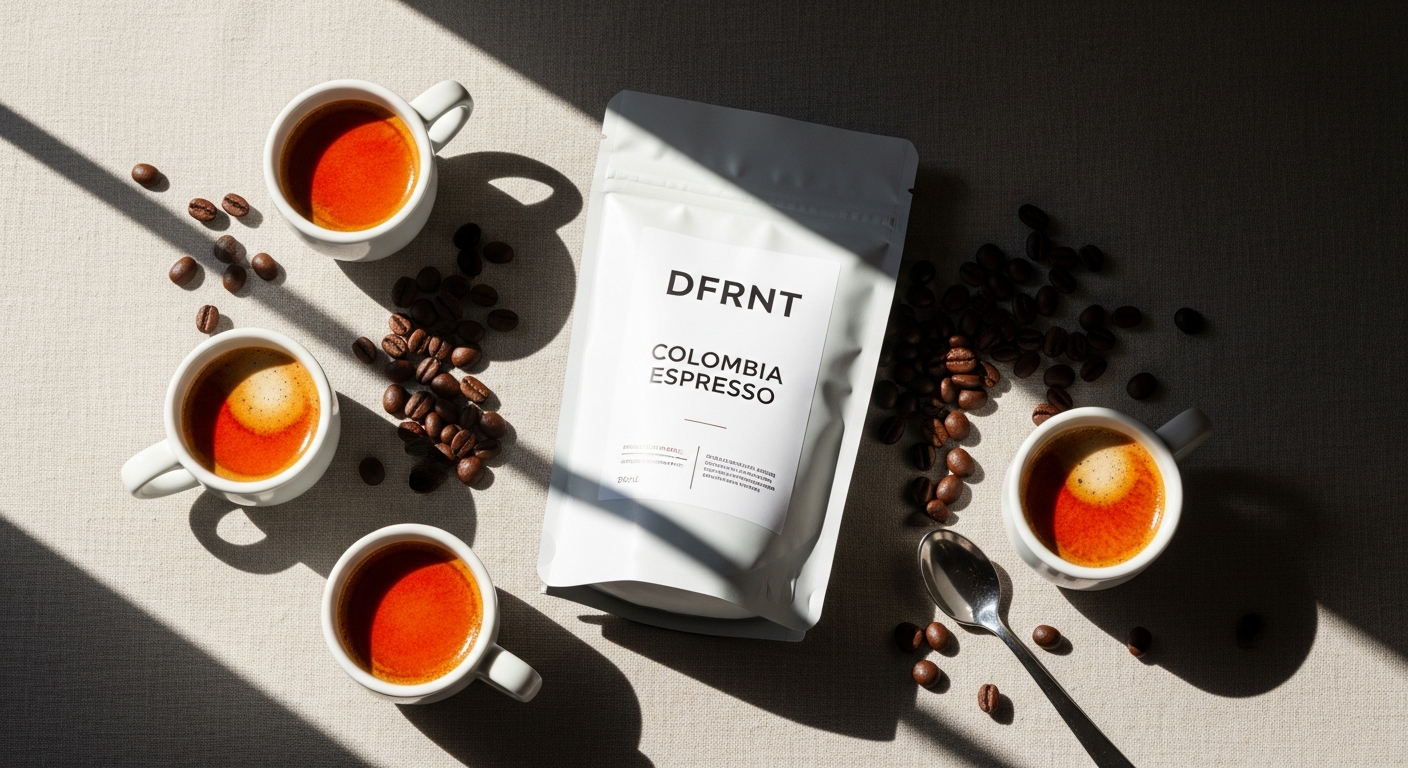
Discover why DFRNT Colombia Espresso ranks in the world’s top 5% with an SCA score of +85. Learn about its traceability, flavor notes, and why 41% of customers become repeat buyers.
Most of us have tasted espresso that tastes like burnt rubber, and it's because commercial coffee companies prioritize profit margins over actual flavor. What if specialty-grade espresso existed at a price point that won't drain your wallet? The DFRNT Colombia Espresso has quietly become a bestseller in the specialty coffee world, consistently earning rave reviews from home baristas and coffee enthusiasts alike.
Here's the thing: not all espresso is created equal. The DFRNT Colombia Espresso stands apart because it's roasted with intention, traced from specific Colombian farms, and crafted to deliver the kind of silky crema and complex flavor you'd expect from a third-wave café. It's specialty coffee stripped of pretension—no artificial additives, no mystery about where it comes from, just pure, ethically sourced beans that actually taste incredible.
Discover what makes DFRNT Colombia Espresso the specialty coffee choice for discerning palates.
The Science Behind Top 5% Specialty-Grade Coffee
SCA Scoring System and What an +85 Score Actually Means
The Specialty Coffee Association's scoring system separates exceptional coffee from the ordinary. Scores range from 0 to 100, and anything above 80 lands in specialty-grade territory. DFRNT Colombia Espresso achieves a +85 score, placing it in the top 5% of coffees worldwide. This isn't arbitrary—it reflects rigorous evaluation of aroma, flavor, aftertaste, acidity, body, balance, uniformity, and cleanliness. A single point difference at this level represents measurable quality separation.
How DFRNT Colombia Espresso Achieves Specialty Coffee Classification
Colombian beans naturally possess the altitude, climate, and soil composition that favor specialty-grade development. DFRNT sources from farms at optimal elevations where beans develop slower, building complexity. Their selection process identifies only the highest-scoring lots, rejecting anything that doesn't meet strict standards. The medium roast profile then carefully extracts these inherent qualities without masking them through over-roasting.
The Difference Between Specialty-Grade and Commercial Coffee Quality Standards
Commercial coffee prioritizes volume and shelf stability. Beans are often blended from multiple origins, roasted dark to hide defects, and aged weeks before reaching consumers. Specialty-grade coffee focuses on traceability, single-origin authenticity, and freshness. Commercial espresso typically scores 60–70; specialty coffee consistently exceeds 80. This 10-20 point gap translates directly to what you taste in your cup.
Cupping Notes and Flavor Complexity That Distinguish Premium Beans
Professional cuppers identify chocolate, caramel, nuts, almonds, and red fruit notes in DFRNT Colombia Espresso through systematic tasting. These aren't marketing language—they're documented sensory characteristics. The presence of multiple distinct notes indicates complex amino acid development and balanced fermentation during processing. Commercial coffees typically present one-dimensional, often bitter, flavor profiles.
Why Medium Roast Amplifies Colombian Coffee's Natural Characteristics
A medium roast sits at the sweet spot between preserving origin flavor and developing pleasant roasted notes. Light roasts can highlight acidity that some find harsh; dark roasts obliterate delicate characteristics. Medium roast on Colombian beans amplifies their natural sweetness while introducing subtle caramel and chocolate notes that emerge from the Maillard reaction. This roast level is specifically chosen for Colombian terroir.
Bean Density, Altitude, and Terroir Impact on Espresso Extraction
Colombian coffee grows at elevations between 1,200 and 2,000 meters, where cooler temperatures slow bean development. Denser beans extract differently than low-altitude coffee—they require precise pressure and timing to release their full potential. The specific terroir of DFRNT's partner farms creates mineral-forward sweetness and balanced acidity that espresso machines extract beautifully at proper settings.
Complete Traceability—Know Your Coffee's Origin Story
100% Traceability from Farm to Cup: What This Transparency Means
You can track DFRNT Colombia Espresso to specific farms and producers. This transparency eliminates the mystery surrounding commercial coffee, where beans from 50 different sources might be blended without consumer knowledge. Traceability means knowing the farmer's name, the farm's elevation, the harvest date, and the processing method. It's accountability in action.
Direct Relationships with Colombian Coffee Producers and Cooperatives
DFRNT builds long-term relationships with Colombian cooperatives rather than engaging in one-off transactions. This stability allows farmers to invest in quality improvements, knowing consistent demand exists. Direct relationships eliminate middlemen who water down prices and quality standards. Farmers receive fair compensation, creating incentive for sustainable practices and careful harvesting.
How Traceability Affects Flavor Consistency and Quality Control
When you know your beans' origin, you understand their consistency. DFRNT works with the same farms year after year, building familiarity with their processing and crop characteristics. This consistency means your 250g bag in January tastes similarly excellent to your 1kg purchase in July. Commercial coffee blends constantly shift origins, creating unpredictable flavor variations.
Ethical Sourcing Practices and Fair Trade Considerations
Traceability enables fair compensation verification. DFRNT ensures Colombian farmers receive prices that reflect their beans' actual value, not commodity market lows that incentivize corner-cutting. Fair compensation supports community development, healthcare access, and farm sustainability. Every purchase directly funds better working conditions and environmental stewardship.
Why Knowing Your Coffee's Origin Matters to Conscious Consumers
Modern coffee drinkers increasingly want connection with their purchases. Knowing where your espresso originated transforms it from a commodity into a relationship. You're supporting specific families, specific farms, and specific communities. This consciousness elevates the entire ritual from mindless consumption to intentional engagement.
The Supply Chain Advantage: Fresher Coffee Reaches Your Door Faster
Direct sourcing eliminates storage delays in conventional supply chains. DFRNT roasts shortly after importing and ships within days of roasting. Commercial coffee often sits in warehouses for weeks or months before retail display. Fresher beans mean superior flavor, better crema, and genuinely gentler digestion.
Experience the difference that traceability and freshness make with DFRNT Colombia Espresso today.
Flavor Profile Breakdown: Chocolate, Caramel, Nuts & Red Fruits
Medium Roast Development and How It Unlocks Complex Flavor Notes
Medium roasting creates the Maillard reaction—a chemical process where amino acids and sugars interact under heat. This reaction develops the chocolate and caramel notes inherent to Colombian beans. Push the roast darker and you lose delicate notes to char; pull it lighter and you preserve acidity without complexity. DFRNT's medium roast hits the precise window where Colombian beans shine.
Tasting Notes Explained: Chocolate, Caramel, Almonds, and Red Fruit Undertones
These aren't added flavors—they're present in the raw bean and released through proper roasting. Chocolate notes emerge from cocoa-like compounds naturally present in the bean. Caramel develops from sugar caramelization during roasting. Almond and walnut notes come from specific fatty acid profiles. Red fruit undertones are subtle, appearing in the aftertaste, often describing berry-like acidity characteristics.
How Brewing Method (Espresso vs. Filter) Changes Flavor Expression
Espresso's high pressure forces water through finely ground beans quickly, concentrating flavors and highlighting body. The 9-bar pressure extracts different compounds than filter brewing's gentle immersion. DFRNT Colombia Espresso's medium roast and bean density are optimized for espresso extraction, where the concentrated format intensifies chocolate and caramel notes while the silky crema adds textural richness.
Acidity Levels and Body Characteristics of Colombian Beans
Colombian coffee naturally possesses bright acidity without harshness. Medium roasting tames this acidity, making it pleasant rather than sharp. The body sits in the medium-full range—thicker than filter coffee but not heavy. This balance makes espresso shots enjoyable without requiring milk, though it pairs beautifully with steamed milk for traditional preparations.
The Role of Crema Quality in the Overall Espresso Experience
Crema—that golden layer topping quality espresso—indicates proper extraction and bean freshness. Thick, persistent crema means oils were properly extracted and the beans were recently roasted. Thin or absent crema suggests stale beans or improper extraction. DFRNT Colombia Espresso's fresh roasting and ideal bean density produce noticeably silky crema that enhances mouthfeel and flavor delivery.
Comparison of DFRNT's Flavor Profile Against Other Specialty Espresso Brands
Most specialty espresso emphasizes either origin characteristics or roast profile—DFRNT balances both. Ethiopian espressos highlight florality; Brazilian espressos emphasize chocolate heaviness; Colombian offerings often split between bright acidity and subtle sweetness. DFRNT's +85 SCA score consistently outperforms similarly priced competitors because their sourcing and roasting honor Colombian terroir without overcomplicating it.
Espresso-Specific Benefits & Digestibility
Why This Coffee Is Gentler on the Stomach Than Commercial Alternatives
Commercial espresso's digestive harshness stems from old beans, poor roasting, and low-quality processing. Aged beans develop harsh compounds; over-roasting creates additional irritants. DFRNT's fresh roasting (within days, not weeks) and careful processing minimize stomach-irritating compounds. The pure bean source without additives or fillers reduces digestive stress significantly.
The Science of Espresso Extraction and Concentrated Flavor Delivery
Espresso machines use 9 bars of pressure to force hot water through ground coffee in 25-30 seconds. This high-pressure extraction concentrates solids and oils, creating the thick, flavorful shot characteristic of espresso. Lower-quality beans produce harsh, over-extracted shots because their unbalanced chemistry doesn't respond well to pressure. Premium beans like DFRNT's extract cleanly, delivering concentrated flavor without bitterness.
Silky Crema Formation and What It Indicates About Bean Quality
Crema forms when CO2 and oils from fresh-roasted beans create an emulsion under pressure. Thick, persistent crema indicates proper roasting, freshness, and appropriate bean density. Thin or quickly-dissipating crema signals stale beans or improper extraction. DFRNT's silky crema visibly demonstrates the coffee's quality and freshness—it's not just aesthetic, it's proof of excellence.
Full-Bodied Mouthfeel Characteristics Ideal for Espresso Preparation
DFRNT Colombia Espresso produces a full-bodied shot with substantial mouthfeel. This body comes from the bean's natural oil content and the medium roast profile that preserves these oils. Commercial espresso often tastes thin and watery because those beans lack density or were over-extracted. Full body means each shot feels substantial and satisfying.
Reduced Acidity Levels Compared to Lighter Roasts
While Colombian beans naturally possess bright acidity, DFRNT's medium roast moderates this sharpness to pleasant brightness. Lighter roasts retain more acidity, which some find harsh or mouth-puckering. The medium roast strikes balance—enough acidity for complexity without discomfort. This balanced acidity is easier on the stomach and more enjoyable without milk.
How Fresh Roasting (Within Days, Not Weeks) Affects Digestibility
Freshly roasted coffee contains beneficial compounds that degrade over time. Stale beans develop rancid oils and harsh chlorogenic acid derivatives that irritate digestive systems. DFRNT roasts and ships within days, ensuring you receive coffee at peak digestibility and flavor. Commercial coffee often sits for weeks, losing freshness and digestibility simultaneously.
Whole Bean vs. Ground: Choosing Your Format
Whole Bean Advantages for Home Espresso Enthusiasts
Whole beans maintain flavor longer than pre-ground coffee because the larger surface area slows oxidation. Espresso enthusiasts typically prefer whole beans because grind consistency directly impacts extraction quality. Grinding immediately before brewing ensures maximum freshness and allows customization for your specific espresso machine. Whole beans grant control that ground coffee cannot provide.
Pre-Ground Convenience and Freshness Retention Considerations
Pre-ground coffee offers convenience for busy mornings or travel. DFRNT provides quality pre-ground options for those without grinders or time. However, ground coffee loses freshness faster because increased surface area accelerates oxidation. Pre-ground is best consumed within 2-3 weeks of roasting, whereas whole beans maintain quality for 4-6 weeks.
Grind Consistency Requirements for Optimal Espresso Extraction
Espresso demands consistent particle size—ideally micro-fine and uniform. Burr grinders (either conical or flat burr) produce this consistency; blade grinders create uneven grounds that extract poorly. If choosing whole beans, a quality burr grinder is essential. Pre-ground espresso eliminates this equipment requirement, making it accessible for those without grinders.
Storage Recommendations for Both Formats to Maintain Peak Flavor
Whole beans and ground coffee should be stored in airtight containers away from heat, light, and moisture. Room temperature storage in a cool, dark cabinet works better than refrigeration. Neither format should be frozen unless storing for extended periods. Consume within 4-6 weeks of roasting for optimal flavor and digestibility.
Equipment Compatibility: Burr Grinder Recommendations
If purchasing whole beans, invest in a quality burr grinder—either conical ($40-80) or flat burr ($80-150+). Espresso-specific grinders with fine adjustment capabilities work best, though capable general-purpose grinders exist at all price points. The grinder arguably matters more than the espresso machine for shot quality.
When to Choose Ground Coffee for Busy Mornings or Travel
Pre-ground DFRNT Colombia Espresso makes sense for travelers, busy professionals, or those without grinder space. The convenience trade-off is acceptable for people prioritizing time over maximum freshness. Ground coffee still delivers superior flavor and digestibility compared to commercial alternatives, even if whole bean is theoretically optimal.
Sizing Options & Price-to-Quality Value Proposition
250g Bags: Ideal for Single-Origin Exploration and Testing
The 250g format (approximately £10.00) offers perfect sizing for trying specialty coffee without major commitment. This quantity produces roughly 16-17 espresso shots at standard dosing, allowing two weeks of daily exploration. For those new to specialty coffee or testing a new roaster, 250g removes financial risk while providing adequate tasting experience.
1kg Packs: Cost-Per-Serving Breakdown and Long-Term Savings
The 1kg pack (approximately £41.23) delivers substantially better value per gram—roughly 17% cheaper than buying four 250g bags separately. At £41.23 for 1000g, cost per shot approaches £2.40 (assuming 17g doses), comparing favorably against café espresso at £2-4. For committed daily drinkers, 1kg packs provide genuine savings while ensuring freshness within reasonable timeframes.
Pricing Comparison Within the Specialty Coffee Market (£10–£41.23 Range)
DFRNT's pricing sits competitively within specialty coffee ranges. Comparable single-origin specialty espressos from established roasters run £11-15 per 250g. The 1kg price of £41.23 undercuts bulk pricing from premium brands charging £50+ for equivalent quantities. Quality-to-price ratio positions DFRNT as accessible premium coffee rather than luxury pricing.
Subscription Models and Bulk Purchasing Advantages
Regular customers benefit from subscription arrangements that lock in pricing and ensure consistent delivery. Bulk purchasing of multiple 1kg packs often triggers additional discounts. Subscription models typically offer 10-15% savings while guaranteeing fresh coffee arrival without reordering hassle.
Value Assessment: Quality-to-Price Ratio Versus Supermarket Alternatives
Supermarket espresso costs £4-7 per 250g but represents dramatically lower quality—typically scoring 60-70 on SCA scales versus DFRNT's 85+. The 20-25 point quality gap justifies doubling or tripling the price. DFRNT delivers specialty-grade experience at prices approaching mid-range specialty, making it exceptional value for the quality level.
Investment in Fresh, Traceable Coffee as a Lifestyle Choice
Purchasing DFRNT Colombia Espresso extends beyond caffeine acquisition into intentional consumption. The investment supports sustainable agriculture, fair compensation, and direct farmer relationships. Financially, spending £10-12 weekly on quality coffee costs less than two café visits while delivering superior flavor and ethical satisfaction.
Customer Loyalty & Real-World Performance
41% Repeat Purchase Rate: What This Statistic Reveals
A 41% repeat purchase rate in competitive specialty coffee markets indicates exceptional satisfaction. Most e-commerce categories see 20-30% repeat rates; DFRNT's 41% suggests customers not only enjoy the product but actively choose to repurchase despite abundant alternatives. This loyalty reflects genuine quality and customer trust—people don't return repeatedly to mediocre coffee.
Verified Customer Reviews Highlighting Crema Quality and Taste
Real customer feedback consistently praises silky crema formation and complex flavor delivery. Customers describe shots tasting "like café-quality," "smooth," and "actually flavorful." Negative reviews are rare and typically mention individual preferences rather than quality issues. The review pattern demonstrates consistent performance across different brewing setups and skill levels.
Long-Term Freshness Guarantees and Roast-to-Delivery Timelines
DFRNT emphasizes rapid roast-to-delivery timelines, typically shipping within days of roasting. This commitment ensures customers receive coffee at peak freshness. Long-term, beans remain flavorful for 4-6 weeks post-roast, giving customers extended enjoyment windows. The focus on speed guarantees differentiation from commercial suppliers storing beans weeks before retail.
Community Feedback on Espresso Machine Compatibility
Customer reviews confirm DFRNT Colombia Espresso performs excellently across espresso machine types—from entry-level semi-automatics to high-end prosumers. The medium roast's balanced density extracts cleanly without requiring advanced technique. Machine compatibility across price ranges makes DFRNT accessible regardless of equipment investment level.
Before-and-After Taste Comparisons from Supermarket to Specialty
Customers switching from commercial to DFRNT consistently report shocking flavor improvements. Descriptions include "finally tasting chocolate and caramel notes," "no bitterness," and "smooth shots without milk." These testimonials highlight how dramatically quality increases when stepping from supermarket to specialty coffee—the difference exceeds expectations.
Testimonials from Home Baristas and Coffee Professionals
Both casual drinkers and serious enthusiasts praise DFRNT Colombia Espresso. Home baristas appreciate the consistency for dialing in machines; professionals acknowledge the quality competing with café-grade offerings. This dual appeal across skill levels demonstrates versatility—the coffee performs at beginner and expert levels.
Brewing Best Practices for Maximum Extraction
Optimal Grind Size for Espresso Machines and Manual Devices
Espresso requires fine, consistent grind—typically resembling fine sand. Manual devices like AeroPresses use slightly coarser settings than espresso machines. DFRNT's pre-ground options are optimized for espresso machines; if using whole beans, experiment with settings on your specific grinder. Consistency matters more than exact sizing because your machine requires matching extraction variables.
Water Temperature and Pressure Settings for Colombian Beans
Espresso machines typically operate at 90-92°C water temperature and 9 bars pressure. Colombian beans at medium roast respond well to standard settings without requiring adjustment. Higher temperatures can over-extract the delicate notes; lower temperatures under-extract. Standard machine settings work excellently for DFRNT, eliminating guesswork.
Tamping Technique and Dose Recommendations (18–20g Range)
Standard espresso dosing ranges from 18-20g of ground coffee per shot. Distribute grounds evenly in the portafilter, tamp level and firm (20kg pressure approximately), and pull the shot. Inconsistent tamping creates channeling (water carving paths through coffee, extracting unevenly). Proper technique ensures even extraction that highlights DFRNT's flavor complexity.
Timing Extraction Pulls for Balanced Flavor Development
Shot pulls typically target 25-30 seconds from water contact to espresso flow. Shots pulling faster (under-extraction) taste sour; shots pulling slower (over-extraction) taste bitter. Medium roasts like DFRNT's generally extract balanced within standard timing. Adjust grind size to achieve proper timing—finer grind slows extraction, coarser speeds it.
Equipment Setup: Which Machines Work Best with This Coffee
DFRNT Colombia Espresso performs excellently across all espresso machine types—manual levers, semi-automatics, and fully automatic systems. The coffee doesn't require high-end equipment to shine, though better machines (with temperature stability and consistent pressure) make dialing in easier. Conversely, premium equipment fully showcases the coffee's quality.
Troubleshooting Common Issues (Channeling, Under-Extraction, Over-Extraction)
Channeling (water carving uneven paths through puck) produces inconsistent shots. Solution: improve distribution, tamp more evenly, or upgrade to distribution tools. Under-extraction tastes sour and weak. Solution: use finer grind, increase dose, or tamp firmer. Over-extraction tastes bitter and harsh. Solution: use coarser grind, decrease dose, or reduce water temperature.
Sustainability & Ethical Considerations
Environmental Impact of Direct-Trade Sourcing Practices
Direct trade eliminates middlemen incentivizing volume over sustainability. DFRNT's partner farms implement environmentally responsible practices—shade-grown coffee that preserves forest canopy, water conservation, and soil management. Long-term relationships allow investment in sustainability because farmers aren't pressured to maximize yield at environmental expense. This matters: coffee farming's environmental footprint depends entirely on farming practices.
Support for Colombian Farming Communities and Fair Compensation
Direct relationships ensure farmers receive prices reflecting their beans' actual value. Fair compensation typically ranges 2-3x commodity prices, directly improving farmer incomes and community welfare. These funds support healthcare access, education investment, and infrastructure development. Every DFRNT purchase strengthens Colombian farming communities.
Packaging Materials and Eco-Conscious Shipping Methods
DFRNT uses recyclable or compostable packaging where feasible, minimizing waste accumulation. Shipping practices prioritize efficiency to reduce carbon footprint. While perfect sustainability doesn't exist in commerce, conscious choices throughout the supply chain compound environmentally. Supporting brands prioritizing eco-responsibility encourages market shifts toward sustainability.
Biodiversity Preservation in Colombian Coffee-Growing Regions
Shade-grown coffee farming (which DFRNT's partner farms practice) preserves forest ecosystems. Diverse canopy layers protect soil, support bird populations, and maintain biodiversity. Sun-grown commercial coffee destroys forest habitat, degrading ecosystems. Choosing coffee from shade-grown farms directly supports environmental conservation in biodiverse regions.
How Purchasing Specialty Coffee Supports Sustainable Agriculture
Each purchase signals demand for sustainable practices. As specialty coffee demand grows, more farmers transition from commercial practices to sustainable methods. This market pressure creates positive environmental change—your coffee purchase literally funds reforestation and ecosystem restoration. Supporting brands like DFRNT amplifies these sustainability benefits.
Transparency Reports and Certifications Backing Ethical Claims
DFRNT provides transparent sourcing information and farm details. Reputable specialty roasters back ethical claims with verifiable information, not vague marketing language. When considering any specialty coffee, request traceability details and documentation. DFRNT's willingness to provide comprehensive sourcing information demonstrates confidence in their ethical practices.
Making the Switch from Commercial to Specialty Espresso
Identifying Flavor Differences in Your First Specialty Brew
Your first DFRNT shot will taste dramatically different from commercial espresso. Instead of bitter, burnt flavors, you'll encounter sweetness, chocolate, caramel, and subtle fruit notes. The crema will be noticeably thicker and silkier. The mouthfeel will feel heavier without harshness. These differences might initially surprise—embrace them as improvements, not unfamiliar weirdness.
Equipment Investment: What You Actually Need to Get Started
Essential equipment includes an espresso machine (entry-level models start $200), a burr grinder ($50-150), and a tamper. Nice-to-haves include a distribution tool ($5-20) and a scale ($15-40). You don't need espresso-specific cups or advanced gadgets to experience quality coffee. Starting simple and upgrading gradually works better than massive initial investment.
Mindset Shift from Convenience Coffee to Intentional Consumption
Specialty coffee demands slight ritualization—fresh grinding, proper dosing, timing extraction. This shift from grabbing instant coffee to intentional brewing elevates the experience. The 5-10 minutes invested in quality brewing generates substantially more enjoyment than rushed commercial coffee. Embracing this ritual transforms coffee from fuel into genuine pleasure.
Palate Development and Learning to Taste Complex Notes
Your palate adapts to quality coffee. Initially, you might taste "chocolate" without specificity; over time, you distinguish dark vs. milk chocolate, cocoa powder, etc. This development takes weeks or months of regular tasting. Pay attention to flavor changes across your shot—often the first third tastes different from the final third. Intentional tasting accelerates palate development.
Budget-Friendly Entry Points Without Sacrificing Quality
Starting with a 250g bag (£10) provides low-risk entry. Combined with entry-level espresso equipment (~$250-400 total), you can experience quality coffee inexpensively. Upgrade gradually based on actual needs rather than aspirational gear. Many specialty coffee enthusiasts spend years with modest equipment because quality beans matter more than premium machines.
Building a Home Espresso Routine That Sticks
Successful specialty coffee adoption involves consistency. Brewing one quality shot daily beats sporadically attempting advanced techniques. Establish a simple routine—grinding fresh beans, pulling a shot, enjoying mindfully. This routine becomes meditative rather than burdensome. Within months, the ritual itself becomes rewarding independent of coffee flavor.
The Verdict: Why DFRNT Colombia Espresso Earns Its Reputation
DFRNT Colombia Espresso isn't just another specialty coffee—it's a complete package respecting both your taste buds and your values. From its top 5% SCA rating to its transparent farm-to-cup journey, every element has been considered thoughtfully. The flavor complexity alone—those intertwining notes of chocolate, caramel, and red fruit—transforms your daily espresso from a caffeine delivery system into something genuinely worth savoring.
What truly stands out, though, is the loyalty it inspires. When 41% of customers return for repeat purchases in a market flooded with options, that speaks volumes. You're not just buying coffee; you're investing in a product delivering consistency, freshness, and flavor rivaling café-quality shots. Whether you're a seasoned home barista or someone tired of mediocre supermarket espresso, this Colombian offering bridges the gap between accessibility and excellence.
The 250g bags cost £10—approximately the price of two café espresso drinks—for roughly 16 shots of specialty-grade coffee. The 1kg packs offer even better value at £41.23, delivering genuinely café-quality shots at home. Freshness guarantees, transparent sourcing, and support for Colombian farming communities add ethical weight to the purchase. Your morning ritual deserves better than burnt, stale beans sitting in warehouses for months.
The sensory experience confirms the investment. That silky crema, the complex flavor development across your pull, the smooth mouthfeel without harshness—these details accumulate into something special. Customers consistently describe switching to DFRNT as transformative, finally understanding what specialty coffee actually means. The coffee performs across different machines and skill levels, succeeding whether you're using entry-level equipment or advanced setups.