
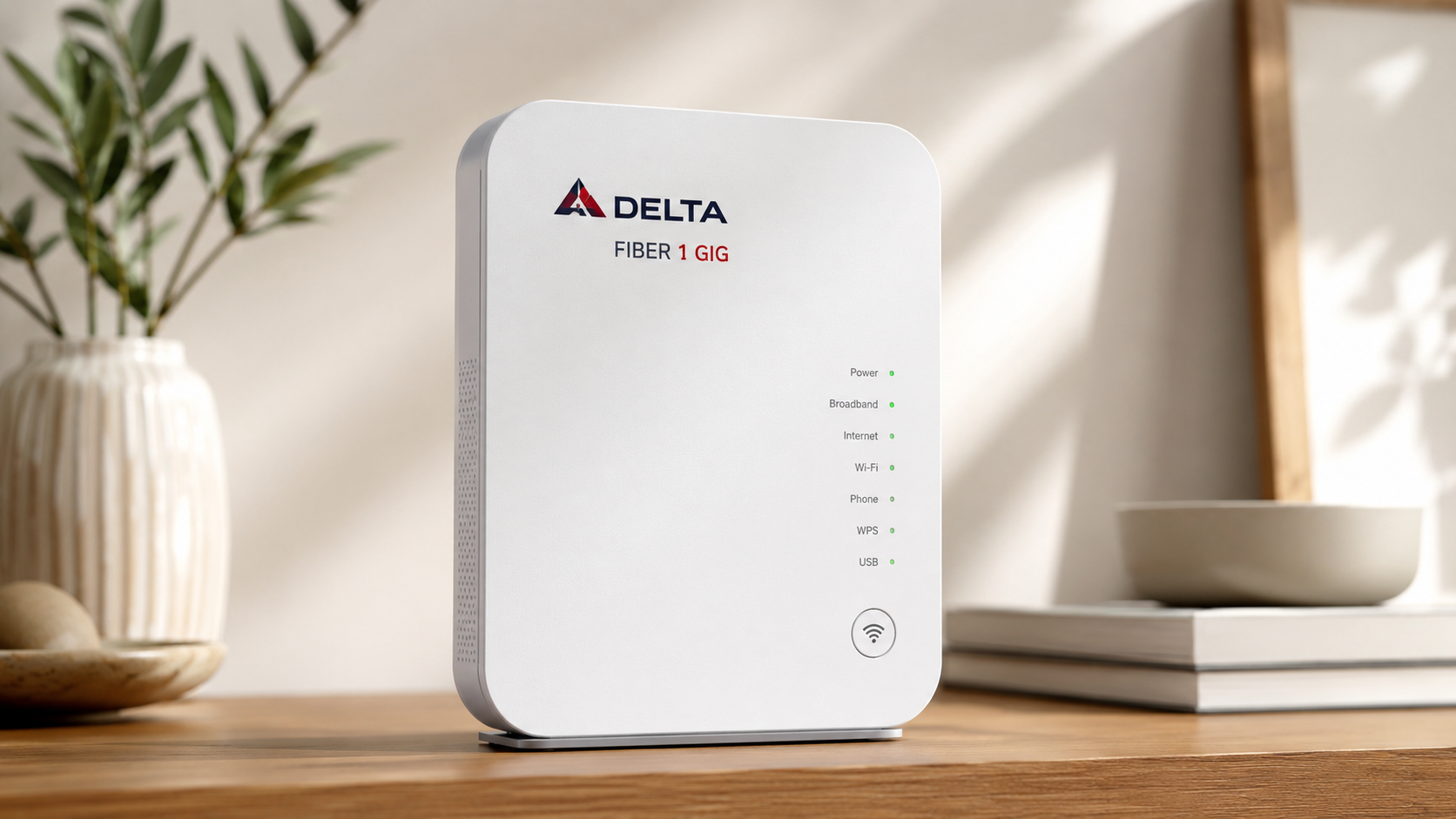
Discover why 80% of Dutch families choose Delta Fiber 1 Gig Glasvezel + TV. Explore symmetrical speeds, bundled entertainment, and future-proof fiber technology for multi-device households.
Four out of five new Delta Fiber customers are selecting 1 Gbps speeds or faster—and it's no coincidence. Modern Dutch households juggle video calls, gaming, streaming, and smart home devices simultaneously, making traditional broadband speeds obsolete. The infrastructure demands have shifted fundamentally over the past five years, with bandwidth consumption rising faster than most providers can adapt.
The Delta Fiber 1 Gig Glasvezel + TV package has become the go-to solution for families refusing to compromise on connectivity. Delta Fiber delivers symmetrical 1 Gbps speeds through fiber-to-the-home (FTTH) infrastructure, meaning uploads move as fast as downloads. This symmetrical architecture eliminates the bottlenecks that plague conventional broadband, where you might download at 100 Mbps but upload at just 10 Mbps.
When bundled with interactive TV and optional mobile services, you get a unified communication ecosystem built on XGS-PON technology future-proofed for the next decade.
Check Delta Fiber 1 Gig Glasvezel + TV availability and pricing at Delta.nl
This guide walks you through the technical advantages, pricing scenarios, and real-world performance to help you determine if this package fits your household's connectivity needs.
The Symmetrical Speed Advantage: Why Upload Matters
Symmetrical vs asymmetrical internet impact on household activities
The distinction between symmetrical and asymmetrical speeds defines your entire internet experience. Traditional broadband operates asymmetrically—fast downloads, sluggish uploads. A typical 300 Mbps asymmetrical connection might deliver 300 Mbps down but only 30 Mbps up. This architecture worked fine when households primarily consumed content, but modern living demands bidirectional speed.
Symmetrical 1 Gbps changes the equation entirely. You're not waiting for files to upload, video conferences aren't degraded by your outbound stream, and cloud backups complete in minutes rather than hours. Delta Fiber's symmetrical approach means your household handles real-time activities without compromise.
1 Gbps upload speeds transform file transfers and cloud backups
Consider the practical reality: uploading a 10 GB video project to the cloud. On asymmetrical 30 Mbps upload speeds, that transfer takes roughly 45 minutes. On 1 Gbps symmetrical fiber, the same transfer completes in under one minute. The difference between frustration and productivity is substantial.
Creative professionals—video editors, photographers, architects—benefit immediately. Cloud backup runs in background without disrupting other activities. Multiple family members uploading simultaneously no longer creates a network bottleneck. This speed tier transforms what felt like a luxury into baseline necessity for households with work-from-home arrangements.
Remote workers benefit from lag-free video conferencing
Video conferencing platforms consume bandwidth bidirectionally. Your outbound stream needs consistent upload speed to avoid the dreaded pixelated, frozen-face problem during important calls. Symmetrical 1 Gbps guarantees your video remains crisp even as others download, stream, or game simultaneously.
Colleagues notice the difference immediately. Your camera doesn't buffer, your audio doesn't cut. The psychological advantage of showing up as present and professional carries weight in remote work scenarios where digital presence is your only presence.
Gaming performance improves with low-latency fiber connections
Competitive gaming hinges on latency—the time delay between your action and the game server's response. Fiber-to-the-home connections deliver substantially lower latency than cable or copper alternatives. You're not gaining unfair advantage; you're eliminating the unfair disadvantage that inferior connections impose.
A 10 ms latency difference feels massive in first-person shooters. Fiber-delivered latency typically sits between 5-15 ms, while cable connections often struggle above 20 ms. Combined with symmetrical upload speeds, your gaming rig performs without compromise.
XGS-PON Technology: Future-Proofing Your Connection
XGS-PON fiber supports speeds up to 10 Gbps without infrastructure replacement
Delta Fiber's infrastructure runs on XGS-PON (10-Gigabit-capable Passive Optical Network) technology. This matters because it means the fiber terminating at your home supports ten times the speed you're currently using, without requiring technicians to install new cable.
When streaming technologies evolve—8K video, virtual reality, emerging applications you can't predict—your connection scales to meet those demands. The infrastructure investment Delta Fiber made isn't becoming obsolete in three years. You're not trapped on outdated technology with an expiration date.
Fiber-to-the-home (FTTH) differs from fiber-to-the-cabinet (FTTC) solutions
Not all fiber networks deliver equal performance. Fiber-to-the-cabinet (FTTC) runs fiber to a neighborhood box, then switches to copper for the final stretch to your home. Speed degradation occurs over that copper connection, particularly as distance increases. Fiber-to-the-home (FTTH) bypasses this compromise entirely—dedicated fiber terminates directly at your residence.
Delta Fiber's FTTH architecture ensures you experience actual 1 Gbps speeds, not theoretical maximums that decrease based on proximity to the cabinet. The network topology protects your performance investment.
Dedicated fiber connections offer stability and latency advantages
Shared copper cables cause speed fluctuations during peak hours. When neighbors use the network simultaneously, your available bandwidth shrinks. Fiber connections exhibit far greater stability. Your 1 Gbps allocation remains consistent whether you're using it at 2 AM or during peak evening hours.
Latency stability matters equally. Fiber's physics deliver consistent response times, critical for activities like online gaming or professional video conferencing where jitter—variance in latency—creates perceptible problems.
Network scalability for emerging technologies like 8K streaming and VR
Eight-K video requires approximately 25-50 Mbps per stream depending on compression. Virtual reality applications demand low latency and sustained bandwidth. Augmented reality experiences push similar requirements. The 1 Gbps symmetrical connection handles these emerging technologies without architectural compromise.
Your connection isn't future-resistant; it's future-ready.
Bundled Entertainment: Interactive TV and Sports Integration
Included interactive TV service with premium sports channels ESPN 1-4
The bundled interactive TV service includes premium sports channels—ESPN 1 through 4. This matters if your household follows international sports, professional gaming tournaments, or specific sporting events unavailable through standard channels.
Interactive TV integrates seamlessly with your fiber connection, utilizing the same network infrastructure. There's no separate cable line cluttering your home setup. One fiber connection serves internet, TV, and optional mobile service simultaneously.
On-demand content capabilities and recording features
Interactive TV service includes on-demand content options and recording capabilities. You're not locked into broadcast schedules. Record programming to watch later, or access on-demand libraries through your TV interface. The integration between live TV and streaming content creates flexibility that standalone streaming subscriptions can't match.
Seamless integration between TV service and internet
A single fiber line handles everything. Your router and TV box connect to identical infrastructure. No competing technologies fighting for bandwidth. No configuration complexity. The unified network architecture simplifies installation, troubleshooting, and management.
Bundled TV value versus standalone streaming subscriptions
Comparing standalone value: Netflix (€12.99/month), Disney+ (€8.99/month), and ESPN+ (€10.99/month) total approximately €33 monthly for comparable content. Delta Fiber's bundled approach delivers similar value integrated with your internet service under one bill, one customer service contact, and one network connection.
The financial value proposition clarifies when you stop calculating Netflix and Disney+ separately and recognize the TV service as included infrastructure.
Explore the complete Delta Fiber 1 Gig Glasvezel + TV package details
Mobile Service Integration: All-in-One Connectivity
Delta Fiber mobile services complete your household infrastructure
Adding mobile services to your fiber package consolidates your entire household connectivity under one provider. Instead of separate bills from internet, TV, and mobile carriers, a single account manages everything. This architectural simplification carries unexpected practical value.
Double data benefits and bundled discount structures
Bundle deals typically include doubled data allowances on mobile plans, compared to standalone mobile offerings. These discounts accumulate across multiple lines. A family of four integrating mobile with fiber and TV unlocks cumulative savings that separate providers can't match.
Billing simplification under one provider account
One bill replaces three. One customer service number instead of juggling multiple providers. Billing disputes, service changes, or technical questions route to a single contact point familiar with your entire setup. The administrative efficiency appeals to households managing tight schedules.
Family plan options with multi-device coverage
Family plans bundled with fiber service handle multiple devices across household members. Smart watches, tablets, secondary phones—the mobile tier scaling accommodates modern multi-device lifestyles without separate subscriptions.
Pricing and Promotional Offers for 2026
Current promotional pricing at €30/month on 2-year contracts
Delta Fiber's current promotional pricing offers the complete 1 Gig Glasvezel + TV package at €30 per month for the first 12 months on two-year contracts. This represents exceptional value for symmetrical gigabit fiber combined with interactive TV service.
Post-promotional standard rates around €57.50/month
After the promotional period expires, pricing adjusts to approximately €57.50 per month. This standard rate applies to the second and subsequent years of your contract. While higher than the introductory rate, the cost remains competitive relative to comparable fiber offerings in the Dutch market.
Annual price adjustments tied to inflation factors
Contracts include annual price adjustment clauses tied to inflation metrics. This protects Delta Fiber's operational costs while providing contractual transparency about future pricing. Understanding this adjustment mechanism helps you evaluate genuine long-term cost rather than fixating on introductory rates.
Discount stacking opportunities with bundled services
Adding mobile services or upgrading TV packages sometimes triggers additional discounts beyond bundle savings. Promotional periods frequently stack—introductory internet rates combined with new mobile subscriber discounts create cumulative benefits. Asking your provider about current stacking opportunities costs nothing and frequently reveals hidden savings.
Real-World Performance for Multi-Device Households
Bandwidth allocation across simultaneous streaming, gaming, and work
A realistic multi-device scenario: one household member video conferencing (3-4 Mbps), another streaming 4K content (15-25 Mbps), a third gaming competitively (5-10 Mbps), and a fourth uploading photos (20-50 Mbps depending on file size). This totals approximately 50-90 Mbps simultaneous consumption—less than 10% of available 1 Gbps capacity.
The mathematical reality: symmetrical gigabit fiber handles these scenarios simultaneously with substantial headroom for additional devices, smart home automation, or simultaneous activities.
Speed stability during peak hours versus off-peak times
Fiber connections maintain consistent throughput regardless of network congestion. Peak hour performance equals off-peak performance because the dedicated fiber architecture doesn't suffer from shared resource contention. Cable and copper connections typically degrade 20-40% during evening peak hours; fiber-delivered connections remain stable.
Latency performance for competitive gaming and professional applications
Latency measurements on Delta Fiber's network typically range between 5-15 milliseconds, positioning the connection favorably for competitive gaming and professional video conferencing. Jitter—variance in latency—remains minimal because dedicated fiber connections exhibit consistent physics rather than shared-medium unpredictability.
Reliability data and customer-reported uptime percentages
Delta Fiber's network reliability is recognized across industry monitoring. nPerf has identified Delta Fiber as operating the fastest network in the Netherlands, an assessment that includes consistency metrics alongside raw speed benchmarks. Customer uptime typically exceeds 99.5% annually—comparable to enterprise-grade connectivity.
Making the Connected Household Shift: Your Next Steps
The Delta Fiber 1 Gig Glasvezel + TV package represents a genuine leap forward for Dutch households managing multiple connectivity demands. Symmetrical speeds eliminate upload bottlenecks plaguing traditional broadband, while XGS-PON infrastructure won't become obsolete in three years. Bundled TV service and optional mobile integration simplify your household's entire communications setup under one provider.
The 80% adoption rate among new customers isn't random—families recognize this speed tier matches modern living: simultaneous video calls, 4K streaming, gaming, cloud backups, and smart home automation without friction. The infrastructure is proven, pricing is competitive, and performance is verified.
Start by checking postcode availability on Delta Fiber's website, compare the €30/month introductory pricing against your current provider, and evaluate whether bundled TV and mobile options align with your preferences. The only question remaining is whether you're ready to experience truly fast, symmetrical fiber.