
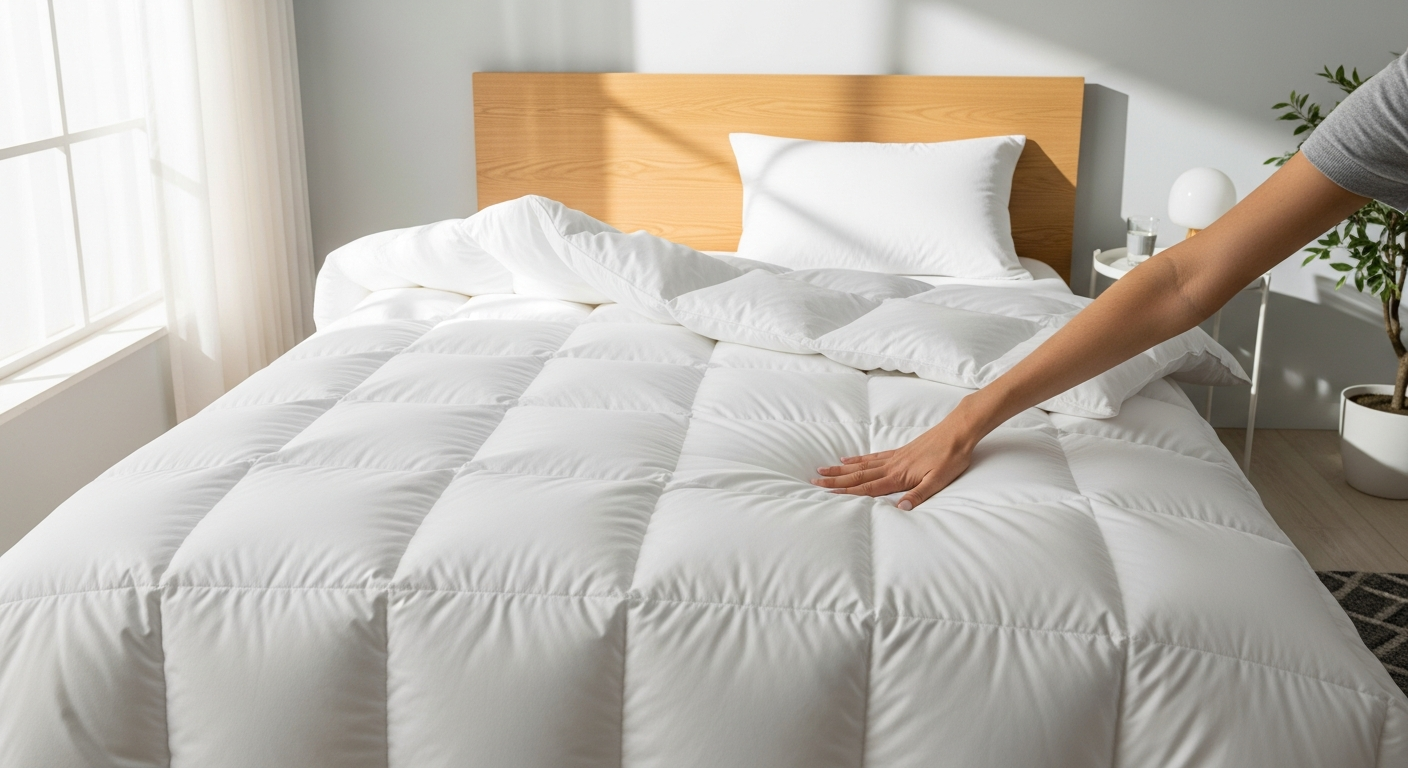
Discover why the Daunenstep D400 100% Down Duvet is ideal for allergy-prone sleepers. Learn about its hypoallergenic certifications, moisture-wicking technology, and 20-30 year durability.
Over 50 million people in Europe suffer from dust mite allergies, yet most continue sleeping on bedding that actively triggers their symptoms night after night. They wake up congested, irritated, and exhausted—victims of a problem that shouldn't exist in their own bedroom. The culprit? Conventional duvets that trap allergens, moisture, and dust mites in their fibers, creating a hostile sleep environment for anyone with sensitive airways or skin.
Daunenstep, an Italian bedding manufacturer with over a century of heritage, recognized this widespread suffering and approached it differently. Rather than chasing marketing trends, they engineered the D400 as a clinically-backed solution specifically designed for allergy sufferers. This duvet combines 100% pure down filling with rigorous certifications that guarantee safety for sensitive sleepers—NOMITE and Oeko-Tex Standard 100 certifications that aren't just labels, but proof of genuine allergen protection.
This guide reveals everything that makes the D400 a game-changer for allergic sleepers: its certified hypoallergenic properties, moisture-wicking technology, superior down quality, and construction that prevents allergen accumulation over its remarkable 20-30 year lifespan.
Discover how the Daunenstep D400 can transform your sleep tonight.
Understanding the Allergy Problem in Traditional Duvets
Common Allergens Trapped in Conventional Bedding
Your pillow and duvet spend approximately one-third of your lifetime pressed against your face. If they're filled with conventional materials, they're also spending that time collecting dust mites, mold spores, bacteria, and dead skin cells. A single gram of dust can contain up to 19,000 dust mites—creatures so small you'll never see them, yet their waste proteins trigger immune responses in sensitive people.
Conventional synthetic duvets create the perfect ecosystem for these allergens. Their dense fibers trap moisture, heat, and humidity—exactly what dust mites crave. Meanwhile, budget down alternatives often contain broken feathers and dust that weren't properly cleaned, amplifying the allergen load from day one.
How Standard Down and Synthetic Fills Accumulate Allergen Buildup
Time works against cheap bedding. As conventional duvets age, their fibers break down and compress, creating air pockets where allergens settle and multiply. Each night's perspiration adds moisture to the fill, promoting mold growth and dust mite reproduction. Within months, what started as a fresh duvet becomes an allergen incubator.
Synthetic fills present their own problems. They don't breathe like natural down, trapping body heat and moisture that encourage bacterial growth. Worse, they compress permanently, losing loft and protective qualities much faster than genuine down alternatives.
The Connection Between Poor Duvet Quality and Nighttime Allergy Symptoms
That congested feeling upon waking, the itchy skin, the midnight sneezing fits—these aren't random occurrences. They're direct responses to allergen exposure during sleep. Poor-quality bedding means eight hours of continuous contact with dust mite waste, mold spores, and bacterial byproducts. Your immune system activates, histamine floods your system, and your sleep quality collapses.
The damage extends beyond immediate discomfort. Chronic nighttime allergy symptoms disrupt sleep architecture, preventing deep restorative stages and leaving you exhausted regardless of how many hours you spent in bed.
Why Breathable, Certified Materials Matter for Sensitive Sleepers
Breathability isn't a luxury feature for allergy sufferers—it's essential. Materials that allow air circulation prevent moisture accumulation and create an environment hostile to dust mites. Certifications matter too, because they represent independent testing and verification, not manufacturer claims.
True hypoallergenic bedding actively resists allergen colonization through material quality and construction. It's built with scientific understanding of what triggers allergic responses and engineered to eliminate those triggers at their source.
The Cost of Untreated Allergies on Sleep Quality and Overall Health
Chronic poor sleep compounds health issues exponentially. Immune function weakens, cognitive performance declines, and your body's ability to manage inflammation suffers. Studies show people with untreated sleep allergies experience higher rates of respiratory infections, weakened immune responses, and accelerated aging markers.
Beyond health metrics, there's the quality-of-life impact: waking exhausted every single day, managing symptoms with medications that carry their own side effects, and accepting compromised sleep as inevitable rather than fixable.
Hypoallergenic Certifications That Actually Mean Something
NOMITE Certification: What It Tests For and Why It Matters
NOMITE certification specifically targets dust mite allergens—the primary culprit affecting millions of sleepers. This certification requires products to meet strict standards for dust mite resistance, meaning the material and construction actively prevent dust mite colonization or allergen accumulation.
NOMITE testing evaluates how effectively a product resists dust mite infestation under controlled laboratory conditions. Products bearing this mark have proven their claim through independent verification, not wishful marketing.
Oeko-Tex Standard 100 Certification: Harmful Substance Testing
Oeko-Tex Standard 100 goes beyond allergens—it tests for harmful chemicals, heavy metals, pesticides, and other substances that could irritate sensitive skin or trigger allergic responses. This certification is particularly important for allergy sufferers who may react to chemical residues from manufacturing or finishing processes.
The testing protocols are rigorous and independent. Materials must pass comprehensive screening across numerous harmful substance categories, ensuring the product is genuinely safe for sensitive users.
How These Certifications Differ From Unverified Hypoallergenic Claims
Countless products market themselves as "hypoallergenic" without any backing documentation. Manufacturers self-declare the term, and without third-party verification, there's no guarantee the product actually prevents allergic reactions. The term itself lacks legal definition in many markets, making unverified claims essentially meaningless.
Certified products, by contrast, have undergone independent laboratory testing with published standards and transparent methodologies. When you see NOMITE or Oeko-Tex marks, you're seeing objective proof—not hope, but verified results.
Independent Testing Protocols That Validate the D400's Status
The D400 doesn't rely on manufacturer assurances. Independent laboratories test its dust mite resistance, chemical safety, and allergen accumulation potential using standardized protocols. These tests confirm what users experience: genuine relief from allergy symptoms.
The testing examines the entire product—fill material, fabric, stitching, and construction—ensuring no single component introduces allergens or irritants. This comprehensive approach explains why certified products consistently outperform uncertified alternatives.
Third-Party Verification as Proof of Genuine Allergen Protection
Third-party certification represents accountability. Manufacturers can't award themselves NOMITE or Oeko-Tex marks—independent bodies conduct testing and grant certifications. If a certified product fails to deliver, the certification body's reputation suffers, creating strong incentives for rigorous standards.
This verification system transforms hypoallergenic claims from marketing language into factual statements backed by measurable evidence.
The Science Behind 100% Pure Down Filling for Allergy Sufferers
Why Premium Down Is Naturally More Hypoallergenic
Down clusters, unlike synthetic fibers or lower-quality feathers, create a structure that naturally resists dust mite colonization. The three-dimensional architecture of down fibers doesn't compress into moisture-trapping pockets where allergens accumulate. Instead, genuine down maintains loft and airflow even after years of use.
Premium down has been properly cleaned and processed to remove dust, broken feathers, and contaminants that lower-grade alternatives retain. This cleaning process alone eliminates a significant portion of potential allergens before the down ever reaches your bed.
Filling Power 730 Cuin: What This Measurement Means
Filling Power measures down quality by indicating how much space one ounce of down occupies. The D400's 730 cuin rating represents exceptional quality—this down is fluffy, lofty, and excellent at trapping warm air while maintaining breathability. Higher filling power means fewer down clusters are needed to achieve the same warmth, resulting in lighter weight and better air circulation.
This measurement isn't arbitrary marketing language—it's a standardized metric that correlates directly with down quality, longevity, and breathability characteristics.
How Pure Down Resists Dust Mite Colonization
Dust mites thrive in dense, moist environments where they can hide and feed on accumulated skin cells. Premium down's open structure and natural moisture-wicking properties create conditions where dust mites struggle to establish colonies. The fiber architecture simply doesn't provide the protected breeding grounds that synthetic materials or compressed traditional down offer.
Additionally, pure down lacks the dust and broken feathers that synthetic alternatives often contain—these fragments are allergen-rich food sources for dust mites.
The Role of Down's Structure in Reducing Allergen Accumulation
Down's three-dimensional structure prevents allergens from settling and accumulating over time. Unlike flat synthetic fibers that compress and trap particles, down clusters naturally resist compression and maintain spaces that allow air circulation. This ongoing air movement carries away dust and allergen particles before they can embed themselves.
The fixed square quilting in the D400 further prevents down migration and maintains this beneficial structure throughout the duvet's lifespan.
Longevity Benefits: How 20-30 Year Durability Reduces Allergen Exposure
A duvet lasting 20-30 years represents decades of consistent allergen protection. Budget alternatives require replacement every 5-7 years, meaning you're constantly introducing new products into your sleep environment—products that may introduce new allergens or fail to meet protective standards.
The D400's longevity means you invest once and benefit continuously. Its durability reflects down quality and construction standards that resist the degradation causing allergen accumulation in lesser products.
Moisture-Wicking Technology and Its Impact on Allergies
Hygroscopic Properties Explained: Managing Moisture and Humidity
Hygroscopic materials naturally absorb and release moisture based on environmental conditions. The D400's 100% pure down and cotton construction both possess strong hygroscopic properties, meaning they actively manage the humidity around your body throughout the night. When you perspire, these materials absorb excess moisture, and when conditions allow, they release it away from your sleep surface.
This continuous moisture management maintains an ideal microclimate—warm enough for comfort but dry enough to inhibit dust mite and mold growth.
The Connection Between Excess Moisture and Dust Mite Proliferation
Dust mites require humidity to survive and reproduce. In dry conditions below 50% relative humidity, their populations collapse. Conversely, the warm, moist microclimate created by conventional duvets—where body heat and perspiration combine without proper moisture management—creates ideal breeding conditions.
By wicking moisture away from your sleep surface, the D400 disrupts the conditions dust mites need to thrive. You're not just sleeping on comfortable bedding; you're creating an actively hostile environment for allergens.
How Moisture Control Reduces Mold and Mildew Growth
Mold and mildew thrive in damp bedding. Improper moisture management allows these allergens to colonize duvet fibers, particularly in humid climates or during warmer months. The D400's hygroscopic properties prevent the moisture accumulation that enables mold growth, meaning less allergen exposure and lower risk of mold-related respiratory issues.
This moisture management proves particularly valuable for people with asthma or multiple allergies, where mold exposure can trigger serious symptoms.
Temperature Regulation Benefits for Night Sweats and Allergy Management
Temperature extremes trigger night sweats and discomfort, which compounds allergy symptoms and sleep disruption. The D400's superior breathability and moisture-wicking properties maintain stable, comfortable temperatures throughout the night. This stability reduces perspiration and keeps the sleep microclimate in an ideal range for both comfort and allergen control.
Better temperature regulation also means more stable sleep, allowing your immune system to function optimally rather than being disrupted by comfort-related wake-ups.
Creating a Drier Sleep Microclimate That Discourages Allergen-Friendly Environments
The cumulative effect of down's structure, cotton's breathability, and hygroscopic properties is a sleep microclimate fundamentally hostile to dust mites, mold, and bacterial growth. You're not fighting allergies reactively through medication; you're preventing allergic triggers from developing in the first place.
This preventive approach explains why allergy sufferers switching to certified premium down duvets often experience dramatic symptom reduction—they're finally sleeping on bedding engineered to protect them rather than harbor allergens.
Supersoft Batiste Cotton Fabric: Breathability Meets Protection
100% Cotton Construction and Hypoallergenic Advantages
Cotton fibers are naturally hypoallergenic compared to synthetic fabrics. Their structure doesn't generate static electricity that attracts dust particles, and they lack the chemical treatments many synthetics require. The D400's Supersoft Batiste cotton cover provides a breathable barrier that allows air circulation while preventing down escape.
Pure cotton also naturally resists bacterial and fungal growth better than synthetic alternatives, further reducing allergen accumulation on the duvet's surface.
Breathability Features That Prevent Moisture and Allergen Trapping
Batiste weave creates a lightweight, breathable fabric that maintains excellent airflow. Unlike tightly woven or synthetic covers that trap heat and moisture, the D400's cotton cover allows perspiration vapor to pass through, preventing moisture from accumulating at your skin interface.
This breathability extends the allergen-controlling benefits of the down fill—moisture management works effectively only when the outer cover doesn't create a moisture barrier.
Fixed Square Quilting Design: Ensuring Even Distribution
The D400's fixed square quilting serves multiple purposes. It prevents down from migrating toward edges or corners where it might compress and create allergen-trapping pockets. Simultaneously, it ensures even warmth distribution without cold spots that might encourage you to bunch bedding in ways that trap moisture.
This quilting design reflects engineering specifically intended for durability and allergen control, not merely aesthetic purposes.
How the Fabric Prevents Down Escape While Maintaining Air Circulation
Down particles are incredibly small—they can pass through standard cotton weaves if improperly constructed. The D400's Batiste cotton is tightly enough woven to contain down while remaining breathable enough to manage moisture effectively. This balance requires precise engineering: tight enough for function but loose enough for airflow.
The result is a cover that genuinely protects your down investment while never compromising on the breathability that supports allergen control.
Softness Benefits for Sensitive Skin Alongside Allergy Protection
Beyond allergen management, Supersoft Batiste provides tactile comfort. Soft, smooth fabrics reduce skin irritation—important for people whose allergies come with sensitive skin reactions. The gentle feel against your face and body creates a more pleasant sleep experience while the protective properties address underlying allergen triggers.
Comfort and protection work together; you're not sacrificing one to achieve the other.
Practical Care and Maintenance for Allergy-Prone Users
40°C Washability: Safe Cleaning Without Damaging Properties
The D400 can be washed at 40°C, a temperature that effectively kills dust mites and removes allergens without degrading down quality or damaging hypoallergenic properties. This washability is crucial for allergy sufferers who need to regularly refresh their bedding without worrying about destroying their investment.
Regular washing at appropriate temperatures maintains the duvet's protective qualities while removing surface allergen accumulation.
Recommended Washing Frequency for Allergy Sufferers
Industry experts recommend washing duvets every 6-12 months under normal circumstances. For allergy sufferers, particularly those with severe dust mite sensitivity, washing every 3-6 months provides additional assurance of allergen reduction. The D400's durability easily withstands frequent washing without deterioration.
Establishing a washing schedule removes the guesswork from allergen management and creates a systematic approach to maintaining duvet effectiveness.
Proper Drying Techniques to Maintain Down Loft and Prevent Mold
After washing, thorough drying is essential. Machine drying on low heat with wool dryer balls (which gently separate clumps) maintains down loft while ensuring complete moisture removal. Alternatively, line drying in sunlight provides natural antimicrobial benefits, though it requires more time.
Incomplete drying invites mold growth, negating the benefits of washing. Proper drying technique transforms laundry from a chore into an essential allergy management practice.
Storage Solutions That Protect Against Allergen Recontamination
Store the clean, dry D400 in a breathable cotton storage bag—never plastic, which traps moisture. Place the storage location in a cool, dry area away from potential dust sources or pest activity. Proper storage prevents recontamination after cleaning and preserves the duvet's condition during off-season months.
For seasonal duvets, this storage care proves particularly important for maintaining allergen-free conditions when the duvet returns to regular use.
Longevity Practices That Preserve Protective Qualities
Simple maintenance practices extend the D400's lifespan and protective qualities: using a quality duvet cover that's washed regularly, avoiding storage in high-humidity areas, and following manufacturer guidelines for care. These practices aren't burdensome—they're straightforward steps that anyone can implement.
Consistent care transforms the D400 from a purchase into a long-term partnership with your sleep health, ensuring decades of allergen protection.
Real Customer Experiences: Allergy Relief Stories
Testimonials From Users With Dust Mite Sensitivities
Customers with documented dust mite allergies consistently report dramatic improvements after switching to the D400. Their stories share common themes: reduced morning congestion, fewer nighttime wake-ups due to allergy symptoms, and the surprising experience of sleeping through the night without itching or sneezing.
These aren't testimonials from occasional users—they come from people who've tried multiple duvets and noticed the difference with the D400.
Improvements in Sleep Quality and Nighttime Symptom Reduction
Beyond just fewer allergic reactions, users report genuine improvements in sleep quality. They're sleeping deeper, waking more refreshed, and experiencing better cognitive function throughout the following day. The correlation is clear: remove allergen exposure and sleep quality improves naturally.
Many describe the improvement as life-changing, suggesting their previous duvet choices had been limiting their sleep potential for years.
Comparisons to Previous Duvets and Noticeable Differences
Customers frequently mention trying budget alternatives or other premium brands before discovering the D400. The consistent pattern: other duvets provided temporary relief or good warmth but failed to address underlying allergy symptoms. The D400 stands apart through its combination of certified allergen protection and genuine comfort.
These comparisons provide context for the D400's premium pricing—users recognize they're paying for a genuinely superior product, not just brand reputation.
Long-Term Satisfaction and Durability Observations
Users with D400 duvets for multiple years report consistent performance and protection. Unlike cheaper alternatives that deteriorate and become less effective over time, the D400 maintains its protective qualities year after year. This durability translates to sustained allergy relief and sustained satisfaction.
Long-term ownership experiences validate the promised 20-30 year lifespan and justify the investment for anyone seeking lasting solutions.
Value Assessment: Investment Cost Versus Health Benefits Gained
When customers calculate the actual value, the premium price becomes reasonable. They're comparing not just the upfront cost but the sustained health benefits, the elimination of frequent replacements, and the genuinely improved quality of life from better sleep. Many describe the D400 as the best investment they've made in their health.
From this perspective, the €265–€459+ cost represents excellent value for what you're actually receiving: years of protected sleep and allergen-free nights.
Learn why thousands of allergy sufferers trust the Daunenstep D400 for their sleep health.
Sizing and Price Considerations for Your Needs
Available Sizes and Their Suitability for Different Bed Types
The D400 comes in multiple sizes accommodating single beds, doubles, queens, and king-size mattresses. Proper sizing is essential—an undersized duvet leaves gaps where you lose warmth and allergen protection, while oversized duvets create unnecessary weight and bulk.
Selecting the correct size for your bed type ensures optimal coverage and performance.
Price Range Overview: €265–€459+ and What Factors Affect Cost
The D400's pricing varies by size and seasonal variants. Standard sizes begin around €265, while larger formats and special seasonal versions reach €459 or higher. This range reflects the genuine cost of premium materials and manufacturing—you're not paying for marketing; you're paying for down quality, certification, and construction standards.
Understanding what drives pricing helps you evaluate whether specific variants justify their cost for your particular needs.
Value Proposition: Durability and Lifespan Justifying Premium Pricing
Calculating the actual cost per year reveals the D400's exceptional value. A €300 investment lasting 25 years equals €12 annually—significantly less than replacing a budget duvet every 5-7 years. When you add the health benefits from years of allergen protection and improved sleep quality, the investment becomes clearly justified.
Most customers who do the math recognize they've been overpaying for inferior products throughout their lives.
Seasonal Variants and Their Specific Benefits for Allergy Management
The D400 comes in different weight variants optimized for seasonal use. Summer versions provide lighter warmth and maximum breathability for warm months, while winter variants offer enhanced insulation. Seasonal variants allow you to optimize comfort year-round while maintaining allergen protection in all conditions.
Selecting the appropriate weight for your climate maximizes both comfort and the duvet's allergen-controlling properties.
Retailer Options and Where to Find Authentic Products
Purchase from authorized Daunenstep retailers to ensure genuine products with valid certifications. Counterfeit bedding poses serious risks—you might unknowingly receive uncertified products with allergen exposure potential. Authorized retailers provide documentation confirming NOMITE and Oeko-Tex certifications.
Protecting your investment means verifying authenticity before making your purchase.
Comparing the D400 to Other Allergy-Friendly Duvet Options
How Premium Down Duvets Stack Against Synthetic Alternatives
Synthetic hypoallergenic duvets offer a lower-cost entry point but sacrifice long-term performance. They compress over time, reducing loft and creating allergen-trapping pockets. Pure down, by contrast, maintains its structure and protective properties for decades. The D400's durability advantage means fewer replacements and sustained allergen protection.
While synthetics work initially, premium down proves superior across the entire product lifespan.
Certification Comparison: D400's Standards Versus Competitor Claims
Many competitors market hypoallergenic properties without third-party certification. They make claims but provide no independent verification. The D400's NOMITE and Oeko-Tex certifications represent measurable proof against unverified competitor assertions.
When making purchasing decisions, certified proof outweighs marketing language every time.
Durability Advantages of the D400 Over Budget Alternatives
Budget hypoallergenic duvets typically last 5-7 years before requiring replacement. The D400's 20-30 year lifespan represents a fundamentally different product category. You're not just buying a duvet; you're buying decades of consistent allergen protection.
This longevity difference alone justifies the premium pricing for anyone thinking beyond the initial purchase.
Comfort and Breathability Differentiators in the Premium Market
Even among premium alternatives, the D400 distinguishes itself through its specific engineering for allergy sufferers. Its combination of down quality, moisture-wicking properties, and breathable cotton cover creates superior allergen control compared to premium options optimized purely for luxury feel.
You're getting luxury comfort with allergen protection that other premium products don't prioritize.
Long-Term Cost Analysis: Investment Versus Replacement Cycles
Consider purchasing over a 30-year period. The D400 costs approximately €300-400 as a one-time investment. A budget alternative at €150 requires replacement 4-5 times, totaling €600-750 plus the accumulating allergen exposure during the transition periods between replacements. The D400's total cost is lower, and the health benefits are incomparably greater.
From a purely financial perspective, the D400 represents better value than cheaper alternatives.
Is the Daunenstep D400 Right for Your Allergy Profile?
Ideal Candidates: Dust Mite Allergies, Sensitive Skin, Night Sweats
The D400 is specifically engineered for people with dust mite allergies. If you experience morning congestion, nighttime sneezing, or itchy eyes when waking, this duvet addresses your specific problem. People with sensitive skin who react to bedding materials, or those prone to night sweats, find the D400 particularly effective due to its breathability and moisture-wicking properties.
These represent the primary use cases where the D400's engineering delivers the most noticeable benefits.
Considerations for Severe Asthma or Multiple Chemical Sensitivities
For people with severe asthma triggered by dust mite exposure, the D400's NOMITE certification and allergen-reducing properties can be genuinely transformative. However, if you have multiple chemical sensitivities, consult the Oeko-Tex certification details to verify the specific substances tested and ensure compatibility with your particular triggers.
The D400 addresses environmental allergens exceptionally well, though severe chemical sensitivities may require additional precautions.
Compatibility With Other Allergy Management Strategies
The D400 complements other allergy management approaches—regular cleaning, air filters, allergen-proof mattress covers—without conflicting with any of them. It works synergistically with your overall allergy management plan, enhancing effectiveness of other strategies.
Think of it as one component of comprehensive allergy management, not a standalone solution.
Lifestyle Factors That Maximize the D400's Protective Benefits
To maximize the D400's allergen-controlling properties, maintain a regular washing schedule, use quality cotton duvet covers that you wash frequently, store the duvet properly during off-seasons, and keep your bedroom clean and well-ventilated. These practices transform the D400 from an excellent product into a comprehensive allergen management system.
Your habits and maintenance directly influence how fully you experience the duvet's protective benefits.
Questions to Ask Yourself Before Making the Investment
Before purchasing, consider: Do you have documented dust mite allergies or consistent nighttime allergy symptoms? Are you committed to proper care and maintenance? Can you afford the investment knowing it will last 20-30 years? Will the expected health benefits justify the cost in your situation?
Honest answers to these questions reveal whether the D400 represents the right choice for your circumstances.
Your Path to Allergy-Free Sleep Starts Here
The Daunenstep D400 isn't just another luxury duvet—it's a clinically-backed solution for people whose allergies have stolen too many nights of quality sleep. Between its NOMITE and Oeko-Tex certifications, 100% pure down filling, and moisture-wicking capabilities, this Italian-crafted duvet addresses the root causes of nighttime allergy symptoms rather than masking them.
What sets the D400 apart is its durability: a 20-30 year lifespan means you're investing in decades of protected, uninterrupted sleep. The €265–€459+ price tag requires consideration, yet when you factor in the health benefits, the elimination of frequent replacements, and the sheer number of nights you'll sleep soundly, the value becomes undeniable. No more waking congested. No more compromising on sleep quality. No more accepting allergies as an unchangeable part of your life.
If you've spent years battling dust mite allergies, waking up congested, or compromising on sleep quality, the D400 deserves serious consideration. Your body deserves rest free from allergen exposure. Your immune system deserves not to be triggered repeatedly throughout the night. Your overall health depends on sleep that actually protects rather than threatens you.