
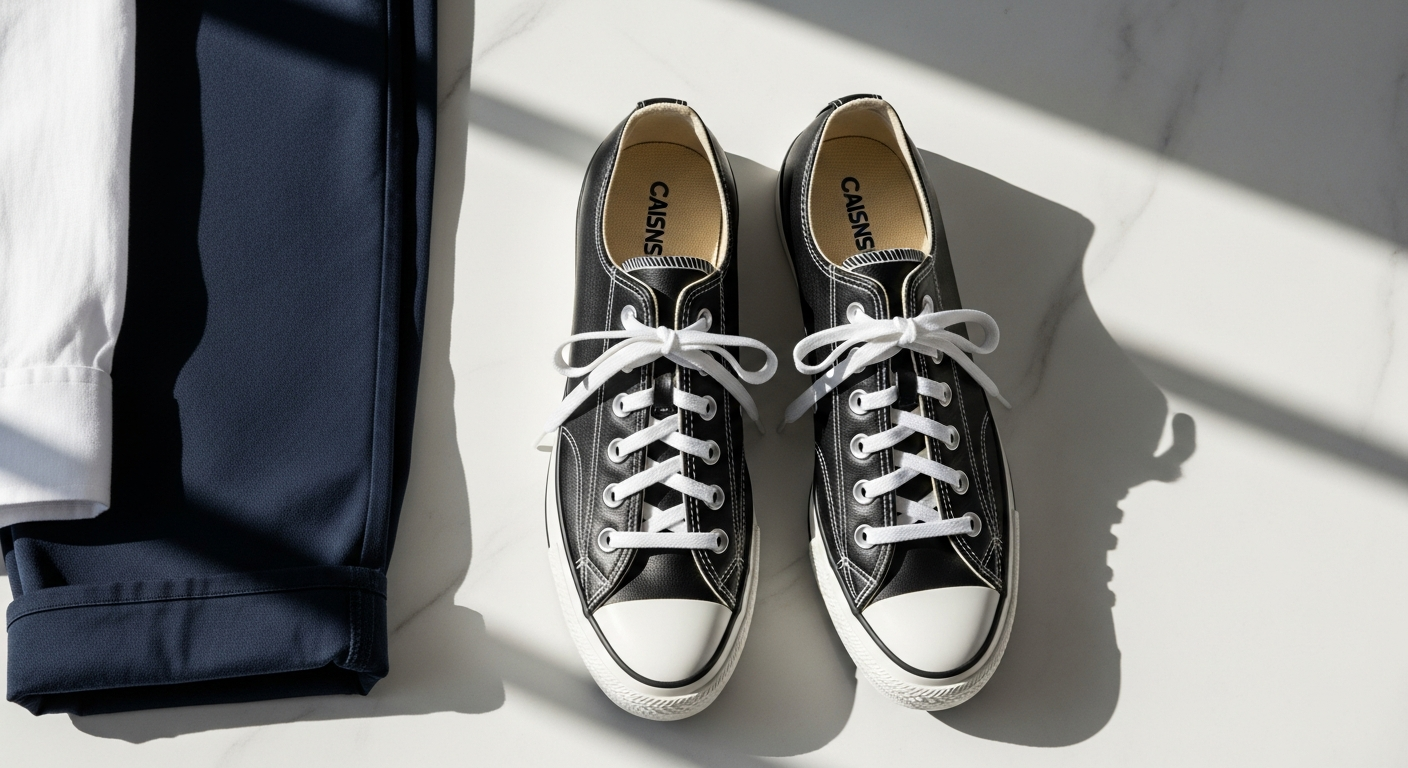
Discover why Converse Chuck Taylor All Star Leather sneakers are ideal for professionals seeking durability and style. Learn sizing, care tips, and styling strategies for work-to-weekend versatility.
Nearly 70% of professionals admit they'd rather wear sneakers to the office if the dress code allowed it. The everyday struggle between comfort and appearance has defined workplace fashion for decades, but the Converse Chuck Taylor All Star Leather sneaker changes that equation entirely. This isn't your typical canvas sneaker—it's a deliberate evolution of an iconic design that actually belongs in professional settings.
The Converse Chuck Taylor All Star Leather takes the legendary silhouette that's defined casual style for generations and elevates it through genuine leather construction. Where canvas versions blur the line between comfort shoe and lifestyle statement, the leather alternative crosses into territory that feels intentional, refined, and credible alongside business casual wardrobes. The shift isn't subtle—it's the difference between a sneaker you wear because you want comfort and a sneaker you wear because you made a deliberate choice about your personal style.
Why Leather Changes Everything: Durability and Sophistication Compared to Canvas
Enhanced durability profile
Leather resists scuffs, creasing, and general wear far better than canvas, making these sneakers an investment rather than a disposable purchase. Canvas versions show every mark and bend within weeks of regular wear. Leather develops patina instead—a visual record of authentic use that actually improves the shoe's character. The upper material maintains structural integrity through countless walks, stairs, and daily life scenarios that would leave canvas looking beaten down.
Weather resistance advantages
Light rain and moisture don't penetrate leather like they do canvas, extending the shoe's lifespan and protecting your feet. Canvas darkens and stains when wet, often leaving permanent marks. Leather sheds water and dries cleanly, returning to its original appearance once dry. This practical advantage becomes significant in climates where unexpected weather isn't unusual, transforming these sneakers from fair-weather shoes into reliable year-round options.
Premium aesthetic versatility
The leather finish photographs better, feels more refined to the touch, and pairs seamlessly with business casual and smart casual outfits. Canvas conveys intentional casualness; leather whispers intentional style. The subtle sheen of genuine leather catches light differently than matte canvas, creating visual interest without loudness. This aesthetic quality matters whether you're in a meeting, at a coffee shop, or in photographs—the shoe reads as chosen rather than default.
Aging characteristics
Genuine leather develops character over time, softening and molding to your foot shape for increasingly personalized comfort. The material becomes more supple, the creases deepen in meaningful ways, and the shoe transforms from new purchase to trusted companion. This progression—where the shoe becomes better with age rather than worse—creates genuine attachment and justifies the higher price point. You're not watching an asset decline; you're watching it mature.
Mastering the Fit: Sizing Strategy and Comfort Considerations for All-Day Wear
The notorious half-size large issue
Converse Chuck Taylors consistently run about half a size large; sizing down is the standard recommendation, not the exception. This quirk catches new buyers off guard, but understanding it prevents the frustration of shoes that slip at the heel or bunch uncomfortably at the toe. Someone wearing a US size 10 typically needs a size 9.5 in Chuck Taylors, or size 9 for a snug fit with thick socks. The leather versions follow the same pattern—don't assume your usual sneaker size will work without adjustment.
High-top versus low-top comfort profiles
High-tops provide ankle stability but can feel restrictive; low-tops offer freedom but less support for those needing it. The choice isn't purely aesthetic—it's functional. High-tops wrap the ankle in leather that requires a proper break-in period before feeling natural. Low-tops feel immediately comfortable but lack the structural support high-tops provide. Neither is objectively better; the right choice depends on your ankle stability needs and how much restriction you tolerate during a full day of wear.
Break-in period expectations
Leather Chuck Taylors require 1-2 weeks of gradual wear to soften and conform to your foot shape. Unlike canvas versions that feel immediately wearable, leather demands patience. The sides will feel slightly stiff, the heel may rub initially, and the overall shoe seems unyielding during the first several wears. This window isn't failure—it's the leather developing personalization. By week two, the shoe has molded to your foot's unique contours and feels distinctly yours in a way new canvas versions never quite achieve.
Insole customization options
Adding aftermarket insoles can address the arch support gap without compromising the shoe's aesthetic. Chuck Taylors are notorious for minimal arch support, and the leather versions don't improve this fundamental characteristic. Quality insoles—whether specialized arch support or simple cushioning—transform the shoe from "my feet hurt after eight hours" to "I can wear these all day." The addition barely changes the shoe's silhouette and cost under $30 easily pays for itself in comfort.
Invest in your comfort and style with genuine Converse Chuck Taylor All Star Leather sneakers now.
Professional Styling: How to Wear Leather Chuck Taylors Beyond Casual Settings
Business casual integration
Pair with chinos, tailored trousers, or midi skirts for an approachable-yet-professional look that signals confidence. Black or neutral leather Chuck Taylors disappear visually when paired with similarly dark bottoms, creating the illusion of a more traditional shoe while maintaining the comfort advantage. Navy leather works with gray or charcoal trousers. White leather makes a bolder statement but still reads as intentional rather than strictly casual. The shoe becomes a bridge—neither fully formal nor purely casual, but something in between that works in spaces where strict dress codes have loosened.
Monochromatic styling tricks
Black leather Chuck Taylors create visual continuity when paired with black pants or skirts, elongating the leg line and creating seamless movement from torso to floor. This visual trick works because the shoe blends into the outfit rather than standing apart as a casual element. The effect differs dramatically from pairing canvas sneakers the same way—leather reads as intentional, while canvas often looks like an afterthought. The same monochromatic principle works with white and cream tones, where the sneaker becomes a subtle anchor point rather than a bold statement.
Dress-down Fridays elevated
Leather Chucks transform casual Friday from sloppy to intentional, especially when paired with quality denim or relaxed blazers. The leather construction signals that you've made deliberate choices, rather than simply throwing on whatever felt comfortable. A structured blazer with good denim and leather Chuck Taylors reads as "I'm confident in this style," whereas the same combination with canvas sneakers reads as "I didn't think about this too hard." The sneaker itself doesn't change, but the context shifts dramatically based on the material quality.
Minimalist wardrobe anchor
The neutral leather finish works with nearly every color palette, making these sneakers a foundational piece for capsule wardrobes. A single pair of black or navy leather Chuck Taylors pairs with virtually every bottom and most tops in a minimalist closet. The versatility reduces decision fatigue and ensures you always have an option that works, whether you're dressing for a casual day or a business casual situation. This foundation-building quality justifies keeping these sneakers as a permanent closet staple.
Real-World Performance: Durability, Maintenance, and Long-Term Value
Scuff resistance testing
Leather Chuck Taylors withstand daily wear, minor impacts, and accidental drags far better than canvas counterparts. A canvas sneaker shows every scuff within weeks of regular urban wear—curbs, door frames, and concrete all leave visible marks. Leather develops scratches that blend into the patina rather than standing out as damage. The upper material maintains cohesion and appearance through the type of casual abuse that degrades canvas. After a year of regular wear, leather versions look distinguished; canvas versions look tired.
Sole longevity
The vulcanized rubber sole maintains traction and structural integrity for 2-3 years of regular wear before showing significant wear patterns. Heavy daily use shortens this timeline; occasional weekend wear extends it. The rubber doesn't crumble or separate from the upper—it gradually wears in a predictable pattern. Once traction becomes insufficient for safety, sole replacement is an option for well-maintained pairs, extending the shoe's life beyond the initial 2-3 year estimate. This longevity differs from canvas versions, where sole wear often arrives alongside deteriorating uppers.
Cleaning routine simplicity
A damp cloth and mild soap restore appearance; no special leather conditioners required for basic maintenance. Unlike some leather shoes that demand specific conditioning products, Chuck Taylors respond well to fundamental care. Wipe down with a damp cloth weekly, address stains with a mild soap solution, and allow natural air drying. The leather doesn't crack or deteriorate from minimal maintenance, and the shoe retains its appearance through years of regular cleaning. This simplicity makes upkeep realistic rather than burdensome.
Cost comparison over time
A $70-$90 investment lasting 2-3 years costs roughly $0.08-$0.12 per wear for regular users. Compare this to higher-priced leather sneakers costing $150-$200 (roughly $0.20-$0.27 per wear for similar durability) or canvas sneakers requiring replacement every 12-18 months at lower upfront cost but higher cumulative spending. The leather Chuck Taylor occupies sweet spot territory—higher initial cost than canvas but better durability, and lower overall cost than premium leather alternatives. The math rewards patient buyers who can look beyond initial purchase price.
The Leather Chuck Taylor Verdict: A Timeless Investment That Earns Its Place
The Converse Chuck Taylor All Star Leather sneaker occupies a rare sweet spot in the footwear world—it's genuinely iconic, remarkably versatile, and built to last. The leather construction elevates this legendary silhouette from pure casual wear into something that works in professional settings, weekend adventures, and everything in between. The material transforms a cultural icon into something that belongs alongside considerably more expensive shoes, yet costs a fraction of the price.
What makes these sneakers genuinely valuable is the compounding return on investment. The leather upper resists damage that would doom canvas alternatives. The iconic silhouette means you'll actually wear these shoes across years rather than abandoning them when newer styles emerge. The versatility ensures they work in contexts far beyond the casual realm, reducing the need for multiple pairs of sneakers.
At $70-$90, you're paying for quality that compounds over years of wear. If leather Chuck Taylors fit your lifestyle, climate, and comfort needs, you've just found a sneaker that works harder than it looks, ages beautifully, and costs less per wear than almost any other quality footwear option available.