
Discover why commercial feminine hygiene bins matter for workplace compliance and employee well-being. Learn about features, costs, and how Direct 365 streamlines washroom management.
Nearly 50% of female employees report feeling uncomfortable in workplace washrooms that lack proper sanitary disposal facilities. This discomfort isn't a minor inconvenience—it's a significant factor affecting how people experience their working environment every single day. When organizations overlook this fundamental need, they send an unintended message: that certain employees' dignity and comfort matter less than cost-cutting measures.
The reality is that commercial feminine hygiene bins represent far more than functional equipment. They're a tangible expression of organizational values. Direct 365, a leading UK business services provider, has positioned these bins at the heart of their workplace hygiene solutions because they recognize what modern businesses genuinely require: discreet, compliant, and professionally managed sanitary waste disposal that works seamlessly in the background while making a powerful statement in the foreground.
This article walks through everything you need to know about commercial feminine hygiene bins—from the regulatory requirements that make them non-negotiable, to the design features that prioritize user dignity, to the financial and operational advantages of outsourcing this service rather than managing it internally. Explore Direct 365's commercial feminine hygiene bin solutions to see how their managed service can transform your workplace washroom facilities.
The Regulatory & Compliance Imperative Behind Sanitary Waste Management
Providing adequate sanitary facilities isn't optional in the UK workplace—it's a legal requirement. The Health and Safety at Work Regulations explicitly require businesses to provide appropriate facilities for personal hygiene, which directly includes menstrual product disposal. The Environmental Protection Act mandates proper segregation and disposal of sanitary waste, ensuring it's handled as biohazardous material rather than general refuse.
COSHH regulations (Control of Substances Hazardous to Health) classify menstrual products as potentially hazardous waste, which means your business must follow specific handling and disposal protocols. Local authority inspections increasingly scrutinize washroom facilities as part of comprehensive workplace assessments, meaning non-compliance can trigger enforcement notices and substantial fines.
Failure to meet these requirements exposes your organization to regulatory action, financial penalties, and reputational damage that can affect recruitment and client relationships. Direct 365's managed service handles the compliance burden entirely—their expertise ensures your business meets every regulatory requirement without requiring internal compliance specialists. Service contracts include documentation and audit trails that protect your organization against regulatory challenges, providing evidence that you're taking sanitary waste management seriously.
Design Features That Prioritize Dignity & Discretion
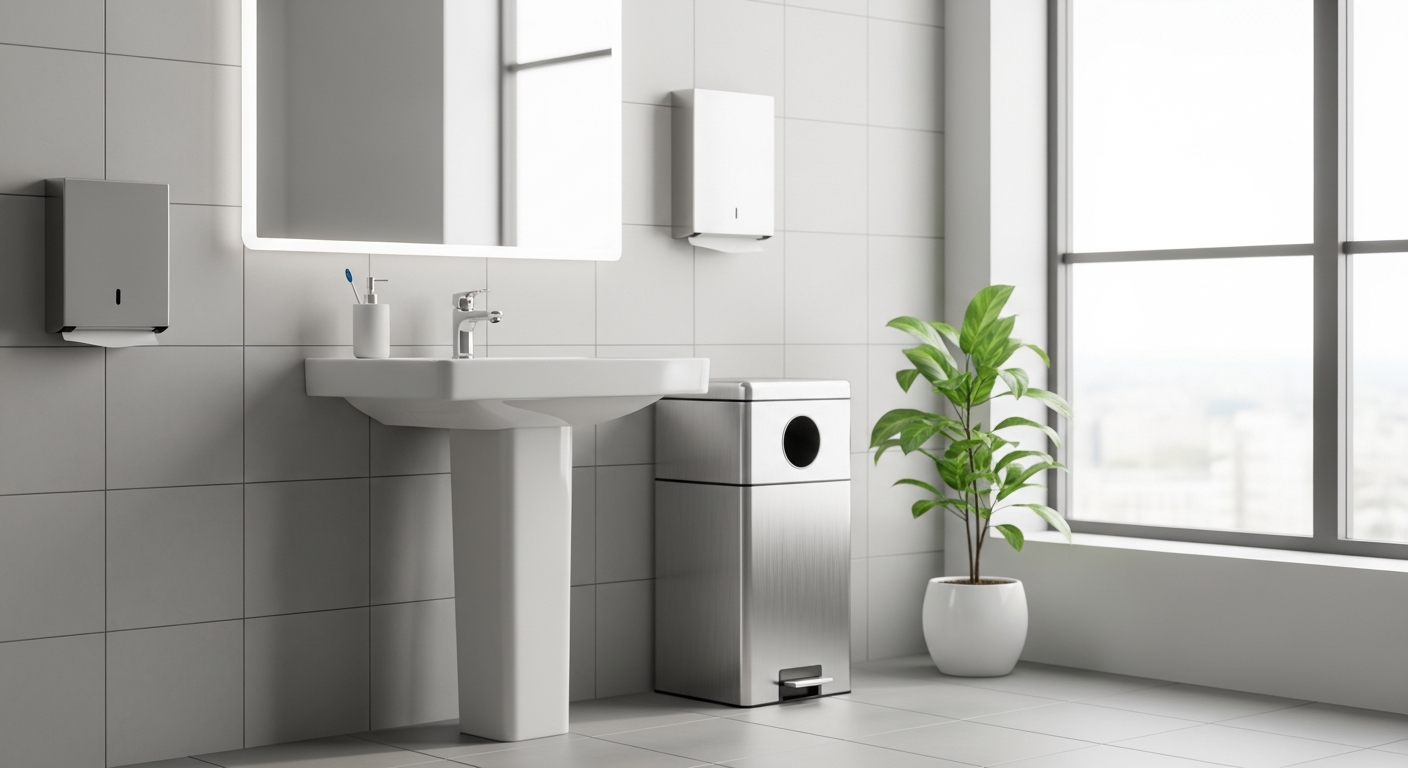
The most effective commercial feminine hygiene bins operate on a simple principle: users should never feel exposed or embarrassed when disposing of sanitary products. Hands-free foot pedal operation is central to this design philosophy. The pedal eliminates the need for hand contact, reducing contamination risks while maintaining complete privacy—users control the bin without anyone else knowing they're using it.
Internal modesty flaps and chutes conceal contents entirely, removing the visual element that might cause embarrassment. This hidden design also prevents odors from escaping, addressing another concern that can make people avoid workplace facilities altogether. Antimicrobial-treated materials inhibit bacterial growth directly within the bin itself, preventing the bin from becoming a contamination source.
Scented liners and active carbon filters provide superior odor control compared to standard waste bins, ensuring the washroom environment remains fresh and hygienic. The physical design prioritizes discretion through sleek, compact profiles—typically around 50-60 cm in height—that fit seamlessly beside toilet units without dominating the washroom space. Color options in white, grey, and black blend naturally with modern washroom aesthetics rather than standing out as institutional fixtures.
Construction from durable ABS plastic or stainless steel ensures the bins withstand frequent use while remaining easy to clean and sanitize. The easy-access design for service personnel enables quick, hygienic liner changes without spillage or mess, ensuring the bin is always in pristine condition.
Understanding Capacity, Specifications & Installation Requirements
Standard commercial feminine hygiene bins range from 15 to 23 liters in capacity, which accommodates typical commercial washroom usage patterns without requiring excessive collection frequencies. Compact dimensions—approximately 20-30 cm width and 30-40 cm depth—fit standard washroom layouts, whether you're working with a small office or a large corporate facility.
Material selection depends on your priorities and budget. ABS plastic options offer cost-effectiveness and straightforward cleaning; stainless steel provides premium durability for high-traffic environments. Both options incorporate bacterial resistance properties, ensuring the bin construction itself doesn't become a hygiene liability.
Installation requires minimal infrastructure—no special plumbing, no electrical connections, and no extensive modifications to existing washrooms. The bins simply position beside toilet units, making them suitable for retrofit situations or new facility designs. However, determining optimal placement and quantity requires proper assessment. Direct 365 handles site evaluation to identify how many bins your washroom traffic requires and where they should be positioned for maximum accessibility and discretion.
The Service Model: Why Managed Contracts Beat Standalone Purchases
The choice between purchasing bins independently and engaging a managed service contract fundamentally reshapes how your organization handles this responsibility. Standalone bins cost £50-£150 to purchase outright, but ownership brings ongoing responsibility: your organization becomes responsible for scheduling collections, ensuring compliance with disposal regulations, and managing the logistics of getting sanitary waste to licensed facilities.
Direct 365's managed service model operates differently. Monthly or quarterly fees (£15-£40 per bin) include provision of the bin, scheduled collection, and professional disposal at licensed facilities. This removes the burden entirely from your internal operations. Your team doesn't need to manage waste handling, coordinate collections, or maintain compliance expertise.
Scheduled collection ensures consistent, professional service according to your washroom traffic patterns. Frequency options—weekly, bi-weekly, or monthly—adapt to your actual usage rather than forcing you into a generic schedule. Professional servicing guarantees bins are always stocked with clean liners, functional, and hygienic. Transparent pricing prevents surprise costs and budget overruns, making financial planning straightforward.
The complexity of sourcing, installing, and managing this service independently involves vendor relationships, compliance verification, scheduling coordination, and emergency backup arrangements. Direct 365's comprehensive approach eliminates these complications, freeing your team to focus on core business operations.
Cost-Benefit Analysis: Investment in Employee Well-Being & Business Reputation
Monthly service costs of £15-£40 per bin represent a modest investment when considered against the operational and reputational benefits. Compare this to the cost of employee turnover—replacing a single employee typically costs 50-200% of their annual salary. Improved employee satisfaction and retention directly offset service expenses many times over.
Organizations that provide adequate sanitary facilities demonstrate genuine commitment to diversity and inclusion initiatives. This signals to your workforce that their well-being matters, which reduces absenteeism related to workplace discomfort or inadequate facilities. Employees who feel cared for are more productive, more engaged, and more likely to remain with the organization.
Poor washroom facilities generate negative reviews on Glassdoor, Indeed, and other platforms where job seekers research companies. Conversely, facilities that reflect organizational values attract top talent by signaling that your business prioritizes employee dignity. In competitive labor markets, this advantage is substantial.
Compliance represents another hidden cost that proper facilities prevent. Non-compliance fines, legal fees, and enforcement action costs far exceed the service investment. Service contracts provide predictable budgeting without surprise expenses or emergency situations requiring urgent remediation.
Common Concerns & Contract Considerations
Organizations sometimes hesitate about ongoing service fees, viewing them as perpetual costs rather than investments. However, framing matters here: these fees represent a fixed operational expense with known costs and included services, which simplifies budget planning compared to the variable, unpredictable costs of managing sanitary waste internally.
Contract terms and cancellation policies vary across providers—clarify exit clauses and flexibility options before committing. Some businesses worry about being locked into long-term agreements that don't suit their evolving needs. Direct 365's approach emphasizes partnership, and negotiating flexible terms based on your situation is reasonable.
Service frequency should match actual washroom usage patterns. Over-servicing wastes money; under-servicing undermines the benefits. Clear communication about your facility's traffic patterns ensures the contract structure serves your needs.
Response times matter when issues arise. Ensure Direct 365 has reliable communication channels and clearly defined Service Level Agreements (SLAs) specifying collection schedules and emergency response protocols. Request detailed contract breakdowns clarifying exactly what's included in your fee—transparency prevents surprises and ensures both parties have aligned expectations.
Making the Business Case to Leadership & Stakeholders
Securing organizational support for a commercial feminine hygiene bin service requires framing the investment appropriately for different audiences. Finance teams respond to compliance risk quantification—present potential fines, enforcement action costs, and legal fees associated with non-compliance. These figures quickly justify the modest service investment.
HR leadership values recruitment and retention data. Share employee feedback about washroom facilities and satisfaction metrics showing how adequate facilities impact workplace culture. Benchmark against industry standards—most modern businesses now provide these facilities as standard, positioning this as table-stakes rather than luxury.
Frame the service as a workforce investment, connecting it to broader organizational values and ESG (Environmental, Social, Governance) goals rather than positioning it as merely an operational expense. Use case studies from similar-sized businesses demonstrating ROI through improved retention, reduced absenteeism, and positive recruitment outcomes.
Emphasize the managed service advantage: Direct 365 handles the complexity and maintains quality control, while your organization focuses on strategic priorities. This positioning transforms the conversation from "do we buy bins?" to "how do we outsource this responsibility to specialists?"
Transforming Workplace Washrooms Into Spaces That Reflect Your Values
Commercial feminine hygiene bins represent something straightforward yet powerful: organizational commitment to employee dignity. The regulatory requirements are clear, employee expectations continue rising, and the business case is compelling. Your organization faces a genuine choice about what message your washroom facilities communicate.
By partnering with Direct 365 for a managed service contract, you're outsourcing the entire complexity of compliance, maintenance, and professional waste disposal. This partnership frees your team to focus on strategic priorities while ensuring your washrooms remain hygienic, compliant, and welcoming. The investment is modest, the benefits are substantial, and the message you send to your workforce resonates far beyond the washroom.
Whether you operate a small office or a large corporate facility, commercial feminine hygiene bins have become essential infrastructure in modern workplaces. Direct 365's service model removes friction, ensures consistent quality, and guarantees that every employee experiences a washroom environment reflecting organizational values.
Your workplace culture is built through countless interactions and decisions—big and small. The facilities you provide communicate priorities more directly than any mission statement. When you invest in sanitary disposal solutions that prioritize dignity and discretion, you're affirming that your organization genuinely values all its people.