
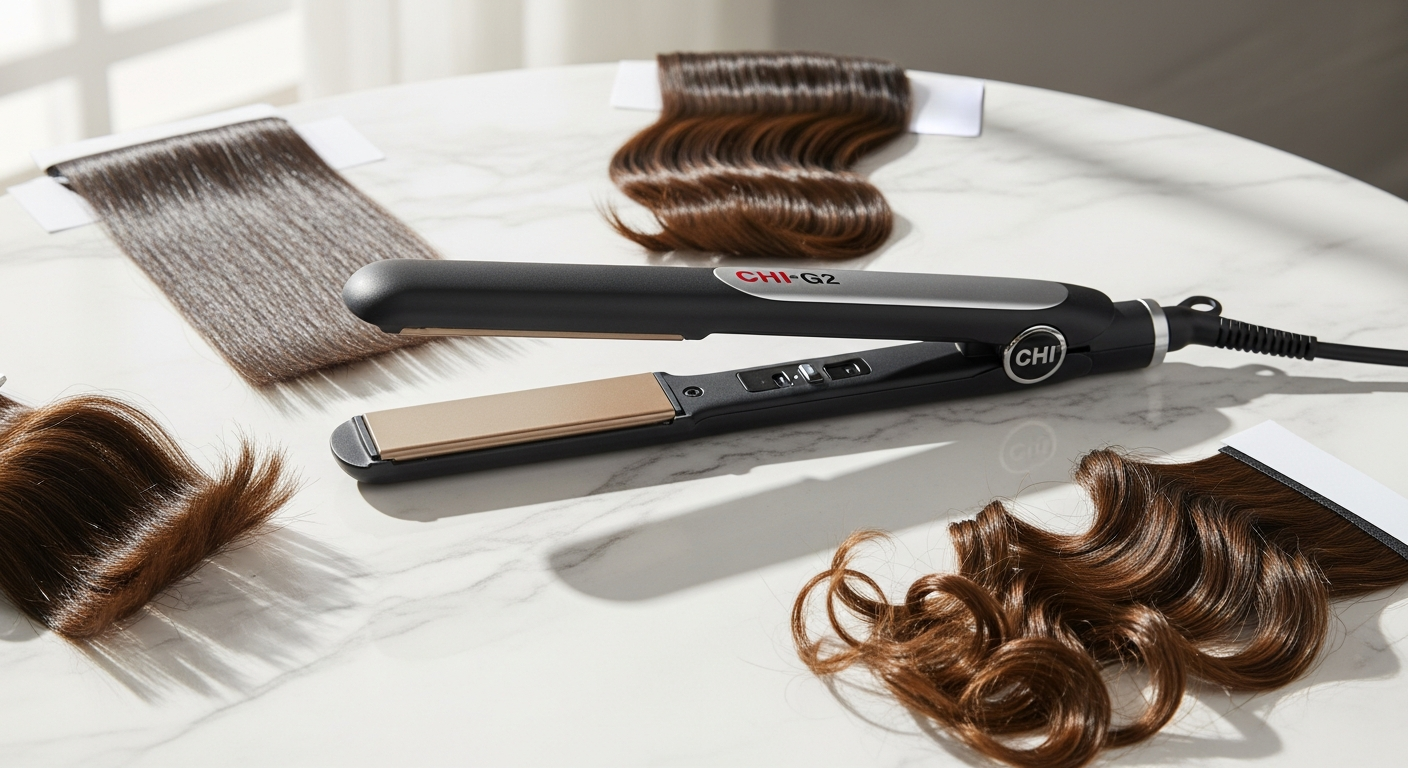
Discover how the CHI G2 Ceramic Titanium Digital Flat Iron transforms your styling routine with versatile techniques—from sleek straightening to bouncy waves. Learn pro tips for creating curls, flips, and waves with this salon-quality tool.
Most people think flat irons are one-trick ponies—you straighten and you're done. But the CHI G2 Ceramic Titanium Digital Flat Iron isn't just about creating straight, sleek hair; it's a versatile styling powerhouse that can produce curls, waves, flips, and textures that rival what you'd pay a stylist $100+ to achieve. With its titanium-infused ceramic plates, rapid 40-second heat-up time, and intelligent color-coded temperature settings, this mid-range investment ($120-$160) bridges the gap between budget tools and professional equipment.
The styling world has shifted dramatically in recent years. Professional-grade tools are no longer exclusive to salons, and the CHI G2 exemplifies this democratization of quality hair care. Built on CHI's legacy, the G2 represents the next generation of flat iron technology—one that prioritizes both performance and user control. Whether you're tackling thick, coarse hair or delicate strands that need careful handling, this iron adapts to your specific needs through its innovative design.
This guide breaks down exactly how to use the CHI G2 for multiple styling techniques, explores its advanced features, and reveals why both professionals and everyday users trust this tool.
Discover the CHI G2 and transform your styling routine today.
Beyond Straightening—Styling Techniques You Can Master with the CHI G2
The true power of the CHI G2 emerges when you move beyond basic straightening. This iron's smooth plates and responsive design make it surprisingly capable for creating an array of textures and finishes.
Creating Loose, Beachy Waves by Twisting the Iron
Beachy waves feel effortless but intentional. To achieve this look, take a horizontal section of hair and clamp it at the roots with the iron held vertically. As you glide down the section, gently twist your wrist in a rotating motion—about 90 degrees as you move toward the ends. This creates that undulating, natural-looking wave that feels like you've just returned from the coast. The key is consistency: each section should rotate in the same direction for a cohesive appearance.
Techniques for Tight, Defined Curls Using the Clamp-and-Rotate Method
When you want structured, springy curls, the clamp-and-rotate method delivers. Clamp a section at mid-length, then rotate the iron 360 degrees while slowly moving it down the hair shaft. This wraps the hair around the plates, creating a defined curl. For tighter curls, rotate more slowly and use smaller sections. The CHI G2's smooth plates prevent snagging, so your curls form cleanly without frizz or breakage.
Achieving Soft, Bouncy Waves with the Half-Twist Technique
Half-twists produce waves with more movement than traditional straightening but less definition than full curls. Clamp a section, twist the iron 180 degrees (half a rotation), then glide downward. This partial rotation creates a gentle S-curve through the hair that bounces and moves throughout the day. These waves feel relaxed yet polished—ideal for those who want texture without appearing overly styled.
Creating Textured Flips and Movement at the Ends of Hair
Flipped ends add personality and dimension. Near the ends of each section, turn the iron outward (away from your face) and rotate it 180 degrees as you glide through. This flips the ends outward, creating lift and movement. For inward flips (toward the face), rotate the iron inward instead. Mixing both directions throughout your hair creates dimension and prevents a one-dimensional appearance.
Straightening Techniques for Different Hair Types
Fine hair requires a lighter touch and lower heat. Use smaller sections and move the iron through quickly to avoid over-processing. Medium hair tolerates standard techniques and mid-range temperatures. Coarse hair benefits from larger sections, slower passes, and higher heat settings to fully relax the texture. The CHI G2's color-coded system guides these decisions, but technique matters equally.
Blending Techniques to Create Dimension and Natural-Looking Styles
Professional stylists combine multiple techniques within a single look. Start by straightening the base, then add subtle waves to the mid-lengths and flip the ends. Alternate between different wave techniques in different sections to create movement that feels lived-in rather than uniform. This layering of techniques produces sophisticated, dimensional styles.
Tips for Achieving Salon-Quality Results Without Damaging Hair
Preparation is foundational. Apply heat protectant spray before styling to create a barrier between your hair and the plates. Section your hair into manageable pieces—never attempt to style thick sections all at once. Work through the hair systematically rather than randomly. Allow curls and waves to cool before handling them; this sets the style and increases longevity. Finally, use the appropriate temperature for your hair type, and never make multiple passes over the same section unnecessarily.
Understanding the Color-Coded Temperature System for Different Hair Types
The CHI G2's color-coded temperature system removes guesswork from heat selection. This intelligent design acknowledges that different hair types require different thermal conditions to style safely and effectively.
Blue Setting (Up to 370°F) for Fine and Fragile Hair—When to Use and Why
Fine hair is delicate and prone to damage from excessive heat. The blue setting caps out at 370°F, providing enough warmth to style without compromising hair integrity. Fine hair styles quickly, so the lower temperature actually performs efficiently. Use this setting if your hair falls flat without much texture, feels thin when twisted, or shows damage easily. The conservative heat prevents breakage, split ends, and that straw-like appearance that results from over-processing.
Green Setting (375°F-395°F) for Medium and Wavy Hair—Optimal Styling Temperatures
Most people fall into the medium hair category, and the green setting accommodates this broad range perfectly. These temperatures handle natural wave patterns, moderate density, and typical texture without requiring extreme heat. This setting works for hair that has some body but isn't resistant to styling. The green range allows you to pick the exact temperature based on your specific styling goals and how your hair responds on any given day.
Red Setting (400°F-425°F) for Coarse and Resistant Hair—Maximum Heat for Stubborn Texture
Coarse hair demands heat to relax and style effectively. The red setting delivers maximum temperature, providing the energy needed to smooth thick texture and create lasting styles. Coarse hair typically recovers better from heat exposure than fine hair, so these elevated temperatures are generally appropriate for this hair type. If your hair feels thick, resists straightening attempts, or naturally falls into tight waves or curls, you likely belong in the red range.
How to Identify Your Hair Type Before Selecting a Temperature
Run a single strand between your fingers. Fine hair feels thin and delicate; medium hair has obvious presence but isn't thick; coarse hair feels substantial and visible to the naked eye. Another method: pull back your hair tightly and examine your ponytail's diameter. If you can barely wrap your fingers around it, you have fine hair. A normal circumference suggests medium hair. A thick, substantial ponytail indicates coarse hair. Knowing this categorization prevents the common mistake of using excessive heat on delicate hair.
Common Mistakes When Choosing the Wrong Temperature Setting
Using red heat on fine hair causes damage, breakage, and a fried appearance. Using blue heat on coarse hair wastes time because the hair won't style effectively at that temperature. Some people make the mistake of assuming that higher heat always works better or faster—it doesn't. Starting at the appropriate temperature for your hair type actually produces faster, better results with less damage. Another common error is using the same setting regardless of hair condition; freshly washed hair often needs less heat than second-day hair.
Adjusting Temperature Based on Styling Technique
Straightening generally requires moderate heat because you're forcing the hair shaft to conform to a flat shape. Creating waves or curls might need slightly higher temperatures to set the shape more firmly. If you're doing multiple styling techniques in one session, start with your most heat-intensive needs first while your hair is fresh. As you progress through different styles, you might actually lower the temperature slightly as your hair becomes more responsive.
Advanced Features That Elevate Your Styling Game
Beyond its core function, the CHI G2 incorporates several technological features that genuinely improve the styling experience.
Rapid 40-Second Heat-Up Time and What It Means for Your Routine
Most mornings involve rushing. The CHI G2 reaches your desired temperature in 40 seconds, which means you can unpack it, plug it in, and start styling within a minute. This speed compounds throughout your styling session, shaving meaningful time off your routine. Over a week, that's an extra 20-30 minutes of sleep or coffee. This practical benefit distinguishes the CHI G2 from slower competitors that require several minutes to heat up.
Titanium-Infused Ceramic Plates and Their Role in Preventing Hot Spots
Hot spots—areas of uneven temperature on the plates—damage hair by exposing certain sections to extreme heat while others cool. The CHI G2's titanium-infused ceramic construction distributes heat uniformly across the entire plate surface. This consistency means every millimeter of hair receives the same thermal treatment, preventing the striped, damaged appearance that hot spots create. The combination of materials also means the plates conduct heat efficiently while maintaining that critical evenness.
Even Heat Distribution Technology That Protects Hair Integrity
Consistent temperature across the plates directly translates to healthier hair. When heat distributes evenly, your hair doesn't experience the thermal shock of sudden temperature fluctuations. This stability allows the cuticle layer to remain smooth and protected. Over time, this attention to even heating means your hair maintains its shine, elasticity, and overall health despite regular styling.
The 1-Hour Auto Shut-Off Function for Peace of Mind and Safety
Life gets hectic. You finish styling and then wonder if you actually unplugged the iron. The CHI G2's automatic shut-off after one hour eliminates that anxiety and prevents accidental damage. If you step away and forget the iron is on, it powers down safely. This feature also saves energy and extends the iron's lifespan by preventing prolonged, unnecessary heat generation.
Dual Voltage Capabilities for International Travel and Styling Flexibility
The CHI G2 works anywhere in the world, automatically adapting to voltage differences between countries. If you travel frequently or move internationally, this versatility means you're never without your preferred styling tool. The dual voltage also means you can use the iron with various power adapters and outlets without concern about compatibility.
Explore the full range of CHI G2 features and find the perfect size for your styling needs.
Professional Tips for Maximizing Your CHI G2 Results
Understanding techniques and features matters, but execution determines final results. These professional strategies elevate your styling from competent to salon-quality.
Pre-Styling Preparation: Sectioning, Heat Protection, and Moisture Balance
Start with clean, dry hair—wet or damp hair requires excessive heat to style and suffers more damage. Divide your hair into four to six sections using clips, depending on thickness and length. Apply heat protectant spray liberally to each section before styling; this creates an invisible barrier that reduces heat damage. Check your hair's moisture level; if it feels brittle or straw-like, apply a leave-in conditioner before styling to restore suppleness. Proper preparation determines whether your styling effort builds beautiful results or compounds existing damage.
Optimal Technique for Straightening Without Multiple Passes
Place the iron at the roots, clamp firmly, and glide smoothly toward the ends in one continuous motion. Rushing this movement or moving too quickly creates incompletely straightened sections. Moving too slowly or making multiple passes over the same hair causes unnecessary heat exposure. Find the rhythm where you glide through in one pass while fully straightening the hair. Starting at your most difficult sections when your focus is sharp ensures these challenging areas receive optimal technique.
Creating Waves That Last Throughout the Day
Waves set best when they cool completely. After creating each wave with your preferred technique, immediately run your fingers through it or use a cool shot (if your iron has this feature) to set the pattern while it's still malleable. Waves that cool in their curved shape hold that shape much longer throughout the day. Avoid touching or brushing waves immediately after styling; let them fully cool and set first. Using a light hairspray after cooling also extends longevity.
Achieving Curls with Varying Degrees of Tightness and Bounce
Tighter curls result from smaller section sizes, tighter iron rotation, and slower movement through the hair. Looser, bouncier curls come from larger sections, gentler rotation, and faster movement. Experiment within a single styling session to understand how these variables affect results. Mark sections mentally—the front gets loose, bouncy curls while the back has tighter, defined curls for dimensional contrast. Varying curl tightness throughout your hair prevents a uniform, overly-styled appearance.
How to Style Different Hair Lengths Effectively
Short hair requires smaller sections and more careful technique because less hair means fewer styling opportunities. Work more slowly with short hair. Medium-length hair offers flexibility for most techniques. Long hair sometimes needs strategic sectioning to ensure all layers style consistently; focus on sections in your lower half to avoid missing strands that hide beneath upper layers. Longer hair also benefits from horizontal sections at different heights rather than vertical sections, ensuring complete coverage.
Maintenance Routines to Keep Plates Functioning Optimally
Allow the iron to cool completely before cleaning. Use a slightly damp cloth to wipe the plates, removing product buildup, dust, and residue. Never submerge the iron or use excessive water. Clean the plates regularly—weekly if you style daily—to maintain optimal heat distribution and plate smoothness. Store the iron with the cord loosely coiled in a cool, dry location. Check the cord periodically for damage. With proper maintenance, your CHI G2 remains in peak condition for years.
The CHI G2 Delivers Versatility That Justifies the Investment
The CHI G2 Ceramic Titanium Digital Flat Iron transcends the typical flat iron experience by offering genuine versatility that extends far beyond straightening. The color-coded temperature system removes the guesswork, the rapid heat-up saves precious morning minutes, and the titanium-infused ceramic plates deliver consistent, damage-resistant results. Yes, the $120-$160 price tag sits firmly in the mid-to-high range, but when you consider the styling versatility, professional-grade performance, and durability this iron offers, the investment pays dividends. Whether you're straightening your hair, creating beachy waves, or experimenting with bouncy curls, the CHI G2 adapts to your vision. If you're serious about mastering multiple styling techniques and want a tool that actually delivers on its promises, this flat iron deserves a spot in your styling arsenal.