
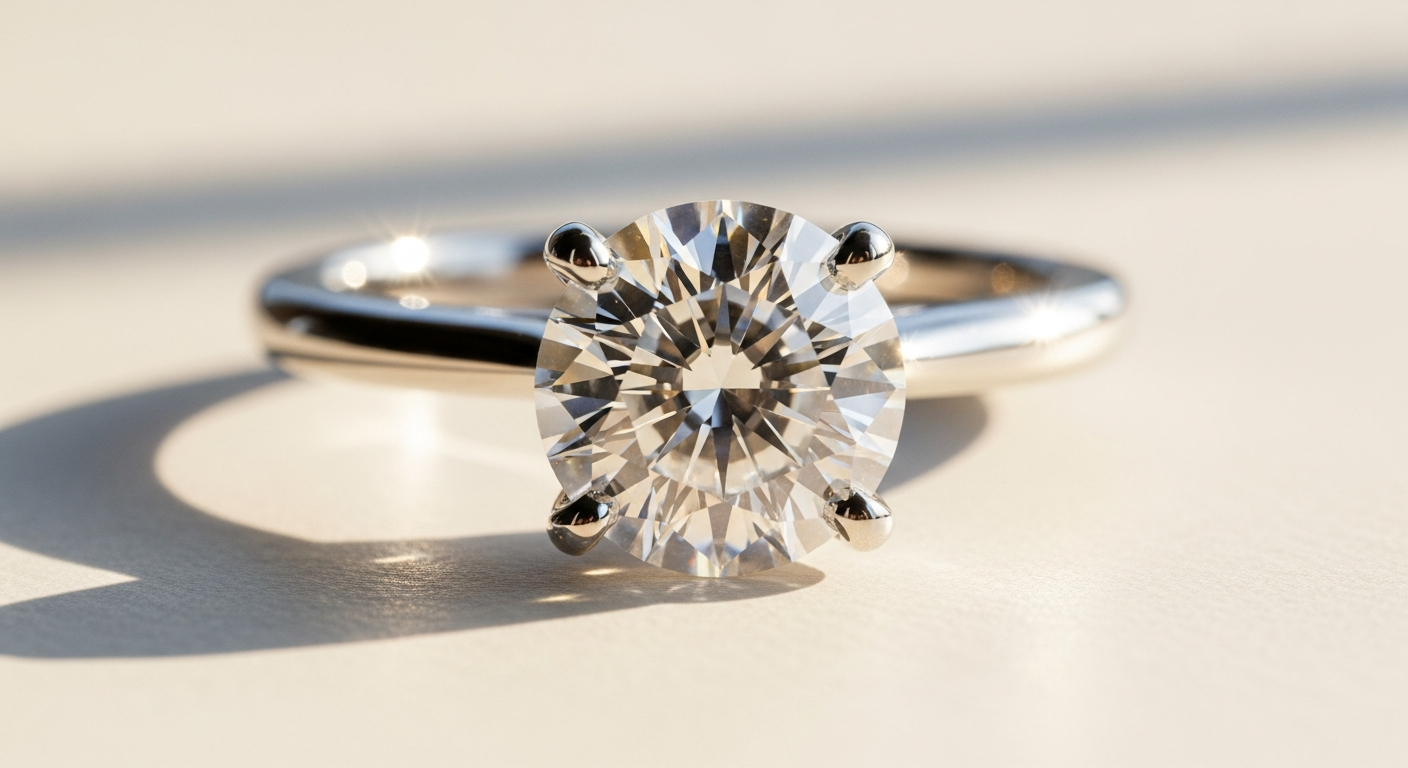
Learn how to assess a certified lab grown diamond, verify its grading report, compare quality factors, and know what to check before you purchase one.
Buying a certified lab grown diamond gives you independent documentation you can review before committing to a stone. Rather than relying solely on a retailer’s description, you can check how an independent gemological laboratory has identified and assessed the diamond.
Certification, however, does not automatically mean every diamond has the same quality. You still need to examine the grading information, compare stones, confirm the report number, and decide which characteristics matter for your jewelry and budget.
What Does a Certified Lab Grown Diamond Tell You?
A certified lab grown diamond has been examined by a gemological laboratory that issues documentation identifying the stone as laboratory-grown and recording relevant quality characteristics.
The FTC distinguishes laboratory-grown diamonds from mined diamonds and states that sellers should clearly communicate their laboratory-created origin. Laboratory-grown terminology is appropriate for material having essentially the same optical, physical, and chemical properties as mined diamond.
Depending on the laboratory and report type, the document may include information such as measurements, weight, quality assessments, polish, symmetry, growth method, treatments, or identifying inscriptions.
One important detail for shoppers is that reporting systems are not identical across laboratories. GIA currently uses an overall Premium or Standard quality assessment for qualifying loose, colorless-to-near-colorless laboratory-grown diamonds, rather than the conventional format shoppers may associate with its natural-diamond reports.
IGI, meanwhile, states that its Laboratory Grown Diamond Report documents the stone’s laboratory-grown origin and provides assessments of carat weight, color, clarity, and cut where applicable.
Why Independent Documentation Matters
A grading document gives you a reference point when comparing diamonds that may look similar in online photographs.
For example, two stones with the same carat weight can receive different assessments for other characteristics. IGI specifically notes that diamonds of identical weight can differ in color, clarity, and cut grades.
That makes lab grown diamond certification useful during comparison shopping. Instead of judging a stone from carat weight or a retailer photograph alone, you can review independently documented characteristics.
A report is not the same thing as a financial appraisal, however. IGI states that its certification report provides objective information about a diamond’s characteristics but is not itself an appraisal.
What to Check on a Diamond Grading Report
Before purchasing, read the diamond grading report attached to the individual stone rather than stopping at the word “certified.”
1. Laboratory-Grown Identification
First, confirm that the document identifies the diamond as laboratory-grown.
This distinction matters because laboratory-grown, mined, and simulated stones are different product categories. The FTC advises sellers to disclose clearly when a diamond is laboratory-created rather than mined.
2. Report Number
Look for the identifying report or assessment number.
GIA states that its assessed laboratory-grown diamonds have their girdles inscribed with the relevant GIA number. Its laboratory-grown reports are digital, and GIA says a report found through its Report Check system can be authenticated there.
IGI likewise provides an online report-verification service.
3. Carat Weight
Carat describes weight, not face-up dimensions.
Two diamonds with identical carat weights can have different measurements, proportions, and visual presence. Check the dimensions alongside weight when comparing candidates.
4. Cut Information
For applicable diamonds and reporting systems, pay close attention to diamond cut quality.
Cut-related proportions and workmanship affect how a faceted diamond handles light. IGI states that its round brilliant cut assessment examines factors associated with brightness, fire, scintillation, and pattern. Its reports also document polish and symmetry.
Do not judge a purchase from a single grade in isolation. Videos, measurements, proportions, shape, and your own visual preferences can add useful context.
5. Color
Color grading describes the degree of body color observed under standardized conditions.
IGI uses a D-to-Z scale for applicable diamonds, with D–F described as colorless and G–J as near colorless.
You do not necessarily need the highest possible color grade. The setting metal, diamond shape, size, and your sensitivity to color can influence what looks right to you.
6. Clarity
Clarity concerns internal and external characteristics assessed during grading.
Higher clarity grades can cost differently from lower grades, yet some clarity differences may be difficult to detect without magnification. Rather than buying a grade solely because it sounds impressive, inspect available imagery and determine how visible the characteristics are under normal viewing.
IGI Certified Lab Diamond: What the Report Can Include
An IGI certified lab diamond report identifies the stone’s laboratory-grown origin and records relevant gemological characteristics.
IGI states that its reports can document the shape, cutting style, measurements, carat weight, color, clarity, and cut assessment. The growth process and presence of treatments may also be noted in report comments when applicable.
For shoppers comparing several stones, these details can make side-by-side research easier.
| Report Detail | Why You Should Check It |
|---|---|
| Origin | Confirms laboratory-grown identification |
| Report number | Helps you verify the document |
| Carat weight | Records diamond weight |
| Measurements | Shows physical dimensions |
| Color information | Helps compare visible body color |
| Clarity information | Documents assessed clarity characteristics |
| Cut information | Helps assess applicable cut characteristics |
| Polish and symmetry | Documents finishing workmanship |
| Comments | May contain additional identification or treatment information |
Report contents depend on the laboratory, diamond type, and service used, so check the actual document rather than assuming every certificate contains every field.
Lab-Created Versus Diamond Simulants
A lab created diamond should not be confused with a diamond simulant.
FTC guidance states that laboratory-created diamond terminology should be used for products having essentially the same optical, physical, and chemical properties as mined diamond. Simulated or imitation products are different materials and should be identified accordingly.
This distinction is worth checking carefully in product listings, especially when descriptions use broad terms such as “diamond alternative.”
GIA and IGI Reporting Is Not Identical
One common shopping mistake is assuming every gemological laboratory currently reports laboratory-grown diamonds in exactly the same format.
They do not.
GIA currently provides a Premium or Standard overall quality evaluation for qualifying loose, colorless-to-near-colorless laboratory-grown diamonds weighing at least 0.15 carats. GIA also laser-inscribes these diamonds with “Laboratory-Grown” and their quality-assessment number.
IGI’s current laboratory-grown diamond reporting uses detailed quality assessments that can include the familiar color, clarity, carat, and applicable cut information.
Neither format means you should buy a stone automatically. Read what the specific report actually assesses and use comparable information when evaluating candidates.
How to Compare Two Certified Diamonds
Suppose you are choosing between two similarly sized stones for a lab grown engagement ring.
Rather than selecting according to carat weight alone, compare them in this order:
- Confirm laboratory-grown origin.
- Verify each report or assessment number.
- Compare measurements and carat weight.
- Review cut-related information where available.
- Check color and clarity information provided by the laboratory.
- Review polish, symmetry, treatments, and report comments where applicable.
- Examine clear photographs or videos of the actual stones.
- Compare setting compatibility and total purchase terms.
- Read the retailer’s return, resizing, warranty, and service policies.
- Compare the final prices only after understanding what differs between the stones.
This method helps prevent a larger carat number or higher-sounding grade from dominating your decision without context.
Should You Prioritize Carat, Cut, Color, or Clarity?
There is no single specification that suits every buyer.
If visible light performance matters strongly to you, pay close attention to cut-related characteristics and actual stone imagery. If size is your main preference, you may accept different color or clarity characteristics to reach your target dimensions.
Setting choice matters too. The appearance of a diamond can change depending on its shape, proportions, surrounding stones, and metal.
The practical goal is to choose a combination of characteristics that you can see and value rather than automatically paying for grades that may make little visual difference to you.
Does Certification Guarantee a Good Diamond?
No.
Independent documentation tells you what the issuing laboratory assessed. It does not guarantee that you will personally like the diamond’s appearance, that a particular price represents good value, or that the jewelry setting meets your preferences.
Certification also should not replace basic retailer research. The FTC advises jewelry shoppers to check seller reputation and obtain refund and return policies in writing.
Can You Verify the Certificate Online?
Often, yes, depending on the issuing laboratory.
For GIA-assessed laboratory-grown diamonds, GIA provides Report Check for verification. GIA states that laboratory-grown diamond reports are digital and that its assessed stones carry identifying inscriptions.
IGI also maintains an online system through which shoppers can enter a report number and view grading results.
When possible, perform this check independently rather than relying only on a retailer-provided screenshot.
Questions to Ask Before Paying
Ask the seller:
- Which gemological laboratory issued the report?
- Can you access the report independently using its number?
- Does the report identify the stone as laboratory-grown?
- Are any treatments disclosed?
- Are photographs or videos of the actual diamond available?
- What are the return and exchange conditions?
- Does resizing affect the return policy?
- What warranty or after-sale service applies?
- Is the stone sold loose or already mounted?
- Which specifications belong to the center stone rather than the finished jewelry?
These questions give you information that can matter after the initial visual comparison.
If you are actively shopping, compare certified laboratory-grown diamond options and their individual grading documents before choosing a stone.
What to Review Before Choosing Your Diamond
A certified lab grown diamond can give you useful independent documentation, yet the word “certified” should be the beginning of your research rather than the deciding factor.
Confirm who issued the report, verify its number, understand the laboratory’s current grading or assessment system, and compare the documented characteristics with clear imagery of the stone. Then review the setting, retailer policies, and total price.