
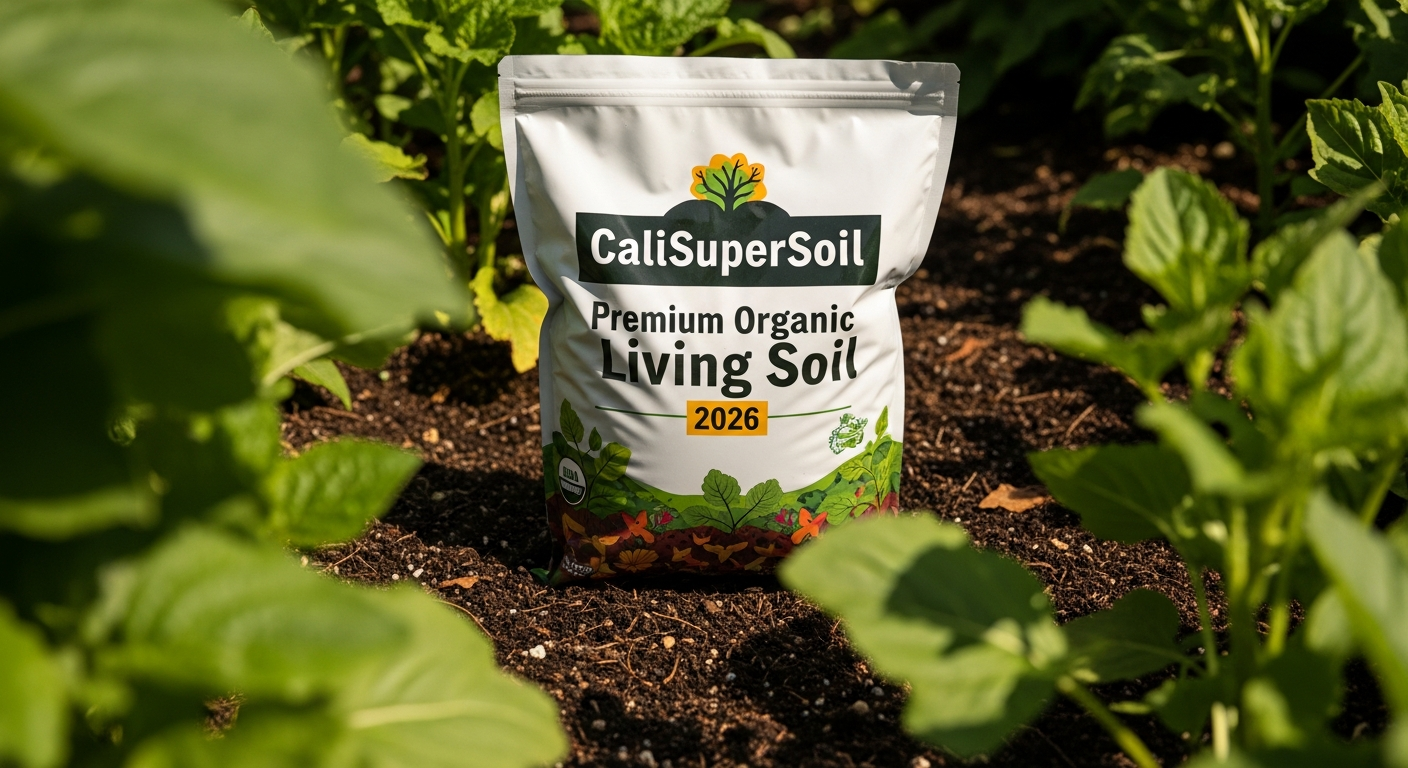
Discover why CaliSuperSoil Premium Organic Living Soil is revolutionizing home cultivation. Learn about its 800% nutrient advantage, living soil technology, and whether this super soil concentrate is worth the investment for your garden.
Imagine harvesting plants so vibrant and nutrient-dense that you wonder if you're doing something wrong—because it feels too easy. That's the reality for thousands of home growers who've switched to CaliSuperSoil Premium Organic Living Soil, ditching their complicated feeding schedules and bottled supplements for a just-add-water growing medium.
I've spent considerable time researching this product, and the numbers speak for themselves: a 5lb concentrate that expands into 25-30 gallons of premium super soil, packed with 800% more available nutrients than standard potting soil. The rise of living soil technology has fundamentally changed how home gardeners approach cultivation, especially those seeking organic methods without the complexity.
Explore CaliSuperSoil's Premium Organic Living Soil and transform your growing operation today.
CaliSuperSoil has positioned itself at the forefront of this movement, hand-crafting a 60-day fermented blend of 18+ amendments that transform raw ingredients into a thriving microbial ecosystem. This isn't just another bagged soil—it's a complete growing solution designed to eliminate nutrient deficiencies, reduce feeding schedules, and support robust plant development from seed to harvest.
Understanding Living Soil Technology: The Science Behind the Concentrate
How fermentation activates nutrients and creates bioavailable forms
The 60-day fermentation process is where CaliSuperSoil's magic happens. Rather than relying on inert ingredients that plants must chemically break down, fermentation allows beneficial microorganisms to pre-digest amendments into forms plants can immediately absorb. This accelerated nutrient availability means seedlings and young plants access nutrition without waiting weeks for natural decomposition. The fermentation process is particularly important because it transforms compounds like bone meal and blood meal into phosphate and nitrate ions that roots can transport through their cell membranes.
The role of beneficial microbes (Mycorrhizal Fungi, Trichoderma) in nutrient cycling
Living soil technology depends entirely on microbial communities. Mycorrhizal Fungi form symbiotic relationships with plant roots, extending the root system's reach and accessing nutrients the plant alone couldn't obtain. Trichoderma breaks down organic matter and competes against harmful pathogens, protecting roots from disease. These fungi don't just exist in the soil—they actively shuttle nutrients from decomposing matter directly into plant tissues. The result is a self-regulating ecosystem where the plant signals nutrient needs, and microbes respond by mobilizing exactly what's required.
Why 18+ amendments create a complete nutrient profile versus single-nutrient solutions
Single-nutrient fertilizers force growers into complex feeding schedules because plants need calcium, sulfur, magnesium, copper, zinc, boron, and molybdenum in precise ratios. CaliSuperSoil's 18+ amendment blend includes worm castings (trace minerals and microbial populations), blood meal (nitrogen), bone meal (phosphorus), fish meals (balanced nutrients), guano (concentrated nutrients), and numerous other components that work synergistically. Rather than adding nitrogen and watching plants yellow from magnesium deficiency, every major and minor nutrient exists in the formula from day one.
How microbial ecosystems reduce dependency on external fertilizers
In conventional growing, nutrients are applied externally because the soil itself is biologically dead. CaliSuperSoil maintains active microbial populations that continuously cycle nutrients from organic matter into plant-available forms. Once you introduce a plant into living soil, you're essentially employing an invisible nutrient delivery service. The plant's root exudates (carbohydrates and amino acids released by roots) feed the microbes, which respond by mineralizing organic matter and making nutrients available. This feedback loop means the plant essentially feeds itself once established.
The difference between dead potting soil and active living soil systems
Standard potting soils are designed for convenience—they're usually sterile, lightweight, and consistent from bag to bag. However, they lack biological activity. Once you plant into conventional soil, nothing is actively cycling nutrients. You become responsible for all nutrient delivery through fertilizers. Living soil reverses this dynamic. The biological ecosystem actively works on behalf of your plants, recognizing and responding to nutrient demands. This distinction explains why CaliSuperSoil users consistently report reduced maintenance compared to conventional growers.
Timeline: why the 60-day fermentation process matters for plant health
Many competitors skip extended fermentation to reduce production timelines and costs. CaliSuperSoil's 60-day window allows complex organic compounds to break down sufficiently that microbes establish stable populations and nutrients achieve proper chemical forms. Shorter fermentation periods result in immature soil where ammonia concentrations remain dangerously high and beneficial microbes haven't colonized thoroughly. The 60-day commitment represents quality assurance—CaliSuperSoil is selling fully mature living soil, not raw amendments hastily mixed together.
Nutrient density comparison: 800% advantage explained in practical terms
Standard potting soil contains approximately 5-10 parts per million (ppm) of immediately available nitrogen and similar trace mineral ratios. CaliSuperSoil's 800% nutrient density advantage means the concentrate supplies 50-80 ppm of available nitrogen plus proportional increases in every other essential element. When you mix the 5lb concentrate with regular potting soil at the recommended ratio, you're creating soil that sustains vigorous plant growth for 8-12 weeks without supplemental feeding. This advantage compounds because the microbial ecosystem continues mobilizing nutrients from the amendment blend throughout the grow cycle.
Ingredient Breakdown: What's Actually in CaliSuperSoil's Formula
Organic matter base: premium soil components and composition
CaliSuperSoil builds its foundation on high-quality organic matter rather than cheap fillers like peat moss or coconut coir alone. The base includes premium soil components that provide structure, water retention, and microbial habitat. California hand-crafting ensures each batch meets quality standards without low-grade mixing fillers that compromise nutrient cycling. The organic matter base also determines the soil's long-term health—cheap fillers collapse after one or two harvest cycles, while premium bases maintain structure and biological activity across multiple seasons.
Nitrogen sources: worm castings, blood meal, and fish meals
Nitrogen availability defines plant vigor, and CaliSuperSoil approaches nitrogen from multiple angles. Worm castings provide slow-release nitrogen alongside beneficial microbes already present in castings. Blood meal offers rapid nitrogen release for early-stage growth demands. Fish meals supply balanced nitrogen with secondary nutrients like calcium and phosphorus. This three-pronged approach ensures nitrogen is available across different plant growth stages—gentle release during establishment and more aggressive availability during vegetative growth and flowering.
Phosphorus and potassium: bone meal, guano, and plant-based amendments
Phosphorus drives root development and reproductive processes (flowering and fruiting). Bone meal provides phosphorus in slow-release form through microbial action, while guano offers concentrated phosphorus alongside potassium. Plant-based amendments contribute potassium for cellular function and structural integrity. Together, these sources establish the nutrient ratio plants demand during transition and flowering phases without requiring schedule adjustments or supplemental feeding.
Micronutrient additions: trace minerals and their plant absorption rates
Plants need copper, zinc, boron, iron, and molybdenum in small quantities, but deficiencies in any of these compounds cause stunted growth and poor yield quality. CaliSuperSoil's comprehensive amendment blend includes natural mineral sources providing trace elements in organic forms that microbes can mobilize efficiently. Unlike synthetic chelated micronutrients that may or may not remain available long-term, organic mineral sources integrate into soil chemistry gradually, providing stable micronutrient availability across entire grow cycles.
Fungal inoculants: how Mycorrhizal Fungi and Trichoderma establish symbiotic relationships
The presence of Mycorrhizal Fungi and Trichoderma distinguishes living soil from simply well-amended soil. These fungal species are established during fermentation, so they're already colonizing the concentrate when it reaches growers. Upon mixing and planting, the fungi encounter the plant's roots and establish symbiotic associations. Mycorrhizal Fungi penetrate root cell walls and extend hyphae (thread-like structures) into soil, accessing nutrients beyond the root's natural reach. Trichoderma aggressively decomposes organic matter and protects against root pathogens. This partnership is impossible to replicate through conventional fertilization.
Absence of synthetic fillers: quality control standards and California hand-crafting process
CaliSuperSoil explicitly avoids synthetic fillers like perlite or vermiculite mixed into the concentrate. Hand-crafting in California allows small-batch quality control where each batch can be inspected for consistency and microbial viability. Industrial operations optimize for volume and profit margins, often cutting costs through fillers that dilute nutrient density. CaliSuperSoil's commitment to premium ingredients without shortcuts directly explains its premium pricing and consistent results across user reports.
Amendment synergy: how ingredients work together versus in isolation
Each CaliSuperSoil amendment serves multiple functions simultaneously. Worm castings provide nitrogen while hosting beneficial microbes. Bone meal supplies phosphorus while buffering soil pH. Blood meal adds nitrogen while providing trace iron. This synergy means the formula doesn't have weak points—every ingredient addresses multiple nutritional and biological needs. In contrast, conventional fertilizers isolate nutrients, forcing growers to balance nitrogen while separately addressing potassium deficiencies and praying for adequate micronutrient availability.
Cost Analysis: Is Premium Organic Living Soil Worth the Investment?
Pricing structure: 5lb concentrate ($41.99) and multi-pack kits
A single 5lb container of CaliSuperSoil's Super Soil Concentrate retails for approximately $41.99. Larger kits containing seven 6lb bags naturally command higher prices but offer volume discounts. This premium pricing immediately confronts growers accustomed to $15-20 conventional potting soil bags. Understanding whether the investment makes financial sense requires calculating actual cost-per-gallon and comparing total growing expenses across multiple seasons.
Yield calculation: 5lb concentrate creates 25-30 gallons of finished soil
The concentrate's exceptional value emerges when you calculate expansion ratios. A single 5lb container mixed with compatible potting mix creates 25-30 gallons of premium growing medium. At $41.99 per 5lb concentrate, you're investing roughly $1.40-$1.68 per gallon of finished super soil. This yield matters because whether you're filling two 15-gallon containers or four 5-gallon pots, a single concentrate covers substantial growing space.
Cost-per-gallon comparison with conventional potting soil and nutrient programs
Conventional potting soil costs $3-8 per bag (usually 2 cubic feet or ~15 gallons). Basic cost suggests potting soil wins at $0.20-0.50 per gallon. However, conventional soil requires supplemental nutrients—whether organic fertilizers ($15-40 per month) or synthetic nutrients ($10-30 monthly)—across 8-12 week grow cycles. A single grower typically invests $40-120 in supplemental nutrients per plant or per season. When CaliSuperSoil eliminates external feeding, the true cost comparison becomes: CaliSuperSoil at $1.40-1.68/gallon versus conventional soil at $0.30/gallon plus $40-120 in nutrients. CaliSuperSoil actually becomes the economical choice once you factor complete expenses.
Hidden savings: eliminated bottled nutrients, reduced feeding schedules, fewer plant failures
Beyond direct soil costs, CaliSuperSoil users eliminate expenses that don't appear on conventional balance sheets. Nutrient bottles require constant purchasing and storage. Failed crops from nutrient lockout, deficiencies, or pH problems consume soil, nutrients, and water without yielding harvests. The time investment in mixing nutrients, monitoring EC (electrical conductivity) levels, and adjusting feeding schedules represents hidden costs that living soil eliminates entirely. A grower preventing just one failed plant per season has already justified CaliSuperSoil's premium through reduced waste alone.
Long-term ROI for home growers: yield improvements and terpene production benefits
Users consistently report 15-25% yield increases when switching to CaliSuperSoil compared to their previous methods. For cannabis growers, terpene profiles (aromatic and flavor compounds) measurably improve due to the microbial ecosystem's support of plant secondary metabolism. A home grower producing 4 ounces monthly with conventional methods might achieve 5-6 ounces monthly with CaliSuperSoil. Over 12 months, this 2-ounce improvement significantly exceeds the annual cost difference between premium and conventional soil ($50-100 investment difference).
Bulk purchasing options and retailer price variations
Purchasing larger kits (seven 6lb bags) versus individual 5lb containers typically reduces per-unit costs. Different retailers price products variably, and seasonal promotions occasionally emerge. Buying in bulk makes sense for growers planning multiple sequential crops or sharing costs with other cultivators. However, CaliSuperSoil's shelf life isn't infinite—the fermentation process means older inventory may lose microbial viability. Purchasing for immediate use rather than year-long stockpiling ensures you're accessing the product at peak potency.
Budget-friendly alternatives and when to compromise on quality
Not every grower can justify $41.99 for a concentrate, especially beginners still establishing growing competence. Competitor living soil products exist at lower price points, though typically with reduced nutrient density or shorter fermentation processes. For budget-conscious growers, starting with smaller CaliSuperSoil batches (maybe one plant per 5lb concentrate) while maintaining conventional soil for other plants allows testing without overcommitting financially. Alternatively, some growers benefit from learning fermentation fundamentals by building their own living soil amendments before investing in premium concentrates.
Ideal Growing Scenarios: Where CaliSuperSoil Excels
Indoor cultivation: container sizes and environmental control benefits
CaliSuperSoil performs exceptionally well in controlled indoor environments where you manage watering schedules, humidity, temperature, and light precisely. Container gardening indoors—whether 5-gallon buckets or fabric pots—pairs perfectly with the concentrate's nutrient density. The microbial ecosystem thrives under stable indoor conditions without extreme temperature swings, waterlogging from rain, or extreme nutrient leaching from heavy watering. Indoor growers benefit most from the "just-add-water" simplicity since they're not constantly addressing environmental variables beyond their control.
Outdoor gardening: seasonal considerations and soil amendment durability
CaliSuperSoil works outdoors but demands more strategic planning. Rain and seasonal temperature changes affect microbial populations and nutrient cycling more dramatically than indoor conditions. Outdoor growers should consider container gardening (raised beds or fabric pots) to maintain better control over microbial conditions. Ground soil amendments introduce unknown variables—compaction, existing nutrient profiles, local pest populations—that complicate living soil effectiveness. Outdoor growers benefit most by using CaliSuperSoil in contained systems rather than amending existing ground soil directly.
Cannabis cultivation: why home growers prioritize this product for cannabis
Cannabis cultivation dominates CaliSuperSoil's reputation and marketing. Cannabis is demanding—it requires precise nutrient ratios, produces aromatic terpenes affected by soil biology, and rewards growers for superior cultivation practices. Home cannabis growers specifically appreciate eliminating complex feeding schedules while maximizing yield and product quality. The cannabis community actively discusses growing methods, shares results photographically, and drives demand for products delivering measurable improvements. CaliSuperSoil's popularity in this demographic reflects genuine effectiveness rather than marketing hype.
Vegetable and herb gardens: versatility beyond specialty crops
While cannabis drove CaliSuperSoil's popularity, the formula works effectively for tomatoes, peppers, herbs, and leafy greens. Any plant benefiting from consistent nutrient availability and robust microbial support thrives in CaliSuperSoil. Vegetable growers sometimes hesitate because the product markets itself with cannabis-centric language, but the fundamental soil biology supports all plant types equally.
Container gardening: optimal pot sizes for concentrate mixing ratios
CaliSuperSoil concentrates work best in containers where you control the soil environment completely. Five-gallon, ten-gallon, and larger fabric pots or containers accommodate the mixing ratios effectively. Container gardening eliminates drainage and compaction variables present in ground soil while allowing you to reuse and refresh soil between growing seasons. A single 5lb concentrate supports multiple plants across several containers simultaneously, making container gardening the most cost-effective application for this product.
Seed-to-harvest timelines: nutrient availability across growth stages
CaliSuperSoil's 18+ amendment blend provides nutrient availability across the entire plant lifecycle. Early seedling stages access gentle nitrogen from fermented sources without toxicity. Vegetative growth stages encounter robust nitrogen and trace mineral availability for vigorous leaf expansion. Flowering stages benefit from phosphorus and potassium prominence without requiring feeding schedule adjustments. This comprehensive nutrient availability across growth stages eliminates the common challenge of switching nutrients between growth phases.
Small-scale operations: why this soil isn't suited for commercial agriculture
CaliSuperSoil's premium pricing and labor-intensive hand-crafting make it economically unfeasible for large-scale commercial operations. A commercial greenhouse managing thousands of plants per season requires commodity-priced soil and simplified logistics. CaliSuperSoil positions itself for home growers and small operations managing dozens of plants annually, not commercial enterprises prioritizing volume and margin optimization. Attempting to scale CaliSuperSoil use to commercial proportions would eliminate profit entirely through ingredient and production costs.
Common Mistakes That Lead to Fertilizer Burn and Plant Stress
Direct seeding into super soil without buffer layers: causes and prevention
The most frequent mistake new CaliSuperSoil users make involves planting seedlings directly into undiluted super soil concentrate. Seedlings possess delicate root systems and minimal nutrient demands. The concentrate's 800% nutrient density overwhelming young roots causes chemical burns visible as darkened, necrotic leaf edges and stunted growth. Prevention requires mixing the concentrate into larger volumes of plain potting soil (typically 1 part concentrate to 4-5 parts plain soil), which dilutes nutrient intensity appropriately for seedlings. Alternatively, start seedlings in plain potting soil and transplant into full-strength super soil once plants establish secondary root systems (2-4 weeks old).
Seedling sensitivity: why young plants need plain soil transition
Seedlings evolved to germinate in environments with minimal available nutrients, relying on cotyledon (seed leaf) reserves for initial growth. Abundant nutrient availability actually stresses seedlings by flooding their vascular systems with minerals they cannot yet utilize efficiently. A gradual nutrient transition—starting in plain soil and progressively experiencing richer soil as roots develop—allows the seedling to adjust enzyme systems and mineral uptake mechanisms proportionally. Rushing seedlings into nutrient-rich environments causes osmotic stress and nutrient toxicity simultaneously.
Overwatering and nutrient concentration: managing moisture in dense soils
CaliSuperSoil's density differs from airy conventional potting soils. Overwatering compacts the soil, restricts oxygen availability, and concentrates soluble salts around roots. The fermented ingredients require aerobic conditions to maintain microbial function—flooding kills beneficial bacteria and fungi while favoring anaerobic pathogens. Users accustomed to daily watering with light potting soil often overwater living soil, creating waterlogged conditions that harm both plant roots and the biological ecosystem. CaliSuperSoil requires less frequent watering than conventional soil because the nutrient-rich medium retains moisture effectively and reduces plant stress from temporary dryness.
pH fluctuations: monitoring soil chemistry during fermentation
Freshly mixed CaliSuperSoil sometimes experiences pH fluctuations as fermentation processes continue and microbes adjust the soil environment. pH values occasionally dip below ideal ranges (below pH 6.0) during this transition period. Plants in excessively acidic soil cannot efficiently absorb calcium and magnesium, causing nutritional deficiencies despite nutrient abundance. Allowing newly mixed soil to settle for 7-14 days before planting allows pH to stabilize. Alternatively, monitoring pH with simple test kits prevents nasty surprises. The fermentation process self-corrects toward neutral pH eventually, but patience prevents plant problems.
Microbial die-off: environmental factors that kill beneficial organisms
The beneficial microbes distinguishing living soil require appropriate conditions to survive. Extreme temperatures (below 50°F or above 90°F) slow or kill microbial populations. Complete drying of soil desiccates fungal hyphae and bacteria. Chlorinated water can inhibit some microbial species. Chemical pesticides and fungicides devastate the microbial ecosystem that CaliSuperSoil cultivates. Users maintaining their living soil through consistent watering, moderate temperature stability, and avoiding chemical inputs preserve the biological advantage. Growers importing pests via contaminated tools or introducing harsh chemicals experience microbial die-off that undermines CaliSuperSoil's value proposition.
Root development issues: recognizing signs of nutrient toxicity
Nutrient toxicity appears as brown leaf edges spreading inward, sometimes accompanied by dark coloration on stems and petioles. Roots in severely toxic conditions develop brown, stunted appearance with limited branching. The phenomenon occurs when salt concentration in soil exceeds the plant's osmotic tolerance, essentially dehydrating root cells from the outside in. Prevention requires proper seedling introduction, appropriate mixing ratios, and moderation in concentration application. Recovery involves flushing affected plants with plain water—not perfectly ideal in living soil systems where you want to avoid disrupting microbial balance, but sometimes necessary when early mistakes occur.
Recovery strategies: correcting mistakes mid-grow cycle
If toxicity develops mid-cycle, partial soil replacement can help. Carefully remove the plant, discard the outer inch of soil contacting roots, and repot into freshly mixed (diluted) CaliSuperSoil or plain potting soil. The plant continues developing with reduced nutrient stress. Alternatively, increasing watering frequency (while maintaining drainage) gradually reduces salt concentration through dilution. Neither strategy is ideal, but both can salvage plants that would otherwise be lost. Prevention through proper initial setup remains infinitely preferable to mid-cycle rescue operations.
Mixing and Preparation: Maximizing Your Concentrate's Potential
Optimal ratios: 5lb concentrate to standard potting mix proportions
The standard mixing ratio recommended by CaliSuperSoil calls for combining the concentrate with plain potting soil at approximately 1:4 or 1:5 ratios (one part concentrate to four or five parts plain soil). This ratio achieves nutrient density appropriate for established plants without exceeding toxicity thresholds for any growth stage. Different applications allow some flexibility—more concentrate for vegetative growth, slightly less for seedling establishment. The key is maintaining the ratio consistently so you understand your soil's nutrient profile.
Expansion yield: achieving 25-30 gallons from single concentrate containers
A 5lb container mixed at 1:5 ratio (1 part concentrate to 5 parts plain soil) yields approximately 30 gallons of finished growing medium. The concentrate itself occupies minimal volume (roughly 0.5-1 gallon as dry ingredients), so the ratio is primarily about combining concentrate with 24-29 gallons of plain potting soil. This massive expansion explains CaliSuperSoil's value—one purchase covers multiple plants across several containers and seasons when managed properly. First-time users sometimes underestimate the volume generated, running out of plain soil mid-mixing. Calculate total soil volume needed before starting the mixing process.
Ingredient quality: selecting compatible potting mixes for best results
Not all plain potting soils mix equally well with CaliSuperSoil. Avoid heavily perlite-amended mixes designed for orchids or extremely light, airy soil designed for succulents. Instead, choose general-purpose potting mixes containing peat moss or coconut coir, perlite for drainage, and some compost—products designed for vegetable gardening perform excellently. The potting mix provides structure and water retention that complements the concentrate's nutrient density. Lower-quality mixes containing fillers, treated wood products, or recycled materials compromise the living soil's integrity.
Settling time: why resting mixed soil improves microbial establishment
After thoroughly mixing concentrate and plain soil, allowing the mixture to rest for 7-14 days noticeably improves results. This settling period allows microbial populations to adapt to the new environment, pH to stabilize, and physical stratification to resolve. Soil that's been rested and aged shows improved plant growth compared to soil used immediately after mixing. The difference isn't dramatic, but measurable—plants in aged soil establish faster and suffer less transplant shock. When possible, mix soil in advance of planting rather than mixing immediately before use.
Container preparation: sterilization and contamination prevention
Containers reused from previous seasons should be cleaned thoroughly before refilling with CaliSuperSoil. Old soil residue, algae, and salt accumulation compromise the new soil's biological environment. Containers with visible root disease (brown, necrotic roots, or foul odors) should be discarded rather than reused. Sterilization isn't necessary—actually counterproductive since you want the living soil microbes to thrive—but cleanliness prevents introducing pathogens into your new medium.
Storage best practices: maintaining concentrate viability before use
CaliSuperSoil concentrate maintains viability for extended periods if stored properly. Keep containers in cool (50-75°F), dry locations away from direct sunlight. Excessive heat or moisture accelerates microbial death and nutrient oxidation. Sealed containers prevent contamination and moisture loss. Most users store concentrates in basements or climate-controlled spaces without problems. However, concentrated products are perishable goods where extended storage (beyond 6-12 months) risks degradation. Purchase quantities you'll use within a reasonable timeframe rather than stockpiling year-long supplies.
Batch consistency: ensuring uniform nutrient distribution across batches
Hand-crafting inherently introduces minor batch-to-batch variations. Some concentrate containers may contain slightly higher or lower nutrient concentrations than others. Thoroughly mixing your prepared soil helps distribute any minor concentration variations evenly throughout the finished product. Mixing is particularly important if you're filling multiple containers—rotating soil sources between containers ensures more uniform nutrient distribution than filling containers sequentially from depleted concentrate supplies.
Customer Experience and Support: What Users Actually Report
Positive feedback: growth improvements, reduced maintenance, yield increases
CaliSuperSoil's reputation rests on genuine positive user experiences. Multiple forums, Reddit communities, and growing blogs feature testimonials describing noticeably vibrant plant growth, measurable yield improvements, and dramatically simplified growing processes. Users consistently appreciate eliminating complicated feeding schedules, reducing nutrient imbalances, and achieving robust plants with minimal intervention. Photography evidence shows thriving plants in living soil systems compared to conventional soil counterparts, validating the marketing claims with visual documentation.
Customer service challenges: reported issues and resolution timelines
Despite excellent product quality, CaliSuperSoil has experienced documented customer service inconsistencies. Some users report difficulty reaching support teams when questions arise, slow response times to complaints, and frustration with return policies. These issues don't universally occur—many customers receive prompt assistance—but enough reports surface across multiple platforms to acknowledge a genuine vulnerability. Support quality appears inconsistent across different channels or retailers, suggesting CaliSuperSoil's infrastructure hasn't scaled proportionally with product popularity.
Product consistency: batch-to-batch reliability and quality assurance
Users report generally excellent batch-to-batch consistency, with most experiencing similar results across multiple purchases. However, occasional reports surface of concentrate quality variation where certain batches underperform or exhibit reduced microbial viability. The hand-crafting process introduces more variability than industrial production, which is both an advantage (quality control) and disadvantage (occasional inconsistency). Most batches perform excellently, but perfection isn't guaranteed with artisanal production methods.
Return policies and satisfaction guarantees across retailers
Return policies vary by retailer rather than being standardized by CaliSuperSoil directly. Direct purchases from CaliSuperSoil sometimes include guarantees, while third-party retailers may have restricted returns. This variation creates confusion and occasionally frustrates customers who assumed satisfaction guarantees applied universally. Purchasing directly from CaliSuperSoil when possible provides clearer return expectations than third-party channels.
Community feedback: forums, reviews, and real grower testimonials
Cannabis cultivation forums and gardening communities heavily feature CaliSuperSoil discussions, with typically positive sentiment dominating. Experienced growers who've tested competing products generally favor CaliSuperSoil's performance over alternatives. Testimonials emphasize the "just-add-water" simplicity, improved plant health, and time savings compared to conventional methods. Some negative reviews surface—usually from users who experienced seedling burn from improper mixing or had specific customer service issues—but these represent minority opinions within overwhelmingly positive feedback.
Troubleshooting resources: available support channels and documentation
CaliSuperSoil provides mixing guides, growing documentation, and basic troubleshooting resources online. However, users seeking detailed assistance beyond basic setup sometimes struggle finding comprehensive resources. Community forums and growing communities often provide more detailed troubleshooting than official CaliSuperSoil documentation, suggesting the company could expand its educational offerings. The gap between product quality and customer education represents an opportunity for improvement.
Warranty and guarantee coverage for defective or underperforming batches
CaliSuperSoil offers some warranty or satisfaction guarantee directly, though specific terms vary. If a batch demonstrates obvious defects (foul odors, visible contamination, or complete absence of microbial viability), replacements or refunds are typically available. However, guarantees often depend on prompt reporting and may exclude cases where user error (like direct seedling planting) contributed to problems. Reviewing specific guarantee terms before purchasing prevents misunderstandings if issues arise.
Comparing CaliSuperSoil to Competitor Living Soil Products
Feature-by-feature comparison with other premium organic soils
Several competitors offer living soil concentrates or complete soil solutions in CaliSuperSoil's price tier. The market includes products like Roots Organics Original Potting Soil, Fox Farm Ocean Forest, and various craft living soil producers. Each product takes slightly different approaches—some emphasize broader versatility across plant types, others focus specifically on cannabis cultivation. Feature-by-feature comparisons reveal that CaliSuperSoil's 800% nutrient density advantage and comprehensive amendment blend compete favorably with most alternatives, though specific strengths vary by product.
Amendment blend differences and nutrient density claims
Competitors sometimes claim similar or superior nutrient density to CaliSuperSoil, though independent verification of these claims is limited. CaliSuperSoil's 800% nutrient density figure provides a specific, memorable comparison metric that appeals to data-oriented growers. Some competitors emphasize different amendment philosophies—fewer amendments with higher individual concentrations, or broader diversity of ingredients. These differences produce varied results depending on specific growing goals and plant types.
Price positioning: premium tier versus mid-range alternatives
CaliSuperSoil positions itself in the premium tier alongside other craft living soil producers. Mid-range alternatives (like commercial Fox Farm or Roots Organics lines) cost less per unit but require supplemental feeding. Competing premium products occupy similar price points, creating genuine price competition. Budget-conscious growers might choose mid-range alternatives accepting that supplemental feeding becomes necessary, while convenience-prioritizing growers justify premium pricing for the "just-add-water" advantage.
Brand reputation and market share in the living soil category
CaliSuperSoil dominates the premium living soil market, particularly within cannabis cultivation communities. Brand recognition, positive user testimonials, and consistent product quality have established CaliSuperSoil as the market leader in its segment. Competitors gain market share through lower pricing, broader distribution, or specialized formulations, but CaliSuperSoil maintains the strongest reputation for premium quality within living soil enthusiast communities.
Fermentation process variations across competitors
Competitors vary in fermentation duration, methodology, and emphasis on microbial establishment. Some products skip extended fermentation to reduce production timelines. Others extend fermentation beyond CaliSuperSoil's 60-day standard, claiming superior microbial populations. Research into these claims is limited, but the 60-day standard appears to represent a practical balance between production efficiency and microbial maturation. Significantly shorter fermentation produces inferior results; significantly longer fermentation may provide marginal improvements not justifying extended lead times.
Specialized formulations: cannabis-specific versus general-purpose blends
CaliSuperSoil emphasizes cannabis-specific nutrient ratios, marketing itself primarily to cannabis growers. Some competitors offer more general-purpose formulations claiming broader plant compatibility. This specialization strengthens CaliSuperSoil's appeal within the cannabis community while potentially limiting its perceived versatility. However, the fundamental soil biology supporting plant growth applies universally—cannabis-optimized soil works excellently for other plants too.
User preference trends and switching patterns
Growers who've tested multiple premium living soils frequently return to CaliSuperSoil, suggesting strong preference satisfaction. Users switching from conventional soil to living soil typically choose CaliSuperSoil based on reputation and community recommendations. Switching from competitors to CaliSuperSoil occurs regularly, usually attributed to superior results or better customer experiences. This switching pattern indicates CaliSuperSoil's market position strengthens through actual product performance rather than marketing alone.
Sustainability and Organic Certification: Meeting Growing Standards
Organic ingredient sourcing and certification status
CaliSuperSoil uses certified organic ingredients throughout its amendment blend, supporting organic cultivation standards. The company emphasizes sourcing premium organic materials rather than cheaper conventional alternatives. However, the final product's organic certification status varies—the concentrate itself may not carry official USDA Organic certification, though ingredients comply with organic standards. Growers prioritizing certified organic grow systems should verify specific certification claims before purchasing.
Environmental impact: hand-crafting versus industrial production
Hand-crafting in California produces smaller environmental footprints per unit than industrial production across distant warehouses. However, this advantage diminishes as production scales increase. Regional production reduces shipping distances and associated carbon emissions compared to products manufactured internationally. CaliSuperSoil's commitment to California production represents an environmental stance, though absolute environmental impact depends on energy sources powering production facilities and transportation distances to end users.
Packaging materials: recyclability and waste reduction efforts
CaliSuperSoil concentrates ship in containers that should be recyclable, though specific