
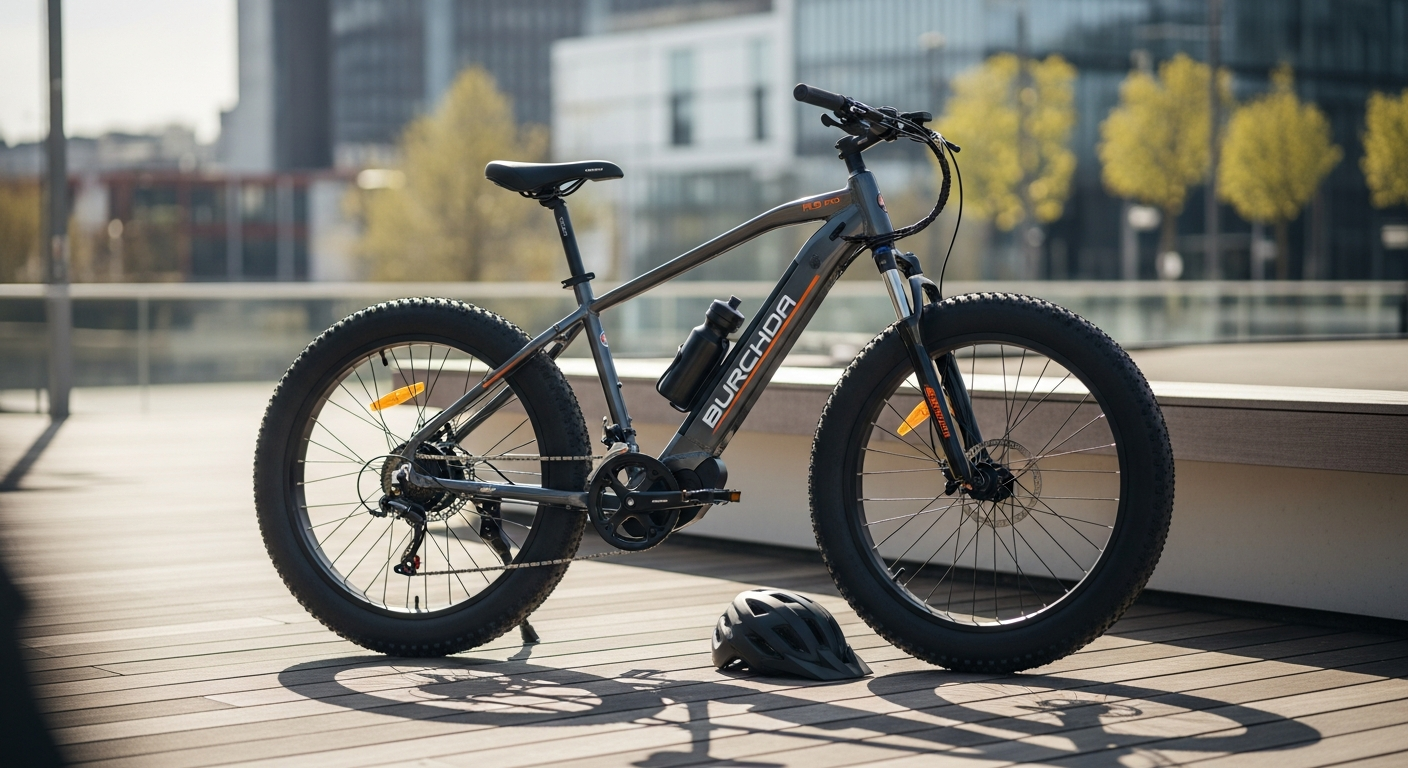
Discover why the Burchda R5 Pro fat tire e-bike is a game-changer for off-road adventures and city commutes. Explore its 1500W motor, 65km range, and exceptional stability.
The heart of the Burchda R5 Pro is its 1500W brushless motor—a serious powerplant that separates this bike from typical commuter-class e-bikes. Brushless motors offer distinct advantages: they’re quieter, more efficient, and require less maintenance than their brushed counterparts. The 1500W output translates into punchy acceleration that riders consistently praise, making takeoffs feel responsive rather than sluggish. You feel this power immediately when you twist the throttle or engage pedal assist, which is precisely why the R5 Pro has earned such strong user satisfaction ratings.
Top Speed of 45 km/h (28 MPH) and Practical Riding Scenarios
With a maximum speed of 45 km/h, the R5 Pro operates in the higher tier of electric bike performance. This speed matters most when you’re covering distance efficiently—think commuting across sprawling neighborhoods or linking trail segments without constant acceleration cycles. At 28 MPH, you’ll keep pace with urban traffic in many jurisdictions while maintaining the control advantages of an electric system. Real-world riders report hitting these speeds comfortably on paved sections, though terrain and weight distribution naturally influence actual performance.
Incline Climbing Ability and Steep Grade Performance
Where the 1500W motor truly showcases its credentials is on hills and inclines. The R5 Pro handles steep grades with genuine ease, a capability that separates performance-tier e-bikes from underpowered alternatives. Riders highlight the motor’s torque delivery when tackling inclines—this isn’t a bike that bogs down or requires excessive pedaling effort when the terrain rises. The combination of motor power and fat tire traction means you’re not wrestling the bike up slopes; you’re riding it.
Cadence-Based Pedal Assist Versus Torque-Sensing Alternatives
The R5 Pro uses a cadence-based pedal assist system, which means the motor engages when it detects pedal rotation at a certain RPM threshold. This differs from premium torque-sensing systems that measure the force you’re applying and respond proportionally. Cadence systems offer predictable power delivery and straightforward operation, but they can feel “twitchy” when transitioning between assist levels—a characteristic some users find requires an adjustment period. Torque-sensing alternatives provide smoother, more intuitive power curves, though they typically command higher prices.
Motor Efficiency and Battery Consumption Across Terrain
The brushless motor is engineered for efficiency, meaning it extracts maximum range from the battery without unnecessary drain. Efficiency becomes critical on varied terrain where sustained climbing and high-speed riding can deplete reserves quickly. The motor’s design minimizes wasted energy, contributing directly to the claimed 65km range holding up in real-world conditions. Rider behavior—assist level selection, speed maintenance, and terrain choice—ultimately determines actual battery consumption, but the motor itself performs efficiently across the board.
Battery Range & Charging: The 65km Promise Explained
UL-Certified 48V20Ah Battery Specifications and Safety
The UL-certified 48V20Ah battery represents a substantial energy storage system. The 48V configuration is a sweet spot for e-bikes—it delivers sufficient power without requiring exotic charging infrastructure or creating excessive heat. The 20Ah capacity translates to genuine range capability without proportionally increasing weight or size. UL certification means the battery has undergone rigorous safety testing for thermal stability, electrical safety, and overall reliability. This matters because cheap batteries in budget e-bikes frequently skip these certifications, leaving riders with fire risk and poor longevity.
Maximum Electric Range of 65km Under Optimal Conditions
The 65km (40-mile) maximum range is cited across official specifications and verified by numerous user reviews. This distance assumes optimal conditions: lighter rider weight, moderate assist levels, relatively flat terrain, and warm battery temperature. Real-world range typically falls between 50-65km depending on your specific riding conditions. The fact that actual riders consistently report range meeting or exceeding expectations speaks to the battery’s legitimate capacity—not marketing hyperbole.
Real-World Range Expectations Based on Rider Variables
Actual range fluctuates with several variables. Heavier riders experience slightly reduced range due to increased energy requirements. Higher assist levels drain the battery faster than lower settings. Hilly terrain consumes more energy than flat routes. Cold weather reduces battery efficiency slightly. Even tire pressure affects range—properly inflated tires roll more efficiently than underinflated ones. Understanding these variables means treating the 65km figure as a ceiling rather than a floor, which helps set realistic expectations.
Charging Time and Battery Management Best Practices
Charging times depend on charger specifications, but most modern e-bike batteries charge from empty to full in 5-8 hours. Overnight charging is typical for evening riders. Battery longevity improves with proper management: avoid completely draining the battery regularly, store it in moderate temperatures, and charge it before extended storage periods. The R5 Pro’s battery management system handles these basics automatically, but user behavior still influences overall lifespan.
Battery Longevity and Degradation Over Extended Use
Quality lithium batteries retain 80-90% of original capacity after 500-1000 charge cycles—typically 3-5 years of regular use. The R5 Pro’s UL-certified battery should perform reliably through this timeframe with reasonable care. Degradation is gradual rather than sudden, meaning your range decreases slowly over years rather than failing catastrophically. Users reporting thousands of miles on their batteries indicate solid longevity characteristics.
How Different Riding Modes Affect Overall Range and Battery Drain
Most electric bikes offer multiple assist levels—typically low, medium, and high. Each level consumes proportionally more battery per mile. Riding in low assist at moderate speeds maximizes range, while sustained high-assist climbs drain the battery noticeably faster. The R5 Pro’s LCD display shows real-time battery level, allowing you to manage assist selections strategically. Experienced riders learn to balance speed preferences with range awareness, treating the assist system as a resource to deploy intentionally rather than leaving it continuously maxed out.
Explore the Burchda R5 Pro’s complete specifications and current pricing on the official store.
Fat Tires & Traction: Why 20×4.0-Inch Tires Change Everything
Fat Tire Dimensions and Stability Benefits of 4.0-Inch Width
The 20×4.0-inch fat tires are the defining characteristic that separates the R5 Pro from standard e-bikes. The 4.0-inch width provides an enormous contact patch—the area where rubber meets ground. This translates into exceptional stability and grip across diverse surfaces. The 20-inch wheel diameter is smaller than traditional road bike wheels, which actually benefits off-road riding by lowering the center of gravity and improving maneuverability through tight terrain.
Traction Advantages Across Paved Roads, Gravel, Sand, and Rocky Terrain
Fat tires excel where conventional tires struggle. On paved roads, the massive contact patch provides confident grip even during aggressive cornering or emergency braking. Gravel paths see dramatic performance gains—the tires’ width distributes rider weight across more surface area, preventing the bike from sinking into loose material. Sand riding becomes practical rather than exhausting, as the fat tires float across surfaces that would bog down narrower tires. Rocky terrain reveals fat tires’ true superpower: they conform to irregular ground, maintaining contact and traction where skinny tires would bounce and slip.
Shock Absorption and Ride Comfort Compared to Standard E-Bike Tires
The fat tire volume acts as a natural suspension system. At lower pressures, the tire sidewalls flex and absorb impacts from roots, rocks, and potholes. This effect is similar to suspension technology but distributed across the entire tire rather than concentrated in a fork. Riders frequently comment on how smoothly the R5 Pro rides across rough surfaces compared to standard bikes. The front suspension adds to this comfort advantage, creating a system-wide approach to impact absorption.
Puncture Resistance and Durability of Oversized Tire Construction
The substantial rubber thickness of fat tires provides genuine puncture resistance. Small thorns and sharp rocks that would penetrate standard tires often fail to reach the inner tube on fat tires. The sidewall stiffness also resists pinch flats—damage that occurs when tires compress around obstacles. Durability testing by users shows these tires hold up remarkably well under aggressive riding, maintaining integrity through countless miles of abuse.
Terrain Versatility and Surface Types Where Fat Tires Excel
Whereas road bikes excel on pavement and mountain bikes on trails, fat tires blur those boundaries. The R5 Pro transitions seamlessly between city streets, gravel paths, sandy beaches, and rocky trails. This versatility eliminates the need for multiple bikes or compromise—you get a single machine that performs legitimately well across all surfaces. Weekend explorers particularly appreciate this capability, allowing spontaneous route changes without worrying whether the bike can handle the terrain.
Maintenance Requirements and Tire Pressure Optimization
Fat tire maintenance is straightforward. Check pressure regularly—optimal range typically falls between 5-15 PSI depending on riding conditions and rider weight. Lower pressures (toward 5 PSI) maximize traction and comfort on rough terrain but increase rolling resistance on pavement. Higher pressures (toward 15 PSI) improve efficiency on smooth surfaces but reduce traction on loose terrain. Rotate pressures to match your primary riding conditions. Puncture repairs follow standard procedures, though the tire’s size means you’re working with larger components.
Frame Design & Suspension: Building a Bike That Lasts
Sturdy Frame Construction and Material Quality for the Price Point
The R5 Pro’s frame is engineered to handle the stresses of a 1500W motor and heavy-duty tires without flex or failure. Material quality is solid for the $949 price point—this isn’t budget construction with visible compromise corners. The frame geometry balances aggressive capability with everyday usability, positioning the rider for control without requiring contorted postures. Build quality consistently receives praise from users, indicating that Burchda has invested in durable engineering rather than cutting costs on structural components.
Front Suspension System and Shock Absorption Role
The integrated front suspension absorbs impacts before they reach the frame and rider. Suspension forks typically feature adjustable stiffness, allowing you to tune the system for your weight and riding style. The combination of suspension and fat tires creates a complementary shock-absorption system—the fork handles larger impacts while the tires handle continuous micro-impacts. This dual-layer approach explains why riders describe the R5 Pro as exceptionally comfortable across rough terrain.
Folding Mechanism Design and Weight Distribution Effects
The folding mechanism allows the R5 Pro to compress into a more compact form, beneficial for vehicle storage or apartment living. The design itself is robust, featuring sturdy hinge points and latching mechanisms that maintain frame rigidity when unfolded. However, the folding feature adds mechanical complexity and weight compared to rigid-frame designs. The bike maintains its full structural integrity whether folded or unfolded—the hinges don’t represent weak points. The weight penalty is primarily due to reinforcement around hinge areas rather than poor engineering.
Build Quality Assessment and Durability Expectations for Long-Term Ownership
Users report that R5 Pro builds feel solid and durable through extended ownership. Components don’t rattle loose, welds appear clean and professional, and paint quality withstands weather and use. The 4.95 out of 5.0 rating from 78 verified owners reflects satisfaction with overall construction quality. Long-term durability expectations are positive—this is a bike you can reasonably expect to maintain for years with basic care rather than watching components fail prematurely.
Structural Integrity Under Stress and Aggressive Riding Conditions
The R5 Pro handles aggressive riding without structural complaints from users. Whether you’re launching off drops, aggressive cornering, or sustained climbing, the frame maintains integrity. The sturdy construction absorbs riding stresses without developing cracks or significant flex. This durability matters because underpowered bikes with aggressive tires create stresses that poorly-designed frames can’t handle—the R5 Pro is engineered to manage these demands.
Aesthetic Appeal and Rugged, Aggressive Design Appeal
Beyond functional design, the R5 Pro’s appearance influences owner satisfaction. The rugged, aggressive aesthetic—thick tires, substantial frame, premium finish—communicates capability. Users frequently mention that the bike looks as good as it performs. The visual design conveys quality and power rather than economy or compromise, contributing to the overall ownership experience. Many riders appreciate owning a machine that looks serious because it performs seriously.
Braking, Gears & Control Systems That Keep You Safe
Hydraulic Disc Brakes and Emergency Stopping Power
Hydraulic disc brakes provide confident, powerful stopping capability across variable conditions. The hydraulic system delivers consistent braking power without requiring manual adjustment as pads wear. Disc brakes work reliably in wet conditions where rim brakes can fade. The R5 Pro’s braking system is engineered for the bike’s 45 km/h top speed, providing adequate stopping power without requiring excessive lever force. Users report responsive, predictable braking that inspires confidence at speed.
Shimano Derailleur Reliability and Gear-Shifting Smoothness
The Shimano derailleur is a proven component offering smooth, reliable gear shifting across multiple sprockets. Shimano’s reputation for quality means you’re getting established technology that works rather than experimenting with untested alternatives. Smooth shifting matters because rough derailleurs create hesitation and chain stress. The R5 Pro’s derailleur maintains precise alignment and responsiveness through extended use, supporting the overall durability narrative.
LCD Display Functionality and Real-Time Metrics
The integrated LCD display provides essential information: current speed, battery level percentage, distance traveled, and assist mode selection. The intuitive interface lets you monitor battery capacity without guessing, critical for range planning. Speed display helps you stay aware of velocity in speed-limited zones. Distance tracking supports trip logging and maintenance scheduling. The display is readable in varied lighting and operates reliably through extended use.
Integrated Lighting System for Day and Night Visibility
Integrated front and rear lights enhance visibility whether you’re riding predawn commutes or evening adventures. Built-in lights eliminate the need for aftermarket accessories and ensure consistent performance since they’re integrated into the electrical system. Visibility matters for safety—lights make you visible to traffic and illuminate the path ahead on night rides.
Handlebar Controls and User Interface Intuitiveness
Controls are positioned intuitively on the handlebars, within easy reach for throttle operation and mode adjustment. Buttons are clearly labeled and responsive. The learning curve is minimal—most riders operate the system competently within their first ride. Control accessibility matters because fumbling with complicated interfaces distracts from riding safety.
Safety Features and Responsive Bike Behavior
Beyond brakes and lights, safety emerges from responsive handling and predictable behavior. The R5 Pro responds intuitively to rider input—turning, acceleration, and speed changes feel natural rather than sluggish or overly sensitive. This responsiveness allows confident control even at higher speeds or on challenging terrain. The combination of responsive handling, powerful brakes, and integrated lighting creates a safety-conscious system.
Foldable Design: Storage Benefits vs. Portability Trade-offs
Folding Mechanism and Simplified Storage in Garages or Apartments
The folding mechanism compresses the R5 Pro into a more storage-friendly footprint. For apartment dwellers, this is genuinely valuable—the bike occupies less hallway or closet space when folded. Garage storage becomes more flexible, allowing you to fit multiple bikes or share space with other equipment. The folding process itself is straightforward and doesn’t require tools, making it accessible for everyday use.
Vehicle Transport Advantages for Multi-Destination Adventures
Folded dimensions fit into car trunks and hatchbacks, enabling easy transport to trailheads or distant starting points. This capability matters for weekend warriors who want to explore new locations without riding there first. You can load the bike for a road trip and have it ready to explore upon arrival. Multi-destination adventures become practical in ways they wouldn’t be if you required roof racks or external carriers.
Weight Considerations and Why Daily Portability Isn’t the Design Priority
The R5 Pro’s substantial weight—a characteristic inherited from the foldable design and robust components—means it’s not a bike you’ll casually carry upstairs or load onto public transit daily. The folding feature is optimized for vehicle transport and storage, not portability in the sense of frequently moving the bike between environments. If you need a bike light enough to carry on trains or buses regularly, the R5 Pro isn’t ideal. If you need a bike that fits in your trunk and stays out of your living space, it’s excellent.
Compact Dimensions When Folded and Space-Saving Capabilities
When folded, the R5 Pro achieves dimensions suitable for closets, storage lockers, or under-bed storage in generous apartments. The exact compact size varies, but riders report the folded form takes up significantly less space than the unfolded configuration. This space-saving matters in urban environments where square footage is premium and shared.
Unfolding Process and Setup Time Before Riding
Unfolding is the reverse of folding—typically a minute or less for experienced users. No tools are required, and the process is intuitive. Once unfolded, the bike is ready to ride immediately. Unlike bikes requiring assembly, the R5 Pro doesn’t need adjustment or calibration post-folding, though checking quick-release mechanisms briefly before riding is sensible practice.
Best Use Cases for the Foldable Feature in Real-World Scenarios
The foldable design shines when you’re storing the bike long-term or transporting it occasionally but not carrying it frequently. Apartment living, garage space constraints, and periodic vehicle transport represent ideal use cases. The feature works less well for situations requiring constant portability or manual carrying. Matching the design to your actual lifestyle determines whether the foldable feature enhances or complicates your experience.
Real-World Rider Feedback & Performance Validation
4.95 Out of 5.0 Rating Analysis and What 78 Verified Reviews Reveal
A 4.95 out of 5.0 rating from 78 verified reviews is genuinely exceptional in the e-bike market. This isn’t margin-of-error territory—it represents sustained satisfaction across a meaningful sample of actual owners. The consistency of high ratings indicates that user experience matches marketing claims in most cases. Negative reviews certainly exist within those 78, but the overwhelming majority reflects genuine satisfaction. This rating carries weight because reviews are verified purchases, meaning actual owners rather than promotional accounts have posted them.
Stability and Control Feedback Across Different Rider Skill Levels
Users highlight stability and control as standout characteristics regardless of skill level. Beginners appreciate the confidence the fat tires and responsive handling inspire. Experienced riders note that the bike feels planted and predictable even during aggressive maneuvers. This universal praise suggests the bike’s design accommodates different skill levels while delivering a quality experience to each.
User Experiences Tackling Inclines and Challenging Terrain
Reviews frequently mention impressive incline performance and terrain versatility. Riders describe hills that previously required walking being easily tackled with pedal assist. Rocky and rough terrain that would slow or damage other bikes doesn’t faze the R5 Pro. Users express satisfaction with the motor’s ability to handle demanding riding without bogging down.
Battery Life Consistency and Whether 65km Claims Hold Up in Practice
Users report battery performance aligning with claimed specifications. Reviewers consistently mention reaching 50-65km distances on single charges depending on conditions, validating the marketing claims. This honest assessment—showing range meets realistic expectations rather than exceeding them dramatically—reflects credibility. If the battery consistently underperformed, the rating would suffer noticeably.
Acceleration Smoothness and Responsiveness During Varied Riding Conditions
The “punchy” acceleration mentioned in multiple reviews translates to smooth, confident power delivery. Users describe responsiveness across pedal assist engagement and throttle operation. Even in high-demand situations—steep inclines, rapid acceleration—the motor responds smoothly rather than lurching or stuttering.
Aesthetic Appreciation and How Appearance Influences Owner Satisfaction
Owner comments reveal that the aggressive, rugged aesthetic contributes to satisfaction. Users appreciate owning a machine that looks capable because it is capable. The visual design reinforces the performance reality, creating a cohesive ownership experience where appearance and function align.
Cadence-Based Assist System: Understanding the Trade-off
How Cadence-Based Pedal Assist Differs from Torque-Sensing Alternatives
Cadence systems detect pedal RPM—once you’re pedaling above a threshold (typically 50-60 RPM), the motor engages at your selected assist level. Torque-sensing systems measure the force you’re applying and respond proportionally—harder pedal pressure means more motor assistance. Cadence systems are mechanically simpler and more affordable, explaining their presence in mid-range e-bikes like the R5 Pro. Torque systems provide more refined, intuitive power curves but require more sophisticated sensors and electronics, increasing cost significantly.
Twitchy Response Characteristics and What Triggers This Behavior
Some users describe the cadence system as “twitchy,” particularly during transitions between pedaling and coasting. When your cadence drops below the engagement threshold, the motor cuts out; when you accelerate above it, power engages suddenly. This on-off behavior can feel abrupt compared to gradual torque-system power scaling. Riding technique matters—smooth, consistent pedaling minimizes twitchiness, while choppy pedal strokes trigger more noticeable transitions. Situations like navigating traffic or technical terrain where pedal cadence naturally fluctuates exacerbate the twitchy sensation.
Adjustment Period for Riders Transitioning from Other E-Bike Systems
Riders transitioning from torque-sensing systems typically need 1-2 weeks to adapt to cadence-based assist. Once you understand the engagement threshold and adjust your pedaling rhythm accordingly, the system becomes natural and transparent. The learning period is brief—riders quickly develop muscle memory for maintaining consistent cadence. Beginners starting on cadence systems rarely notice the adjustment period since they have no reference point for comparison.
Scenarios Where Cadence Assist Shines Versus Where It Feels Less Refined
Cadence assist performs smoothly during consistent-speed riding—maintain steady cadence and the system delivers reliable power without drama. Climbing on gentle slopes where cadence remains stable is an example of excellent cadence performance. The system feels less refined during variable-intensity riding like technical trails or urban stop-and-go commuting, where cadence naturally fluctuates and triggers constant engagement transitions.
Software Calibration Options and Whether Firmware Updates Improve Responsiveness
Some e-bike systems allow cadence sensitivity adjustment through firmware updates. Whether the R5 Pro supports this customization varies—consulting the user manual or manufacturer support provides definitive answers. Adjustable sensitivity can reduce the twitchy sensation by lowering engagement thresholds or altering power ramp curves. Standard firmware typically provides adequate performance, but personalization options can enhance user satisfaction if available.
Comparison with Premium Torque-Sensing Systems and Performance Expectations
Premium torque-sensing systems in $2000+ e-bikes deliver smoother, more intuitive power delivery. However, you’re paying significantly more for this refinement. For $949, the R5 Pro’s cadence system represents a reasonable compromise. The system works well for most riding scenarios, and the money saved funding other capabilities—like the powerful 1500W motor and premium fat tires—arguably delivers more value than upgrading to torque sensing alone.
Pricing & Value Proposition: Is $949–€1,499 Worth It?
US Pricing at $949.00 and EU Pricing at €1,499.00 EUR
The R5 Pro carries a $949 USD regular price on the US official store, with EU pricing at €1,499.00. These are legitimate mid-range e-bike prices, significantly lower than premium brands charging $2000+ for similar specifications. The R5 Pro positions itself as an accessible performance option rather than economy or luxury. Sales frequently reduce these prices, particularly during seasonal promotions, making ownership even more affordable.
Regular vs. Sale Pricing and When to Expect Discounts
Sale prices are common, with discounts appearing during holiday seasons, manufacturer promotions, and seasonal transitions. Watching the official store or signing up for promotional emails helps you catch discounts without constant monitoring. The gap between regular and sale prices is often 15-25%, making timing your purchase potentially valuable. However, regular pricing is still reasonable for the specifications offered—waiting indefinitely for sales isn’t necessary if you’re ready to ride.
Cost-Per-Feature Analysis Compared to Competing Fat Tire E-Bikes
Comparing the R5 Pro’s $949 price to competitors offering similar 1500W motors, 48V batteries, and fat tire configurations reveals strong value. Brands charging $1500+ for equivalent specifications demonstrate how competitive the R5 Pro’s pricing is. You’re getting legitimate performance and features at a price point typically reserved for less-capable bikes.
Value Proposition for Off-Road Enthusiasts Versus Casual Commuters
Off-road enthusiasts receive exceptional value—the combination of motor power, fat tires, and suspension creates a platform for adventure riding at accessible pricing. Casual commuters also benefit, getting more capability than necessary for city riding but enjoying the robustness and control advantages fat tires provide. Both user types get strong value, though off-road riders fully leverage the all-terrain design.
Long-Term Ownership Costs Including Maintenance and Potential Repairs
Beyond purchase price, maintenance costs influence total ownership expense. Brake pads and chains require replacement periodically, but these are minor expenses. Fat tires are durable and resist punctures, reducing maintenance frequency. The 1500W motor is brushless, requiring no maintenance beyond occasional cleaning. Battery replacement, should it outlive its lifespan after years of use, is the largest potential expense, but this typically occurs 3-5 years into ownership. Overall, long-term ownership costs are moderate for electric bikes.
Financing Options and Payment Plans That Make Ownership Accessible
The official Burchda store frequently offers financing options or payment plans, reducing upfront cost barriers. Many retailers partner with financing services allowing 12-24 month payment terms with or without interest. These options improve accessibility for buyers who want the R5 Pro but prefer spreading costs. Exploring available financing helps determine whether the bike fits your budget structure.
Who Should Buy the Burchda R5 Pro (And Who Shouldn’t)
Ideal Riders: Off-Road Adventurers, Gravel Path Explorers, and Terrain-Aggressive Commuters
The R5 Pro is purpose-built for riders tackling varied terrain and seeking adventure. Off-road adventurers exploring trails, mountains, and remote locations get a capable partner that handles demanding environments. Gravel path explorers benefit from fat tire traction and motor assistance across loose surfaces. Terrain-aggressive commuters—riders willing to leave road routes and explore alternative paths—leverage the bike’s all-terrain versatility. These riders justify every aspect of the R5 Pro’s design.
Perfect Use Cases: Weekend Trail Riding, Beach Cruising, and Multi-Surface Commuting
Weekend trail riding represents an ideal use case where the R5 Pro’s power and suspension shine. Beach cruising leverages fat tire flotation and salt-air durability. Multi-surface commuting—where your route includes paved roads, gravel sections, and sandy paths—is exactly what the R5 Pro excels at. If your riding naturally involves terrain variety, this bike solves the problem elegantly.
Less Suitable For: Daily Lightweight Portability Needs and Frequent Bike-to-Transit Transitions
The R5 Pro isn’t ideal if you’re carrying it regularly or transitioning frequently between bikes and public transit. Its weight makes daily portability impractical. If you’re loading it onto trains, buses, or bike racks constantly, lighter alternatives serve better. Urban commuters with narrow storage and frequent portability requirements might find the R5 Pro’s weight a persistent friction point.
Rider Skill Levels and Whether Beginners Can Handle Power and Weight
Beginners can absolutely ride the R5 Pro. The responsive handling and stable platform actually build beginner confidence. The weight is manageable for most people when seated and riding—it’s only problematic when carrying the bike. Beginners should expect a brief learning period adjusting to the motor power and cadence system, but nothing more complex than other e-bikes. The 45 km/h top speed is accessible but not forced; beginners can ride comfortably at lower assist levels and gentler speeds.
Storage Space Requirements and Garage/Apartment Compatibility
Garage storage works well with the foldable design—the bike compresses into a manageable footprint. Apartment living is feasible, particularly if you have hallway or closet space. Tight spaces like studio apartments or units without dedicated storage are challenging but potentially manageable if folding reliability is high. Honestly assessing your storage situation before purchase prevents buyer’s remorse over space constraints.
Climate Considerations and How Weather Affects Performance and Maintenance
The R5 Pro performs reliably across climates from wet temperate to arid desert regions. The sealed motor and controller handle rain and moisture exposure. Hydraulic brakes work in wet conditions where rim brakes fade. Fat tires roll through snow and ice better than narrow tires, improving winter capability. Salt air from coastal riding requires occasional rinsing to prevent corrosion, but nothing extreme. Climate rarely represents a limiting factor for R5 Pro viability.
Ready to Ride Wild: Making Your Final Decision
The Burchda R5 Pro fat tire e-bike punches above its weight class in nearly every meaningful way. Its 1500W motor delivers genuine power, the 65km range proves reliable across real-world conditions, and those fat tires transform sketchy terrain into playground-level fun. The build quality justifies the $949 price tag, and the foldable design—while heavy—solves genuine storage headaches for apartment dwellers and adventure seekers alike.
That said, this bike isn’t a Swiss Army knife. The cadence-based pedal assist system feels less sophisticated than torque-sensing alternatives, and if you’re constantly loading it onto trains or shuttling between vehicles, the weight becomes a legitimate friction point. The R5 Pro thrives when you commit to it—when you’re ready to explore trails, crush commutes, and embrace the aggressive capability it offers.
If you’re hunting for an all-terrain e-bike that balances raw performance with reasonable pricing, the R5 Pro deserves serious consideration. The 78 verified reviews averaging 4.95 out of 5.0 aren’t coincidental—they reflect genuine satisfaction from actual owners who’ve tested the bike across real-world conditions. Whether you’re battling rocky mountain trails, navigating potholed city streets, or exploring new destinations, this machine delivers the kind of performance that justifies the investment.