
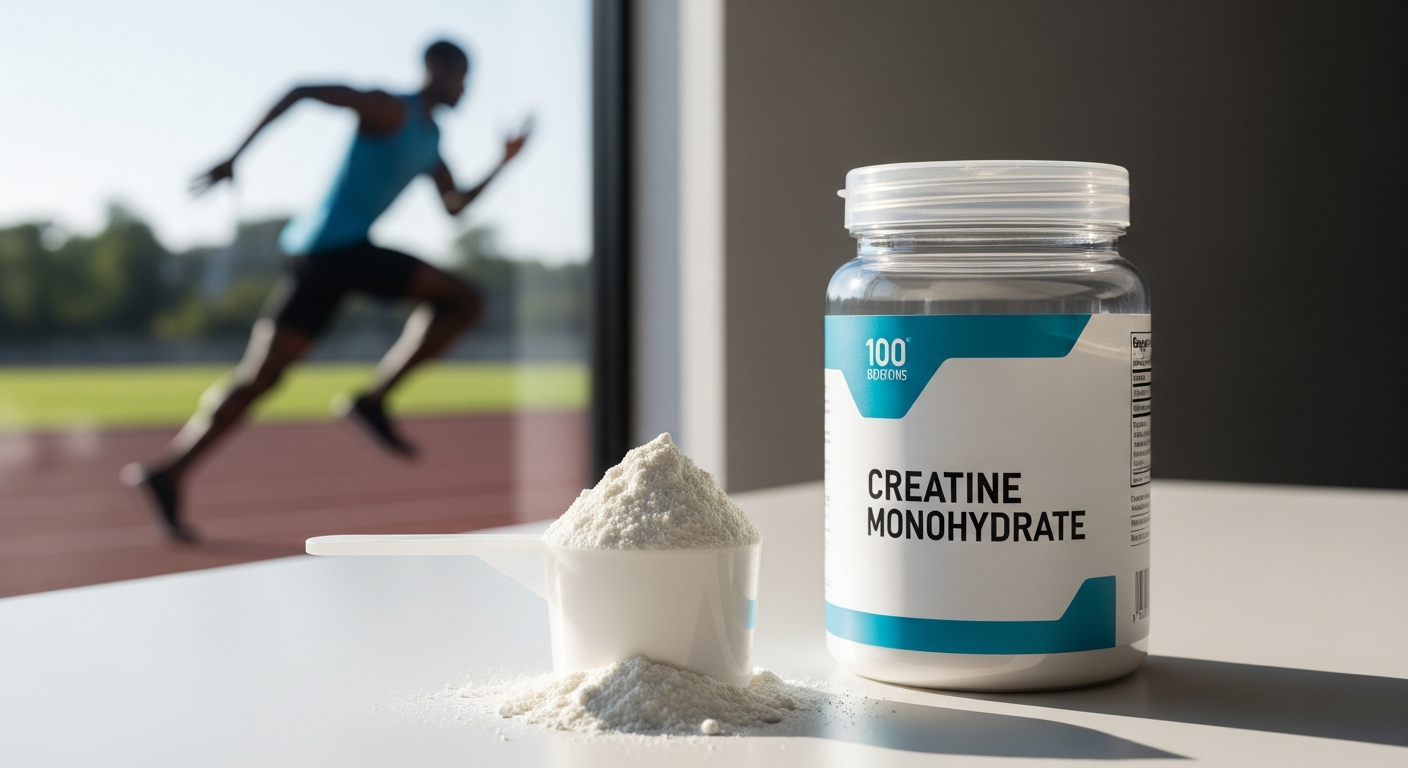
Discover how Bulk™ Creatine Monohydrate Powder enhances endurance performance for distance runners and cyclists. Learn dosing, benefits, and why athletes choose this micronized supplement for sustained energy and recovery.
Endurance athletes often overlook creatine supplementation, assuming it’s only for bodybuilders chasing massive muscle gains. The reality tells a different story. Research demonstrates that creatine monohydrate boosts ATP regeneration and improves sustained power output—two capabilities distance runners, cyclists, and triathletes desperately need during competition.
Bulk™ Creatine Monohydrate Powder has earned its reputation as a trusted choice among serious athletes. The micronized formula dissolves instantly, maintains uncompromised purity, and carries pricing that won’t drain your training budget. Understanding why endurance athletes specifically benefit from creatine supplementation reveals how this supplement can transform your performance.
Discover how Bulk™ Creatine Monohydrate Powder can elevate your endurance training today.
Creatine’s Role in ATP Production and Energy Availability
ATP (adenosine triphosphate) is your body’s primary energy currency. During endurance activities, muscles rapidly deplete phosphocreatine stores, which are needed to rapidly regenerate ATP. Creatine supplementation increases these phosphocreatine reserves, allowing your muscles to maintain ATP production at higher intensities for longer durations. This directly translates to improved power output during the sustained efforts that define endurance training.
Power Output in the Final Kilometers
The closing stages of any endurance event separate champions from mid-packers. Athletes who supplemented with creatine consistently demonstrate improved power output during the final kilometers of distance races. This isn’t about explosive strength—it’s about maintaining your pace when fatigue sets in. Research on cycling time trials and running performance shows that creatine-supplemented athletes retain more muscular power when it matters most.
Time-Trial Performance and Lactate Threshold Improvements
Time-trial performance, a critical metric for endurance athletes, shows measurable improvements with creatine supplementation. Studies indicate enhanced lactate threshold and improved performance during sustained, high-intensity efforts. Your body’s ability to buffer lactate accumulation improves, meaning you can maintain threshold pace longer before fatigue forces you to slow.
Aerobic vs. Anaerobic Capacity Distinction
An important clarification: creatine primarily enhances anaerobic capacity and repeated power outputs. Endurance athletes benefit most from its effects on intermittent high-intensity efforts within aerobic training—think tempo runs, climbing sections, or finishing kicks. The supplement doesn’t directly improve aerobic capacity, but it bolsters your ability to produce power when aerobic metabolism alone becomes insufficient.
Why Distance Athletes Traditionally Avoided Creatine
For decades, distance athletes dismissed creatine as irrelevant to their needs. This misconception stemmed from early marketing that emphasized muscle mass gains. Modern research has shifted this perspective. Athletes now understand that improved power output and enhanced recovery between sessions directly benefit endurance performance, especially during competitive events where tactical surges and accelerations determine outcomes.
Muscle Fiber Recruitment and Fatigue Resistance
Creatine enhances the recruitment and function of high-threshold muscle fibers—the fibers responsible for generating power during intense efforts. By improving the metabolic capacity of these fibers, creatine allows your muscles to resist fatigue more effectively. This means you can maintain form and power output later in your training sessions and races.
Connection to Improved Recovery Between Training Sessions
Beyond in-race performance, creatine accelerates recovery between training sessions. Enhanced phosphocreatine availability supports faster ATP regeneration during the recovery window, reducing accumulated fatigue across training blocks. For endurance athletes managing high weekly training volumes, this recovery benefit can be as valuable as the direct performance improvements.
The Science Behind Bulk™’s Micronized Formula
What Micronization Means and Bioavailability Improvements
Micronization is a process that reduces creatine particles to finer sizes, typically to 200 mesh or smaller. This increases the surface area available for absorption in your digestive system. The result: faster bioavailability and more efficient utilization of the supplement you’re consuming.
Particle Size Reduction and Absorption Rates
Standard creatine monohydrate features larger particles that dissolve more slowly and absorb less completely. Bulk™’s micronized approach reduces these particles significantly, improving the rate at which creatine reaches your bloodstream and muscle cells. This enhanced absorption means you achieve effective dosing with consistency and efficiency.
Solubility Advantages Compared to Standard Creatine
Micronized creatine dissolves substantially better than standard forms. Standard creatine often leaves a gritty residue at the bottom of your glass—wasted supplement and an unpleasant drinking experience. Bulk™’s micronized formula mixes completely, ensuring you receive the full dose in every serving and maintaining the palatability necessary for consistent daily supplementation.
Prevention of Bloating and Gastrointestinal Distress
One common complaint with standard creatine is gastrointestinal discomfort and bloating. The superior solubility of micronized creatine significantly reduces these issues. Your digestive system processes it more efficiently, and the faster absorption means less creatine sitting in your GI tract causing discomfort. For endurance athletes managing sensitive stomachs during training, this benefit is substantial.
Third-Party Testing Standards and Contaminant Screening
Bulk™ Creatine Monohydrate Powder undergoes third-party testing for contaminants, heavy metals, and banned substances. This testing ensures the product meets stringent quality standards and carries no hidden impurities. For competitive athletes, this certification provides confidence that supplementation won’t trigger inadvertent anti-doping violations.
Stability of the Powder and Shelf-Life Considerations
Creatine monohydrate is remarkably stable when stored properly. The micronized powder from Bulk™ maintains its integrity and effectiveness throughout its shelf life when kept in a cool, dry environment. Unlike some supplements that degrade over months, creatine monohydrate remains potent for extended periods, making bulk purchasing economical without quality concerns.
Micronized vs. Buffered vs. Other Creatine Forms
Multiple creatine forms exist: monohydrate, buffered, ethyl ester, and others. Creatine monohydrate remains the gold standard based on research. It’s the most extensively studied, most cost-effective, and most effective form available. Bulk™’s micronized monohydrate combines the proven efficacy of this classic form with improved absorption characteristics—offering the best of both worlds without premium pricing.
Practical Dosing Strategies for Endurance Training
Loading Phase Protocols and Necessity for Distance Athletes
Loading phases involve consuming 20g daily (typically split into four 5g doses) for 5-7 days, followed by maintenance dosing. While loading accelerates blood creatine saturation, it’s optional. For endurance athletes, loading provides no advantage over simply starting maintenance dosing immediately. Results take slightly longer without loading, but saturation eventually occurs. Skip loading if convenience matters to you.
Maintenance Dosing Recommendations
Standard maintenance dosing ranges from 3-5g daily, typically in the lower end of this range for most athletes. A 70kg (154lb) endurance athlete generally responds well to 3-4g daily. Heavier athletes can increase toward 5g. This consistent daily intake is far more important than the exact dose—consistency allows blood creatine levels to build over weeks.
Timing Strategies: Pre-Workout vs. Post-Workout vs. With Meals
Research shows that creatine timing is less critical than total daily intake, but slight advantages exist. Post-workout consumption with carbohydrates and protein enhances absorption slightly. The insulin response from carbs improves creatine transport into muscle cells. However, consistent daily supplementation outweighs minor timing optimization. Take creatine whenever you’ll remember to take it daily.
Calculating Individual Dosing Based on Body Weight
A rough calculation: 0.03-0.05g per kilogram of body weight represents an effective daily maintenance dose. A 60kg athlete might use 2-3g daily, while a 90kg athlete might use 3-4.5g daily. This personalization accounts for differences in muscle mass and metabolic factors. Start at the lower end and adjust upward if you notice minimal effects after 4-6 weeks.
Hydration Requirements When Supplementing with Creatine
Creatine pulls water into muscle cells, increasing intramuscular hydration. Consequently, adequate total water intake becomes more important. Aim for consistent hydration throughout the day—not excessive amounts, but sufficient intake to support your training and creatine supplementation. This ensures the supplement works optimally without creating any dehydration concerns during training or racing.
Why Daily Supplementation Trumps Sporadic Use
Creatine requires consistent daily intake to maintain elevated muscle concentrations. Sporadic supplementation—taking it only before important workouts—fails to build the tissue saturation necessary for benefits. Muscle creatine levels take 3-4 weeks to stabilize with consistent daily dosing. Once established, stopping supplementation gradually reduces these levels over several weeks.
Adjusting Doses for Different Training Phases
During base-building phases with high volume and lower intensity, standard maintenance dosing suffices. During peak training blocks with increased intensity, some athletes increase slightly to 4-5g daily, though no strong evidence supports this practice. The consistency matters more than phase-based adjustments. Unless circumstances prevent it, maintain steady daily dosing year-round.
Mixing and Compatibility with Endurance Nutrition
Optimal Liquids for Mixing
Water works perfectly for creatine mixing—it’s simple and neutral. Electrolyte drinks pair well, providing additional sodium and minerals that support hydration. Post-workout shakes with protein and carbohydrates represent an ideal delivery mechanism since the insulin response enhances creatine absorption. Avoid acidic beverages like citrus juice, which may slightly reduce creatine stability, though the effect is minimal.
Combining with Carbohydrate Sources for Enhanced Absorption
Pairing Bulk™ creatine with 40-80g of carbohydrates increases insulin response and improves muscular creatine uptake. A post-workout shake containing creatine, protein, and carbs creates an optimal absorption window. This combination is particularly valuable on hard training days when your post-workout nutrition becomes critical anyway.
Pairing with Protein for Muscle Preservation
Adding creatine to your post-workout protein shake creates synergy. While creatine supports power and ATP regeneration, protein provides amino acids for muscle repair and recovery. This combination addresses multiple recovery mechanisms simultaneously. A post-workout shake with 20-30g protein, 40-60g carbs, and 5g creatine represents efficient supplementation strategy.
Taste Profile and Why Unflavored Powder Is Ideal
Bulk™’s unflavored creatine dissolves cleanly without altering the taste of whatever beverage you’re mixing it with. Flavored creatine products limit your flexibility—they don’t work well in everything. The unflavored approach lets you add creatine to your existing nutrition routine without compromise. Slip it into your morning coffee, post-workout shake, or simple water without concern.
Preventing Clumping and Ensuring Consistent Mixability
The micronized particles in Bulk™ minimize clumping. To ensure maximum mixability, add creatine to liquid and stir thoroughly for 30-60 seconds. For powder that seems reluctant to dissolve, add a small amount of warm water first, stir to create a slurry, then add more liquid. The superior solubility of micronized creatine makes this process straightforward compared to standard forms.
Travel-Friendly Dosing for Athletes Training Away from Home
Pre-portion daily doses into small containers or use a simple pill organizer. A small plastic container holding 5g portions fits easily in luggage or a gym bag. This approach eliminates the need to transport bulk powder and ensures you maintain consistency regardless of travel demands. Many athletes maintain this system year-round for convenience.
Storage Tips to Maintain Powder Quality
Store creatine in a cool, dry place—a pantry, closet, or supplement cabinet works well. Avoid excessive heat and direct sunlight. While creatine is stable, keeping it away from humidity prevents any potential clumping. A sealed container or the original bag stored inside an airtight container provides ideal conditions. Properly stored creatine maintains its integrity for years.
Real Results: Performance Gains You Can Expect
Timeline for Noticing Improvements
Initial improvements typically appear after 2-4 weeks in creatine responders. These “responders” represent about 80% of the population; some individuals show minimal response due to genetic factors or already-elevated baseline creatine levels. Early signs include improved power during interval sessions and slightly faster recovery between hard efforts. Full saturation and maximum benefits often take 6-8 weeks.
Increased Power Output in Tempo Runs and Interval Sessions
The first measurable improvements appear in controlled workout environments. Tempo runs and interval sessions feel noticeably easier—you can hold the target pace with reduced perceived exertion. Power output during sprint intervals improves measurably. These gains accumulate; what felt impossible six weeks ago becomes achievable.
Enhanced Recovery Between Hard Training Blocks
Reduced accumulated fatigue across training blocks represents a major benefit. Athletes report feeling fresher on recovery days and entering hard training blocks with better baseline energy. This allows improved training consistency and quality across the training cycle—a significant advantage when training for endurance events.
Body Composition Changes and Water Retention Considerations
Creatine increases intramuscular water content by 1-2kg over the first weeks—you’ll notice this on the scale. This is water inside muscle cells, not subcutaneous water, so you don’t look bloated. Increased muscle hydration appears as fuller muscles and can contribute to strength gains. Some athletes prefer this; others adjust their race weight calculations accordingly.
Improved Mental Clarity and Reduced Perceived Exertion
Beyond muscular effects, creatine supports brain function. Athletes report improved focus during training and reduced perception of effort during hard efforts. Your brain, like muscles, uses creatine for energy metabolism. This central nervous system benefit contributes to overall training quality and mental resilience during challenging workouts.
Case Studies from Endurance Athletes Using Bulk™ Creatine
Distance runners report improved kilometer splits during tempo runs and better performance during the closing stages of races. Cyclists note enhanced power during climbs and time-trial improvements. Triathletes appreciate improved run performance—often the most challenging final leg—when supplementing with creatine during the race-specific training block. These real-world experiences align with published research.
Realistic Expectations: A Game-Changer, Not a Magic Bullet
Creatine provides measurable, but modest, performance improvements—typically 2-5% in relevant metrics. It’s not a magic bullet that transforms mediocre athletes into champions. Rather, it’s a legitimate performance enhancer that compounds with training consistency, nutrition quality, and adequate recovery. For athletes already executing their training plan effectively, creatine tips the scales toward improved results.
Budget-Friendly Supplementation for Distance Athletes
Cost-Per-Serving Breakdown Compared to Competitors
Bulk™ creatine costs significantly less per serving than premium brands. A 500g container providing approximately 100 servings costs roughly $0.05-0.10 per serving, compared to $0.20-0.40 at competitor brands. Over a year of daily supplementation, this difference accumulates to substantial savings without sacrificing quality or efficacy.
Bulk Sizing Options and Value Calculations
Bulk™ offers both 500g and 1kg options. The 1kg container provides better value per gram, reducing cost-per-serving further. For committed athletes planning long-term supplementation, the 1kg size represents superior economics. Even accounting for storage considerations, the savings justify larger purchases.
Long-Term Savings When Purchasing Larger Quantities
Annual supplementation with premium brands might cost $150-200 depending on dosing. Bulk™ reduces this to $20-30 yearly. Over five years of training, the difference approaches $600-800. For athletes managing tight budgets, redirecting these savings toward other training investments—coaching, race entries, or additional recovery tools—multiplies the value proposition.
Why Bulk™ Undercuts Premium Brands Without Sacrificing Quality
Bulk™’s business model emphasizes direct-to-consumer sales and minimal marketing overhead. This allows competitive pricing without compromising on third-party testing or manufacturing standards. You’re paying for the product itself, not expensive sponsorships or celebrity endorsements. The quality remains uncompromised while pricing reflects operational efficiency.
Building a Supplement Stack Without Overspending
Creatine represents the most cost-effective supplement with proven endurance benefits. Rather than purchasing multiple expensive products, focusing on creatine as your core supplement maximizes value. If budget allows, adding beta-alanine or beetroot juice complements creatine nicely, but creatine alone provides exceptional value relative to cost.
Prioritizing Creatine Over Trendy (and Expensive) Alternatives
The supplement industry constantly introduces new products with impressive marketing but minimal research backing. Creatine monohydrate, studied for over two decades with consistent positive results, represents a proven investment. Trendy alternatives often cost 5-10 times more while providing negligible additional benefit. Choose the tried-and-tested option.
ROI Perspective: Supplement Cost vs. Performance Improvement Value
Consider the ROI on supplement investment. If creatine costs $30 annually and improves your race time by 1-2%, the value is substantial. That 1-2% improvement in an endurance race often translates to meaningful placement improvements or personal record achievements. The supplement investment pays dividends through improved racing outcomes.
Addressing Common Misconceptions About Creatine
Myth: Creatine Causes Dehydration
This misconception, rooted in outdated anecdotal evidence, contradicts modern research. Creatine actually increases intramuscular water content. Athletes supplementing with creatine while maintaining adequate hydration experience no negative effects on fluid balance. Proper hydration remains important, but creatine doesn’t deplete hydration status.
Myth: Creatine Is Only for Strength Athletes
Early marketing positioned creatine as a strength-building supplement, leading to the assumption that endurance athletes wouldn’t benefit. Recent research clearly demonstrates that creatine improves power output, repeated sprint ability, and performance during the high-intensity portions of endurance events. This myth has been thoroughly debunked by modern sports science.
Myth: Creatine Causes Kidney Damage
Extensive research, including studies on athletes with pre-existing kidney conditions, shows no evidence that creatine damages kidneys in healthy individuals. Creatine supplementation increases urinary creatinine (a marker of creatine metabolism), which some misinterpret as kidney stress. The increase in creatinine is a normal metabolic response, not an indicator of damage. Athletes with existing kidney disease should consult medical professionals, but healthy individuals face no risk.
Myth: You Need a Loading Phase
Loading phases accelerate creatine saturation but aren’t necessary. Daily maintenance dosing achieves the same endpoint over 3-4 weeks rather than 5-7 days. For athletes who prefer simplicity or dislike taking larger amounts at once, skipping loading eliminates this misconception entirely.
Myth: Creatine Makes You Gain Excessive Water Weight
While creatine increases intramuscular water by 1-2kg, this occurs inside muscle cells and doesn’t create the bloated appearance that excessive subcutaneous water retention produces. Body weight increases, but composition remains favorable. Most athletes appreciate the improved muscle fullness and hydration status.
Myth: Creatine Is Unsafe or Banned in Sports
Creatine monohydrate is legal in all sports organizations, approved by regulatory bodies worldwide, and has an excellent safety record spanning decades of research. It’s not a banned substance; it’s a widely accepted, legitimate supplement. Competitive athletes use it freely without violating anti-doping regulations.
Myth: Vegetarians Can’t Benefit from Creatine
Vegetarians potentially benefit more than omnivores from creatine supplementation. Plant-based diets typically contain minimal creatine, meaning vegetarians begin with lower baseline creatine levels. Supplementation addresses this deficit, and vegetarian athletes often experience more dramatic improvements than meat-eating athletes who already consume dietary creatine.
Integration with Your Endurance Training Plan
Supplementing During Base-Building Phases vs. Peak Training
Start creatine supplementation during base-building phases to allow 4-6 weeks for muscle saturation before peak training begins. This timing allows you to experience the full benefit during race-specific training and competition. Alternatively, maintain consistent year-round supplementation, which simplifies the regimen and eliminates concerns about building creatine back up before important races.
Creatine Timing Relative to Long Runs, Bike Rides, and Interval Sessions
Consistency matters more than tactical timing. If you prefer post-workout supplementation, consume creatine after completing interval sessions or tempo efforts when you can combine it with carbohydrates and protein. If daily morning supplementation suits your routine better, take that approach. The total daily intake determines effectiveness; timing provides only marginal optimization.
Synergy with Other Endurance-Focused Supplements
Beta-alanine complements creatine by buffering lactate accumulation, further improving high-intensity performance. Beetroot juice, rich in nitrates that support vascular function, pairs well with creatine for comprehensive endurance support. These three supplements represent evidence-based options that don’t conflict with one another.
Adjusting Supplementation During Taper Weeks
Maintain normal creatine dosing during taper weeks. Some athletes worry that continuing supplementation during reduced training volume will cause excessive water retention or weight gain. This concern is unfounded. Creatine continues supporting ATP regeneration and muscle function regardless of training volume. Maintaining consistency ensures peak muscle saturation during competition.
Maintaining Consistency Through Seasonal Training Variations
Whether emphasizing base-building, strength development, or race-specific training, maintain steady daily creatine supplementation. The supplement’s benefits remain relevant across all training phases. Seasonal variation in training shouldn’t affect your supplementation protocol—consistency across seasons simplifies the regimen and ensures continuous benefit.
Monitoring Performance Metrics to Track Creatine’s Impact
Track specific metrics to evaluate creatine’s effects: tempo run pace, interval power output, time-trial performance, and recovery speed between hard efforts. Performance testing after 4-6 weeks of consistent supplementation provides objective evidence of benefit. Some athletes notice subjective improvements in energy and perceived exertion before measurable performance metrics improve.
When to Cycle Off and When to Maintain Year-Round
Most evidence supports year-round supplementation without cycling. Creatine doesn’t require periodic breaks from supplementation. Saturation levels remain constant with consistent daily dosing; stopping and restarting simply creates unnecessary resaturation periods. Unless specific circumstances dictate otherwise, maintain daily supplementation throughout your training year.
Quality Assurance and What Sets Bulk™ Apart
Third-Party Testing Certifications and What They Mean
Third-party testing involves independent laboratories analyzing product samples for purity, potency, and contaminants. Bulk™’s commitment to this testing ensures the label claims match actual content and that banned substances or heavy metals don’t contaminate the product. For competitive athletes, this certification provides assurance that supplementation won’t trigger inadvertent anti-doping violations.
Purity Standards and Single-Ingredient Transparency
Bulk™ Creatine Monohydrate Powder contains a single ingredient: micronized creatine monohydrate. No fillers, binders, flow agents, or artificial additives compromise the formula. This transparency and purity standard distinguishes Bulk™ from competitors who sometimes include additives that offer no performance benefit.
Manufacturing Processes That Ensure Micronization Quality
The micronization process requires precise particle-size control. Bulk™’s manufacturing maintains these standards consistently, ensuring every batch delivers the solubility and absorption benefits that define the micronized formula. Quality control at the manufacturing level translates to consistent product performance batch after batch.
Batch Testing and Consistency Guarantees
Beyond initial third-party testing, Bulk™ maintains quality through batch-by-batch testing protocols. This ensures that every container you purchase meets the same stringent standards. Consistency across batches removes variability—you know exactly what you’re getting with every purchase.
Absence of Banned Substances for Competitive Athletes
Athletes competing under strict anti-doping rules need assurance that supplements don’t contain prohibited substances. Bulk™’s testing protocols specifically screen for banned substances, providing competitive athletes confidence that supplementation won’t compromise their eligibility or career.
How Bulk™ Maintains Affordability Without Cutting Corners
Bulk™’s direct-to-consumer business model and streamlined operations allow competitive pricing without compromising quality. The brand doesn’t maintain extensive retail overhead, celebrity endorsements, or marketing departments that inflate costs. Customers benefit from this efficiency through superior value.
Customer Feedback and Real-World Reliability Data
Thousands of satisfied customers and impressive product ratings across platforms validate Bulk™’s quality claims. Real-world feedback from endurance athletes using Bulk™ creatine consistently confirms its efficacy, mixability, and value. This independent verification from actual users provides confidence that the product delivers on its promises.
Find Bulk™ Creatine Monohydrate Powder and start optimizing your endurance performance.
The Bottom Line: Why Endurance Athletes Choose Bulk™ Creatine
Creatine monohydrate isn’t a secret weapon reserved for powerlifters—it’s a legitimate performance enhancer for endurance athletes willing to embrace the science. Bulk™’s micronized formula delivers exactly what you need: pure, effective, and affordable supplementation that fits seamlessly into your training routine.
The combination of proven efficacy, third-party testing, and competitive pricing makes this a straightforward choice for distance runners, cyclists, and triathletes serious about marginal gains. Start with a consistent 3-5g daily dose, stay hydrated, and give it 3-4 weeks to work its magic. Your next race might just prove that creatine was the missing piece in your endurance arsenal.
Order Bulk™ Creatine Monohydrate Powder now and experience the difference.