
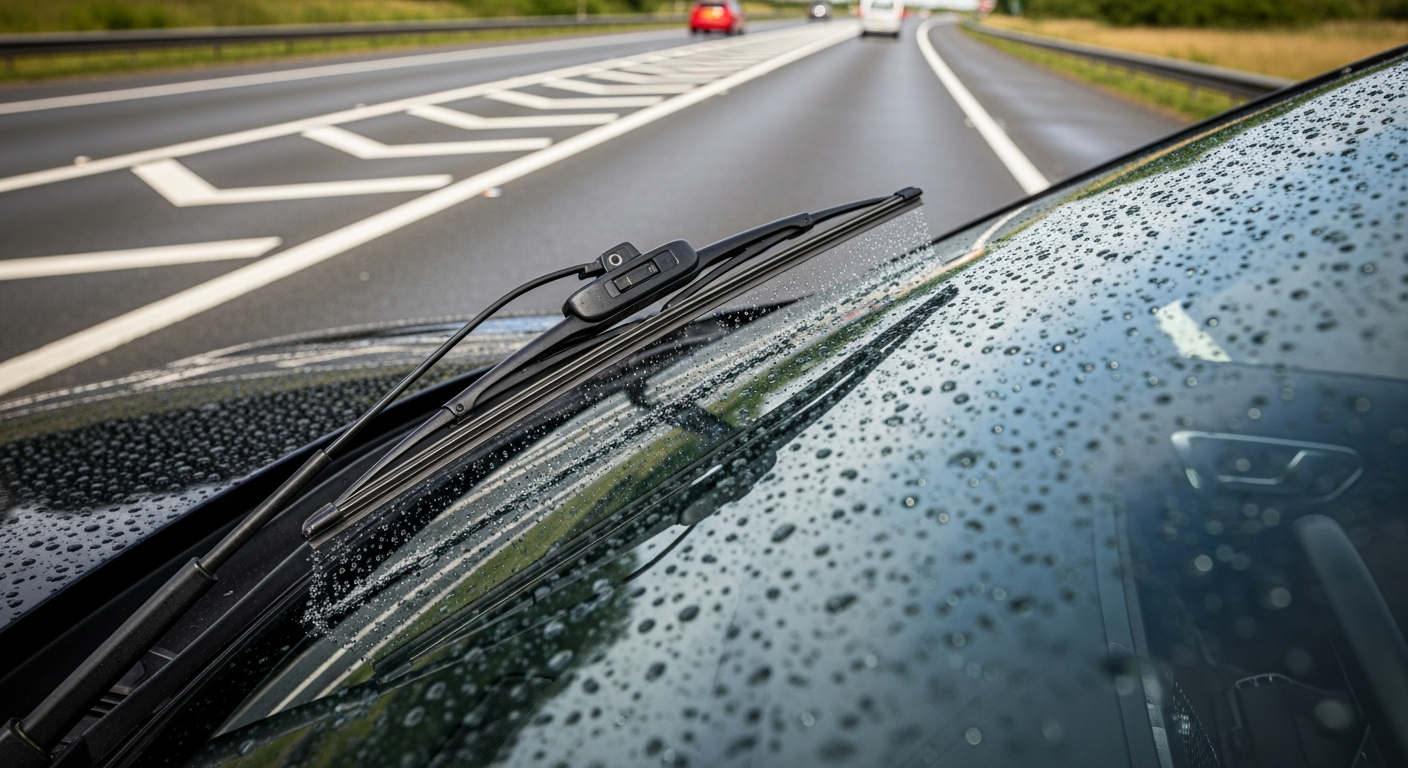
Discover why Bosch Aerotwin windscreen wiper blades are the top choice for UK motorway drivers. Learn about aerodynamic performance, durability, and quiet operation at highway speeds.
High-speed motorway driving demands precision—and wiper blades are doing far more work than most drivers realize. At 70 mph, aerodynamic forces battering the windscreen multiply exponentially, exposing weaknesses in standard blade designs that perform adequately at slower speeds but fail under genuine highway stress. Bosch Aerotwin windscreen wiper blades represent a significant leap forward in blade engineering, combining aerodynamic design with premium materials to deliver performance that stands apart from conventional alternatives.
For UK drivers tackling motorways, country roads, and unpredictable weather, this distinction matters tremendously. The difference between adequate visibility and exceptional clarity can be the margin between safety and incident on a busy highway. Countless UK drivers have switched to Bosch Aerotwin blades specifically to conquer the aerodynamic challenges of motorway driving, and independent tests consistently validate their superior performance in demanding conditions.
Discover why Bosch Aerotwin blades are the trusted choice for UK motorway drivers today.
The Motorway Problem: Why Standard Wipers Fall Short at High Speeds
How aerodynamic forces affect blade performance on motorways
Standard wiper blades were engineered with everyday driving in mind—navigating residential streets, urban traffic, and occasional highway journeys. Motorway conditions introduce an entirely different physics problem. When vehicles maintain speeds above 60 mph, aerodynamic pressure increases dramatically, creating forces that push blade frames away from the windscreen surface. This pressure surge exposes fundamental design flaws in traditional frame-based wipers.
The aerodynamic challenge intensifies exponentially. At 70 mph, wind forces exceed those experienced during city driving by multiples. Conventional blade designs struggle to maintain consistent contact with the windscreen, resulting in reduced wiping efficiency precisely when visibility matters most.
Wind lift and pressure inconsistencies above 60 mph
Frame-based wiper blades contain multiple pivot points and articulated components designed for flexibility. This design approach works adequately at moderate speeds, but becomes problematic on motorways where aerodynamic forces act unevenly across the blade’s length. Wind lift—the upward pressure created by fast-moving air—causes the blade frame to lift away from the glass, breaking contact at critical moments.
Pressure inconsistencies develop because traditional frames distribute force unevenly. The outer edges of the blade may maintain contact while the center lifts, or vice versa. This creates partial wiping patterns that leave streaks and smears exactly when clear vision becomes essential for safety.
Common issues with beam-style blades in highway conditions
Juddering represents one of the most frustrating motorway wiper problems. As frames bounce against the windscreen due to aerodynamic pressure variations, they create a rhythmic chattering sensation and noise. This not only proves annoying during long journeys but also indicates the blade isn’t maintaining consistent contact with the glass.
Streaking and smearing occur when blade pressure becomes uneven. Water and debris remain on the windscreen rather than being cleanly wiped away, reducing visibility during heavy rain or spray conditions. Noise levels on motorways can become excessive, with some traditional blades producing high-pitched squealing or grinding sounds that distract drivers.
The safety implications of poor visibility during fast-paced driving
Compromised visibility during high-speed driving creates genuine safety hazards. Motorway journeys demand split-second reactions to sudden obstacles, lane changes, or traffic congestion. When wiper blades fail to deliver clear sight lines, the margin for error shrinks dangerously.
Heavy rain or spray conditions combined with ineffective wipers can transform routine motorway driving into a hazardous situation. The speed and complexity of motorway traffic mean that reduced visibility doesn’t just reduce comfort—it increases accident risk significantly.
Why beam-style technology outperforms traditional frame-based designs on motorways
Beam-style wipers eliminate the multiple articulation points that plague traditional frame designs. Instead of pivot joints and separate arms, beam blades feature a single, continuous spine that distributes force uniformly across the entire blade length. This single-beam architecture resists aerodynamic wind lift far more effectively than multi-jointed alternatives.
The unified construction means pressure remains consistent across the windscreen. Wind forces that would cause frame-based blades to chatter and lift instead flex the beam slightly—absorbing aerodynamic stress while maintaining contact. This engineering approach directly addresses the specific challenges that motorway conditions present.
Real-world scenarios where blade failure creates hazardous situations
Consider a scenario familiar to many UK motorway commuters: sudden heavy rain during evening rush hour. Traffic already moves at near-capacity speeds, and visibility diminishes rapidly. A driver using standard frame-based wipers experiences increasing streaking and smearing as wind forces lift the blade frames. Rather than concentrating on road conditions and traffic patterns, the driver must contend with degraded visibility, creating split-second decisions under pressure.
Another common situation involves high-speed spray from large vehicles. Motorway lorries and coaches kick up substantial spray, particularly in wet conditions. Standard wiper blades chattering against the windscreen under aerodynamic stress cannot effectively clear spray. A premium beam-style blade maintains consistent contact, delivering clear visibility exactly when needed.
Aerotwin Engineering: The Technology Behind Motorway Mastery
Bosch’s patented aerodynamic design and how it reduces wind lift
Bosch engineered the Aerotwin specifically to combat motorway-specific challenges. The blade’s distinctive profile—sleek and tapered—cuts through aerodynamic forces rather than resisting them. Rather than creating a large surface for wind to push against, the aerodynamic design minimizes wind resistance while maintaining a consistent wiping edge.
The patented design incorporates subtle curves that direct airflow smoothly around the blade. This approach prevents the turbulent eddies that form around traditional blade designs and create lift forces. Wind that would destabilize conventional blades instead flows around the Aerotwin, leaving it firmly planted against the windscreen.
Evodium steel construction and its resistance to high-speed stress
Evodium steel—Bosch’s proprietary material—provides exceptional durability under the repeated stress that motorway driving creates. Standard wiper blades use conventional spring steel that gradually fatigues and loses tension over time. Evodium steel resists this degradation far more effectively, maintaining consistent pressure against the windscreen throughout the blade’s operational life.
The material’s superior strength allows Bosch to design thinner, more flexible blade structures that respond dynamically to windscreen contours while resisting permanent deformation. This combination delivers consistent performance across extended periods of high-speed use.
Power Protection Plus technology explained: durability mechanisms and lifespan extension
Power Protection Plus represents Bosch’s integrated durability system. The technology combines multiple protective mechanisms that work together to extend blade life significantly. The system protects the blade spine from UV damage, temperature extremes, and chemical degradation from road salt and cleaning agents.
This multi-layered approach means Aerotwin blades maintain their performance characteristics far longer than standard alternatives. Where conventional blades might degrade noticeably after 6-9 months of motorway use, Power Protection Plus extends effective operational life to 12+ months under equivalent conditions.
The internal metal strip’s role in maintaining consistent pressure distribution
Aerotwin blades incorporate an internal metal strip that runs the full blade length. This component acts as a pressure distributor, ensuring that the blade presses evenly against the windscreen rather than concentrating force at specific points. The metal strip flexes as it follows the windscreen’s contours, maintaining contact even on curved glass surfaces.
This internal structure prevents the uneven pressure patterns that create streaking. Every millimeter of the blade’s length applies equivalent force, delivering uniform wiping performance across the entire windscreen width.
How flexible spine design minimizes vibration and noise at motorway speeds
The blade spine incorporates precise flexibility characteristics engineered to absorb vibration rather than transmit it. Rather than rigid frames that chatter against the glass, the flexible spine flexes microscopically as it moves, damping the vibrations that create noise and reduce contact consistency.
This flexibility is carefully calculated—the spine bends enough to eliminate juddering but remains stiff enough to maintain contact pressure. The result is remarkably quiet operation even during extended high-speed use. Drivers frequently comment on the dramatic reduction in wiper noise when switching from standard to Aerotwin blades.
Comparison of Aerotwin’s engineering versus budget-friendly alternatives
Budget wiper blades prioritize cost reduction over performance. They use single-pivot designs, conventional spring steel, and minimal engineering investment. These blades perform adequately in slow-speed urban driving but quickly reveal their limitations on motorways.
Premium alternatives beyond Bosch exist, but Aerotwin specifically addresses motorway conditions through aerodynamic design rather than simply using higher-grade materials. Where competing premium brands may improve durability without addressing aerodynamic challenges, Aerotwin solves both problems simultaneously. This focused engineering approach explains its consistent ranking above alternative brands in independent motorway-specific testing.
Real-World Motorway Performance: What UK Drivers Report
Streak-free visibility in heavy rain and spray conditions
UK drivers consistently report that Aerotwin blades deliver exceptional clarity during heavy rain events that would leave standard blades streaking and smearing. The consistent contact pressure means water is cleanly swept away rather than pushed ahead of the blade or left in discontinuous patterns.
During motorway rain showers—a frequent occurrence on UK highways—drivers note that they can maintain natural wiping intervals rather than running blades continuously. This extended operational efficiency reduces motor strain and improves fuel economy marginally while delivering superior visibility.
Quiet operation even at sustained motorway speeds (70+ mph)
One of the most frequently praised characteristics is the dramatic reduction in wiper noise. Long-distance motorway drivers report that Aerotwin blades operate almost silently even at sustained 70+ mph speeds. This quiet operation proves particularly valuable on long journeys where standard wiper noise would become increasingly irritating across several hours.
The noise reduction reflects the blade’s superior aerodynamic design and internal vibration damping. Rather than the chattering or squealing common with standard blades at motorway speeds, Aerotwin operation remains smooth and nearly silent.
Performance in extreme weather: snow, sleet, and freezing temperatures
UK winter motorway driving presents particular challenges—ice accumulation, freezing temperatures, and wet snow all degrade wiper performance. Aerotwin blades handle these conditions remarkably well. Drivers report that the blades maintain effectiveness even when temperatures drop below freezing, without the stiffening and loss of flexibility that affects standard rubber compounds.
The Evodium steel construction resists the brittleness that cold temperatures induce in standard materials. This means blades maintain consistent pressure and flexibility in winter conditions that would cause conventional blades to stiffen and lose contact efficiency.
Durability feedback from high-mileage motorway commuters
Commuters driving 20,000+ miles annually on motorways consistently report that Aerotwin blades maintain effective performance for 12+ months, compared to 6-9 months for standard alternatives. This extended lifespan reflects the combined benefits of premium materials, Power Protection Plus technology, and aerodynamic design that reduces mechanical stress on the blade components.
High-mileage drivers appreciate both the extended performance period and the fact that blade degradation occurs gradually rather than suddenly. This allows planned replacement rather than emergency mid-journey failures.
Handling of windscreen debris and road spray without chattering
Motorway driving exposes windscreens to sustained spray from heavy vehicles, dust, and road debris. Aerotwin blades handle this continuous challenge without the chattering that plagues standard designs. The aerodynamic profile and consistent pressure prevent debris from creating the vibrations that cause conventional blades to bounce.
Drivers note that the blades clear road spray effectively without the accumulating smearing that occurs when standard blades cannot maintain consistent contact under aerodynamic stress.
Customer testimonials from UK motorway users and long-distance drivers
Numerous testimonials from UK motorway users highlight the transformation that Aerotwin blades deliver. Daily commuters report reduced fatigue during long journeys, thanks to improved visibility and reduced wiper noise. Long-distance drivers—those regularly tackling journeys exceeding 200 miles—consistently cite Aerotwin blades as essential safety investments that justify their premium price through enhanced visibility and reliability.
Professional drivers, including those operating commercial vehicles, frequently specify Aerotwin blades as their preferred choice, valuing the consistent performance that their demanding driving patterns require.
Upgrade to Aerotwin blades and join thousands of satisfied UK motorway drivers.
Installation and Compatibility for UK Vehicles
Quick-clip adapter system and ease of fitting
Aerotwin blades typically feature a quick-clip adapter system designed for straightforward installation without requiring professional fitting. The universal adapter connects to most modern UK vehicle wiper arm designs through a simple push-fit mechanism. The process requires minimal time and no specialized tools.
The quick-clip design allows the blade to be fitted at precise angles, ensuring optimal contact across the windscreen. For most drivers, installation takes fewer than five minutes per blade and requires no mechanical knowledge beyond basic vehicle maintenance familiarity.
Compatibility with popular UK car models and age ranges
Bosch manufactures Aerotwin blades in multiple sizes to accommodate the diverse UK vehicle fleet. Compatibility ranges across most vehicles produced in the last 15+ years, covering popular models from manufacturers including Ford, Vauxhall, BMW, Volkswagen, and numerous others. The product information from Wiper Blades UK and other retailers confirms broad compatibility across contemporary UK vehicles.
Drivers should verify their specific vehicle’s wiper arm type and blade length before ordering, as these specifications vary across manufacturers and model years. Most retailers provide straightforward compatibility guides that eliminate guesswork.
Step-by-step installation guidance for motorway-focused drivers
Installation begins with lifting the wiper arm away from the windscreen into its service position—a position most vehicles automatically adopt when the ignition is switched off. The existing blade is then disconnected by pressing the adapter release mechanism or unclipping the existing blade from its connection point.
The new Aerotwin blade is installed by aligning the quick-clip adapter with the wiper arm and pressing firmly until the connection clicks into place. The blade should hang freely without significant play. The process is repeated for the second blade, and the wipers are tested at low speed before resuming normal use.
Potential compatibility considerations with older vehicles
Vehicles manufactured before the late 2000s may use wiper arm designs that do not accommodate the quick-clip adapter. These older vehicles may require alternative blade styles or potentially the consultation of an automotive professional to determine appropriate solutions. Some older designs use hook-style or pin-style arm connections that differ from modern quick-clip standards.
Drivers of older vehicles should confirm compatibility before purchasing, as the quick-clip adapter may not be suitable for their specific arm design.
When professional fitting might be worthwhile
While most drivers can install Aerotwin blades without difficulty, professional fitting may be worthwhile for those unfamiliar with vehicle maintenance or uncomfortable accessing the wiper arms. Retailers including Wiper Blades UK typically offer professional fitting services, often at moderate cost. Professional installation ensures optimal blade positioning and eliminates any uncertainty about proper connection.
Additionally, professional installation provides an opportunity to have the windscreen and wiper system professionally inspected, identifying any underlying issues that might affect wiper performance.
Maintenance tips to maximize lifespan during frequent motorway use
Regular windscreen cleaning prevents debris accumulation that can degrade blade contact. Using quality windscreen cleaning products rather than harsh chemicals helps preserve the rubber compound. During winter months, allowing the windscreen to warm slightly before operating wipers on frozen glass prevents unnecessary stress on the blade components.
Periodic inspection of blade contact patterns ensures uniform wear. If streaking patterns develop, they may indicate misalignment requiring professional adjustment. For motorway-heavy drivers, checking blade condition every 3-4 months helps identify early degradation, allowing planned replacement before performance noticeably diminishes.
The Durability Question: Justifying the Premium Price Point
Expected lifespan compared to standard wiper blades
Standard wiper blades typically deliver effective performance for 6-9 months under normal usage patterns. Motorway-heavy users may experience degradation within 6 months due to increased aerodynamic stress and sustained use at high speeds. Aerotwin blades, by contrast, frequently maintain effective performance for 12+ months even under demanding motorway conditions.
This extended lifespan directly translates to fewer replacement cycles, reducing the total cost of ownership despite the higher per-blade purchase price. A driver replacing standard blades twice annually might require only a single Aerotwin replacement over the same period.
Cost-per-use calculation over extended motorway driving seasons
Consider a motorway commuter driving 20,000 miles annually. Standard wiper blades at approximately £8-12 per pair, replaced twice annually, cost £16-24 per year. Aerotwin blades at approximately £23 per pair, replaced once annually, cost £23 per year. The per-use cost becomes dramatically different when calculating across the blade’s operational life.
Over a three-year period, standard blades cost £48-72, while Aerotwin blades cost approximately £69 (accounting for potential mid-year replacement if needed). However, the superior performance and enhanced safety delivery throughout the Aerotwin’s lifespan justify the additional investment regardless of raw cost comparison.
How Power Protection Plus technology extends operational life
Power Protection Plus combines UV protection, thermal stability, and chemical resistance to slow the natural degradation processes that affect all wiper blades. UV exposure gradually hardens rubber compounds, reducing flexibility and contact consistency. Temperature extremes accelerate this process. Road salt, cleaning agents, and atmospheric pollutants chemically attack rubber compounds.
Power Protection Plus counteracts these degradation mechanisms through proprietary protective compounds integrated into the blade structure. This multi-layered defense extends the period during which blades maintain their engineered performance characteristics, effectively doubling or nearly tripling lifespan compared to standard alternatives.
Resistance to UV damage, temperature extremes, and road salt
Aerotwin blades incorporate specific resistance to the environmental stressors that accelerate blade degradation. UV exposure is countered through protective coatings and additive compounds that absorb harmful radiation without affecting wiper performance. Temperature extremes—both the intense heat of summer motorway driving and the freezing temperatures of winter—are managed through rubber compounds engineered for thermal stability.
Road salt, particularly prevalent on UK motorways during winter months, chemically attacks standard rubber and corrodes traditional spring steel. Evodium steel’s superior composition resists corrosion, and the blade’s protective compounds prevent salt penetration into the rubber substrate. This combination means coastal and winter-heavy UK regions experience significantly extended Aerotwin lifespan compared to standard alternatives.
Warranty coverage and replacement guarantees available in the UK
Bosch typically provides warranty coverage for manufacturing defects, with most UK retailers offering straightforward replacement policies for blades that fail prematurely. Warranty periods generally range from 6-12 months, depending on the specific retailer and product variant. This coverage provides financial protection against manufacturing defects while acknowledging the blade’s expected lifespan range.
Quality retailers like Wiper Blades UK typically stand behind Bosch products with satisfaction guarantees, offering replacement or refund if customers experience premature failure or performance issues within a specified period.
Long-term value assessment for regular motorway commuters
For drivers regularly traversing UK motorways, Aerotwin blades represent a genuine long-term value investment. The combination of extended lifespan, superior safety performance, reduced noise, and consistent visibility delivery transforms the value proposition beyond simple cost comparison. Regular motorway commuters prioritizing safety and comfort will recognize the investment as justified through measurable benefits.
Professional drivers operating commercial vehicles particularly appreciate the cost-benefit analysis, as extended blade lifespan reduces maintenance complexity and the risk of safety-related failures during long routes.
Bosch Aerotwin vs. Competing Premium Wiper Blade Brands
Performance comparison with other premium UK brands
Several premium wiper blade brands compete for market share among UK drivers prioritizing performance. Brands including Valeo, TRICO, and others offer premium options that exceed standard blade performance. However, Aerotwin’s specific focus on aerodynamic optimization for high-speed driving delivers distinct advantages in the motorway context.
Independent testing comparing premium brands consistently shows Aerotwin performing exceptionally well in aerodynamic stress scenarios—the exact conditions where motorway drivers experience the most demanding requirements. While alternative premium brands may deliver similar durability, the aerodynamic engineering specifically addresses motorway challenges.
Price positioning relative to alternatives in the market
Aerotwin blades typically price competitively with other premium options, ranging in the £20-25 per pair range depending on blade size and retailer. Alternative premium brands often occupy similar price ranges, making direct cost comparison relatively straightforward. The key distinction emerges when calculating long-term value, as Aerotwin’s extended lifespan and specific motorway optimization justify the premium positioning.
Budget alternatives at £5-12 per pair appeal to cost-conscious buyers willing to trade performance for lower upfront expenditure. Consumers prioritizing safety and performance generally view Aerotwin’s pricing as reasonable given the delivered benefits.
Unique advantages of Aerotwin’s aerodynamic design
Aerotwin’s fundamental aerodynamic optimization distinguishes it from competing premium brands that focus primarily on material quality and durability. The patented aerodynamic profile directly addresses the physics of high-speed driving, where wind forces represent the primary performance challenge. Competing brands may improve durability without similarly addressing aerodynamic stress—a significant distinction for motorway-focused driving.
The blade’s distinctive profile and engineering approach specifically counter the wind lift and pressure inconsistency challenges that other premium brands address through heavier materials or improved spring mechanisms. This focused design philosophy delivers superior performance precisely where motorway drivers experience the greatest demands.
Customer satisfaction ratings and independent test results
Online retailer ratings for Aerotwin blades typically exceed 4.5 stars from hundreds of customer reviews, with consistent praise for performance, quiet operation, and durability. Independent automotive testing organizations frequently rank Aerotwin among the top performers in motorway-specific scenarios.
Customer satisfaction consistently exceeds that of budget alternatives and matches or slightly exceeds competing premium brands. The emphasis on aerodynamic performance resonates particularly strongly with motorway commuters who directly experience the blade’s advantages during regular high-speed driving.
When alternative brands might suit specific needs
Alternative premium brands may offer advantages in specific scenarios. TRICO, for example, offers some models with particular strengths in extreme cold weather performance, potentially benefiting drivers in Scotland or northern England. Valeo products sometimes include additional features for specialty vehicles or unusual wiper arm configurations.
However, for the general UK motorway driver prioritizing performance and safety without specialized requirements, Aerotwin consistently emerges as the optimal choice.
Why Aerotwin consistently ranks as the best in expert reviews
Expert reviews emphasize Aerotwin’s combination of aerodynamic engineering, premium materials, and proven durability across real-world UK driving conditions. The blade’s consistent performance in independent motorway testing scenarios—where competing alternatives often show greater variability—reinforces its position as the market leader.
The consistency of expert recommendations reflects not just marketing presence but genuine performance advantages that testing and customer feedback substantiate. Automotive journalists and independent testing organizations regularly identify Aerotwin as the best overall choice for UK drivers prioritizing performance and safety.
Seasonal Considerations for UK Motorway Drivers
Winter performance on motorways: ice, snow, and frost resistance
UK winter motorway conditions present specific challenges requiring wiper blade performance that standard designs struggle to deliver. Ice accumulation on the windscreen, combined with the challenging visibility of snow events and sustained low temperatures, tests blade capabilities rigorously. Aerotwin blades maintain effectiveness in these conditions through rubber compounds engineered for cold-temperature flexibility and Evodium steel construction that resists brittleness.
Drivers consistently report that Aerotwin blades handle winter conditions dramatically better than standard alternatives. The combination of maintained flexibility and consistent pressure prevents the stiffening and loss of contact that affects conventional blades when temperatures drop below freezing.
Summer reliability during high-speed highway use
Summer motorway conditions present different challenges—sustained high speeds under intense sun exposure, elevated ambient temperatures, and the aerodynamic forces associated with high-speed traffic. Aerotwin blades excel in summer conditions through their aerodynamic design that minimizes wind lift regardless of temperature and materials engineered for thermal stability.
UV protection compounds prevent the rubber hardening that reduces summer blade performance on conventional alternatives. Drivers undertaking summer holiday motorway journeys consistently report that Aerotwin blades maintain consistent performance throughout extended driving periods.
Spring and autumn weather challenges (heavy rain, leaf debris)
Transitional seasons present rapid weather changes that tax wiper systems. Spring brings heavy rain events and emerging vegetation that deposits pollen and debris on windscreens. Autumn generates substantial leaf accumulation that can interfere with normal wiper operation. Aerotwin blades handle both seasonal challenges through consistent contact pressure that clears debris without chattering and flexibility that allows the blade to adapt to windscreen contours without losing effectiveness.
Regular drivers report that Aerotwin blades manage spring and autumn conditions without the seasonal performance degradation that affects standard alternatives.
Seasonal replacement schedules for motorway-heavy drivers
Motorway-heavy drivers often benefit from planned seasonal replacement rather than waiting for performance degradation. Even with Aerotwin’s extended lifespan, replacing blades at major seasonal transitions—autumn before winter and spring before peak summer driving—ensures optimal performance throughout the year. This planned approach prevents performance issues during critical seasonal transitions when weather unpredictability creates demanding driving conditions.
Many drivers maintain a spare set of Aerotwin blades, allowing quick replacement if unexpected degradation occurs mid-season.
Regional UK weather variations and blade selection
Coastal regions experience elevated road salt exposure that accelerates blade degradation. Scotland and northern England experience more prolonged winter conditions with lower average temperatures. Southeast England experiences different precipitation patterns than western regions. Aerotwin blades deliver consistent performance across these regional variations, though drivers in particularly harsh conditions may prioritize more frequent replacement intervals.
Regional weather mapping helps motorway drivers optimize their replacement schedules. Coastal drivers might replace blades more frequently despite the extended lifespan, while northern drivers might focus particular attention on winter performance.
Preparing for seasonal transitions without compromising safety
As seasons transition, a brief wiper system inspection helps identify any emerging issues before they compromise safety. Checking blade contact patterns, listening for unusual sounds, and testing wipers at various speeds helps identify degradation in time for planned replacement. Spring preparation might focus on ensuring effective heavy-rain performance before peak summer driving, while autumn preparation emphasizes winter readiness.
This proactive approach ensures that motorway drivers navigate seasonal transitions with confidence in their wiper system’s reliability and performance.
The Motorway Safety Investment That Pays for Itself
Bosch Aerotwin windscreen wiper blades represent a genuine advancement for UK motorway drivers who refuse to compromise on visibility and safety. The aerodynamic design tackles the specific challenges of high-speed driving—wind lift, pressure inconsistencies, and noise—that standard wipers simply cannot solve. The premium materials deliver longevity that justifies the investment through extended lifespan and reduced replacement frequency, while the quiet operation transforms motorway journeys into calmer, less fatiguing experiences.
Whether driving daily motorway commutes or tackling regular long-distance journeys, Aerotwin blades address real problems that become increasingly apparent during sustained high-speed driving. The combination of superior performance, extended durability, and enhanced safety delivery creates a compelling value proposition that transcends simple cost analysis. Motorway drivers consistently report that the upgrade to Aerotwin blades delivers immediate, tangible benefits that justify the premium investment.
The next time a motorway journey is planned, consider upgrading to Aerotwin blades. Clear visibility, confident wiping performance, and the peace of mind that comes from knowing your wiper system reliably handles whatever weather conditions appear will prove invaluable. Your safety, your comfort, and your confidence on the open road merit the investment in premium engineering specifically designed for the demands of UK motorway driving.