
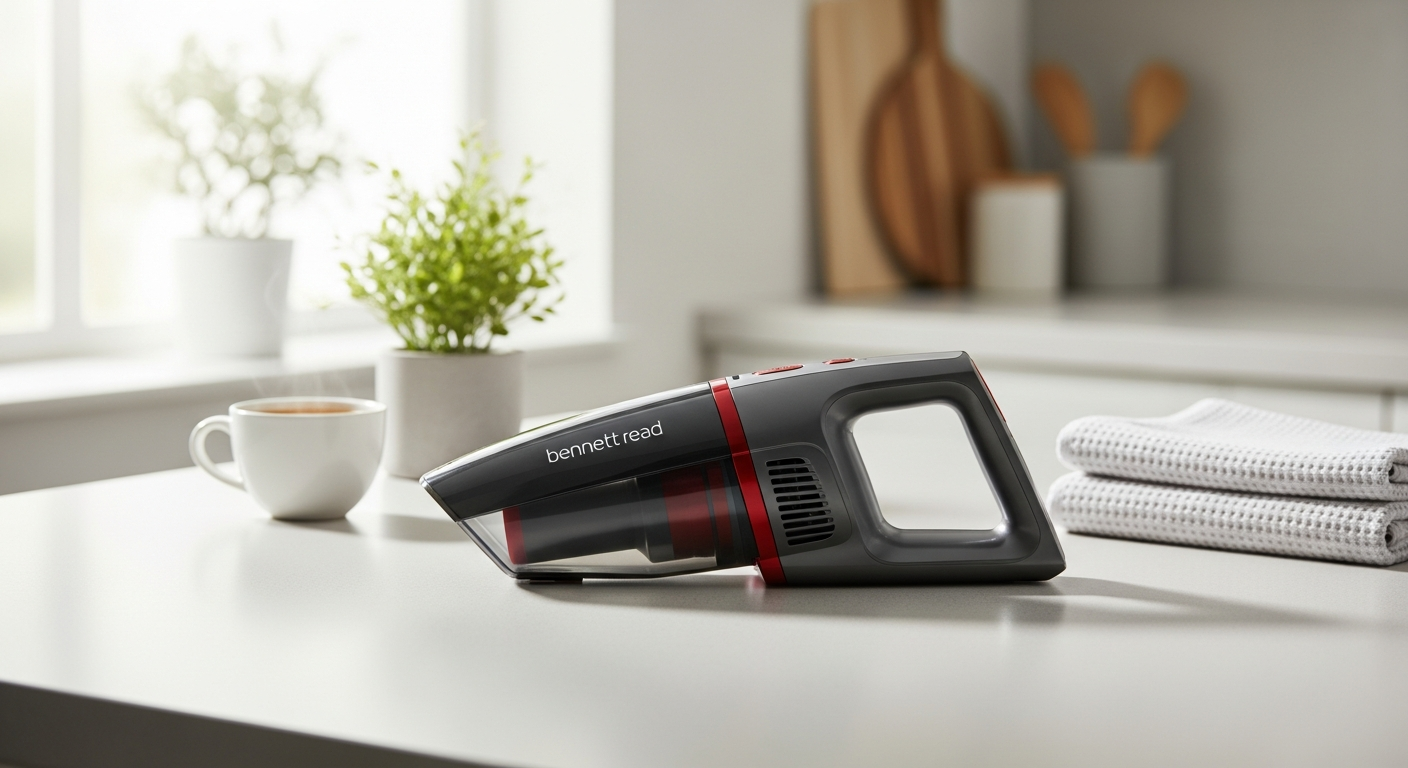
Discover our in-depth Bennett Read Swift 2.0 Handvac review. Learn about its wet and dry cleaning capabilities, battery performance, and whether this cordless handheld vacuum delivers real value for South African households.
Picture this: you've just knocked over a glass of juice on your living room carpet, and simultaneously, your kids have tracked dirt through the hallway. Most handheld vacuums force you to choose—wet or dry. The Bennett Read Swift 2.0 Handvac handles both messes in seconds. That's the kind of dual-functionality transforming how South African households approach everyday cleanup.
Bennett Read has built a solid reputation for delivering practical home appliances that don't break the bank. The Swift 2.0 represents their answer to a genuine household pain point: the need for a versatile, lightweight cleaning solution that works everywhere—from kitchen spills to car interiors to dusty corners. With a price tag between R799 and R849, it's positioned as an accessible option for families tired of juggling multiple cleaning tools.
Discover the Bennett Read Swift 2.0 and transform your cleaning routine today.
What Makes the Bennett Read Swift 2.0 Stand Out from Other Handheld Vacuums
The cordless handheld vacuum market is crowded, yet the Swift 2.0 carves out genuine distinction through its dual wet and dry cleaning capability—a rare feature at this price point. Most competitors force you to choose one function or the other, but this device seamlessly transitions between liquid spill management and dry debris pickup.
Weighing just 1.26–1.5 kg, the Swift 2.0 feels weightless in your hand during extended cleaning sessions. The ergonomic grip is engineered specifically to reduce hand fatigue, making it accessible for users of all ages and physical capabilities. This matters more than it sounds—a heavy handheld vacuum becomes a chore rather than a convenience.
The 11.1V Lithium-ion battery technology powers completely cordless operation, eliminating the tether that restricts movement around your home, car, or office. You'll appreciate the freedom to move from room to room without hunting for power outlets or managing extension cords.
The bagless system with washable microparticle filter represents a genuine cost-saving feature over time. No replacement bags mean ongoing savings and reduced waste. The integrated LED light illuminates shadowy corners and spaces under furniture, revealing dust and debris you'd otherwise miss. Essential accessories round out the package: a crevice nozzle for tight spaces between cushions, a dusting brush for delicate surfaces, and a wall-mounted charging station that keeps the device accessible and ready.
Battery Performance and Runtime: What You Actually Get
The 11.1V Lithium-ion battery is the heart of cordless convenience, but real-world expectations matter more than specifications. For typical household cleaning tasks—quick spill cleanup, small debris pickups, car interior maintenance—the battery delivers sufficient runtime between recharges.
Runtime varies depending on cleaning mode. Dry debris pickup typically sustains operation longer than wet mode, which demands more power to manage moisture and suction simultaneously. You can expect adequate performance for 15–20 minutes of continuous use under normal household conditions, which covers most quick cleanup scenarios. Spot cleaning a spill, vacuuming stairs, or addressing a pet accident all fall well within this window.
Battery degradation follows the natural pattern of Lithium-ion technology. Over extended use—typically years of regular operation—you'll notice gradual charge capacity reduction. This is normal and doesn't indicate a defect. Proper storage and avoiding deep discharge cycles help maximize longevity.
The wall-mounted charging station occupies minimal counter or wall space, offering convenient storage and recharging. Placement considerations matter: keep it in an accessible location where you'll actually use it, not hidden away in a cupboard where the device becomes inconvenient to retrieve.
Recharge time between cleaning sessions typically ranges from 3–4 hours for a full charge. Plan around this timeline if you anticipate multiple cleaning sessions in quick succession. For most households managing daily spills and maintenance cleaning, one fully charged unit covers the day's needs comfortably.
Wet and Dry Cleaning Capabilities Explained
The dual-function system operates through a single tank and filtration mechanism that adapts to moisture levels. Switching between modes is straightforward—typically a simple dial or button adjustment. The mechanical design captures both liquid and dry debris without requiring separate containers or complex reconfiguration.
Liquid spill handling addresses common household accidents: water, juice, coffee, wine, and similar spills. The Swift 2.0 captures moisture effectively without spreading it or creating slipping hazards. Suction strength pulls liquid into the tank rather than dispersing it across your floor. This functionality alone justifies the purchase for many households with young children or pets.
Dry debris performance handles dust, crumbs, pet hair, and fine particles across various surfaces. On carpets, it picks up surface-level debris effectively. On hardwood and tile, it performs admirably for quick cleanups. Upholstery attachment use requires care—suction strength pulls firmly, so avoid prolonged contact on delicate fabrics.
Tank capacity limitations mean frequent emptying on larger jobs. The container fills quickly when handling substantial spills or extensive debris collection. For a household that generates multiple daily messes, you'll empty the tank several times per day. This isn't a flaw—it's the practical reality of a compact, lightweight design. Accepting this trade-off is essential to satisfaction.
Performance on different surfaces varies. The device excels on hard floors and light carpet debris. Deep pile carpets demand more suction power than the Swift 2.0 provides. Upholstery cleaning works for spot treatment but isn't designed for comprehensive sofa or mattress cleaning.
The Swift 2.0 shines in scenarios involving quick pickups, small spills, car interiors, and stairs. It struggles with extensive debris collection, heavy carpet cleaning, and sustained high-volume cleaning sessions. Understanding this distinction prevents disappointment and ensures realistic expectations.
Included Accessories and Their Practical Value
The crevice nozzle transforms tight spaces into accessible cleaning zones. It reaches between sofa cushions, along baseboards, around window sills, and into car cup holders—places standard vacuum heads can't reach. This accessory isn't an afterthought; it's genuinely useful for comprehensive household cleaning.
The dusting brush serves delicate surfaces: lampshades, electronics, decorative items, and furniture surfaces. Bristles are soft enough to avoid damage while maintaining enough firmness to dislodge dust effectively. For allergy sufferers managing household dust, this attachment extends the vacuum's utility significantly.
LED light brightness proves adequate in most lighting conditions. Shadowy corners under furniture and dark cabinet interiors become visible, revealing dust accumulation that dim lighting would obscure. The onboard light eliminates the need to reposition or angle your head awkwardly to see what you're cleaning.
The wall-mounted charging station occupies minimal space and keeps the device visible and accessible. Some users appreciate the aesthetic integration; others find it takes up valuable wall real estate. Consider your available space before purchase.
Attachment materials feel durable rather than flimsy. The nozzles aren't cheap plastic that breaks after a few uses—they're engineered for repeated use. This matters because accessories broken early in the product's lifespan create frustration and waste.
Aftermarket attachment compatibility depends on connector design. Before purchasing additional accessories, verify compatibility specifications. Some third-party options may fit; others won't. The basic package provides sufficient attachments for most household needs.
Maintenance, Cleaning, and Long-Term Care
The easy-eject dirt container empties without complicated latches or awkward twists. Press a release button, and the container slides free. Emptying involves holding it over a bin and shaking out debris—simple, intuitive, and no mess. Rinsing the container extends its lifespan and eliminates odor buildup.
The washable microparticle filter demands regular maintenance. After every wet cleaning session, rinse the filter thoroughly with clean water. Dry debris use doesn't require as frequent washing, but regular light rinsing keeps suction performance optimal. Monthly deep cleaning with water ensures filter longevity.
Filter material durability withstands repeated washing cycles. Microparticle filters are designed for this repeated exposure to water and drying. After years of regular use, filter effectiveness may gradually diminish, eventually necessitating replacement. This is a far more economical long-term expense than ongoing replacement bag purchases.
The bagless system eliminates recurring costs and environmental waste associated with disposable bags. Over a product's five-year lifespan, this savings accumulates meaningfully. You're not contributing to landfill waste monthly, and your household budget benefits consistently.
Odor management in the tank after wet cleaning becomes important with regular use. Empty the tank immediately after wet sessions rather than allowing moisture to sit. Rinse the tank thoroughly and allow air drying before storage. This simple habit prevents mold growth and bacterial odors that create unpleasant smells during subsequent use.
Preventive maintenance steps extend appliance lifespan significantly. Keep the filter clean, empty containers promptly, allow the device to dry completely before storage, and charge the battery regularly without allowing complete discharge. Store in a dry location away from extreme temperatures. These straightforward practices keep the Swift 2.0 performing optimally for years.
Troubleshooting reduced suction often points to a clogged filter or full container. Clean or replace the filter; empty the tank completely. Suction should return to normal. Persistent reduced suction might indicate filter damage requiring replacement. Battery problems—failure to hold charge or dramatic runtime reduction—typically necessitate battery replacement through the manufacturer. Professional service availability depends on your location in South Africa.
Suction Power and Performance Limitations
Realistic suction strength compared to upright and cylinder vacuums reveals the fundamental trade-off: cordless handheld vacuums sacrifice raw power for portability and convenience. The Swift 2.0's suction is adequate for light debris and spills but won't match the force of a full-sized appliance. This isn't a deficiency—it's the inherent nature of the category.
Handheld vacuums have lower power because battery capacity, weight constraints, and compact motor design all limit maximum suction force. Engineering constraints mean choosing between weight and power, and manufacturers consistently choose weight for user convenience. Carrying a five-kilogram handheld vacuum becomes exhausting quickly.
Best-use scenarios highlight where the Swift 2.0 genuinely excels: spot cleaning small spills, quick pickups of crumbs and debris, car interior maintenance, stair cleaning, and furniture surface debris removal. These everyday scenarios are where cordless handheld vacuums earn their place in households.
Situations where the Swift 2.0 falls short include deep carpet cleaning in heavily trafficked areas, extensive debris collection requiring multiple passes, sustained cleaning sessions exceeding 20 minutes, and comprehensive household cleaning requiring large-surface coverage. Attempting to use the Swift 2.0 as a primary vacuum for a large home will generate disappointment and frustration.
The dirt container capacity constraint is real. The compact size that makes the device portable also means limited debris storage. Expect frequent emptying—sometimes multiple times during extended cleaning sessions. This rhythm becomes routine and acceptable when you understand it's inherent to the design.
Performance degradation as the container fills happens quickly. As debris accumulates, suction effectiveness diminishes noticeably. This drives home the importance of frequent emptying rather than attempting to maximize container capacity before disposal.
An honest assessment acknowledges the Swift 2.0 as a supplementary cleaning tool rather than a primary vacuum replacement. Households with full-sized vacuum cleaners will find the Swift 2.0 invaluable for maintenance cleaning between deep cleaning sessions. Households without primary vacuums may struggle to rely solely on this device for complete home cleaning needs.
Price-to-Value Analysis: Is R799–R849 a Fair Investment?
Cost comparison with competing cordless handheld vacuums in the South African market shows the Swift 2.0 positioned competitively. Similar devices from other brands often cost R1,000 or more, making the Bennett Read offering accessible. Budget alternatives exist at lower price points, but they typically lack the wet and dry dual functionality.
The value proposition of wet and dry functionality justifies the price point meaningfully. Purchasing separate devices for liquid and dry cleaning would cost substantially more. Consolidating these functions in one handheld eliminates tool multiplication and decision-making fatigue.
Long-term savings from the washable filter system accumulate over years. Traditional vacuum cleaners require replacing filters and bags regularly—costs that add up across the product lifespan. The Swift 2.0's washable filter eliminates these recurring expenses, improving value significantly.
Durability expectations matter. Bennett Read's reputation suggests solid construction quality. Five to seven years of regular household use represents a reasonable lifespan expectation. Warranty offerings vary by retailer; verify coverage terms before purchase.
Cost per use over a typical product lifespan justifies the initial investment. If the device prevents one serious carpet stain through prompt wet spill cleanup, its value proposition strengthens considerably. For households managing frequent small spills and pet-related messes, cost-per-use becomes minimal.
Whether premium features justify the price depends on your household's specific cleaning needs. If you regularly face both wet and dry debris situations, yes. If your household generates primarily dry dust and crumbs, a basic dry-only handheld might suffice at lower cost. Assess your actual cleaning patterns before deciding.
Best retailers across South Africa include major appliance stores, online marketplaces, and hardware chains. Current pricing variations fluctuate based on promotional periods. Shopping around during sales events can yield savings, though the base price point remains accessible year-round.
Real-World User Scenarios: Where the Swift 2.0 Shines
Busy parents managing multiple daily spills and messes experience the Swift 2.0's utility most acutely. Children generate constant small crises: spilled juice, dropped crackers, tracked dirt, and mysterious sticky spots. Having a ready-to-use handheld vacuum eliminates the friction of retrieving a full-sized machine and dragging it to problem areas. Parents consistently report reaching for the Swift 2.0 multiple times daily for quick interventions.
Pet owners tackling fur and occasional accidents benefit tremendously from dual functionality. Dry pet hair cleanup happens instantly with the attachment tools; accident cleanup—whether liquid or solid—becomes manageable without elaborate cleaning protocols. The microparticle filter addresses pet dander effectively, improving indoor air quality for allergy-prone household members.
Car interior cleaning and maintenance represent ideal use cases. The lightweight device easily navigates between seats, under dashboards, and into cup holders. The crevice nozzle reaches spaces ordinary car vacuum attachments struggle with. Spill cleanup—coffee, juice, pet accidents—happens quickly without requiring a stationary vacuum in the driveway.
Office and workspace quick cleanups benefit from the Swift 2.0's convenience. Desk surface debris, keyboard dust, and small spills get handled immediately without disrupting workflow significantly. Quiet operation makes office use socially acceptable during business hours.
Allergy sufferers using the microparticle filter experience genuine air quality improvement. The washable filter captures fine particles effectively, reducing airborne dust and allergen circulation. Regular filter cleaning maximizes this benefit, making the device an active participant in household health management.
Elderly users benefit tremendously from the lightweight, ergonomic design. Avoiding heavy vacuum lifting reduces strain and injury risk. Cordless convenience eliminates power cord management challenges. The intuitive controls require no complicated setup or operation procedures.
Small apartment dwellers with limited storage space appreciate the compact footprint. The charging station mounts on walls; the device itself stores conveniently in closets or under sinks. Compared to full-sized vacuum storage requirements, the Swift 2.0 occupies negligible space.
Renters seeking portable, non-permanent cleaning solutions find the Swift 2.0 ideal. No built-in installation; no permanent infrastructure required. The device moves between rental properties effortlessly, protecting your deposit through proactive cleaning without landlord concerns about wall-mounted equipment.
Drawbacks and Honest Trade-Offs You Should Know
Battery life limitations requiring frequent recharging represent the most significant constraint. If you anticipate cleaning sessions exceeding 20 minutes, you'll need strategic planning. Extended cleaning projects require battery swaps or multiple session breaks. Accepting this rhythm is essential to satisfaction.
Suction power constraints compared to traditional vacuum cleaners define the category. No cordless handheld achieves full-sized vacuum performance. If deep carpet cleaning is your primary need, the Swift 2.0 will frustrate. Full-sized vacuums remain necessary for serious cleaning work.
The dirt container capacity necessitates regular emptying, sometimes multiple times during extended use. Some users find this frequent maintenance annoying rather than routine. If you prefer minimizing maintenance frequency, this device won't suit your preferences.
The Swift 2.0 isn't suitable as a primary vacuum for large homes or heavy-duty cleaning. Attempting to rely solely on this device for comprehensive household cleaning generates frustration and leaves surfaces inadequately cleaned. Pairing it with a full-sized vacuum addresses this limitation effectively.
Filter clogging with fine dust particles happens when regular maintenance is neglected. Dry homes with significant dust require more frequent filter rinsing than standard households. Failure to maintain filter cleanliness causes dramatic performance degradation.
Noise levels during operation exceed quiet whisper ranges. The device operates noticeably loudly compared to some premium handheld competitors, though not excessively by vacuum standards. If you value near-silent operation, note this consideration.
Durability concerns with long-term cordless battery performance emerge after years of use. Battery capacity inevitably diminishes over time. Eventual replacement becomes necessary, adding cost to long-term ownership.
Limited availability of replacement parts or accessories in some regions affects long-term serviceability. Urban areas with multiple retailers experience better access than remote locations. Before purchasing, research parts availability in your specific region to ensure you won't face supply challenges if repairs become necessary.
How the Bennett Read Swift 2.0 Compares to Competitors
Side-by-side comparison with other cordless handheld vacuums at similar price points reveals the Swift 2.0's competitive positioning. Brands like Black+Decker, Dyson, and Samsung offer alternatives, with pricing ranging from R700 to R2,000 depending on features and brand prestige.
Wet and dry capability availability distinguishes the Swift 2.0 meaningfully. Many competitors offer dry-only operation, requiring separate devices for liquid cleanup. Few alternatives at this price point match the dual functionality. Premium brands like Dyson offer wet-dry capability at substantially higher prices.
Battery technology and runtime differences vary across competitors. The 11.1V Lithium-ion specification is standard in this category. Runtime differences of a few minutes between brands are negligible; user experience depends more on cleaning patterns than absolute runtime specifications.
Suction power benchmarks across brands show relatively tight clustering in the cordless handheld category. Dyson premium models deliver marginally higher performance; budget brands perform marginally lower. The differences rarely justify price premiums for average household users.
Accessory packages and included tools vary significantly. The Swift 2.0's inclusion of crevice nozzle, dusting brush, and LED light represents solid value. Some competitors charge extra for accessories; others include fewer options.
Brand reputation and customer service support matter for long-term satisfaction. Bennett Read's South African heritage provides local support advantage over international brands that require overseas warranty service. This matters practically when you need repairs quickly.
Warranty offerings and after-sales service in South Africa favor locally-based brands. Extended warranty options through local retailers provide greater protection and convenience than international warranty programs requiring shipping devices overseas.
User review patterns and satisfaction ratings across platforms show the Swift 2.0 performing well relative to competitors. Owners consistently praise the wet-dry functionality and lightweight design. Criticisms typically focus on battery runtime and suction power—complaints applicable to the entire cordless handheld category rather than unique weaknesses.
Setup, Learning Curve, and User-Friendliness
Unboxing and initial assembly requirements prove minimal. The device arrives nearly ready to use. Battery installation, if required, involves simple clicking mechanisms. The charging station requires wall mounting or placement on a shelf—straightforward without tools or expertise.
Charging station installation and optimal placement demands consideration. Mount at waist height for convenient access without bending or reaching uncomfortably. Ensure proximity to areas where you typically use the vacuum to minimize retrieval distances. Some users place stations in multiple locations for convenience.
First-use experience and intuitive controls make the Swift 2.0 accessible to users of varying technical proficiency. Power buttons, mode switches, and attachment connections follow standard conventions. No steep learning curve impedes immediate use.
Learning to switch between wet and dry modes requires minimal practice. Most models feature simple dial or button adjustments. After one or two mode transitions, the process becomes instinctive and requires no thought.
Attachment installation and removal ease matter for practical daily use. Nozzles and brushes should connect and disconnect smoothly without requiring excessive force or complicated alignment procedures. Poor attachment design frustrates users and discourages use of available tools.
Instruction manual clarity varies by product batch. Bennett Read typically provides clear, illustrated manuals explaining operation and maintenance. If manuals lack clarity, customer support channels should provide guidance. Verify support availability in your region before purchase.
Accessibility for elderly users or those with limited dexterity requires particular consideration. The lightweight design and ergonomic grip facilitate comfortable handling without requiring significant hand strength. Intuitive controls and simple operation eliminate frustrating complexity.
Time investment to master all features and functions remains minimal. Most users operate effectively within minutes of first use. Advanced optimization of battery efficiency or filter maintenance requires more time, but isn't necessary for basic operation.
The Verdict: Should You Buy the Bennett Read Swift 2.0?
The Bennett Read Swift 2.0 Handvac earns its best-seller status through a winning combination of practicality and affordability. Its wet and dry functionality genuinely sets it apart—you'll find yourself reaching for it constantly because it handles whatever mess appears without requiring a tool swap. The lightweight design and cordless convenience make quick cleanups effortless, and the washable filter system means you're not throwing money at replacement bags month after month.
This handvac works best when you understand its limitations. It's a supplementary cleaning tool, not a primary vacuum replacement for extensive deep cleaning. The battery demands regular recharging, the suction power won't tackle heavily soiled carpets, and the container fills faster than a full-sized model. But for busy households, pet owners, car interiors, and anyone who values convenience and versatility at an accessible price point, the Swift 2.0 delivers genuine value.
At R799–R849, you're getting solid engineering from a trusted South African brand without premium pricing. If your household generates frequent small spills, pet hair, and dust—and you appreciate having one tool that handles everything—this handvac absolutely deserves consideration.