
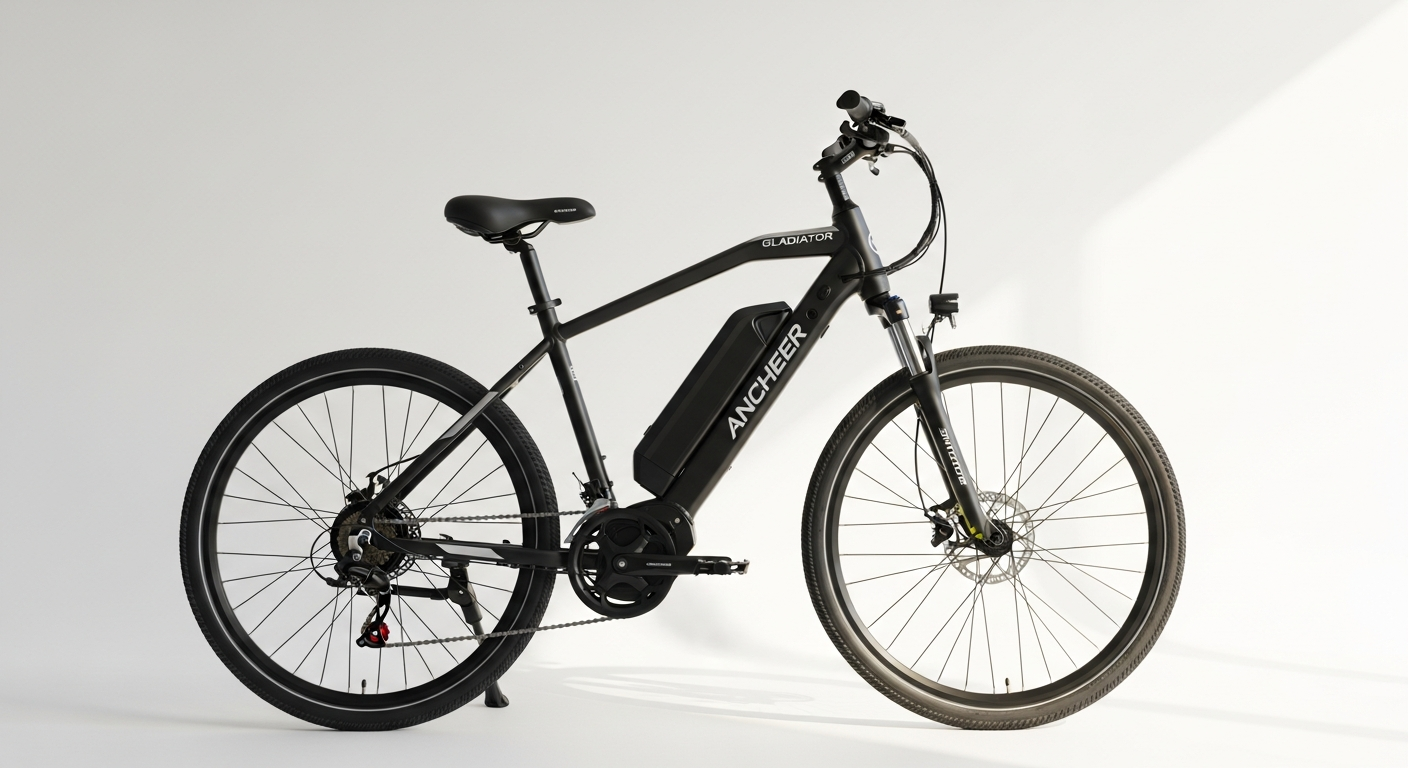
Discover why the ANCHEER Gladiator 500W electric bike dominates the affordable e-bike market with 60-mile range, 500W motor power, and 4.8★ ratings. Your complete buyer’s guide inside.
Over 1,400 riders have rated the ANCHEER Gladiator 500W at 4.8 stars—and they're not holding back. This e-bike has become Walmart's overall pick, outselling premium competitors at half the price. The phenomenon stems from a combination of raw power, exceptional battery endurance, and accessibility that challenges everything we thought we knew about budget electric bikes.
The e-bike market has traditionally forced riders into two camps: spend $2,000+ for quality or settle for mediocre performance at lower price points. ANCHEER disrupted this false choice with the Gladiator—a 500W electric mountain bike that refuses to compromise on the essentials. Whether commuting through city streets or exploring gravel trails on weekends, this machine delivers genuine versatility without the premium price tag.
Discover what makes the ANCHEER Gladiator the smart choice for affordable electric biking.
Motor Performance and Speed Capabilities
500W Brushless Motor and Real-World Acceleration
The heart of the Gladiator is its 500W brushless motor, engineered to deliver consistent power without the maintenance headaches of brushed alternatives. This motor class sits squarely in the sweet spot for e-bikes—powerful enough to handle varied terrain but efficient enough to stretch battery life. Real-world acceleration from a standstill feels responsive, with riders experiencing noticeable push within the first few pedal strokes when in throttle mode.
Reaching 20 mph: Performance Across Scenarios
The Gladiator achieves its 20 mph top speed efficiently, whether you're rolling through flat urban streets or tackling gentle slopes. On paved surfaces, the motor delivers its full potential, allowing riders to cruise at legal speed limits in most jurisdictions. Commuters report that acceleration helps merge smoothly into traffic, while recreational riders appreciate the ability to maintain consistent speeds without constant pedaling effort. The motor's power distribution remains stable across different assistance levels, meaning you can scale back to 15 mph for energy conservation or push to the maximum when time matters.
Motor Efficiency Across Terrain Types
Performance varies predictably across different surfaces. On pavement, the Gladiator excels—smooth acceleration and reliable throttle response make city commuting straightforward. Gravel and packed dirt trails see maintained performance, though the motor works harder against increased rolling resistance, impacting range slightly. Light trail work demonstrates the motor's versatility; it handles moderate inclines without bogging down. Steep technical terrain is where limitations emerge. The motor struggles with aggressive climbs, and riders exceeding the bike's weight capacity will notice diminished acceleration on anything steeper than 15 degrees.
Pedal-Assist Versus Throttle Modes
The Gladiator supports both riding modes, and understanding the difference matters for range and performance. Pedal-assist mode activates motor support proportional to your pedaling effort, creating a natural riding feel while maximizing battery efficiency. Throttle mode engages the motor at full power regardless of pedaling, ideal for quick acceleration or navigating traffic. Heavy throttle usage drains the battery faster—expect 30-40 miles of range if relying solely on throttle versus the advertised 60 miles when using pedal-assist optimally. Most experienced riders blend the two approaches, using throttle for merging and tough climbs while relying on pedal-assist for steady-state cruising.
Competitive Motor Comparison
In the $400-$600 price range, 500W is competitive but not exceptional. Some competitors offer 750W motors at similar prices, though this comes with reduced range and heavier weight. The Gladiator's 500W specification reflects a practical balance—enough power to feel responsive without excessive battery drain. Higher-priced bikes in the $1,000+ category often feature more sophisticated motor controllers with better hill-climbing algorithms, but these advantages diminish significantly on the types of terrain most riders actually encounter.
Thermal Management and Longevity
The motor includes integrated thermal protection that throttles performance if internal temperature exceeds safe limits. This prevents damage during extended high-power usage but can feel restrictive during hot summer rides. User feedback over 2-3 years suggests the motor holds up reliably under normal conditions, with no widespread reports of premature failure. Riders operating in humid or rainy climates should ensure proper drying after wet rides to maintain electrical integrity.
Battery Technology and Range Realities
48V 10.4Ah Lithium-Ion Specifications
The 48V system provides sufficient power delivery for smooth motor engagement while maintaining manageable weight. The 10.4Ah capacity (approximately 499 watt-hours) positions the Gladiator in the mid-range for energy storage. Lithium-ion chemistry offers advantages over older lead-acid batteries: no memory effect, faster charging, and consistent output across the battery's discharge cycle. The specific 48V 10.4Ah configuration is becoming standard in the affordable e-bike segment because it balances cost, weight, and performance effectively.
The 60-Mile Range Claim: Reality Check
ANCHEER's 60-mile range claim represents the theoretical maximum under ideal conditions—lightweight rider, consistent pedal-assist level 1, flat terrain, optimal temperature, and new battery. Real-world range typically falls between 35-50 miles depending on usage patterns. A 180-pound commuter using moderate pedal-assist on mixed terrain will see closer to 40 miles per charge. Heavy throttle usage or hilly routes can reduce this to 30 miles. Understanding this gap matters for trip planning; the Gladiator suits daily commutes and weekend rides but requires intermediate charging for longer touring adventures.
Factors Impacting Actual Range
Rider weight significantly affects range—heavier riders lose 15-20% of advertised range. Terrain gradient matters substantially; hills consume battery faster than flat routes. Cold weather reduces range by 20-30%, a critical consideration for winter commuters. Tire pressure, bearing friction, and even wind conditions play minor roles. The pedal-assist level chosen dramatically impacts range; using level 1 instead of level 5 can extend range from 40 miles to 50+. Pre-ride planning with these variables in mind prevents unexpected battery depletion.
Charging Requirements and Compatibility
The included charger operates on standard 110V outlets, taking 6-8 hours for a complete charge from empty. This timeline fits overnight charging for morning commutes. Rapid chargers exist in the aftermarket but add cost and stress the battery faster. Most riders charge overnight or during work hours, making the standard charger adequate for typical usage. The battery connects via a proprietary connector that prevents accidental misalignment.
Battery Degradation and Longevity Patterns
Lithium-ion batteries lose capacity gradually—expect 80-85% capacity retention after 500 charge cycles (roughly 2-3 years of regular use). The Gladiator's battery typically supports 500-800 cycles before significant degradation. Proper maintenance extends life: avoid complete discharge, don't store in extreme temperatures, and charge regularly rather than letting the battery sit empty. Users report that after 3 years of moderate daily use, batteries retain sufficient capacity for 45-50 mile range, still adequate for most commutes.
Cold Weather Performance
Winter riding presents challenges. Lithium-ion cells deliver less power in cold temperatures, reducing both available range and motor responsiveness. A 40-degree ambient temperature might reduce range by 25%. Storing the battery indoors and warming it before rides helps mitigate this. Long-term cold storage can damage cells, so winter storage should keep batteries in moderate temperatures at 40-60% charge.
Suspension, Braking, and Handling Dynamics
Front Suspension Design and Terrain Comfort
The Gladiator features a front suspension fork designed to absorb bumps from pavement and gravel without the weight penalty of full suspension. This setup prioritizes comfort on varied surfaces while keeping the bike nimble. The suspension travel accommodates small obstacles and road imperfections effectively. However, it provides minimal benefit on technical single-track terrain where more sophisticated suspension geometry would help. Users appreciate the cushioning for commuting; the bike soaks up road vibration without feeling bouncy or energy-wasting.
26-Inch Wheels and Handling Characteristics
The 26-inch wheel size delivers a practical compromise between maneuverability and rolling efficiency. Smaller than the 27.5 or 29-inch standard on newer mountain bikes, 26-inch wheels accelerate more quickly and feel more responsive through corners. They roll slightly less efficiently on flat surfaces compared to larger diameters but climb more easily. For urban commuting and light trail exploration, this wheel size works well. The handling feels direct and intuitive, allowing riders to place the bike precisely through traffic or technical sections.
Disc Brake System Performance
Both front and rear disc brakes provide superior stopping power compared to rim brakes, critical for an e-bike reaching 20 mph. However, user feedback consistently flags brake quality as the Gladiator's primary weakness. The brakes function adequately for normal riding but lack the modulation and strength found on mid-range mountain bikes. Hard braking generates some noise, and some riders report inconsistent feel between front and rear. For casual commuting and trail riding, they're sufficient; for aggressive downhill work or rapid repeated braking, they show limitations.
Brake Maintenance and Replacement Costs
Disc brakes require periodic bleeding and pad replacement. OEM ANCHEER brake pads cost $20-40 per set. The system uses standard brake fluid but demands proper maintenance to prevent air bubbles that reduce performance. Fortunately, many shops can service the brakes at reasonable cost ($50-80 labor). Riders report needing pad replacement every 1-2 years depending on usage intensity.
Shimano 7-Speed Transmission
The Shimano 7-speed gearing system provides adequate range for most riding scenarios. The gear ratios allow comfortable climbing on moderate slopes while enabling efficient cruising on flat sections. The system is straightforward and reliable—Shimano components carry proven longevity. With motor assistance, most riders don't maximize the transmission's potential, relying instead on the motor for climbing. Casual riders find seven speeds more than sufficient; more aggressive trail riding benefits from the extra gear ratios of 10 or 21-speed systems.
Stability and Control at Maximum Speed
At 20 mph, the Gladiator feels stable and predictable on smooth surfaces. The geometry keeps the center of gravity low, preventing the twitchy feel some lightweight e-bikes exhibit. Acceleration remains smooth even when reaching top speed. However, on rougher terrain or during emergency maneuvers, the handling becomes less forgiving. The front suspension limits the bike's ability to track precisely through rocky sections.
Technical Terrain Handling
On technical single-track trails, the Gladiator's limitations become apparent. The suspension travel isn't designed for aggressive riding, and the brake power struggles with rapid consecutive stops. The bike handles smoother gravel and packed dirt competently but struggles with rocky, rooted, or muddy conditions. This reflects the honest positioning—it's a trail-capable urban e-bike, not a trail-focused machine.
The Real Value Proposition for Daily Commuters
Why the Gladiator Outperforms Double-Price Competitors
The fundamental value lies in the Gladiator's ruthless focus on practical performance. Premium e-bikes at $800-1,200 add features like integrated lights, premium components, and lighter frames—features that matter less for daily commuting than reliable motor performance and battery range. The Gladiator delivers exactly what commuters need: enough speed to match traffic, enough range to eliminate charging anxiety, and enough durability to handle daily abuse. The price gap reflects luxury, not essential capability.
Total Cost of Ownership Analysis
Purchase price forms only part of the equation. At $430 (sale price), the Gladiator costs less than many e-bikes' upgrade components. Electricity for charging costs roughly $0.50 per 60-mile charge at current rates—negligible compared to fuel costs. Maintenance expenses remain low: brake pads ($20-40), chain care (standard bike supplies), and occasional tire replacement. Battery replacement after 3-5 years runs $300-500, but by then, the original purchase cost has been amortized across thousands of commute miles. Total cost per commute mile falls below $0.10, competitive with public transportation in most cities.
Commute Time Reduction and Productivity
A 20 mph average speed cuts typical urban commute times significantly. A 5-mile commute that takes 25 minutes by car (including parking) takes roughly 15 minutes by Gladiator. Over a year, this saves 40-50 hours—equivalent to a full week of productivity. The mental shift matters too; electric bike commuting reduces stress and increases exercise without requiring dedicated gym time.
Weather Protection Considerations
The Gladiator itself lacks integrated fenders and lights, requiring aftermarket additions for all-season commuting. Quality fenders ($40-80) and lights ($30-60) make year-round riding practical. The sealed motor and battery connectors provide reasonable weather resistance, though extended exposure to saltwater demands rinsing. Most commuters successfully ride year-round with modest weatherproofing investments.
Public Transportation Integration
The Gladiator weighs roughly 65 pounds—manageable for carrying onto buses or trains but requiring genuine effort. Bike racks on public transit solve this elegantly; the bike becomes a first-last-mile solution. Urban commuters often combine the Gladiator with transit, using the e-bike for short segments beyond transit reach.
Storage and Security Solutions
The bike's weight requires dedicated security when parked. A quality U-lock ($40-60) combined with cable for the wheel prevents casual theft. Apartment living requires creative solutions: wall-mounted racks, hooks, or dedicated storage areas. The 26-inch wheels fit through standard doorways, simplifying indoor storage compared to larger bikes.
Registration and Insurance Requirements
E-bike regulations vary by location. Most U.S. jurisdictions classify 500W e-bikes as bicycles requiring no registration or insurance. Certain municipalities impose restrictions on motor class, speed, or age requirements. Checking local regulations before purchasing prevents legal complications. Insurance often extends from existing homeowner policies for minimal additional cost.
Resale Value and Market Depreciation
E-bikes depreciate 30-40% in the first year, then stabilize. A $430 Gladiator might sell for $250-300 after a year of moderate use. This reflects the rapid evolution in e-bike technology and the brand's position in the budget market. However, the low initial cost means losing $100-150 on resale often feels acceptable given the transportation value gained.
Honest Limitations and Where the Gladiator Struggles
Brake System Quality Concerns
The brakes represent the Gladiator's most legitimate weakness. They function adequately but lack the precision and power expected on mid-range competitors. Squealing under certain conditions and inconsistent modulation between front and rear frustrate some riders. For casual riding, this proves acceptable; for riders expecting bike park performance or daily alpine descending, disappointment awaits.
Weight Distribution on Steep Descents
The motor's weight sits low and forward, affecting weight distribution compared to unpowered bikes. On steep descents, this concentration affects the handling feel slightly, making the front end feel heavier than expected. This doesn't prevent safe descent but creates a noticeable characteristic different from lighter bikes.
LCD Display Readability
The integrated LCD display functions clearly indoors and under normal lighting but struggles in direct sunlight. Checking speed or battery level becomes difficult during bright midday rides, though the bike's feel offers alternative feedback about motor engagement. This represents a minor inconvenience rather than a critical flaw.
Frame Durability for Heavier Riders
ANCHEER specifies a 265-pound maximum weight limit. Riders exceeding this weight report frame flex and handling instability. Aluminum frames used on budget e-bikes lack the reinforcement of heavier bikes, meaning excess weight stresses components prematurely. Riders in this category should investigate heavier-duty alternatives.
Tire Quality and Replacement Frequency
The stock tires are adequate but not premium grade. They provide reasonable traction and durability but wear faster than specialized e-bike tires. Replacement every 1-2 years of heavy use is typical. Budget $50-80 per tire replacement from quality aftermarket options.
Missing Integrated Conveniences
The Gladiator ships without integrated lights, fenders, kickstand, or bell. These omissions reflect cost reduction but require aftermarket additions for practical daily use. Budget an additional $100-150 for these essentials. Experienced riders often prefer aftermarket components for customization but beginners may find this frustrating.
Customer Service and Warranty Processes
ANCHEER's customer service receives mixed reviews. Response times can be slow, and warranty claim processes require navigating through multiple channels. Standard warranty covers defects but proving coverage sometimes requires persistence. This doesn't reflect systemic problems but rather the reality of budget brand support.
Who Should Buy and Who Should Look Elsewhere
Perfect Fit: Who Thrives on the Gladiator
Urban commuters represent the ideal audience. The combination of range, speed, and affordability solves the first-mile-last-mile problem for transit-dependent riders. Casual weekend explorers benefit from the trail-capable design without paying for aggressive capabilities they'll never use. Budget-conscious first-time e-bike buyers gain entry to the category without financial regret. Riders commuting 5-20 miles daily find the 60-mile range removes charging anxiety, making ownership effortless.
Questionable Fit: When to Look Elsewhere
Aggressive downhill riders should explore full-suspension alternatives; the Gladiator's brakes and suspension lack the capability for demanding terrain. Long-distance touring cyclists need bikes designed for carrying loads and extended multi-day range. Commercial delivery riders benefit from larger frames and heavier-duty components. Riders weighing over 250 pounds encounter performance limitations and frame stress.
Age and Fitness Considerations
The Gladiator suits riders from early teens through seniors, with some caveats. Younger riders benefit from the motorized assist for learning confidence, though lighter models might suit smaller frames. Seniors find the modest 65-pound weight manageable for lifting and maneuvering. The pedal-assist feature helps riders maintain fitness while reducing joint stress, making it therapeutic for aging athletes. Riders with mobility limitations might require custom mounting or professional fitting.
Terrain Suitability Assessment
Paved roads and gentle rolling terrain showcase the Gladiator at its best. Gravel paths and packed dirt trails work well. Rocky, rooted, or technical single-track presents challenges. Sand and mud expose limitations in both braking and motor power. Steep sustained climbs (over 15%) are possible but demand battery management.
Competing Models and Alternatives
Entry-level mountain bikes in the $300-400 range offer lighter weight and more suspension travel but lack motorized assistance and range. Mid-range hybrid e-bikes at $600-800 feature lighter frames and better components but cost 40-80% more. Within ANCHEER's lineup, the brand offers smaller 20-inch city models for apartment dwellers and larger 27.5-inch variants for riders preferring bigger wheels. Direct competitors like Ecotric or Nakto offer similar specifications at comparable prices but with varying component quality and customer support.
Critical Pre-Purchase Questions
Before committing, honestly assess your needs. Will you ride in rain and snow, or primarily fair weather? Can you store the 65-pound bike conveniently? Is your commute 5-15 miles or over 25 miles? Do you value simplicity or advanced features? Are you comfortable with minor maintenance? Will the bike sit unused in winter, or do you anticipate year-round riding? Clear answers guide whether the Gladiator fits your actual lifestyle versus your aspirational one.
The Bottom Line
The ANCHEER Gladiator 500W isn't trying to be a $2,000 e-bike—and that's precisely why it succeeds. This machine delivers genuine value to riders who prioritize practical performance over premium components. Its 500W motor pushes you to 20 mph, its 60-mile range eliminates daily charging anxiety, and its versatile design handles everything from downtown streets to weekend trail exploration. Yes, the brakes could be stronger, and yes, there are pricier models with fancier features. But for the $430 asking price (when on sale), you're getting a reliable, capable electric bike that solves real transportation problems without breaking the bank.
If you're a commuter tired of traffic, a recreational rider exploring local trails, or someone curious about e-bikes without wanting to invest thousands, the Gladiator deserves serious consideration. Your next ride might be just one purchase away.
Get your ANCHEER Gladiator 500W Electric Bike today and experience affordable e-biking done right.