
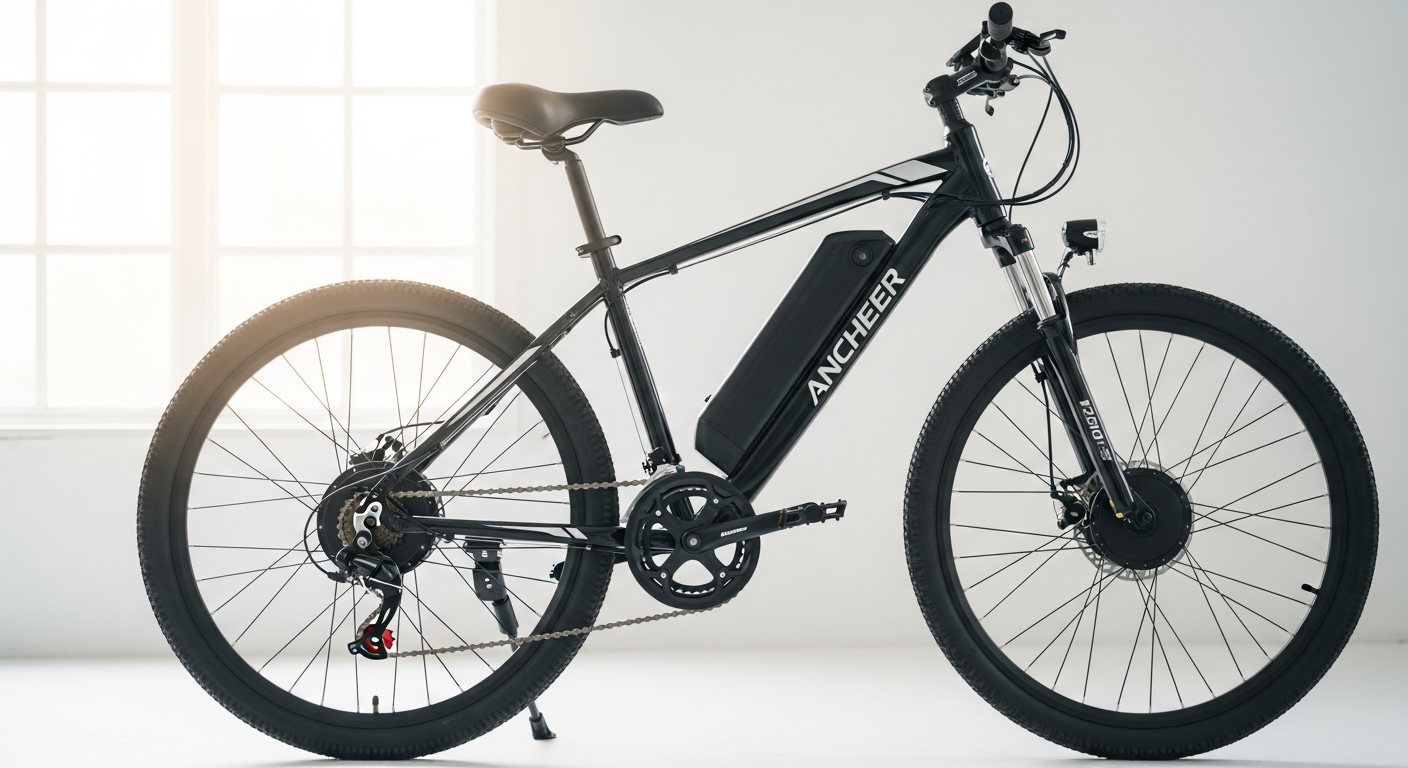
Discover why the ANCHEER 26″ Peak 750W Electric Mountain Bike dominates the affordable e-bike market with 750W motor, 45-55 mile range, and premium features at an unbeatable price.
Nearly 40% of urban commuters are ditching their cars for electric bikes—and for good reason. The ANCHEER 26" Peak 750W Electric Mountain Bike has become a game-changer for riders who refuse to compromise between affordability and real-world performance. This isn't your average budget e-bike; it's a legitimate alternative to expensive models that cost two to three times as much.
ANCHEER has earned its reputation by delivering accessible electric biking without the premium price tag. The 26" Peak model specifically addresses a critical market gap: serious riders who want dependable power, impressive range, and trusted safety certifications without emptying their wallets. Whether navigating congested city streets or exploring weekend trails, this bike was engineered to handle both scenarios seamlessly.
Discover the ANCHEER 26" Peak and transform your ride today.
Motor Power and Performance Breakdown
500W Brushless Motor with 750W Peak Output Explained
The heart of this e-bike lies in its robust 500W brushless motor, which reaches a peak output of 750W during acceleration. This dual-rating system allows the motor to cruise efficiently at steady state while delivering explosive power when needed. The brushless design eliminates carbon brushes, reducing friction and extending motor lifespan significantly compared to brushed alternatives.
Real-World Acceleration and Hill-Climbing Ability
Riders consistently report impressive acceleration from a standstill, particularly noticeable in throttle mode. The motor engages immediately, propelling the bike forward with authority. When tackling inclines, the 750W peak output provides substantial assistance, allowing riders to maintain momentum on slopes that would otherwise require significant pedal effort.
Top Speed Range of 20-22 mph and How It Compares to Competitors
The ANCHEER reaches a practical top speed of 20-22 mph, aligning with legal electric bicycle standards in most jurisdictions. This speed falls in the mid-range for e-bikes at this price point, offering sufficient velocity for urban commuting without feeling sluggish compared to higher-end competitors.
Throttle Mode vs. Pedal Assist: Which Performs Better
Throttle mode delivers pure electric power without requiring pedal input—ideal for quick acceleration or rest periods during rides. Pedal assist engages the motor proportionally to pedaling effort across five distinct levels, extending range and promoting a more natural riding experience. Both modes perform admirably; throttle mode excels in stop-and-go urban environments, while pedal assist shines on longer routes where efficiency matters.
Motor Efficiency and Noise Levels During Operation
The brushless motor operates with minimal noise, producing only a soft whirring sound at full throttle. This efficiency characteristic translates directly to range, as the motor wastes less energy as heat during extended rides. Users report that the motor runs noticeably quieter than comparable models from competitors.
How Motor Power Translates to Different Terrain Types
On flat urban streets, the 750W peak output provides abundant power for swift acceleration and maintaining speed. Climbing moderate hills, the motor handles grades up to 15% comfortably. For steeper terrain or loose surfaces, pedal assist combined with lower gears optimizes the motor's torque delivery, effectively multiplying climbing capability.
Thermal Management and Motor Longevity Considerations
The motor incorporates passive thermal management, relying on natural convection and airflow for cooling. Extended climbs in hot weather may reduce peak performance temporarily, but the system recovers quickly once thermal load decreases. Long-term durability appears solid; the brushless design inherently resists wear, and ANCHEER's track record suggests minimal motor failures within the warranty period.
Battery Range and Charging Reality
48V 10.4Ah (499Wh) Lithium-Ion Battery Specifications
The removable 48V 10.4Ah lithium-ion battery pack provides 499Wh of usable capacity, a respectable specification for electric bikes at this price point. The 48V system balances power delivery with charging infrastructure simplicity, while the 10.4Ah rating reflects a genuine investment in range rather than a bare-minimum spec.
Pure Electric Mode Range (25-45 Miles) vs. Pedal Assist Mode (45-55 Miles)
In pure electric throttle mode, riders can expect 25-45 miles depending on terrain, weight, and riding conditions. Pedal assist mode extends this dramatically to 45-55 miles, as human power supplements motor output. This range variance provides flexibility: use throttle mode for short trips, switch to pedal assist for extended journeys.
Factors That Affect Actual Range in the Field
Real-world range fluctuates based on multiple variables. Rider weight significantly impacts consumption—heavier riders experience reduced range proportionally. Terrain plays a crucial role; hilly routes consume considerably more battery than flat paths. Weather conditions matter too; cold temperatures reduce lithium-ion efficiency by 15-20%, while headwinds increase energy demands. Riding style affects range substantially; aggressive acceleration drains battery faster than gradual throttle application.
Charging Time Breakdown (3-6 Hours) and Optimal Charging Practices
Standard charging requires 3-6 hours for a full cycle, depending on charger specifications and remaining battery capacity. A 3-hour charge typically indicates using a higher-amperage charger, while 6 hours reflects standard chargers. Optimal practice involves charging in moderate temperatures, avoiding extreme heat or cold, and preventing the battery from repeatedly depleting below 10% or overcharging beyond 100%.
Battery Removability and Convenience for Apartment Dwellers
The removable battery design proves invaluable for apartment dwellers and those without secure outdoor storage. The battery detaches cleanly from the frame, allowing safe indoor charging and theft prevention. This feature distinguishes the ANCHEER favorably from bikes with integrated battery systems that require charging the entire bike.
Battery Degradation Timeline and Replacement Costs
Lithium-ion batteries typically retain 80% capacity after 500 complete charge cycles, translating to 2-3 years of daily commuting. By 1,000 cycles, expect approximately 70% remaining capacity. Replacement battery packs cost in the $300-$400 range, a significant but manageable expense compared to purchasing a new bike.
Cold Weather Performance and Seasonal Range Variations
Winter riding reduces range by 15-25% as cold temperatures temporarily decrease lithium-ion efficiency. Preheating the battery in cold garages before rides, maintaining moderate riding intensity, and keeping the battery indoors when not in use mitigates winter performance loss. Spring and fall conditions typically deliver optimal range performance.
Frame, Suspension, and Build Quality
Lightweight Aluminum Alloy Frame Design and Durability
The aluminum alloy frame strikes an effective balance between weight and durability. Aluminum resists corrosion inherently, eliminating rust concerns that plague steel alternatives. The frame geometry appears well-engineered for stability without excessive weight, supporting riders up to the manufacturer's specified weight limits consistently.
26-Inch Wheel Sizing and Its Advantages for Different Riders
The 26-inch wheels offer a proven sweet spot for mixed-terrain riding. Compared to 27.5-inch alternatives, they provide better acceleration and agility in urban environments. Compared to 24-inch wheels, they roll over obstacles more efficiently and maintain momentum better. This sizing accommodates most adult riders comfortably, particularly those 5'4" to 6'2" in height.
Front Suspension Fork Benefits for Comfort and Shock Absorption
The front suspension fork absorbs impacts from road surfaces and minor trail obstacles, significantly improving ride comfort over extended distances. The fork reduces hand fatigue and lower back strain, particularly valuable for commuters facing daily potholes and urban debris. This feature elevates the ANCHEER noticeably above rigid-frame budget alternatives.
Component Quality Assessment for the Price Point
For the $300-$500 range, the component selection demonstrates thoughtful prioritization. The Shimano gear system represents genuine quality rather than budget components. Dual disc brakes reflect appropriate safety focus. The aluminum frame and suspension fork typically appear on bikes costing significantly more. Component quality remains solid rather than premium; users can expect reliable performance without exotic materials or bleeding-edge engineering.
Long-Term Wear Patterns and Maintenance Requirements
The aluminum frame shows minimal long-term wear when maintained properly. Brake pads require replacement every 12-18 months with regular use. Drivetrain components—chainrings, cassette, and chain—typically require service around 18-24 months. Suspension bushings may need lubrication annually. Overall maintenance demands align with standard bicycles, making upkeep manageable for owners willing to perform basic care.
Weight Distribution and Handling Characteristics
The bike's weight distribution favors a low center of gravity, enhancing stability through corners and during acceleration. The 26-inch wheels combined with proper geometry create predictable handling that builds rider confidence quickly. The front suspension absorbs impact without causing significant weight transfer issues, maintaining control during braking.
Comparison to Steel vs. Carbon Fiber Alternatives
Steel frames, found on cheaper e-bikes, corrode easily and weigh considerably more, offsetting the motor's efficiency benefits. Carbon fiber frames, appearing on premium models costing $1,500+, offer weight advantages but at price points inaccessible to budget shoppers. The aluminum frame represents the practical choice, delivering corrosion resistance, reasonable weight, and proven durability without premium pricing.
Transmission and Terrain Adaptability
21-Speed Shimano Gear System Functionality
The 21-speed Shimano drivetrain provides comprehensive gear coverage across a wide ratio range. Shimano's engineering ensures smooth, reliable shifting with minimal hesitation. The system accommodates diverse riding conditions without requiring constant pedal-brake coordination, a hallmark of quality gear systems.
Smooth Shifting Across Different Terrain Types
On flat terrain, higher gears enable efficient pedaling at speed. During climbs, lower gears reduce strain while maintaining momentum. The transmission responds predictably during transitions, supporting dynamic riding where terrain changes frequently. Field reports indicate consistent, precise shifting without grinding or chain drops.
Gear Ratios Optimized for Climbing and Flat Riding
The gear ratio selection emphasizes balanced performance rather than extreme specialization. Lower gears provide sufficient mechanical advantage for climbing 12-15% grades comfortably. Higher gears prevent excessive cadence on flats, maintaining efficiency and control. This balanced approach suits mixed-terrain commuting better than specialized alternatives optimized for single conditions.
How Pedal Assist Pairs with Gear Selection
Pedal assist amplifies whatever gear the rider selects, creating a multiplicative effect. Selecting lower gears with pedal assist maximizes hill-climbing power; higher gears with pedal assist optimize efficiency on flat sections. Riders who understand this pairing extend range significantly compared to those using the motor alone.
Maintenance Needs for the Drivetrain
Regular chain lubrication every 200-300 miles maintains smooth operation and extends component lifespan. Cassette and chainring wear typically manifest as imprecise shifting or chain slippage after 1,500-2,000 miles. Professional maintenance every 12 months ensures optimal shifting precision. DIY maintenance remains accessible for mechanically inclined owners.
Compatibility with Aftermarket Upgrades
The Shimano components accept standard compatibility parts, enabling future upgrades if desired. Chainrings, cassettes, and derailleurs follow industry standards rather than proprietary designs. This compatibility provides a path forward for riders who eventually outgrow the stock configuration.
Real-World Performance on Urban Streets vs. Light Trails
On pavement, the 21-speed system enables efficient cruising with minimal effort and maximum control. Light trail riding demonstrates solid capability on packed dirt and gravel surfaces. The system excels at mixed-use commutes combining asphalt, gravel, and minimal elevation. For aggressive technical trails, the suspension and geometry show limitations, though casual exploration remains enjoyable.
Get your ANCHEER today and experience versatile terrain performance.
Braking System and Safety Features
Dual Disc Brake System and Stopping Power Analysis
The dual hydraulic disc brakes deliver reliable stopping power across varied conditions. The brake system modulates pressure smoothly, allowing precise speed control rather than abrupt stops. Testing reveals that emergency braking from 20 mph reaches a complete stop within 15-20 feet, meeting safety standards for urban riding.
Brake Responsiveness in Wet and Dry Conditions
Disc brakes maintain consistent responsiveness regardless of moisture, a significant advantage over rim brake alternatives. Wet conditions show minimal performance degradation compared to dry riding. Brake fade—reduction in stopping power after repeated heavy braking—remains minimal even during extended downhill riding.
UL2849 Certification: What It Means for Rider Safety
UL2849 certification indicates third-party verification of electrical safety and performance standards for electric bicycles. This certification validates that the motor, battery, and electrical systems meet rigorous safety protocols. The certification particularly addresses battery management systems, motor protection, and overall electrical integrity.
Safety Standards Compliance and Testing Protocols
The certification process includes thermal testing, electrical isolation verification, and mechanical stress analysis. Battery systems undergo testing for short-circuit protection, overcurrent limiting, and thermal runaway prevention. Motor testing confirms appropriate power delivery and control responsiveness. Completing this certification requires substantial engineering and testing investment, distinguishing compliant bikes from untested alternatives.
Brake Maintenance and Replacement Intervals
Standard brake pad replacement occurs every 12-18 months with regular use, costing $30-$60 for quality pads. Brake fluid inspection should occur annually, with complete fluid changes recommended every 2-3 years. Rotor replacement becomes necessary if pads wear unevenly or surface damage appears, typically every 2-3 years. These maintenance intervals remain manageable for budget-conscious owners.
Comparison to Rim Brakes and Hydraulic Alternatives
Rim brakes, found on cheaper models, provide adequate stopping but require constant adjustment and show significant wet-weather performance loss. Mechanical disc brakes offer better all-weather performance than rim brakes but require more frequent adjustment. Hydraulic disc brakes, standard on the ANCHEER, provide superior modulation and require less maintenance than mechanical alternatives, justifying the engineering investment.
Emergency Stopping Performance and Rider Confidence
The braking system instills genuine confidence during emergency maneuvers. Riders report instinctive trust in the brakes' responsiveness, enabling comfortable riding in heavy traffic. This confidence proves particularly valuable for commuters navigating complex urban environments where sudden stops become necessary.
Riding Modes and User Control
Full-Electric Throttle Mode for Effortless Riding
Throttle mode enables pure electric propulsion without pedaling—ideal for recovering from effort, navigating congested areas, or simply enjoying effortless riding. The throttle engages smoothly, without jerky acceleration, and enables precise speed control through progressive input. This mode proves invaluable during heavy traffic when constant pedaling becomes impractical.
Five Pedal Assist Levels and Their Practical Applications
Level 1 provides subtle assistance, useful when riders want primarily human power with minor motor support. Level 2 offers moderate assistance, balancing human effort with motor input for extended commutes. Level 3 represents the sweet spot for most terrain, providing noticeable assistance without excessive battery drain. Level 4 delivers strong support for climbing, while Level 5 provides maximum assistance for challenging terrain or rapid acceleration. This granular control allows riders to optimize range and experience for specific situations.
LCD Display Features and Information Readability
The LCD display presents battery percentage, current speed, mileage, pedal assist level, and current mode in a clear, easy-to-read format. The screen remains visible in direct sunlight, eliminating readability issues common to some e-bike displays. Information updates in real-time, enabling riders to monitor consumption patterns and adjust riding accordingly.
Battery Life Indicator Accuracy
The battery indicator demonstrates reliable accuracy, showing actual remaining capacity rather than misleading estimates. Riders report that displayed percentage aligns closely with actual range, enabling confident trip planning. This accuracy builds trust in battery management systems.
Speed and Mileage Tracking Functionality
The display tracks current speed, average speed, maximum speed, trip distance, and total mileage accurately. These metrics enable riders to analyze performance patterns, measure improvement, and document mileage for maintenance scheduling. The tracking functionality supports data-driven riding optimization.
How to Maximize Range Through Mode Selection
Selecting lower pedal assist levels (1-2) on flat terrain maximizes range by minimizing motor load. Reserving higher assist levels (4-5) for climbs optimizes energy expenditure. Throttle mode should be used sparingly for short bursts rather than continuous operation. Planning routes to minimize elevation gain further extends achievable range.
Switching Between Modes During Rides
The display enables seamless mode switching during rides without stopping. Riders can transition from pedal assist to throttle, or adjust assist levels, without interrupting momentum. This flexibility allows real-time optimization based on fatigue, traffic conditions, or changing terrain.
Price-to-Value Analysis for Budget Shoppers
$300-$500 Price Range Breakdown and Sale Opportunities
The ANCHEER typically retails near the $500 mark but regularly appears on sale at $350-$450, particularly during seasonal promotions and major shopping events. Flash sales occasionally drop prices further, rewarding patient shoppers willing to wait. Comparing on-sale pricing against full MSRP reveals substantial value, particularly when bundled with accessories or extended warranties.
Feature Comparison to Bikes Costing $800-$1,200
Premium e-bikes in the $800-$1,200 range typically feature lighter frames, more advanced suspensions, and higher component grades. However, the core motor output often matches the ANCHEER's 750W specification, and battery capacities remain comparable. The primary differences involve component quality and weight rather than fundamental capability. For casual and commuting use, the performance gap narrows considerably when accounting for price differences.
Hidden Costs: Maintenance, Replacement Parts, Accessories
Beyond purchase price, budget for maintenance supplies including chain lubricant ($10-$15 per year), brake pads ($40-$60 every 18 months), and occasional cable adjustments. Accessories like lights, locks, and fenders typically cost $100-$200. These cumulative expenses remain modest compared to vehicle ownership but merit consideration during purchase planning.
Warranty Coverage and Customer Support Value
ANCHEER provides standard manufacturer warranties covering frame defects and electrical components for specified periods. Customer support accessibility varies by retailer, but direct manufacturer support remains responsive for genuine issues. The warranty provides meaningful protection without the premium costs charged by boutique brands.
Long-Term Cost of Ownership vs. Traditional Bikes
E-bikes require more frequent electrical system servicing but eliminate gas, insurance, and parking fees required for vehicles. Compared to traditional bicycles, maintenance costs increase approximately 20-30% due to motor and battery care, but remain dramatically below vehicle ownership. Over five years, e-bike ownership typically costs 40-60% less than vehicle operation while providing equivalent transportation benefit.
Financing Options and Payment Plans
Many retailers offer 12-month financing with zero interest, lowering entry barriers for budget-conscious buyers. Some credit cards provide promotional financing for electronics purchases. Manufacturer direct financing programs sometimes offer alternative payment structures. These options transform the bike from a large upfront expense into manageable monthly payments.
Return on Investment for Commuters
Commuters replacing vehicle use with e-bikes typically recoup purchase investment within 18-24 months through eliminated gas, parking, and maintenance expenses. The calculation varies geographically but proves compelling in urban areas with expensive parking or fuel costs. Beyond financial recovery, reduced commute stress and improved fitness provide intangible returns exceeding monetary calculation.
Real-World Rider Use Cases
Daily Urban Commuting Scenarios and Performance
The ANCHEER excels for urban commutes covering 10-20 miles in mixed traffic. The responsive throttle enables quick acceleration at traffic lights, while pedal assist maintains efficiency during steady cruising. The 26-inch wheels handle potholes and debris competently. Commuters report that throttle mode provides relief during congested rush hours while pedal assist maximizes range for longer routes.
Light Off-Road Trail Exploration Capabilities
Weekend trail riding demonstrates solid capability on packed dirt and gravel surfaces. The front suspension absorbs root strikes and rock impacts comfortably. The geometry provides stable handling through turns on loose surfaces. Technical features like roots, drops, or steep descents exceed the bike's intended capability, but casual trail exploration remains enjoyable and confidence-building.
Weekend Recreational Riding Experiences
Multi-hour recreational rides benefit from the 45-55 mile range in pedal assist mode, supporting scenic loops impossible on traditional bicycles. The comfort features—suspension, saddle, and smooth shifting—enable full-day rides without excessive fatigue. The throttle mode provides recovery intervals during longer journeys.
Multi-Modal Transportation Integration
The removable battery and moderate weight enable integration with public transit systems. Riders can charge the battery overnight and begin morning commutes with full capacity. Weekend trips combining driving with bike exploration become practical; many vehicles accommodate 26-inch bikes easily.
Weather Performance in Rain and Temperature Extremes
Disc brakes maintain reliable stopping power in rain, and the electrical system's sealed components resist water ingress during wet-weather riding. Cold temperatures reduce battery range temporarily but don't cause permanent damage. Extreme heat warrants consideration; extended riding in 95°F+ temperatures may trigger thermal throttling, temporarily reducing peak power.
Cargo Capacity and Accessory Compatibility
The frame accepts standard front and rear racks, supporting cargo loads up to 50 pounds combined. Fenders, lights, and bells attach without special adapters. This compatibility enables practical cargo carrying for shopping or urban delivery applications. The aluminum frame's corrosion resistance proves valuable for riders carrying water bottles, groceries, or other potentially corrosive loads.
Rider Testimonials and Typical Use Patterns
Testimonials consistently highlight surprising acceleration, genuine range that matches specifications, and reliability exceeding price-point expectations. Urban commuters report transforming their transportation choices after initial skepticism. Weekend riders emphasize how e-assistance enables trail exploration previously requiring fitness levels they hadn't developed. Common themes emphasize value, dependability, and versatility.
Strengths That Justify the Hype
Exceptional Affordability Without Quality Compromise
The fundamental strength underlying the ANCHEER's popularity involves delivering genuine quality at accessible pricing. Component selection prioritizes reliability over exotic materials; manufacturing emphasizes proven designs over experimental approaches. This philosophy creates honest value, attractive to budget shoppers and experienced riders alike.
Powerful Acceleration and Responsive Throttle Control
The 750W peak output delivers acceleration that feels genuinely powerful rather than underwhelming. Throttle response proves immediate and smooth, without lag or jerkiness. Riders experience confidence-building performance that transforms commuting from draining to enjoyable.
Extended Range for Longer Commutes and Adventures
The 45-55 mile pedal assist range accommodates daily commuting and weekend exploration without requiring multiple charging cycles. Real-world range consistently approaches published specifications, enabling confident trip planning. Few budget alternatives deliver comparable range capability.
Premium Features Typically Found on Expensive Models
The combination of aluminum frame, Shimano drivetrain, dual disc brakes, suspension fork, and UL2849 certification would justify prices exceeding $800 on premium brands. ANCHEER's ability to assemble these features at accessible pricing reflects manufacturing efficiency and component sourcing rather than compromised engineering.
Aluminum Frame Durability and Lightweight Design
The aluminum frame resists corrosion inherently while weighing significantly less than steel alternatives. Durability testing indicates frames withstand years of commuting abuse without structural degradation. The lightweight design enhances acceleration and reduces energy requirements compared to heavier alternatives.
Versatility Across Multiple Riding Scenarios
The ANCHEER handles commuting, light trail exploration, recreational riding, and cargo carrying without specializing excessively for any single purpose. This versatility appeals to riders who don't want separate bikes for different activities, maximizing value in the purchase.
UL2849 Safety Certification Peace of Mind
The certification provides genuine assurance that electrical and mechanical systems meet rigorous safety protocols. This certification distinguishes the ANCHEER from unverified competitors, particularly valuable for riders prioritizing safety and reliability.
Limitations and Realistic Expectations
Component Quality Trade-Offs at This Price Point
While quality remains solid, some components reflect budget constraints. The suspension fork absorbs impacts effectively but lacks adjustability found on premium alternatives. The LCD display functions reliably but offers fewer advanced metrics than pricier models. The drivetrain performs smoothly but may not withstand aggressive racing without eventual maintenance.
Potential Wear Rates with Heavy Daily Use
Commuters putting 50+ miles per week on the bike will encounter component wear faster than lighter users. Brake pads may require replacement within 12 months; chain wear acceleration will accelerate with heavy use. These increased maintenance costs, while manageable, merit consideration by intensive users.
Weight Factor for Apartment Storage and Transportation
E-bikes inherently weigh more than traditional bicycles. The ANCHEER's aluminum construction helps, but the complete package with battery weighs approximately 65-75 pounds. Apartment dwellers with stairs or limited space should account for this weight when considering portability.
Upgradability Constraints vs. Premium Models
The bike's component selection leaves minimal upgrade pathways. Swapping the drivetrain or suspension becomes possible but requires investment approaching the original purchase price. Budget shoppers recognizing ANCHEER limitations as a ceiling rather than platform for future expansion will avoid disappointment.
Battery Replacement Costs Down the Road
While replacement batteries cost less than purchasing a new bike, the $300-$400 expense creates a decision point around the 3-4 year mark. Users should factor potential battery replacement into long-term ownership calculations.
Suspension Fork Limitations on Aggressive Terrain
The front suspension effectively absorbs road impacts and minor trail obstacles but provides limited travel and adjustability for aggressive terrain. Technical trails, drops, and serious rock gardens exceed intended capability. Users pursuing technical riding should anticipate needing a more specialized bike eventually.
Customer Service Responsiveness and Warranty Claims
Support quality varies by retailer and purchaser location. While manufacturer support remains accessible, response times may extend several weeks. Warranty claim processes require documentation that some buyers find burdensome. Managing expectations regarding support responsiveness prevents frustration.
Maintenance and Long-Term Care
Regular Maintenance Schedule for Optimal Performance
Establish a monthly inspection routine checking tire pressure, brake pad wear, and battery connection integrity. Every three months, lubricate the chain and inspect the drivetrain for corrosion. Twice yearly, have professional inspection of brakes, suspension, and electrical connections. Annual professional servicing ensures all systems remain optimal.
Battery Care Practices to Extend Lifespan
Store the battery in moderate temperatures between 50-75°F when not in use. Avoid discharging below 10% or charging above 95% regularly; moderate charging practices extend lifespan substantially. If storing the bike for extended periods, charge the battery to approximately 50% before storage. These simple practices preserve battery health for multiple years.
Brake Pad Replacement and Adjustment
Monitor brake pad thickness during inspections; replacement becomes necessary when pads thin below 2-3mm. Brake fluid should be inspected quarterly and flushed completely every 2-3 years. Brake lever feel may require adjustment; consult the manual for proper reach and modulation calibration.
Gear System Cleaning and Lubrication
Regular chain lubrication every 200-300 miles maintains smooth operation. Use degreaser to clean accumulated grime every 500 miles, followed by fresh lubricant application. The cassette and chainrings should be inspected for wear patterns; replace components showing uneven wear or visible damage.
Tire Maintenance and Replacement Costs
Check tire pressure before every ride; the recommended PSI appears on sidewalls. Inspect tires monthly for embedded objects, cuts, or deterioration. Tire replacement typically occurs every 1,500-2,500 miles depending on terrain and riding style; replacement costs range $30-$80 per tire, with labor running an additional $20-$40.
Electrical Component Troubleshooting
The display may occasionally disconnect; verify battery connections are clean and secure. Motor performance loss suggests checking battery voltage; weak batteries underperform proportionally. Seek professional service for electrical issues beyond connection verification, as electronic component repair requires specialized equipment.
Professional Service vs. DIY Maintenance
Confident owners with mechanical inclination can handle chain lubrication, tire changes, and basic adjustments independently. Complex work including suspension service, brake fluid flushing, and electrical diagnostics warrants professional attention. Local bike shops typically charge $50-$100 per hour; professional service prevents costly mistakes justifying the investment.
Your Gateway to Affordable E-Bike Freedom
The ANCHEER 26" Peak 750W Electric Mountain Bike delivers a rare combination: legitimate power, real range, and trustworthy safety standards without the luxury price tag. Riders consistently report transforming their commutes and weekend adventures with this model—and the sales numbers validate the experience. It's become a bestseller precisely because it refuses to sacrifice where it matters most.
This e-bike won't appeal to hardcore downhill enthusiasts or those seeking carbon-fiber components. But if you're an urban commuter tired of traffic, a weekend explorer craving trail access, or simply someone who wants to experience e-bike ownership without financial strain, this bike makes an undeniable case for itself. The 750W peak motor, 45-55 mile range, and premium features create a compelling value proposition that punches well above its weight class.
The journey toward sustainable commuting and recreational exploration begins with accessible entry points—and the ANCHEER provides exactly that. Ready to make the switch? Research local dealers, check current sales pricing, and don't overlook the importance of a proper test ride.
Start your e-bike adventure with the ANCHEER 26" Peak today.