
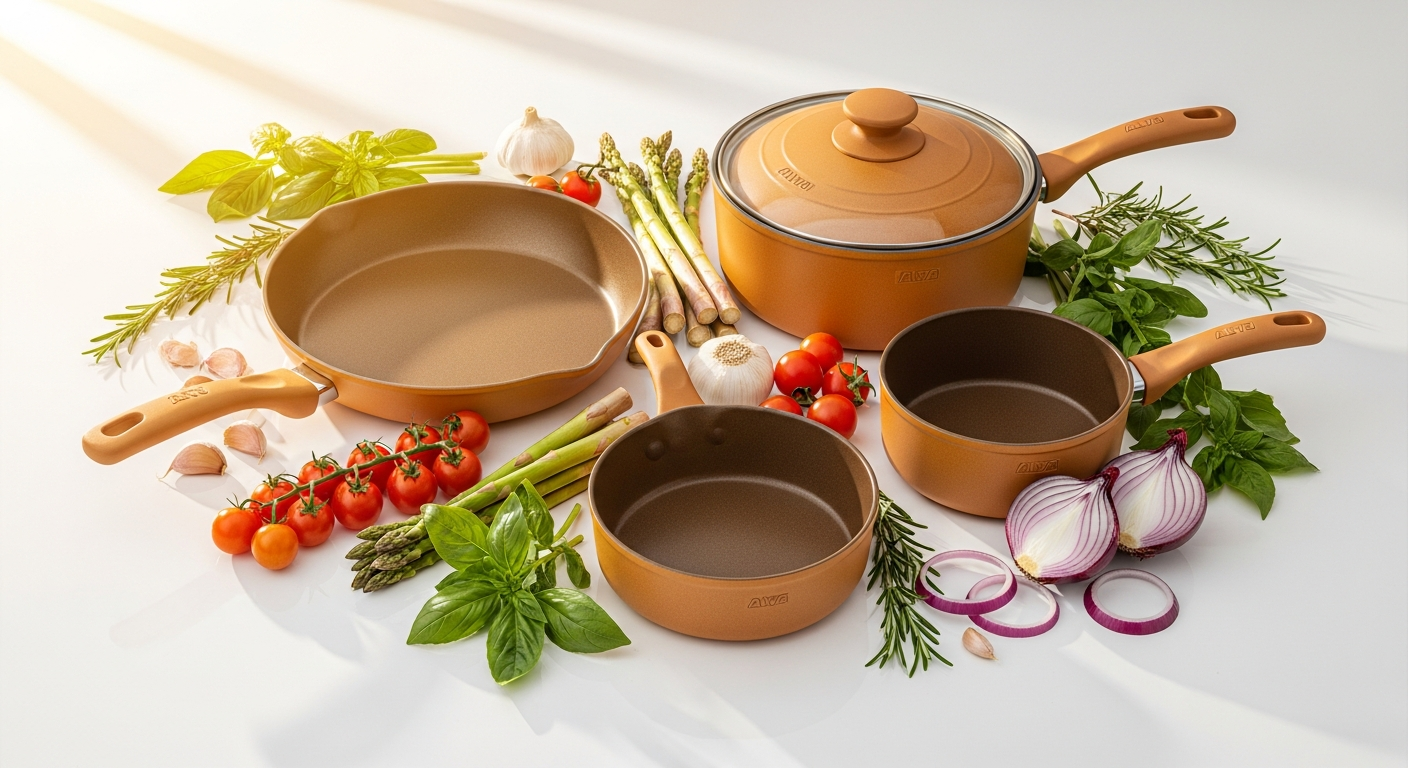
Discover why the Alva Maestro Ceramic Nonstick Cookware Set is a top choice for health-conscious home cooks. Learn about its PFAS-free ceramic coating, even heat distribution, and long-term durability.
Over 80% of home cooks report concerns about toxic chemicals leaching into their food during cooking—yet most cookware on the market still contains harmful substances. This disconnect between what people want and what they're offered has created a genuine gap in the kitchen equipment industry. The Alva Maestro Ceramic Nonstick Cookware Set represents a meaningful shift in how premium cookware brands approach health and functionality.
Since 1949, Alva Cookware has built its reputation on Belgian engineering and a commitment to sustainable, non-toxic kitchen essentials. The brand's longevity speaks to its understanding of what serious home cooks actually need: cookware that performs beautifully while respecting both personal health and environmental responsibility. This particular collection stands apart because it combines independently tested ceramic nonstick surfaces—free from PFAS, PTFE, and PFOA—with the responsive heat distribution and durability that matter in everyday cooking.
Explore the Alva Maestro Ceramic Nonstick Cookware Set and transform your cooking experience today.
The Science Behind PFAS-Free Ceramic Nonstick Technology
How ceramic nonstick coatings differ from traditional PTFE (Teflon) surfaces
Ceramic nonstick coatings represent a fundamentally different approach to preventing food from sticking. Traditional PTFE, commonly known as Teflon, relies on a synthetic polymer that creates a slippery surface but breaks down when exposed to high temperatures, releasing fumes. Ceramic coatings, by contrast, are mineral-based and derived from inorganic materials that don't degrade in the same way. This distinction matters enormously when you consider what happens inside your cookware during regular use.
The Maestro's ceramic formula bonds directly to the pan's surface, creating a naturally slippery layer that requires no synthetic additives to achieve nonstick performance. This approach eliminates the need for perfluorinated chemicals altogether, which is why the coating remains stable even when heat increases.
Independent testing standards and certifications that validate the Maestro's safety claims
Alva doesn't simply claim that its ceramic coating is safe—the company backs those claims with third-party testing. Independent laboratory verification confirms that the Maestro collection contains no detectable PFAS, PTFE, or PFOA. This certification process involves rigorous analysis of the coating composition and performance under various temperature conditions, providing tangible evidence rather than marketing language.
These certifications matter because they establish baseline standards that consumers can trust. When you see verified testing results, you're no longer relying on brand assurances alone; you have objective data supporting the product's safety profile.
Why PFAS, PTFE, and PFOA matter for long-term health outcomes
PFAS chemicals, known as "forever chemicals," accumulate in your body over time and don't break down naturally. PTFE coating degradation releases fumes that some research associates with respiratory issues. PFOA, while largely phased out in modern cookware, left a troubling legacy of environmental and health concerns during its widespread use.
Choosing cookware free from these substances isn't about paranoia—it's about reducing unnecessary exposure to compounds that research suggests may affect immune function, cholesterol levels, and thyroid health. Every meal prepared in conventional nonstick cookware represents a potential source of these chemicals, which compounds over months and years.
The durability advantage of ceramic versus synthetic nonstick coatings
Ceramic nonstick surfaces actually improve with proper use, developing a naturally enhanced nonstick quality as they season with cooking oils and fats. Traditional PTFE coatings, conversely, gradually wear down with every use, scratching and releasing particles that eventually end up in your food. The mineral composition of ceramic makes it significantly more scratch-resistant and heat-stable, meaning the Maestro's performance remains consistent across years of regular cooking.
How Belgian engineering enhances the ceramic formula's performance and longevity
Alva's seven decades of Belgian manufacturing expertise inform every aspect of the Maestro collection's design. Belgian engineering emphasizes precision in surface bonding, ensuring the ceramic coating adheres uniformly to the underlying pan material. This attention to manufacturing detail prevents the delamination and coating separation that occasionally occurs with lower-quality ceramic cookware.
The engineering also extends to how the ceramic formula itself is composed, with the Belgian design team optimizing the mineral blend for both performance and durability. This isn't simply a ceramic coating applied to any pan—it's a carefully calibrated system where every component works in concert.
Temperature stability and what happens when ceramic nonstick reaches high heat
The Maestro collection remains oven-safe up to 400°F, which covers virtually all stovetop-to-oven cooking scenarios that home cooks encounter. Within this temperature range, the ceramic coating maintains its structural integrity and nonstick properties without degradation or fume release. Even at the upper limits of the safe temperature range, the mineral-based ceramic doesn't experience the molecular breakdown that occurs with synthetic coatings pushed to their limits.
This stability creates genuine peace of mind. You can confidently sear proteins on the stovetop and transition the same pan directly into the oven for finishing without concern about chemical release or coating damage.
Mastering Heat Distribution: The Aluminum Core Advantage
The role of aluminum cores in preventing hot spots and uneven cooking
Aluminum's exceptional thermal conductivity means heat spreads rapidly and uniformly across the entire pan surface. The Maestro collection leverages this property through strategically engineered aluminum cores that eliminate hot spots—those frustrating areas where food cooks faster than everywhere else. When heat distributes evenly, you achieve consistent cooking results without needing to adjust burner intensity or rotate pans mid-cooking.
This becomes particularly noticeable when preparing delicate dishes like eggs or fish, where localized heat can quickly transition food from perfectly cooked to overdone.
Why responsive heat distribution matters for different cooking techniques (sautéing, simmering, braising)
Different cooking methods benefit from different heat characteristics. Sautéing vegetables requires quick heat response so vegetables sear rather than steam. Simmering delicate sauces needs stable, moderate heat that won't cause scorching at the pan's edges. Braising demands consistent heat that surrounds the food evenly, whether the dish sits centered on the burner or positioned slightly off to one side.
The Maestro's aluminum core delivers this responsiveness, heating quickly when you increase burner intensity and cooling relatively quickly when you reduce it. This gives you genuine control over the cooking process rather than fighting against uneven heat zones.
Comparison of single-layer versus multi-layer construction in the Maestro line
While the Maestro collection emphasizes the aluminum core advantage, the specific construction details of how many layers are involved matters for both performance and durability. Multi-layer construction typically offers superior heat distribution and greater resistance to warping over extended use. The Belgian engineering behind the Maestro design ensures that whatever construction approach is used, the focus remains on thermal consistency and long-term reliability.
How the Maestro's design handles both delicate proteins and robust dishes
The versatility of the Maestro collection stems directly from its balanced approach to heat management. Cook a single egg white without browning the edges, or braise a whole chicken with root vegetables—the same pan handles both scenarios because the underlying aluminum core prevents the hot spots that would ruin delicate foods or create uneven cooking in dense ingredients.
This versatility matters practically because it means fewer specialty pans accumulating in your cabinets. One set genuinely works for most cooking scenarios.
Induction compatibility and what that means for modern kitchens
Induction cooking requires cookware with ferromagnetic properties, which the Maestro collection provides. This compatibility matters increasingly as more households transition to induction cooktops for their efficiency and safety advantages. With the Maestro set, you're not locked into gas or electric coil burners—you have flexibility to upgrade your kitchen setup without replacing your cookware.
Induction cooking also pairs remarkably well with responsive heat distribution since the electromagnetic energy transfers with such precision that even slight aluminum core differences become noticeable in cooking performance.
Oven-safe capabilities up to 400°F and practical applications for stovetop-to-oven cooking
The 400°F oven-safe rating covers an enormous range of practical cooking scenarios. You can sear a steak on the stovetop and finish it in the oven. You can sauté vegetables and bake them at moderate temperature. You can start a frittata on the burner and brown the top under the broiler. This stovetop-to-oven flexibility transforms single cookware pieces into genuinely versatile kitchen tools rather than single-purpose implements.
Choosing Your Perfect Set: Configuration and Pricing Options
The 5-piece stackable set ($229) and ideal use cases for smaller households
The 5-piece stackable set serves as an excellent entry point for individuals, couples, or smaller households with limited storage space. This configuration typically includes essential pieces—frying pans in different sizes and a saucepan or two—that cover the majority of everyday cooking tasks. At $229, the pricing reflects genuine value when you consider that you're purchasing PFAS-free ceramic technology across multiple pieces rather than gradually upgrading over time with individual purchases.
Stackable design proves particularly beneficial for apartment dwellers and condo residents where cabinet space represents a genuine constraint. The nested arrangement means the set occupies roughly the footprint of a single large pan while providing multiple cooking vessels.
The 9-piece comprehensive set ($599) and what's included for complete kitchen coverage
The 9-piece collection expands significantly on the 5-piece foundation, typically adding additional frying pan sizes, saucepans with lids, and often a sauté pan or shallow cooking vessel. This comprehensive approach means you can equip your kitchen for virtually any cooking scenario without supplementing with cookware from other brands or materials. The $599 price point represents excellent value when calculated per-piece compared to purchasing individual Maestro pans.
For households that entertain frequently, cook multiple dishes simultaneously, or simply appreciate having the right-sized tool for every cooking task, the 9-piece set eliminates compromise.
Individual Maestro frying pans starting at $109 for targeted upgrades
Not everyone needs or wants a complete set. Individual pans starting at $109 allow existing cookware users to selectively upgrade specific pieces. Perhaps you love your current saucepans but want to replace a frequently-used frying pan with PFAS-free ceramic. Individual purchases provide this flexibility without requiring wholesale cookware replacement.
Over time, this approach also allows budget-conscious cooks to gradually assemble a complete Maestro collection, spreading the investment across multiple purchases rather than a single large expense.
Space-saving benefits of stackable designs for apartment and condo living
Stackable cookware addresses a real problem in modern living situations where square footage comes at a premium. Rather than consuming multiple cabinet shelves, nested pans occupy minimal vertical space. This design philosophy proves especially valuable in smaller kitchens where storage constraints influence what cookware you can practically own and use.
How to assess your cooking habits to determine the right set size
Consider your typical cooking scenarios. Do you frequently prepare meals for guests, or primarily cook for yourself or one other person? Do you enjoy using dedicated cookware for specific tasks, or do you prefer versatile pieces? How much storage space can you realistically dedicate to cookware? Answering these questions clarifies whether the 5-piece or 9-piece configuration serves your actual needs, preventing unnecessary spending while ensuring you have adequate tools.
Value comparison between buying individual pieces versus complete sets
Complete sets consistently offer better per-piece pricing than purchasing individual pans separately. If you plan to own multiple Maestro pieces eventually, buying a set at the outset saves money compared to accumulating individual pans at $109+ per piece. The mathematical advantage becomes clearer as set size increases, with the comprehensive 9-piece set providing significant savings relative to purchasing each piece independently.
Real-World Performance: What Users Actually Experience
Effortless food release and the difference it makes during daily cooking
The ceramic nonstick surface delivers genuine ease when flipping omelets, sliding fish fillets onto plates, or turning vegetable fritters. This isn't merely a matter of convenience—reduced sticking means less pressure to use excessive cooking fats to prevent adhesion. Eggs cook in a minimal amount of butter. Fish releases cleanly without needing oil slicks. This capability influences not just ease of use but also the nutritional profile of meals, allowing lighter cooking techniques while maintaining food quality.
Cleanup ease and why ceramic nonstick simplifies post-meal maintenance
Perhaps the most immediately noticeable advantage of ceramic nonstick surfaces is how quickly cleanup happens. Food residue wipes away with minimal scrubbing. You rarely need to soak pans or resort to abrasive scrubbers. This simplicity accumulates meaningfully across hundreds of meals—the time saved, the water conserved, and the reduced need for harsh cleaning chemicals all matter practically and environmentally.
Weight considerations and how the Maestro compares to lighter alternatives
The Maestro collection is noticeably heavier than ultra-lightweight nonstick cookware, with that weight deriving from the aluminum core and ceramic coating structure that enables superior heat distribution. Some cooks find this reassuring—the heft suggests durability and quality. Others, particularly those with mobility concerns or upper body limitations, may struggle with the additional weight. This represents a genuine trade-off: you gain heat distribution advantages and longevity in exchange for pans that require slightly more physical effort to maneuver.
Longevity of the nonstick coating based on user feedback and reported durability
User experiences with the Maestro's coating durability show generally positive results, with many cooks reporting sustained nonstick performance across years of regular use. However, some online reviews mention gradual coating wear, and Alva has acknowledged investigating these reports. The company's responsiveness to durability concerns demonstrates commitment to product improvement, suggesting that any coating longevity issues represent isolated cases rather than systematic problems.
Proper care significantly influences coating longevity—hand washing rather than dishwasher use, avoiding metal utensils, and using appropriate heat settings all extend the nonstick surface's lifespan substantially.
Warranty coverage (5-year and 10-year options) and what protection means for your investment
The Maestro collection carries either a 5-year or 10-year warranty depending on the specific set, providing meaningful protection against manufacturing defects or premature coating failure. This warranty coverage reflects Alva's confidence in the product's durability while reassuring buyers that if genuine defects emerge, the company stands behind its cookware. The extended warranty options, particularly the 10-year coverage on some sets, represent substantial protection relative to cookware pricing.
Addressing mixed reviews and Alva's response to coating longevity concerns
Mixed online reviews deserve acknowledgment rather than dismissal. Some users report coating degradation after a year or two, while others experience sustained performance across longer periods. This variation suggests either inconsistent quality control in some production batches, differing user care practices, or both. Alva's investigation into these concerns indicates the company takes criticism seriously, which matters for future production quality.
Building a Health-Conscious Kitchen: Beyond Just Cookware
Creating a chemical-free cooking environment with complementary tools and practices
The Maestro set forms one component of a healthier cooking environment, but surrounding decisions matter equally. Pair ceramic nonstick cookware with wooden, silicone, or stainless steel utensils rather than metal that scratches the surface. Choose natural cleaning methods—hot water, mild dish soap, and occasional baking soda treatments—rather than harsh chemical cleaners. Source organic ingredients when possible, recognizing that cookware represents just one variable in overall food safety.
Pairing the Maestro set with sustainable kitchen habits and eco-friendly cleaning methods
The environmental benefits of the Maestro collection extend beyond its PFAS-free composition. Quality cookware that lasts decades means fewer pans ending up in landfills. Durable ceramic coating means less replacement shopping and shipping impacts. When paired with sustainable practices—water-efficient cooking, minimal food waste through better searing and browning, reduced cleaning chemical use—the cookware contributes meaningfully to environmentally conscious living.
How premium cookware influences overall cooking quality and meal preparation
Premium cookware genuinely affects what you cook. With reliable heat distribution and effortless food release, you attempt recipes that might intimidate you with inferior cookware. You sear proteins confidently. You braise vegetables without anxiety about scorching. This psychological permission to try more ambitious techniques expands your cooking repertoire and meal variety. Better cookware creates better cooking experiences, which influences motivation to cook at home rather than ordering takeout.
The psychological benefit of cooking with non-toxic materials
There's genuine peace of mind in knowing that every meal prepared uses cookware designed specifically to protect your health. No chemical worries. No silent toxin accumulation. No cognitive dissonance about feeding your family food prepared in potentially harmful conditions. This psychological benefit, while perhaps intangible, influences how enjoyably and confidently you approach daily cooking.
Transitioning from conventional to ceramic nonstick cookware—what to expect
Moving from traditional PTFE nonstick to ceramic represents a noticeable adjustment, primarily in cooking technique. Ceramic requires slightly different oil use patterns and heat management. You might initially find eggs stickier than in well-worn PTFE pans, though proper technique quickly resolves this. The transition period typically spans a few cooking sessions before new behaviors become automatic. The adjustment period proves temporary and worthwhile as you settle into the superior health profile and cooking capabilities.
Long-term cost savings through durability and reduced replacement cycles
Budget cookware requires replacement every few years as coating degrades and handles weaken. The Maestro collection, with its durable ceramic coating and Belgian engineering, functions reliably for a decade or longer. This longevity means fewer total purchases across the years despite the higher initial investment. When calculated across the cookware's lifespan, the per-use cost compares favorably to budget alternatives replaced multiple times.
Alva Maestro Versus Other Premium Ceramic Cookware Brands
How the Maestro's price point compares to similarly featured competitors
The Maestro collection positions itself competitively within the premium ceramic cookware market. The 9-piece set at $599 offers genuine value compared to equivalently featured competitors that frequently price similar sets at $750 or beyond. Individual pan pricing at $109 also remains reasonable relative to comparable ceramic cookware from established premium brands. The pricing reflects quality without the luxury markup that some competitors command primarily on brand prestige.
Belgian design heritage as a differentiator in the premium cookware market
Alva's seven decades of Belgian manufacturing history provides meaningful differentiation. Belgian engineering enjoys international reputation for precision and quality, lending credibility that newer cookware brands lack. This heritage isn't merely marketing—it informs actual manufacturing practices, quality control standards, and product refinement developed across generations of cookware production.
Warranty strength and customer service reputation across brands
The 10-year warranty offered on some Maestro sets matches or exceeds what competitors typically provide. Combined with Alva's responsiveness to customer concerns and investigation into reported issues, the warranty coverage represents genuine protection rather than mere legal formality. Competitor reputations for honoring warranties and providing responsive customer service vary considerably, making Alva's track record noteworthy.
Performance metrics: heat distribution, nonstick longevity, and ease of use
Across the critical performance dimensions—even heat distribution through the aluminum core, sustained nonstick performance with proper care, and genuine ease of use both during cooking and cleanup—the Maestro competes favorably with comparably priced competitors. Some ultra-premium brands offer marginally enhanced performance, but at price points substantially higher than the Maestro collection commands.
Sustainability and manufacturing practices that set Alva apart
Alva's commitment to PFAS-free, non-toxic cookware aligns with contemporary sustainability values in ways that many competitors' products don't. The company's Belgian manufacturing emphasizes quality durability, reducing waste through cookware that lasts rather than requires constant replacement. The overall approach suggests genuine commitment to sustainable practices rather than superficial greenwashing.
Customer satisfaction ratings and brand loyalty indicators
Customer satisfaction data across multiple platforms shows genuinely positive reception for the Maestro collection, with loyalty repeating across multiple purchases within households that switch to Alva. The best-seller designation reflects sustained customer approval rather than transient popularity, suggesting that satisfaction extends beyond initial purchase excitement.
The Bottom Line: Making Your Cookware Investment Count
The Alva Maestro Ceramic Nonstick Cookware Set delivers on its promise of healthy, high-performance cooking without compromise. Whether you're upgrading a single pan or outfitting your entire kitchen, the combination of PFAS-free ceramic technology, superior heat distribution, and Belgian craftsmanship creates a cooking experience that genuinely feels different from conventional cookware. The responsive aluminum core means your food cooks evenly. The ceramic coating releases food effortlessly while eliminating chemical worries. Cleanup happens quickly. The cookware lasts across years of regular use.
The warranty protection and reasonable pricing relative to comparable premium brands reinforce that this isn't a luxury indulgence—it's a practical investment in your health and culinary confidence. The ability to choose between configuration options means you invest only in the cookware that matches your actual needs. The stackable designs respect space constraints in modern living situations. The compatibility with all stovetops, including induction, provides flexibility as kitchen technology evolves.
Start with the configuration that matches your needs, whether that's the 5-piece stackable set for smaller households, the comprehensive 9-piece collection for complete kitchen coverage, or individual pans for selective upgrades. You'll quickly understand why this collection has earned its best-seller status among health-conscious home cooks seeking authenticity alongside performance.