
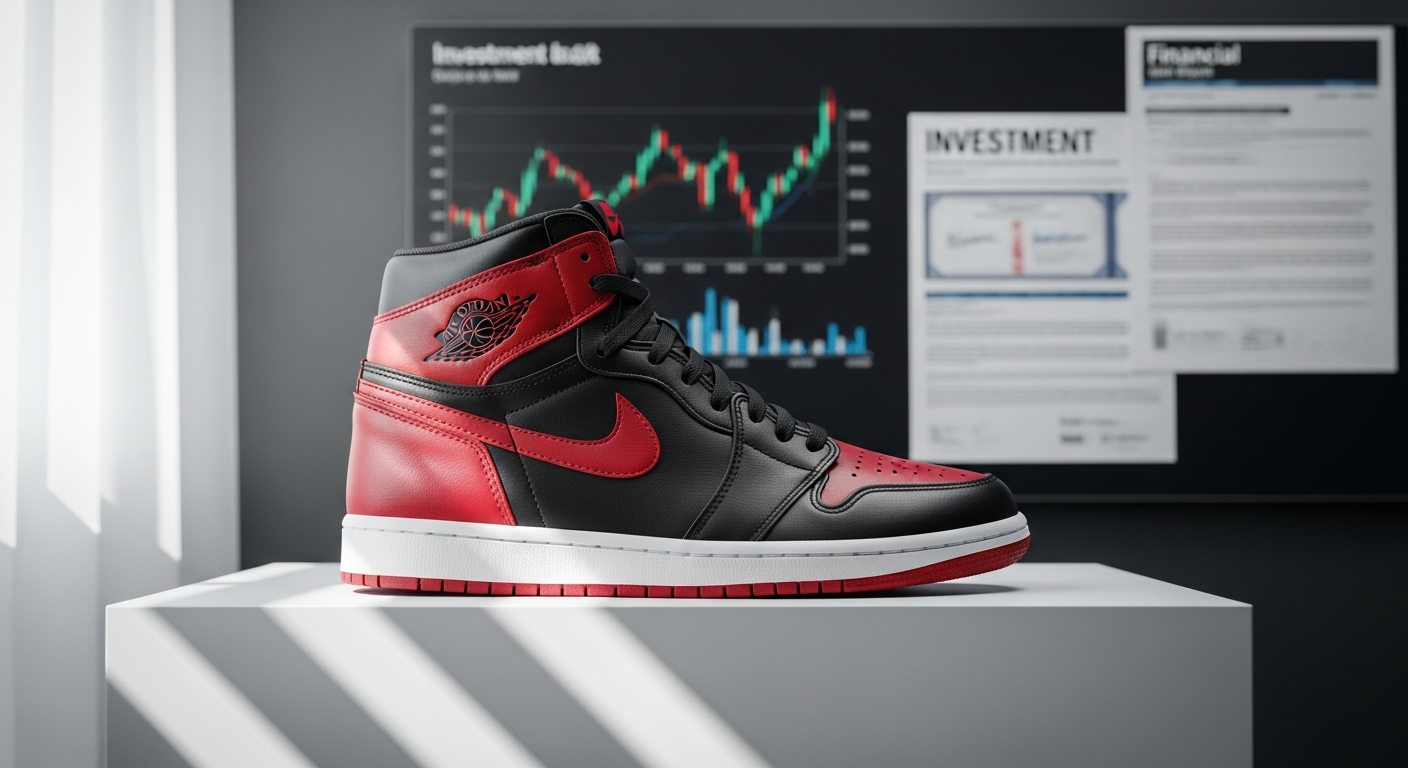
Discover why Air Jordan 1 Retro High OG remains a top investment for sneaker collectors. Explore resale trends, limited editions, and value retention strategies in 2026.
The Air Jordan 1 Retro High OG: Your Guide to Sneaker Investment Success
Sneaker resale prices for rare Air Jordan 1 colorways have skyrocketed to over €5,000 in recent years, transforming what was once pure passion into measurable financial gain. The Air Jordan 1 Retro High OG has transcended its basketball heritage to become a legitimate alternative investment asset, rivaling traditional collectibles in both demand and appreciation potential. The market dynamics around this iconic silhouette reveal serious wealth-building opportunities for those willing to understand the nuances.
The sneaker investment space has matured considerably, with sophisticated collectors now treating premium Air Jordan 1 releases with the same analytical rigor applied to art, watches, or vintage automobiles. This evolution reflects genuine scarcity, documented price history, and consistent cultural relevance that shows no signs of diminishing.
This guide reveals which colorways hold their value best, how to spot authentic pairs versus counterfeits, the mechanics of the sneaker resale market, and strategic timing for purchases that maximize returns.
The Investment Appeal of Air Jordan 1 Retro High OG Models
Historical Price Appreciation Patterns Compared to General Release Sneakers
The Air Jordan 1 Retro High OG occupies a unique position in the sneaker market. While standard releases often depreciate immediately after launch, select colorways appreciate consistently. The original 1985 "Chicago" colorway, for instance, traded hands in the €2,000–€4,000 range within a decade, far outpacing inflation and comparable footwear investments. This pattern distinguishes the Air Jordan 1 from fashion sneakers that fade from relevance within seasons.
General release models typically see 30–50% value loss in the first year. Conversely, limited Air Jordan 1 OG drops maintain or increase their value, particularly when demand exceeds supply by significant margins. The difference lies in cultural permanence—the Air Jordan 1 transcends trend cycles because of its foundational role in sneaker history and Michael Jordan's undiminished cultural influence.
Why Limited-Edition Colorways Command Exponential Resale Premiums
Scarcity creates market dynamics that reward early acquisition. A limited release of 500 pairs globally generates fundamentally different economics than a 50,000-unit general drop. When 2,000 collectors worldwide compete for 500 pairs, resale prices reflect that competition instantly.
Collaboration releases amplify this effect exponentially. The Dior Air Jordan 1 Retro High OG, produced in minimal quantities, reached €9,000+ on secondary markets—a 6,000% premium over retail. This phenomenon occurs because collaborations introduce exclusivity signals that appeal beyond traditional sneakerheads. Fashion connoisseurs, luxury collectors, and investment-focused buyers all converge on these releases, fragmenting available inventory across multiple collector types.
Rarity Factors That Determine Long-Term Value Retention
Production numbers form the foundation of investment potential. Air Jordan 1 Retro High OG releases produced in fewer than 5,000 units historically show stronger appreciation trajectories. Geography matters significantly—regional exclusives released only in Asia or Europe command premiums among collectors unable to access them at retail.
Release year influences perceived authenticity and cultural weight. First-year re-releases of original colorways (1985 Bred, Chicago, Royal) carry more prestige than subsequent iterations. Collectors distinguish between 2013 retros, 2015 retros, and 2020 retros of the same colorway—earlier versions typically appreciate faster because they represent closer proximity to the original.
Material composition also drives value. Genuine leather uppers age better than synthetic alternatives and command higher resale premiums. Pairs featuring original-era construction details (specific Swoosh curves, heel tab proportions, lace hole placement) appeal to purists willing to pay premium prices for authenticity markers.
Authentication Challenges and How They Impact Resale Pricing
Counterfeit Air Jordan 1s flood the market, creating significant pricing pressure on legitimate pairs. A suspected fake—even an exceptional one—loses 70–90% of its value instantly. This authentication risk compresses margins for careless buyers while rewarding those who verify legitimacy through trusted channels.
Professional authentication services charge €30–€50 per pair, representing insurance against multi-thousand-euro losses. Experienced collectors budget for these services as non-negotiable expenses. Sneakers purchased from gray market sources, private sellers without verified track records, or platforms with weak authentication protocols carry substantially higher counterfeiting risk.
Identifying High-Value Colorways Worth Your Collection Budget
OG Colorway Releases and Their Consistent Resale Performance
The original 1985 colorways—Bred (black/red), Chicago (black/white/red), and Royal (black/blue)—form the foundation of any serious Air Jordan 1 investment portfolio. These three colorways have appreciated continuously for over a decade, with documented price increases across all market conditions.
Bred editions consistently trade in the €1,500–€3,500 range for earlier retro releases, depending on condition and specific year. Chicago colorways command similar or slightly higher premiums due to their iconic imagery in Jordan's championship moments. Royal editions round out this core trio, offering similar appreciation but sometimes slightly lower pricing than their counterparts.
Re-releases matter. The 2013 "Chicago" retro remains the benchmark for this colorway's value, with pairs in pristine condition fetching €2,800–€4,200. Each subsequent re-release (2015, 2020) depreciates in value relative to earlier iterations, though they still hold premium resale prices compared to general releases.
Bred, Chicago, Royal, and Banned Editions—Which Ones Appreciate Fastest
Among these four pillars, Bred editions demonstrate the most consistent appreciation trajectory. The combination of black leather with deep red accents appeals across gender demographics and fashion sensibilities, generating sustained demand. New colorway releases rarely cannibalize Bred resale prices because the classic remains culturally anchored.
Chicago editions appreciate faster initially but sometimes plateau earlier due to market saturation from multiple re-releases. The iconic imagery generates nostalgia appeal that drives prices upward, but availability of various versions prevents the extreme scarcity that fuels exponential growth.
Royal editions occupy the middle ground, appreciating steadily without the volatility of Breds or the market saturation of Chicagos. Collectors seeking value often target Royal releases because they're underappreciated relative to their historical significance.
Banned editions—the black/red colorway officially refused by the NBA in 1985—command premiums because they embody the shoe's rebellious origin story. The narrative surrounding "banned" status generates marketing value that translates directly to resale premiums. Banned colorways typically appreciate as aggressively as Breds, though with slightly lower absolute resale prices.
Collaboration Releases (Travis Scott, Dior, Union) and Premium Pricing
Collaboration Air Jordan 1s occupy their own stratospheric pricing tier. The Travis Scott Reverse Mocha AJ1 Low traded above €3,500 within months of release despite lower production expectations. The combination of Travis Scott's cultural currency with the Air Jordan 1 heritage created unique demand from fashion, hip-hop, and sneaker communities simultaneously.
Dior collaborations represent the extreme: original retail €2,000 with resale prices regularly exceeding €8,000–€10,000. The luxury fashion positioning attracts collectors with substantially higher budgets than typical sneakerheads, fragmenting the potential buyer pool in ways that concentrate ownership and inflate prices. These releases appreciate most aggressively in the first 6–12 months, then stabilize at elevated plateaus.
Union collaborations occupy the sweet spot—premium pricing without luxury-tier sticker shock. Union's credibility within sneaker culture generates authentic demand from serious collectors rather than fashion speculators, resulting in more stable long-term value retention. Union Air Jordan 1s typically appreciate 200–400% over 3–5 years.
Regional Exclusives and How Geography Affects Resale Value
Asia-exclusive releases command significant premiums in Western markets. Limited Air Jordan 1 drops distributed only in Japan, South Korea, or China generate international shipping demand that inflates resale prices. Collectors outside these regions face either steep resale markups or import logistics costs that often exceed the price difference, cementing regional premium pricing.
Europe-exclusive releases follow similar patterns. A limited Air Jordan 1 Retro High OG colorway released exclusively through House-of-Sneakers DE in Germany, for instance, would command premiums in North American resale markets. American collectors facing import complications and tariff costs accept higher prices rather than pursue complex acquisition pathways.
Navigating the Sneaker Resale Market Like a Pro
StockX, SNKRS, and Grailed—Comparing Platforms and Fee Structures
StockX functions as the sneaker market's closest equivalent to a stock exchange, offering transparent pricing, standardized authentication, and consistent fee structures. The platform charges 12% in seller fees, making it expensive for high-volume traders but reliable for collectors seeking liquidity. StockX's historical price data provides the most robust market analytics available to retail collectors.
SNKRS operates as Nike's official draw system, prioritizing first-access acquisition rather than resale. However, SNKRS maintains a secondary marketplace for already-purchased sneakers. Fees run lower (8–10%) than StockX, but authentication standards remain less rigorous. SNKRS appeals to collectors focused on immediate retail acquisition opportunities.
Grailed attracts serious collectors and boutique sellers, offering person-to-person transactions without mandatory fees (though Grailed charges buyers a percentage). The platform's narrative-driven listings and community discussions create opportunities for informed negotiation. Grailed often features better pricing than StockX for savvy negotiators willing to engage directly with sellers.
Specialized regional platforms like Klekt (Asia-focused) and Depop (social-first) offer alternative acquisition channels with their own pricing dynamics. Prices often vary substantially across platforms for identical pairs, rewarding collectors who monitor multiple marketplaces.
Bid-Ask Spreads and How to Time Purchases for Maximum Value
The bid-ask spread—the difference between willing buyer and seller prices—represents hidden transaction costs. On StockX, spreads for popular Air Jordan 1 colorways often range from 5–15%, meaning sellers must accept 5–15% discounts to move inventory immediately. Patient collectors waiting for seller desperation can acquire pairs at bid prices substantially below asking.
Market sentiment shifts dramatically around new release windows. Resale prices typically peak 2–3 weeks before major Air Jordan 1 drops, as demand anticipation drives speculative buying. Conversely, immediately after a new release floods the market, prices often compress as flippers exit positions simultaneously. Strategic buyers acquire during these post-release valleys, capturing pairs at temporary discounts before prices stabilize.
Seasonal patterns affect pricing. Summer months see slightly lower prices as discretionary spending shifts toward travel and experiences. Winter months generate stronger demand as gift-giving season approaches. Patient international collectors can exploit these seasonal cycles, purchasing in depressed summer markets and selling during winter peaks.
Understanding Market Saturation and Its Impact on Specific Releases
Every Air Jordan 1 release has saturation thresholds. A collaborative drop with extremely limited production (under 2,000 pairs globally) maintains scarcity indefinitely. Conversely, general releases with 50,000+ units circulating in the market face continuous depreciation pressure as supply consistently exceeds collector demand.
Early retro releases (2010s) face saturation challenges because limited original production gets redistributed repeatedly across the resale market, gradually suppressing prices. The 2013 Chicago Air Jordan 1, for example, has been listed and relisted hundreds of thousands of times, creating psychological oversupply perceptions even when absolute quantities remain genuinely limited.
Saturation risk increases when Nike announces multiple retro releases of the same colorway in consecutive years. Collectors delay purchases anticipating upcoming versions, depressing prices for earlier iterations. Watching Nike's official release calendar becomes essential for timing acquisition decisions strategically.
Price Prediction Tools and Analytics for Informed Purchasing Decisions
StockX and Grailed provide historical price data revealing multi-year appreciation patterns. Filtering for identical colorways across different years exposes which releases performed strongest. Pairs with consistent 10%+ annual appreciation merit serious consideration; those with declining prices signal softening demand.
Spreadsheet-based tracking allows collectors to document their own portfolio performance. Comparing personal collection appreciation against market averages reveals whether specific acquisitions outperform or underperform. This data informs future purchasing decisions, gradually refining investment thesis clarity.
Sneaker-specific Discord communities and Reddit forums host experienced collectors sharing market analyses. While not all commentary proves reliable, consensus predictions from multiple independent observers identify emerging value opportunities. These communities flag upcoming limited releases with unusual hype potential or underappreciated colorways gaining momentum.
Authenticity Verification and Counterfeiting Risks
Common Counterfeit Indicators in Air Jordan 1 Retro High OG Pairs
Counterfeiters struggle with consistent leather quality across entire pairs. Genuine Air Jordan 1 Retro High OG models feature uniform leather texture, grain patterns consistent across both shoes, and tactile premium feel immediately apparent upon handling. Counterfeits often display mismatched leather quality—one shoe featuring noticeably different grain than its counterpart, indicating different leather sources.
Stitching represents another primary counterfeit weakness. Authentic Air Jordan 1s feature perfectly straight stitching with consistent stitch length (approximately 3–4 millimeters) and uniform spacing throughout. Counterfeits frequently display wavy stitching, inconsistent stitch length variations, and threading color mismatches indicating rushed production.
Color saturation proves difficult for counterfeiters to replicate exactly. The Bred colorway's deep red should appear consistently saturated across the entire shoe. Counterfeits often display either overly bright reds (too vibrant) or dull reds (too muted). Side-by-side comparisons with authenticated reference images reveal these color discrepancies immediately.
Stitching Quality, Leather Texture, and Material Composition Checks
Examining stitching under bright lighting (use a LED flashlight) reveals authentic construction immediately. Authentic pairs display invisible thread knots at stitch endpoints, uniform thread tension without puckering or bunching, and straight lines maintained across curved surfaces. Counterfeits typically feature visible knots, loose thread tension variations, and wavy stitch paths that become obvious under magnification.
Leather texture examination requires comparing against verified authentic samples. Genuine Air Jordan 1 leather features natural grain variations, visible pore structure, and consistent suppleness throughout. Counterfeits often use plastic-heavy leather alternatives displaying artificial grain patterns, absent pore structure, and unnatural stiffness.
Material composition separates counterfeits most decisively. Authentic Air Jordan 1 Retro High OG models specify premium leather percentages in official product descriptions. Counterfeits substitute lower-grade synthetic leather, suede, or canvas in critical areas. Comparing the shoe's feel, flexibility, and weight against authenticated references identifies synthetic substitutions quickly.
Examining the Wings Logo, Swoosh Placement, and Toe Box Construction
The Wings logo embossed on the ankle collar requires precise examination. Authentic versions display crisp, clear embossing with sharp edges and consistent depth throughout each letter. Counterfeits frequently show fuzzy embossing, inconsistent letter depth, and poorly defined edges indicating inferior stamping equipment.
Swoosh placement varies slightly by size, but authentic pairs maintain consistent angles and proportional sizing relative to the shoe's overall dimensions. Counterfeits often display Swooshes that appear slightly crooked, disproportionately large or small, or positioned millimeters off from reference images. Photography of your acquisition alongside authenticated reference images from StockX or other verified sources identifies Swoosh irregularities immediately.
Toe box construction reveals manufacturing rigor. Authentic Air Jordan 1s feature smooth toe box leather without wrinkles or creases in new condition. Stitching around the toe box should be invisible from above, creating seamless appearance. Counterfeits frequently display visible stitching, leather bunching, and irregular shapes indicating careless assembly.
Why Buying from House-of-Sneakers DE Guarantees Legitimacy
House-of-Sneakers DE maintains authentication protocols and supply chain transparency that eliminate counterfeiting risks entirely. Direct acquisition from authorized retailers guarantees original packaging, receipt documentation, and return policies protecting collectors against defective products or misrepresented condition.
Authorized retailers maintain relationships with Nike and Jordan Brand, receiving official allocation through legitimate distribution channels. These supply chains include authentication verification at multiple stages, ensuring every pair undergoes professional inspection before retail sale. Private sellers and gray market sources cannot offer these assurances, creating counterfeiting vulnerability collectors should avoid.
Purchasing from House-of-Sneakers DE provides peace of mind that justifies retail pricing premium relative to secondhand market options. This assurance compounds when acquiring investment-grade sneakers where authenticity determines entire asset value.
Building a Strategic Air Jordan 1 Collection Portfolio
Diversification Across Different Colorways and Release Years
Concentrating investment in single colorways exposes portfolios to colorway-specific demand fluctuations. The Royal Air Jordan 1 might appreciate 15% annually while Breds advance 25%, generating opportunity cost for concentrated Royal holdings. Strategic collectors distribute capital across multiple proven colorways—allocating perhaps 30% to Bred editions, 25% to Chicago, 20% to Royal, and 25% to collaboration releases or underappreciated colorways showing emerging momentum.
Release year diversification protects against market cycles affecting specific eras. Early 2010s retros have appreciated steadily for over a decade and may enter saturation phases. Conversely, 2020s releases remain in early appreciation trajectories with potentially stronger future upside. Balanced portfolios include both established value stores (early retros) and emerging growth opportunities (recent limited releases).
Mixing flagship colorways (Bred, Chicago, Royal) with collaboration releases and regional exclusives balances stability against upside potential. Flagship colorways provide reliable appreciation and liquidation certainty. Collaborations offer higher growth potential with correspondingly higher volatility and counterfeiting risk.
Storage and Preservation Techniques to Maintain Condition and Value
Condition represents the primary value variable within single colorways. A DS (Deadstock—never worn) pair commands 30–50% premiums over a VNDS (Very Nearly Deadstock—minimally worn) pair of identical age and colorway. Preservation techniques directly translate to financial returns, making proper storage non-negotiable for investment-grade sneakers.
Original packaging preservation proves essential. Shoes retained in original Nike boxes with original tissue paper, hang tags, and receipt documentation maintain maximum resale value. Collectors who remove shoes from boxes or discard original packaging immediately reduce resale potential by 15–25%.
Environmental control prevents premature aging. Humidity fluctuations cause leather cracking and glue separation. Temperature swings between extreme hot and cold degrade materials. Storing Air Jordan 1 Retro High OG pairs in climate-controlled closets (18–22°C, 40–50% humidity) with acid-free tissue paper inside boxes maximizes longevity.
UV exposure yellows leather and fades colorways. Storing sneakers in opaque containers, on shelves without direct sunlight, or in dark closets prevents photodegradation. Professional collectors maintain collection photos and temperature-humidity monitoring systems ensuring storage conditions remain optimal year-round.
Condition Grading Systems (DS, VNDS, NM, VG) and Their Resale Impact
DS (Deadstock) represents the highest condition tier—shoes never worn, indistinguishable from retail condition. DS pairs command top resale prices, with pricing multiples potentially 2–3x higher than worn examples.
VNDS (Very Nearly Deadstock) indicates minimal wear barely visible without magnification. These pairs have been tried on, perhaps worn briefly at home, but remain in essentially retail condition. VNDS pairs typically trade 10–20% below DS equivalents while remaining substantially more liquid than more heavily worn options.
NM (Near Mint) indicates light wear visible under normal lighting—perhaps a handful of wearings outdoors with minimal creasing or scuffing. NM pairs trade 30–50% below DS prices, representing the entry point for collectors seeking investment-grade condition without DS premiums.
VG (Very Good) and lower condition tiers show noticeable wear—visible creasing, scuffing, light soiling, or material softening from extended use. These tiers appeal primarily to wearers rather than investors, with pricing reflecting utility rather than investment potential.
Condition grading directly determines portfolio returns. A collection maintained in DS condition appreciates faster and attracts broader buyer bases than the same collection in worn condition. Conservative collectors prioritize condition preservation above all other variables.
Tracking Your Collection's Performance and ROI Metrics
Spreadsheet documentation of acquisition date, purchase price, and current market value enables real-time portfolio performance analysis. Comparing personal collection appreciation against benchmark Air Jordan 1 indices (simple average of key colorways' price appreciation) reveals whether specific acquisitions outperform market averages.
Calculating annual ROI percentage identifies which colorways generate strongest returns. If Bred editions appreciate 20% annually while your personal Breds appreciate only 12%, you've underperformed—perhaps due to condition issues or acquisition timing. This data informs future allocation decisions.
Tracking acquisition dates against price cycles reveals whether you're acquiring at market peaks or valleys. Buyers consistently acquiring when resale prices are elevated underperform those acquiring during temporary price compressions. Historical documentation highlights these patterns, enabling improved future timing.
Expense tracking including authentication fees, storage costs, and insurance premiums must be subtracted from gross appreciation gains. A €2,000 shoe appreciating 20% (€400 gain) loses 80% of those gains to €320 in annual costs, yielding merely 4% net returns. This accounting discipline prevents overestimating collection performance and identifies unprofitable holdings worth liquidating.
The Smart Collector's Path Forward
The Air Jordan 1 Retro High OG represents far more than nostalgia—it's a tangible asset that combines cultural significance with genuine financial appreciation. Strategic purchases of limited colorways, paired with proper storage and authentication verification, yield returns that rival traditional investments. The documented appreciation patterns across Bred, Chicago, Royal, and collaboration releases demonstrate that this isn't speculative gambling but data-driven asset accumulation.
Success requires discipline. Avoid impulse acquisitions driven by hype; instead, acquire during market valleys when bid-ask spreads widen. Prioritize condition preservation because that single variable multiplies returns more reliably than colorway selection. Authenticate relentlessly because counterfeiting risks obliterate any potential profit margin if you're deceived.
The most sophisticated collectors treat Air Jordan 1 investment like portfolio management—diversifying across proven colorways and emerging opportunities, monitoring market cycles, tracking performance metrics, and making allocation decisions based on data rather than emotion. This approach transforms sneaker collecting from hobby into wealth-building vehicle.
Your collection's trajectory depends entirely on foundational acquisition decisions. Starting with authenticated pairs ensures you're building on solid ground rather than discovering years later that you've invested substantial capital in expertly crafted fakes. The authentication insurance that seems expensive initially becomes invaluable when protecting multi-thousand-euro holdings.