
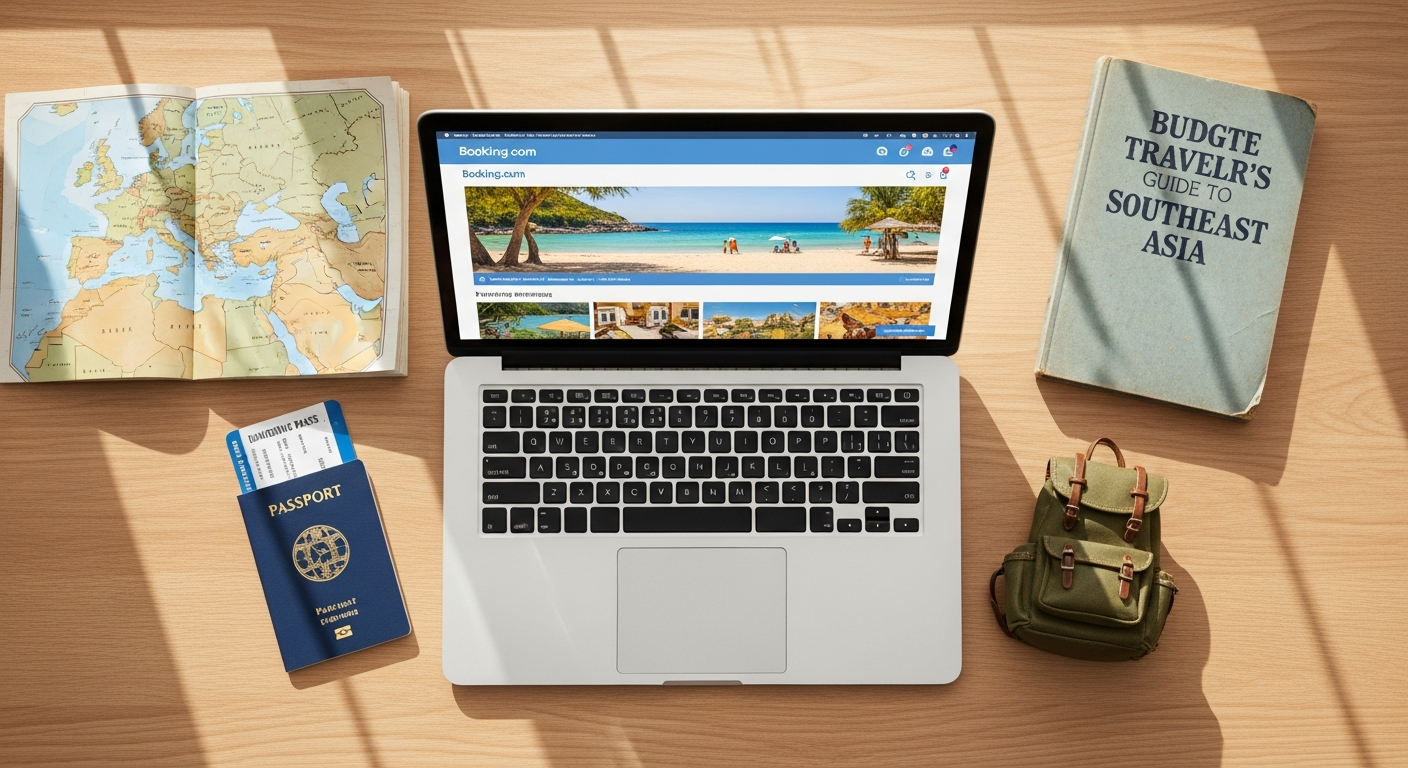
Discover how to maximize your travel budget with strategic accommodation booking techniques. Learn insider tips for finding the best deals on worldwide hotel and accommodation booking services without sacrificing quality or comfort.
Every year, 1.5 billion travelers book accommodations online, yet most leave money on the table—overpaying by 20-30% simply because they haven't learned where to look or what to compare. The culprit isn't always high prices; it's incomplete strategy. Booking platforms have fundamentally changed travel, but only for those who know how to use them properly.
Booking.com stands as a prime example of this transformation, connecting travelers with over 28 million listings across more than 220 countries and territories. The platform houses over 370 million verified guest reviews, user-friendly search filters, transparent pricing, and flexible cancellation options that can genuinely protect your budget. The question isn't whether these tools exist—they do. The question is whether you're using them strategically.
Discover exactly how to book smarter accommodations at prices that preserve your travel budget.
Mastering Advanced Search Filters to Unlock Hidden Deals
Most travelers use search filters as basic navigation tools—they pick a date, set a price, and book the first acceptable option. This approach wastes hundreds of dollars per trip. Strategic filter use reveals properties that others miss entirely.
Understanding how location-based filtering impacts pricing and availability
Location filtering does far more than narrow geography. It reveals pricing patterns across neighborhoods. A hotel three blocks away from the main tourist district often costs 40-50% less while remaining walking distance to attractions. Booking.com's map view lets you spot these savings visually, showing price variations as you shift location slightly. Neighborhoods that tourists overlook frequently offer superior value without sacrificing convenience.
Using price range sliders strategically to identify sweet-spot accommodations
Price sliders represent the most underutilized filtering tool. Rather than setting a maximum budget and sorting by lowest price, identify the sweet spot—typically 10-15% below your maximum. Properties in this range often have superior amenities and ratings compared to the absolute cheapest options, yet cost significantly less than average properties. This narrow band frequently contains the best value accommodations because they're less visible to price-only searchers.
Filtering by accommodation type to find undervalued properties
Hotels aren't the only accommodation type, nor are they always the best value. Apartments, guesthouses, and villas frequently offer lower nightly rates while providing kitchens, separate living spaces, and amenities that reduce your overall trip expenses. A guesthouse with kitchen access at $65 per night delivers more value than a $85 per night hotel without cooking facilities. Booking.com's accommodation type filters reveal these alternatives instantly.
Leveraging amenity filters to avoid paying for features you won't use
High-end properties pay for spa facilities, restaurants, and concierge services. If you're hiking all day and sleeping eight hours at night, you're funding amenities you won't use. Conversely, filtering for essentials you actually need—working desk, strong WiFi, laundry facilities—ensures you pay only for what matters. This filter distinction separates budget-conscious travelers from those who overpay for irrelevant luxury.
Decoding the 370 Million Reviews—What Actually Matters
Review volume creates both opportunity and challenge. With 370 million verified guest opinions, you can identify genuine property quality signals—or get lost in contradictory perspectives. The difference between a smart review reader and an overwhelmed one comes down to methodology.
Why verified guest reviews matter more than star ratings alone
Star ratings compress complex experiences into single numbers. A 4.2-star property might be consistently solid or wildly inconsistent. Verified reviews from actual guests reveal the pattern. Booking.com's review verification system requires guests to have booked through the platform, eliminating fabricated opinions. This verification transforms reviews from marketing material into authentic traveler feedback.
Red flags in negative reviews that indicate genuine problems versus minor complaints
Not all negative reviews signal property failures. Some guests complain because their expectations exceeded reality—they booked a budget hostel and expected luxury. Genuine problems appear repeatedly: "mattress uncomfortable," "bathroom moldy," "noise from street." Minor complaints are one-time mentions: "staff didn't speak my language," "breakfast menu limited." When multiple recent reviews mention the same specific issue, you've found a real problem. When complaints vary wildly, you're reading normal expectation mismatches.
How to identify reviews from travelers with similar budgets and priorities
Your priorities don't match everyone's. A solo backpacker's review differs vastly from a family's perspective on the same property. Booking.com filters reviews by traveler type—solo, families, couples, business travelers. Read reviews from your category specifically. A property rated poorly by families but highly by solo travelers might be perfect for your trip. This segmentation transforms reviews from noise into targeted intelligence.
Using review filters to find properties that excel in specific areas
Properties excel in different categories. Some shine for cleanliness but lag on location; others excel for value but disappoint on comfort. Booking.com's topic filters—cleanliness, comfort, location, value, facilities—reveal specific strengths. If location matters most to you, filter reviews praising location specifically. You'll find properties that cost less because they underperform in areas irrelevant to your needs.
The Free Cancellation Advantage—Strategic Booking for Flexibility
Flexible cancellation policies represent financial safety nets that most travelers ignore. This oversight costs hundreds of dollars annually through forced stays at properties that no longer work for your plans.
How free cancellation policies reduce financial risk on uncertain bookings
Booking with free cancellation transforms uncertainty into optionality. When your plans might change or better options might emerge, booking a property with free cancellation costs nothing to hold that reservation. You're securing a floor price without financial penalty if circumstances shift. Properties with this flexibility cost slightly more than non-refundable rates, but the protection justifies the expense when genuine uncertainty exists.
Timing your bookings to maximize cancellation windows
Cancellation deadlines vary dramatically—some allow cancellation until arrival, others until 14 days before. Knowing these windows changes your booking strategy. Book early with free cancellation when prices are lowest, then reassess closer to your travel date. If better options emerge or your plans shift, you can cancel freely and rebook. If nothing changes, you've secured the early-bird rate. This approach requires tracking your cancellation deadlines, but the savings justify the effort.
Comparing refundable versus non-refundable rates and when each makes sense
Non-refundable rates discount 15-25% compared to refundable bookings. If your travel dates are fixed, your destination confirmed, and your plans unlikely to change, non-refundable rates make financial sense. If any uncertainty remains—work schedules might shift, travel companions might drop out, weather might force rerouting—refundable rates' extra cost becomes insurance against disruption. This decision hinges on your specific circumstances, not general guidance.
Using flexible booking options to secure properties while keeping options open
Flexible booking strategies involve securing multiple reservations with different properties, then canceling all but your final choice as plans solidify. This approach requires discipline—you must track multiple reservations and cancellation deadlines—but guarantees you can adapt if better options emerge. For price-conscious travelers, flexible booking combined with free cancellation policies represents the difference between rigid plans and responsive travel strategies.
Your Accommodation Booking Action Plan
The gap between travelers who overpay and those who save hundreds per trip isn't luck—it's methodology. You now understand how to weaponize advanced filters to uncover hidden value, decode verified reviews to identify genuine property quality, leverage flexible cancellation as financial protection, and navigate transparent pricing strategically. Your first step starts immediately: identify your next trip and implement one strategy from this guide. The money saved—potentially hundreds depending on your destination and trip length—remains in your travel fund rather than inflating hotel profit margins.
Budget-conscious travel doesn't require sacrificing quality or convenience. It requires strategy, attention to detail, and willingness to spend five extra minutes comparing options rather than booking the first acceptable result. Start now, track your savings, and refine your approach based on what works for your travel style.
Begin your smarter booking journey today and transform how you reserve accommodations worldwide.