
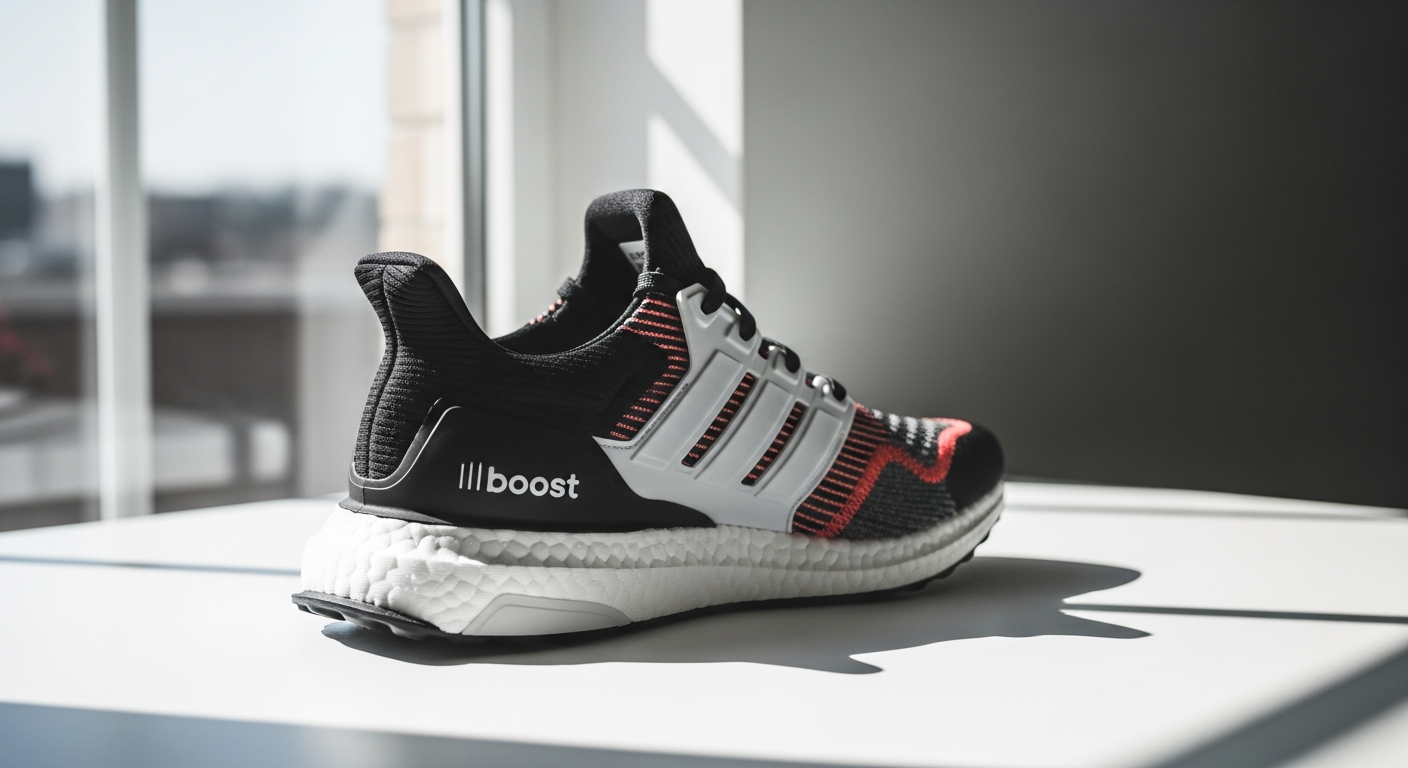
Discover why the Adidas Hyperboost Edge running shoes are revolutionizing long-distance training. Explore Hyperboost Pro foam technology, cushioning performance, and whether this €200 super trainer is worth the investment for marathon runners.
Adidas Hyperboost Edge Running Shoes: The Ultimate Non-Plated Super Trainer
If you've been hunting for a shoe that balances plush comfort with genuine energy return, the Adidas Hyperboost Edge finally delivers what most runners assume they can't have. Watching countless athletes sacrifice responsiveness for cushioning—or vice versa—has become frustrating, but this shoe fundamentally changes that equation. The innovative engineering inside challenges everything we thought we knew about how super trainers should perform.
The Adidas Hyperboost Edge has become a best-seller at Endurance Store FR, with French running communities celebrating its ability to handle everything from easy recovery miles to marathon-distance efforts. What separates this shoe from the crowded field of cushioned trainers is its audacious commitment to maximum cushioning without the rigid plates and stiffening elements that weigh down most contemporary competitors. The result feels almost heretical in today's carbon-plated running landscape: a shoe that achieves serious performance through pure foam innovation rather than mechanical rigidity.
Discover the Adidas Hyperboost Edge at Endurance Store FR
This guide walks through the innovative Hyperboost Pro midsole technology that powers this shoe, the engineering decisions that keep it lightweight despite its substantial stack height, and the real-world trade-offs that matter for long-distance runners. Whether you're training for your first marathon or upgrading your daily trainer rotation, understanding this shoe's strengths and limitations will help you make an informed decision about whether it belongs in your rotation.
Hyperboost Pro Midsole Technology: The Engine Behind the Energy Return
Expanded PEBA Foam Compound with Superior Performance
The Hyperboost Pro midsole represents Adidas's most ambitious reimagining of its Boost lineup. Built on an expanded PEBA foam compound with superior density characteristics, this material works fundamentally differently than standard Boost foams. The expanded structure creates more air pockets while maintaining material density, resulting in a foam that feels bouncy and soft simultaneously—a combination most runners thought required compromise.
Hyperboost Pro differs significantly from competing super trainer foams. Nike's ZoomX, for instance, prioritizes energy return above all else but sacrifices some comfort feel. New Balance's FuelCell offers cushioning but can feel sluggish on slower runs. The Hyperboost Pro threading the needle between these extremes: delivering responsive energy without sacrificing the plush, forgiving feel that makes long runs enjoyable rather than punishing.
Natural Gait Cycle Integration Without Plates
The Adidas design team made a deliberate choice to build this shoe without plates or stiffening elements—a rarity in today's super trainer market. This decision allows the Hyperboost Pro foam to work naturally through your entire gait cycle. Rather than forcing your foot into a predetermined mechanical pathway, the foam compresses and releases based on your individual stride mechanics. The result is a propulsive feel that generates its energy through material responsiveness rather than structural rigidity.
The shock absorption capabilities are genuinely impressive across impact-heavy training. During long runs where fatigue accumulates with every step, the foam maintains its protective properties mile after mile. The fun factor separates this from minimalist competitors that prioritize lightness over actual comfort—you'll notice the difference on your twentieth repetition of a twenty-mile run.
Foam Behavior Across Pacing Variations
The Hyperboost Pro foam behaves consistently across easy, steady, and threshold paces, though with subtle variations in feel. During conversational recovery runs, the softness and cushioning dominate the experience. As you increase pace into steady-state efforts, the foam's responsiveness becomes more apparent, providing that energetic push without feeling unstable. The foam does firm up slightly when pushed hard, which some runners appreciate as additional support and others find less comfortable for sustained threshold efforts.
Durability expectations remain strong through high-mileage training cycles. The expanded PEBA compound resists the premature breakdown that plagues some super trainers. Most runners report foam degradation becoming noticeable around 400-500 miles, though some experience cushioning changes earlier. This lifespan positions the shoe competitively within the super trainer category, where extended mileage capacity directly impacts cost-per-mile economics.
Stack Height, Weight, and Geometry: Engineering a Lightweight Cushioned Trainer
Substantial Stack with Minimal Weight Penalty
The numbers tell an impressive story: 44-45mm heel stack and 38-39mm forefoot stack with a 6mm heel-to-toe offset. These measurements place the Hyperboost Edge firmly in the super trainer category alongside shoes like the Nike Alphafly and Brooks Hyperion Elite. Yet despite this substantial cushioning volume, men's versions typically weigh 247-272 grams (8.7-9.6 ounces) and women's versions around 224 grams (7.9 ounces). This weight profile emerges from Adidas's material innovations—the Primeweave upper and full-length LIGHTTRAXION outsole both contribute minimally to overall mass.
The high stack height delivers tangible benefits for long-distance comfort and fatigue reduction. That extra cushioning matters on mile eighteen of a marathon training run when your legs feel heavier and impact forces multiply. The geometry also provides a substantial platform for runners who value stability during tired miles. The offset ratio creates a natural progression through your gait without forcing excessive heel striking or forefoot engagement.
Geometry Considerations for Different Running Styles
The stack specifications interact with individual running mechanics in meaningful ways. Heel-strikers often experience the most benefit from the pronounced cushioning and comfort pod technology in the heel. Midfoot strikers sometimes report feeling disconnected from ground feel, though the responsive foam often compensates. Forefoot strikers might find the stack height slightly forward-heavy, though rarely problematically so.
Explore the complete Hyperboost Edge collection
The stack height benefits translate across training phases. During base-building blocks where you're accumulating high volumes at easy paces, the cushioning feels genuinely luxurious. When you transition into tempo work and threshold efforts, the geometry maintains stability without feeling mushy. The late forefoot rocker might feel awkward for some stride patterns during faster efforts, though most runners adapt within a few runs.
Primeweave Upper and Comfort Pod Technology: Fit, Feel, and Lockdown
Primeweave Construction: Durability Meets Breathability Challenges
The Primeweave woven material represents Adidas's attempt to balance durability with weight reduction. The super-soft, hyper-light upper feels plush against your foot during the first few runs. The woven construction provides structural support without unnecessary rigidity around the sides and heel counter. Many runners praise the comfortable, secure fit that Primeweave delivers across typical foot shapes.
The material does exhibit some stiffness during the initial break-in period. A few runners report ankle rubbing or discomfort around the heel collar, particularly during the first ten to fifteen miles. However, this generally resolves as the material softens slightly and your foot adapts to the shoe's geometry. Durability expectations are strong across high-mileage training cycles—the Primeweave upper consistently outlasts the midsole foam.
Heel Comfort Pods and Foot Movement Prevention
The comfort pods placed strategically in the heel serve a functional purpose beyond marketing language. These soft inserts cradle your heel during foot strike, reducing friction and lateral movement. For heel-strikers with sensitive heels, this feature often proves transformative across long training runs. The padding prevents the raw spots and hot spots that plague many distance runners, particularly during back-to-back heavy training days.
The locked-in fit mechanics work well for average-width feet and runners with typical arch profiles. Neutral runners particularly appreciate how the shoe accommodates the foot during the pronation cycle without excessive movement or instability.
Real Fit Considerations: The Narrow Toe Box Challenge
The narrow toe box represents the most significant fit concern for certain runners. Those with wide forefeet or splayed toes often feel crowded in the front of the shoe. This narrowness doesn't present problems for the first mile but becomes progressively uncomfortable on longer runs as your foot swells naturally. For runners with average or narrow feet, this is a non-issue. For wide-footed runners, testing the shoe's fit before committing becomes essential.
The upper stiffness and ankle rubbing concerns aren't universal dealbreakers but warrant serious consideration during fitting. If you have ankle sensitivity or history of rubbing issues with other shoes, pay particular attention during in-store testing. Most runners find these concerns resolve within a few runs, but some experience persistent discomfort.
LIGHTTRAXION Outsole and Ground Contact: Traction Without Weight Penalty
Full-Length Outsole Design and Rubber Specifications
The full-length LIGHTTRAXION outsole uses a proprietary rubber compound formulated to grip dry road surfaces reliably without adding unnecessary mass. The placement across the entire footprint provides consistent traction during transitions through gait cycle phases. The rubber thickness balances durability against weight considerations—thick enough to withstand hundreds of miles while contributing minimally to overall shoe weight.
Grip performance on dry road surfaces remains consistent across various intensities and paces. You won't experience sudden loss of traction during faster efforts or sudden directional changes. On wet conditions, the outsole delivers adequate grip for typical training, though it's not designed for technical trail terrain. Most runners won't encounter situations where traction becomes a limiting factor during their training.
Durability and Wear Patterns
The rubber compound resists premature wear under the high-mileage training volumes that serious distance runners accumulate. Wear patterns typically show first at the heel and forefoot—the highest-impact areas—but progress slowly. Most runners report noticeable outsole wear around 300-400 miles, with functional traction remaining through 500+ miles if you're not pushing extremely hard efforts daily.
The forefoot rocker characteristics support natural transitions during the propulsive phase of your gait. The slight curve in the forefoot encourages efficient push-off without forcing your biomechanics into unnatural positions. Some runners with extreme forefoot-striking patterns report the rocker feels awkward initially, though adaptation typically occurs quickly.
Marathon Training Performance: Distance Capability and Versatility
Long-Distance Suitability and Training Phase Performance
The Adidas Hyperboost Edge genuinely excels across marathon-specific training demands. The substantial cushioning makes it ideal for those critical 18-20 mile training runs where fatigue accumulates rapidly. The non-plated design allows your feet and legs to work naturally without the artificial propulsion that plated shoes provide, building the resilience you'll need on race day.
The shoe handles the full training cycle effectively. During base-building phases with high easy-run volumes, the plush cushioning feels luxurious. Tempo work benefits from the foam's responsiveness without sacrificing the supportive platform. Taper runs feel smooth and confidence-building without the shoe feeling unstable or unpredictable when you're running less frequently.
Cushioning Consistency Over Extended Distance
The Hyperboost Pro foam maintains its protective qualities remarkably well over 20+ mile runs and back-to-back heavy training days. You might notice slightly more impact sensation on mile nineteen compared to mile five, but nothing approaching the dramatic degradation some runners experience with inferior super trainers. The consistent performance across repeated long runs makes this shoe particularly valuable during marathon training blocks when you're running multiple twenty-milers over consecutive weekends.
Recovery run performance and easy-pace comfort deserve special emphasis. The shoe shines during the conversational-pace efforts that comprise 80% of proper training. The cushioning feels indulgent without creating that sluggish, dead feeling that can make easy runs feel slower and harder than they should. This combination—plush comfort during easy efforts with enough responsiveness for faster work—makes the Hyperboost Edge a genuine all-purpose weapon.
Mileage Capacity and Marathon Readiness
The midsole capacity before noticeable foam degradation typically reaches 400-500 miles for most runners, positioning this shoe competitively against dedicated marathon trainers. You can comfortably handle a full 16-20 week marathon training block in a single pair without concern about midsole breakdown affecting your race. The durability extends through actual race day, meaning you can wear your training shoes for the marathon itself if you prefer that familiarity.
Runner feedback on completing full marathon training cycles consistently praises the shoe's ability to handle the demands. Multiple reports highlight completing 400+ mile training blocks culminating in successful marathon finishes without encountering significant durability issues.
Pacing Versatility: From Recovery Runs to Threshold Efforts
Performance Across the Training Spectrum
The Hyperboost Edge's versatility across different intensities represents one of its defining strengths. During easy, conversational paces, the softness and substantial cushioning dominate the experience. Your legs feel protected and fresh even on recovery runs following hard efforts. This comfort factor matters more than many runners realize—when easy runs feel genuinely easy and pleasant, consistency becomes easier to maintain.
During steady-state and moderate-intensity runs, the foam's responsiveness becomes apparent. The shoe provides energetic feedback without feeling unstable or requiring excessive engagement. You experience the propulsive push that makes sustained efforts feel slightly less laborious. The energy return isn't as dramatic as dedicated racing shoes, but it's authentic and useful.
Behavior During Faster Efforts
When you push into faster efforts and tempo work, the foam firms up slightly, providing additional support and creating a more stable platform. Some runners appreciate this additional structure; others find it less comfortable than the softer feel at easier paces. The transition happens smoothly rather than abruptly, so you won't experience sudden personality changes when pace increases.
The versatility as a true all-purpose training shoe cannot be overstated. Rather than maintaining separate shoes for different intensities, serious runners can rely on the Hyperboost Edge for nearly all training scenarios. The suitability for speed work and interval training exists, though dedicated tempo trainers or racing flats might provide marginal advantages for purely speed-focused sessions. For runners unwilling to maintain multiple shoes, the Hyperboost Edge handles the entire spectrum admirably.
Fit Considerations: Who Should Buy and Who Might Struggle
Ideal Runner Profile and Foot Type Compatibility
The Hyperboost Edge performs optimally for runners with neutral to slightly narrow feet, heel-striking or midfoot-striking gait mechanics, and a preference for cushioned comfort combined with responsive energy. Average-width forefeet experience the most harmonious fit. Runners with typical arches find the support characteristics precisely calibrated. Those prioritizing the fun factor and engaging ride over minimalist ground feel align perfectly with what this shoe delivers.
Neutral runners comprise the primary target audience, though runners with mild overpronation often experience acceptable performance. The shoe's stability emerges from the substantial platform and inherent foam structure rather than medial support posts, which means runners with more significant pronation needs might feel underpinned.
Challenges for Certain Foot Shapes
The narrow toe box implications demand honest assessment for wide-footed runners. If you consistently purchase wide-sized shoes, the Hyperboost Edge will likely frustrate rather than inspire. The narrowness isn't extreme—many average-width runners report adequate room—but it represents a genuine limitation for the broader-footed population. Testing before purchasing becomes essential if you fall into this category.
Upper stiffness concerns and ankle rubbing potential primarily affect runners with ankle sensitivity or those whose previous shoes featured softer collar materials. Most experience resolution within the first 10-15 miles as the material softens. However, if you have a history of collar rubbing issues with other shoes, this warrants careful consideration and possibly trying the shoe in a store setting with extended duration.
The heel comfort pod benefits particularly favor heel-strikers who experience heel sensitivity or raw spots. Midfoot strikers sometimes notice the pods but rarely find them problematic. The contrast is noticeable during testing: heel-strikers often immediately recognize the comfort enhancement, while other gait patterns might not perceive obvious benefit.
Sizing Recommendations and Break-In Expectations
Most runners size the Hyperboost Edge true to their typical running shoe size. Some find a half-size down works with the narrow toe box, but this compromises heel fit and isn't generally recommended. Plan for a 10-15 mile break-in period before expecting maximum comfort, though most runners find the shoe acceptably comfortable from the first wear. Return and exchange considerations deserve emphasis: if initial fitting feels wrong, most retailers accept exchanges within a reasonable timeframe, so don't force adaptation to a poor fit.
Price-to-Performance Analysis: Is the €200 Investment Worth It?
Competitive Positioning in the Super Trainer Market
The €200 price point positions the Hyperboost Edge in the premium super trainer category. Nike Vaporfly and Brooks Hyperion Elite occupy similar price territory, while some New Balance alternatives cost slightly less. The value proposition depends significantly on your intended use: for marathon training and high-volume daily running, the versatility justifies the investment more readily than for runners logging lower weekly mileage.
The comparison against competitors reveals both advantages and compromises. The Vaporfly emphasizes racing-specific performance with its carbon plate, making it potentially excessive for pure training. The Hyperion Elite offers comparable cushioning with slightly different foam characteristics. New Balance alternatives generally cost €50-100 less but typically sacrifice either cushioning or durability. The Hyperboost Edge occupies a sweet spot for runners wanting maximum training versatility.
Durability and Lifespan ROI
The 400-500 mile expected lifespan translates to approximately 30-40 running hours for most training runners. If you're logging 50-60 miles weekly, expect roughly 8-10 weeks of use before midsole degradation becomes noticeable. Cost per mile calculations yield approximately €0.40-0.50 per mile—higher than budget trainers but lower than dedicated racing shoes used for limited occasions.
The durability significantly impacts ROI. Unlike some super trainers that experience premature breakdown, the Hyperboost Edge consistently delivers the promised lifespan. When you factor in the reduced injury risk from superior cushioning and the psychological benefit of enjoying your daily training, the €200 investment becomes more defensible from an overall health and wellness perspective.
Premium Features and Discount Strategies
The premium features justifying the price tag include the innovative Hyperboost Pro foam, the Primeweave upper construction, and the thoughtful heel comfort pod design. These aren't marketing gimmicks—they translate into tangible benefits during your training. Discount opportunities emerge seasonally, with €20-30 reductions appearing during end-of-season sales. Buying from retailers like Endurance Store FR during promotional periods can reduce effective cost-per-mile and improve ROI.
Budget alternatives and compromises in lower-priced options typically involve less responsive foam, heavier weight, or narrower versatility. A €140 trainer saves €60 upfront but might not handle the full training spectrum as effectively, potentially requiring purchase of additional shoes.
The Non-Plated Advantage: Why No Carbon Plate Matters for Training
Carbon Plate vs. Non-Plated Foam Technology
The absence of a carbon plate represents a deliberate design philosophy diverging from industry trends. Carbon plated shoes force your foot into a predetermined mechanical pathway, providing propulsive energy through rigidity rather than material responsiveness. The non-plated approach allows your foot and leg to work more naturally through the gait cycle, engaging stabilizer muscles and proprioceptive systems more extensively.
The flexibility and natural gait cycle benefits emerge most obviously on longer runs where fatigue accumulates. Plated shoes can feel uncomfortable as your mechanics deteriorate because the rigid structure doesn't accommodate form breakdown gracefully. The non-plated Hyperboost Edge adapts to your individual biomechanics and changes in mechanics, providing consistent support throughout extended efforts.
Propulsive Feel and Training Adaptability
The propulsive feel from foam responsiveness rather than plate mechanics feels different—sometimes less dramatic than plated shoes during the first few runs. However, this difference reflects training-focused design rather than deficiency. The propulsion emerges from your muscles and the foam working together rather than the shoe doing the work for you. This interaction builds greater muscular adaptation and resilience compared to relying on mechanical structures.
Injury prevention through natural movement patterns represents a compelling theoretical advantage. Running in rigid structures over thousands of miles might contribute to compensation patterns and overuse injuries. The Hyperboost Edge's commitment to natural motion reduces this risk, though injury prevention ultimately depends on multiple factors beyond shoe design.
Long-Term Training Benefits
Runner preferences divide along philosophical lines. Some chase the maximum propulsive advantage of plated shoes, prioritizing race-day gains even if training feels uncomfortable. Others prefer the muscle-building, resilience-developing approach of training in responsive foam. The Hyperboost Edge explicitly optimizes for the latter philosophy, delivering training benefits that translate into race day through accumulated strength and adaptability rather than technological shortcuts.
The transition from training shoe to race shoe presents fewer complications with the non-plated approach. Runners who train in the Hyperboost Edge and race in a plated shoe experience a less dramatic transition compared to those training exclusively in super trainers. This versatility and compatibility with various racing options shouldn't be underestimated in long-term training planning.
Making Your Decision: Is the Adidas Hyperboost Edge Right for You?
Ideal Runner Profile and Decision Framework
The ideal runner for the Hyperboost Edge logs 40+ miles weekly, plans a marathon training block, has neutral gait mechanics, and values versatility across different intensities. You appreciate responsive energy and engaging rides rather than minimalist, ground-contact-focused shoes. Your feet are average-width or narrower. You prioritize comfort during long runs without sacrificing performance. The €200 investment fits your budget for training footwear.
The decision framework simplifies to key questions: Will you wear these shoes frequently enough to justify the investment? Do you have fit concerns around the narrow toe box? Do you prefer marathon-specific trainers or all-purpose shoes? Do you want carbon plate propulsion or non-plated foam flexibility? Honest answers to these questions reveal whether the Hyperboost Edge aligns with your running philosophy and needs.
Trial Run Recommendations and Practical Testing
Plan for a 15-20 mile trial period before making a final commitment. This distance reveals fit issues, comfort patterns, and whether the shoe's personality matches your preferences. Try the shoe at different paces—easy runs, steady efforts, and faster work—to evaluate versatility claims. Pay attention to how your feet feel during the latter miles of longer runs when fatigue compounds fit issues.
In-store evaluation tips include trying the shoe late in the day when your feet are more swollen, mimicking actual running conditions. Walk around the store for 5-10 minutes, then sit and remove the shoe. Check for pressure points, rubbing, or restriction. If the initial fit feels wrong, it probably will remain uncomfortable even after break-in. Return policies and exchange options deserve clarification before purchasing—most reputable retailers offer 30-day satisfaction guarantees.
Comparison Checklist and Rotation Planning
Compare the Hyperboost Edge against your current shoe rotation by evaluating weight, stack height, cushioning feel, upper construction, and intended use cases. Identify where this shoe fills gaps in your rotation. Does it replace your current daily trainer? Add a second rotation option for high-volume weeks? Serve as marathon-specific training shoe?
Budget considerations and financial planning should honestly assess whether €200 represents a reasonable training investment. If you run 50+ miles weekly, the cost-per-mile becomes quite reasonable. If you run 20-30 miles weekly, the investment remains substantial and might warrant waiting for sales or considering lower-priced alternatives.
The timeline for purchase relative to training cycles matters considerably. Beginning a Hyperboost Edge as your primary trainer right before marathon training starts offers distinct advantages compared to introducing new shoes during peak mileage weeks. Plan shoe transitions during lower-mileage periods to allow adequate adaptation time.
The Hyperboost Edge Verdict: A Game-Changing Trainer for Serious Distance Runners
The Adidas Hyperboost Edge represents a genuine breakthrough in super trainer design. By combining the bouncy, responsive Hyperboost Pro foam with feather-light construction and deliberate non-plated approach, Adidas has created a shoe that genuinely excels across the entire training spectrum. From recovery miles to marathon-distance efforts, the versatility proves remarkable. The €200 price tag stings initially, but the ability to handle everything your training demands makes it a compelling investment for runners serious about their preparation.
This shoe demands the right fit. Wide-footed runners, those with ankle sensitivity, and anyone prioritizing maximum breathability above all else might find frustration rather than inspiration. The upper stiffness and narrow toe box aren't dealbreakers universally, but they're real considerations that deserve hands-on testing before committing financially. Some runners will find these aspects immediately disqualifying; others won't even notice them.
For runners who fit the shoe well and value the fun factor of a responsive, energetic ride, the Hyperboost Edge becomes an easy recommendation. The non-plated design philosophy represents a refreshing divergence from industry trends, prioritizing training adaptability and natural movement over technological shortcuts. The Hyperboost Pro foam delivers on promises of bouncy responsiveness and substantial cushioning without the compromises that plague competitors.